What to Do When the Leaves of Sedum multiceps Turn Yellow and Dry? A Detailed Care Guide
Keeping Sedum multiceps alive is fairly easy, but getting it to look beautiful is not so simple. During cultivation, yellowing and drying leaves are very common. Once the leaves stop looking good, the whole Sedum multiceps looks very unattractive. So what should you do when yellowing and drying leaves appear during cultivation? Let's take a look together with the women's website:
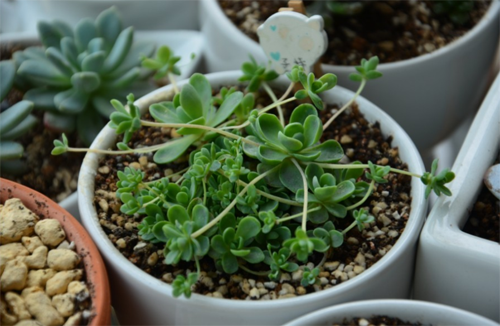
How to grow Sedum multiceps:
During the spring and autumn growing season, Sedum multiceps can be given enough water; when the soil mix is nearly dry, water it thoroughly once. In summer, Sedum multiceps enters dormancy and watering should be controlled; just give a small amount of water when watering (when Sedum multiceps enters dormancy, like the mountain rose, its leaves will wrap up, very noticeably, like a little cabbage). For watering times, you can choose the warmer period near noon in winter and the cooler period in the afternoon or evening in summer.
When summer temperatures rise above 30°C, place Sedum multiceps in a bright spot without direct light, strengthen ventilation, and water sparingly; watering can be done in the evening. If the leaves of Sedum multiceps have wrapped up, it has entered dormancy, and you should reduce the amount of water given. After summer ends, wait until the leaves of Sedum multiceps spread open and it enters the growing period, then gradually increase light. In winter, as long as the temperature is not below 0°C, Sedum multiceps can generally continue to grow; if it is lower, it should be moved indoors to overwinter, choosing a sunny indoor spot as much as possible, and the amount of water can be appropriately reduced.
Sedum multiceps prefers strong light. With weak light, the plant shape loosens, leaves fall off, and even the stems stretch out, each one sticking out its neck, which is really ugly. It should be noted that during the growing period the leaves are indeed rather loose, but it is still easy to distinguish this from etiolation by how long the necks have stretched.
What to do when the leaves of Sedum multiceps turn yellow and dry:
Yellow leaves and dry leaves on Sedum multiceps during its dormancy period are normal; during dormancy, the new leaves need to be wrapped by the dry yellow leaves. If it is not the dormancy period, then you need to water less, give more sunlight, and after a while it will be fine.
Sedum multiceps has different requirements for temperature and soil in different seasons. Growing a beautiful Sedum multiceps is still quite difficult, especially during the dormancy period, when seeing dry yellow leaves makes one unhappy.
What to Do When Lotus Leaves Turn Yellow and Dry, and What Causes Lotus Yellowing (Cut Dead Leaves and Spray Medicine)
The lotus is also called the lotus flower by people, and is one of China's top ten famous flowers. In nature, any plant can “get sick”, and yellowing and drying lotus leaves are among its symptoms. So what should be done when lotus leaves turn yellow and dry? First we need to find its symptoms, then prescribe the right remedy. Below, let's take a look with the editor at what causes lotus yellowing.
1. What causes lotus yellowing, light and temperature
Since ancient times, the lotus has been deeply loved by people. Earlier we talked about how to grow lotus and the effects and benefits of lotus. Now let's talk about a common problem: what to do when lotus leaves turn yellow and dry, and what causes lotus yellowing. There are many reasons for lotus leaves turning yellow: it may be caused by strong light, or improper fertilizing, or temperatures that are too low, and so on. Below we explain the solutions one by one.
2. What to do when lotus leaves turn yellow and dry, prescribe the right remedy
1. Insufficient light
The lotus is a sun-loving plant. Insufficient light can cause the lotus branches and leaves to grow leggy, the leaves cannot carry out normal photosynthesis, and chlorophyll synthesis is affected, causing the leaves to turn yellow.
Solution: Pay attention to giving more sunlight. Potted ornamental lotus must be placed in a sunny spot, not in a shady place.
2. Soil or water is strongly alkaline
Soil or water that is on the alkaline side affects the absorption of trace elements by the roots of ornamental lotus, and the symptoms of deficiency in elements such as iron, magnesium and sulfur mostly appear as what we usually call watermelon stripes.
Solution: Adding a little ferrous sulfate to the water is a good method; it can adjust the pH and also supplement iron.
3. Improper fertilizing
Both excessive fertilizer and lack of fertilizer can cause lotus leaves to yellow. For beginners growing lotus, excessive fertilizer is generally the more common cause. Yellowing from fertilizer deficiency mostly shows as the color of young leaves becoming lighter, appearing yellow or pale green, while older leaves remain relatively normal or gradually turn from green to yellow. Leaf yellowing caused by lack of nutrient elements mostly occurs during the growing period and the later stage.
Solution: Too much fertilizer burns the roots. If root burn occurs, it is recommended to replant, switch to plain soil for cultivation, and at the same time spray more water on the leaves. After digging out the lotus rhizome, you can observe the root condition to confirm whether the judgment is correct. Roots that are partly black, short, or absent indicate root burn.
4. Freezing damage or disease
A sharp drop in temperature or too great a temperature difference can cause new leaves to turn yellow, shrink, and curl inward. Pay attention to cold protection; just do not leave the potted lotus outdoors where the temperature is too low. Fungal diseases generally show as yellow spots of varying sizes appearing on the leaves, gradually turning brown and necrotic, with powdery or flocculent material often present on the diseased spots. Carbendazim can be used, but do not abuse it, otherwise it may have the opposite effect.
The lotus is a very easy flower to grow. As long as you pay attention to its light and temperature, growing lotus well is not a problem. Through the answers above, you now know what to do when lotus leaves turn yellow and dry, and what causes lotus yellowing, right?
What to Do When Nasturtium Leaves Turn Yellow and Dry?
Nasturtium is a plant in the family Tropaeolaceae and the genus Tropaeolum, a perennial semi-trailing or prostrate plant. The plant height is 30 cm-70 cm. The basal leaves have long petioles, and the leaf blades are pentagonal, ternately parted, with the secondary segments having a few small lobes and sharp teeth. The flowers are solitary or in cymes of 2-3 flowers, with five petals and 8-19 sepals, yellow, elliptic-obovate or obovate, the petals equal in length to the sepals, narrowly linear. Previously, some flower lovers encountered the phenomenon of nasturtium leaves turning yellow. Generally speaking, the causes of nasturtium leaves turning yellow are many-sided; water, fertilizer, light and pests can all be causes. Below, let's look at the analysis of the causes and solutions for nasturtium leaves turning yellow and dry.
Cause 1 of nasturtium leaves turning yellow and dry: improper wateringAlthough it is named nasturtium, it is so named relative to the lotus, and it is not a plant that likes drought. Watering needs to alternate between wet and dry; do not water while the surface soil is still dry, and when it is dry, be sure to water thoroughly. In addition, after nasturtium blooms, watering should be reduced to prevent excessive branch growth. If watering is excessive and drainage is poor, the roots are prone to rot from dampness; in mild cases the leaves turn yellow and fall off, and in severe cases the whole plant wilts and dies. (If the potting soil becomes waterlogged, it will cause the leaves to turn yellow.)
2. Nasturtium leaf yellowing: low temperatureIf the temperature is too low, it is best to keep the temperature above 10°C, and the lower the temperature, the more watering frequency should be controlled. Also prevent cold wind from blowing on it and dry hot air from heating or air conditioning, otherwise it can very easily cause leaf yellowing.
3. Nasturtium leaf yellowing: excessive fertilizingExcessive fertilizing: although fertilizer needs to be applied during the growing process, excessive fertilizer will cause fertilizer damage. Especially when pouring fertilizer solution, prevent the fertilizer solution from splashing onto the leaves.
4. Nasturtium leaf yellowing: strong lightLight: this cannot be discussed simply as light, but rather as seasons. Nasturtium is a perennial plant that fears both cold and heat. It goes dormant in summer, and can be placed in a cool, ventilated place, with fertilizer stopped and watering reduced. During the yellow plum rainy season, do not let the potting soil become waterlogged. Doing these things basically gets it through the summer. (Simply put, nasturtium fears heat, and especially in summer it easily develops yellow leaves, which is also because it is difficult to get through summer.)
5. Nasturtium leaf yellowing: pests and diseases. Pests and diseases, red spider mite damage; when the air is dry, it is easily afflicted by this pest. The control method is to increase humidity, and acaricides specifically for mites can also be sprayed.Solutions for nasturtium leaves turning yellow and dryTo grow potted nasturtium well, first choose a reasonably formulated growing soil; second, strengthen fertilizer and water management during the growing period; third, ensure relatively sufficient sunlight.
1. For the growing soil, it is best to choose a loam mixed from 4 parts leaf mold, 4 parts garden soil, 1 part compost soil, and 1 part sandy soil.
2. During the growing period, nasturtium often shows long nodes and yellow leaves, thin stems and small leaves, or lush branches and leaves but sparse flowers due to improper fertilizer and water management. During growth, generally apply once a month a 20% concentration of decomposed soybean cake water; during the flowering period, stop applying nitrogen fertilizer and instead apply 0.5% superphosphate or decomposed chicken and duck manure water, once every half month; after the flowers fade, apply one topdressing of 30% decomposed soybean cake water to supplement the nutrients consumed by flowering.
3. Stop fertilizing in the hot summer weather. At the end of autumn, apply one more compound overwintering fertilizer to enhance the plant's cold resistance. Watering is a routine management task, and the frequency and amount of watering should be determined according to the weather and the plant's growth condition. In spring and autumn, generally water once every other day; in summer, water once a day to maintain relatively high air humidity. When flower buds appear, the watering frequency should be appropriately reduced, but the amount of water each time should be increased, so that the potting soil alternates between dry and moist. After flowering, watering should be reduced.
4. Nasturtium likes sunlight by nature. In spring and autumn it should be placed in a spot with ample sunlight; in summer it needs appropriate shading; in winter, keep the room temperature at around 15°C with ample sunlight, and it can continue to grow and develop.