What to Do When Asparagus Fern Leaves Turn Yellow? Detailed Guide to Growing Methods and Precautions
Asparagus fern leaves are very fine and delicate, and they look very beautiful. It is very suitable for bonsai. Many households now grow asparagus fern, but as they grow it, the leaves turn yellow. What should be done? It does not look good at all. Let's take a look together with Women's Network:
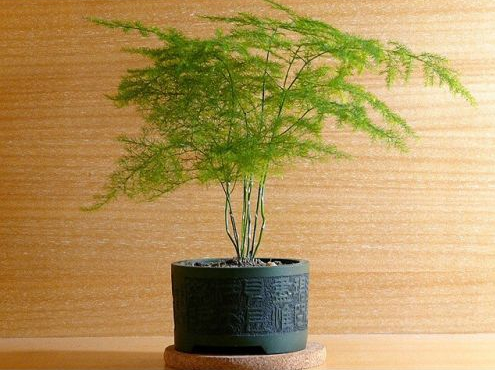
Growing methods for asparagus fern:
1. Selection of flower pots for growing asparagus fern
(1) Requirements for pot material: Clay pots, plastic pots, porcelain pots, and ceramic pots can all be used for cultivation.
(2) Pot size: Asparagus fern can be planted in pots with a diameter of 14-18 cm. Nowadays, flat bonsai pots are often used for cultivation.
2. Potting method for growing asparagus fern
When seedlings grow to more than 5 cm, they can be divided and potted, planted into pots with a diameter of 7-10 cm. The potting soil should preferably be mixed and prepared with 5 parts leaf mold, 2 parts garden soil, 2 parts river sand (sandy soil), and 1 part decomposed barnyard manure.
Asparagus fern is a flower cultivated for many years, but it should be repotted once every year before budding in early spring, removing the old soil and replacing it with new culture soil; according to the size and growth condition of the plant, change to a larger pot or still use the original pot; cut off dead branches and yellow leaf-like branches to maintain a beautiful plant shape.
3. Watering method for growing asparagus fern
Watering is the most critical issue in the cultivation and management of asparagus fern. Therefore, watering becomes an important measure for whether asparagus fern can be grown well. Too much watering and overly wet potting soil can easily cause root rot and yellowing and falling leaves; too little watering and long-term drought in the potting soil can easily cause yellowing and falling leaf tips. Therefore, the amount and frequency of watering during the growth period should be determined according to the weather, growth condition, and dryness or wetness of the potting soil.
Watering should follow the principle of “dry then wet”: do not water when not dry, and water thoroughly when watering. That is, water when the surface of the potting soil becomes dry, and water until water comes out of the bottom of the pot; do not give “half water”, that is, an amount of water that only moistens the surface soil while the soil below remains dry, causing the roots at the bottom to be unable to absorb water, and then the branches and leaves will also wither and yellow. When the weather is dry or hot, in addition to keeping the potting soil moist, it is also necessary to frequently sprinkle water on the ground around the plant and spray and wash the branches and leaves with clean water to increase air humidity. In winter, watering should be controlled and the frequency of watering reduced. Every 5-7 days, spray and wash the branches and leaves once with clean water close to room temperature to keep the plant tender green and fresh.
4. Light requirements for growing asparagus fern
Asparagus fern is a shade-loving flower that grows well under scattered light. In early spring and autumn, sunlight is not strong, so placing it in a bright indoor spot is beneficial to growth; in winter, it should be placed in a sunny spot; after summer begins, it can be moved outdoors to a cool place without direct sunlight or indoors in a place with bright scattered light.
5. Fertilization method for growing asparagus fern
Asparagus fern relatively likes fertilizer. In order to make the plant grow robustly, generally in spring and autumn, apply a fully decomposed dilute organic liquid fertilizer once every 15-20 days. A chemical fertilizer of nitrogen, phosphorus, and potassium can also be applied as a top dressing, using a mixed solution of 0.1% urea plus 0.1% potassium dihydrogen phosphate; stop fertilizing during the hot summer and the overwintering period. However, fertilization should also be controlled during the growth period to avoid excessive growth and the production of long vines, which would damage the plant shape and affect the ornamental effect. If you want the plant to remain short, apply less liquid fertilizer, especially less nitrogen fertilizer.
6. Four-season management for growing asparagus fern
(1) Spring management
In March-April, repot old asparagus fern plants, and prune appropriately before repotting. Because asparagus fern likes a shady and humid environment, it can be placed indoors for viewing for a long time. However, because indoor air humidity is relatively low, attention should be paid to increasing indoor air humidity.
Spring temperatures are suitable, and asparagus fern grows relatively vigorously. Seedlings can be top-dressed 1-2 times to ensure sufficient water supply, and attention should also be paid to increasing air humidity; otherwise, leaf color is prone to aging and falling off, affecting viewing.
(2) Summer management
In summer, asparagus fern can be placed in a bright indoor place, keep the potting soil moist, sprinkle water around it more often, strengthen ventilation to lower the temperature, and do not fertilize.
(3) Autumn management
After autumn temperatures become cool, asparagus fern resumes growth, and attention should be paid to the supply of water and fertilizer and the supplement of air humidity. After temperatures drop in late autumn, attention should be paid to maintaining indoor temperature, and gradually move the asparagus fern to a place by the window with light for cultivation, and reduce the frequency of watering, keeping the potting soil moist.
(4) Winter management
Asparagus fern is not cold-tolerant. Temperatures below 5°C will cause leaf drop, so room temperature should be kept above 5°C. At this time, asparagus fern is in a state of stagnant growth. A certain amount of light should be ensured, watering should be reduced, the potting soil should be kept slightly dry, and no fertilizer should be applied.
If room temperature is kept above 10°C, asparagus fern can also grow normally, the potting soil should be kept moist, and no fertilizer should be applied.
Precautions for growing asparagus fern:
(1) If new branches of asparagus fern are found to be turning yellow, apply decomposed 20-fold liquid fertilizer or 1000-fold urea solution 1-2 times, and appropriately increase morning and evening light.
(2) Asparagus fern likes warmth, loves moisture, tolerates semi-shade, and is not cold-tolerant. In the Jiangnan region, it cannot overwinter outdoors. Potted asparagus fern should be placed in a semi-shaded place not directly exposed to the scorching sun in summer and autumn, and in winter should be placed indoors in a south-facing, sunny, wind-sheltered spot.
(3) Potted asparagus fern especially needs to be cultivated in loose, well-drained sandy soil containing humus. For cultivating asparagus fern, it is best to choose a clay tile pot with good drainage and air permeability, and the lower layer should be lined with coarse sand and stones as a drainage layer.
(4) The most critical issues in the cultivation and management of potted asparagus fern are fertilization and watering. Avoid rain and direct sunlight, otherwise the tips of asparagus fern are easily scorched and branches withered, and the plant color turns yellow. During the growth period, do not apply concentrated fertilizer. According to the growth condition of the seedlings, appropriately apply dilute light fertilizer to control nutrients, prevent the plant from growing too excessively, and keep the plant shape graceful. Generally, apply fully fermented and decomposed liquid cake fertilizer water (bean cake or rapeseed cake) once every 7-10 days, with a concentration of 30% fertilizer and 70% water. If the plant grows vigorously and produces vine branches, stakes can be set up or appropriate pruning and shaping can be done.
(5) Although asparagus fern likes moisture, it is averse to excessive watering. If too much water is given, accumulated water in the pot cannot be discharged for a while, the roots are easily rotted, and the plant may even die. If water is too little, dry potting soil will also cause yellow leaves or scorched tips. Therefore, whenever the soil surface turns white, water thoroughly. The standard to grasp is that after watering thoroughly, water can quickly drain from the bottom of the pot. It is best to keep it slightly wetter during the high-temperature growing season and drier during the low-temperature dormant season. In hot summer weather, it is suitable to spray the leaf surface; in winter, water close to room temperature can be used to spray and wash the leaves to keep the leaf surface clean and full of vitality.
What should be done when asparagus fern leaves turn yellow?
1. Strong light exposure. Asparagus fern cultivation prefers semi-shade. In summer, it should not be exposed to strong direct sunlight, otherwise the branches and leaves will wither and yellow. The solution is to move the flower pot to a cool place and spray more water on the branches and leaves to increase humidity.
2. Improper watering. Although asparagus fern likes moisture, it can also suffer from waterlogging due to excessive wetness, so during cultivation it is best to keep the potting soil dry then wet. Generally, do not water when not dry, and water thoroughly when watering, but do not let too much water accumulate on the pot surface when watering. If overwatering occurs, you can temporarily stop watering and instead only spray water on the leaf surface to maintain moisture for the asparagus fern.
3. Improper fertilization. Applying fertilizer that is too concentrated or applying undecomposed fertilizer will both cause asparagus fern leaves to turn yellow and fall off. If the potting soil used for planting is too poor in nutrients, it will likewise cause asparagus fern leaves to turn yellow. Therefore, when fertilizing, pay attention to applying lightly, with more frequent applications but smaller amounts, and use decomposed fertilizer. For situations that have already occurred, changing the potting soil can be used to solve the problem. It is worth noting that fertilization is not suitable during the low-temperature period in winter and the high-temperature period in summer.
4. Gas poisoning. Asparagus fern is very afraid of smoke and dust. If it is often exposed to harmful gases such as smoke and dust, asparagus fern will show poisoning symptoms of yellowing branches and leaves. When this happens, promptly move the flower pot away from its original position and increase the work of sprinkling water on the leaf surface to remove dust.
5. Pests. Scale insects are the most common pest in asparagus fern cultivation. When scale insects are found, they should be promptly wiped away with a wet cloth strip. In severe cases, buy treatment from a pharmacy, and promptly change the potting soil. When changing the potting soil, old and residual root tendrils can be cut off to reduce nutrient consumption.
6. Inadequate winter management. Asparagus fern cultivation requires maintaining a certain temperature, especially in winter it should be placed in a sunny position. If asparagus fern is kept for a long time in a place lacking light, poorly ventilated, and cold, it is very easy for the leaves to wither and dry up. In winter, the temperature for asparagus fern cultivation generally must not be lower than 12°C, and it should be placed in a place with better light, and watering can be appropriately reduced.
The reason for asparagus fern leaves turning yellow may also be: the asparagus fern cultivation pot is placed next to radiators, air conditioners, televisions, and other electronic items. Because these items have strong radiation, they can also cause asparagus fern leaves to turn yellow and fall off, and over time can even cause the stems to dry up, so attention should be paid when placing the flower pot for asparagus fern cultivation.
Asparagus fern bonsai is very beautiful, but it is especially easy to die in winter. This requires giving the asparagus fern some warmth in winter so it will not die. When growing bonsai, it is easy for it to die because of the soil, so this needs to be carefully noted.
Growing Methods and Precautions for Asparagus Fern Growing Methods and Precautions for Asparagus Fern [Pictures]
Asparagus fern is also called Yunpian Song, Citian Dong, Yunzhu, etc. It is a climbing plant, with plants reaching several meters tall. Because asparagus fern is a potted foliage plant, its ornamental value is very high. It can be placed in the living room, study, and other places for cultivation, and it can also purify the air. The root of asparagus fern is a medicinal material and has the function of moistening the lungs and relieving cough for acute bronchitis. Today, let's take a look at what the growing methods and precautions for asparagus fern are.
Potting soil as a growing method for asparagus fern
Asparagus fern likes to grow in loose, fertile, well-drained sandy loam rich in humus, so during cultivation, garden soil, leaf mold, compost soil, and sand can be mixed and prepared in a ratio of 4:2:2:1 for cultivation. During cultivation, the soil should be changed and fertilizer added for asparagus fern at regular intervals. If too much fertilizer is applied, it is easy to cause root burn, so the pot should be turned over to remove the fertilizer, and the soil ball should be flushed with clean water, then replaced with new culture soil for cultivation.
Watering as a growing method for asparagus fern
Asparagus fern is a plant that is not drought-tolerant, but when watering, if too much is given, it easily causes its roots to rot. If too little is given, it will cause its leaf tips to wither and yellow. Therefore, during watering, be sure to water according to the weather and the dryness of the potting soil, and follow the rule of not watering when not dry and watering thoroughly when watering. Especially in hot and dry conditions, water should be sprayed on the leaf surface to increase humidity and lower temperature. In winter, watering should be reduced.
Fertilization as a growing method for asparagus fern
Asparagus fern does not have a very large demand for fertilizer, but it cannot lack fertilizer either. Because it is limited by potted soil cultivation, during cultivation nutrients should be supplemented in a timely manner to meet its growth needs. When fertilizing asparagus fern, be sure to follow the rule of frequent applications with small amounts, and do not apply concentrated fertilizer, otherwise it will cause yellow leaves. Generally, applying a decomposed thin liquid fertilizer once a month to asparagus fern is sufficient. During its growth period, apply a thin fertilizer containing ammonia and phosphorus 1-2 times a month to promote lush branches and leaves.
Light as a growing method for asparagus fern
Asparagus fern cannot be exposed to strong light, especially in summer, and should be placed in a cool, ventilated place for cultivation. Asparagus fern is also a plant relatively afraid of wind and rain, so during cultivation, not only should attention be paid to good ventilation, but in appropriate weather it can also be placed in a sunny place for sunlight exposure. Because asparagus fern likes to grow in a clean and air-circulating environment, when placing it, it must be placed in a clean and ventilated place for cultivation.
Pruning as a growing method for asparagus fern
During cultivation, in order to make the shape of asparagus fern more attractive, we can prune it appropriately. When the growth position of the small leaf-like branches on its main branch is unsatisfactory or missing for some reason, short pruning can be carried out at an appropriate position on the main branch to force the latent buds there to sprout. It can also be pruned during its growing season, because pruning during the growing season generally makes it easy to sprout new branches, but after pruning, watering should be appropriately reduced. Absolutely do not make the potting soil too wet, otherwise pruning is likely to fail.
Precautions for growing asparagus fern
1. When watering asparagus fern, do not give too much or too little. Although asparagus fern likes moisture, it is averse to excessive wetness. If the potting soil is too wet and drainage is poor, the roots will rot. If watering is too little or not done, because asparagus fern has high evaporation and low absorption, it will cause scorched leaves and falling tips.
2. Asparagus fern likes to grow in clean and ventilated places. If it is harmed by harmful gases such as smoke, dust, coal gas, and pesticides, its leaves will turn yellow, curl, and even die.
3. After pruning asparagus fern, reduce the amount of watering and do not let its potting soil become too wet.
Summary: Asparagus fern is a plant with fine branches and leaves, upright and elegant, with dense or sparse fresh green foliage and a natural, unrestrained posture. It is also a good accompanying plant for cut flowers, bouquets, and flower baskets. Whether used as an accompaniment or cultivated in pots, it has very high ornamental value. The above is the introduction to the growing methods and precautions for asparagus fern brought to you by the editor. After reading the editor's introduction, I believe everyone has a relatively good understanding.
Growing Methods and Precautions for Asparagus Fern What to Do When Asparagus Fern Leaves Turn Yellow
Growing Methods and Precautions for Asparagus Fern
[Propagation and Cultivation of Asparagus Fern]
(1) Propagation of asparagus fern:There are two methods: sowing and division. After asparagus fern grows for 3-4 years, it can bloom and bear fruit in autumn. The fruit turns from green to brown (around December). After fully maturing, harvest it, dry it, and store it. By February-March of the following year, sow in holes in a shallow pot, cover with soil 2 times the size of the seeds, and cover with glass or plastic film.
Keep the temperature at 20-25°C, and the soil should be moist and loose. It takes about 40 days for seedlings to emerge.
When collecting seeds, the mother plant must first be well cultivated. When asparagus fern blooms, do not move the direction of the flower pot, otherwise it is easy to cause flower drop. The fruit must be fully mature before harvesting, otherwise the seed germination rate will be low.
Division propagation: Large clumps 4-5 years old have many clustered branches and can also be propagated by division in spring and autumn, but the plant shape is not necessarily beautiful.
(2) Cultivation of asparagus fern:
① Soil: Loose, fertile, well-drained soil should be selected. You can use 5 parts leaf mold,
2 parts garden soil, 1 part rice chaff ash, 1 part sandy soil, and 1 part decomposed organic fertilizer, mix them, and change the potting soil once every 2-3 years.
② Fertilizer: Generally, in spring and autumn, apply decomposed soybean juice water diluted 5 times, or human manure, chicken manure, etc., once every 10 days. In summer and winter, do not apply or apply little fertilizer.
③ Watering: In spring, summer, and autumn, the potting soil can be slightly wetter, but it must also remain breathable. If the potting soil is too dry, the leaf-like branches will wither and yellow from top to bottom. Asparagus fern likes an environment with relatively high air humidity but also ventilation, and water can be sprayed frequently to maintain humidity.
④ Light: Asparagus fern is a shade-loving plant and grows well under scattered light, so it is suitable for indoor cultivation. In spring, it can be exposed to sunlight appropriately, and in summer, direct sunlight must be avoided.
⑤ Temperature: Asparagus fern is not tolerant of cold or frost. It can overwinter safely when room temperature is above 5°C.
⑥ Pruning and shaping: 1-2 year old asparagus fern has a graceful posture, shaped like a pine tree. However, as the plant grows, later branches will grow into a climbing type. At this time, a frame can be appropriately set up for support and tying, which can make it grow luxuriantly and maintain a neat and beautiful plant shape. But if you want to maintain a low and short form, pruning is needed. Remove old leaves and yellow leaves at any time. When new leggy branches are found, promptly remove the growing point at the bud tip to prevent them from becoming too long and climbing.
During the growth period, asparagus fern needs overly dense branches, weak branches, and dead branches to be cut off in time to maintain a beautiful plant shape, and it is also beneficial for ventilation and light transmission and helpful for growth. Prune old stems and climbing stems at different heights to promote new branches and leaves to sprout from the branching points of the stem below the cut, which can give the plant shape a layered styling effect.
AboutWhat to Do When Asparagus Fern Leaves Turn YellowYou can refer to the following articles