Causes of Yellowing Leaves in Pothos, Plus Growing Methods and Precautions
Pothos is now found in many homes. Grown well, pothos stays green all year round and looks very nice, but keeping pothos in good shape is actually not that easy. What are the precautions for growing pothos? Why do the leaves turn yellow? Let's take a look together with Women's Net:
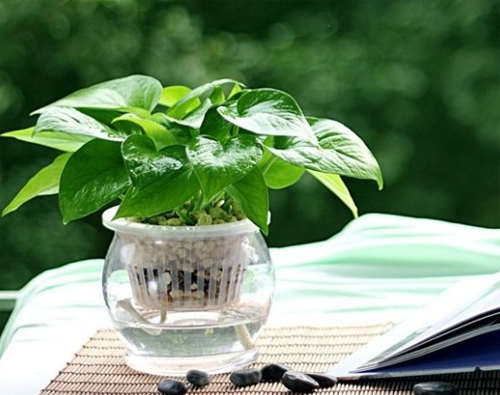
Growing methods and precautions for pothos:
1. For growing pothos indoors at home, use loose, well-drained soil for potting, and pothos does well in slightly acidic soil.
2. Temperature: The suitable temperature for growing pothos is 20 to 30 degrees; it must not go below 15 degrees at the lowest, and around 10 degrees it will freeze to death. Of course, most homes have growing temperature conditions suitable for pothos; you just need to pay attention to keeping it warm in winter. If the climate is too cold, you can keep pothos warm by opening windows less.
3. Light: Because pothos originally grows in dark primeval forests and is naturally shade-loving, its light requirements are not strong. Therefore, when growing pothos, usually just place it indoors where it can see sunlight; you can also take it into the sun at noon for a short while so it can carry out photosynthesis better, then put it back indoors. Although pothos is very shade-tolerant, it is not good to leave it in a dark place for a long time; at least about every half month it should be exposed to strong light.
4. Water: When growing pothos, do not water too much; at most just spray water at its roots. As long as the soil is kept moist. If water accumulates, it will breed mosquitoes and insects, seriously affecting the growth and ornamental effect of pothos. In summer, water appropriately more; the principle is to keep the potting soil moist but not waterlogged. In winter, watering should be restrained, once every two or three days is enough. When indoor heating is on, water appropriately more; when the indoor temperature is too low, be careful to reduce watering. When you cannot water, you can spray water on the leaves to cool it down.
5. Fertilizer: For fertilizing pothos, ordinary inorganic fertilizers are hard to absorb, so special fertilizer must be used, such as Beida Huhuashen and Japan's Hana Ichiban. Because pothos growth slows in winter, fertilizer should be applied less, while during the growing season fertilizer can be appropriately increased. When fertilizing, spraying liquid fertilizer can be the main method.
The difference between growing pothos and growing other plants is that because it has aerial roots at its stem nodes, it is very easy to keep alive, and propagation is generally done by cuttings. It grows fastest especially between 15°C and 25°C.
What causes pothos leaves to turn yellow?
1. Improper watering: Both too much and too little watering can cause water-yellowing in pothos. If the leaf surface is dull yellow and lusterless, and newly grown tips shrink and stop growing, it may be too much watering; while if leaf tips or edges wither and dry out, new leaves grow normally, but old leaves turn yellow and fall off, then it is insufficient watering.
2. Sunlight: Pothos likes shade. Strong light will cause the leaf tips and leaf edges to wither, and yellow spots will appear on the sun-facing part of the leaves. Conversely, if placed in a dark environment for a long time, the leaves cannot get enough sunlight and cannot form chlorophyll, which will also cause pothos leaves to turn yellow, so light must be supplemented in time.
3. Fertilizer yellowing: Applying too much fertilizer or too high a concentration when growing pothos, or even when fertilizer is not lacking, can all cause pothos leaves to turn yellow. When too much fertilizer is applied, the pothos leaf surface is thick and lusterless, and the leaf surface looks unrelaxed, with old leaves turning yellow and falling off; this can be reduced by flushing. When fertilizer is lacking, the leaf color becomes lighter, appearing pale green or yellow, and fertilizer should be supplemented in time; in severe cases, the potting soil should be changed.
Solutions for yellowing pothos leaves:
The solution for yellowing pothos leaves should be adjusted according to the cause of the yellowing. Because pothos can be propagated by cuttings, each root node has a leaf bud, and just taking one node for planting can grow. So when the leaves of a grown pothos turn yellow severely, you can remove the rotten roots, pick off the yellow leaves, and replant cuttings. Note that when growing in water, the water should be changed to fresh water. You can also cut off vine sections whose leaves have not yet turned yellow and replant them. During planting and inserting, bury two to three nodes; for water culture it is likewise two to three nodes, and the water should be changed once within three or four days (boiled cold water is best). Just after planting cuttings, they must not be exposed to direct strong light; place them in a position with weaker light, and in about 20 days the newly planted pothos will take root and grow.
Keeping pothos alive is relatively easy, but keeping pothos looking good is not easy. When growing pothos, be sure to look at the methods above.
The Most Complete Guide to Growing Pothos and Precautions_ Growing Pothos in Water and Precautions
Pothos, a large evergreen climbing plant, is a flower suitable for indoor placement. To help the many potted plant growing enthusiasts solve the problem of how to grow pothos, below we have compiled the most complete guide to growing pothos and precautions for growing it. Welcome to read!
Growing methods for pothos
The growing methods and precautions for pothos should mainly be analyzed and done well from the following 5 aspects. As long as the requirements of the following 5 aspects are met, you will definitely grow very good pothos.
1. For growing pothos indoors at home, use loose, well-drained soil for potting, and pothos does well in slightly acidic soil.
2. Temperature: The suitable temperature for growing pothos is 20 to 30 degrees; it must not go below 15 degrees at the lowest, and around 10 degrees it will freeze to death. Of course, most homes have growing temperature conditions suitable for pothos; you just need to pay attention to keeping it warm in winter. If the climate is too cold, you can keep pothos warm by opening windows less.
3. Light: Because pothos originally grows in dark primeval forests and is naturally shade-loving, its light requirements are not strong. Therefore, when growing pothos, usually just place it indoors where it can see sunlight; you can also take it into the sun at noon for a short while so it can carry out photosynthesis better, then put it back indoors. Although pothos is very shade-tolerant, it is not good to leave it in a dark place for a long time; at least about every half month it should be exposed to strong light.
4. Water: When growing pothos, do not water too much; at most just spray water at its roots. As long as the soil is kept moist. If water accumulates, it will breed mosquitoes and insects, seriously affecting the growth and ornamental effect of pothos. In summer, water appropriately more; the principle is to keep the potting soil moist but not waterlogged. In winter, watering should be restrained, once every two or three days is enough. When indoor heating is on, water appropriately more; when the indoor temperature is too low, be careful to reduce watering. When you cannot water, you can spray water on the leaves to cool it down.
5. Fertilizer: For fertilizing pothos, ordinary inorganic fertilizers are hard to absorb, so special fertilizer must be used, such as Beida Huhuashen and Japan's Hana Ichiban. Because pothos growth slows in winter, fertilizer should be applied less, while during the growing season fertilizer can be appropriately increased. When fertilizing, spraying liquid fertilizer can be the main method.
The difference between growing pothos and growing other plants is that because it has aerial roots at its stem nodes, it is very easy to keep alive, and propagation is generally done by cuttings. It grows fastest especially between 15°C and 25°C. The growing methods and precautions for pothos summarized here are all very practical. Growing some pothos at home adds beauty and purifies the air, so isn't that killing two birds with one stone?
Precautions for growing pothos
In the growing methods for pothos, special attention should be paid to temperature, because pothos is native to the Indonesian archipelago and likes warmth, so it is easier to grow in a milder temperature environment. For potted pothos, choose fertile, loose, well-drained leaf mold soil, preferably slightly acidic. In this way, potted plants can be grown more successfully. Pothos is a good helper for purifying the air and can absorb benzene, trichloroethylene, formaldehyde and so on from the air. In a newly renovated room, choosing pothos is simply ideal.
Propagation methods for pothos
Pothos propagation can use cuttings and stem burial, that is, in late spring and early summer select a robust pothos vine, cut a branch 15 cm to 30 cm long, remove the leaves from the basal 1 to 2 nodes (do not damage the aerial roots), then insert it into the growing pot soil. After burying the soil well and watering, first place it in a shaded place. After that, for a period, spray water on the leaf surface every day or cover it with plastic film to keep moisture. The room temperature must not be lower than 20°C, and the survival rate is generally above 90%.
Common problems and solutions in growing pothos:
1. Causes of pothos leaves turning yellow
Many friends have discovered pothos leaves turning yellow while growing pothos indoors. So why do pothos leaves turn yellow, and what should be done when pothos leaves turn yellow? Here the editor will analyze and provide the most practical solutions for everyone.
What to do when pothos leaves turn yellow
Main causes of pothos leaves turning yellow
Overall, when pothos leaves turn yellow, if it is water culture there are mostly bacteria in the water, while if it is soil culture the roots may be rotting. Relatively speaking, water-cultured pothos has a greater probability of yellow leaves than soil-cultured pothos. The specific factors for pothos leaves turning yellow are mainly three aspects: improper watering, unbalanced light, and incorrect fertilizing. Below the editor analyzes in detail the situations of the three major factors causing pothos leaves to turn yellow.
1) Improper watering: Both too much and too little watering can cause water-yellowing in pothos. If the leaf surface is dull yellow and lusterless, and newly grown tips shrink and stop growing, it may be too much watering; while if leaf tips or edges wither and dry out, new leaves grow normally, but old leaves turn yellow and fall off, then it is insufficient watering.
2) Sunlight: Pothos likes shade. Strong light will cause the leaf tips and leaf edges to wither, and yellow spots will appear on the sun-facing part of the leaves. Conversely, if placed in a dark environment for a long time, the leaves cannot get enough sunlight and cannot form chlorophyll, which will also cause pothos leaves to turn yellow, so light must be supplemented in time.
3) Fertilizer yellowing: Applying too much fertilizer or too high a concentration when growing pothos, or even when fertilizer is not lacking, can all cause pothos leaves to turn yellow. When too much fertilizer is applied, the pothos leaf surface is thick and lusterless, and the leaf surface looks unrelaxed, with old leaves turning yellow and falling off; this can be reduced by flushing. When fertilizer is lacking, the leaf color becomes lighter, appearing pale green or yellow, and fertilizer should be supplemented in time; in severe cases, the potting soil should be changed.
2. Solutions for pothos leaves turning yellow
The solution for yellowing pothos leaves should be adjusted according to the cause of the yellowing. Because pothos can be propagated by cuttings, each root node has a leaf bud, and just taking one node for planting can grow. So when the leaves of a grown pothos turn yellow severely, you can remove the rotten roots, pick off the yellow leaves, and replant cuttings. Note that when growing in water, the water should be changed to fresh water. You can also cut off vine sections whose leaves have not yet turned yellow and replant them. During planting and inserting, bury two to three nodes; for water culture it is likewise two to three nodes, and the water should be changed once within three or four days (boiled cold water is best). Just after planting cuttings, they must not be exposed to direct strong light; place them in a position with weaker light, and in about 20 days the newly planted pothos will take root and grow.
Growing methods and precautions for water-cultured pothos
1. First, choose the stems of the pothos well. Healthy, strong stems with aerial roots are the good choice for water culture. After such stems with aerial roots are cut and placed in clean water, they can quickly adapt to the water culture environment, and in about ten days they can grow water roots. Note that the part of the stem placed in water must not have leaves, otherwise leaves soaking in water can easily affect water quality.
2. In the first few days of water-cultured pothos, pay attention to changing the water, once every two or three days with water at the same room temperature. After water roots grow, change the water once a week. After new leaves grow, add nutrient solution once about every ten days, and you can also spray some diluted nutrient solution water on the leaves, which can make the leaves green and glossy.
3. Water-cultured pothos needs sufficient scattered light for the leaves to spread out and the leaf color to be green. Usually it is best to place it where there is enough scattered light. If the environment prevents it and it is too dark, you can move it about every ten days to a place with enough scattered light to receive several hours of light, which can also maintain the glossiness of the leaf color.
4. The root system of water-cultured pothos should be cleaned and trimmed often. If the roots are too long, cut them short in time to avoid loss of nutrients.
5. Pothos itself likes a warm, humid environment. In dry seasons, often spray water on the leaves, which increases environmental humidity and also cleans the leaves. In winter, the placement location should be away from heating, and attention should be paid to preventing cold damage. Water-cultured leaves are delicate and very sensitive to temperature changes, so try to keep room temperature normal and do not allow large temperature differences.
Precautions:
1. The water for water-cultured pothos is a very key part. Tap water, well water, clean river water and so on can be used, but the water should be left to stand for one or two days before use.
2. Water-cultured pothos should have its water changed once every 2-3 days, with simple nutrients added. Pothos has high ornamental value. Its vines droop naturally, and it can both purify the air and make full use of space, adding lively lines and bright colors to a dull cabinet surface.
What are the benefits of growing pothos?
Placing pothos in the bathroom can absorb odors very well
Growing pothos at home has many benefits, mainly reflected in ornamental value, removing odors, and absorbing harmful gases such as formaldehyde.
First, pothos has good ornamental qualities because its leaves are delicate and beautiful and its stems are slender and soft. It can also add vitality and energy to a room, making it a very good indoor plant decoration. Besides ornamental and environmental beautification benefits, pothos is also good at absorbing indoor formaldehyde. Its vines droop naturally, and it can effectively purify the air while also absorbing most harmful gases such as formaldehyde and benzene indoors.
In addition, pothos also has the title of odor absorber. Because pothos has well-developed aerial roots, it has a strong ability to absorb odors such as cooking fumes and detergents produced in family life. Many families place grown pothos in the bathroom to purify the air.
Besides the above benefits, growing it can also effectively enhance the interests and personal qualities of family members, thereby bringing more harmonious enjoyment to family life.
About the pothos pot
Growing methods and precautions for large-leaf pothos
Growing methods and precautions for large-leaf pothos - selection and treatment of cuttings
For cuttings, choose healthy, pest-free, semi-lignified branches, cut them into 10-13 cm lengths, cut the lower incision at a slant, keep 2-3 leaves at the upper end, and cut the leaves in half to reduce water evaporation and help the cuttings survive.
(This article comes from a website, for more please visitGrowing methods and precautions for large-leaf pothos
Growing methods and precautions for large-leaf pothos - cutting medium
The cutting medium requires loose, breathable, well-drained loam or sandy soil rich in humus; vermiculite is best, as it roots quickly and has a high survival rate. Before inserting, disinfect the soil well with 2% formalin or 5% potassium permanganate.
(This article comes from a website, for more please visitGrowing methods and precautions for large-leaf pothos
Growing methods and precautions for large-leaf pothos - cutting method
Quickly dip the lower end of the prepared cutting in ABT rooting powder or indolebutyric acid, then insert it into the previously prepared medium, with 1/2 of it entering the soil. Water thoroughly so the cutting makes close contact with the medium, then cover with plastic film.
(This article comes from a website, for more please visitGrowing methods and precautions for large-leaf pothos
Growing methods and precautions for large-leaf pothos - post-cutting management
(1) After cutting, pay attention to keeping the soil moist and the air temperature relatively high. Soil moisture around 50% is suitable, while air humidity is best at 80%-90%.
(2) In the early stage of cutting, keep the shade shed shading degree at about 80%. This can prevent direct strong light while ensuring enough scattered light, so as to help leafy cuttings carry out photosynthesis and favor rooting.
(3) Through the above treatment, roots generally form after 20 days, and the film can be removed to increase light. At the same time, on sunny summer days still pay attention to leaf spraying and shading, and in winter pay attention to cold protection. About 10 days after rooting, they can be moved into pots for normal management.
(This article comes from a website, for more please visitGrowing methods and precautions for large-leaf pothos
Growing methods and precautions for large-leaf pothos - temperature
In the north, pothos can safely overwinter when room temperature is above 10°C, and can grow normally when room temperature is above 20°C. Generally, households have no big problem reaching this temperature. What needs attention is avoiding excessive temperature differences, and also making sure the leaves do not get close to heating equipment.
(This article comes from a website, for more please visitGrowing methods and precautions for large-leaf pothos
Growing methods and precautions for large-leaf pothos - humidity
This refers to the water content of the air in the plant's growing environment. Under the condition of ensuring normal temperature, increasing humidity is extremely beneficial to plant growth.
The following methods can be used to increase humidity. Place the plant near a humidifier; the humidifier should be on for more than 5 hours a day, so the plant can enjoy the mist sprayed by the humidifier. Use a sprayer adjusted to the mist setting to spray water on the plant's leaves, stems, and aerial roots several times a day. Keep an appropriate amount of water in the flower pot tray, and through its evaporation increase the local humidity around the plant. Use a cold wet towel or toilet paper to gently wipe the leaf surface or gently apply it to the leaf surface for a short time (1-2 hours per day). Cover the plant with transparent plastic film to create a small greenhouse effect, supplementing the plant's moisture through evaporation of water vapor from the soil, for no more than 2 hours per day; too long will affect the plant's ventilation and photosynthesis.
Growing methods and precautions for large-leaf pothos
Growing methods and precautions for large-leaf pothos - water
The amount of watering in autumn and winter should be strictly controlled according to room temperature. Before heating, the temperature is lower, the plant's soil evaporates more slowly, and watering should be reduced, with the amount controlled at 1/4-1/2 of the original. Even after heating is turned on, watering must not be too frequent. When watering, pour less into the pot, and water should seep through the coir. In addition, water should also be sprayed at the places where aerial roots grow on the coir column, to reduce insufficient root water absorption caused by too-rapid evaporation. For winter watering, water left to stand for one day is better; water that is too cold easily damages the roots. When growing in water, the amount of water must not be too much; just submerge the roots. Too much water easily rots stems and leaves.
Growing methods and precautions for large-leaf pothos
Growing methods and precautions for large-leaf pothos - soil
In winter, it can grow well under bright scattered light indoors, with sturdy stem nodes and brilliant leaf color. During the growth period, it has relatively high water requirements. Besides normally replenishing water to the pot soil, also often spray water on the leaf surface. For column-vine cultivation, also spray more water on the coir column so the coir fully absorbs water for the aerial roots winding around the stem to absorb. Apply a nitrogen-phosphorus-potassium compound fertilizer once every 2 weeks or spray a 0.2% potassium dihydrogen phosphate solution weekly, to make the leaves green and the markings more vivid.
Pothos likes moisture. During the growing season, watering should keep the potting soil moist regularly; never let the potting soil dry out, otherwise it easily causes yellow leaves and poor plant shape. If too much watering causes water accumulation in the pot, it easily causes root rot and withered leaves, especially when winter room temperature is low, so be even more careful to control watering. In summer, while watering fully, also pay attention to often spraying water on the leaf surface. In winter, when the climate is dry, also spray and wash the leaves once every 4-5 days with warm water, washing away dust on the leaf surface to help keep the leaves bright and green.
(This article comes from a website, for more please visitGrowing methods and precautions for large-leaf pothos
Growing methods and precautions for large-leaf pothos - fertilizing
In the autumn and winter seasons in the north, plants mostly grow slowly or even stop growing, so fertilizing should be reduced. Before winter begins, mainly water or spray liquid inorganic fertilizer, about once every 15 days. After winter begins, fertilizing is mainly by leaf spraying, mainly through the stomata on the leaf surface, which absorb fertilizer, so the fertilizer effect can act directly on the leaf surface. Leaf fertilizer should use special fertilizer; ordinary inorganic fertilizer is not easily absorbed by the leaf surface. The Beida Huhuashen series and Japan-produced Hana Ichiban can all be used as leaf fertilizer.
Growing methods and precautions for large-leaf pothos
Growing methods and precautions for pothos: propagation of pothos
Pothos propagation can use cuttings and stem burial, that is, in late spring and early summer select a robust pothos vine, cut a branch 15 cm to 30 cm long, remove the leaves from the basal 1 to 2 nodes (do not damage the aerial roots), then insert it into the growing pot soil. After burying the soil well and watering, first place it in a shaded place. After that, for a period, spray water on the leaf surface every day or cover it with plastic film to keep moisture. The room temperature must not be lower than 20°C, and the survival rate is generally above 90%.
What are the growing methods and precautions for pothos?
Growing methods and precautions for pothos: soil culture
To grow flowers well, soil is very important. One important reason many flower lovers cannot grow flowers well and keep having them die is soil. So when growing spider plant, if conditions allow, it is recommended to use nutrient soil, or your own soil with good water permeability. Having said that about soil, next let's talk about the growing environment and watering. From pothos's habits we can also see that pothos is shade-tolerant but avoids direct sunlight, so when choosing the growing environment, a ventilated place with scattered light is best. Watering is a very interesting thing, and many flower lovers cannot get it right. Here it should be said that different soil, different pots, and different regions all have different watering amounts and frequencies. Flower lovers should mainly judge whether to water from the soil's moisture; a little dry is not scary, but do not have water accumulation every day.
(This article comes from a website, for more please visitWhat are the growing methods and precautions for pothos?
Growing methods and precautions for pothos: water culture
Actually water culture has two types: one is pure water culture, and the other is filling a pot or teacup with vermiculite and then filling it with water. Of these two, the vermiculite one is relatively simpler. There is no special trick; the main thing is the environment, which can refer to soil culture. As for watering and so on, that no longer exists, and flower lovers can water freely.
(This article comes from a website, for more please visitWhat are the growing methods and precautions for pothos?
Growing methods and precautions for pothos: temperature
The suitable temperature for growing pothos is 20 to 30 degrees; it must not go below 15 degrees at the lowest, and around 10 degrees it will freeze to death. Of course, most homes have growing temperature conditions suitable for pothos; you just need to pay attention to keeping it warm in winter. If the climate is too cold, you can keep pothos warm by opening windows less.
(This article comes from a website, for more please visitWhat are the growing methods and precautions for pothos?
Growing methods and precautions for pothos: light
Because pothos originally grows in dark primeval forests and is naturally shade-loving, its light requirements are not strong. Therefore, when growing pothos, usually just place it indoors where it can see sunlight; you can also take it into the sun at noon for a short while so it can carry out photosynthesis better, then put it back indoors. Although pothos is very shade-tolerant, it is not good to leave it in a dark place for a long time; at least about every half month it should be exposed to strong light.
(This article comes from a website, for more please visitWhat are the growing methods and precautions for pothos?
Growing methods and precautions for pothos: water
When growing pothos, do not water too much; at most just spray water at its roots. As long as the soil is kept moist. If water accumulates, it will breed mosquitoes and insects, seriously affecting the growth and ornamental effect of pothos. In summer, water appropriately more; the principle is to keep the potting soil moist but not waterlogged. In winter, watering should be restrained, once every two or three days is enough. When indoor heating is on, water appropriately more; when the indoor temperature is too low, be careful to reduce watering. When you cannot water, you can spray water on the leaves to cool it down.
(This article comes from a website, for more please visitWhat are the growing methods and precautions for pothos?
Growing methods and precautions for pothos: fertilizer
For fertilizing pothos (Epipremnum aureum), ordinary inorganic fertilizers are difficult for it to absorb, so you need to choose a dedicated fertilizer, such as Beida Huhuashen and Japan's Hana Ichiban. And because pothos grows more slowly in winter, you should fertilize less, while during the pothos growing season you can appropriately increase fertilization; when fertilizing, you can mainly use sprayed liquid fertilizer.
(This article comes from a website, for more please visitWhat are the methods and precautions for growing pothos?
The editor also recommends
The benefits of pothos: a detailed look at the four major benefits of pothos
The reasons pothos leaves turn yellow and the solutions
How to grow pothos: how to grow pothos well