Reasons and Solutions for Split, Yellowing Leaves and No Flowers in Bird of Paradise
Bird of paradise looks extremely beautiful, just like a cute little animal, but problems can arise during cultivation, such as yellowing and splitting leaves, and failure to bloom. So what should be done? Let's take a look with Women's Net:
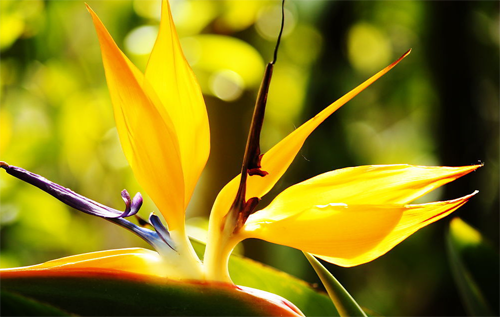
What to do when bird of paradise leaves split?
Leaves splitting along the veins may be related to strong wind. Bird of paradise is rather delicate: it loves light yet fears it (it cannot be exposed to the sun in summer), and it loves water yet dreads it (its fleshy roots rot most easily). In tropical Africa, bird of paradise relies on hummingbirds to pollinate its flowers. In China, hand pollination is required. Much cultivation experience shows that for potted bird of paradise, the best soil is a nutrient soil mixed from leaf mold, river sand, dried manure and peanut shells. The pH value should be controlled between 5.5-6.5; strongly alkaline or strongly acidic soil is unsuitable. In summer, use black netting for shade, and move it indoors in winter to protect it from the cold.
What to do when bird of paradise leaves turn yellow?
1. Root development is affected, causing water uptake to be blocked and resulting in yellow leaves, such as from overwatering or over-concentrated fertilizer.
2. Nutrient deficiency. Failing to repot for a long time or not fertilizing in time will leave the plant deficient and turning yellow, with symptoms first appearing on the old leaves.
3. Alkaline soil. Bird of paradise prefers slightly acidic soil with a pH of 5.5—6.5; in alkaline soil the leaves yellow, with symptoms mainly showing on the newly grown leaves.
4. Scorching sun in summer. Bird of paradise dislikes fierce sun; when light is too intense the leaves turn yellow. As long as you identify the cause of the yellow leaves and take corresponding measures, you can make the leaves of bird of paradise grow a vivid green.
Reasons bird of paradise does not bloom:
1. Nutrient imbalance: if the plant grows too vigorously, consider reducing the amount of nitrogen fertilizer and increasing phosphorus and potassium fertilizer, such as watering with fully decomposed dilute chicken or duck manure water, or using a 0.2% potassium dihydrogen phosphate solution.
2. Pot too large: the pot for planting bird of paradise must not be too large, otherwise a large amount of nutrients is used for root growth, forming a huge fleshy root mass in the pot, which also affects flower bud differentiation and normal flowering of the bird of paradise plant. For this reason, consider planting in a slightly smaller pot, which may promote flowering.
3. Planted too deep: for potted bird of paradise, if planted too deep with too much of the root crown buried, flower bud differentiation will likewise be affected. For this reason, when you change the pot in late autumn this year or next spring, simply earth up to the root crown, as long as the fleshy roots can be buried in fertile potting soil.
The problems encountered during the cultivation of bird of paradise are introduced here. Bird of paradise rather likes sunlight, so it must not be kept in a dark, damp place.
How to Identify True and False Bird of Paradise Varieties; Bird of Paradise Cultivation Methods and Precautions
Many people do not know why bird of paradise was given such a name. Actually, just seeing the blooming bird of paradise makes it clear. The flower shape of bird of paradise is very unique and also very beautiful, with high ornamental value, and its market prospects are currently quite considerable. However, there are always some unscrupulous merchants who pass off other varieties as inferior substitutes.
How to identify true and false bird of paradise varieties
Mastering some basic growth characteristics of bird of paradise allows you to distinguish true from false. The following points are for everyone's reference.
1. Stem
Bird of paradise has no stem.
2. Leaves
Oblong-lanceolate, 25-45 cm long, about 10 cm wide, apex acute, base rounded or wedge-shaped, lower margin wavy; petiole slender.
3. Flowers
Solitary or several borne on one peduncle, subtended by a spathe; spathe boat-shaped, up to 20 cm long, green, with purple-red edges, sepals lanceolate, 7.5-10 cm long, orange-yellow, arrow-shaped petals with ear-like lobes at the base, nearly as long as the sepals, dark blue; stamens as long as the petals; anthers narrowly linear, style protruding, stigma 3-lobed.
Bird of Paradise Cultivation Methods and Precautions
I. Bird of Paradise Cultivation Methods
1. Temperature
Bird of paradise is not cold-tolerant; its most suitable growth temperature is 15-25°C, and it stops growing below 8°C.
2. Light
Bird of paradise likes light; insufficient light easily leads to poor plant growth and affects flowering, so attention must be paid to light.
3. Pruning
To improve flower bud quality, promptly remove old leaves, diseased leaves and useless flower and fruit branches.
4. Watering
Bird of paradise fears waterlogging; during summer growth and the autumn-winter flowering period water should be sufficient, while after flowering in early spring watering should be appropriately reduced.
In summer, water once a day, and in the morning and evening use a spray bottle to spray clear water on the leaf surfaces and the surrounding ground to increase air humidity. In winter, reduce watering and keep the soil slightly dry. If you let it continue growing, then watering should be more and frequent.
5. Fertilizing
Bird of paradise likes fertilizer; an appropriate amount of phosphorus and potassium fertilizer should be added to the soil, and during the growing season, a liquid fertilizer of active humic acid should be applied about every 2 weeks.
II. Precautions for Cultivating Bird of Paradise
1. Different light in different seasons
In spring and autumn, the pot should be placed in a sunny spot for cultivation, while in winter it should receive more sunlight, otherwise it will directly affect leaf growth and flower color. But in summer, because the sunlight is too strong, the plant should be placed under a shade shelter for care, to prevent the leaves from being scorched by the fierce sun and affecting their ornamental value.
2. Repot frequently
Bird of paradise is a large potted ornamental flower with fast growth and well-developed roots; generally seedlings should be repotted and given fresh soil once a year, while once the plant has formed it should be repotted and given fresh soil once every 2-3 years, with division carried out in spring.
What propagation methods does bird of paradise have?
1. Division propagation method
Division propagation is usually best carried out from April to June. When propagating, select robust adult plants that have more than 5-6 growing root tiller buds and no pests or diseases. You can use the method of retaining the mother plant or the method of not retaining the mother plant.
Plant the divisions in well-ventilated, nutrient-rich, slightly acidic sandy loam, or in a specialized cultivation substrate; at the same time note that planting should not be too deep. The root crown of the leaf cluster must be exposed above the ground, but the fleshy roots must not be exposed above the ground. After planting, water thoroughly immediately, then protect with a shade net for a few days; only after the seedlings begin to sprout new leaves can they be transferred to normal management.
2. Seed propagation method
The seeds need to be soaked in water for 4-5 days at a water temperature of 15°C. After they have fully absorbed water, sow them in a clay pot or a hard plastic tray, with the substrate temperature preferably at 18-22°C. Cover the container with glass to avoid rodent damage. Spray water to maintain moisture, and seedlings can emerge in about 20 days; provide shade. When the seedlings grow to 5-7 cm, they can be transplanted into earthen pots.
What to do when bird of paradise leaves turn yellow and split
1. Root damage
Discomfort in other parts of the bird of paradise will be reflected in its leaves; if the roots are damaged, it will affect the roots' absorption of nutrients and water, causing the leaves to turn yellow. So once the roots are damaged, get ready to repot the bird of paradise!
2. Nutrient deficiency
The soil in the pot has too few nutrients, and the bird of paradise lacks the nutrients necessary for growth, so the leaves turn yellow. Fertilize the bird of paradise in time, and remember to apply light fertilizer frequently; better to take a little more trouble than to apply too much fertilizer at once!
3. Unsuitable soil pH
It is very likely that the soil is alkaline, and the new leaves grown by the bird of paradise are very prone to turning yellow. This can be solved by adjusting the soil pH, or by directly repotting the bird of paradise.
4. Scorching sun exposure
Although bird of paradise likes light, it dislikes fierce sun, so in summer it must never be exposed to scorching sun, otherwise the leaves of the bird of paradise will turn yellow under the fierce sun. Therefore, the bird of paradise should be placed in a shaded spot to receive diffused light.
It is actually not difficult to identify bird of paradise; once you have mastered its basic growth characteristics, you can still tell it apart with careful observation. We hope the above methods can help everyone identify the correct variety and jointly expose unscrupulous merchants.
Bird of Paradise Strelitzia reginae Bird of Paradise Illustrated Guide: How to Grow Bird of Paradise / How to Propagate Bird of Paradise
Bird of Paradise ProfileBird of Paradise Strelitzia reginae
Bird of Paradise Cultivation Methods and Precautions; Introduction to Bird of Paradise
Bird of paradise is native to southern Africa. It likes a warm, humid climate and fears frost and snow. It is a light-loving plant; in winter it needs plenty of sunlight, and in summer when the light is strong it needs slight shading. The soil should be loose, fertile and well-drained. Its wintering temperature is 5°C. It is commonly propagated by sowing and division. Seed-grown plants flower after 4-5 years of cultivation. Its leaves are large and graceful, and its flower shape is peculiar. Potted bird of paradise is suitable for decorating conference rooms and halls, giving a fresh and elegant feel. Planted in the ground in southern courtyards, it adds much natural charm.
The scientific name of bird of paradise is Strelitzia reginae, and its scientific name was chosen to commemorate Queen Charlotte, wife of King George III of England. It is an ornamental plant of the genus Strelitzia in the family Strelitziaceae. The genus Strelitzia has 5 species in total, native to southern Africa, and it is the city flower of Los Angeles, USA. The leaves of this genus are blue-green, upright, leathery, oblong, and concave; the midrib is red, reaching up to 1-1.5 m (3-5 ft) tall, emerging from the underground stem. The flowers of Strelitzia mostly have long peduncles, are orange-yellow or light blue, with 2 upright and pointed petals and 5 stamens; outside there is a boat-shaped spathe, green, with red edges. Strelitzia has a yellow-flowered variety. Bird of paradise can grow up to 2 m tall, with large and sturdy leaves, 25-70 cm long and 10-30 cm wide, with petioles up to 1 m long. The leaves are evergreen and arranged in two rows, forming a fan shape. The flowers grow at the ends of long stems. The spadix is hard and like a bird's beak, and because it is perpendicular to the stem, it resembles a bird's head. It is strong enough to support sunbirds that feed on nectar on the flowers. The flower has three bright orange sepals and three purple-blue petals. Two of the petals are united, forming an arrow-like nectar tube. When a sunbird sits on it to feed on nectar, the petals open and press pollen onto the bird's feet.
Morphological Characteristics of Bird of Paradise
Perennial evergreen herbaceous plant, about 1.5 m tall. It has thick fleshy roots underground, the stem is inconspicuous, and the leaves are large, resembling those of canna. From the extremely short above-ground stem disc, they emerge in an imbricate opposite arrangement, with long petioles, leathery, entire. The flower stem is terminal or borne in leaf axils, higher than the leaves, the spathe-like involucre is purple with a dark red tinge at the margin, 6-8 flowers emerge beyond the bract and open in sequence, the perianth is sky blue, the outer sepals are orange-yellow, and the flower shape is peculiar, like a crane stretching its neck to gaze into the distance. It blooms in autumn and winter, with a flowering period lasting more than 100 days.
It has thick fleshy roots underground, as well as rhizomes. The above-ground stem is inconspicuous. The leaves appear basal, with long petioles, elliptical, opposite, arranged in two ranks, dark in color, rather hard in texture, with straight parallel veins. The flowers emerge from the leaf cluster, the peduncle is long and sturdy, the inflorescence is a lateral spike, with a purple involucre outside, containing 6-10 small flowers, and the outer petals are orange-yellow.
Ecological Habits of Bird of Paradise
Native to South Africa, it requires warm winters, cool and humid summers, and climatic conditions with a large day-night temperature difference; it is not cold-tolerant and fears frost. The suitable growth temperature is 13°C-24°C, but it has a fairly wide temperature tolerance and can withstand temperatures of 0°C-40°C, and in winter it must not go below 5°C. It likes light; during the growing period, apart from slight shading in summer, it should be given sufficient light, as continuous cloudy days affect leaf growth and the posture and color of the flowers. The underground fleshy roots can store water, so it has fairly strong drought resistance and fears waterlogging; it is not very strict about soil, and soil that is well-drained and rich in humus is best. Bird of paradise is an insect-pollinated plant; in its place of origin it relies on hummingbirds weighing only 2 grams for pollination, and in areas without hummingbirds it needs hand pollination to set seed. In its place of origin it blooms from early spring to summer, while in China it mostly blooms in autumn and winter.
It likes a warm, humid climate, requires sufficient sunlight, is not cold-tolerant, and fears frost and snow; in winter it requires no less than 5°C, grows at 18-24°C, needs to grow under a shade shelter in summer, and likes to grow in organic-rich clay soil. In the south it can be cultivated in the open ground, while in the Yangtze River basin it is cultivated in greenhouses or solar greenhouses. Suitable growth temperatures: 18-24°C from March to October, and 13-18°C from October to March of the following year. 20-22°C during the day and 10-13°C at night are even more favorable for growth. In winter the temperature must not be lower than 5°C. Bird of paradise is a light-loving plant. In summer when the light is strong, it should be shaded or placed under a shade shelter to grow. In winter it needs plenty of sunlight; if it grows too densely or there is insufficient sunlight, it directly affects leaf growth and flower color. Each single leaf takes 40-45 days from sprouting to full maturity. From the appearance of the flower bud to the formation of the flower bud (bud) takes 30-35 days. A single flower blooms for 13-15 days, and the entire inflorescence can be enjoyed for 21-25 days. There is a bird that grows in New Guinea and the Australia region called the "bird of paradise"; because this flower resembles the feathers of the bird of paradise, bird of paradise also has another name, Bird of Paradise Flower. The orange petals and blue pistil make up this magnificently colored flower. The flower shape is in the form of an acute angle. Just one bird of paradise is enough to make an entire bouquet look lifelike. Bird of paradise is a typical bird-pollinated plant; in its place of origin it relies on hummingbirds weighing only 2 grams for pollination, and generally requires hand pollination to set seed normally.
Distribution Region of Bird of Paradise
Native to southern Africa, now widely cultivated. Countries such as the United States, Germany, Italy, the Netherlands and the Philippines all produce bird of paradise abundantly. Since the 1990s, China has established production bases for bird of paradise seedlings and potted flowers in Guangdong, Fujian, Jiangsu and other places.
Variety Classification of Bird of Paradise
Common ornamental species in the same genus include:
White Bird of Paradise (S. nicolai), a large potted plant, clump-forming, with large leaves, petioles 1.5 m long, leaf blades 1 m long with a heart-shaped base, blooming in June-July, with large flowers, white sepals and light blue petals.
Leafless Bird of Paradise (S. parvifolia), about 1 m tall, with rod-shaped leaves, large flowers, orange-red sepals and purple petals. Kew Bird of Paradise (S. kewensis), a hybrid of white bird of paradise and bird of paradise, 1.5 m tall, with large leaves and long petioles, blooming in spring and summer, with large flowers, both sepals and petals light yellow with light purplish-red spots.
Caudate Bird of Paradise (S. candata), with pink sepals and white petals. Golden Bird of Paradise (S. golden), a precious variety newly discovered in 1989, 1.8 m tall, with large flowers, both sepals and petals yellow.
Others
1. White-flowered Bird of Paradise: a common species in the same genus. Flowers white, other traits the same as bird of paradise.
2. Small-leaved Bird of Paradise: a common species in the same genus. Leaves rod-shaped, flowers large, outer petals dark orange-red, inner petals purple.
3. Nicolai Bird of Paradise: a common species in the same genus. The plant is taller than bird of paradise, about 5 m. Leaves larger, leaf base heart-shaped, petioles also longer. Involucre reddish-brown, outer petals white, inner petals blue.
Propagation Methods of Bird of Paradise: Seed PropagationThe bird of paradise plant is pollinated in its place of origin by hummingbirds weighing only 2 g, and is a typical bird-pollinated plant. Under general cultivation conditions in China, hand pollination is required to set seed. For the seed-bearing mother plant, choose plants with an upright plant type, sturdy petioles, rounded-blunt leaf tips and broad, thick leaves. When the flower opens, use the middle finger of the left hand to support the underside of the united petals, and gently press the two wings of the petals with the thumb and index finger to separate them longitudinally from the center, exposing the wrapped anthers and pollen, then use a clean brush to apply the pollen onto the stigma at the tip; the entire stigma must be coated, and then press the petals together to secure the style. The first pollination is the key to success; if the stigma is coated evenly, fertilization of the ovules can basically be ensured. But to ensure pollination quality, before the stigma dries, supplement pollination 1-2 more times. Under normal circumstances, about 5 days after pollination, this flower gradually withers, and at the same time the second flower of the same inflorescence rises and opens; pollination can be carried out flower by flower in the above manner until all the flowers of the entire inflorescence have been pollinated. With hand pollination, the seeds mature in about 3 months, and after harvesting they should be sown immediately, otherwise the seeds very easily lose their vitality. Keep the temperature at about 25°C, and they will germinate in about 3-4 weeks. With hand pollination, it takes 80-100 days for the seeds to mature. Mature seeds should be sown immediately, and the germination rate is high. Before sowing, soak the seeds in warm water for 4-5 days, then disinfect them in a 5% New Germine 1000-fold solution for 5 minutes; the suitable germination temperature is 25-30°C, and they germinate 15-20 days after sowing. If the sowing temperature is unstable, it will cause uneven germination or rotting and death of seedlings after germination. After the seeds germinate, small seedlings form in half a year, and they can only flower after 4-5 years of cultivation when they have 9-10 mature leaves.Division PropagationCarry it out when repotting in early spring; lift the plant out of the pot, split it from the gaps in the rhizome with a sharp knife, and coat the wounds with plant ash to prevent rot. For pot cultivation, each division should have no fewer than 8-10 leaves. For greenhouse or solar greenhouse cultivation, each division should have no fewer than 5-6 leaves; after planting, place it in a semi-shaded spot for care, and it can flower in autumn or winter of the same year. It sprouts many lateral buds, which is favorable for division; when planting, note that it should be planted appropriately shallowly, so that the root crown of the plant is slightly above the potting soil. In this way lateral buds can emerge every year; let them grow to no fewer than four leaves, and then in the hot, humid months of June and July division can be carried out. When dividing, after tipping the whole plant out of the pot, first rinse off the old soil with tap water, and once the direction of the root system can be clearly distinguished, cut carefully; each group of fleshy roots should carry a certain number of leaves and 2-3 new buds, and the new plant should have no fewer than three roots. For those with fewer than four leaves per plant, several plants can be cut together rather than being cut separately into individual plants, otherwise they are not easy to survive. For the plants after cutting, whether new plants or old plants, if the roots are too long when potting, they can be appropriately shortened. Coat the cut surfaces with plant ash or sulfur powder, let them dry in a cool place for half a day, then plant them directly into the "three-mix soil" suitable for potted bird of paradise, water thoroughly and place in semi-shade. After that, do not water unless dry, and water thoroughly when watering. After about 45 days, fertilizer and water management can proceed as normal. With this division method, the old plant's flowering in the same year is not affected, and the new plant can flower the following year. Tissue culture propagation can also be used. Use petioles or shortened stems as explants, rinse with 70% alcohol for 5 minutes, then disinfect in a 0.3% mercuric chloride solution for 15 minutes, and finally rinse with sterile distilled water. Use MS liquid medium as the culture medium, adding indolebutyric acid 2.5 mg/L, naphthaleneacetic acid 1.0 mg/L, kinetin 5 mg/L, and 2,4-D 0.5 mg/L. The explants can also be terminal buds, inflorescence axes and stem nodes. Bird of paradise is a scarce and precious cut flower on the market. Division is the best propagation method for bird of paradise. The mother plant should be selected from robust adult plants with many tillers, neat leaves and no pests or diseases. For mother plants to be dug up whole for division, generally choose plants that have grown for more than 3 years, have more than 4 buds and a total leaf count of no fewer than 16. For those to be used for potting after division, choose plants with more rooted tiller seedlings. Whether planted in a greenhouse or field seedlings used for potting, the suitable time is May-June. The method of not retaining the mother plant means digging up the whole plant for division. This method is suitable when field-planted seedlings are too dense and thinning is needed. Dig up the whole clump from the soil (carrying as many roots as possible), and once the root system and the gaps between buds can be clearly distinguished, reasonably choose the cutting entry point according to plant size while ensuring each small division has 2-3 buds, and use a sharp knife to divide the mother plant into 2-3 clumps from the gaps in the rhizome. The cuts should be dipped in plant ash and dried in a ventilated place for 3-5 hours; overly long roots can be appropriately shortened, and then they can be planted. During division, note that the new plant should have no fewer than 3 roots and a total leaf count of no fewer than 8-10, and generally needs 2-3 buds. If the root system is too small or there are too few lateral buds, several plants can be combined for planting.
The method of retaining the mother plant. When field-planted seedlings are growing too vigorously and there is no need for thinning, the mother plant need not be dug up; directly split the plants at the side of the mother plant into several clumps in the field with a sharp knife (method as above). If potting is needed, only a few well-grown side plants should be separated from the mother plant for planting. For already potted, lush plants, division propagation can be carried out in conjunction with repotting.
Propagation notes:
I. Seed propagation
Bird of paradise is a bird-pollinated plant and generally requires hand pollination to set seed normally; after hand pollination the seeds mature in 80-100 days. After the seeds mature they should be sown immediately; before sowing, soak the seeds in warm water for 4-5 days, then disinfect in a 5% New Germine 1000-fold solution for 5 minutes. After sowing the seeds, they need to be covered with soil to a thickness twice that of the seeds; if the soil cover is too thick, the seeds are difficult to germinate; if too thin, the roots will be exposed and the survival rate will not be high. During germination keep the temperature at 25-30°C, and they can germinate in 15-20 days. If the sowing temperature is unstable, it will cause uneven germination or rotting and death of seedlings after germination. After the seeds germinate, small seedlings form in half a year, and they can only flower after 4-5 years of cultivation when they have 9-10 mature leaves.
II. Division propagation
1. Selection of the mother plant: the mother plant should be selected from robust adult plants with many tillers, neat leaves and no pests or diseases. For mother plants to be dug up whole for division, generally choose plants that have grown for more than 3 years, have more than 4 buds and a total leaf count of no fewer than 16. For those to be used for potting after division, choose plants with more rooted tiller seedlings.
2. Division time: whether planted in a greenhouse or field seedlings used for potting, the suitable time is May-June.
3. Division method: (1) The method of not retaining the mother plant, that is, digging up the whole plant for division. This method is suitable when field-planted seedlings are too dense and thinning is needed. Dig up the whole clump from the soil (carrying as many roots as possible), and once the root system and the gaps between buds can be clearly distinguished, reasonably choose the cutting entry point according to plant size while ensuring each small division has 2-3 buds, and use a sharp knife to divide the mother plant into 2-3 clumps from the gaps in the rhizome. The cuts should be dipped in plant ash and dried in a ventilated place for 3-5 hours; overly long roots can be appropriately shortened, and then they can be planted. During division, note that the new plant should have no fewer than 3 roots and a total leaf count of no fewer than 8-10, and generally needs 2-3 buds. If the root system is too small or there are too few lateral buds, several plants can be combined for planting.
(2) The method of retaining the mother plant. When field-planted seedlings are growing too vigorously and there is no need for thinning, the mother plant need not be dug up; directly split the plants at the side of the mother plant into several clumps in the field with a sharp knife (method as above). If potting is needed, only a few well-grown side plants should be separated from the mother plant for planting. For already potted, lush plants, division propagation can be carried out in conjunction with repotting.
Sowing and Raising Seedlings of Bird of Paradise
The seeds of bird of paradise can be sown in any season, but in terms of genetic characteristics, the germination rate of the seeds is generally about 50%, and the suitable germination temperature is 25-30°C. After the seeds are sown in spots, the radicle begins to grow after 20-25 days, and after another 35-40 days the leaves emerge from the soil.First stageSeed pretreatment. Remove the colored fuzz on the seeds (easily removed with a thumbnail), soak the seeds in warm water for 1-2 days, changing the water twice a day, to promote germination.Second stageSowing. Spread the moist medium in a container. Press the seeds into the container to a depth of about 0.7 cm, cover moderately, and place in a warm spot at 24-30°C. Keep moist and avoid drying out completely. The container must be covered with plastic film to help maintain humidity.Third stageCare after the seeds emerge. Maintain sufficient light, avoid overwatering and strong light. Increase ventilation, try to water in the morning and let it dry by evening. Transplant and raise the seedlings at the two-leaf stage; transplant the seedlings into 5 cm peat plug trays, and move them into 10 cm trays when the roots grow out of the holes. You can also sow the seeds directly into plug trays, and when the plant's root system fills the plug tray, transplant into a larger container.Transplanting/PottingWhen the seedlings are 30-40 cm tall and have about 8 leaves, they can be planted in place. When transplanting, damage to the fleshy roots must be prevented. The planting depth should be such that the rhizome is buried 2-3 cm below the soil surface. Planting too shallow easily damages new buds; planting too deep affects bud sprouting and flower bud differentiation. After planting, water thoroughly, and then for about two consecutive weeks, persist in spraying water on the leaves every day to help the plant recover its growth. For potting use a mixed soil of garden soil, peat and sand; it must have good drainage, and it is best to use a sterilized mixed soil. Soilless media can also be used.Light RegulationBird of paradise needs no fewer than 4 hours of direct light every day, and ideally bright light all day. Take some protective measures when the sunlight is strong. In winter, the main flowering period, sufficient sunlight helps increase flower production. Light regulation emphasizes the management principle of "not shady in winter, not scorching in summer." When the plant is shaded, the leaves look more beautiful, but the number of flowers will be relatively fewer.Temperature ControlTemperature management of bird of paradise is of great significance for flower production. Usually bird of paradise's growth is hindered above 40°C, it suffers frost damage below 0°C, and it grows well within the range of 18-30°C. It is best to ensure a nighttime temperature (13-18°C) and a daytime temperature (31-35°C). Within the suitable temperature range, flower buds can form in the leaf axil of every leaf of bird of paradise. Therefore, controlling the cultivation temperature well is the key to increasing bird of paradise production.Fertilizer and Water ManagementEnsure a sufficient and regular water supply. Except from September to February when the plant needs to stay dry, at other times the soil should be kept constantly moist. Using a well-drained medium is the key to cultivation management. Bird of paradise fears waterlogging at the cultivation site, because its fleshy roots can tolerate drought but fear flooding. The growth of bird of paradise requires fertile, slightly acidic soil and heavy fertilizer. It can be planted in sandy soil rich in humus, or a mixture of one part each of coarse sand, leaf mold, peat and garden soil mixed evenly. If the soil is rather poor, put decomposed fertilizer or slow-release fertilizer into the hole when planting. After planting, apply a topdressing once every 7-10 days, using 0.05 kg of compound fertilizer per sq m; after entering the flowering age, in the 2 months before the flower production season, supplement with a soil application of 0.02% potassium dihydrogen phosphate once a month, or halve it for foliar topdressing.
Cultivation Techniques of Bird of Paradise
Because bird of paradise has well-developed fleshy roots and grows fast, the preparation of the potting soil is very important; it must have good permeability, otherwise the roots rot easily. The potting soil can be prepared as follows: mix 2 parts garden soil, 1 part peat soil or leaf mold, and 1 part coarse sand; or mix 1 part garden soil, 2 parts peat soil, 3 parts compost soil, and 1 part coarse sand. During the seedling stage it is best to repot once a year, and for flowering adult plants, repot once every 2-3 years depending on growth. During the growing period, mainly apply organic liquid fertilizer, supplemented with compound fertilizer or potassium dihydrogen phosphate (0.2% concentration), until the flower buds appear. Stop fertilizing during the flowering period. The location should be well-ventilated, otherwise it easily breeds scale insects. Around Frost's Descent, move it into a greenhouse, and the room temperature should preferably be controlled at 10-24°C. After hand pollination, the ovary swells very quickly; if fertilization is good, every flower can form a fruit, every inflorescence can form multiple fruits, and every fruit has from several to several dozen seeds. Well-developed, mature seeds are the size of peas, with a hard seed coat, shiny black-brown, plump, and with golden yellow umbilical fuzz. Mature seeds are best sown promptly, and they emerge quickly and evenly. For sowing, choose plain sandy soil or plain sandy soil with 1/3 peat soil added. Soak the potting soil thoroughly with water, and when there is no water on the soil surface, evenly sow the seeds in spots at a spacing of about 2 cm in a shallow pot, then cover with soil, with the principle that the soil cover thickness does not exceed twice that of the seeds. Place the sowing pot in a damp, semi-shaded spot; to keep the soil moist, the pot surface can be covered with a piece of glass or plastic film. The temperature should preferably be 25°C, and generally they sprout in about 30 days. After the seedlings emerge, move the pot to a bright spot, and at the same time remove the cover so that the seedlings can receive light and grow robustly. When the seedlings grow to 5-7 cm, they should be pricked out, transplanted into another pot at a spacing of 5 cm, and when they grow to 10-15 cm, plant one plant per pot. Generally, seed-grown plants, if cultivated properly, can flower in 3 years. Temperature, light, water and soil have a direct relationship with the growth and development of bird of paradise. In winter the temperature should be kept between 10-25°C, and not lower than 8°C. Below 8°C it stops growing, and when the temperature drops below 4°C, although the plant can endure it for a short time, the formed flower buds easily wither and die. Generally move it into the greenhouse before Cold Dew, and move it outdoors after Grain Rain. It is not demanding about humidity. Because the roots store a certain amount of water, the amount of watering should be determined according to seasonal changes, the needs of growth and development, and the soil moisture. Light has a direct relationship with growth and development. In autumn, winter and spring it needs sufficient light, while in summer it needs shading. The soil is required to have good permeability and the best drainage and water retention performance; block peat soil can be chosen, and attention should be paid to timely fertilizing and preventing and controlling pests and diseases.Basic requirements:Water: requires humid air and well-drained soil. Fertilizer: likes fertilizer. During the growing period, apply liquid fertilizer once every 15 days. Soil: requires loose, fertile loam. Temperature: likes warmth, is not cold-tolerant, and in winter must not go below 5°C. Light: fears strong sunlight and scorching in summer, while in winter it needs sufficient sunlight and good air circulation. For potted bird of paradise, use loose, fertile potting soil, leaf mold plus a small amount of coarse sand, and place many coarse tiles at the bottom of the pot to facilitate drainage, which is beneficial to the growth and development of the fleshy roots. When planting, it should not be too deep, with the fleshy roots not visible as the standard, otherwise it affects the sprouting of new buds. During the summer growing period and the autumn-winter flowering period, sufficient water is needed, and after flowering in early spring, the amount of watering should be appropriately reduced. During the growing period, fertilize once every half month, and especially fertilize in time when new leaves grow, because more new leaves mean more flower branches. When the flower stem has formed up to the full flowering period, apply phosphorus fertilizer 2-3 times. After the flowers fade, if there is no need to keep seeds, the flower stem should be cut off immediately to reduce nutrient consumption. In winter, remove broken leaves and dead leaves, so that it can bloom continuously every year. Formed bird of paradise should be repotted once every 2-3 years. Cultivation managementBird of paradise likes a warm, humid environment with sufficient sunlight and good ventilation, and requires loose, humus-rich, well-drained sandy soil. Bird of paradise is not cold-tolerant; its most suitable growth temperature is 15-25°C, and it stops growing below 8°C. In winter, when the temperature is not lower than 4°C, it can be placed in a spot facing south with its back to the north and with light, watered appropriately less, and overwintered in the open ground. In the north, the flowers should be moved indoors or into a plastic greenhouse to overwinter. 1) Water and fertilizer regulation: bird of paradise fears waterlogging. During summer growth and the autumn-winter flowering period water should be sufficient, while after flowering in early spring watering should be appropriately reduced. In summer, generally water once a day, and in the morning and evening use a spray bottle to spray clear water on the leaf surfaces and the surrounding ground to increase air humidity. In winter, reduce watering and keep the soil slightly dry. If you let it continue growing, then watering should be more and frequent. Bird of paradise likes fertilizer; an appropriate amount of phosphorus and potassium should be added to the soil, and during the growing season, a liquid fertilizer of active humic acid should be applied about every 2 weeks. In autumn and winter, mainly use phosphorus and potassium fertilizer; applying potassium dihydrogen phosphate diluted with water to the roots can make the plant grow sturdy and the flowers numerous and large. 2) Pay attention to light: bird of paradise likes light; insufficient light easily leads to poor plant growth and affects flowering, so attention must be paid to light. In spring and autumn, the pot should be placed in a sunny spot for cultivation, while in winter it should receive more sunlight, otherwise it will directly affect leaf growth and flower color. But in summer, because the sunlight is too strong, the plant should be placed under a shade shelter for care, to prevent the leaves from being scorched by the fierce sun and affecting their ornamental value. 3) Repotting and changing soil: bird of paradise is a large potted ornamental flower with fast growth and well-developed roots; generally seedlings should be repotted and given fresh soil once a year, while once the plant has formed it should be repotted and given fresh soil once every 2-3 years, with division carried out in spring. 4) Pruning: to improve flower bud quality, promptly remove old leaves, diseased leaves and useless flower and fruit branches. 5) Pest and disease control: the main pests and diseases of bird of paradise include gray mold, damping-off, cottony cushion scale and heart-boring borers. Scale insects mostly occur in hot seasons; during the larval hatching period, spray with a 40% omethoate 1000-fold solution for control. Heart-boring borers mainly bore into and feed on tender shoots and flower buds, causing great damage. During the larval stage, spray with a 40% omethoate 800-fold solution once a week for 2-3 consecutive sprays. In low-temperature, high-humidity environments or when plants are too dense and ventilation is poor, gray mold and damping-off easily occur. For control methods, pay attention to ventilation in the greenhouse; on sunny days generally ventilate from 10 a.m. to 4 p.m., and on cloudy days pay attention to keeping warm and shortening the ventilation time; in the early stage of disease, use 0.5% potassium permanganate or 50% carbendazim for control.
Disease Control of Bird of Paradise
Pests and diseases: bird of paradise is susceptible to root rot, gray mold and bacterial damping-off; before sowing, the seeds need to be soaked in warm water and the soil disinfected. The control method for gray mold is: spray the plant with water as little as possible, apply more potassium fertilizer, and ensure a well-ventilated environment; in the early stage of disease, spray with a 75% chlorothalonil wettable powder 500-fold solution once every 10 days, for a total of 2-3 applications. For the control of bacterial damping-off, attention must be paid to soil disinfection; when planting, the spacing between plants should not be too small, planting should not be too deep, old leaves should be cut off in time, ventilation and nutrient management should be strengthened, and the growth vigor of the plant should be increased. After diseased plants are found, pull them out immediately and carry out local soil disinfection. During the growing period, spray validamycin regularly to achieve early control. It is susceptible to pests such as mealybugs, red spider mites and scale insects, all of which can be controlled with insecticides. Pests and diseases must be controlled very carefully, otherwise the leaves become rough and look very old. When cultivated in a greenhouse or indoors, if the air is not circulating, scale insect damage easily occurs, and it can be killed by spraying with a 40% dimethoate emulsifiable concentrate 1000-fold solution. In summer high temperatures, the leaf margins of bird of paradise often show yellowing; most of this is a physiological disease caused by dry air, and a few are damage from leaf spot disease, which can be controlled by spraying with a 65% zineb wettable powder 600-fold solution. Bird of paradise is susceptible to root rot; pay attention to soil disinfection and control watering, and after disease occurs, remove the rotten roots and burn them, and sprinkle lime in the hole for disinfection.
Before bird of paradise leaves the nursery, ventilation should be strengthened so that the plants undergo hardening, to avoid potted flowers being affected in growth and flowering after sale due to not adapting to the environment, and yellow leaves and diseased leaves should be removed. Its cut flowers are generally harvested when the first small flower is in bud or fully open; cut flowers for storage and transport can be cut before the flower buds show color. The harvested cut flower peduncles are required to reach more than 70 cm. After harvesting and water treatment, they can be stored dry for one month at 7-8°C. If long-distance transport is needed, after soaking the cut flowers in water they should be transported dry in a moisture-retaining box at a temperature of 7-8°C; below 7°C easily causes low-temperature injury. During storage, cut flowers are sensitive to gray mold and need to be sprayed with a fungicide for protection before storage and transport.
Common diseases include damping-off and red rust; the former easily occurs when drainage is poor and the plant is large. Digging drainage ditches before planting in place can prevent it; the latter easily occurs in the plum rain season, and after disease occurs, diseased leaves should be removed in time to avoid infection. The main pests include the striped stem borer, scarab beetles and scale insects, which can be controlled with the corresponding pesticides.
Uses and Purposes of the Bird of Paradise
The bird of paradise, also known as the bird of paradise flower or the paradise bird flower, is a plant whose poetic name alone makes it easy to imagine its nobility and elegance. The bird of paradise is native to South Africa and was introduced to the United Kingdom in 1973. The British were immediately drawn to its dignified, generous, gorgeous yet charming bearing upon first sight, calling it an indescribable flower. In China, the bird of paradise is also a rare and precious flower. Its blooms are extremely delicate and brilliant: the pistil is sky blue, the sepals surrounding the pistil are a brilliant orange-yellow, and the bract supporting it from below is a blue-green edged with purple. The entire flower shape opens amid rich, upright green leaves, much like a crane raising its head and gazing into the distance.
The bird of paradise is highly adaptable and easy to cultivate, making it an ornamental flower of economic value. Potted bird of paradise plants placed in hotels, reception halls and large conference venues convey a sense of freshness and elegance. In the south, they can be planted in clumps in courtyard corners or used to accent the center of flower beds, with equally excellent landscape effects. They are also an important cut flower.
The leaves of the bird of paradise resemble those of the canna, and the entire flower shape looks like a crane with spread wings and an outstretched neck gazing into the distance. With its brilliant colors, unusual form and long flowering period, it is one of the most popular fresh cut flowers in the world today and has very high ornamental value. In South Africa it is regarded by Black people as a symbol of "freedom, good fortune and happiness." Planted in clumps in a corner of the courtyard or as an accent in a flower bed, it adds greatly to natural charm. If a plant in full bloom in a pot is placed in a living room, meeting room or bedroom, it will give you a wonderful illusion of a crane flying in.
Cut Flower Measures for the Bird of Paradise: Site Selection and PlantingFor planting the bird of paradise, choose a sandy loam with relatively ample sunlight, good soil drainage and aeration, deep soil layers, high organic matter content and a pH value of 6 to 7. The planting time is generally April to May or September to October. Before planting, dig the holes well and apply enough base fertilizer, with a plant spacing of 1 m x 1 m, and water thoroughly after planting to settle the roots. During the recovery period after planting, provide the plants with appropriate shade.Water and Fertilizer ManagementLarge bird of paradise plants have thick, fleshy roots with a strong capacity to store water and regulate the plant's water supply and demand, so they do not need to be watered every day. In summer, generally water 3 to 4 times per week, and in winter 2 to 3 times per week. Each watering should be thorough. Large bird of paradise plants can grow and bloom all year round and have a relatively high fertilizer requirement, so more organic fertilizers such as cake fertilizer and livestock manure should be applied, with 30 to 50 kg of organic fertilizer applied per clump per year. In chemical fertilizer application, attention should be paid to scientifically formulating according to the soil's available nitrogen, phosphorus and potassium content, and to adjusting the amount of fertilizer according to the peak and off seasons for flower production. Trials have shown that vigorously growing plants have a relatively high nitrogen requirement, and their cut flowers also have a higher commercial flower rate and first-grade flower rate. The application rate of compound fertilizer is 100 g per clump per month, but it should be appropriately increased or decreased according to market demand for cut flowers and changes in flower prices, with the principle of improving the output-to-input ratio. Generally speaking, summer is the off season for cut flower consumption, and market flower prices are relatively low, so measures should be taken to reduce the amount of fertilizer applied, control summer cut flower production and also save production costs. Foliar spraying of boric acid and monopotassium phosphate has a certain effect on improving cut flower quality.Summer ShadingIn the southern subtropical region, using shade netting to shade bird of paradise plants in summer can reduce exposure of the plants and leaves to intense sunlight and high temperatures and prevent sunburn, keeping the plants growing well. Shading the plants in summer will significantly reduce the first-grade flower rate of the cut flowers produced. Because summer market flower prices are low, at only about 20% of those in peak demand season, summer cut flower production should be controlled and the amount brought to market reduced to protect the plants through the summer smoothly, thereby increasing the yield and quality of cut flowers in the peak demand season of winter and spring. From the perspective of annual economic returns, the gains outweigh the losses.Building a Shed in WinterIn the southern part of this province, temperatures are relatively low from December to March of the following year in winter and spring, and cold waves from the north often strike. Cut flower production of the bird of paradise is low, while market demand for cut flowers increases during this period and prices rise. Trials have shown that building film arch sheds in the field can significantly promote increased cut flower production, with small arch sheds having the best effect, increasing cut flower production by 300% compared with open-field cultivation. Moreover, simple film small arch sheds are easy to source materials for and easy to cover, have low cost, and are effective at keeping warmth and promoting flowering, making them suitable for the vast number of rural growers.
Related Questions About the Bird of Paradise
Why is it difficult for bird of paradise seeds to emerge? The reasons bird of paradise seeds fail to emerge may be: the seeds have lost their germination capacity, or are immature, or the seed soaking water temperature was too high, or management after sowing was improper, causing the seeds to mold or dry up. However, bird of paradise emergence is very uneven; some seeds can still emerge after half a year or even longer, so do not give up on them as soon as you see no emergence. Seeds introduced from outside generally lose water rather seriously, so before sowing it is best to soak them in 30 to 40°C water for 2 to 3 days, changing the water 1 to 2 times in between, so that the seeds absorb enough water and germination capacity is improved. For sowing, do not use heavy clay soil; choose a loose soil with good drainage, such as plain sand soil or plain sand soil mixed with one third peat soil. First soak the pot soil thoroughly with water and then take it out. When there is no water on the soil surface, sow the seeds evenly in a "shallow pot," covering with soil no more than twice the volume of the seeds. Before the seeds germinate they do not like strong light, so it is best to place them in a relatively humid semi-shaded spot. To keep the soil moist and increase temperature, a glass pane or plastic film can be placed over the sowing pot. A temperature of about 25°C is suitable. If the pot soil looks dry before germination, water by the "soaking method" or with a fine-rose watering can. Generally, seedlings will emerge successively in about 30 days. During the seedling germination process, if root seedlings are found exposed, bury them in the soil promptly; otherwise, over time they are likely to dry up and die. 2. How do you propagate the bird of paradise? The bird of paradise is mostly propagated by sowing and division. Its seeds are hard and black like peas, with orange-red fuzz attached to the tip. They need to be soaked in water at 15°C for 4 to 5 days. After fully absorbing water, sow them in clay pots or hard plastic trays, with the substrate temperature preferably reaching 18 to 22°C. Cover the container with glass to prevent mouse damage. Spray water to keep it warm, and seedlings will emerge in about 20 days; shade is required. When the seedlings grow to 5 to 7 cm, they can be transplanted into clay pots. A mixture of 4 parts garden soil, 3 parts orchid soil, 2 parts sandy soil and 1 part mountain soil is good. Water thoroughly. After July, apply dilute soybean cake fertilizer or 1% nutrient solution once every half month to aid growth, and monopotassium phosphate compound fertilizer can also be applied as a 1:250 solution. Begin controlling water in September to avoid excessive moisture. Throughout the growth process, avoid direct sunlight and excessive drought. In the same year, 4 to 5 leaves can be produced, with a height of about 20 cm. Repot and add soil every year; when 12 to 14 leaves have grown, the plant shifts from the seedling stage to the flowering stage.
Potted Cultivation Techniques for the Bird of Paradise 1. Potted Cultivation Techniques
The corresponding cultivation method should be adopted according to the size of the seedling. For 2- to 3-year-old seedlings grown from seed, they should first be planted in the ground for about two years, and after flower buds appear, planted into corresponding pots; this is beneficial for growth and increases the number of flower buds. If not planted in the ground, they can also first be planted in small pots and then, according to growth, changed into corresponding pots. When potting plants that have already flowered, before planting soak them in a rooting agent and then pot them. The potting soil should be rich in humus and well drained. They should be placed in full light all year; after being moved indoors or into a greenhouse in winter, sufficient light should be maintained. During the growth period, apply once every half month a watered solution of decomposed cake fertilizer, and from flower stalk formation to full bloom, apply 2 to 3 times superphosphate. After the flowers fade, promptly cut off the spent flowers to reduce nutrient consumption. Generally, change the potting soil once every two years.
Key Points for Potted Maintenance:
1. Choose a Suitable Growing Medium
Potted bird of paradise requires a loose, humus-rich soil as a growing medium, with an appropriate amount of phosphorus and potassium fertilizer or cake fertilizer added as base fertilizer. A certain proportion of coarse sand can be appropriately mixed into the growing medium to aid drainage. Because the bird of paradise has thick, fleshy roots, if soil aeration is poor, root rot is very likely. Generally, a mixture of 2 parts vegetable garden soil, 1 part leaf mold and 1 part coarse sand can be used, or 4 parts vegetable garden soil, 2 parts peat soil, 3 parts compost and 1 part coarse sandy soil.
2. Water and Fertilizer Should Be Appropriate
The bird of paradise fears drought and dislikes waterlogging, so watering should be determined by season, plant growth condition and the degree of soil dryness and moisture. During the summer growth period and the autumn and winter flowering period, sufficient water is needed; after early spring flowering, watering can be appropriately reduced. In summer, generally water once a day, and in the morning and evening spray clean water on the leaf surfaces and surrounding ground to increase air humidity. In rainy weather, pay attention to timely drainage. In winter, watering should be appropriately reduced, and it is better to keep the potting soil slightly dry. If it is to continue growing, then water somewhat more and more frequently. It likes fertilizer. In addition to adding an appropriate amount of phosphorus and potassium fertilizer to the potting soil as base fertilizer, during the growing season apply a dilute fertilizer about once every two weeks, and in autumn and winter focus on phosphorus and potassium fertilizers. This can make the plants grow robustly and produce more and larger flowers.
3. Regulate Light Well
The bird of paradise is a light-loving plant. If light is insufficient, the plants are prone to poor growth and will bloom less or not at all. Therefore, in spring and autumn they should be placed in a sunny spot for cultivation, and in winter they should receive even more sunlight. Maintenance under conditions of ample sunlight and a temperature of 23°C to 25°C can promote flower bud development. However, because summer sunlight is too intense, the plants must be placed under a shade shed for maintenance to prevent the leaves from being scorched by the blazing sun and affecting their ornamental value.
4. Pay Attention to Frost Protection
The bird of paradise is not cold-tolerant. Its most suitable growth temperature is 15°C to 25°C, and it stops growing below 8°C. In areas where the winter temperature is not below 4°C, it can be placed in a spot facing south with its back to the north and with sunlight, with watering appropriately reduced, and can overwinter in the open ground. In areas where the winter temperature is below 4°C, the plant needs to be moved indoors to overwinter.
5. Pay Attention to Repotting
The bird of paradise is a large potted ornamental flower. It grows rapidly and has a well-developed root system, so generally during the seedling stage it should be repotted and have its soil changed once a year. After the plant has matured, it should be repotted once every 2 to 3 years and divided. If not divided, choose a relatively deep and large pot (to favor root development), and place a layer of broken tiles at the bottom of the pot to aid drainage and base fertilizer application.
2. Field Planting TechniquesThis is mainly for cut flower production in greenhouses.
1. Planting: Before planting, the soil should be disinfected and sufficient organic fertilizer applied. There are no strict requirements for soil pH value; it can adapt to acidic, neutral and even alkaline soils. The best planting period is late March to early June, but in greenhouses it can be done from March to November. Only the former is easier to manage after planting. The row spacing and plant spacing depend on the size of the greenhouse, generally 80 cm to 90 cm between rows and 50 cm to 60 cm between plants. If the plants are small, they will not flower within 2 to 3 years. To avoid wasting soil, they can first be planted densely at 3 to 4 plants per sq m, and transplanted after 3 to 4 years. When planting plants that have already flowered, the planting hole diameter should exceed 60 cm. Firm the soil after planting. If conditions permit, it is best to place the seedlings in a rooting agent for 1 hour before planting to aid rooting.
2. Water and Fertilizer Management: After planting, water thoroughly, then water once a day for the first week, and afterward water whenever the soil looks dry. The bird of paradise is extremely drought-tolerant, and generally will not dry up even without watering for 1 to 2 months. Under normal circumstances, in winter it is enough to water once every 7 to 10 days at noon, and in summer water 2 to 3 times per week, but excessive drying should also be prevented. During the growth period, topdress fertilizer promptly.
3. Temperature Management: To ensure a suitable growth temperature and a winter temperature not below 5°C, greenhouses should be covered from November to March. If one layer is not enough, 2 layers of plastic film can be used for covering, and in cold regions heating should be added. However, excessively high temperatures are also unacceptable. After temperatures rise in March, pay attention to ventilation at noon to prevent continuous high temperatures above 40°C from causing physiological disorders and flower bud death. Greenhouses can generally be dismantled in April to May, but in regions with abundant rainfall, to prevent excessively high soil moisture content, the upper part of the greenhouse can be left in place to block rain. However, the film on all sides should be completely removed to facilitate ventilation and cooling.
4. Light: The influence of light on the bird of paradise varies with climate conditions and plant age. The flowering period of the bird of paradise runs from autumn to early summer, but peaks in autumn and spring. Among these, environmental conditions such as sunshine and temperature have a significant effect on the flowering period. Light intensity in particular has a great influence on the number of flowers, how early or late the flowering period is, and how long it lasts. The stronger the light, the more favorable it is for growth and flowering, so cultivating the bird of paradise requires ample light, especially in winter.
Seedling Propagation Techniques for the Bird of Paradise
1) Propagation by sowing: Late March each year is the best season for sowing and raising seedlings. Before sowing, soak the seeds for 2 hours in 0.3% potassium permanganate or a 500-fold dilution of 50% carbendazim wettable powder, then soak the seeds in 40°C warm water for 3 days to effectively remove the waxy layer on the seed coat surface. For the seedling substrate, use peat, furnace slag and fertile soil in a 1:1:2 ratio as bed soil. Sow the seeds at 2.5 x 2.5 cm spacing, cover with 0.3 to 1.0 cm of soil, at a temperature of 25 to 30°C, air humidity of 60% to 70%, and light of 5000 to 10000 Lx. After emergence, gradually increase light. When the seedlings have grown to the two-leaf-one-heart stage, the first seedling separation and transplanting can be carried out, and the soil should first be disinfected, with a plant spacing of 10 x 10 cm. After transplanting, water thoroughly and prevent the transplanted seedlings from being exposed to the sun. Afterward, fertilize about once every 5 days until autumn, when the shade shed can be removed. Before frost, cover with film to keep warm for overwintering, and ensure more than 2 hours of ventilation at noon each day. After 2 years, the seedlings generally grow to about 50 cm with 8 to 10 leaves. At this time they should be planted out, with April to May being the best time. A two-stage planting method can be used: the first planting slightly denser, and after 1 to 2 years, transplant at a row spacing and plant spacing of 60 x 60 cm using a triangular arrangement. After transplanting, water thoroughly. Spray water on the leaves every day, with 0.2% monopotassium phosphate or 0.2% potassium permanganate added to the water. Transplanted sown seedlings generally begin flowering in 3 to 4 years. 2) Propagation by division: Division propagation is generally suitable from April to June. Select healthy mature plants with 5 to 6 or more root tiller buds and no pests or diseases. Division can use the method of retaining the mother plant or not retaining the mother plant. Plant the divisions in nutrient-rich, well-ventilated, slightly acidic sandy loam or a special cultivation substrate, and do not plant too deep. The crown of the leaf clump must be exposed above the ground, but the fleshy roots must not be exposed above the ground. After planting, water thoroughly immediately and protect with shade netting for a few days. Only after the plants begin to sprout new leaves can they be returned to normal management. 3) Artificial pollination: The bird of paradise relies on artificial pollination to obtain seeds. The method is: after the bird of paradise flower is in full bloom, gently separate the bright blue inner petals on both sides from the center, and use a small regular-script brush that has been disinfected with ethanol and dried to dip the matured pollen from the center and smear it onto the narrow, elongated stigma tip, pollinating two flowers per inflorescence. Then, after an interval of 2 to 3 days, repeat pollination once. The best pollination time is 8 to 10 in the morning. Cross-pollination or self-pollination can be used. The seed-setting rate of cross-pollination is higher than that of self-pollination, reaching more than 90%. After pollination, the seeds mature in 80 to 100 days. Each fruit can produce about 20 seeds. The seed collection period is best when the tip of the fruit shell has just begun to split. After collection, place the fruits in the sun to dry and thresh the seeds, and sow promptly after threshing.
Cultural Background of the Bird of Paradise
Origin of the Name
The bird of paradise, a fashionable flower full of the spirit of the times, was originally a wild flower produced at the Cape of Good Hope in southern Africa, and the local Black people regarded it as a symbol of "freedom, good fortune and happiness." But for a long time it remained obscure. In the 18th century, Queen Charlotte, beloved wife of King George II of England, liked this plant best. She thought its flower shape especially resembled a bird's crest and beak, and since her birthplace was originally called Bird of Paradise Village, she bestowed on this flower the name "bird of paradise" (later some also called it the paradise bird). From then on, this new star among flowers, named after an animal, became famous throughout the world. Chinese horticultural experts, however, felt its shape resembled a crane stretching its neck and gazing into the distance, so they specifically named it "crane-gazing orchid." In fact, it is not a true orchid, but a perennial herb belonging to the Strelitziaceae family. The plant grows up to 1 m tall, with a clumping habit, banana-like leaves, relatively long petioles arranged in a fan shape, and a rugged appearance. The flower stalk is drawn from the leaf axil, reaching fifty to sixty cm long. Its inflorescence consists of a boat-shaped bract, about the length of a palm, in the form of a spathe. When it blooms, the involucre is purplish red, the sepals orange-yellow, and the petals light blue; the entire flower shape is like a colorful bird gliding with spread wings. Its flowering period is very long, blooming continuously from autumn to spring, with each plant producing about twenty to thirty flowers per year; if kept fresh properly, they can be enjoyed for more than 10 days before fading.
Related Legends
Legend tells of a bird that lived in paradise, flying all its life and never able to perch. Its plumage was exceptionally bright and beautiful, and it never felt hungry in its entire life; occasionally when thirsty, it took in only moisture from the air. Yet it seemed as if God deliberately punished it: it had no wings and no feet, so it could only spread its long ornamental feathers and slowly, slowly float in the air, drifting everywhere like a dandelion seed, and it had to be so all its life. One day, it grew weary of the comfortable and peaceful life in paradise. It was convinced it no longer wanted to stay there. It deeply felt that such an unchanging life would eventually make its soul rot, so it decided to take the opportunity of a flock of wild birds migrating to escape to the human world. As it wished, it indeed mixed into the flock of wild birds and successfully escaped to the human world. On the way, its wild bird friends told it that the human world was a colorful world with high mountains, rivers, oceans, forests, deserts and cities. These places were so new and interesting to it that it decided to visit them one by one to broaden its knowledge. First it came to a valley full of all kinds of beautiful flowers, where lived a beautiful butterfly. It said to the butterfly, "How wonderful! Living among such colorful flowers, you must be very happy, right?" The butterfly said, "Perhaps it is so for you! But do you understand that butterflies are colorblind? I cannot even see my own appearance clearly!" At that moment, it only felt sorrow. Must beautiful things always carry some flaw? It suddenly remembered that it had no wings. Was that also a kind of flaw? It could not help feeling self-pity, and this feeling was one it had never had before. Next, it came to a river and saw a fish struggling to swim upstream to a waterfall. It was very surprised. This waterfall was not high at all; it only needed to wait for an updraft and could easily float up to the top of the waterfall, so why did the fish need to expend so much effort? It asked the fish, "Why not fly? That would be much easier." The fish told it, "I cannot fly! But I am not discouraged, because I know every living thing has its own way of life and its own destiny. I spend my whole life swimming, just as you must fly your whole life!" "Every living thing has its destiny!" it murmured, so that it could remember this sentence. Then, as if suddenly remembering something, it asked the fish again, "Tell me, do you have any flaws?" The fish answered, "Yes, I cannot distinguish smells!" This answer satisfied it, so very happily it set out on its journey again. Its third destination was a forest. It was a vast, verdant southern broadleaf forest located on a high mountain on an island country, reaching 2000 m above sea level. It happened to be spring, and many migratory birds were resting there for a while, but one bird particularly caught its attention. It heard a sound like "bu bu, bu bu, bu bu," as if a flute were being played poorly. It found this novel, so it asked "Passerine Bird A," "What bird is that?" Passerine Bird A said, "That is my younger brother! His call is terribly unpleasant, like someone blowing through a bamboo tube, so he is called the Tube Bird." Then Passerine Bird A showed off its voice, singing "cuckoo, cuckoo, cuckoo," and went off on its own. It disapproved, and plucking up courage, struck up a conversation with the Tube Bird: "Why do you sing like that?"
"Because I am happy!" the Tube Bird answered.
Happy? What kind of feeling was that? It asked the Tube Bird again, "What feeling is called happy?" The Tube Bird seemed very surprised by this question and asked in return, "You do not know what happy means? Where did you used to live?"
"In paradise!" it answered. "Oh, no wonder then. Life there is peaceful, and there is little chance for you to experience joy, anger, sorrow and happiness." The Tube Bird then added, "Being happy means that certain things make you very satisfied!"
"Certain things make me very satisfied?" it murmured again, and then suddenly remembered the words the fish had told it about having flaws, and at that time it had felt very satisfied. Mm, so this was the feeling of being happy! It thought so.
"Do you have any flaws?" it asked the Tube Bird again. "Yes, I cannot build nests!" the Tube Bird told it dejectedly.
Without a doubt, this answer made it very satisfied! It quietly felt this feeling. In paradise it did not need to build nests; the female bird usually laid eggs directly on its back, and then it was responsible for carrying their next generation. To outsiders, like the seahorse, it could be considered a competent new good man!
"The feeling of being happy is so good!" it silently said to itself. Leaving the forest, it began to float westward along the Tropic of Cancer. After floating for a long, long time, it saw a vast, boundless expanse of sand - that was its fourth destination, the desert.
When it first arrived, it was very surprised, because it could not find any other living creature that moved like itself, and it could not even find landmarks such as flowers, grasses, trees or rocks. At that time, it was extremely disappointed and could not figure out why its wild bird friends had mentioned this place to it. Fortunately, just then it saw a bright golden band, flashing with the luster of moonlight, sweeping across the sand.
"Hello!" it greeted politely. It understood how difficult it was to meet a friend in this wasteland, so it naturally felt warmly toward this small creature before its eyes.
"Hel... lo!" The snake seemed a little afraid of it. It asked the snake, "Why are you so nervous? I am your friend!" The snake said, "How do I know whether you will eat me?" It told the snake frankly, "I will not eat you. To be honest, I do not feel hungry at all! And look, I have no feet, and of course no claws."
The snake looked up, then said with relief, "Mm, it seems you really will not eat me!" "But it is really strange, how can you not need to eat? I usually have to spend six months sleeping to digest the prey I swallow!" the snake said on and on.
"How pitiful! Then you usually must have no time to play," it said in a sympathetic tone. "I do not need to play. But I have the power to decide whether other lives may play!" the snake said proudly. "Power? What is that?" it could not understand at all. The snake said, "It is an invisible force like God's that can control others."
It looked somewhat sad. God? Was that not the one who had taken away its wings and feet? Then it said to the snake, "I hate God, and I hate power!" Perhaps its hatred was too deep! It even began to hate the snake a little as well, and in order to escape this unnecessary hatred, it decided to leave this place as soon as possible. Before leaving, it remembered that question again: "Do you have any flaws?"
"Yes, I cannot experience emotions!" the snake answered helplessly. It felt the snake was truly pitiful. The emotion of pity was something it had learned from the butterfly. Although it vaguely felt that this feeling was best not had often, compared with the snake, it felt that being able to pity others was very fortunate. This time, the feeling of pity was far greater than satisfaction, so it did not feel happy.
What next? Where should it go? It thought so. There was too little moisture above the desert, making it especially easy to become thirsty. Remembering that during the gap in its conversation with the snake it had kept feeling dry-mouthed and hoarse, a very uncomfortable feeling. The east was better. So it floated back eastward again. It came to a city in a basin. This city rained often, and such humidity made it feel very satisfied. Only, the air here was simply awful. Compared with that vast desert, the dark mass of human heads below seemed far too crowded. Besides that, on the outside of those strangely towering buildings were attached glittering things that stung its eyes. But because it liked the humidity here, it felt it could tolerate such a tiny shortcoming.
Then it began to discover that in this city it could hardly find any higher-level living being with which it could discuss flaws and emotions, and those winged friends in the city were locked in tiny cages, lifeless. It found this strange. Was flying not the natural posture of birds? Why did people use such cages to domesticate its own kind? It could not understand no matter how hard it tried!
"Why not go outside and walk around?" it asked the escaped bird in the cage. "This is my world. I belong here," the escaped bird in the cage said on and on. "But your world is so small! Outside there are high mountains, rivers, forests and deserts, so many fun places waiting for you to discover!"
"I have traveled across various continents, and in the end my own home is the most comfortable." The caged bird stretched lazily. It simply could not believe this answer, because it clearly saw the envy in the caged bird's eyes that could not be hidden or restrained. It looked at the caged bird with pity and could not help thinking, "Alas, this companion before me has already had his mind and consciousness controlled by humans. Look at him: his gaze is sorrowfully meek, his voice is gently low, his wings are weak and powerless, his feathers are fluffy and lusterless, and he obediently submits. What is even more frightening is that he keeps saying he is very happy..." It was extremely disappointed in the caged bird, but it still forced down the disgust in its heart and asked the caged bird the same question: "Do you have any flaws in your heart?"
"Yes! I cannot find food for myself!" the caged bird said very honestly. Hearing such an answer, it remembered what the fish had told it: "Every life has its own way of life and its own destiny!" And the caged bird had abandoned the freedom bestowed by nature and chosen a life of ease. Who could say that was not a kind of happiness?
This time it asked itself this question: "Do you have any flaws?"
"Yes! Lacking wings, losing both feet and being unable to perch, these are all my flaws!" It finished listing its flaws in one breath. Then it developed a very strong desire - it wanted to stop and perch.
Because of this wish, it drifted over mountains and ranges, only to find a beautiful rock that could serve as its stepping stone. In the end, by a river seldom visited by people, it found a sapphire embedded in a large rock. The dazzling reflection reminded it of the glittering things attached to the buildings, and the natural blue reminded it of the sky and the sea. It remembered that the wild bird had urged it to visit the ocean, but the sea breeze was simply too strong, so that it could not stabilize its body and observe the sea properly.
"Then let this touch of blue replace the flaw of not seeing the sea!" After saying this, it tightly wrapped its two ornamental feathers around the rock. It truly perched; the wind could no longer blow it away. "I can finally have a good sleep!" It lowered its head and began to enter a deep sleep.
And so, this sleep lasted a full seven years - one third of its life. During these seven years, its ornamental feathers quietly turned into the roots and stems of a plant, and its feathers gradually transformed into brilliant petals. Next, its wings grew out, and it had feet as well.
It completely turned into a flower, a flower with orange petals and a blue pistil, shaped like a brightly winged bird of paradise soaring with spread wings. People called it - the bird of paradise flower.
On this day, it could not help asking itself again: "Do you still have any flaws?"
"Yes, I yearn for freedom!" It then added, "But it does not matter! Beautiful things always have flaws! Accept the flaws. In fact, why bother paying attention to flaws? The happiness we possess in life is already enough for us to cherish well." It told itself this.
The Flower Language of the Bird of Paradise
The flower language and symbolic meaning of the bird of paradise: passionate love, embracing each other, happiness and joy
The bird of paradise, also known as the bird of paradise flower or the paradise bird flower, is a plant whose poetic name alone makes it easy to imagine its nobility and elegance. The bird of paradise is native to South Africa and was introduced to the United Kingdom in 1973. The British were immediately drawn to its dignified, generous, gorgeous yet charming bearing upon first sight, calling it an indescribable flower. In China, the bird of paradise is also a rare and precious flower. Its blooms are extremely delicate and brilliant: the pistil is sky blue, the sepals surrounding the pistil are a brilliant orange-yellow, and the bract supporting it from below is a blue-green edged with purple. The entire flower shape opens amid rich, upright green leaves, much like a crane raising its head and gazing into the distance.
The flower language of the bird of paradise is for lovers in passionate love. The bird of paradise belongs to the genus Strelitzia in the Strelitziaceae family, with the scientific name Strelitzia reginae. The bird of paradise is also known as the paradise bird flower and the bird of paradise flower. Its flower language is passionate love and embracing each other, blessing those in love with happiness and joy. The bird of paradise flower shape is like a crane standing alone, raising its head and gazing into the distance, graceful in posture, with colors neither gaudy nor delicate, elegant and generous. The bird of paradise was originally an animal that loved freedom, and because its flower shape resembles a crane, the bird of paradise symbolizes people's yearning for freedom and happiness. The bird of paradise is a precious fresh cut flower. Not only is its flower shape unusual and wonderful, but its flowering period is also very long, reaching as long as two months. Whether placed in a vase in water or used as a material for flower arrangements, it is a top-grade choice.
1. Freedom, happiness, unrestrained elegance, a boy dressed up for love
2. No matter when, no matter where, never forget that the person you love is waiting for you 3. A bird that can fly to paradise, able to bring all kinds of emotions and longing to paradise 4. Friendship 5. Give you all happiness 6. Passionate love, embracing each other, blessing those in love with happiness and joy, the flower language of lovers in passionate love, the soul bestowed on every kind of flower. That is people's wishes or blessings. The bird of paradise - a bird from paradise - has many versions of its flower language. Some say it is a flower representing bitter love. I once read a novel in which two lovers could not be together forever, so after death one became a bird, crying and flying in the sky; the other became a bird of paradise on the ground, still unable to be together, only guarding and gazing at each other from afar. Perhaps this is its truest flower language as the bird of paradise. "Flying wing to wing with the one you love" is another flower language. From my heart I truly hope this is its only flower language. It is not because I like it that I hope it has a good flower language; it is just that I feel that many times beauty is accompanied by tragic beauty, and perfection always comes at a cost. The meeting of beauty with beauty is a rare luxury. In fact, no matter how many flower languages there are or what the meaning is, its most genuine intention lies in the heart of the person holding the flower: with what mood it is given, with what mood it is received. At the moment of transmission, its language is truly real. There is also another flower language: "a man who dresses up beautifully for love." Because no matter how much a man may usually neglect his appearance, once he falls in love, he will have the feeling of flying in paradise, and will dress up beautifully!
Bird of Paradise Pictures