What to Do When Aglaia odorata Drops Its Leaves? Detailed Guide to Growing Methods and Precautions
Aglaia odorata is now a potted plant that many people like in home life. Its leaves look nice and are very green, and the flowers are even a bit fragrant. What precautions are there in the process of growing Aglaia odorata? What should be done if leaf drop occurs during cultivation? Let's take a look together with Women's Network:
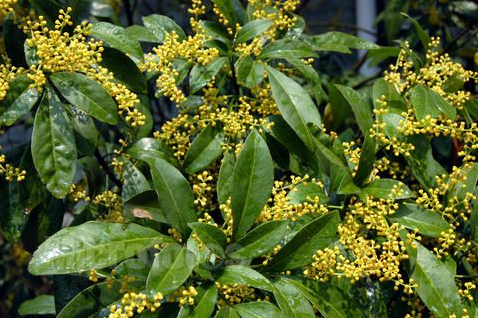
Growing methods for Aglaia odorata:
1. Fertilization tips: Generally, fertilizer should be applied once a month, mainly organic fertilizer and high-efficiency phosphorus-potassium fertilizer, and it is strictly forbidden to apply nitrogen fertilizer alone. Each time, apply 25-30 grams of composted and deodorized peanut cake fertilizer, rapeseed cake fertilizer, or tea seed cake fertilizer per pot, plus 15-20 grams of potassium dihydrogen phosphate or high-efficiency biological phosphorus-potassium fertilizer, mixed with 2-3 kg of clean water or composted and deodorized human and livestock manure water, then pour it on.
2. Watering tips: Keep the pot soil in a moist state all year round. Do not let it become dry and crack, but it also must not remain overly wet for a long time, otherwise it will cause root suffocation, root rot, and yellow leaves. Generally, water once a day with clean water in summer and autumn, and once every 2-3 days in winter and spring, so that the water can quickly penetrate into the pot soil and not accumulate on top of it. At the same time, frequently spray clean water on the branches and leaves, especially during periods of high summer heat and winter drought, evenly moistening all branches and leaves until water droplets begin to drip down, so as to keep the branches and leaves moist.
3. Pesticide spraying tips: Potted Aglaia odorata is quite seriously harmed by powdery mildew, leaf spot disease, anthracnose, red spider mites, scale insects, aphids, rust mites, and other diseases and pests, causing branches and leaves to turn yellow and die. Every 15-20 days, spray the leaves once with a clarified liquid made by soaking a mixture of 25-30 times dry, clean plant ash and superphosphate, or a 0.1% clarified lime water, for pollution-free control, so as to protect the branches and leaves and prevent various diseases and pests. Care of overwintering Aglaia odorata: Aglaia odorata is a flower that people love, but it is naturally heat-tolerant and afraid of cold.
Precautions for Aglaia odorata:
1. When Aglaia odorata is first potted, after watering thoroughly once, water sparingly within half a month to encourage new roots to grow.
2. For potted Aglaia odorata, generally repot and change the soil once every two years. Do not break up the old soil. Remove part of the old soil where there are no roots and cut off rotten roots. When adding new soil, appropriately add some phosphate fertilizer as base fertilizer, but not too much. After potting, place it in a cool place for care, and after about a week move it to a sunny place. Soil replacement is generally best done about one week after it is brought out in spring.
3. Aglaia odorata is afraid of cold, and overwintering is relatively difficult. When the temperature is below 12°C, it enters dormancy, so fertilization should stop and watering should be reduced.
4. When spring comes the next year, wait until the temperature is stable before bringing it out, so as to avoid the spring cold freezing the plant to death.
5. Newly purchased Aglaia odorata may easily drop leaves and wither because its growing environment differs from the indoor environment, such as due to temperature and light.
The flowering period of Aglaia odorata is from May to September, or it can bloom all year round. The fragrance is light and pleasant, making it a relatively good plant for decorating the home.
What should be done if Aglaia odorata drops leaves?
There are two main reasons for Aglaia odorata dropping leaves. One is too much water. Too much water prevents the root system of Aglaia odorata from breathing, and water cannot be conducted to the leaf surface, causing suffocation and root rot. When Aglaia odorata has too much water, the lower leaves first curl, dry up, turn brown, and fall off, which then causes the upper green leaves to also fall off within a short time.
The second is too little water. Long-term water shortage will cause the root system of Aglaia odorata to die. At this time, watering it thoroughly again will cause a large number of leaves to fall in a short time, leading to the death of the plant. Of course, there are also many other reasons such as improper fertilization, poor ventilation, and leaf drop due to freezing.
The growing methods for Aglaia odorata and ways to deal with leaf drop are introduced here. During cultivation, you only need to observe and pay attention carefully.
What to Do When Aglaia odorata Drops Its Leaves: Growing Methods and Precautions for Aglaia odorata
Aglaia odorata is a flower with a very beautiful name. It is an evergreen shrub or small tree, and its flower language is "With love, life will bloom." As long as we take careful care of it, it will grow. However, Aglaia odorata is a bit delicate, and it will drop leaves if you are not careful. Next, the editor will briefly introduce what to do when Aglaia odorata drops leaves, as well as its growing methods and precautions, as a reference for everyone growing Aglaia odorata.
I. What should be done if Aglaia odorata drops leaves?
There are many reasons why Aglaia odorata drops leaves. Only by finding the cause can the right remedy be applied. The following are several reasons why Aglaia odorata drops leaves and how to deal with them.
1. Improper watering, too much or too little
If watered too much, the roots of Aglaia odorata will rot, and the leaves will also be affected, showing leaf fall; if watered too little, water will be insufficient, yellow leaves will appear, and the leaves will also fall off.
Solution: Adhere to the principles of not watering until dry and "water only when dry and wet." Generally, water once every 2 days, and be sure to water thoroughly each time. In summer and autumn, water once a day; in winter and spring, water once every 2-3 days.
2. Improper fertilization, too much or too little
Too much fertilizer will damage the roots, and the leaves of Aglaia odorata will also fall after being affected; if fertilizer is insufficient, the leaves will not have enough nutrients and will also turn yellow and fall off.
Solution: Adhere to the principle of applying thin fertilizer frequently, fertilizing once a month. You can also add an appropriate amount of superphosphate to the fertilizer, so that Aglaia odorata will grow better.
3. Insufficient light
Aglaia odorata likes a warm, humid environment and plenty of sunlight. If it is placed in a dark environment to grow, insufficient light will affect growth, and the leaves will turn yellow and fall off.
Solution: Place Aglaia odorata under bright, indirect light for cultivation.
4. Impact of diseases and pests
Affected by leaf spot disease, scale insects, red spider mites, and other diseases and pests, the leaves of Aglaia odorata will wither, turn yellow, and fall off.
Solution: Spray pesticide regularly, carrying out disease and pest control every 15-20 days.
II. Growing methods and precautions for Aglaia odorata
1. Temperature
Aglaia odorata likes a warm and humid environment. The suitable growth temperature is 20°C~25°C, and its cold resistance is relatively weak. During winter overwintering, attention should be paid to moving it to an environment with a temperature not lower than 10°C.
2. Light
Aglaia odorata likes an environment with plenty of sunlight, especially bright, indirect light. In summer, when the sunlight is intense, it needs appropriate shading or should be moved indoors, avoiding direct sunlight; in winter, it should be exposed to more sunlight, ensuring 12 hours of sunlight per day.
3. Watering
Aglaia odorata likes a humid environment. Generally, water once every 2 days. When watering, adhere to the principles of "do not water until dry" and "water only when dry and wet." In summer, when water evaporates relatively quickly, it is necessary to frequently spray water on the leaves.
4. Soil
Aglaia odorata grows best in loose, fertile, slightly acidic soil. Therefore, during cultivation, the soil should be loosened frequently to keep it loose and draining smoothly, and fertilizer should be applied appropriately to maintain the acidity of the soil and the normal growth of Aglaia odorata.
5. Disease and pest control
Magnolia may suffer from leaf spot disease, sooty mold, and be affected by scale insects, red spider mites, aphids, and other diseases and pests, which will hinder growth, so disease and pest control must be carried out regularly. A clarified liquid can be produced by mixing plant ash with superphosphate and culturing it, then spraying it on the leaf surface once every 15-20 days, or specialized pesticides on the market can be purchased for spraying.
Aglaia odorata not only has ornamental value, but also edible value and medicinal value. It has many uses and is worth growing. However, if not cared for properly, Aglaia odorata will drop leaves. When growing it, everyone must ensure the temperature is not lower than 10°C, direct sunlight must not be allowed in summer, and the soil must be kept moist and fertile, with regular disease and pest control.
How to grow potted Aglaia odorata: Growing methods and precautions for Aglaia odorata / Sufficient light is required
Aglaia odorata is a highly ornamental flower, and it can be seen in many gardens in our country. Growing Aglaia odorata at home can also beautify the indoor environment. So how do you grow potted Aglaia odorata? What are the growing methods and precautions for Aglaia odorata? Below, the editor will take everyone to learn about it.
I. How to grow potted Aglaia odorata / Sufficient light is required
If you want to know how to grow potted Aglaia odorata, first we need to know its growth habits. Aglaia odorata is a plant that relatively likes light, so sufficient light must be maintained during cultivation. However, besides this, there are many other places that also need attention. Details are introduced in the growing methods and precautions for Aglaia odorata below. Let's continue reading.
II. Growing methods and precautions for Aglaia odorata
1. Soil requirements
When growing Aglaia odorata, the first step is to choose soil. Just as building a house requires laying a good foundation first, the choice of soil is a very important part. In terms of soil, we can choose relatively loose sandy soil. This kind of soil has good drainage and can be more conducive to Aglaia odorata absorbing nutrients.
2. Fertilization requirements
In the growing methods and precautions for Aglaia odorata, fertilizer is a very important nutrient and is indispensable for Aglaia odorata, because if you want the plant to grow luxuriantly, relying only on the nutrients in the soil is far from enough. In terms of fertilizer, we can choose cake fertilizer. However, before fertilizing, everyone should note that it must first be diluted with water, so that Aglaia odorata can absorb it better.
3. Temperature control
Aglaia odorata likes a warm environment and has little resistance to cold weather, so the temperature must not be too low during cultivation. It is best to keep the temperature between 18-25°C, which will be more conducive to its growth.
4. Watering requirements
Watering is an indispensable step when growing flowers, and Aglaia odorata is no exception, but the amount of watering is still quite particular. Aglaia odorata likes a warm and humid environment, so during cultivation the soil should be kept moist. Generally, watering once every 2-3 days is enough, but remember that water must not accumulate, otherwise it will easily cause root rot.
5. Light requirements
In the growing methods and precautions for Aglaia odorata, light is indispensable. Only by maintaining sufficient light can Aglaia odorata grow vigorously. However, in summer, when the sunlight is too strong, shading is still needed, otherwise it will easily burn Aglaia odorata and cause its leaves to turn yellow. Everyone must pay attention to this point.
6. Disease and pest control
In the process of growing Aglaia odorata, if the method is not right, various diseases and pests are very likely to appear. When such situations occur, we need to find the cause in time and deal with it accordingly. For specific methods, everyone can refer to the article on disease and pest control for Aglaia odorata, which contains detailed symptoms and control methods for various diseases and pests. The editor will not introduce too much here.