What to Do When Narcissus Leaves Turn Yellow? Mastering the Growing Methods Is Key
Narcissus is very beautiful, with willow-shaped leaves and small flowers, which is very lovely, giving a feeling of happiness at the sight of it. How should narcissus be grown? What should be done when yellow leaves appear during the growing process? Let's take a look with Women's Network:
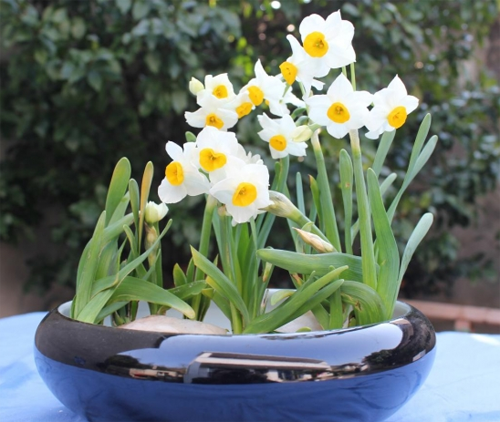
Growing methods for narcissus:
1. Hydroponic growing method for narcissus
Before water cultivation, first peel off the dry brown scale leaves on the outer layer of the bulb, remove the root-protecting mud and the brown rotten roots at the base (be careful not to damage the white new roots), wash the surface clean, stand it upright in a shallow pot without drainage holes, add water to about 1 cm below the bulb of the narcissus head, place it in a cool place, and after the bulb has grown roots, place it in the sunlight.
When growing narcissus in water, it is best to change the water every day. On one hand, this prevents the water from deteriorating and causing root rot; on the other hand, changing the water daily keeps the water clean and the roots that grow white and beautiful. When changing the water, use tap water that has been left to stand in the sun. Avoid using too much water; soaking up to a little less than half of the flower head is sufficient. Before flowering, you can change to changing the water once every 2—3 days.
Narcissus growth requires plenty of sunlight; the suitable temperature is around 15 degrees. To make narcissus grow strong, it should be taken to the balcony during the day to get more sun. Narcissus loves sunlight the most; without sunlight, it is very difficult for narcissus to bloom. After the sun comes out, move the narcissus outdoors for direct exposure until the sunlight is insufficient, then move it back indoors.
2. Soil cultivation method for narcissus
For soil cultivation of narcissus, loose humus soil is required. Before planting, peel off the dry scale pieces on the outer surface of the narcissus head and scrape off the old roots, add humus soil to 3 cm from the pot rim, and firm the humus soil, then place the narcissus bulb base in the pot, continue adding soil for about 1 cm, then water thoroughly, and place the flowerpot in a cool place. After 5 days, when the bulb base has grown roots, place the flowerpot in a sunny place for growing.
For soil cultivation, watering should follow the principle of watering when dry and stopping when wet, that is, do not water when the soil is not dry, and once you water, water until it leaks from the bottom of the pot. Watering time should be chosen in the morning and evening, otherwise it will damage root growth.
3. Sand cultivation method for narcissus
For sand cultivation, it is best to use cleanly washed fine sand, and the pot should also be a breathable tile pot. Before planting, first put the sand into the pot, filling it to 3 cm from the pot rim, then place the narcissus head with old stem pieces and old roots removed into the flowerpot filled with fine sand, add about 1 cm of sand, so that the lower stem of the narcissus head is buried about 1 cm in the sand. Then water thoroughly and place in a cool place. After 5 days, place it in a sunny place until it blooms. When using sand to plant narcissus heads, water thoroughly every day; failure to water in time will cause water deficiency and affect root growth of the flowers. Watering should also be arranged in the morning and evening.
What to do when narcissus leaves turn yellow?
1. Improper fertilization
a. Long-term lack of fertilizer: If no nitrogen fertilizer is applied or the pot and water are not changed, the water lacks nitrogen and other nutrient elements, causing the branches and leaves to be weak, with thin and yellow leaves. It is necessary to promptly replace with new culture water and gradually apply dilute decomposed liquid fertilizer or compound flower fertilizer.
b. Excessive fertilization: If too much fertilizer is applied, new leaves will become thick and fleshy, often uneven, and old leaves will dry at the tips, turn scorched yellow, and fall off. Fertilization should be stopped immediately, water changes should be increased to let the fertilizer drain away, or the pot should be immediately turned over, the bulbs rinsed with water, and then replanted in the pot.
c. Pesticide irritation: Using too high a concentration of pesticide when preventing and controlling pests and diseases, or exposure to toxic gas pollution in the air, or suddenly watering with cold water when the temperature is high, can all easily cause the leaf tips or parts of the leaf surface to turn yellow and scorched, or even the whole plant to die. Therefore, attention should be paid to the rational use of pesticides, and efforts should be made to eliminate air pollution sources. In midsummer, avoid watering flowers with cold water around noon.
2. Poor temperature
a. Hot and high temperature: If narcissus is placed in a high-temperature place under direct strong sunlight, it is very easy to cause the leaf tips and leaf margins of young leaves to become scorched, or the leaves to turn yellow and fall off. It needs to be moved promptly to a well-ventilated and cool place.
b. Temperature too low: If the winter temperature is too low, narcissus suffers cold damage, which causes the leaves to turn yellow, and in severe cases they wither and die. If the room temperature is too high, the plant's transpiration is excessive, and the roots cannot supply enough water and nutrients, which can also cause the leaves to turn yellow. Please pay attention to adjusting the room temperature in time.
3. Unsuitable water and soil
a. Iron deficiency in water: Because the water lacks absorbable soluble iron and other elements, the leaves will gradually turn yellow. When planting, choose acidic water and soil, and frequently water with alum fertilizer water during the growing period.
b. Dry air: When indoor air is too dry, narcissus often shows phenomena such as dry leaf tips or scorched leaf margins. Attention should be paid to methods such as spraying water and covering with plastic film to increase air humidity.
4. Insufficient light
If narcissus is kept in a shaded place or a place with insufficient light for a long time, excessive shading will cause the branches and leaves to turn yellow. As long as there are 6 hours of light per day, it can grow normally. If light is insufficient, the leaves tend to grow leggy, and there will be few or no flowers; if the light is too strong, it is also unfavorable for growth.
5. Long-term lack of pruning
If the branches and leaves of narcissus grow too luxuriantly, and there has been no pruning for a long time, making it dense and poorly ventilated, the inner branches and leaves will receive insufficient light, which can easily cause the leaves to turn yellow and fall off. Fertilize reasonably and strengthen pruning to allow ventilation and light penetration.
6. Damage from pests and diseases
Leaf spot disease caused by infection with fungi and other pathogens can easily cause local necrosis of the leaves, with yellow spots or patches appearing, and in severe cases the entire leaf withers, turns yellow, and falls off. After infection by mosaic virus, yellow-green mottled patches appear on the leaves; when attacked by scale insects, red spiders, and other pests, the leaves will also become locally yellow and withered, or even the entire leaf will wither, turn yellow, and fall off. In all cases, pesticides should be sprayed promptly for prevention and control.
Growing narcissus also requires effort to grow well. Once yellow leaves appear, just solve the problem according to the methods above.
What to do when narcissus leaves turn yellow, methods for handling yellow narcissus leaves
Narcissus habits: Narcissus is an autumn-planted bulbous greenhouse flower. It likes plenty of sunlight, has strong vitality, can tolerate partial shade, and is not cold-tolerant. It sheds leaves and goes dormant in July-August. During dormancy, flower bud differentiation occurs in parts of the growth point of the bulb. It has the physiological characteristics of growing in autumn and winter, blooming in early spring, and going dormant in summer. Narcissus likes light, water, and fertilizer, and is suited to warm, humid climatic conditions and fertile sandy soil. In the early growth stage it likes coolness, in the middle stage it is slightly more cold-tolerant, and in the later stage it likes warmth. Therefore, it requires a climatic environment with no severe cold in winter, no extreme heat in summer, and more rain in spring and autumn.
During the growing process of narcissus, if yellow leaves appear, it must be related to the growing environment and also to whether your own care methods are appropriate. Let's take a look:
Analysis of the causes of yellow narcissus leaves 1. Unreasonable temperatureNarcissus is an autumn-planted bulbous greenhouse plant that likes sufficient light but also avoids direct strong light. When the temperature is hot and too high, still letting narcissus be exposed to sunlight without proper shading can easily make the leaves wither and turn yellow. Narcissus is not cold-tolerant and fears cold. When the temperature is too low, narcissus is easily frostbitten, causing the leaves to turn yellow, and in severe cases to wither, turn yellow, and die. Therefore, when caring for narcissus, you must follow its growth habits and keep the temperature balanced and warm.
2. Unsuitable water and soilNarcissus likes a humid environment, and its growth requires acidic water and loose, fertile acidic sandy soil. When watering and caring for it, if you only use ordinary water and do not pay attention to the iron content in the water, the leaves will also gradually turn yellow due to iron deficiency and lack of nutrients.
If suitable acidic soil is not used for soil planting and care, it will also cause a lack of nutrients needed for growth, making the leaves turn yellow.
3. Excessive fertilization or no fertilization for a long timeAlthough narcissus likes fertilizer, fertilization must be moderate. When too much fertilizer is applied, new leaves will grow thick and fleshy, the leaf surface will be uneven, and old leaves will become dry and yellow.
If no fertilizer is applied for a long time, especially nitrogen fertilizer, the soil will lack nitrogen and other nutrients, and the leaves will gradually wither and turn yellow.
4. Pests and diseases appearDuring the growing process of narcissus, leaf spot disease caused by infection with fungi and other pathogens is most likely to appear. Leaf spot disease makes yellow spots appear on the leaves, and the yellow spots gradually expand and spread over the entire leaf.
Pests include scale insects, red spiders, and others. These pests can cause parts of the leaves to become withered and yellow.
How to handle yellow narcissus leaves 1. Control the growing temperatureHow should the growing temperature of narcissus be controlled? Don't worry. In hot and high temperatures, you only need to promptly move the narcissus to a well-ventilated and cool place to avoid direct strong light. The leaves will then gradually return to normal.
2. Pay attention to watering and the selection of soilWhen planting narcissus, you must choose acidic soil to ensure the nutrients needed for growth. During the growing period of narcissus, water with alum fertilizer water. In this way, the leaves will not turn yellow due to iron deficiency.
3. Fertilize on time and in the right amountWhen caring for narcissus, you must fertilize on time and in the right amount. If too much fertilizer is applied, you can try changing the water to let the excess fertilizer drain away, or immediately turn over the pot and rinse the bulb area with clean water.
If the leaves turn yellow because no fertilizer has been applied for a long time, you can use new culture water and apply dilute decomposed liquid fertilizer or compound flower fertilizer. In this way, you can save the yellowed leaves and let them grow again.
4. Pest and disease control. When pests and diseases appear, the most effective method is to spray medicine to completely eliminate the pests and diseases.
What to do when narcissus leaves turn yellow, 4 rescue methods
Narcissus does not have the strong fragrance of jasmine, nor is it as gorgeously varied as the peony, nor does it have the unyielding resilience of the plum blossom. However, narcissus maintains its own fresh elegance, standing out without a worldly air. Narcissus generally grows in loose, breathable sandy soil. The water needed for narcissus growth is greater than that of ordinary flowers, especially during the vigorous growth period, when sufficient water must be maintained, otherwise yellow leaves are likely to appear. Below is an analysis of six causes of yellow narcissus leaves and what to do about yellow leaves.
Causes of yellow narcissus leaves 1. Improper fertilization causes yellow leavesa) Long-term lack of fertilizer: If no nitrogen fertilizer is applied or the pot and water are not changed, the water lacks nitrogen and other nutrient elements, causing the branches and leaves to be weak, with thin and yellow leaves. It is necessary to promptly replace with new culture water and gradually apply dilute decomposed liquid fertilizer or compound flower fertilizer.
b) Excessive fertilization: If too much fertilizer is applied, new leaves will become thick and fleshy, often uneven, and old leaves will dry at the tips, turn scorched yellow, and fall off. Fertilization should be stopped immediately, water changes should be increased to let the fertilizer drain away, or the pot should be immediately turned over, the bulbs rinsed with water, and then replanted in the pot.
c) Pesticide irritation: Using too high a concentration of pesticide when preventing and controlling pests and diseases, or exposure to toxic gas pollution in the air, or suddenly watering with cold water when the temperature is high, can all easily cause the leaf tips or parts of the leaf surface to turn yellow and scorched, or even the whole plant to die. Therefore, attention should be paid to the rational use of pesticides, and efforts should be made to eliminate air pollution sources. In midsummer, avoid watering flowers with cold water around noon.
2. Poor temperature causes yellow leavesa) Hot and high temperature: If narcissus is placed in a high-temperature place under direct strong sunlight, it is very easy to cause the leaf tips and leaf margins of young leaves to become scorched, or the leaves to turn yellow and fall off. It needs to be moved promptly to a well-ventilated and cool place.
b) Temperature too low: If the winter temperature is too low, narcissus suffers cold damage, which causes the leaves to turn yellow, and in severe cases they wither and die. If the room temperature is too high, the plant's transpiration is excessive, and the roots cannot supply enough water and nutrients, which can also cause the leaves to turn yellow. Please pay attention to adjusting the room temperature in time.
3. Unsuitable water and soil causes yellow leavesa) Iron deficiency in water: Because the water lacks absorbable soluble iron and other elements, the leaves will gradually turn yellow. When planting, choose acidic water and soil, and frequently water with alum fertilizer water during the growing period.
b) Dry air: When indoor air is too dry, narcissus often shows phenomena such as dry leaf tips or scorched leaf margins. Attention should be paid to methods such as spraying water and covering with plastic film to increase air humidity.
4. Insufficient light causes yellow leavesIf narcissus is kept in a shaded place or a place with insufficient light for a long time, excessive shading will cause the branches and leaves to turn yellow. As long as there are 6 hours of light per day, it can grow normally. If light is insufficient, the leaves tend to grow leggy, and there will be few or no flowers; if the light is too strong, it is also unfavorable for growth.
5. Long-term lack of pruningIf the branches and leaves of narcissus grow too luxuriantly, and there has been no pruning for a long time, making it dense and poorly ventilated, the inner branches and leaves will receive insufficient light, which can easily cause the leaves to turn yellow and fall off. Fertilize reasonably and strengthen pruning to allow ventilation and light penetration.
6. Damage from pests and diseases causes yellow leavesLeaf spot disease caused by infection with fungi and other pathogens can easily cause local necrosis of the leaves, with yellow spots or patches appearing, and in severe cases the entire leaf withers, turns yellow, and falls off. After infection by mosaic virus, yellow-green mottled patches appear on the leaves; when attacked by scale insects, red spiders, and other pests, the leaves will also become locally yellow and withered, or even the entire leaf will wither, turn yellow, and fall off. In all cases, pesticides should be sprayed promptly for prevention and control.
What to do when narcissus leaves turn yellow 1. Control the growing temperatureHow should the growing temperature of narcissus be controlled? Don't worry. In hot and high temperatures, you only need to promptly move the narcissus to a well-ventilated and cool place to avoid direct strong light. The leaves will then gradually return to normal.
2. Pay attention to watering and the selection of soilWhen planting narcissus, you must choose acidic soil to ensure the nutrients needed for growth. During the growing period of narcissus, water with alum fertilizer water. In this way, the leaves will not turn yellow due to iron deficiency.
3. Fertilize on time and in the right amountWhen caring for narcissus, you must fertilize on time and in the right amount. If too much fertilizer is applied, you can try changing the water to let the excess fertilizer drain away, or immediately turn over the pot and rinse the bulb area with clean water.
If the leaves turn yellow because no fertilizer has been applied for a long time, you can use new culture water and apply dilute decomposed liquid fertilizer or compound flower fertilizer. In this way, you can save the yellowed leaves and let them grow again.
4. Pest and disease control. When pests and diseases appear, the most effective method is to spray medicine to completely eliminate the pests and diseases.