What to Do When Alocasia Leaves Turn Yellow? A Detailed Guide to Alocasia Care
Alocasia is now a very popular potted plant. Its leaves grow very large and are very smooth, but how should Alocasia be grown? Why do the leaves turn yellow during the growing process? Let's take a look with Women's Network at how to solve these problems:
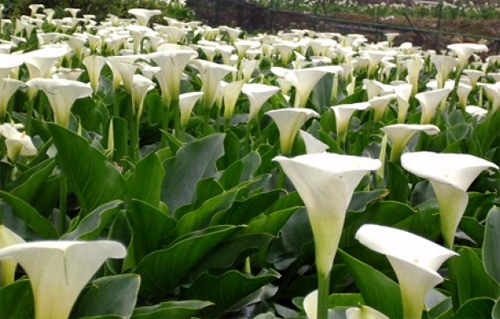
How to grow Alocasia:
1. Soil: Alocasia is relatively undemanding to cultivate. It can be potted in leaf mold, peat soil or fine sandy soil. When the soil is loose, fertile and has sufficient base fertilizer, the leaves are thick and large and the leaf color is emerald green.
2. Watering: In winter, Alocasia should be placed on an indoor south-facing windowsill, with watering controlled, watering only when dry, and fertilization stopped. Every 5-7 days, spray and wash the leaves once with clean water close to room temperature, and the leaf color can remain deep green. As long as the air is humid, the light is suitable and the nutrients are sufficient, the leaves will be large and spread out, and the ornamental value will be high.
3. Sunlight: Alocasia dislikes exposure to strong sun. From June to October it needs shading, blocking 50-70% of the sunlight. Although Alocasia likes to grow in a semi-shaded environment, being placed for a long time in places such as the living room or bedroom, due to insufficient light, has a great impact on the plant's life activities. The formation of many plant organs is directly related to light intensity. With insufficient light or no light, the plant's internodes become especially long, the leaves are underdeveloped and small, and it lacks chlorophyll and appears yellow.
4. Temperature: The suitable growing temperature for Alocasia is around 20-25°C. In winter, keeping the room temperature above 8°C is enough for it to overwinter safely. Low temperatures make it prone to cold damage.
5. Fertilization: During the growing season, Alocasia needs 1-2 applications per month of a dilute liquid fertilizer based mainly on nitrogen fertilizer and mixed with phosphorus and potassium fertilizers. When potted, topdressing with ferrous sulfate can make Alocasia leaves larger, thicker and greener, smooth and glossy, and the leaf stalks are less likely to elongate, thus ensuring the leaves look attractive. At the same time, it can promote flower bud formation and prolong the flowering period.
6. Pests and diseases: The common disease of Alocasia is gray mold. Spray pesticide for control in the early stage of the disease. You can choose 50% Vinclozolin wettable powder 1500 times solution, 50% Iprodione wettable powder 1500 times solution, etc.
What to Do When Alocasia Leaves Turn Yellow?
1. Too much light
Too much light is one of the common reasons Alocasia leaves turn yellow. Alocasia likes shade, and in summer it needs 50% shading and must not be exposed to direct sunlight, otherwise the leaves are very prone to yellow edges. Prevention tip: place Alocasia in a place in the home that avoids strong light.
2. Insufficient light
Alocasia placed in a dark place for a long time will also show yellowing leaves, mainly because insufficient light affects Alocasia's photosynthesis. Prevention tip: Alocasia dislikes strong light, but that does not mean it does not need light. Rather, it needs sufficient diffused light. You can place Alocasia in a place that avoids strong light but provides enough diffused light.
3. Overwatering
Overwatering Alocasia can cause the rhizome to rot, which in turn makes the leaves turn yellow. Prevention tip: water Alocasia in the right amount, and water thoroughly, but there should not be standing water.
4. Too much dust on the leaf surface
Alocasia's leaves are relatively large and easily accumulate dust. If they are not sprayed and cleaned with water for a long time, the accumulation of dust will hinder photosynthesis, thus causing yellowing and withering. Prevention tip: regularly spray and wipe Alocasia's leaves clean, and do not let too much dust accumulate.
These are the Alocasia growing methods. If the leaves really do turn yellow, just compare them with the reasons above to find the cause. Once the cause is found, the corresponding solution can be used.
What to Do When Alocasia Leaves Turn Yellow: Apply dilute fertilizer / replenish water / provide shade
Alocasia is a perennial herbaceous plant of the genus Alocasia in the Araceae family. It has high ornamental value and can be seen all over our country. However, even a beautiful plant, if its leaves turn yellow, will affect its overall beauty. So what should be done when Alocasia leaves turn yellow? What causes it and how should it be solved? Below, the editor will take everyone through it.
I. What to Do When Alocasia Leaves Turn Yellow: Find the cause
If you want to know what to do when Alocasia leaves turn yellow, we first need to find the cause. We need to know what is causing the yellowing leaves so that we can deal with it in a targeted way. Improper watering, insufficient humidity, and pest and disease infestation are all causes of this phenomenon. As for how to solve it, there is a detailed introduction below. Let's take a look.
II. Causes of Alocasia Leaves Turning Yellow (with solutions)
1. Improper fertilization
Fertilizer is one of the main nutrients in Alocasia's growth process. If we fertilize too little or the fertilizer concentration is too high, it will cause Alocasia leaves to turn yellow. If we fertilize too little, it will turn yellow and wither due to insufficient nutrients. If the fertilizer concentration is too high, it will burn the plant and cause yellowing.
Solution: Alocasia has a very high demand for fertilizer during its growth process, especially after entering the growing period, when its demand for water is also very high. Basically, it needs to be fertilized once every week, so that its leaves can grow large. However, when fertilizing, the fertilizer concentration must not be too high. Before application, it must first be diluted with water. If the concentration is too high, it can easily burn the plant.
2. Insufficient water
Alocasia prefers a warm and humid environment, so water is very important to it. However, the amount of watering is something we need to pay attention to. If we water too much, its root system will be unable to breathe, resulting in yellowing leaves. If we water too little, the plant will become dry and turn yellow.
Solution: If standing water occurs when we water Alocasia, we must promptly clear the standing water. As long as it is cleared in time, the problem generally will not be serious. If the yellowing of Alocasia leaves is caused by dryness, we can spray the leaves with more water to maintain environmental humidity.
3. Light too strong
Alocasia likes to grow in a warm and moist environment and is relatively intolerant of direct sunlight. During the process of growing it, if the light is too strong, it can easily scorch the plant, resulting in the problem of Alocasia leaves turning yellow.
Solution: When growing Alocasia, it is best to place it in a place with diffused sunlight and avoid direct sunlight. In summer, when the light is relatively strong, we can keep it in a semi-shaded indoor place to avoid scorching the plant and causing its leaves to turn yellow.
4. Pest and disease infestation
During Alocasia's growth process, if we do not care for it properly, problems such as pests and diseases can easily appear. Such problems are extremely harmful to the plant. They not only affect its ornamental value, but in severe cases can also cause Alocasia leaves to turn yellow and dry up.
Solution: When problems such as pests and diseases appear, we must deal with them in time. If the time is dragged out, the harm to the plant will be great, and handling it will also be more troublesome. For specific control methods, everyone can refer to the article on pest and disease control for Alocasia. The editor will not repeat them here.
Alocasia Growing Methods: Six Care Tips Worth Saving
Alocasia is a common household potted plant. It can be enjoyed for both foliage and flowers. Alocasia has broad, emerald green leaves and pure white, elegant flowers. Placed in the home, it has great ornamental value. Below we will look at the growing methods for Alocasia:
Basic information about Alocasia:
Alocasia (scientific name: Alocasia macrorrhizos), called giant taro in Taiwan, China, is native to South America and is a common ornamental plant. It has multiple common names, such as Henyutou, Langdu (Guangdong), wild taro, mountain taro, big-root taro, big worm taro, sky taro, Tianmeng. As an ornamental plant it is called Dishuiguanyin, because if the environmental humidity is too high, water will drip down from its broad leaves. Its flower is a spadix inflorescence, with a large green spathe outside, opening into a boat shape, like a statue of Guanyin seated. Alocasia is a perennial herb with broad leaves. In northern China it needs to overwinter indoors, while in the south it can grow in the open ground. The corm and leaves can be used medicinally, but they are toxic, and the leaf sap will cause poisoning if ingested. What is called Alocasia in Taiwan, China refers to calla lily.
How to grow Alocasia:
1. Soil: Alocasia is relatively undemanding to cultivate. It can be potted in leaf mold, peat soil or fine sandy soil. When the soil is loose, fertile and has sufficient base fertilizer, the leaves are thick and large and the leaf color is emerald green.
2. Watering: In winter, Alocasia should be placed on an indoor south-facing windowsill, with watering controlled, watering only when dry, and fertilization stopped. Every 5-7 days, spray and wash the leaves once with clean water close to room temperature, and the leaf color can remain deep green. As long as the air is humid, the light is suitable and the nutrients are sufficient, the leaves will be large and spread out, and the ornamental value will be high.
3. Sunlight: Alocasia dislikes exposure to strong sun. From June to October it needs shading, blocking 50-70% of the sunlight. Although Alocasia likes to grow in a semi-shaded environment, being placed for a long time in places such as the living room or bedroom, due to insufficient light, has a great impact on the plant's life activities. The formation of many plant organs is directly related to light intensity. With insufficient light or no light, the plant's internodes become especially long, the leaves are underdeveloped and small, and it lacks chlorophyll and appears yellow.
4. Temperature: The suitable growing temperature for Alocasia is around 20-25°C. In winter, keeping the room temperature above 8°C is enough for it to overwinter safely. Low temperatures make it prone to cold damage.
5. Fertilization: During the growing season, Alocasia needs 1-2 applications per month of a dilute liquid fertilizer based mainly on nitrogen fertilizer and mixed with phosphorus and potassium fertilizers. When potted, topdressing with ferrous sulfate can make Alocasia leaves larger, thicker and greener, smooth and glossy, and the leaf stalks are less likely to elongate, thus ensuring the leaves look attractive. At the same time, it can promote flower bud formation and prolong the flowering period.
6. Pests and diseases: The common disease of Alocasia is gray mold. Spray pesticide for control in the early stage of the disease. You can choose 50% Vinclozolin wettable powder 1500 times solution, 50% Iprodione wettable powder 1500 times solution, etc.
Alocasia's broad, emerald green leaves have the charm of a tropical rainforest. Placed in the home, they give people the feeling of being in a rainforest. If you like Alocasia and grow it at home, then do not miss the Alocasia growing methods the editor has compiled for everyone.