How much does a Phalaenopsis orchid cost per plant? Plus care methods
Phalaenopsis orchids look just like butterflies, very beautiful, and their colors are quite attractive too. How should you care for a Phalaenopsis orchid to keep it looking beautiful? How much does one Phalaenopsis orchid plant sell for? Is it very expensive? If it is too expensive and you end up killing one plant, how sad that would be. Let's take a look together with Women's Web:
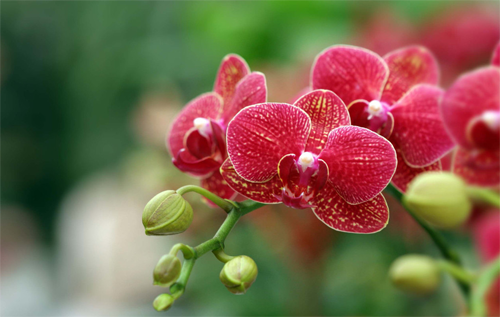
Phalaenopsis orchid care methods:
1. Soil
Soil is essential for plant growth. When choosing to grow Phalaenopsis orchids, choosing the soil is very important. Phalaenopsis orchids have high soil requirements: it must be breathable, rot-resistant, slightly acidic, and retain water. Generally, we can choose materials such as pine needles, peanut shells, shredded tree bark, and clay balls as the growing medium for Phalaenopsis orchids. If you cannot prepare these materials yourself, you can directly buy special orchid soil for Phalaenopsis orchids at a flower market, which is even better for the growth of Phalaenopsis orchids.
2. Choose a suitable temperature environment for Phalaenopsis orchids
Temperature is very particular when it comes to the growth of Phalaenopsis orchids, especially for those cultivated indoors. During the day, the temperature is best kept between 25-28 degrees, and at night the temperature needs to be kept between 18-20 degrees. Phalaenopsis orchids originate from subtropical regions, so a high-temperature, high-humidity environment is very suitable for their growth (when the summer temperature is above 32 degrees, Phalaenopsis orchids will directly enter a semi-dormant state, so high temperatures must be prevented. When the temperature is lower, the growth of Phalaenopsis orchids will be inhibited, so suitable temperature is also very important. If you are in a home in the north with radiators, be sure to place the Phalaenopsis orchid away from the radiator! This avoids excessive high temperature affecting the growth of the Phalaenopsis orchid.
3. How to water Phalaenopsis orchids
High humidity is what Phalaenopsis orchids love most. Avoid letting Phalaenopsis orchids be in a water-deficient state, especially during their growing period. Once water deficiency occurs frequently, it will cause the leaves to turn yellow, and it is very difficult to recover. Usually, you can water Phalaenopsis orchids with a spray bottle. Water until water flows out from the bottom of the pot, and avoid watering too much.
4. Frequent ventilation and shading are more conducive to the growth of Phalaenopsis orchids
In flower-growing forums, you often see some flower-growing problems about Phalaenopsis orchids having root rot, and this may also be caused by a lack of a ventilated environment. Phalaenopsis orchids are delicate, and choosing a ventilated environment will be more conducive to their growth. A stuffy and hot environment is also not suitable for growing Phalaenopsis orchids, especially in the summer in the south, where you must pay attention to shading the Phalaenopsis orchid. Phalaenopsis orchids are epiphytic orchids and like semi-shade. In winter, when the temperature is low, use the midday time to ventilate them, but do not let the draft blow directly on the orchid plant. In spring and autumn, pay attention to protecting the orchid from light. This way, by ensuring good light and ventilation, the flowers that bloom will be even more gorgeous!
5. Fertilization precautions for Phalaenopsis orchids
The principle of fertilization should be to apply less fertilizer and apply dilute fertilizer. This is because it grows relatively quickly and its growth period is also relatively long.
Fertilization month precautions: Phalaenopsis orchids that have been grown for one year or many years will be repotted every year in late spring and early summer (May). Phalaenopsis orchids that have just been repotted are in a recovery period, so there is no need to fertilize the orchid plant. After a month of recovery, the orchid plant begins normal growth. That is to say, from June to September, when the orchid plant enters its growing period, it only needs to be fertilized once a week.
How much does a Phalaenopsis orchid cost per plant:
Market price: a medium pot is roughly between 80 and 300 yuan (roughly 4 to 6 good stems).
Phalaenopsis orchids have been a relatively high-end flower that has remained popular in recent years, and more people recognize them. This year's price is slightly lower than in previous years. The ordinary price is 30 to 35 yuan per stem. If it is a well-decorated pot, the price has now declined somewhat; generally, you can buy one for around two or three hundred yuan.
Phalaenopsis orchids look like very high-end flowers, and people all like them. The price mainly depends on the shape of the flowers and the number of flowers, and it is still a bit expensive.
How much does a Phalaenopsis orchid cost per plant? The benefits of Phalaenopsis orchids
Phalaenopsis is a beautiful orchid family plant, named for its butterfly-like appearance. Growing a pot of Phalaenopsis at home is very nice. Many people worry that the price of Phalaenopsis orchids will be very expensive. Next, Xiao Qi will share the price of Phalaenopsis orchids and their benefits.
1. The price of Phalaenopsis orchids
Phalaenopsis orchids have a magnificent and elegant flower posture. They not only bloom abundantly and have rich flower colors, but also have large flowers and a particularly long flowering period. They are very popular and have great development potential. In the south, fern boards and coconut shells (with fiber) can be used for hanging cultivation, or they can be planted directly on tree trunks and grown covered with moss. In northern regions, pot cultivation is suitable, placed in the living room, bedroom, or on the balcony, with very high ornamental value. They are a world-famous precious orchid. When choosing Phalaenopsis orchids, generally choose according to variety, height, crown width, etc. The price of Phalaenopsis seedlings is generally 0.12 yuan per plant. The market price of Phalaenopsis orchids in the flowering period is roughly: between 80 and 300 yuan per pot (roughly 4 to 6 stems) (better ones).
2. The benefits of Phalaenopsis orchids
1. Being for people to admire is the greatest benefit of Phalaenopsis orchids. Phalaenopsis orchids come in many different varieties, and their flower colors and flower shapes are all different. They are the most common plant landscape in major garden scenic areas across the country, and are also common plants in parks everywhere. It is precisely because of the existence of these Phalaenopsis orchids that the environment we live in has become so beautiful and varied.
2. Improving air quality is also an important function of Phalaenopsis orchids. This plant has a strong ability to absorb and break down harmful gases in the air such as formaldehyde and benzene. After absorbing these gases, it releases a large amount of oxygen, playing an outstanding role in improving people's indoor air quality.
3. Resisting radiation is also an important function of Phalaenopsis orchids. This plant can absorb various kinds of radiation released by radiation sources such as computers, and can reduce the harm these radiation substances do to people's bodies. Therefore, when growing Phalaenopsis orchids at home, it is suitable to place them near a computer.
4. Beauty and skin care is also an important function of Phalaenopsis orchids. The fresh petals of Phalaenopsis orchids can be used for bathing, which can help relieve physical and mental fatigue. At the same time, after bathing with Phalaenopsis orchids, the Phalaenopsis fragrance on the skin can remain for a long time without disappearing, and it also has a noticeable effect on removing body odor.
The above isthe price of Phalaenopsis orchidsandthe benefits of Phalaenopsis orchidsintroduced. The price of Phalaenopsis orchids is still quite reasonable, and their benefits are also very good. Growing some at home is still a very good choice.
How much does a Phalaenopsis orchid cost per pot? Phalaenopsis orchid care methods
Phalaenopsis is an epiphytic orchid of the genus Phalaenopsis in the orchid family, native to subtropical rainforest regions. It is named for its posture like a dancing butterfly. It has extremely high ornamental value for cultivation and is deeply favored by flower enthusiasts. It has always been known as the "Queen of Foreign Orchids," and the market price of Phalaenopsis orchids is also very cheap. Let's take a look below at how much a pot of Phalaenopsis orchids costs!
How much does a pot of Phalaenopsis orchids cost?
The market price of Phalaenopsis orchids is roughly between 80 and 300 yuan per pot (roughly 4 to 6 good stems). Phalaenopsis orchids have been a relatively high-end flower that has remained popular in recent years, and more people recognize them. When choosing Phalaenopsis orchids, generally choose according to variety, height, crown width, etc. The ordinary price is 30 to 35 yuan per stem. If it is a well-decorated ordinary one, it is roughly around two or three hundred yuan per pot, while the price of Phalaenopsis seedlings is generally 0.12 yuan per plant.
Phalaenopsis orchid care methods
1. Temperature: Phalaenopsis orchids like a high-temperature, high-humidity environment. In autumn and winter and at the turn of winter and spring, as well as when the winter temperature is low, attention should be paid to increasing the temperature. When the summer temperature is on the high side, it needs to be lowered and attention should be paid to ventilation. If the temperature is above 32°C, it will enter a semi-dormant state, and continuous high temperatures should be avoided. Around the Spring Festival is the full flowering period. Properly lowering the temperature can extend the viewing time. When flowering, the nighttime temperature is best kept between 13 and 16°C, but it must not be lower than 13°C.
2. Humidity: The suitable air humidity for the growth of Phalaenopsis orchids is 60 to 80%. During the period of vigorous new root elongation, water more; during the post-flowering dormant period, water less. In spring and autumn, water once every day around five in the afternoon. In summer, when the plant grows vigorously, water once each at nine in the morning and five in the afternoon. In winter, when light is weak and the temperature is low, watering once every other week is enough, and it is best done before ten in the morning. If a cold wave hits, it is not suitable to water; keep it dry, and resume watering after the cold wave passes.
3. Light: Although Phalaenopsis orchids are relatively shade-loving, the orchid plant still needs to be able to receive some light, especially before and after the flowering period. Proper light can promote flowering in Phalaenopsis orchids and make the flowers more brilliant and long-lasting. Generally, they should be placed in a spot indoors with scattered light, and sunlight should not shine directly on them.
4. Ventilation: The normal growth of Phalaenopsis orchids requires flowing fresh air, so when growing Phalaenopsis orchids at home, ventilation must be good, especially during the high-humidity period in summer. Good ventilation must be used to prevent heatstroke, and it can also avoid infection by pests and diseases.
5. Fertilization: Phalaenopsis orchids should be fertilized throughout the year. Unless low temperatures last for a very long time, fertilization should not be stopped. Winter is the flower bud differentiation period for Phalaenopsis orchids, and stopping fertilization can easily lead to no flowers or few flowers. Spring and summer are the growing period, and a thin liquid fertilizer can be applied once every 7 to 10 days. Organic fertilizer is suitable, and special nutrient solution for Phalaenopsis orchids can also be applied, but do not apply it when there are flower buds, otherwise the buds are likely to drop early. The time for fertilization is after watering in the afternoon. After fertilizing several times, use a large amount of water to rinse the orchid pot and orchid plant, so as to avoid residual inorganic salts harming the roots.
6. Diseases: Phalaenopsis orchids are prone to soft rot and gray spot disease. Soft rot is extremely contagious. Once discovered, immediately isolate the diseased plant. The diseased plant can be treated with mancozeb or Huoshengling, usually sterilizing once every 15 days. The common cultivation medium for Phalaenopsis orchids is mainly water moss and moss, so the potting material should not use soil, but should use sphagnum moss, pumice, tree fern scraps, charcoal fragments, etc.
Precautions for Phalaenopsis orchids
1. Watering too frequently: Friends who grow Phalaenopsis orchids always worry that the orchids lack water, and regardless of whether the cultivation medium is dry, they water every day, causing severe root rot.
2. Temperature too low: Usually the flowering plants of Phalaenopsis orchids are mostly brought to market in early spring, and after buying them home they are generally placed in places such as the living room for appreciation. Although the daytime temperature in these places is sufficient, the nighttime temperature is somewhat on the low side.
3. Excessive fertilization: Applying fertilizer whenever there is fertilizer and not paying attention to concentration, thinking that applying fertilizer will make them grow faster. You should know that Phalaenopsis orchids are suitable for light fertilizer, and it should be applied in small amounts many times. Remember that "nourishing" must not be excessive, otherwise it will be counterproductive.
4. Large pot for a small plant: Thinking that using a large pot can give Phalaenopsis orchids a loose environment and sufficient materials. In fact, after using a large pot, the water moss is not easy to dry. You should know that Phalaenopsis orchids like ventilation, and when air flows freely, they are comfortable.
5. Buds drying and wrapping: Most Phalaenopsis orchids now are forced into bloom. After leaving the base, once the environment changes, the problem of buds drying and wrapping easily appears. At this time, do not think it is because they are dry and do not water more. Instead, increase indoor humidity, control indoor temperature, and the temperature must not be too high. When buying flowers, try to choose ones with thicker petals.