What to Do When Asparagus Fern Grows Too Tall? Pruning Methods and Bonsai-Making Techniques
Asparagus fern is very beautiful and highly suitable for bonsai, but when planted in a pot it grows taller and taller, which looks unattractive at all. How can you keep asparagus fern from growing tall? Bonsai looks good only when it is short, and asparagus fern looks good only when it is pruned regularly. How should you normally prune asparagus fern to keep it looking good? Let's take a look together with Women's Network:
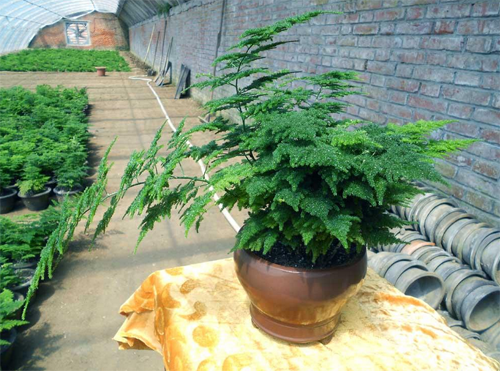
What to do when asparagus fern grows too tall:
If you don't want asparagus fern to grow taller and taller, you can cut off the overly long branches. Asparagus fern can be pruned in any season, but it is best to do it during the slow growth period in winter, thinning out the overly dense inner branches and the poorly shaped branches (those that are trailing and elongated), so that the distribution of branches and leaves forms an even shape.
Methods to control asparagus fern from growing tall: ⟧7⟧1. Pruning: cut off the old branches, so that it will always keep a touch of fresh green (tender yellow-green). It is not about removing the new buds as mentioned on the first floor (note: regularly use nutrient soil to increase nutrients).
1. Pruning: cut away the old branches so that it always keeps a fresh flush of new growth (a tender yellow-green). It is not about removing the new shoots as mentioned on the first floor (note: use nutrient-rich soil regularly to boost the nutrient supply).
2. Use that kind of "Suoganling" (stem-shortening agent) at a ratio of three parts per thousand, but it will not produce the look of a welcoming-pine (Japanese white pine) style.
3. Use half-sand soil, the kind without nutrients, as this can control growth.
How to make an asparagus fern bonsai:
Material selection: choose one asparagus fern with relatively good growth, about 20 cm tall, and two asparagus ferns about 10 cm tall; choose a shallow, slightly irregular Han-white jade pot and other related stands, and several rocks about 10 cm tall; a certain amount of potting soil and green moss.
Bonsai planting: spread a relatively thin layer of potting soil in the pot, place the tallest asparagus fern, with its curved branches and leaves, on the right side of the left planting area in the pot; plant the second-tallest asparagus fern far to the left of the first asparagus fern, at an appropriate distance toward the back of the pot; finally plant the last asparagus fern at the intersection of one-half and two-thirds of the pot's length, with its relatively curved branches and leaves also facing left, so that the three asparagus ferns face the same direction. Finally, look at them from different distances, both from far away and up close, and adjust the positions of the asparagus ferns appropriately. When it looks relatively natural, that's good enough.
Bonsai styling methods:
Tower style: choose 2 to 3 asparagus fern stems that are relatively tall and firm as the main peak, remove every growing point on their stems, and generally set the plant height within 30 to 35 cm. The remaining stems and newly grown stems should not be taller than our main peak.
Double-clump style: plant one tall and one short asparagus fern in the pot. The tall asparagus fern should be about 30 cm tall, and the short one about 18 cm tall. During growth, simply style them the same way as the tower-style asparagus fern.
Natural style: plant the asparagus fern in the pot in a relatively casual and natural way, using the relatively natural growth form of the asparagus fern. Still remove its growing points, and use methods such as shading and taking advantage of its phototropic nature, so as to achieve well-extended branches and leaves and give people a relatively natural feeling.
How to prune asparagus fern:
1. Pruning of branches and leaves:
During the growth of asparagus fern, the most important thing is the growth on the main stem. When pruning, you can appropriately prune the main stem, or simply cut it short. Pruning this way will cause the dormant buds of the asparagus fern to sprout, making the asparagus fern look very lush and, to a certain extent, reducing its height. Moreover, the branches on the main stem will also become stronger and stronger, so the plant that grows out is relatively healthy.
2. Complete renewal and pruning:
Complete renewal and pruning of asparagus fern is because, during growth, exposure to strong sunlight can prevent the plant from developing and growing. Therefore, at this time everyone needs to carry out complete pruning. When pruning, the main thing to pay attention to is the position of the thorns on the asparagus fern branches; the positions of the thorns should be left evenly, so that the branches and leaves of the plant during growth will also appear very even. Also, during complete renewal, be sure to water the plant to some extent; this is done to sprout new growth. But everyone should water moderately and absolutely not overwater, otherwise, because the potting soil is too wet, the pruning of the asparagus fern will fail.
3. Pruning of trailing branches of asparagus fern:
For the pruning of asparagus fern's trailing branches, the trailing branches are generally those weak-growing and slender branches. At this time it depends on your aesthetic sense. If you think these trailing branches make the whole plant look very unattractive, then you can cut them off at the root. If these trailing branches do no harm to the plant itself, you can leave them.
Asparagus fern is a kind of bonsai, and bonsai looks good only when it is pruned regularly. Potted plants are not suitable for growing too tall; if they grow too tall, they lose that refined and compact quality. There is no need to worry when asparagus fern grows tall; you just need to keep pruning. Potted plants have no fixed style; as long as it looks comfortable to you, that's fine.
What to Do When Asparagus Fern Grows Too Tall: Pruning Methods for Tall Asparagus Fern
Asparagus fern is not only a green plant with extremely high ornamental value, but when grown indoors it can also clean the air and kill bacteria. But once asparagus fern grows too tall, its ornamental and decorative value is reduced. So what should you do when asparagus fern grows too tall? How should you prune it properly?
1. What to do when asparagus fern grows too tall
What should you do when asparagus fern grows too tall? The answer to this question is to cut it off. Asparagus fern is a climbing plant and grows rapidly. After being grown for a few years, its branches will grow taller and taller. For asparagus fern potted plants placed at home, the shape has long since been set. When the asparagus fern grows tall, it destroys the original shape, so the best way is to prune it. Asparagus fern can be pruned in any season, but it is best to do it during the slow growth period in winter, thinning out the overly dense inner branches and the poorly shaped branches (those that are trailing and elongated), maintaining the cloud-like bonsai posture of the asparagus fern.
2. Methods to control asparagus fern from growing tall
1. Pruning: cut off the old branches, so that it will always keep a touch of fresh green (tender yellow-green).
2. Use that kind of "Suoganling" (stem-shortening agent) at a ratio of three parts per thousand, but it will not produce the look of a welcoming-pine (Japanese white pine) style.
3. Use half-sand soil, the kind without nutrients, as this can control growth.
3. How to prune asparagus fern
1. Pruning when leaf-like branches are missing
When the growth position of small leaf-like branches on the main stem is not ideal or they are missing for some reason, you can carry out heading-back pruning at an appropriate position on the main stem to force the dormant buds there to sprout. Generally, the height at which you cut is the height at which the leaf-like branches will sprout, and the position of the thorns on the branch is the position where the leaf-like branches will sprout. The greater the thickness of the branch, the higher the sprouting rate of the dormant buds.
2. Renewal pruning of the whole plant
If the branches and leaves of the whole plant grow poorly due to strong sunlight scorching, dry potting soil, lack of fertilizer, or some unknown reason, then renewal pruning of the whole plant can be carried out. During renewal pruning, all leaf-like branches can be cut off, but pay attention to the positions where the thorns on the branches grow, because they determine whether the distribution of the retained branches is even. Pruning during the growing season generally makes it easy to sprout new branches. After pruning, watering should also be appropriately reduced. Absolutely do not let the potting soil become too wet, otherwise the pruning will fail.
3. Pruning of trailing branches
Trailing branches are generally weak and slender. If you do not want to keep them for propagation and want the plant shape to look good, you can cut them off from the root all at once. If you want to increase the number of leaf-like branches or fill a certain gap, you can cut them back at a certain position. When pruning, pay special attention to comprehensive management such as small amounts of fertilizer. Asparagus fern is best when the plant shape and leaf-like branches are dense and sparse in a balanced way, with high and low parts staggered. But after 3 to 4 years of cultivation, when it sends out tall trailing branches and flowers and fruits, it is no longer suitable for indoor viewing and must be pruned.
In addition, if you want asparagus fern to bloom and bear fruit, you can grow it in a pot with a 15 cm diameter, and let it grow naturally for 3 years. Its branches can then reach more than 2 m in length. At this time, you can tie the long and dense asparagus fern branches firmly with string and let it climb up along the window. In spring, old plants can be renewed. First cut off the entire upper half of the clump, then thin out some of the overly dense branches from the base, and then cut the remaining branches back to about 30 cm above the pot surface, leaving the central branches a little taller and the surrounding trailing branches a little lower.
The above iswhat to do when asparagus fern grows too tallandhow to prune asparagus fernintroduced. If you don't want your asparagus fern to grow too tall, just help it by pruning.
What to Do When Asparagus Fern Grows Too Tall: How to Prune Asparagus Fern
Asparagus fern is a plant that grows very quickly, so it needs appropriate pruning, otherwise it will grow very tall. What should you do when asparagus fern grows too tall? How do you prune asparagus fern? Let's take a look at the answers together below.
What to do when asparagus fern grows too tall
What should you do when asparagus fern grows too tall? The suggested answer to this question is to cut it off. Asparagus fern is a climbing plant and grows rapidly. After being grown for a few years, its branches will grow taller and taller. For asparagus fern potted plants placed at home, the shape has long since been set. When the asparagus fern grows tall, it destroys the original shape, so the best way is to prune it. Asparagus fern can be pruned in any season, but it is best to do it during the slow growth period in winter, thinning out the overly dense inner branches and the poorly shaped branches (those that are trailing and elongated), maintaining the cloud-like bonsai posture of the asparagus fern.
If you want asparagus fern to bloom and bear fruit, you can grow it in a pot with a 15 cm diameter. Let it grow naturally for 3 years, and its branches can reach more than 2 m in length. You can tie the long and dense asparagus fern branches firmly with string and let the asparagus fern climb up along the window, just like a green curtain, quite unique. If you place the asparagus fern on a table or desk as a bonsai for viewing, when the branches grow tall, you can use lead wire to shape them into a ball, which is also quite interesting. It is not a serious matter when asparagus fern grows tall; whether to cut or not depends on the flower grower's preference. In addition, if you do cut, for the sake of appearance you can consider cutting from the root right at soil level.
Asparagus fern pruning methods:
1. Pruning when leaf-like branches are missing
When the growth position of small leaf-like branches on the main stem of asparagus fern is not ideal or they are missing for some reason, you can carry out heading-back pruning at an appropriate position on the main stem. When pruning, pay attention to the dormant buds at the nodes and do not cut them off, so as to force the dormant buds there to sprout. Generally, the height at which you cut is the height at which the leaf-like branches will sprout, and the position of the thorns on the branch is the position where the leaf-like branches will sprout. The greater the thickness of the branch, the higher the sprouting rate of the dormant buds.
2. Renewal pruning of the whole plant
If the branches and leaves of the whole asparagus fern plant grow poorly due to strong sunlight scorching, dry potting soil, lack of fertilizer, or some unknown reason, then renewal pruning of the whole plant can be carried out. During renewal pruning, all leaf-like branches of the asparagus fern can be cut off, but pay attention to the positions where the thorns on the branches grow; they determine whether the distribution of the retained branches is even. Pruning during the growing season generally makes it easy to sprout new branches. After pruning, watering should also be appropriately reduced. Absolutely do not let the potting soil become too wet, otherwise the pruning will fail.
3. Pruning of trailing branches
Trailing branches are generally weak and slender. If you do not want to keep them for propagation and want the asparagus fern plant shape to look good, you can cut them off from the root all at once. If you want to increase the number of leaf-like branches or fill a certain gap, you can cut them back at a certain position. When pruning, pay special attention to comprehensive management such as small amounts of fertilizer. Asparagus fern is best when the plant shape and leaf-like branches are dense and sparse in a balanced way, with high and low parts staggered. But after 3 to 4 years of cultivation, when it sends out tall trailing branches and flowers and fruits, it is no longer suitable for indoor viewing and must be pruned.