How to grow String of Pearls (Senecio rowleyanus) and what to watch out for, and how long until it fills the pot
String of Pearls is very beautiful, and many people like to grow it. String of Pearls looks like beads strung together, which is very beautiful, but if you do not grow it well, String of Pearls will develop rotting flesh and rotten roots. How can you grow String of Pearls well? How long until it fills the pot? Let's take a look together with Women's Web:
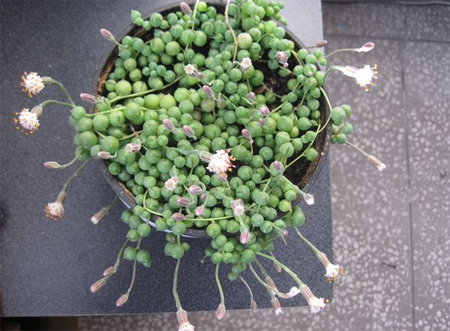
How to grow String of Pearls:
String of Pearls has many similarities with ordinary plants, and when growing it you must pay attention to the combination of temperature and moisture. Nurturing such a life in a small flower pot is not simple. Find a relatively shallow flower pot; its root system is fairly short, and planting it in a shallow pot makes it easier for it to breathe. Pay attention to the combination of temperature and moisture. This plant should not be watered in summer, otherwise its roots will easily rot. It is best to use the spray-type bottles that ladies usually use to spray water. It grows slowly in all four seasons, so you must be patient in caring for it, and apply some fertilizer appropriately. It does not need too much, and it will slowly absorb it.
What to watch out for with String of Pearls:
String of Pearls likes a relatively cool and shady environment, so after tending to it you must place it in a shady spot. If it is exposed to the sun, it will, like other plants, gradually let its leaves droop and lose their original color, or more seriously, it will wither and die. Likewise, it also needs sufficient oxygen and carbon dioxide, so placing it in a ventilated spot makes it easier for it to survive. After growing it for a long time, it is best to repot it. Many small roots may already have grown out from the bottom of its pot and need to be dealt with, or you need to frequently check whether you have watered too much, causing the roots to rot.
How long does it take for String of Pearls to fill the pot?
You can bury the small roots that emerge from the stems into the soil. After some time, once the roots have taken hold in the soil, cut them off, and in this way one stem becomes two. String of Pearls has very strong vitality, and after about a few months it will fill the pot.
Lay it all flat on the soil, and do not let it hang down at first. By summer it will fill the pot. I did this last year, but after it filled the pot in summer, it slowly all turned to water.
That is all for the knowledge about String of Pearls. The growing method is actually quite easy, but once String of Pearls fills the pot, it means death.
Can String of Pearls be grown in water? How to grow String of Pearls (Senecio rowleyanus) and what to watch out for
There are more kinds of spider plants than usual, including String of Pearls, pothos, and String of Pearls. String of Pearls and String of Pearls look very much alike, but String of Pearls and String of Pearls cannot be grown in water. The only ones that can be grown in water are hydroponic spider plants. What points should be noted when growing String of Pearls in soil? Let's take a look together with Women's Web:
Can String of Pearls be grown in water?
It cannot be grown in water. String of Pearls is a succulent with no leaves, and once it is soaked in water it will just rot completely.
Can String of Pearls be grown in water?
Spider plants that can be grown hydroponically are generally hydroponic spider plants. String of Pearls is mainly grown in soil. Because it likes warm, humid, and semi-shaded environments, a very unique characteristic of String of Pearls is that it is relatively drought-tolerant and cold-tolerant. It also likes soil rich in organic matter that is loose and fertile.
How to grow String of Pearls and what to watch out for:
1. Because the leaves are fleshy and juicy, it is drought-tolerant. When growing it, watering should prefer dry over wet; this is one of the keys to success. When the weather is dry, you can spray more water on the leaves and vines to make up for the lack of moisture and keep the beads green and plump. It relatively likes semi-shade; exposure to strong sun may scorch the beads, while too weak light will make growth poor.
2. The plant's root system is very shallow, so it can be planted in a shallow pot. Generally use a tile to cover the bottom hole, and spread a layer of coal cinder or coarse sand to increase air permeability and drainage (especially when using the commonly used plastic pots for planting now). For the soil, it is best to use leaf mold (fallen leaves of trees in autumn and winter mixed with a certain amount of broken soil and left to rot for a year, then it can be used? mix in a certain amount of sand (the ratio of soil to sand is about 1:3).
3. It likes warmth and humidity by nature, is relatively cold-tolerant (when grown in the Jianghuai region it can tolerate a low temperature of 0°C), and is heat-tolerant. The most suitable temperature is about 20°C~28°C. It grows slowly at both high and low temperatures, and especially in a high-temperature environment above 30°C it is almost dormant, so watering and fertilizing should be reduced, otherwise the roots easily rot -- this is also one of the keys to successful cultivation.
4. In spring and autumn, when growth is vigorous, you should "apply thin fertilizer frequently." Often spraying 1-3‰ nitrogen fertilizer and monopotassium phosphate on the leaf surface helps make the beads greener and plumper and improves ornamental value.
5. There are rarely pests or diseases. Aphids in spring are one of them; promptly wipe them off or spray 1500 times omethoate to kill them. Mites in summer and autumn are secondary, and need to be killed with 1000 times dicofol. Pay attention to ventilation and increasing leaf surface humidity, which can reduce mite infection.
6. String of Pearls can be propagated by cuttings. The vines very easily produce aerial roots. In spring and autumn, cut off a few segments, bury half into sand or loose soil, keep it moist but not waterlogged, and it will soon take root for planting (about half a month in spring and autumn, while in winter and summer it is not easy to root. When the potted plant is not uniform and full enough but has grown too long, this measure can be used to make up for it.)
Be sure to remember that String of Pearls cannot be grown in water. Growing it in water will only turn the flesh of String of Pearls into water. Why does that sound a bit disgusting? String of Pearls and String of Pearls look very much alike, and String of Pearls also cannot be grown in water.
What are the growing methods and precautions for String of Pearls?
[Common questions] What are the growing methods and precautions for String of Pearls?
[Expert answer]
How to grow String of Pearls:
1. Propagation method
The propagation method for String of Pearls is mostly cuttings. You can trim the branches and leaves, 8-10 cm per segment, then insert them into the potting soil, half covered, with humidity controlled between 50% and 60%. They will take root in 10 days to half a month, and only with careful tending can they survive. At this time, strictly control the amount of watering and keep the potting soil in a state between dry and wet, which is most beneficial to plant growth.
2. Cultivation management
Preferring dry over wet is one focus of growing String of Pearls. In addition, applying thin fertilizer frequently is also an extremely important point. The so-called preferring dry over wet is because String of Pearls, which comes from southern Africa, likes a warm environment and is relatively drought-tolerant and cannot tolerate waterlogging, so it is better to place it in a dry environment than to cause poor development by watering too much. Applying thin fertilizer frequently means fertilizer should be applied often, but each time as a dilute fertilizer. Do not apply too much fertilizer at once, which would cause problems in its growth.
3. Pest prevention
String of Pearls actually rarely has pest problems, but such cases still occur. Generally, the most common disease of String of Pearls is aphids, occurring in spring. When encountering this phenomenon, it should be killed with 500 times omethoate. In summer, mites appear, and can be killed with 1000 times dicofol. When there are pests, pay attention to increasing leaf surface humidity, which can reduce pests. In addition, ventilation facilities must also be in place.
Precautions for growing String of Pearls:
1. Because the leaves are fleshy and juicy, it is drought-tolerant. When growing it, watering should prefer dry over wet; this is one of the keys to success. When the weather is dry, you can spray more water on the leaves and vines to make up for the lack of moisture and keep the beads green and plump. It relatively likes semi-shade; exposure to strong sun may scorch the beads, while too weak light will make growth poor.
2. The plant's root system is very shallow, so it can be planted in a shallow pot. Generally use a tile to cover the bottom hole, and spread a layer of coal cinder or coarse sand to increase air permeability and drainage. For the soil, it is best to use leaf mold, mix in a certain amount of sand, with the ratio of soil to sand at about 1:3.
3. It likes warmth and humidity by nature, is relatively cold-tolerant, and is heat-tolerant. The most suitable temperature is about 20°C~28°C. It grows slowly at both high and low temperatures, and especially in a high-temperature environment above 30°C it is almost dormant, so watering and fertilizing should be reduced, otherwise the roots easily rot -- this is also one of the keys to successful cultivation.
4. In spring and autumn, when growth is vigorous, you should "apply thin fertilizer frequently." Often spraying 1-3‰ nitrogen fertilizer and monopotassium phosphate on the leaf surface helps make the beads greener and plumper and improves ornamental value.
[Editor's review] String of Pearls is a foliage succulent plant. The above is the growing method and precautions for String of Pearls introduced to everyone by First Agricultural Economics. I believe that after reading this article you will have a better understanding of String of Pearls. I hope this article is helpful to you, and thank you for your attention to and support of our website!