Money Tree Care Methods and Repotting Precautions
The money tree is something everyone loves. Its meaning is very auspicious, namely prosperity, and everyone loves prosperity. If there is a money tree at home, it becomes even easier to prosper. How should a money tree be grown? What precautions should be taken during the growing process? What precautions should be taken when repotting a money tree? Let's take a look together with Women's Network:
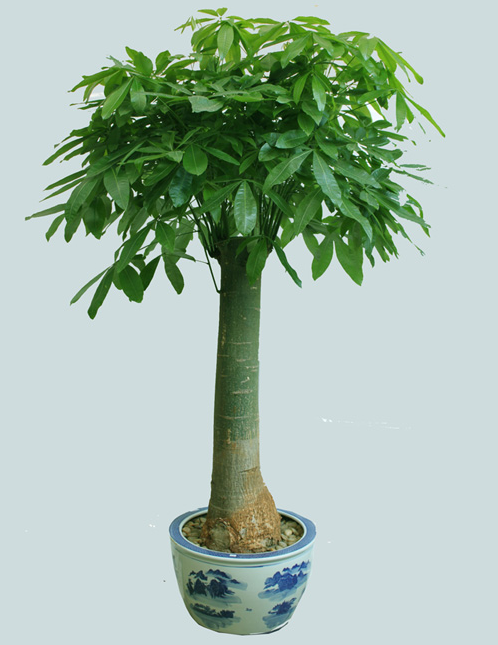
Money tree care methods:
1. Choice of environment
The money tree is highly adaptable, likes light and also tolerates shade, and grows well in full sun, half sun, or shaded locations. However, if grown in a dark place for a long time, its vitality will deteriorate. When summer arrives, it is best to shade it by 50% to avoid scorching sun exposure that causes leaf tips and leaf margins to wither and burn. For indoor ornamental cultivation, it should be placed in a spot with some scattered light, and it should not remain so for more than 30 consecutive days. If weak growth and leggy growth appear, it should gradually be exposed to sunlight. Never suddenly expose it to strong light, to prevent it from dying of shock.
2. Choice of potting soil
Most money trees bought now come with soil provided by the seller. Gardeners do not need to change the soil immediately after buying one; just grow it for now and consider changing the soil later. If changing the soil, potted money trees generally use loose garden soil or peat soil, leaf mold, and coarse sand, with a small amount of compound fertilizer or chicken manure as base fertilizer and growing medium.
3. Watering the money tree (important)
The money tree's root system is very underdeveloped. Many gardeners' money trees die mostly because of root rot. Some gardeners may ask, how often exactly should a money tree be watered, and how much water each time? It must be clearly stated here that conditions differ from place to place, and the pots and soil used also differ, so there is no fixed watering standard. So how should gardeners water? Generally speaking, watering a money tree once a month is not too little. Also, here is a little tip for gardeners: a plant will not die quickly from lack of water and will recover quickly after watering, but if it is waterlogged, it is basically beyond saving. Money trees can usually be misted more and watered less.
4. Fertilizing the money tree
Normally, if the soil is fertile enough, no fertilizing is needed. If it has been grown for a long time, consider giving light fertilizer. Never use concentrated fertilizer. For fertilizing, some common foliage fertilizers can be used, and remember to use light fertilizer.
Note: Generally speaking, money trees have been topped, so every spring, gardeners can also prune them appropriately. First, it improves appearance; second, it promotes the growth of new branches.
5. Watch for pests and diseases
If the stem surface is found to be blackened or black thread-like fibers are exposed, it is stem rot causing the money tree's stem to rot. In the early stage of the disease, spray with a 1000-fold solution of 50% water-soluble fungicide powder, once every 10 days, for 2—3 consecutive treatments. For anthracnose, spray with 800-fold 50% chlorothalonil wettable powder or 600-fold 50% carbendazim solution for control, once every 7—10 days. For cabbage caterpillars, inchworms, and red spider mites, regularly spray with 800-fold 40% omethoate or 1000-fold 50% dichlorvos, once every 7 days, spraying 2—3 times in a row.
Precautions for the money tree:
(1) Overwatering. If the potting soil remains too wet for a long time, it causes a lack of oxygen in the soil, makes some fibrous roots rot, hinders normal respiration and the absorption of water and nutrients, and causes leaves to turn yellow and fall off. After being affected, the young leaves first turn pale yellow, and then the old leaves gradually turn yellow as well. Watering should be controlled immediately, fertilizing should be suspended, and the soil should be loosened frequently to ensure good aeration.
(2) Drought and dehydration. Missing watering or watering only halfway (that is, wet on top and dry below) for a long time affects nutrient absorption and also easily causes dull, lusterless leaf color and wilting, drooping leaves. First the lower old leaves age, and gradually wither, yellow, and fall from bottom to top. At this time, water a small amount and mist the plant, let it gradually recover, and then return to normal watering.
(3) Long-term nutrient deficiency. If nitrogen fertilizer has not been applied for a long time or the pot and soil have not been changed, the soil lacks nitrogen and other nutrient elements, causing weak branches and leaves and thin, yellow leaves. The pot should be tipped out in time, replaced with new loose, fertile growing medium, and gradually given more dilute decomposed liquid fertilizer or compound flower fertilizer.
(4) Excessive fertilizing. Too much fertilizer will cause new leaves to be thick and fleshy, often uneven, while old leaves dry at the tips, scorch yellow, and fall off. Fertilizing should be stopped immediately, watering should be increased so the fertilizer flows out through the drainage hole at the bottom of the pot, or the pot should immediately be tipped out, the root ball rinsed with water, and then replanted into the pot.
(5) Hot high temperatures. In summer, if cool-loving flowers (such as cyclamen, fuchsia, and wax begonia) are placed in a hot spot under direct strong sunlight, it very easily causes young leaf tips and leaf margins to wither and burn, or leaves to yellow and fall. They need to be moved promptly to a well-ventilated, cool place.
(6) Excessive shading. If sun-loving flowers are kept for a long time in a shaded place or a spot with insufficient light, the branches and leaves will turn yellow.
(7) Soil and water tending alkaline. In most northern regions, the soil and water contain more salt and alkali. When planting acid-loving flowers such as rhododendrons, camellias, banana shrubs, gardenias, orchids, Michelia alba, and osmanthus, because the soil lacks absorbable soluble iron and other elements, the leaves gradually turn yellow. When planting, choose acidic soil and frequently water with alum fertilizer water during the growing period.
(8) Too dense and poorly ventilated. If too much nitrogen fertilizer is applied, the branches and leaves grow too luxuriantly, and with no pruning for a long time, the inner branches and leaves receive insufficient light, which easily causes leaves to turn yellow and fall. Fertilize reasonably and strengthen pruning to allow ventilation and light penetration.
(9) Dry air. When indoor air is too dry, some flowers that like humid environments, such as spider plants and orchids, often show dry leaf tips or scorched leaf margins. Attention should be paid to increasing air humidity by misting, covering with plastic film, and similar methods.
(10) Improper temperature. If the indoor temperature in winter is too low, flowers that like high temperatures are often susceptible to cold damage, causing leaves to turn yellow and, in severe cases, to wither, yellow, and die. If the indoor temperature is too high, the plant's transpiration is excessive, and the roots cannot supply enough water and nutrients, which also makes leaves turn yellow. Please remember to adjust the indoor temperature in time.
(11) Soil tending acidic. Red soil in the south tends to be acidic, and magnesium and other elements are easily lost. When planting trees and flowers that tolerate alkali or like slightly alkaline soil, such as oleander, boxwood, and winter jasmine, interveinal chlorosis and yellowing of old leaves often occur. Calcium magnesium phosphate fertilizer can be applied or a magnesium sulfate solution sprayed.
(12) Damage from pests and diseases. Leaf spot disease caused by fungal and other pathogenic infections easily causes local necrosis of leaves, with yellow spots or patches appearing; in severe cases, entire leaves wither, yellow, and fall. After infection by mosaic virus, yellow-green mottled patches appear on the leaves; when harmed by scale insects, red spider mites, and others, leaves also become locally yellow and withered, or even the whole leaf wilts, yellows, and falls. In all cases, pesticides should be sprayed promptly for control.
(13) Strong stimulation. When preventing and controlling pests and diseases, using pesticide concentrations that are too high, or being polluted by toxic gases in the air, or suddenly watering with cold water when the temperature is high, can all easily cause leaf tips or parts of the leaf surface to turn yellow and scorch, or even kill the whole plant. Therefore, pesticides should be used reasonably and sources of air pollution should be eliminated as much as possible. In midsummer, avoid watering flowers with cold water around noon. Finally, it should also be mentioned that yellow leaves on potted flowers are sometimes caused by one reason, but are often the result of multiple factors, so a correct diagnosis should be made before treating the root cause.
Precautions for repotting a money tree:
Under normal circumstances, a newly bought money tree does not need repotting that year. This is mainly to prevent the tree shape from becoming deformed. Newly introduced money tree plants do not need repotting that year, to prevent the tree shape from becoming deformed.
The most suitable season for repotting a money tree is spring, and it can also be repotted in July or August when the money tree is in a semi-dormant state. Potted money trees are usually repotted once every 1-2 years, carried out in spring when they are moved outdoors. Money trees have strict requirements for potting soil. The potting soil should be slightly moist and well drained, and acidic sandy loam containing humus can be used.
The main reason for repotting a money tree is that its root system grows larger as the plant grows. If it is always kept in a small pot, root growth will be inhibited, thereby affecting the money tree's growth. Therefore, when repotting a money tree, choose a pot one size larger.
In addition, the nutrients in the soil originally used to grow the money tree have largely been absorbed by the money tree, so the potting soil needs to be replaced. The potting soil can be a mixed soil of garden soil, river sand, and sawdust in a 3:1:1 ratio, and a small amount of soybean cake can also be added as base fertilizer.
Before potting the money tree, choose the potting soil and flowerpot well, and remove dead roots and part of the old soil. The planting depth for the money tree is usually preferably 1/2 of the swollen part, the plant should be placed in the center and upright, and the firmness of the potting soil should be moderate. When filling in the potting soil, do not damage the plant tissue, to avoid wound infection.
When repotting, place a tile or window screen over the drainage hole at the bottom of the new pot to prevent soil loss; when filling with soil, be sure not to leave gaps, otherwise water will easily escape and leak.
After potting, spray the main trunk of the money tree with a mixed solution of fungicide and insecticide, preferably so that the liquid runs down the trunk into the potting soil. In addition, do good ventilation work within 2-3 days after repotting is completed, water thoroughly for the first time after 5 days, pay attention to keeping warm in winter, and the first watering can be appropriately delayed.
The appearance, methods, and precautions of the money tree are introduced here. Be sure to pay attention during the repotting process, otherwise the money tree after repotting is very likely to die.
Money Tree Care Methods and Precautions Money Tree Care Methods and Precautions
???Related recommendations:
?Golden Camellia pictures ?Balloon flower pictures ?Ginkgo tree planting ?Uses of cactus
???Indoor plants, this article originates from [Decoration Information]
The money tree not only has an auspicious name, but is also especially beautiful as a decorative plant placed indoors. It can also regulate indoor temperature and humidity and has the effect of a natural "humidifier." Therefore, the money tree is the best choice among green plants for home decoration. The money tree can also carry out photosynthesis, absorb excess harmful gases, and provide sufficient oxygen, which is very helpful to the human body. As for the money tree's care methods, friends interested in the money tree can learn about them.
[Money Tree Care Methods]
1. Sunlight
In money tree care methods, sunlight is very important. During cultivation, the money tree should be placed in a spot indoors with sufficient sunlight. When placing it, note that the leaf surface should face the sunlight, and it should not be shaded for a long time, otherwise the branches and leaves will twist and deform. Also note that it is best to mist the money tree leaves once every 3 to 5 days. This is more conducive to photosynthesis and also makes the money tree's branches and leaves more beautiful and verdant.
2. Watering
The money tree does not have very high water requirements. Generally, if it is not watered indoors for more than ten days, waterlogging and drought will not occur. But it should still be noted that if the amount of water is too little, branch and leaf development is likely to stagnate. However, if the amount of water is too much, the roots may rot and the plant may die; the amount of water must be moderate, and then the branches and leaves will be thick and full. Indoors, it should still be watered once about every 10 days. During the peak growing season, water more; for small newly planted plants, water less.
3. Fertilizing
The money tree's demand for fertilizer is somewhat greater than that of other plants. Fertile soil includes a mixture of decomposed leaf litter, miscellaneous bone meal, soybean cake residue, and so on. This kind of fertile soil has high effectiveness and is convenient and easy to obtain. But note that it must be fully decomposed, to avoid "burning" the leaves yellow. However, special attention should be paid: during the money tree's growing period, that is, from May to September, a decomposed liquid fertilizer or flower-growing fertilizer should be applied once every 15 days. Only in this way can the effect of deep roots and lush leaves be achieved.
4. Temperature and humidity
Money tree cultivation has relatively high requirements for temperature and humidity. If the temperature is too low or the humidity is insufficient, leaf drop may occur, and in severe cases the branches may become bare, which is unfavorable for viewing and may also cause the plant to die. Money tree cultivation should maintain a temperature above 15°C, while in winter attention should be paid to cold protection and freeze protection. For indoor cultivation in summer, water once every 3-5 days. Its most suitable growing temperature is 18-30°C.
5. Repotting
A newly planted money tree does not need repotting that year, to prevent the tree shape from becoming deformed. The suitable repotting season is spring, and it can also be done in July or August, taking advantage of the plant's semi-dormant state during the high-temperature period. Money trees have strict requirements for potting soil. The potting soil should be slightly moist and well drained, and acidic sandy loam containing humus can be used.
[Precautions for Money Tree Cultivation]
1. Pay attention to ventilation.
2. Avoid direct sun exposure (scattered light is best).
3. Watering should be determined according to your own pot, soil, and wet-dry conditions, not by time.
4. When fertilizing, pay attention to using light fertilizer.
5. Control your hands. Do not move the money tree to a new spot or water it just because you have nothing else to do.
Conclusion:The money tree is a plant with very good symbolism when placed at home. It also has a very good purifying effect on the air and a great decorative effect in home decoration. It is also the best choice for gifting. The above is the money tree care method exclusively shared by the editor. I hope it can help everyone. To learn more plant care methods, please follow Aiyouwo Decoration Information.
▓ Recommended Reading
?Lucky Bamboo ?String of Coins ?Forget-me-not ?Winter Daphne ?Hydroponic Tulips?Small Potted Plants ?Cactus Flowers ?Pine Bonsai ?Miniature Coconut ?Clerodendrum thomsoniae Pictures
How to Grow a Money Tree: Potted Money Tree Care Methods and Precautions / Do Not Overwater
Gardeners are certainly familiar with the money tree. It is a very beautiful plant, and its pleasant name, graceful plant shape, and evergreen leaves make it welcomed and loved by a wide range of people. In daily life, many people grow money trees at home, so how do you grow a money tree? Below are the potted money tree care methods and precautions carefully compiled by the editor. They are very comprehensive. Friends who want to grow one should definitely take a look~
1. How to Grow a Money Tree: Create the Conditions
Growing plants indoors is not like growing them in the wild; we need to create favorable conditions for them. So for how to grow a money tree, according to its growth habits, start with soil, light, water and fertilizer, temperature, and so on, and satisfy each one. The specific requirements are all in the money tree care methods. Let's continue reading.
2. Potted Money Tree Care Methods and Precautions
1. Potting soil
If you directly buy a finished money tree from a plant market, then there is no need to consider the potting soil issue. But if we start growing a money tree from a seedling, then we need to make a good choice regarding potting soil. The details are as follows:
①Pot selection: You can use clay pots, plastic pots, porcelain pots, or ceramic pots for cultivation. As for pot size, because it is a young money tree, generally choose a pot with a diameter of 16-24 cm. Friendly reminder: when the plant grows larger, it needs to be repotted into a pot with a diameter of 24—34 cm.
②Soil selection: For how to grow a money tree, soil selection is very important. Because the money tree likes fertile, loose, well-drained sandy soil, we can choose the formula: 4 parts seedling medium, 4 parts garden soil, and 2 parts leaf mold mixed together.
2. Light
In money tree care methods, light is extremely important. It is understood that the money tree likes light and has high light requirements, so in normal times, we should give it more sun. Otherwise, once light is insufficient, the money tree's leaves will curl.
Precautions: Giving the money tree sun is good, but avoid direct sunlight, because if the sunlight is too strong, the leaves will be sunburned and develop white spots. Therefore, in summer, when giving the money tree sun, shade it appropriately.
3. Watering/humidity
For how to grow a money tree, water is certainly indispensable, but its root system is underdeveloped and its water-absorbing capacity is poor. In addition, the money tree is drought tolerant, so when watering, be sure to note: water it, but not too much, otherwise it will cause root rot. It is understood that watering the money tree once a month is acceptable.
Precautions: During the seedling stage, the potting soil should remain moist, and mist around it several times a day to increase air humidity; for mature plants, keep the potting soil on the dry side, and likewise mist around it several times a day to meet its need for highly humid air.
4. Fertilizing
In money tree care methods, fertilizing is very important. It is understood that the money tree likes fertilizer. During the growing period of young plants, we should apply decomposed 10-fold liquid fertilizer once every 20 days, but do not fertilize when summer temperatures are high or winter temperatures are low; during the growing period of mature plants, no fertilizing is needed. If the money tree's leaves turn yellow at this time, spray a 500-fold urea solution on the leaves, which can restore the leaf color.
Precautions: If you have prepared fertile soil, then the money tree does not need fertilizing. Wait until the nutrients in the soil are used up before considering fertilizing. In addition, you must not apply concentrated fertilizer, otherwise it will cause root rot. Using some common foliage fertilizers is sufficient.
5. Temperature
To grow a money tree well, temperature is also something we need to pay attention to. Because the money tree is a southern tree species, it likes a warm environment. It is best to grow it in an environment of 20-30°C.
Precautions: The money tree is not cold tolerant. Once the temperature is too low, leaf drop often occurs, and in severe cases the entire branch becomes bare. This not only affects the viewing effect but also easily causes the plant to die.
6. Pruning and repotting
In money tree care methods and precautions, pruning and repotting are what gardeners need to focus on. Every year, we need to prune the money tree once, generally carried out together with repotting. Repotting procedure: change to a larger pot and place base fertilizer at the bottom, accounting for one third of the potting soil. After that, cut off weak branches and withered leaves, and replant in soil.
7. Pests and diseases
During the money tree's growth process, it will inevitably be disturbed by pests and diseases, thereby affecting the plant's ornamental value, and this is generally caused by poor ventilation. At this time, we should pay attention and promptly identify which pest or disease it is, then solve it. Because the prevention and control of money tree pests and diseases was introduced in detail earlier, it will not be repeated here.
3. How to Grow a Money Tree So It Thrives More
In the money tree cultivation process, many people actually grow it according to the requirements, but after all, we are not professionals and often do not have time to care for it, so problems arise. So how to grow a money tree so it thrives more? It is very simple: if everyone follows the above requirements and does everything properly, it will naturally grow very vigorously, and vice versa.