When Does the Bird of Paradise Bloom? Growing Methods and Precautions
The flowers of the bird of paradise are extremely beautiful, just like a crane with its wings spread. What precautions should be taken when growing the bird of paradise? When does it bloom? Let's take a look together with Women's Network:
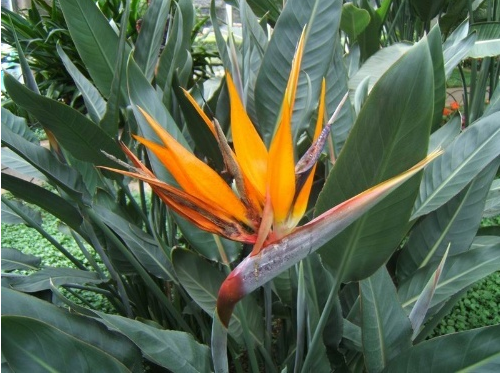
Growing methods and precautions for the bird of paradise:
1. Soil: Plant in sandy soil rich in humus, or mix coarse sand, leaf mold, peat and garden soil in equal parts. If the soil is relatively poor, put decomposed fertilizer or slow-release fertilizer into the hole when planting.
2. Watering: Ensure a sufficient and regular water supply. Except from September to February, when the plant needs to stay dry, the soil should be kept constantly moist at other times. Using a well-drained medium is the key to cultivation management. The bird of paradise is afraid of waterlogging at the cultivation site, because its fleshy roots can tolerate drought but are afraid of flooding.
3. Sunlight: The bird of paradise is a light-loving plant and needs no less than 4 hours of direct light every day, preferably bright light all day. In summer, when the light is strong, it should be shaded or placed under a shade frame to grow. In winter, it needs sufficient sunlight. If it grows too densely or lacks sunlight, this directly affects leaf growth and flower color.
4. Temperature: The bird of paradise likes a warm, humid climate and is afraid of frost and snow. The suitable growth temperature is 18-24°C from March to October, and 13-18°C from October to March of the following year. 20-22°C during the day and 10-13°C at night are more favorable for growth. The winter temperature should not be lower than 5°C.
5. Fertilizing: The growth of the bird of paradise requires fertile, slightly acidic soil and heavy fertilizer. After planting, apply fertilizer once every 7-10 days, using 0.05kg of compound fertilizer per sq m. After entering the flowering age, in the 2 months before the flowering season, supplement once a month with 0.02% potassium dihydrogen phosphate applied to the soil, or apply half that amount as a foliar topdressing.
6. Pests and diseases: The bird of paradise is prone to root rot, gray mold and bacterial damping-off. Try to spray the plant with water as little as possible, increase potassium fertilizer, and ensure good ventilation. In the early stage of disease, spray once every 10 days with a 500-fold solution of 75% chlorothalonil wettable powder, for a total of 2-3 applications. Study, all have very good beautifying effects.
When does the bird of paradise bloom:
1. Blooming time: Generally speaking, the cultivation period of the bird of paradise is very long. It is usually sown in March, and only after 2 years can the bird of paradise be planted in the field. After field planting, it is propagated by division. Once mature, it blooms every winter.
2. Blooming duration: The flowering period lasts more than 100 days.
That is all for the introduction to the bird of paradise. During cultivation, be sure to pay attention to the growing environment of the bird of paradise.
[Bird of Paradise Pictures] Growing Methods and Precautions for the Bird of Paradise
✤
The flower stem of the bird of paradise is taller than the leaves, and the inflorescence generally extends horizontally. The outer petals of this flower are orange-yellow, the inner petals are bright blue, and the stigma is pure white. The colors are diverse and very dazzling, and the shape of the flower is like a crane holding its head high and gazing into the distance, hence the name bird of paradise. The leaves of the bird of paradise are oblong-lanceolate in shape, and the flower shape is peculiar and the color is gorgeous. It can be kept in water for as long as 20 days in summer, and about 50 days in winter. It is a plant that can be grown in water and has the reputation of being the king of fresh flowers.
The bird of paradise is a perennial herbaceous plant with no stem. Its leaves are about 25-45cm long and about 10cm wide, pointed at the tip, round or wedge-shaped at the base, with wavy lower edges. The bird of paradise is an evergreen perennial herbaceous perennial flower, with a plant height of about 1-2 m, an extremely short and inconspicuous stem, and large, gracefully shaped leaves. Its flower shape is peculiar, and it is often placed as a potted plant in conference rooms, halls and other places, showing a fresh and elegant feel. In the south, it is mostly planted in courtyards, adding natural scenic charm.
✤ Growing Methods andPrecautions for the Bird of Paradise
1. Temperature conditions. The suitable growth temperature for the bird of paradise is 18-24°C. In summer, above 40°C will hinder growth, and in winter, below 0°C and under will also suffer frost damage. The general cultivation temperature is no lower than 10°C at night in winter, and it can still bloom when it is around 20°C during the day. When the bird of paradise grows within the suitable temperature range, flower buds can form in every leaf axil and scapes can emerge to produce flowers. Therefore, controlling the temperature well is the key to increasing the flower quantity of the bird of paradise.
2. Light conditions. The bird of paradise likes to grow in an environment with sufficient sunlight, but in summer it is afraid of strong sunlight exposure, so proper shading treatment should be done when cultivating it in summer. The suitable light intensity during the growth period of the bird of paradise is 30000Lx. In summer, if exposed to too much sun, the leaves will curl inward and growth will be slow. In winter, insufficient sunlight will also cause leggy leaves or slender, weak and bent petioles, making it difficult to bloom. Therefore, when growing the bird of paradise, it should not be shady in winter or exposed in summer, otherwise the yield of cut flowers will be affected.
3. Soil conditions. The bird of paradise has fleshy roots and is afraid of water accumulation, so when the soil for growing the bird of paradise is too moist and poorly ventilated, it will cause root rot. Generally, sufficient water should be supplied during the flowering period and in summer, while in early spring and after flowering, the amount of watering should be appropriately reduced. In order to increase the humidity in the air and ensure that the bird of paradise can fully absorb water, the above-ground part of the plant also needs timely spraying, so that the air humidity during the growth period is maintained at 60% to 70%.
4. Fertilizer conditions. During the growth period, the bird of paradise needs topdressing about once every 20 days, preferably with decomposed cake fertilizer water. From flower stem formation to full bloom, it needs 2 to 3 applications of compound fertilizer mainly based on phosphorus and potassium. In autumn, the amount of nitrogen fertilizer should be appropriately reduced to prevent excessive stem and leaf growth from affecting flower bud development and cold resistance. In summer, because the plant is in a semi-dormant state, the amount of fertilizer and water should be reduced. Remember to stop fertilizing in winter, and loosen the soil by weeding and hoeing to increase aeration.
Conclusion:The bird of paradise is a flower with extremely high ornamental value, and the shape of the flower is like a crane holding its head high and gazing into the distance, with a graceful form, loved by many friends. The bird of paradise can not only be grown as a potted plant and is a good helper for home decoration, but can also be placed in a courtyard for free-range growing, achieving the effects of ornamentation and air purification. The above is the introduction brought to you by the editor about bird of paradise picture appreciation, growing methods and precautions. I hope it is helpful to everyone.
Growing Methods and Precautions for the Bird of Paradise
Seedling-raising techniques
(1) Seed sowing and seedling raising: Late March each year is the best season for sowing and raising seedlings. Before sowing, soak the seeds for 2 hours in 0.3% potassium permanganate or a 500-fold solution of 50% carbendazim wettable powder, then soak the seeds in warm water at 40°C for 3 days to effectively remove the waxy layer on the seed coat surface. The seedling-raising substrate uses peat, furnace slag and fertile soil mixed in a ratio of 1:1:2 as bed soil. Sow the seeds in holes at 2.5×2.5 cm, cover with 0.3-1.0 cm of soil, at a temperature of 25-30°C, air humidity of 60%-70%, and light of 5000-10000lx. After emergence, gradually increase light. After the seedlings emerge and grow to two leaves and one heart, the first transplanting and seedling separation can be carried out, and the soil should first be disinfected, with a plant spacing of 10×10 cm. After transplanting, water thoroughly to prevent sunscald after transplanting. After that, fertilize about once every 5 days until the shade frame can be removed after autumn. Before frost, cover with film to keep warm for overwintering, and ensure more than 2 hours of ventilation and air exchange at noon every day.
After 2 years, the seedlings generally grow to about 50 cm and have 8-10 leaves. At this time, field planting should be carried out, and the best time is April-May. A two-time field planting method can be used. The first time should be slightly denser. After 1-2 years, transplant and plant with a row spacing and plant spacing of 60×60 cm in a “pin” shape. After transplanting, water thoroughly. Spray water on the leaves every day, adding 0.2% potassium dihydrogen phosphate or 0.2% potassium permanganate to the water. Transplanted sown seedlings generally begin to bloom in 3-4 years.
(2) Division propagation: Division propagation is generally suitable from April to June. Select healthy adult plants with 5-6 or more root tiller buds and no pests or diseases. Division can use the method of retaining the mother plant or not retaining the mother plant. Plant the divisions in nutrient-rich, well-ventilated, slightly acidic sandy loam or a special cultivation substrate, and planting should not be too deep. The root crown of the leaf cluster must be exposed above the ground, but the fleshy roots must not be exposed above the ground. After planting, water thoroughly immediately and protect with a shade net for a few days. Only after the seedlings begin to sprout new leaves can they be transferred to normal management.
(3) Artificial pollination: The bird of paradise relies on artificial pollination to obtain seeds. The method is: after the bird of paradise flower is fully open, gently separate the bright blue inner petals on both sides from the center, and use a small regular script brush that has been disinfected with ethanol and dried to dip the mature pollen in the middle and smear it onto the narrow, long stigma at the tip. Pollinate two flowers per inflorescence. After an interval of 2-3 days, repeat pollination once more. The best pollination time is 8-10 in the morning. Cross-pollination or self-pollination can be used. The seed-setting rate of cross-pollination is higher than that of self-pollination, reaching more than 90%. After pollination, the seeds mature in 80-100 days. Each fruit can produce about 20 seeds. The seed collection period is best when the tip of the fruit shell has just cracked. After collection, place the fruit in the sun to dry and thresh the seeds, then sow promptly after threshing.