How to grow moss? Causes of yellowing and solutions
Moss likes to grow in relatively humid environments. When moss grows into a large patch, the sight is very charming. So, how should you grow moss yourself? What should you do if the moss turns yellow as you grow it? How can you keep it green? Let's take a look together with Women's Net:
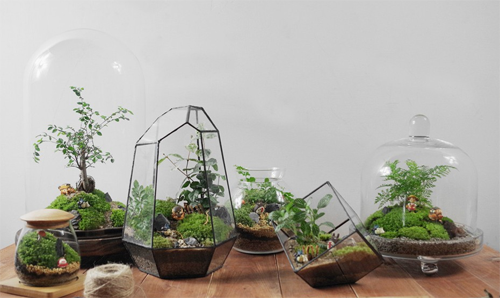
How to grow moss:
Moss is an indispensable part of reptile terrarium landscaping. "Dotting with moss" is a common technique for greening reptile enclosures. The main methods of operation are the following three.
Rapid mossing method. Place driftwood, rocks or branches in rain or river water for several days, then take them out. Evenly sprinkle taro powder on the rocks. Then wrap the rocks with moist straw or a cattail bag, tie them firmly with nylon rope, spray with water and place them in a shady, damp spot. Afterwards, frequently spray with water or rice-washing water. In this way, during the dog days of summer, it takes about two weeks, or as fast as about one week.
Moss inoculation method. Take several blocks of nutrient soil and adjust them into a paste after adding water, then dig up moss from a shady, damp place, put it into the paste-like mud and stir evenly, and evenly brush it with a small brush onto driftwood that has been soaked in rainwater. Then place it in a semi-shady, damp environment, and frequently spray water with a fine spray bottle. Before long, the moss will naturally multiply and spread. If you add some nutrients such as potato juice to the moss, the moss will grow faster and better. There is also another moss-grafting method, which is to remove impurities from the dug-up moss, wash it, dry it, grind it into fine powder, sprinkle it on moist rocks or pot soil, and then sprinkle some very thin dry fine soil on top. Then slowly immerse the whole piece of driftwood in water, and after it is completely soaked, gently lift it out and place it in a shady, damp place for cultivation. If the driftwood is too large, you can use a small spray bottle to gently moisten it. Before long, lush moss can grow.
Natural mossing method. Place the driftwood in a shallow basin, and frequently sprinkle it with fertilizer liquid made by soaking rice-washing water, vegetable leaves, or bean pod water. After each sprinkling, cover it with a plastic bag to retain moisture. If the temperature is around 20°C and it can receive a little sunlight in the morning and evening, the rocks will become covered in soft green within about a month. Although this method takes a long time, the moss that grows has no trace of artificiality, as if naturally formed. When dotting with moss for landscaping, you should also note: moss used for propagation should be collected from places with good environmental conditions such as pond edges, wall bases, tree trunks, and under forests. The placement of moss should conform to natural laws, paying attention to changes in primary and secondary status, size, gathering and scattering, and density, and following the principle of "present in shady deep valleys, absent on sunny protruding rocks." Moss should be pruned in time to appropriately set off the beauty of the stone and driftwood. Moss is suitable for growing in acidic soil. If the moss turns yellow, you can water it several times with ferrous sulfate solution.
To grow moss, there are particular requirements for temperature and watering:
1. Growth habits: Moss is not suitable for growing in dark places. It needs a certain amount of diffused light or a semi-shady environment. Most importantly, it likes humid environments and is especially intolerant of drought and dryness.
2. Environmental requirements: Diffused light or a semi-shady environment. During care, a certain amount of light should be provided,
3. Watering: Spray water multiple times a day (depending on air humidity). The relative air humidity should be kept above 80%.
4. Pot soil: Potted Malabar chestnut should often keep the pot soil moist, but there must be no standing water. The relative humidity of the environment is best kept above 80%, maintaining a moist pot soil environment.
5. Soil: Ordinary garden soil is fine, and slightly acidic soil can also be used. The pot soil should form a mound shape in the pot to increase the planting area as well as air permeability and water permeability.
6. Fertilization: Generally no fertilization is needed. Of course, you can also water with very dilute fertilizer water.
7. Temperature: The temperature must not be lower than 22°C, and it is best kept above 25°C for good growth.
What to do if the moss turns yellow:
1. Insufficient air humidity: You can move the moss to the most humid place in the home (the bathroom), increase air humidity through a humidifier or enclosed cultivation, or you can wrap it with plastic wrap during the day and uncover it at night to let the plant breathe.
2. Unsuitable soil medium: Moss dug up from the wild is best kept with 3-5 cm of soil attached. After collecting it, do not rush to plant it. If the bottom layer is too thin, you can fill it with sandy soil, spray a small amount of water, and press the roots into contact. Then when planting, you must gently compact it to prevent the plant from failing to get the best growing environment due to poor contact with the medium.
The best partners for moss are sand and gravel + peat + sphagnum moss + moss (from bottom to top). This ensures the moss has air permeability while also allowing it to get the necessary nutrients. Enclosed cultivation or open cultivation is up to you. Outdoor moss is all grown in the open, so there is no need to be too fixated on buying a sealed jar to care for moss.
In dry areas, enclosed cultivation is a must. It is still recommended to open the lid for ventilation every evening.
3. The water quality for watering is recommended to be slightly acidic. You can use a concentration of 300 ml of water + 1 or 2 drops of white vinegar to simulate a rainwater environment, making the moss greener and longer.
4. Lighting issue: Diffused-light care is sufficient. The light requirement is not high; just avoid direct sun exposure.
Moss turning black:
Cause: This situation occurs when there is too much water in the moss substrate, and the moss is soaked in water for a long time, causing the moss to rot, turn black and die. What moss needs for growth is a humid environment, not the moss itself being wet.
Solution: Increase the time with the lid open for ventilation and reduce the frequency of spraying water.
Moss growing white threads and mold
Cause: This situation is caused by poor ventilation and an overly stuffy and humid environment inside the container.
Solution: Increase the time with the lid open for ventilation, appropriately reduce the frequency of spraying water, and if conditions permit, expose it to early morning or evening sunlight for sterilization.
Moss grows in nature however it wants. When moss is transplanted into pots, keeping it alive becomes more troublesome. The methods above can solve this.
How to grow moss_What to do if moss turns yellow?
Content summary: Moss is not unfamiliar to everyone. In stagnant water, moss grows very easily. With the recent popularity of flower-growing knowledge, potted cultivation of moss plants has gradually become a trend and a plant choice for indoor decoration. So, how to grow moss? What to do if moss turns yellow?
[How to grow moss]
▍Plant profile
Moss plants, after their growth period, grow into small green plants. Their overall structure is simple, with no flowering period or fruiting period, and only two parts: rhizome and leaf body. They mostly grow on moving stone walls, or in relatively dark forests, stone crevices, and swampy areas.
Moss prefers shade. According to research findings, moss plants are composed of single cells, their body structure is simple, and cultivation is simple. They are still of great significance to the study of modern biology.
▍Cultivation methods
1. Hole planting: Moss plants mainly reproduce by spores, and vegetative propagation can also be used. They can be planted directly on flat ground. It is recommended to dig one hole every 10 cm, with 5 small moss plants per hole. If later care is successful, they will reproduce on their own.
2. Sheet planting: You can take out aged moss, prepare soil yourself, crush the soil finely, then lay the removed moss on the surface of the soil and press it firmly with your hands. When the moss is closely connected to the soil, its epiphytic ability will be enhanced. In about one week, it will grow normally.
3. Stem cutting: Moss plants have extremely strong regenerative ability. You can directly cut the moss into segments, then lay them flat on the soil and cover with a layer of fine soil.
▍Precautions
Moss plants are suitable for being cultivated alone and are not suitable for continuous cropping with other plants, because during the planting period the plant's vitality is very weak. If other plants are nearby, nutrient absorption also drops by more than 50%, making it very easy to die. Therefore, during the cultivation period of moss plants, weeds should be removed frequently.
In the cultivation of moss plants, soil directly affects vitality, and most moss plants today prefer acidic soil. During soil preparation, peat soil can be mixed in, making it more suitable for moss plant cultivation.
[What to do if moss turns yellow]
▍Causes of yellowing
The main causes of moss plants turning yellow: insufficient humidity, alkaline soil, incorrect watering, and excessive light.
▍Solutions
➀ Humidity. For moss cared for indoors, you can directly move it to an environment with heavier indoor humidity, such as a bathroom, washroom, or restroom. For potted moss cared for directly in the living room, a humidifier is needed to increase indoor moisture.
➁ Soil. Moss plants like acidic soil. When transplanting, old soil can be kept attached, about 2 cm is enough. The best choices are sand and gravel, peat, and sphagnum moss.
➂ Watering. For watering moss plants, avoid following ordinary methods. Instead, add two drops of white vinegar to the water to simulate rainwater, which can effectively improve the yellowing phenomenon.
➃ Light. Moss plants prefer shade, so direct sunlight should be avoided. Potted plants must not be placed in a sunny environment, but mainly in shady places.
Summary: This article mainly introduces information related to moss turning yellow and moss cultivation methods. Through the above, have you learned how to plant a pot of moss?
Causes of moss turning yellow. What to do if moss turns yellow
During the process of growing moss, many flower lovers may encounter the situation of moss turning yellow, which not only affects the appearance but also indicates that the moss is not growing well. So, what are the causes of moss turning yellow? What to do if moss turns yellow?
1. The environment is too dry, and air humidity is insufficient
Solution: Remember to water every day. You can use spraying to increase the surrounding air humidity. It is even better if the watering water is slightly acidic. You can appropriately add a few drops of white vinegar to simulate a rainwater environment. You can use enclosed cultivation. During the day after watering, cover it with plastic film to reduce water evaporation. In dry areas, enclosed cultivation must be used for the moss to survive. At night, proper ventilation should also be given.
2. Exposure to strong sun or leaving the moss plant in a cool, dark place for a long time, failing to meet the light needs for moss growth
Solution: Moss plants do not have high light requirements. Strong sun exposure and direct strong light are strictly forbidden, and they also must not remain in a completely shaded state for a long time. During care, simply provide appropriate diffused light.
3. The soil medium is not suitable for the growth of moss plants
When digging moss from the wild, it is best to keep 3-5 cm of soil. Before planting, first fill the bottom layer with sand and gravel, then spray a small amount of water so that the roots and soil fit tightly together. When planting, you must gently compact it, reducing soil gaps as much as possible, to avoid failing to get a good growing environment because the soil and roots do not fit well.
Moss plants like slightly acidic soil. Generally, peat soil mixed with sand and gravel is chosen to ensure the moss's air permeability. Then add some sphagnum moss or leaf mold to provide nutrients. Depending on the environment and personal circumstances, you can choose open cultivation or enclosed cultivation.