Illustrated Guide to Identifying and Controlling Aphids, Thrips, and Spider Mites on Roses
Speaking of roses, they are a plant that many people love to grow, and their blooms are truly beautiful. But when growing roses in cloudy and rainy seasons, the pests and diseases are really overwhelming. The worst part is not being able to recognize these pests. How do you identify these pests and how do you control them?
The most common pests and diseases in home rose growing are black spot, powdery mildew, aphids, thrips, caterpillars, and spider mites. You can match the symptoms and purchase the corresponding flower medications for prevention and treatment.
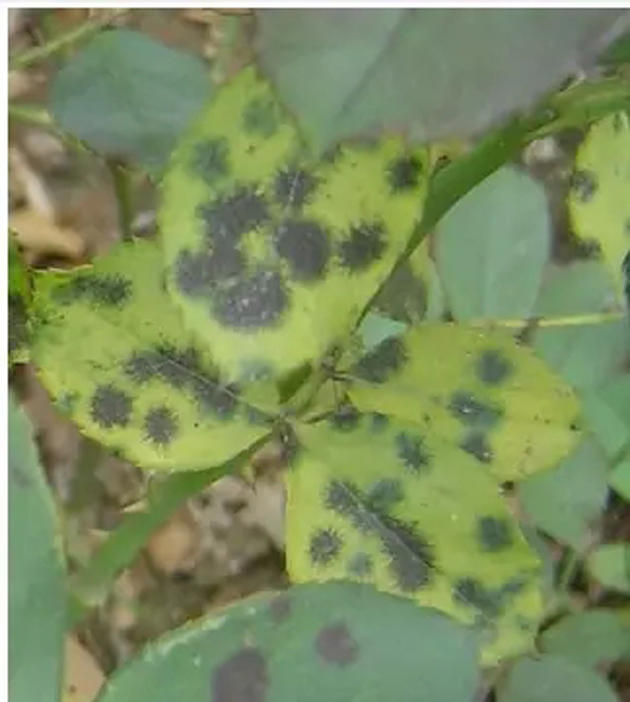
Black spot:
Black spot treatment medication. Prevention is more important than treatment, so spray fungicide regularly for prevention.
Using these two together gives better results!
Powdery mildew:
Powdery mildew treatment medication. Before spraying, remove and discard leaves that have powdery mildew.
Using them together gives better results!
Aphids:
Thrips:
Using aphid and thrips treatment medications together gives better results!
Caterpillars:
Caterpillar treatment medication
Spider mites:
Spider mite treatment medication
Spider mites are very stubborn and seem hard to kill, but that is because your method is wrong. You need to spray once every 3 days, for at least 3 consecutive times, because each time you spray, you kill the mites but the eggs are still alive, and within 3 days many more hatch out, so you must keep spraying, at least 3 consecutive times.
Precautions for using the medications:
1. The above medications have a fairly obvious effect on rose pests and diseases.
2. Medications for the same type of disease can be mixed together for better results.
3. Try not to mix medications for different diseases; they can be used alternately with a 2-3 day interval.
4. Routine pest and disease prevention is also very important. Roses need to be kept well-ventilated, protected from waterlogging, and fertilized in a timely manner.
Growing roses well at home is actually not easy; they need good care. If rose pests are left untreated, it really is very disgusting.
Rose pest and disease identification (pictures)
Roses are famously heavy feeders of pesticides, but many flower lovers do not know how to identify rose pests and diseases. This article summarizes some common rose pest and disease identification pictures along with corresponding control methods, which is very helpful for flower lovers who enjoy growing roses!
1. Rose powdery mildew:Rose powdery mildew is a fungal disease that harms roses, Rosaceae plants, and other flowers. It first infects in mid-to-late May and spreads in June and July. After being affected, a layer of white powdery substance appears on the leaf surface and tender shoots. In severe cases, the leaves turn yellow and fall off, seriously affecting plant growth and flowering.
Medication:During the spring growing period, alternately use 500-800 times diluted mancozeb, chlorothalonil, carbendazim, and thiophanate-methyl. During the disease onset period, spraying 70% thiophanate-methyl at 1000 to 1500 times dilution has a good control effect. After spraying, the white powdery layer on the affected area turns dark gray, shrinks, and disappears. The plum rain season and autumn rain period are peak times for the disease, and hot, humid, rainy summers also cause severe outbreaks. During these periods, the spraying interval should be shortened. Spraying notes: generally 8 AM to 10 AM and 4 PM to 7 PM. Spraying on a sunny, windless day is best. Note: prevention of powdery mildew is more effective than treatment, so it is best to focus on prevention by spraying the above fungicides once every 7-15 days.
2. Rose and rose black spot (black scurf):This disease is a fungal disease. Black spot overwinters on diseased plant debris and spreads through rain or sprinkler water splash; insects can also transmit it. The optimum temperature for onset is around 26°C. In rainy seasons, host plants are severely affected. Newly transplanted plants, those with heavily damaged root systems, and those with weak growth are prone to the disease. In the Beijing area, the disease occurs in mid-May and enters its peak period from July to September. In the Yangtze River basin, two disease peaks occur from May to June and from August to September.
Sweep up fallen leaves at any time and remove diseased leaves to reduce sources of infection. In winter, heavily prune severely affected plants to remove overwintering pathogens on diseased stems. When growing in pots, do not place them too densely, and it is best not to place them directly on the ground, so that the potting soil does not become too wet when water accumulates on the ground. The best option is to place them on tiered plant stands. Improve the watering method and timing: water from the edge of the pot and avoid spray watering. Do not water in the evening, so that water on the leaves cannot dry quickly, which would facilitate pathogen invasion.
Medication:DuPont Fuxing at 1000 times concentration, mancozeb once every 7 days, used alternately or mixed, sprayed on both the front and back of leaves. Cut off diseased leaves and burn them.
3. Rose aphids:The harm caused by aphids is both direct and indirect. Direct harm: they absorb the sap and nutrients of tender buds, causing leaves and flower buds to become deformed and suffer nutritional deficiency, affecting photosynthesis. Indirect harm: they pierce the surface of branches and leaves with their mouthparts, spreading bacteria and viruses and increasing the chance of infection by various diseases.
Aphid control is very simple: spray the plant surface with imidacloprid at 800-**** times dilution once every 7 days, and 2-3 times is enough.
4. Rose spider mites (mites):In flower cultivation, spider mites are a common pest. These mites are very small, less than 1 mm, round or oval, orange-yellow or reddish-brown. Because they are small and hard to find, by the time their damage is discovered, the flowers are often already seriously affected. These mites harm plants by piercing into the flower leaves with their mouthparts and sucking sap, destroying the chlorophyll, causing the leaves to show grayish-yellow spots or patches, and the leaves become withered and yellow, and even fall off. Spider mites have a strong reproductive capacity and can complete one generation in as fast as about 5 days. They prefer high-temperature, dry environments, so under hot and dry climatic conditions, they reproduce rapidly and cause severe damage.
Medication:Abamectin or JINMANZHI at 1000 times dilution, spray the medication on both the front and back of leaves and on the branches, use alternately 2 times, and it is easily dealt with, so easy and pleasant! Dear!
5. Rose downy mildew & phytophthora disease:These two diseases generally occur together. This disease can occur from the seedling stage to harvest, with adult plants suffering more severely. It mainly harms leaves, progressing from the base upward. In the early stage, light yellow nearly round to polygonal lesions form on the leaf surface, and angular leaf spot easily occurs concurrently. When the air is humid, a frost-like mold layer forms on the underside of leaves, sometimes spreading to the leaf surface. In the later stage, the lesions die and merge into patches, appearing yellowish-brown. In severe cases, all outer leaves wither and die, similar to Verticillium wilt.
Transmission routes and disease conditions: The pathogen overwinters as mycelium on seeds or on autumn and winter lettuce, and can also overwinter as oospores on diseased plant debris. It mainly spreads through airflow, watering, farming operations, and insects. The germination temperature of the pathogen spores is 6-10°C, and the suitable infection temperature is 15-17°C. Low temperature and high humidity easily cause the disease. When planting is too dense and the disease is severe, it can cause large-scale death, with a very high mortality rate.
Treatment methods:1. Move the roses to a well-ventilated, dry place with plenty of sunlight.
2. Remove all diseased leaves and destroy them centrally (important).
3. Alternately or mixed use Yikuaijing at 1000 times dilution, anthracnose medication at 1000 times dilution, and silver fala (propamocarb) at 1000 times dilution, once every 7 days, for 3 consecutive times.
6. Thrips:Thrips are insects that live by sucking plant sap and belong to the order Thysanoptera in the class Insecta. Larvae are white, yellow, or orange, while adults are brown or black. When feeding, they cause damage to leaves and flowers.
Damage: Thrips adults and nymphs rasp and suck the sap of young and tender plant tissues (shoots, leaves, flowers, fruits, etc.). The damaged tender leaves and shoots become hard, curled, and withered, and plant growth slows.
Note: Because thrips themselves are good at jumping and prefer nighttime activity, it is generally difficult to find the insects themselves. You can only analyze whether there is disease based on the shape of tender leaves.
Treatment: Spray imidacloprid or acetamiprid at 800-**** times dilution on the leaf surface and underside (with special attention to tender buds), 2-3 times, and it is easily dealt with. Also, because rose tender leaves are too smooth, causing medication or fertilizer to have insufficient adhesion, when spraying or applying foliar fertilizer you can add some silicone as an adhesive.
What to do when potted roses get bugs, pest and disease control for roses (spray medication to kill insects)
Any plant can get bugs, and roses are certainly no exception. Roses are one of the easiest indoor flowers to grow, with a very high survival rate, but if you do not care for them properly, they can also die. The most common pest on roses is spider mites, which cause the leaves to slowly turn yellow and then wither. So what should you do when roses get bugs? Let us take a look at rose pest and disease control.
1. What to do when roses get bugs: spray medication immediately
Roses are plants that love light very much. If they are kept without light for a long time, they will develop symptoms and get bugs. It is very common for roses to get bugs, and there are many reasons for it, so you need to treat the cause. The most common bugs are spider mites, aphids, thrips, and so on. What should you do when roses get bugs? Let us look at the methods for rose pest and disease control.
2. Pest and disease control for roses
1. Spider mitesSpider mites, also called red spiders, mainly include two types that harm roses: one is Tetranychus cinnabarinus, which is vermilion red, and the other is Tetranychus urticae, which is yellow to yellow-green.
Symptoms: Generally, spider mites parasitize the underside of leaves and suck sap, while many tiny yellow-white spots appear on the upper side of the leaves. Then the leaves slowly turn yellow and finally fall off. In severe cases, the entire flower buds and branches are covered with spider mites.
Solution: During the dormant period, evenly spray lime sulfur mixture. In the early stage of occurrence, spray abamectin and propargite, fenpyroximate, or lvmanteling, etc.
2. Flower aphids
Aphids gather on rose buds, tender leaves, and flower buds to suck their sap. In severe cases, there will be honey-oil-like black secretions, affecting flower quality and rose growth.
Solution: When aphids lay eggs to overwinter in autumn and winter, imidacloprid and abamectin can be used alternately for control.
3. Thrips
When thrips inhabit tender leaves, they can cause the tips to die, preventing growth. If they feed on the underside of leaves and also excrete brown substances, it will cause deformation of the leaf underside, and gray-white or gray-brown streaks will appear on both sides of the midrib, with deformation and bending.
Solution: For this kind of rose pest and disease control, you can spray medication for treatment, choosing those containing active ingredients such as imidacloprid, acetamiprid, and thiamethoxam.
4. Rose stem sawfly
It occurs one generation per year. In April-May, it lays eggs under the epidermis of the inner diameter, and after hatching it bores into the stem, then cuts downward in a spiral along the cambium while feeding, all the way to the lower part of the branch. After maturing, it makes a pupal chamber inside the branch, in the shape of a barrel.
Solution: An effective control method is to cut off the diseased branches, cutting downward until the larvae are found, and then eliminate them.
5. Short-horned grasshopper
The short-horned grasshopper bites leaves into many holes. It occurs 2 generations per year, lays eggs to overwinter in winter, and eggs hatch into adults in May-June.
Solution: You can spray 50% fenitrothion at 1000 times dilution, which has a very high mortality rate and very good effect.
What to do when potted roses get bugs: everyone can identify the cause according to the above descriptions and then treat the cause. The above is the complete answer on rose pest and disease control. Hope it can help you.