Why Do Anthurium Leaves Turn Yellow, Have Scorched Edges and Dry Up? Growing Methods and Points to Note
Everyone knows that anthuriums are very upscale and very classy, but anthuriums are not that easy to grow. With the slightest bit of neglect, the leaves turn yellow, develop scorched edges and dry up. How should this situation be handled? What points should be noted when growing anthuriums?
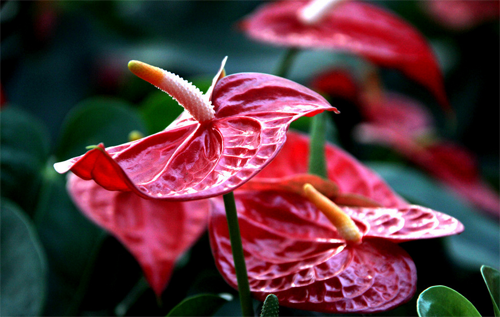
Anthurium growing methods and points to note:
1. Pot selection
As for the size of the anthurium pot, generally it is best to plant one plant per pot. When the smaller ones have grown to nearly fill the pot, they can then be permanently placed in a pot with a diameter of 20 to 25 cm.
2. Method for mixing the soil in the pot
Anthuriums like soft, fertile soil. Peat soil, leaf bran and perlite are mixed in a 3:2:1 ratio to make a potting mix.
3. Watering
I have told you before that anthuriums like moisture. During the dry periods of summer and autumn, it is best to keep the pot moist, and ordinarily mist the leaves or the surrounding area frequently to increase humidity. Winter is the flowering season - anthuriums bloom in winter, haha - so at this time you must not let them lack water, though when winter is colder do not water too much but appropriately. A reminder to everyone: when the anthurium is blooming, do not spray water on the flowers, as that easily damages them.
4. Fertilizing
For fertilizing anthuriums, we should wait until spring when we see new leaves emerge before starting to fertilize. Generally, about 10 fertilizations are enough. Wait until the last stage of autumn, after the temperature has dropped 15 degrees, then stop adding fertilizer. So in late autumn, winter and the first few days of spring, do not fertilize at all. Anthuriums like fertilizer but cannot tolerate too much of it - everything must be moderate.
5. Control room temperature and light well
18°C to 28°C is the most suitable temperature for anthurium growth. The maximum must not exceed 35°C, and the minimum must not be below 14°C; below 10°C there may be a risk of cold damage. However, if the anthurium is exposed to overly strong light, it may cause leaf discoloration, scorching and other phenomena. So whether room temperature and light are managed well or poorly directly affects whether the quality of this potted flower is good or not.
In summer, it is best to place it in a bright spot indoors on the shady side with scattered light, or it can be placed outdoors in a spot with sunlight but no direct exposure. In winter, it is best to keep it on the sunny side indoors.
Why do anthurium leaves turn yellow, have scorched edges and dry up?
1. Metabolism
If you find an anthurium leaf turning yellow, pay attention to observing the condition of the other leaves. If the leaves are fresh tender yellow-green while the flowers are growing well, it means new leaves are growing, and old leaves turning yellow and dropping off is a normal phenomenon.
2. Unsuitable soil
Most areas in the north have media and water with relatively high saline-alkali content. Because the medium lacks the soluble iron that the plant needs to absorb, the leaves will gradually lose their green color and turn yellow. Solution: use oxalic acid and the like to treat the medium and the water used for watering.
3. Overwatering
When the anthurium's new leaves turn yellow while the old leaves remain normal, this situation is generally caused by watering too much or too frequently, which keeps the medium in the pot overly wet for a long time, or even waterlogged, causing some fibrous roots to rot, hindering normal respiration and nutrient absorption, and causing the leaves to gradually turn yellow and drop off.
Solution: water normally.
4. Dry air
In winter, when the air indoors where plants are grown is excessively dry, the leaf tips often dry up and turn yellow, or the leaf margins become scorched, or scorched spots and curled edges appear on the leaves. Solution: according to the growth characteristics of the anthurium, appropriately increase air humidity.
5. Excessive shading
If the anthurium is kept for a long time in a shaded spot or a place with insufficient light, it will lead to weak growth, thin and yellow leaves, and no flowering or very little flowering. Solution: according to the growth characteristics of the anthurium, appropriately increase light intensity.
6. Unsuitable temperature
If the indoor temperature in winter is too low, the leaves will turn yellow; if the room temperature is too high, the plant transpires excessively and the roots cannot supply enough water and nutrients, which will also make the leaves turn yellow. Solution: keep the temperature in the greenhouse relatively stable.
7. Uneven fertilizing
Fertilizing too little, or not repotting or changing the soil for a long time, leads to a lack of nitrogen and other nutrients in the soil, causing weak branches and leaves and thin, yellow leaves. In addition, excessive fertilizing can also cause new leaves to be thick and uneven, while old leaves dry at the tips and turn scorched yellow and drop off. At this point, fertilizing should be stopped immediately, watering increased, and part of the old soil removed and replaced with new potting soil, with normal management carried out.
The anthurium growing methods and the problems that appear during the growing process are introduced here. To grow anthuriums well still requires patience.
Why do anthurium leaves turn yellow, have scorched edges and dry up
Anthuriums can be seen in many places. Anthuriums are ornamental, with unique flowers and bright colors, and are welcomed by many people. When growing anthuriums, one problem often appears - the anthurium leaves turn yellow. Below, the causes of anthurium leaves turning yellow and the solutions are introduced.
Cause 1 of anthurium leaves turning yellow: normal yellowing of leaves due to metabolismIf you find an anthurium leaf turning yellow, pay attention to observing the condition of the other leaves. If the leaves are fresh tender yellow-green while the flowers are growing well, it means new leaves are growing, and old leaves turning yellow and dropping off is a normal phenomenon.
2. Unsuitable soil causing yellow leavesMost areas in the north have media and water with relatively high saline-alkali content. Because the medium lacks the soluble iron that the plant needs to absorb, the leaves will gradually lose their green color and turn yellow. Solution: use oxalic acid and the like to treat the medium and the water used for watering.
3. Overwatering causing yellow leavesWhen the anthurium's new leaves turn yellow while the old leaves remain normal, this situation is generally caused by watering too much or too frequently, which keeps the medium in the pot overly wet for a long time, or even waterlogged, causing some fibrous roots to rot, hindering normal respiration and nutrient absorption, and causing the leaves to gradually turn yellow and drop off. Solution: water normally.
4. Dry air causing yellow leavesIn winter, when the air indoors where plants are grown is excessively dry, the leaf tips often dry up and turn yellow, or the leaf margins become scorched, or scorched spots and curled edges appear on the leaves. Solution: according to the growth characteristics of the anthurium, appropriately increase air humidity.
5. Excessive shading causing yellow leavesIf the anthurium is kept for a long time in a shaded spot or a place with insufficient light, it will lead to weak growth, thin and yellow leaves, and no flowering or very little flowering. Solution: according to the growth characteristics of the anthurium, appropriately increase light intensity.
6. Unsuitable temperature causing yellow leavesIf the indoor temperature in winter is too low, the leaves will turn yellow; if the room temperature is too high, the plant transpires excessively and the roots cannot supply enough water and nutrients, which will also make the leaves turn yellow. Solution: keep the temperature in the greenhouse relatively stable.
7. Uneven fertilizing causing yellow leavesFertilizing too little, or not repotting or changing the soil for a long time, leads to a lack of nitrogen and other nutrients in the soil, causing weak branches and leaves and thin, yellow leaves. In addition, excessive fertilizing can also cause new leaves to be thick and uneven, while old leaves dry at the tips and turn scorched yellow and drop off. At this point, fertilizing should be stopped immediately, watering increased, and part of the old soil removed and replaced with new potting soil, with normal management carried out.
Solutions for anthurium leaves turning yellow1. When yellow leaves appear on an anthurium, pay attention to checking for root rot; once there is root rot, cut it off promptly.
2. Excessive watering or excessive light both easily cause yellow leaves and curled edges; pay attention to adjusting the position of the potted plant.
3. Anthuriums have wide leaves and large flowers, so when misting, also wipe the flowers and leaves at the same time. Keeping them fresh and clean is the key to a beautiful plant.
4. Anthurium flowers are slightly toxic, with the toxin mainly coming from the sap. Never ingest them by mistake, and wash your hands after each time you care for them.
5. Anthuriums are best grown outdoors, or in a well-ventilated corner that is not easily touched.
Anthurium growing methods and points to note 1. Pot selectionAs for the size of the anthurium pot, generally it is best to plant one plant per pot. When the smaller ones have grown to nearly fill the pot, they can then be permanently placed in a pot with a diameter of 20 to 25 cm.
2. Method for mixing the soil in the potAnthuriums like soft, fertile soil. Peat soil, leaf bran and perlite are mixed in a 3:2:1 ratio to make a potting mix.
3. Watering and humidity controlI have told you before that anthuriums like moisture. During the dry periods of summer and autumn, it is best to keep the pot moist, and ordinarily mist the leaves or the surrounding area frequently to increase humidity. Winter is the flowering season - anthuriums bloom in winter, haha - so at this time you must not let them lack water, though when winter is colder do not water too much but appropriately. A reminder to everyone: when the anthurium is blooming, do not spray water on the flowers, as that easily damages them.
4. Fertilizing to supplement the plantFor fertilizing anthuriums, we should wait until spring when we see new leaves emerge before starting to fertilize. Generally, about 10 fertilizations are enough. Wait until the last stage of autumn, after the temperature has dropped 15 degrees, then stop adding fertilizer. So in late autumn, winter and the first few days of spring, do not fertilize at all. Anthuriums like fertilizer but cannot tolerate too much of it - everything must be moderate.
Hydroponic anthurium growing methods and how to deal with yellow leaves on hydroponic anthuriums
The anthurium is a plant introduced to China from abroad, and it currently has a fairly wide distribution range in China. Many people like to grow it at home. The most common anthurium growing method we use ordinarily is soil culture. In fact, anthuriums are also suitable for hydroponic growing. The hydroponic growing method is also very simple.
Hydroponic anthurium growing methods
1. First, disinfect the anthurium's roots. You can use clean water (tap water left to sit for 2 days) to rinse off the growing medium, then soak in a 1000-fold dilution of potassium permanganate for 30 minutes to disinfect. After washing clean, cut off old roots and residual roots, and remove the flowers.
2. Then, place the anthurium plant in a container and fill it with expanded clay pellets, then dilute rooting powder according to the ratio and spray the pellets damp. Note that there should not be too much standing water below; if there is too much water, just pour it off.
3. During routine management, pay attention to changing the water regularly. Generally in spring and autumn, change the water once every 5-7 days; in winter, change it once every 7-10 days; in summer, when temperatures are high, change it once every 2-3 days. When changing the water, do not fill it too full - let at least 1/2 of the plant's roots be exposed above the water surface, so that the exposed part can absorb enough oxygen.
4. Anthuriums like a warm, humid, shady environment. Ordinarily they should be placed in a ventilated spot with scattered light. In summer, it is best not to exceed 28°C; in winter, temperatures below 14°C will cause cold damage, so warmth must be maintained. Relative humidity must not be below 80%, otherwise the edges of the leaves and the red spathes will dry up. Pay attention to misting to ensure air humidity.
How to deal with yellow leaves on hydroponic anthuriums
1. Add water promptly. Frequently check the water level in the hydroponic container. When the water level is below 1/3 of the roots, replenish water promptly. As long as there is enough water in the hydroponic container, there is no need to sprinkle water on the leaves every day. If the leaves get dirty, gently wipe them with a damp cloth.
2. Add nutrient solution at the right time. How often to change the water for a hydroponic anthurium does not really matter; the key is to get the nutrient solution content in the water right. So to ensure there are enough nutrients in the water, when adding water to the container, drip in a few drops of nutrient solution. As for exactly how many drops, you can be flexible according to the anthurium's growth. At minimum, drip two drops each time, then observe the plant's growth; if normal, maintain the status quo, and if growth is poor, add appropriately more.
What to do if a hydroponic anthurium does not bloom
1. Water. When growing anthuriums hydroponically, use sun-exposed tap water, and when drying it do not place it directly in sunlight, otherwise green algae will form. Change the water once every 15 days.
2. Fertilizing. To make the flowers bloom more brilliantly, spray potassium dihydrogen phosphate foliar fertilizer once each in the morning and evening.
3. Humidity and light. Spray water on the leaves every day to maintain the anthurium's humidity. As for light, avoid direct sun exposure, and shade when necessary. Routine maintenance with scattered light is enough. Temperature: hydroponic anthuriums do not have high temperature requirements; between 5 and 30 degrees is fine.
Measures to prevent root rot in hydroponic anthuriums
1. Oxygen-increasing measures. Lack of oxygen in the water is the main cause of root rot, so the dissolved oxygen content in the water should be increased at the right time. The best way to increase oxygen in water is to make the water flow. You can hold the plant with one hand and shake the vase with the other; shaking for 1 minute can increase the dissolved oxygen content in the water by 30%. You can also drip a little hydrogen peroxide into the water, or first take out the anthurium and use an oxygen pump for fishkeeping to "supplement oxygen" to the water.
2. Environmental control. Hydroponic anthuriums grow almost completely exposed to the environment, so controlling their surrounding environment is especially important. The plant should be placed in a spot with scattered light, with temperature controlled: in summer it must not be higher than 28°C, and in winter it must not be lower than 14°C. Appropriately increase environmental humidity; indoor relative humidity should reach above 80%, and humidity can be increased by misting.
Hydroponic growing mainly requires attention to the amount of water and the cleanliness of the water, and before growing, the water must be disinfected. In the later stages of growing, attention also needs to be paid to temperature control. In the later stages of anthurium growing, yellow leaves, failure to bloom and root rot may appear, and these all have corresponding handling measures that everyone can learn more about.