A Detailed Guide to Ivy Cultivation Methods, Precautions and Benefits
Ivy stays green all year round, no matter how low the winter temperature drops, it will not die. What benefits does growing ivy at home have? What are the cultivation methods for ivy?
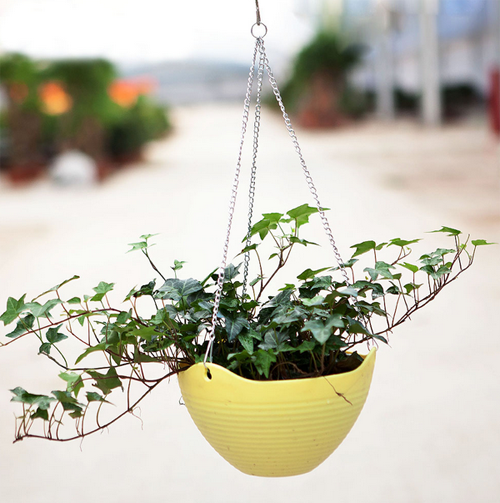
Ivy cultivation methods and precautions:
1 The temperature must be suitable. Ivy by nature prefers warmth, and its optimum growing temperature is 20°C-25°C, so it is best kept indoors. In summer, pay attention to air circulation and suitable temperature; in winter, the lowest temperature must be kept at 5°C. Of course, it can generally be kept at 10°C.
2 Light exposure must be moderate. Only then can the leaf shape stay uniform and the leaf color vivid. But also avoid direct strong light, because too much strong light will trigger sunscald.
3 Watering must be moderate. During the growing season, water when the soil is dry (that is, do not let the potting soil get too wet, nor too dry). If there is too much water, it will cause root rot and leaf drop. Especially in winter when the temperature is on the low side, watering must be controlled even more; just keep the potting soil slightly moist.
4 Reasonable fertilizing. When growing ivy at home, the potting soil can be a mix of rotted leaves or peat soil plus 1/4 river sand and a small amount of bone meal. During the growing season, apply a dilute cake fertilizer solution once every 2 to 3 weeks. Generally do not fertilize in summer and winter. When fertilizing, also be careful not to favor nitrogen fertilizer alone. When fertilizing, also be careful not to soil the leaves, so as to avoid causing the leaves to scorch.
Precautions:
Avoid overly abundant sunlight, and grasp the temperature accurately as well. As well as reasonable pruning, so that its branches and leaves can be kept lush.
What benefits does ivy have:
1. The beautiful meaning of youth and youthfulness
When people mention ivy, they think of a stretch of emerald-green plants and ivory towers representing knowledge one after another. The top American prestigious schools, and also the university alliance in the United States that has produced the most Rhodes Scholars, are all called the Ivy League. It seems that when we speak of ivy, we think of words like young, youthful, hope and vitality. This is not only because of its emerald-green appearance, but also because people have given it a flower language of infinite youth, as if it belongs only to young people in their youth and their time, and to their pure friendship, love and so on while on campus.
2. A healthy and eco-friendly ornamental plant
Ivy is most often planted on outdoor walls or in courtyards, or grown in indoor hanging baskets. No matter where it is, its vitality is vigorous: it climbs like a gecko and spreads out like a spider web. Every late spring and summer we see a stretch of emerald green. Its leaves are like maple leaves, and at each flowering period it also opens small pale yellow-white flowers, very beautiful and fresh. It has become a popular landscaping ornamental plant. Whether in an outdoor environment or indoors, it can bring a stretch of emerald green and bring hope, especially indoors where it is a very eye-pleasing green plant. It can play a role in decoration and beautification, and can improve the naturalness and freshness of the owner's living environment. Moreover, it is also a very healthy and eco-friendly ornamental plant. Ivy can purify indoor air and effectively remove indoor trichloroethylene, hydrogen sulfide, benzene, phenol, hydrogen fluoride and ether, etc., bringing great benefits to human health. Ivy can effectively resist the carcinogens in nicotine. Through the tiny stomata on its leaves, ivy can absorb harmful substances and convert them into harmless sugars and amino acids.
3. It has good medicinal value
Ivy also has good medicinal value. The whole plant can be used as a Chinese herbal medicine. It can clear heat and reduce internal heat, has a good protective and nourishing effect on the human liver, relieves pain in body parts, and can also reduce swollen abscesses, with a good disinfecting and sterilizing effect. In addition, ivy also has a good cosmetic effect, able to firm the skin and reduce edema.
That is all for the introduction to ivy's benefits and cultivation methods. Friends who like it, hurry up and grow a pot, and give your home a change of environment.
Ivy's Benefits and Effects, Ivy Cultivation Methods and Precautions
Growing some green plants at home is a very good choice. It can both decorate the home and improve indoor air quality. Many plants also have the function of absorbing harmful gases, and ivy is one of them. Below, the editor will introduce ivy cultivation methods and precautions here, hoping it will help everyone understand how to grow ivy.
Ivy's Benefits and Effects:
The beautiful meaning of youth and youthfulness:
When people mention ivy, they think of a stretch of emerald-green plants and ivory towers representing knowledge one after another. Famous American universities are all called the Ivy League. It seems that when we speak of ivy, we think of words like young, youthful, hope and vitality. This is not only because of its emerald-green appearance, but also because people have given it a flower language of infinite youth, as if it belongs only to young people in their youth and their time, and to their pure friendship, love and so on while on campus.
A healthy and eco-friendly ornamental plant:
Ivy is most often planted on outdoor walls or in courtyards, or grown in indoor hanging baskets. No matter where it is, its vitality is vigorous: it climbs like a gecko and spreads out like a spider web. Every late spring and summer we see a stretch of emerald green. Its leaves are like maple leaves, and at each flowering period it also opens small pale yellow-white flowers, very beautiful and fresh. It has become a popular landscaping ornamental plant. Whether in an outdoor environment or indoors, it can bring a stretch of emerald green and bring hope, especially indoors where it is a very eye-pleasing green plant. It can play a role in decoration and beautification, and can improve the naturalness and freshness of the owner's living environment. Moreover, it is also a very healthy and eco-friendly ornamental plant. It can not only green the environment but also purify the air, absorb indoor waste gases and release oxygen through photosynthesis, among many other effects. It is a good plant for absorbing formaldehyde.
It has good medicinal value:
Ivy also has good medicinal value. The whole plant can be used as a Chinese herbal medicine. It can clear heat and reduce internal heat, has a good protective and nourishing effect on the human liver, relieves pain in body parts, and can also reduce swollen abscesses, with a good disinfecting and sterilizing effect. In addition, ivy also has a good cosmetic effect, able to firm the skin and reduce edema.
Ivy cultivation methods:
Ivy cultivation method 1: Transplanting
When potted, pay attention to shading in summer, and move it indoors to overwinter in winter. During the growing season, keep the potting soil moist, do not let it get too dry, and also pay attention to ventilation. It is advisable to apply thin, dilute fertilizer, 2-3 times a year is enough; if too much fertilizer is applied, the plant will lose its graceful characteristics. When planting out, heavy pruning should be carried out to promote branching. After that, prune appropriately once every spring, cutting the main vine short to control excessive growth. Usually pay attention to environmental ventilation.
Ivy cultivation method 2: Soil
Ivy is not strict about soil, tolerates poor soil, and prefers moist, loose, fertile sandy soil, avoiding saline-alkaline soil. Generally, fertile loose soil is mostly used as the potting medium, such as garden soil and leaf mold mixed in equal amounts. It can also be made from leaf mold, peat soil and fine sandy soil plus a small amount of base fertilizer, or mixed from garden soil, about 1/4 plant ash, and a small amount of base fertilizer. Plant ash can both keep the potting soil loose and breathable, and provide more potassium fertilizer to meet ivy's growth needs. It can also be grown in sphagnum moss alone.
Ivy cultivation method 3: Light
Ivy is a typical shade-loving vine flower and shrub. It tolerates shade and moisture, and can also grow in a full-light environment. It can be grown long-term in a bright room. In a dark room, as long as supplementary lighting is provided, it can also grow well. It grows well under warm and humid climate conditions, and is not cold-tolerant.
In spring, when branches and leaves sprout abundantly, whether it is a variegated or green-leaf variety, it should be placed in the sun to receive sufficient light, so that the branches and leaves that grow out will be lush and sturdy. Usually it should be placed under diffused light so that the leaf color becomes deep green and glossy. Variegated varieties have even more beautiful leaf color in a shaded environment. In the intense heat of summer, it must be placed in a cool, ventilated place.
Ivy cultivation method 4: Watering
The plum rain season and high summer temperatures are when you must be most careful. For ivy placed outdoors during the plum rain season, as soon as there is standing water in the pot, pour it out promptly, so as to avoid the roots being soaked for a long time and rotting. In summer, the ambient temperature is high, which is unfavorable to ivy growth; growth stalls above 30°C, so it is better to use more foliar water spraying and watering. Insufficient water makes the plant's base prone to leaf drop; too much watering easily causes root rot. You can choose to water in the early morning or evening, so as to avoid a large difference between soil temperature and water temperature, which causes the root system to suffer stress and injury, ultimately leading to the plant withering and dying.
In winter, put it in a greenhouse to overwinter. Indoors, keep the air humidity up and do not let it get too dry, but the potting soil should not be too wet. When transplanting, be careful to keep soil around the roots, which makes it easier to survive.
Ivy cultivation method 5: Pest control
Strengthening ventilation and air permeability can reduce the occurrence of pests. Ivy often suffers from aphids in spring, and under conditions of high temperature, dryness and poor ventilation, it is also prone to damage from red spider mites, scale insects and mites, so spray pesticides for control early.
In the stuffy and hot summer climate, pests are likely to occur, mainly scale insects, especially numerous on the backs of leaves and on leaf stalks. Strengthening ventilation and air permeability can reduce the occurrence of pests. If there are few pests, you can brush them clean with an old toothbrush dipped in soapy water. If there are many pests, you can spray and kill them with a 800-fold dilution of 40% omethoate, spraying once every 7 days, for 2 to 3 consecutive sprayings.
Precautions for growing ivy:
1. The temperature must be suitable. Ivy likes warmth by nature, and its optimum growing temperature is 20°C-25°C. It fears heat and is not cold-tolerant. Therefore, when keeping it indoors, pay attention to ventilation and cooling in summer. In winter, the room temperature is best kept above 10°C, and must not be lower than 5°C.
2. Reasonable fertilizing. For home-grown ivy, the potting soil should be a culture soil made by mixing leaf mold or peat soil plus 1/4 river sand and a small amount of bone meal. During the growing season, apply a dilute cake fertilizer solution once every 2-3 weeks. Generally do not fertilize in summer and winter. When fertilizing, never favor nitrogen fertilizer alone, otherwise the patterns and patches on the leaves of variegated varieties will fade to green. The ratio of nitrogen, phosphorus and potassium is preferably 1:1:1. In the peak growing season, you can also spray 1-2 times a 0.2% potassium dihydrogen phosphate solution on the leaves, which will make the leaf color look even more beautiful. But note that when applying liquid fertilizer, avoid soiling the leaves, so as to avoid causing the leaves to scorch.
3. Light must be moderate. Ivy likes light and is also fairly shade-tolerant. Grown under semi-light conditions, its internodes are shorter, the leaf shape is uniform and the leaf color is vivid, so it is best kept indoors in a bright place. If in spring and autumn you can each choose a period to place it outdoors in a shaded place, so that it sees a bit more sunlight in the morning and evening, then it will be full of vitality and the leaves green and bright. But be careful to prevent direct strong light, otherwise it easily causes sunscald.
4. Moderate watering. During the growing season, water when dry and let it dry between waterings; do not let the potting soil become overly moist, otherwise it easily causes root rot and leaf drop. In winter when room temperature is low, watering must especially be controlled; just keep the potting soil slightly moist. The northern winter climate is dry, so it is best to spray-wash the leaves once a week with clean water close to room temperature, to maintain air humidity; then the plant will look lively and the leaf color tender green and glossy.
To do a good job of growing ivy, just follow the ivy cultivation methods and precautions introduced above, and I hope it helps everyone understand how to grow ivy.
Ivy cultivation methods and precautions
Ivy by nature likes a warm, shaded environment and avoids direct sunlight, but likes sufficient light. It is fairly cold-tolerant, highly resistant, and not strict about soil and water requirements, with neutral and slightly acidic soil being best. Morphological characteristics and uses: a perennial evergreen woody vine plant. It grows by climbing, and the stem can reach more than 20 m, with clinging roots on it and scales on the young branches. The leaves have two forms: one is the triangular or halberd-shaped leaf on sterile branches, with entire margins or three shallow lobes; the other is the lanceolate leaf on fertile branches, with entire margins and a slender leaf stalk. Ivy is a large indoor potted plant, generally used to decorate spacious living rooms and studies. How to grow ivy well is what many friends care about more. Next, Xiao Qi will tell everyone about ivy cultivation methods and precautions.
Ivy cultivation methods
Ivy, a shade-loving vine plant, can generally be grown well in the climate of the south. It is often cultivated along roadsides, on house walls, in courtyards and so on.
1. Temperature: Ivy likes warmth by nature, and its optimum growing temperature is 20°C-25°C. It fears heat and is not cold-tolerant. Therefore, when keeping it indoors, pay attention to ventilation and cooling in summer. In winter, the room temperature is best kept above 10°C, and must not be lower than 5°C.
2. Light: Ivy likes light and is also fairly shade-tolerant. Grown under semi-light conditions, its internodes are shorter, the leaf shape is uniform and the leaf color is vivid, so it is best kept indoors in a bright place. If in spring and autumn you can each choose a period to place it outdoors in a shaded place, so that it sees a bit more sunlight in the morning and evening, then it will be full of vitality and the leaves green and bright. But be careful to prevent direct strong light, otherwise it easily causes sunscald. Although it is a shade plant, it is rather unusual in that it quite likes light for its leaves. So generally people who like growing flowers and plants grow it under semi-light conditions. Indoors, it is recommended to place it in a place with fairly sufficient light. In summer, provide appropriate shading. In spring and autumn, it is best to provide morning and evening light, and shade it during other periods.
3. Watering: During the growing season, water when dry and let it dry between waterings; do not let the potting soil become overly moist, otherwise it easily causes root rot and leaf drop. In winter when room temperature is low, watering must especially be controlled; just keep the potting soil slightly moist. The northern winter climate is dry, so it is best to spray-wash the leaves once a week with clean water close to room temperature, to maintain air humidity; then the plant will look lively and the leaf color tender green and glossy. Humidity and watering are the key to keeping grown ivy evergreen. First, ensure that the soil it is grown in is neither too wet nor too dry; it is recommended to keep the soil neither dry nor wet. For watering, water when it has dried out.
4. Fertilizing: For home-grown ivy, the potting soil should be a culture soil made by mixing leaf mold or peat soil plus 1/4 river sand and a small amount of bone meal. During the growing season, apply a dilute cake fertilizer solution once every 2-3 weeks. Generally do not fertilize in summer and winter. When fertilizing, never favor nitrogen fertilizer alone, otherwise the patterns and patches on the leaves of variegated varieties will fade to green. The ratio of nitrogen, phosphorus and potassium is preferably 1:1:1. In the peak growing season, you can also spray 1-2 times a 0.2% potassium dihydrogen phosphate solution on the leaves, which will make the leaf color look even more beautiful. But note that when applying liquid fertilizer, avoid soiling the leaves, so as to avoid causing the leaves to scorch. Ivy is not very particular about fertilizer. It is generally recommended to provide some fertilizer for nutrition in the early growth stage. Fertilizing is not recommended in summer and winter. After flowering, appropriate fertilizer can be provided for the nutrients needed for flowering the next year.
5. Pruning should be timely: When small seedlings are potted (best with 3 plants per pot) and grow to a certain height, pay attention to pinching them back in time to encourage more branching, so the plant shape looks full.
6. Potted plants should have supports: In order to let them climb upward, adding infinite charm to the beautification of the room space, or grow them as hanging baskets, with soft branches and vines naturally drooping and swaying, extremely elegant, blending in the refreshing enjoyment of evergreen throughout the four seasons. Therefore, it is a rare trailing vine foliage plant for modern living rooms, offices, conference rooms and similar places. Generally repot once every year or two.
Precautions for growing ivy
Growing ivy can in fact generally be done with rough, extensive care. However, in order to keep it evergreen, some things also need attention. During high summer temperatures, it is recommended not to place it under strong sunlight. During the day, place it in a ventilated place and sprinkle some water on the leaves to lower the temperature. The most important thing is to avoid fertilizing, otherwise the leaves will turn yellow under the effect of high temperature. In seasons with a lot of rain, growing it in the south easily causes water accumulation due to overwatering. In such seasons, reduce watering as much as possible. Then root rot can be avoided.
1. Ivy cultivation and management are simple and extensive, but it needs to be planted in a place with moist soil and air circulation.
2. In summer, keep it under a shade shed; in winter, put it in a greenhouse to overwinter. Indoors, keep the air humidity up and do not let it get too dry, but the potting soil should not be too wet.
3. Pay attention to pest and disease control.
Diseases mainly include algal leaf spot, anthracnose, bacterial leaf rot, leaf spot, root rot, blight, etc. Among pests, the damage from leaf roller borers, scale insects and red spider mites is relatively serious.
Control methods: First, in late autumn or early spring, clear away dead branches and fallen leaves and promptly cut off diseased branches and diseased leaves and burn them; second, before the disease occurs, spray a 600-fold dilution of 65% zineb for protection; third, fertilize and water reasonably, and pay attention to ventilation and light penetration;.
Ivy propagation methods
1. Seed propagation
For ivy seed propagation, it mainly means harvesting when the fruit is ripe, piling it up for after-ripening, soaking in water and rubbing, washing the seeds clean and drying them in the shade, then they can be sown. They can also be stored layered in wet sand and sown in spring the next year. After sowing, cover with 1 cm of soil, and cover with grass to retain moisture and humidity. When the seedlings emerge, set up a shed for shading. In the second spring, transplant or after the seedlings are established, grow them into larger plants.
2. Cuttage propagation
The cuttage propagation method for ivy is to use tender branches with aerial roots in the growing season for cuttings, which are the easiest to survive. After cutting, set up a closed plastic film arched shed and shade it, keeping the air humidity at 80%-90%, but the bed soil should not be too wet, so as to avoid the cuttings rotting. They will root in about 30 d.
3. Layering propagation
The layering propagation of ivy is done in spring and autumn, using the wavy layering method. After ring-barking the part to be buried in soil, it roots very easily. It is a relatively simple propagation method.
Ivy's value
1. Ornamental and eye-pleasing
Ivy is most often planted on outdoor walls or in courtyards, or grown in indoor hanging baskets. No matter where it is, its vitality is vigorous: it climbs like a gecko and spreads out like a spider web. Every late spring and summer we see a stretch of emerald green. Its leaves are like maple leaves, and at each flowering period it also opens small pale yellow-white flowers, very beautiful and fresh. It has become a popular landscaping ornamental plant. Whether in an outdoor environment or indoors, it can bring a stretch of emerald green and bring hope, especially indoors where it is a very eye-pleasing green plant that can play a role in decoration and beautification.
2. Fresh air
It can improve the naturalness and freshness of the owner's living environment. Moreover, it is also a very healthy and eco-friendly ornamental plant. It can not only green the environment but also purify the air, absorb indoor waste gases and release oxygen through photosynthesis, among many other effects.
3. Medicinal value
Ivy also has good medicinal value. The whole plant can be used as a Chinese herbal medicine. It can clear heat and reduce internal heat, has a good protective and nourishing effect on the human liver, relieves pain in body parts, and can also reduce swollen abscesses, with a good disinfecting and sterilizing effect. In addition, ivy also has a good cosmetic effect, able to firm the skin and reduce edema.