Bougainvillea Growing Methods and Precautions: How Long Is the Water-Control Period?
The leaves and flowers of bougainvillea look the same in shape; only the color of the leaves and the color of the flowers differ. It is very beautiful and very suitable for container growing, but there is also one problem: when growing bougainvillea well, you need to control water. How long is the water-control period?
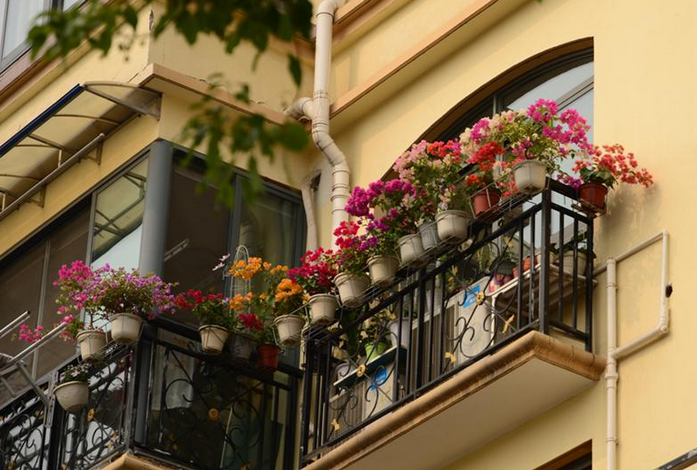
Full-sun environment
Bougainvillea is an extremely sun-loving plant. If you want an explosion of blooms in autumn, a full-sun environment will produce a greater quantity of flowers.
The importance of fertilizer
Generally, in spring, a slow-release fertilizer with balanced nitrogen, phosphorus, and potassium or decomposed organic manure is used, but by August and September, when flower buds begin to differentiate and form, switch to a blooming fertilizer with a high phosphorus content or decomposed bone meal with a relatively high phosphorus content, and also frequently use quick-acting water-soluble phosphorus
fertilizer to spray the leaves and drench the roots.
Pruning and pinching
During the flowering period, in order to obtain more flowers, before water control you can prune the bougainvillea according to the shape you want, removing thin and weak branches, cutting back strong branches, and removing inner canopy branches. For the branches that are kept, carry out the final pinching according to the standard of leaving about 4 leaves, so that all branches differentiate flower buds at the same time.
Water control
Next, let me introduce the seemingly a bit cruel practice of water control! For the Yangtze River Delta region, if you want to reach the best flowering period around National Day, you need to allow 20-30 days of growth for the flower buds, and water control must be completed before flower bud differentiation, with the water-control period lasting about three weeks (generally starting water control on August 10-15). At this time the temperature is still very high. A potted bougainvillea watered thoroughly can, after a day in the sun, have its potting soil dry out somewhat. At this point you still do not need to water; keep letting it sun in the sun until the leaves continue to wilt early the next morning. Then you can give a small amount of water in the tray at the bottom of the pot. After wilting like this for three to five consecutive days, you can water thoroughly once, and then continue this cycle.
After repeating this several times, the bougainvillea will show yellowing and dropping of old leaves, and even almost no leaves on the whole plant. Do not worry; this is the plant's self-protection.
After about a three-week water-control period, once flower bud differentiation is complete, you can use quick-acting water-soluble phosphorus fertilizer to spray the leaves and drench the roots once a week to promote flower bud growth. Then all you need to do is quietly wait for the astonishing autumn display of the bougainvillea.
Growing flowers still requires patience; otherwise, you cannot grow them well. That is all for the introduction to bougainvillea growing methods and precautions.
How to grow bougainvillea: container bougainvillea growing methods and precautions / not afraid of scorching sun
As an excellent choice for indoor growing, bougainvillea is surely familiar to flower lovers. It has rich flower colors, and its flower shape is like bougainvillea, looking extremely beautiful. In daily life, from time to time beginners grow bougainvillea, and they very much want to know how to grow bougainvillea. For this, the editor has carefully compiled the growing methods and precautions for potted bougainvillea, very comprehensive. Friends who want to grow it must take a look.
1. How to grow bougainvillea: understand its habits
Growing plants indoors is not like outdoors; everything must be created by us. As for how to grow bougainvillea, we first need to understand its growth habits and then simply satisfy them. More specifically, it is all in the bougainvillea growing methods and precautions, so let us continue reading.
2. Potted bougainvillea growing methods and precautions
1. Potting soil: loose and fertile
How to grow potted bougainvillea? First, naturally, choose the potting soil. First is the flowerpot: the bougainvillea flowerpot should be a rectangular or oval purple clay pottery pot, and the color should not be too dark, so that it can set off the brilliance of the bougainvillea flowers. Next is the soil: it is best to use nutrient soil containing humus, loose and with good drainage.
For home potted bougainvillea, you can choose this soil formula: 5 parts garden soil, 3 parts leaf mold, 2 parts leaf mold mixed together; or 5 parts peat soil, 2 parts leaf mold, 2 parts sand, 1 part perlite mixed together.
Precautions: In bougainvillea growing methods, although bougainvillea does not have high soil requirements, it dislikes clay. Flower lovers had best choose sandy soil rich in humus, loose, fertile, and with strong permeability.
2. Temperature: 15-30°C
In the potted bougainvillea growing methods and precautions, temperature is something we must pay attention to. To grow bougainvillea well, it is best to place it in an environment with a temperature of 15-30°C.
Precautions: Bougainvillea is not cold-tolerant. Once the temperature is below 5°C, plant growth will be affected, resulting in leaf drop. Although after leaf drop in winter it will sprout leaves and grow again in spring, its growth will be poor. Therefore, in winter, we had best keep the outdoor temperature at around 10°C.
3. Light: not afraid of scorching sun
Bougainvillea loves light. Throughout the year, except that newly potted seedlings should first be placed in a semi-shaded place, at other times sufficient light must be maintained. Especially in winter, be sure to ensure light for no less than 8 hours, otherwise a large amount of leaf drop is likely.
Precautions: Unlike other plants, bougainvillea is not afraid of scorching sun, so whether in winter or summer, everyone can place it outdoors to withstand the test of the sun, which is good for flowering. Once light is insufficient, new branch growth will weaken, leaf color will become dull, and there will be few or no flowers.
4. Watering
How to grow bougainvillea? Watering is also an indispensable part. Spring and autumn: water once a day; summer: water once in the morning and once in the evening; winter: watering should be controlled, and after flower buds appear, water once in the morning and once in the evening each day. However, you must not water too much, as it easily causes root rot. It is best to grasp the principle of "do not water if not dry; when watering, water thoroughly."
Precautions: Starting in September, watering of bougainvillea leaves and flowers should be controlled. Each time, wait until the potting soil is dry and the branches and leaves are soft and drooping before watering. After half a month of this, resume normal watering. Note that during the water-control period, absolutely do not fertilize, so as to avoid fertilizer burning the root system.
5. Fertilizing
In the potted bougainvillea growing methods and precautions, after watering well, fertilizer naturally cannot be lacking. During the growth period, fertilizer should be applied appropriately so as to meet the growth needs of bougainvillea.
Precautions: The fertilizer used should be decomposed. In addition, the frequency of fertilizing should be high, but the amount each time should be small, and the concentration should be dilute; otherwise it easily harms the root system and affects plant growth.
3. Bougainvillea growing precautions
In the bougainvillea growing methods above, several points needing attention have already been mentioned, and I believe everyone should remember them. However, besides those mentioned above, there are three more points flower lovers need to note, namely pruning, repotting, and pest and disease control. The bougainvillea growing precautions are as follows:
1. Pruning
During the bougainvillea growing process, proper pruning can make it look even more beautiful. As for exactly how to do it, everyone can follow the principle of "short, heavy, thin" and simply cut off dense branches and weak branches. As for how exactly to prune bougainvillea, there is a more specific dedicated introduction, so it will not be discussed further here.
2. Repotting
It is understood that bougainvillea grows very fast and has many roots, so the soil easily deteriorates, becoming very compacted and not breathable, which is not conducive to plant growth. So what we need to do is repot once a year to let the bougainvillea freshen up.
3. Pest and disease control
During the growth process, bougainvillea will inevitably be affected by pests and diseases. The main diseases include: shoot blight, and the main pests include: leaf beetles and aphids. Once discovered, everyone should solve the problem immediately. As for how to do it, there is a detailed introduction in bougainvillea pest and disease control, so it will not be discussed further here.
Overall, bougainvillea has strong adaptability, so it is not difficult to grow; you only need to be a bit careful in daily care. As for bougainvillea growing methods, the editor has introduced them here, hoping to bring help to everyone. Finally, wishing everyone's bougainvillea can bloom beautiful flowers.
Bougainvillea Growing Methods_ Bougainvillea Growing Methods and Precautions
Bougainvillea is mostly planted in courtyards in southern regions, while in the north it is suitable for potted growing. Below are the bougainvillea growing methods and precautions we have compiled for everyone, hoping to help.
Bougainvillea growing methods
Soil: Bougainvillea does not have strict soil requirements, but it fears waterlogging and is not tolerant of waterlogging. Therefore, you must choose loose culture soil with good drainage. Generally, you can use culture soil made of 4 parts humus soil, 4 parts garden soil, and 2 parts sand, or you can use sun-dried pond mud mixed with some coal cake residue as potting soil. Do not use clay.
Watering: During the spring and summer growing seasons of bougainvillea, water once a day to ensure branch and leaf growth. From May to June, watering needs to be controlled. The degree of water control is to make the tender shoots and leaves of bougainvillea slightly wilt. At this time, spray water on the leaves 1-2 times a day, and after 2-3 days water thoroughly once. Repeating water control several times or watering every other day can promote bougainvillea flower bud differentiation. When flower buds appear on new shoots of bougainvillea, water thoroughly once in the morning and once in the evening each day, and spray water on the leaf surface 1-2 times.
After October, water appropriately depending on the dryness and wetness of the soil. After moving indoors in winter, absolutely do not water too much. When watering bougainvillea, grasp the principle of "do not water if not dry; when watering, water thoroughly." Wait until the next spring, when bougainvillea sprouts and grows leaves, then gradually increase the amount of watering; otherwise it will cause root rot and death.
Temperature: Bougainvillea is a tropical plant. The suitable growth temperature is 15-25°C, and the most suitable temperature during the flowering period is 15-30°C. Bougainvillea likes a high-temperature and high-humidity climate environment, is also relatively tolerant of dry heat, is not cold-tolerant, and avoids frost. In an environment of 10-32°C, bougainvillea grows normally. In winter, the temperature must not be lower than 7°C, otherwise it will suffer freezing or even die, and care must include good warmth preservation.
Sunlight: Bougainvillea is a strongly sun-loving plant. With sufficient light, it blooms more and the colors are vivid. With insufficient light, branches and leaves grow luxuriantly but it does not bloom or blooms little, and the flower colors are dull. During the growing season, bougainvillea must be placed in a sunny place to ensure all-day light; indoors it can only be placed briefly.
Fertilizing: To make bougainvillea bloom more, sufficient nutrients must be ensured, and fertilizing must be timely, appropriate, and reasonable. Generally, from April to July during the peak growth period, apply liquid fertilizer once every 7 to 10 days to promote robust plant growth. The fertilizer can be 10% to 20% decomposed soybean cake or rapeseed cake water, or human manure water, etc. Starting in August, in order to promote flower bud formation, apply fertilizer mainly based on phosphorus fertilizer once every 10 days. You can use 20% decomposed chicken, duck, and pigeon manure and fish scraps, etc., as liquid fertilizer. From October, it enters the flowering period. From then until mid-November, apply fertilizer mainly based on phosphorus fertilizer once every half month, with a fertilizer-water concentration of 30% to 40%. After that, after each flowering, apply an additional topdressing once, so that bougainvillea continuously receives nutrient supplementation during the flowering period. When small flower buds can be seen in the leaf axils of bougainvillea, increase the application of quick-acting phosphorus-potassium foliar fertilizer. During the full flowering period of bougainvillea, apply 0.3%-0.5% decomposed cake fertilizer alum fertilizer water once a week, and at the same time frequently spray with 0.3% potassium dihydrogen phosphate until fertilizer is stopped in mid-November.
Pruning: Bougainvillea pruning should grasp the principle of "short, heavy, thin," that is, short-cut horizontal branches and heavily prune new branches. Thin out dense branches and weak branches. Red-flowered bougainvillea has relatively weak growth, and is pruned about once a year in March-April; purple-flowered bougainvillea needs comprehensive pruning twice a year, the first time in March-April before sprouting, and the second time in November-December after flowers fade and before new branches grow, so as to ensure vigorous flowering year after year.
Pests and diseases: Bougainvillea has relatively few pests and diseases. From winter to spring, pay attention to observation. Common pests include slug moths and scale insects. For home growing, manual removal is the main method.
Bougainvillea growing precautions
1. In hot summer and winter, bougainvillea grows slowly or enters dormancy, so fertilizing should be stopped to avoid fertilizer damage.
2. When fertilizing bougainvillea, note not to apply concentrated fertilizer or raw fertilizer (organic fertilizer that has not been fully decomposed) to prevent root damage, causing leaf scorch and drop, or even the death of the whole plant.
3. In cold winter, bougainvillea should be moved indoors to avoid frost damage.
Bougainvillea propagation methods
Cuttings: Cut 2-year-old bougainvillea branches into 10 cm long cuttings, insert them into culture soil (use plain sandy soil plus one-third humus or sawdust, add an appropriate amount of water and stir evenly), and after inserting, seal well with plastic film. At a temperature of 20°C to 25°C, they will root in 25 days, and can be divided into pots in 2 to 3 months.
High-layering cuttings: If you want to obtain relatively ideal new bougainvillea seedlings, you should use the air-layering cutting method for propagation. This method does not affect the growth of the original plant, and can also obtain complete new seedlings, so it is often used by home flower growers, and the method is simple, the survival rate is high, later transplanting is convenient, and management is easy.
Bougainvillea's