A Detailed Guide to Myrtle Cultivation Techniques and Origin Price Trends
The myrtle fruit is also very attractive in appearance, and the plant produces beautiful flowers too. How do you cultivate such an alluring myrtle? What points should be noted during cultivation? Where are the places of origin of myrtle? How much does it sell for per jin?
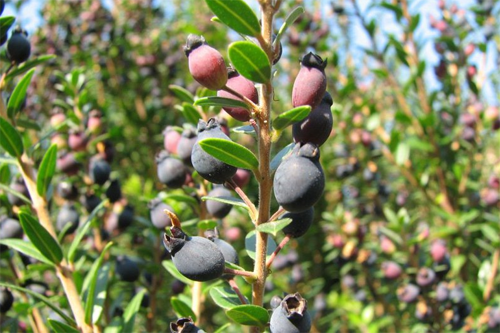
Myrtle cultivation techniques:
1. Seed collection for myrtle cultivation
The myrtle fruit is edible and contains dozens of seeds. In autumn, when the berries turn dark purple, it indicates that the fruit is fully ripe, and they can be picked on a sunny day. After picking, remove the flesh by rubbing directly with your hands to retain the seeds, or pile them to ferment for 2—3d and then rub with your hands, rinse with clean water to filter out the seeds, then dry them indoors until sowing. The 1000-seed weight is 9-11g.
2. Nursery site selection and preparation for myrtle cultivation
1) Nursery site selection
The nursery site should be chosen on slightly elevated ground with good drainage and irrigation, sandy loam to light loam, slightly acidic soil. You can also use leaf mold topsoil + garden soil + river sand mixed in a ratio of (4:4:2).
2) Nursery site preparation
Land preparation: Land preparation mainly includes clearing weeds from the nursery site, cleanup, plowing, breaking up soil, leveling the land, improving the soil, and preparing nutrient soil.
Bed making: Form seedbeds about 1-1.2m wide and of varying lengths. During land preparation, pick out grass roots, stones and other soil debris cleanly, and keep the bed surface soil fine and level.
Seedbed sterilization: After making the seedbeds, soil sterilization must be carried out, and it should be done 1 week before sowing. That is, within 1 week before sowing, drench the seedbed thoroughly for sterilization with a 500 times potassium permanganate aqueous solution or a 500 times chlorothalonil solution + 1500 times phoxim solution.
3. Sowing for myrtle cultivation
Generally, a shade frame is set up around the nursery bed; cultivation can also be done in nursery pots. Myrtle seed germination is not high, about 40%-50%. Before sowing, the seeds can be soaked in warm water (40°C-50°C) for 3-5h to increase the germination rate, and the seeds can be mixed with a small amount of fine soil or fine sand and sown shallowly together. Sowing should be uniform. After sowing, cover with a uniform thin layer of soil, with the covering thickness such that the seeds are no longer visible. Finally, thinly scatter a layer of plant ash on the surface of the seedbed. After sowing, attention must be paid to shading and moisture retention. After about 60d, the seeds begin to sprout. When the seedlings reach 23cm in height, they can be transplanted into nutrient bags containing organic-rich, loose, fertile substrate for cultivation. When one-year-old seedlings reach 4050cm in height, they can be released from the nursery for field planting. For afforestation or landscaping seedlings, container seedlings should be used as much as possible, because myrtle seedlings have few lateral roots, and bare-root seedlings have a lower survival rate when planted.
4. Pest and disease control for myrtle cultivation
Myrtle is a vigorous, easy-growing plant with strong resistance to pests and diseases, and pests and diseases are rarely seen during cultivation. Rust fungus infection occasionally occurs, and when it damages the leaves, rust-colored spots appear on the leaf surface, which can cause poor growth but will not cause death. The infection period is from 4—6 month. Control method: during the susceptible period, promptly detect and remove diseased leaves; you can also spray 800 times carbendazim solution during this period to kill the pathogen, which can effectively control the occurrence of the disease. You can also spray 50% dodine at 100 times or 50% thiram at 1000 times during the disease period, which has a certain effect.
Myrtle places of origin:
Myrtle is produced in Taiwan, China, Fujian, Guangdong, Guangxi, Yunnan, Guizhou and the southernmost part of Hunan. It grows on hilly slopes and is an indicator plant of acidic soil. It is distributed in Indochina, the Philippines, Japan, India, Sri Lanka, Malaysia and Indonesia and other places. It grows on red-yellow soil hills and is extremely common in the Guangdong and Guangxi regions.
Myrtle price:
18 yuan to 40 yuan per jin, prices vary, mainly depending on place of origin and quality.
That is all for the introduction to the price of myrtle and the solutions to problems encountered during cultivation.
Points to note when cultivating myrtle
First, myrtle has certain temperature requirements, because its place of origin is in the tropics, and it likes a high-temperature, high-humidity environment. The surrounding temperature must not be lower than ten degrees, so in summer we can move myrtle outdoors and place it in a semi-shaded spot to enhance air convection, and spray it two to three times a day. When winter comes, we should move it indoors and place it in a relatively warm, brightly lit and well-ventilated spot for cultivation. If it cannot be moved indoors, you can cover the plant with plastic film, but at noon the film should be uncovered to improve ventilation.
In addition, myrtle's "nutrition" must also keep up. In addition to adding organic fertilizer when potting, fertilizer supplementation should also be carried out during regular cultivation. In winter, you can follow the sequence of "Huabao" - clear water - clear water - "Huabao" - clear water - clear water in a cycle every 3-7 days; in spring, summer and autumn, you can follow the sequence of "Huabao" - clear water - "Huabao" - clear water in a cycle every 1-4 days.
Myrtle is a healthy and delicious ingredient. If everyone is interested, you can buy some and try it yourself. The editor also recommends that people with strong hands-on ability can buy seeds and grow them themselves, which will bring even more rewards!
The price of myrtle fruit
The price of myrtle also varies due to differences in place of origin, season, brand and quality. Generally speaking, the price range of myrtle is from ten yuan to thirty yuan per jin. The price of air-dried dried fruit is slightly higher than that of fresh fruit, generally all above thirty yuan per jin. If there are packaging requirements, its price will rise another level. If the quantity purchased is large enough, the merchant will discount it as appropriate, so if you can find people to join a group buy, it will be more cost-effective.
Having introduced the price of myrtle, the editor wants to say that there is another method that is more interesting and more cost-effective, and that is growing it at home. Next, I will introduce some points to note for growing myrtle in pots.