Do mint seeds need to be covered after sowing? A detailed guide to growing them
Many people want to grow mint in the city, but growing mint in the city starts from seeds, not from wild plants straight out in the countryside. So how exactly do you start growing mint from seed? It really is a bit different:
Materials to prepare: seeds, containers, medium (soil), sowing tools, watering tools.
1. Choose the seeds of a plant you like. Whether it is a flower or a vegetable, liking it will give you motivation, let you enjoy the process, and give you a sense of accomplishment.
2. If you are a beginner who has never worked with plants before, you can try herb seeds, since herbs are relatively easy to grow. Or choose larger seeds, which have a better chance of success. 3. Whether the growing medium (potting soil) is suitable or not has a big effect on plant growth. No matter which medium you choose, its drainage, water retention and aeration must all be good, and it must be free of disease. Here we recommend professional sowing (seedling) peat, such as Canada Fafard sowing peat, Canada Sunshine sowing peat, Norway seedling blocks, and so on.
4. For seeds that need to be covered for seedling raising, you had better also prepare some small-grade vermiculite.
5. Growing containers can come in many forms: they can be pots, trays, or direct sowing in the open ground. But for more valuable seeds, or for hobbyists who want to ensure success, seedling plug trays are recommended. 9-cell and 12-cell seedling trays are the most commonly used sowing containers for home propagation.
6. Small trowel: putting the medium into the seedling box and sowing the seeds are fairly delicate tasks, and a small trowel can solve some of the trouble. In addition, you can also prepare toothpicks, label paper, etc., to mark what seeds you sowed, when you sowed them, and so on.
7. Spray bottle: seeds are very small plant products, so you need to use a spray to add water. Watering directly will wash the seeds away.
How to grow mint seeds:
1. For the seeds you get, first you must clearly understand the characteristics of those seeds.
2. Completely moisten the prepared seedling soil with water. This process requires care and patience. Do not just water it casually a couple of times and walk away, because then the inside of the soil may not absorb water at all. Nor should you water too much and turn the soil into thin mud. To make the soil completely moist, squeeze it firmly in your hand into a ball; it is just right when water barely seeps out between your fingers.
3. Fill the soil. Use a small trowel to carefully fill each cell of the seedling box with soil, then press lightly. Note: do not fill the soil too full. If the roots are exposed above the soil after the seeds sprout, or if the seedlings become a bit leggy, you can add a little more soil.
4. After filling the soil, spray it again with a pressure sprayer (atomizer) to make sure the soil is fully moistened. Note: it must be in a mist state, otherwise it can easily wash away the growing soil.
5. Insert labels. It is recommended to do this before sowing, and then sow according to the labels. Otherwise, once we finish sowing, we will forget which is which. The labels can be made like little flags by sticking label paper to one end of a toothpick. After sowing, insert the toothpick flags into the seedling soil.
6. Sow the seeds. If the seeds are large, first use a toothpick to make a small hole in the middle of the filled cell tray; it does not need to be too deep, just enough to hold the seed. If the seeds are relatively small, this is not needed; simply place the seeds on the surface of the seedling soil. Put one seed in each cell.
7. For seeds that need to be covered with soil, cover them with a thin layer of soil or the vermiculite prepared in advance. Before sowing, you must clearly determine whether the seeds we are sowing "need soil cover" or "do not need soil cover." Then spray water once more so that the covering soil and the seeds are fully moistened.
8. Put on the lid. Cover the seedling box with the sown seeds to maintain air humidity inside the box. Place it in a cool, shaded place; under normal circumstances it no longer needs watering. If you find it lacks water, please use a spray bottle to mist it, and never water it directly.
That is all for how to grow mint seeds. Try it soon. Mint itself has a fresh fragrance, so you really must give it a try. Mint can also be steeped in water and drunk.
In the scorching summer, you should keep these plants at home to repel mosquitoes and insects!
The hot summer has arrived. Do you feel that mosquitoes and insects are appearing at home? Mom has started using all kinds of insecticides again to deal with the nuisance bugs. But frequent use of insecticides is neither environmentally friendly nor good for your health.
However, growing some plants at home normally does have a mosquito-repelling function. These plants rely on their leaves or flowers to give off a special smell to drive away mosquitoes and insects. Let me share a few common mosquito-repelling plants with you!
Mosquito-repelling geranium
I believe the one everyone hears about most is mosquito-repelling geranium.
Mosquito-repelling geranium, scientific name: Pelargonium graveolens (scented geranium), is a perennial herbaceous plant.
Though small, its main stem and leaves can grow to 1 m.
The leaves are green with soft hairs, and its captivating fragrance is the main feature for repelling mosquitoes.
Mosquito-repelling geranium has many kinds of scents,
including rose, citrus, mint, coconut and cardamom, along with various fruit scents.
It has the ability to release gases by itself,
releasing substances such as citronellic acid from inside the plant into the air to achieve a mosquito-repelling effect.
Generally, the higher the temperature,
the richer the fragrance of mosquito-repelling geranium, and the higher its mosquito-repelling index.
In the scorching summer,
you can grow mosquito-repelling geranium in the living room or indoors.
The fragrance it releases can not only make people feel relaxed and happy,
but also achieve the effect of driving away insects.
Growing tips: Pelargonium graveolens is drought-tolerant and afraid of waterlogging.
Therefore, during growth, control water appropriately.
In spring and autumn, when growth and flowering are vigorous, you can water a little more,
but it is still best to keep the potting soil moist.
In winter, when the temperature is low and the plant grows slowly, water as little as possible.
Mosquito-repelling geranium rarely blooms,
but with enough patience, you can still grow it until the day it blooms!
Cuban oregano
Cuban oregano, a plant in the Lamiaceae family, genus Plectranthus,
it is said that after you touch it, your fingers smell fresh and pleasant, hence the name "touch-me fragrance."
Cuban oregano grows as a trailing vine, with small ovate leaves,
with serrated edges, a fleshy feel, and the surface covered with small white hairs.
Cuban oregano has a special fragrance and can be used as an ornamental potted plant outdoors,
or hung indoors or placed on a desk,
or used as an accent plant in the bathroom. The scent it releases can refresh you and also repel insects.
Cuban oregano rarely blooms,
so people generally enjoy its cute fleshy leaves.
Besides ornament and mosquito repellence,
its leaves can also be used to make tea or wine, with a wonderfully enticing fragrance.
It can also be used in cooking: soups, stir-fries, and cold dishes are all fine.
In addition,
crushing the leaves, adding honey and eating them raw can relieve sore throat.
Growing tips:
It likes a sunny environment.
On cloudy days, reduce or stop watering and fertilizing.
When sunlight is insufficient or the sun is scorching, the potting soil is waterlogged,
or fertilizer is insufficient, the leaves of Cuban oregano will turn yellow.
At this time, remove the yellow leaves,
place it in a well-ventilated spot with a suitable temperature to grow,
and it is recommended to put it indoors near a window.
In addition,
after being grown for a long time, Cuban oregano becomes woody and the lower leaves turn yellow and fall off, which is normal.
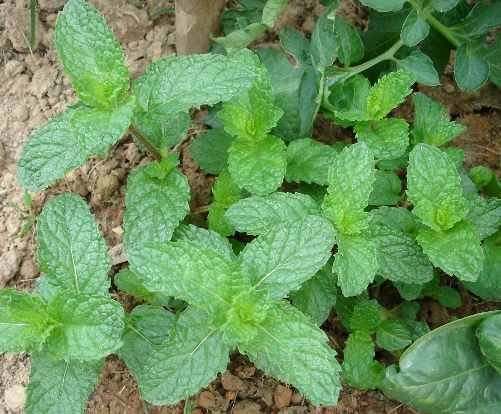
Mint
Mint is probably the plant everyone is most familiar with.
Its local name is "silver dan grass," and it is a plant in the Lamiaceae family.
The whole plant gives off a cool fragrance.
Like Cuban oregano, its leaves are serrated,
but the leaves have a papery texture, and the small hairs on the surface are fewer than those of Cuban oregano.
Mint also grows in a creeping manner,
with small purple flowers, and it is generally very hard to see it bloom.
If you can see it bloom, then you must be very lucky!
The cool fragrance it gives off
easily keeps people clear-headed and makes the air fresh,
and at the same time mosquitoes and insects are also very afraid of this pungent smell.
Besides its pleasant fragrance,
mint can be mixed with lemon, honey,
cucumber and so on to make tea, which has a beauty effect.
It can be made into desserts, and can also be used in cocktails,
as a spice, or to extract essential oil!
It has both edible and medicinal value, so you could say every part of it is a treasure!
Growing tips:
Mint is highly adaptable to environment, temperature,
and humidity, and is easy to grow.
It likes sunlight; long daylight hours can promote mint flowering
and help the accumulation of mint oil and menthol.
Basil
Basil, also known as nine-story pagoda, jinbuhuan,
St. Joseph's wort, sweet basil, and lanxiang,
is an aromatic plant used both as medicine and food, with a taste similar to fennel.
It has a strong, pungent, fragrant odor and also has a bactericidal effect.
The tender leaves can be eaten and can also be steeped in water to drink,
and have the effects of dispelling wind, adding fragrance, strengthening the stomach, and promoting sweating.
It can be used as a seasoning for pizza, pasta sauce,
sausages, soups, tomato juice, dressings, and salads.
Many Italian chefs commonly use basil instead of oregano.
It is also a commonly used seasoning in Thai cooking.
Dried basil can be combined with lavender, mint, marjoram,
and lemon verbena, 3 tablespoons in total, to make a stress-relieving herbal tea.
Basil has special fragrance characteristics
(generally giving off a clove-like aroma,
and some have a slight minty note, a little sweet or a little spicy; the fragrance varies by variety).
Because it has a special smell,
it can therefore block whiteflies and hawkmoth larvae.
Growing tips:
Basil is a deep-rooted plant and dislikes waterlogging.
It likes a warm, humid climate, is not cold-tolerant, is drought-tolerant, and is not waterlogging-tolerant.
It can be grown indoors, where it repels mosquitoes and also serves as an accent.
Pitcher plant
Pitcher plant is the general name for all species in the genus Nepenthes.
It belongs to the tropical insectivorous plants, also known as water-jug plant,
monkey water bottle, monkey pitcher, piglet cage, and thunder god pot.
Its large "pitcher" is an invisible killer of insects,
There is a lid on top of the trap, shaped like a pig cage, which is how it got its name.
The trap we see is actually a modified form of the pitcher plant's leaf.
The main purpose of growing pitcher plants is to admire their bizarre insect-catching organ
--the pitfall trap.
The pitfall trap of the pitcher plant develops from the tip of the tendril.
At the same time,
the same species of pitcher plant will grow two differently shaped types of traps.
Growing tips:
Most pitcher plants live in environments with high humidity and temperature,
and with bright, indirect light,
so pitcher plants are generally grown in sunny spots on balconies,
hung in balcony corners, decorating your beautiful balcony alongside other plants.
Water thoroughly once every two to three days,
keeping the soil moist.
Venus flytrap
The Venus flytrap is a perennial herbaceous plant native to North America,
belonging to the genus Dionaea,
the types commonly grown at home are small in size and very cute!
The Venus flytrap is a very interesting carnivorous plant,
its stem is very short,
and at the tip of the leaf grows a trap that closely resembles a "shell",
which can secrete nectar,
when a small insect wanders in, it can clamp it shut at extremely fast speed,
and digest and absorb it.
It is said that because the leaf edges have regular bristles,
the feeling is just like Venus's eyelashes,
meaning "Venus's flytrap".
Potted plants can be used for viewing on sunny windowsills and balconies,
and can also be grown specially in planting troughs;
the Venus flytrap is hailed as the carnivorous plant of the natural world.
Growing tips:
The Venus flytrap reproduces by seeds,
it loves sunlight; when grown at home, it can receive full sun in spring, autumn and winter,
in southern summers, add 50% shade or simply place it on an indoor sunny windowsill.
It is native to marshes, so the soil needs to be kept moist.
It is worth noting that
you must not feed them too much meat, they will catch their own food.
Lavender
Lavender, I believe everyone is familiar with it,
it actually refers to the collective name for all species under the genus Lavandula in the mint family Lamiaceae,
also known as perfume plant, spirit fragrant grass, fragrant grass, yellow fragrant grass, lavender.
Leaves are linear, stems are upright, the whole plant is covered with hairs.
Spicate inflorescence, flowers small and purple.
The whole plant has a light fragrance with a slight woody sweetness,
because the flowers,
leaves and stems all have hairs that contain oil glands,
a gentle touch ruptures the oil glands and releases the fragrance.
Lavender essential oil has activity against various bacteria.
Besides its bactericidal effect,
lavender also has sedative and hypnotic,
antispasmodic, neuroprotective, lipid-lowering, and cardiovascular insufficiency-treating,
and neurosis-treating functions.
Placed in the bedroom, it can improve sleep quality and relieve nervous stress.
Growing tips:
Lavender is highly adaptable.
Mature plants tolerate both low and high temperatures.
Lavender is a plant that prefers dry conditions and needs little water.
Lavender is a long-day plant,
and needs long hours of light during the flowering period.
So it can be grown near a window in the bedroom for better results,
with a richer fragrance.
[Delicious Food]Spice characteristics and usage techniques
Some spice characteristicsClassification of edible spices
Edible spices are widely used and come in many varieties; there are different classification methods according to different purposes.
1. Classification by spice composition
According to composition, spices can be divided into two major categories. The first category is single-compound spices, referring to spices with a single chemical component. People sometimes also call natural spices such as essential oils single-compound spices. Single-compound spices are only used directly as spices under certain special circumstances; their usual main use is as raw material for blending spices. The second category is blended spices, because the aroma of a single compound can hardly meet practical requirements, so people often skillfully combine various raw materials to create spices that meet certain requirements.
2. Classification by spice form
According to their form, edible spices can roughly be divided into four categories:
(1) Water-soluble spices, also called water-based spices. They are fragrance bases blended from various natural or synthetic spices, dissolved in 40%--60% ethanol (or other water-soluble solvents such as propylene glycol). Their characteristic is mainly that within the general dosage range they dissolve transparently or disperse evenly, with a light and brisk top note. (2) However, heat-sensitive oil-soluble spices, also called oil-based flavors, are common edible spices, usually made by diluting the fragrance base with vegetable oil, etc. as a solvent. (3) Emulsified spices are made by adding appropriate emulsifiers and stabilizers to oil-based spices so that they disperse into fine particles in water. Their characteristics are a mild aroma and a fragrance-retaining effect, and because their dispersion in water produces a turbidity effect, colorants can be added. (4) Powdered spices have two preparation methods. One is to use substances such as lactose as a carrier, mixing the fragrance base and attaching it to the single compound. The other is to first make the fragrance base into an emulsified spice and then make it by spray drying. Both products are convenient to use, but they easily absorb moisture and clump, so spoilage and deterioration must be prevented. For products made by spray drying, because the spice is surrounded and covered by the excipient, the spice's stability and dispersibility are relatively good.
3. Classification by spice aroma type
By aroma type, spices can usually be divided into citrus-type spices, fruity spices, mint-type spices, bean-aroma spices, pungent spices, milky spices, meat-type spices, nut-type spices, as well as wine-type, vegetable-type spices, etc.
4. Classification by spice constitution
Classification by spice constitution is a classification method intended to be consistent with the Food Sanitation Law, divided into two major categories: natural spices and synthetic spices. Natural spices include essential oils, oleoresins, spice extracts, recovered spices, heated spices, fermented spices, and blended spices made from natural substances. Synthetic spices refer to synthetic substances with the same chemical structure as natural components, as well as aromatic substances other than nature-identical ones.
Characteristics and classification of edible spices
Aromatic substances added to improve the flavor of food are called edible flavorings, or edible spices for short. Besides spices used directly in food, certain other spices such as toothpaste spices, tobacco spices, oral cleaners, and internal medicine spices can also broadly be regarded as a category of edible spices.
(1) The particularity of edible spices
Edible spices differ from daily-use or other spices. The particularity of edible spices is mainly shown in the following aspects:
(1) The fundamental purpose of edible spices is to reproduce the aroma or flavor of food. Because humans have an instinctive vigilance toward the aroma and flavor of foods they have never tasted, whereas daily-use spices can have unique fantasy-type aromas and be accepted by people. (2) Edible spices must take into account harmony in food taste; spices that are very bitter or very sour and astringent cannot be used in food. Other spices generally do not need to consider the influence of taste. (3) Humans are much more sensitive to edible spices than to daily-use spices. This is because edible spices can produce olfactory or taste sensations through different pathways such as the nasal cavity and oral cavity. (4) Edible spices are more closely related to product color and other aspects. For example, when using fruit-type spices, if they do not have a color close to that of natural fruit, people will have the illusion that their aroma comes from something else, greatly reducing their effect.
(2) Classification of edible spices
Edible spices are widely used and come in many varieties; there are different classification methods according to different purposes.
1. Classification by spice composition
According to composition, spices can be divided into two major categories. The first category is single-compound spices, referring to spices with a single chemical component. People sometimes also call natural spices such as essential oils single-compound spices. Single-compound spices are only used directly as spices under certain special circumstances; their usual main use is as raw material for blending spices. The second category is blended spices, because the aroma of a single compound can hardly meet practical requirements, so people often skillfully combine various raw materials to create spices that meet certain requirements.
2. Classification by spice form
According to their form, edible spices can roughly be divided into four categories:
(1) Water-soluble spices, also called water-based spices. They are fragrance bases blended from various natural or synthetic spices, dissolved in 40%--60% ethanol (or other water-soluble solvents such as propylene glycol). Their characteristic is mainly that within the general dosage range they dissolve transparently or disperse evenly, with a light and brisk top note. (2) However, heat-sensitive oil-soluble spices, also called oil-based flavors, are common edible spices, usually made by diluting the fragrance base with vegetable oil, etc. as a solvent. (3) Emulsified spices are made by adding appropriate emulsifiers and stabilizers to oil-based spices so that they disperse into fine particles in water. Their characteristics are a mild aroma and a fragrance-retaining effect, and because their dispersion in water produces a turbidity effect, colorants can be added. (4) Powdered spices have two preparation methods. One is to use substances such as lactose as a carrier, mixing the fragrance base and attaching it to the single compound. The other is to first make the fragrance base into an emulsified spice and then make it by spray drying. Both products are convenient to use, but they easily absorb moisture and clump, so spoilage and deterioration must be prevented. For products made by spray drying, because the spice is surrounded and covered by the excipient, the spice's stability and dispersibility are relatively good.
3. Classification by spice aroma type
By aroma type, spices can usually be divided into citrus-type spices, fruity spices, mint-type spices, bean-aroma spices, pungent spices, milky spices, meat-type spices, nut-type spices, as well as wine-type, vegetable-type spices, etc.
4. Classification by spice constitution
Classification by spice constitution is a classification method intended to be consistent with the Food Sanitation Law, divided into two major categories: natural spices and synthetic spices. Natural spices include essential oils, oleoresins, spice extracts, recovered spices, heated spices, fermented spices, and blended spices made from natural substances. Synthetic spices refer to synthetic substances with the same chemical structure as natural components, as well as aromatic substances other than nature-identical ones
Angelica dahurica removes fishiness, so it should not be used in large amounts when cooking. Fennel adds aroma, so it can be used in moderation
Caokou, galangal, amomum, licorice, dried tangerine peel, cassia bark, bay leaf, Sichuan peppercorn, star anise, clove, fennel, Angelica dahurica.
Here, use less clove and fennel; the rest can be used at twice their amount. The flavor is fragrant and tender.
The key to making braising liquid is the proportion of spices...
Actually, the longer the braising liquid is kept, the better
but it must be boiled once every day, otherwise it will spoil
Edible spices
Aromatic substances added to improve the flavor of food are called edible flavorings, or edible spices for short. Besides spices used directly in food, certain other spices such as toothpaste spices, tobacco spices, oral cleaners, and internal medicine spices can also broadly be regarded as a category of edible spices.
The rights and wrongs of edible spices
Edible spices are divided into two categories: permitted for use and temporarily permitted for use, and according to different sources they can also be divided into natural and artificial spices. At present, China permits the use of 534 kinds of edible spices, including 137 natural spices and 397 artificially synthesized spices; there are 157 kinds of spices temporarily permitted for use.
Natural spices use natural plants as raw materials and are made into aromatic oils through hot pressing, cold pressing, distillation, organic solvent extraction, and other methods. They can also be made into tinctures or extracts with ethanol. Commonly used natural spices include star anise, fennel, Sichuan peppercorn, ginger, pepper, mint, clove, jasmine, osmanthus, rose, nutmeg and cassia bark, etc.
Because edible spices are used in small amounts, they generally do not harm health. But in recent years it has been found that some natural spices contain safrole, a liquid with a strong aromatic odor that animal experiments have found can cause liver lesions, so the potential harm of natural spices to the human body should not be ignored. Artificial spices mostly come from raw materials such as petrochemical products and coal tar, and are divided into esters, acids, alcohols, phenols, ketones, ethers, lipids, etc. Due to different raw materials and formulas, artificial flavors have different odors. There are many kinds of flavor monomers; some are toxic and some are non-toxic. To ensure the safe use of artificial edible flavors, we must start with the flavor monomers. National standards divide flavor monomers into (1) flavor monomers permitted for use, (2) flavor monomers temporarily permitted for use, and (3) flavor monomers prohibited from use.
Spices mainly used for deodorizing (odor-correcting), such as garlic, laurel, scallions, sage, rose, thyme, etc.; spices mainly used for aroma, such as star anise, basil, mustard seed, yellow caraway, cardamom, clove, cinnamon, coriander, dill, fennel, nutmeg, sage, etc.
Spices mainly used for aroma, such as star anise, basil, mustard seed, yellow caraway, cardamom, clove, cinnamon, coriander, dill, fennel, nutmeg, sage, etc.
1 The role of spices
Spices are compounds of different aromatic ingredients, and their purpose and effect are to enhance or improve the aroma or taste of tobacco products, making the products more attractive to consumers.
In sensory evaluation of tobacco products, attention must be paid to several important factors, such as taste: bitterness, sweetness, sourness, saltiness, etc. are felt through the taste buds on the tongue; aroma: the smell of the product sensed by the nose after smoking, all of which are collectively called the product's smoke flavor. In addition, there are several relatively important parameters, such as the tobacco's astringency, strength, mouthfeel, fullness, mildness, and irritation. The additives in the product, commonly known as spices, not only affect the product's aroma but also affect the product's other parameters.
The role of casing is to harmonize the tobacco raw material mixture so that it has "smokability". Specifically, it adjusts the proportions of chemical components in tobacco, such as proteins, sugars, nicotine, etc. In addition, tobacco still falls within the category of agricultural products and is affected by growing conditions, so casing must be used to ensure product stability, which is crucial for cigarette manufacturers.
Top flavoring (surface flavoring) is the final coloring of the product's overall aroma profile, so, like perfume, it usually becomes an important part of a product brand's characteristics, refined from various precious ingredients. As soon as the packaging is opened, the packaging's aroma note can let consumers sense the unique brand flavor.
In addition, the tobacco's astringency, bitterness, sourness and mouth strength also need to be improved and masked. Considering that adding pure nicotine is unpopular, special-effect spices can be added to the product to create the effect of nicotine. Besides this, flavor-enhancing ingredients also need to be added to strengthen and harmonize the tobacco's natural aroma notes. However, if one wants to use the effect of additives to replace the mellow aroma of high-quality tobacco with low-quality tobacco, it is almost impossible.
After appropriate casing treatment, the tobacco material has reached smoking standards and possesses most of the aroma note characteristics that a finished product should have. Between casing, casing additives, top flavoring and other tobacco additives, there is usually no obvious distinction, because most additives affect the taste and other characteristics of the tobacco.
2 Spice formulas
Because each brand's spices have their own unique formula, most commonly used spices cannot be precisely named. These formulas are among the industry's top secrets. But the raw materials of some common ingredients still have names, such as humectants, sugar, licorice, cocoa, honey, etc.
From a theoretical and legal point of view, edible spices and tobacco spices are somewhat similar. In fact, the development of spices is carried out according to the performance of the target product. The aroma note characteristics and physical properties of tobacco spices are often very different from the fragrance requirements of products such as dairy products or cookies. Aroma and taste are important standards for edible spices, so tobacco spices are also required to be especially fragrant and pleasant after high-temperature decomposition. Especially for pipe tobacco and cigars, the lingering aroma and aftertaste are even more important. Many companies specialize in tobacco spice production, such as Borgwaldt Flavor GmbH, and some companies use similar facilities for food and tobacco spice production.
Spice knowledge and their characteristics
1. Monk fruit: enhances aroma, cool in nature, sweet in taste, enhances aroma, with a clear, sweet and mellow flavor, and has the effects of clearing the lungs and stopping cough, and moistening the intestines and relieving constipation.
2. Gansong: a fuzzy, dark brown root-like spice, called fragrant grass by people in Chengdu and fragrant song by people in Chongqing; it should actually be called Gansong, also known as Gansongxiang. Gansong has a pungent aroma, close to a strong turpentine odor, and has the effects of regulating qi and relieving pain, and relieving depression and awakening the spleen; it is a traditional Chinese medicine used to treat chest and abdominal distension and pain, stomach pain and vomiting, poor appetite, and indigestion.
3. Clove: also called male clove or female clove, it is the flower bud of the clove plant; dried products are commonly used in cooking, with a strong aroma; tasting it gives a stinging and numbing sensation on the tongue; its nature and flavor are pungent and warm, and it has the effects of warming the stomach, stopping hiccups, dispelling wind, and relieving pain. The amount used in cooking should be within 1-2 grams, and it must never be used in large amounts.
4. Star anise: should be called star anise, also called large fennel, large spice, or August pearl; this is a spice people are relatively familiar with. Its characteristics are that it is aromatic when smelled and slightly sweet when tasted. Its nature and flavor are pungent and warm, and it has the effects of warming the middle and opening the appetite, and dispelling cold and treating hernia. In cooking it can be used in hot pot, braised dishes, and braising liquid. 5-10 grams is appropriate.
5. Cumin: also called fennel, fragrant silk vegetable, huai xiang, or wild fennel. Its mature fruit is like small grains of rice or cumin, with a distinctive aromatic odor. Used as a spice, it is widely used in braised dishes, braising liquid, and spicy hot pot. In hot pot, the amount can be appropriately increased, such as 10-20 grams or a bit more. Medicinally, its nature and flavor are pungent and warm, and it has the effects of promoting qi and relieving pain, strengthening the stomach, and dispelling cold.
6. Caoguo (tsaoko): the fruit of a plant in the ginger family, Amomum tsaoko. It tastes strange and unpleasant. Its medicinal nature is warm and its taste pungent; it has the effects of drying dampness and strengthening the spleen, eliminating phlegm and warming the middle, expelling cold and resisting malaria. In cooking it can be crushed or used whole; used as a spice braised or stewed with beef, its flavor is especially good. Caoguo should also not be overused in spicy hot pot and braising liquid; adding 3 to 5 is more appropriate.
7. Sharen (amomum fruit): also called Chunsharen or Yangchun Sharen, it is the ripe fruit of the plant Yangchunsha (Amomum villosum). It tastes astringent and has a fragrant aroma. Its medicinal nature is warm and its taste pungent. It has the effects of promoting the flow of qi and easing the middle, strengthening the stomach and aiding digestion; in medicine it is used for abdominal distension and pain, poor appetite, nausea and vomiting, enteritis, dysentery, threatened miscarriage and other conditions. When used in hot pot and braised dishes it should not be used in excess; within 3 grams is appropriate.
8. Sannai: also called Shajiang or Shanla, it is a rhizome. What is sold in grocery stores and Chinese medicine shops is its dried sliced form, which is aromatic. Its medicinal nature is warm and its taste pungent; it can warm the middle and resolve dampness, promote the flow of qi and relieve pain, and is mainly used for acute gastroenteritis, indigestion, abdominal pain and diarrhea, stomach cold pain, toothache, rheumatoid arthritis, traumatic injuries and other conditions. In cooking it is mostly used for braising, stewing and spicy hot pot, with the amount mostly between 5 and 10 grams.
8. Lingcao: also called Lingxiangcao, and also known as Linglingxiang, it has a strong aroma, and its nature and taste are sweet and neutral. When used in spicy hot pot, the amount generally does not exceed 5 grams. There is another kind of Lingcao on the market called Luole (basil), which can replace the above one, but it belongs to the Lamiaceae family and is also called Linglingxiang; its nature and taste are pungent and warm. Medicinally, its nature and taste are pungent and warm, and it has the effect of treating wind-cold and cold headaches and other conditions.
9. Paicao: Paicao is also called Paixiang, Xiangpaicao, Xiangyang or Maobing Zhenzhucai (fringed loosestrife), also a plant of the Primulaceae family, and its nature and taste are sweet and neutral. It has the effects of treating colds, coughs, rheumatism, irregular menstruation and other conditions. In spicy hot pot the amount should also not be too much; 3 to 5 grams is enough, and it can also be used in braising liquid. Some people say that in spicy hot pot and braising liquid, "Lingcao adds fragrance, Paicao preserves," and in fact many pungent and aromatic seasonings have antibacterial and preservative effects to varying degrees.
10. Bai Doukou (white cardamom): also called Yuan Doukou, and written in markets or pharmacies as Baikou or Kouren. It tastes astringent in the mouth. Because its medicinal nature and taste are pungent and warm, it has the effects of promoting and regulating the flow of qi, warming the stomach and aiding digestion, resolving dampness and stopping vomiting, and neutralizing alcohol toxicity. Adding 3 to 5 grams to spicy hot pot is enough. Because its fragrance is good, the amount used is small.
11. Rou Doukou (nutmeg): also known as Yuguo. In recent years it has been used very commonly in hot pot, but it also tastes unpleasant. Its medicinal nature and taste are pungent and warm, and it has the effects of warming the spleen and stomach, astringing the intestines and directing qi downward. This substance should not be used in large amounts; 2-3 are enough.
12. Guipi (cassia bark): also called Rougui (cinnamon). Its nature and taste are pungent and sweet, and hot; it has the effects of supplementing original yang, warming the spleen and stomach, removing accumulated cold and unblocking the blood vessels. It is mainly used for decline of kidney yang, cold pain in the heart and abdomen, chronic diarrhea and other conditions. It is very oily and strongly aromatic. It tastes pungent and spicy with a slightly sweet aftertaste. It is very commonly used in spicy hot pot and braised dishes, and an amount of 5 to 10 grams is appropriate.
13. Ziran (cumin): also known as Arabic cumin or Persian cumin, it belongs to the Apiaceae family and is the seed of cumin (Cuminum cyminum). It is mainly produced in the border regions of our country. The fruit is oval in shape, about 5 mm long at the tapered ends and 3 mm wide, pale greenish-gray, and resembles fennel. When using it, pay attention to storage and keep it sealed as much as possible to avoid loss of aroma that would prevent the desired effect.
14. Xiangye (bay leaf): strongly aromatic, that is, the leaf of the laurel tree, grayish-green in appearance. The best quality is free of mold spots and strongly fragrant. Its functions are to enhance fragrance, remove off-flavors and promote appetite.
15. Bibao (long pepper): enhances fragrance, tastes pungent and spicy, and has a distinctive aroma. It has the effects of promoting the flow of qi and warming the stomach, and can treat diarrhea and vomiting, and neutralize alcohol and stop dysentery.
16. Xiangfuzi (cyperus rhizome): enhances fragrance. It is aromatic in smell and bitter and pungent in taste, and has the effects of regulating menstruation, relieving pain and resolving depression.
17. Baizhi (angelica dahurica root): (Xiang Baizhi, Chuan Baizhi) enhances fragrance. Its nature is warm and its taste pungent; it has the effects of dispelling rheumatism, invigorating blood, expelling pus, promoting tissue regeneration and relieving pain.
18. Zicao (gromwell root): enhances fragrance. (Hard Zicao, Hongtiao Zicao, Da Zicao) enhances color. Its nature is cold and its taste is sweet and salty; it has the effects of invigorating blood, cooling blood, detoxifying and promoting eruption, and treating sores and eczema.
19. Shanzha (hawthorn): enhances fragrance. Its nature is sour and its taste sweet; it enhances fragrance, removes off-flavors, aids digestion and strengthens the stomach, promotes the flow of qi and resolves blood stasis, and is used for abdominal fullness and high blood lipids and other conditions.
20. Chenpi (dried tangerine peel): enhances fragrance. (Red tangerine, Dahongpao, Chuan tangerine) suppresses rank odors and removes gamy smells. It has the effects of regulating qi, strengthening the spleen, drying dampness and resolving phlegm, and is used for poor appetite, vomiting and diarrhea, cough with copious phlegm and other conditions.
21. Caokou (tsaoko amomum): enhances fragrance. Its nature is warm and its taste pungent; it has the effects of drying dampness and strengthening the spleen, warming the stomach and stopping vomiting, and is used for cold food obstruction internally, loss of appetite, abdominal distension and fullness and other conditions.
22. Liangjiang (galangal): enhances fragrance (Galangal, lesser galangal). It enhances fragrance and suppresses fishy odors. Its taste is pungent and its nature warm; it has the effects of warming the stomach and dispelling cold, and promoting the flow of qi and relieving pain.
23. Zhizi (gardenia): enhances fragrance. Its taste is pungent and its nature warm; it has the effects of reducing fire, clearing heat and detoxifying, and is used for toothache. It is especially beneficial for reducing internal heat in hot pot.
24. Zisu (perilla): enhances fragrance. Its nature is warm and its taste pungent; it is used to release the exterior and dispel cold, promote the flow of qi and harmonize the stomach, and has the effects of treating wind-cold colds and fish and crab poisoning.
25. Xiangmaocao (lemongrass): (wild lemongrass, stinking grass) Its nature is warm and its taste pungent. It has a rich aroma and should not be used in large amounts. It is mainly used for nourishing the heart and calming the spirit, and dispelling wind and releasing the exterior.
26. Chuan Muxiang (Sichuan costus root): enhances fragrance. Its nature is warm and its taste pungent and bitter; it has the effects of promoting the flow of qi and relieving pain, harmonizing the stomach, reducing distension and stopping diarrhea.
Purchasing tips: When buying spices, be sure to choose a spice shop with a good reputation, low prices and good quality. The wonderful and alluring thing about hot pot lies in its flavor, and that flavor comes from the preparation of the hot pot base broth. It determines the flavor of the hot pot and is also the most critical part of making hot pot. The quality of the base broth determines the success or failure of the hot pot. There are many varieties of Chongqing hot pot, and the base broths also differ, but the most basic are two kinds: red broth and clear broth. As long as you master the formulas and preparation methods of these two base broths and handle the points that need attention well, you can prepare a superior base broth. To prepare a good base broth, you must first understand what kind of seasonings are needed to prepare hot pot base broth. The seasonings used must be authentic and of superior quality; seasonings that do not meet the requirements cannot be used to prepare the base broth. The main seasonings used in hot pot include: douban (Pixian douban is the best), douchi, fermented glutinous rice juice, Sichuan peppercorns, old ginger, garlic, refined salt, monosodium glutamate, chicken essence, cooking wine, sesame oil, pepper powder, rock sugar and five-spice powder, etc.
Teaching you how to make mutton soup
Plain mutton soup is very simple to make. The meat chosen is from the lower abdomen of the sheep, fatty with some lean. Cut it against the grain into thin slices. Blanch in the pot. Remove and rinse off the foam. Wash the pot clean. Add water and bring to a boil, then add the meat. Do not cover the pot. Whenever oil foam floats to the surface, skim it off and discard it. After about ten minutes it can be taken out and put into a basin. Add a little salt and sprinkle with pepper powder and cilantro (you can leave it out if you do not like it). Drink it while hot. It is usually eaten with shaobing or Mongolian meat pies (a kind of mutton pie with a thin crust and tender filling). This soup has no gamy smell and is not greasy, with clear broth and tender meat. It is very suitable for home preparation.
Besides the meat, most of a sheep is offal. Apart from the liver, gallbladder and kidneys, all the offal can be made into soup. It is best to also add a large piece of sheep neck. Rinse the sheep heart clean of blood and throw it directly into a pot of cold water. Inject water into the sheep lungs through the trachea; after filling them, pound every part with your fist. Squeeze the water out, then inject, pound and squeeze again, repeating several times. Throw it into the pot. Making soup with sheep stomach is a bit extravagant, and cleaning it is also rather troublesome. Split it open and turn the inside out. Rinse repeatedly. For the sheep intestines, use chopsticks to hold one end and turn the inside out, then rinse repeatedly. Put the washed intestines and stomach in a large basin, sprinkle baking soda on top, rub evenly, and pour vinegar over them. A lot of white foam will appear. Continue rubbing. Every part must be rubbed. Then rinse with water until clean. The sheep stomach goes directly into the pot; the sheep intestines should be coiled into rolls or tied into bundles and put into the pot. Put the sheep blood in an iron or aluminum basin and let it float on the water in the pot. After boiling vigorously for fifteen minutes, take it out, rinse off the foam and let it cool. Cut it up. Slice the heart, lungs and stomach, and cut the intestines into one-inch sections. Put water in the pot, throw in the sheep neck, and boil over high heat for about one hour. Skim off the foam at any time. Pour all the chopped offal into the pot. Continue cooking for half an hour. Without covering, cut the sheep blood into small pieces or slices and drop them into the pot. Watch the color change of the blood; when the color just darkens, turn off the heat. Skim off the oil on the surface and discard it. Add salt, cilantro and pepper powder and it can be served. Of course, you can also add ginger and cooking wine and such according to personal preference. However, authentic grassland sheep offal soup adds nothing. The soup is milky white, and what you taste is the true flavor of the sheep. It is best to add a little chili oil when drinking sheep offal soup. Drinking and chewing while sweating, before you know it, you can put away half a jin of liquor.
Sometimes, when a sheep is slaughtered, shouba rou is not made, and the mutton is cut off to be sold separately for money. Then only sheep bones can be used to make soup. A bare white skeleton, with occasional bits of meat scattered on it that are unwilling to separate. There is a saying about rendering oil from bones, and I guess this is what it refers to for making soup. Break the bones apart, chop the leg bones and rib bones in the middle, and chop the spine into several large sections. Blanch and rinse clean. Put water in the pot. Add the bones. Light the fire and simmer. It needs to boil for one hour. At the beginning, skim off the foam every few minutes. A little oil that appears later does not need to be skimmed off. This oil is sheep marrow oil; it has no special taste and is also very nutritious. It is said that cattle and sheep marrow oil can strengthen the body and bones. Prepare some tender celery, remove the leaves, wash and cut into one-inch sections, and arrange in a basin. When the sheep bones are done, pour directly from the pot, and the soup hits the celery, blanching it cooked directly. Add a little salt to the soup and it can be served. The bones can be discarded; the essence is all in the soup. But if there is a lot of meat, then gnaw it clean, do not waste it. Deboned meat dipped in pickled chive flowers tastes first-rate. Pure sheep bone soup is rarely seen because it does not look like much. Restaurants are unwilling to make it, afraid that customers will complain there is too little. In fact, this thing is more nutritious than eating mutton. The soup is clear. You can see directly to the bottom of the bowl. The soup is drunk and the bowl is clean. It has a bit of the feel of superior stock. It should be considered top grade.
Sheep skin soup is currently the rarest. It is basically nowhere to be seen. Because sheep skins are all sold off directly. This was an invention after the Han ethnic group entered the grasslands. After slaughter, scald the sheep body with boiling water, and scrape off the wool on the surface with a knife. It must be done carefully. Every edge and corner must be scraped. Then wash clean. Peel off the entire skin. Scrape off the fat on the inner surface. Cut into large pieces and boil in the pot. Take out, rinse with water and wash clean. Scrape both sides once more. Then throw it into a pot of clean water and boil over high heat. Put star anise, Sichuan peppercorns and ginger into the pot together. Boil for half an hour (half an hour is enough for a sheep of the current year. For a two-year-old sheep, extend the time). Take out and let cool. Cut into fine shreds. The finer the better. Take one sheep rib section, chop it open, blanch it, put it into the soup pot, and cook for forty minutes. Add salt and cook for another half hour, then take out the meat pieces. Pour the sheep skin shreds into the pot, and take them out after ten minutes. Sprinkle with cilantro and chili oil. Then you can eat heartily. The skin shreds are smooth and refreshing to chew, with a satisfying bite. The soup is fresh and fragrant.
Besides these few kinds, there are also many local specialty mutton soups. Those can be found in many places online, so I will not list them one by one.
The most critical thing about mutton soup is that the ingredients must be fresh. According to my experience, if more than 24 hours pass from slaughter to putting a sheep into the pot, there will be no fresh flavor left.
?tid-97907.html
&&&&&&&&&&&&&&&&&&&&&&&&&&&&&&&&&&&&&&&&&&&&&&&&&&&&&&&&&&&&&&&&&&&&&&&&&&&&&&&&&&&
How to make mutton soup
Mutton soup is a specialty snack. To make it well, you must first understand the characteristics of mutton, bones, and spices. What are characteristics? They can be simply understood as the properties unique to a thing, for example, how to process it so that the soup can be milky white in color. You must master and apply them according to their characteristics. For example, can white soup be made using only sheep bones? Would you think that just adding more bones and simmering for a long time is enough? No. We are doing business and must consider costs, so we must use the unique properties of sheep bones. Next are spices. Understanding spices is the first step. Some spices can remove the distinctive gamy smell of mutton soup, (but it must not all be removed completely, otherwise it is no longer mutton soup; the best result is to reach a level acceptable to most people). Some spices only need to be added in an appropriate amount; it is not that the more the better. Too much is counterproductive... . . .
The following is some basic knowledge about spices. (For reasons of technical confidentiality, the spices below are not all the spices used in Shanxian mutton soup, and some others will not be disclosed for the time being. Please understand!)
1. Gansong: a fuzzy, dark brown root-like spice commonly used in spicy hot pot broth or braised dishes. Chengdu people call it Xiangcao, and Chongqing people call it Xiangsong. Actually it should be called Gansong, also known as Gansongxiang. Gansong has a pungent and aromatic odor, close to a strong turpentine smell. It has the effects of regulating qi and relieving pain, and resolving depression and awakening the spleen. It is a Chinese medicinal herb used to treat chest and abdominal distension and pain, stomach pain and vomiting, poor appetite, and indigestion. Its aroma is "cloying."
2? Dingxiang (clove): also called Gong Dingxiang or Zi Dingxiang. It is the flower bud of the clove. What is commonly used in cooking is the dried product. It has a strong fragrance and tastes prickly and numbing on the tongue. Its nature and taste are pungent and warm, and it has the effects of warming the stomach, stopping hiccups, expelling wind and relieving pain. It must never be used in large amounts.
3? Bajiao (star anise): should be called Bajiao Huixiang, also called Da Huixiang, Daliao or Bayuezhu. This is a spice people are relatively familiar with. Its characteristics are that it is fragrant when smelled and slightly sweet when tasted. Its nature and taste are pungent and warm, and it has the effects of warming the middle and opening the appetite, and dispelling cold and treating hernia. In cooking it can be used whether for hot pot, red-braising or braising liquid.
4? Xiao Huixiang (fennel): also called Huixiang, Xiangsicai, Huaixiang or wild fennel. It is cultivated in most parts of the country and is familiar to people. Its fresh stems and leaves are commonly used in cooking to make fennel broad beans, fennel stuffed dumplings and so on. Its ripe fruit is like small grains of rice or cumin, with a distinctive fragrance. Used as a spice, it is widely used in red-braising, braising liquid and spicy hot pot. In hot pot the amount can be appropriately increased. Medicinally, its nature and taste are pungent and warm, and it has the effects of promoting the flow of qi and relieving pain, strengthening the stomach, and dispelling cold.
5? Caoguo: the fruit of a plant in the ginger family, Amomum tsaoko. It tastes strange and unpleasant. Its medicinal nature is warm and its taste pungent; it has the effects of drying dampness and strengthening the spleen, eliminating phlegm and warming the middle, expelling cold and resisting malaria. In cooking it can be crushed or used whole; used as a spice braised or stewed with beef, its flavor is especially good.
6? Sharen (amomum fruit): also called Chunsharen or Yangchun Sharen, it is the ripe fruit of the plant Yangchunsha (Amomum villosum). It tastes astringent and has a fragrant aroma. Its medicinal nature is warm and its taste pungent. It has the effects of promoting the flow of qi and easing the middle, strengthening the stomach and aiding digestion; in medicine it is used for abdominal distension and pain, poor appetite, nausea and vomiting, enteritis, dysentery, threatened miscarriage and other conditions.
7? Sannai: in some places also called Shajiang or Shanla, it is a rhizome. What is sold in grocery stores and Chinese medicine shops is its dried sliced form, which is aromatic. Its medicinal nature is warm and its taste pungent; it can warm the middle and resolve dampness, promote the flow of qi and relieve pain, and is mainly used for acute gastroenteritis, indigestion, abdominal pain and diarrhea, stomach cold pain, toothache, rheumatoid arthritis, traumatic injuries and other conditions.
8? Lingcao: because everything sold on the market is dried, it is hard to identify. It should be called Lingxiangcao, also known as Linglingxiang, and is a plant of the genus Lysimachia in the Primulaceae family. It is a perennial herb with a strong aroma, and its nature and taste are sweet and neutral. There is another kind of Lingcao on the market called Luole (basil), which can replace the above one, but it belongs to the Lamiaceae family and is also called Linglingxiang, and also called Jiucengta, Xiangcao, Xiangpeilan, Yatou, Quetoucao and so on; its nature and taste are pungent and warm. Medicinally, its nature and taste are pungent and warm, and it has the effect of treating wind-cold and cold headaches and other conditions.
9? Paicao: a spice. Paicao is also called Paixiang, Xiangpaicao, Xiangyang or Maobing Zhenzhucai (fringed loosestrife), also a plant of the Primulaceae family, and its nature and taste are sweet and neutral. It has the effects of treating colds, coughs, rheumatism, irregular menstruation and other conditions. It can also be used in braising liquid. "Lingcao adds fragrance, Paicao preserves," and in fact many pungent and aromatic seasonings have antibacterial and preservative effects to varying degrees.
10? Bai Doukou (white cardamom): also called Yuan Doukou, and written in markets or pharmacies as Baikou or Kouren. It tastes astringent in the mouth. Because its medicinal nature and taste are pungent and warm, it has the effects of promoting and regulating the flow of qi, warming the stomach and aiding digestion, resolving dampness and stopping vomiting, and neutralizing alcohol toxicity. Adding 3 to 5 grams to spicy hot pot is enough. Because its fragrance is good, the amount used is small.
11? Rou Doukou (nutmeg): also known as Yuguo. In recent years it has been used very commonly in hot pot, but it also tastes unpleasant. Its medicinal nature and taste are pungent and warm, and it has the effects of warming the spleen and stomach, astringing the intestines and directing qi downward. This substance should not be used in large amounts.
12? Guipi (cassia bark): also called Rougui (cinnamon). Its nature and taste are pungent and sweet, and hot; it has the effects of supplementing original yang, warming the spleen and stomach, removing accumulated cold and unblocking the blood vessels. It is mainly used for decline of kidney yang, cold pain in the heart and abdomen, chronic diarrhea and other conditions. It is very oily and strongly aromatic. It tastes pungent and spicy with a slightly sweet aftertaste.
13. Ziran (cumin): also known as Arabic cumin or Persian cumin, it belongs to the Apiaceae family and is the seed of cumin (Cuminum cyminum). It is mainly produced in the border regions of our country. The fruit is oval in shape, about 5 mm long at the tapered ends and 3 mm wide, pale greenish-gray, and resembles fennel. When using it, pay attention to storage and keep it sealed as much as possible to avoid loss of aroma that would prevent the desired effect.
14. Xiangye (bay leaf): that is, the leaf of the laurel tree, grayish-green in appearance. The best quality is free of mold spots and strongly fragrant. Its functions are to enhance fragrance, remove off-flavors and promote appetite.
There are still more spices that will not be disclosed one by one, but one thing is certain: spices are actually all Chinese medicinal herbs, (they all have different characteristics) and they can all be bought in Chinese medicine shops, but generally the prices in Chinese medicine shops are 3-5 times more expensive than in the market. Generally it is still more cost-effective to buy them in the market........
.asp?m=9936
&&&&&&&&&&&&&&&&&&&&&&&&&&&&&&&&&&&&&&&&&&&&&&&&&&&&&&&&&&&&&&&&&&&&&&&&&&&&&&&&&&&
How to make delicious mutton soup
Shanxian mutton soup has a history of more than 200 years and is the most representative traditional famous food of Shanxian. The characteristics of Shanxian mutton soup are: "bright in color, milky white; excellent in broth quality, rich in nutrition; not gamy and not fishy, with an exceptionally delicious taste." There are many varieties of mutton soup, each with its own characteristics. Tianhua (sheep brain) soup has the effect of strengthening the brain and improving eyesight,
and is especially suitable for the elderly and those with neurasthenia; Koutiao soup has the ability to strengthen the body and nourish the blood, and is most suitable for those recovering from illness who need heavy nourishment; Tripe shred soup is fatty with some lean, Naizha soup is sandy and crisp with sweetness, and there are also Mafengwo soup, Sankongqiao soup, sheep offal soup and others, as many as 72 kinds.
Shanxian mutton soup is finely made, and great attention is paid to the meat used, boiling, ingredients, processing, utensils and other aspects. For the meat, "Chuijie", "Mengyang" and other Qingshan mutton from the banks of the Dasha River in the southeast of Shanxian are chosen. The boiling method is: first add 50 jin of clean water to the pot, and when the pot makes a sound put in 30 jin of fresh meat, one set each of sheep offal and skeleton, and boil over high heat (wood fire is best), skim off the blood foam, then put the seasonings into the pot, along with half a jin each of large scallions and ginger and an appropriate amount of salt, and simmer for another 40 minutes and it is done. The main seasonings include Baizhi, Rougui, Caoguo, Chenpi, apricot kernels and so on, which must be put into the pot in a certain proportion and appropriate amount. Too much and the medicinal taste shows; too little and the gamy smell is not cleaned away. When eating, take cooked mutton and sheep offal from the soup pot, cut them up and put them into a bowl, then ladle on the mutton soup, and add chopped garlic sprouts and spicy oil.
Shanxian mutton soup is excellent in color, aroma and taste, and enjoys a high reputation in China. Guests from all over, when they arrive in Shanxian, all consider tasting Shanxian mutton soup a pleasure. After the Huaihai Campaign, the two generals Liu Bocheng and Chen Yi, on their way back to Xibaipo to report on their work, passed through Shanxian and greatly praised Shanxian mutton soup. General Secretary Hu Yaobang, Chairman Qiao Shi, Chief of Staff Yang Dezhi and others, when they inspected Shanxian, all tasted Shanxian mutton soup and unanimously praised it as delicious with a distinctive flavor.
.html
First add 50 jin of clean water to the pot, and when the pot makes a sound put in 30 jin of fresh meat, one set each of sheep offal and skeleton, and boil over high heat (wood fire is best), skim off the blood foam, then put the seasonings into the pot, along with half a jin each of large scallions and ginger and an appropriate amount, and simmer for another 40 minutes and it is done. The main seasonings include Baizhi, Rougui, Caoguo, Chenpi, apricot kernels and so on, which must be put into the pot in a certain proportion and appropriate amount. Too much and the medicinal taste shows; too little and the gamy smell is not cleaned away. When eating, take cooked mutton and sheep offal from the soup pot, cut them up and put them into a bowl, then ladle on the mutton soup, and add chopped garlic sprouts and spicy oil.
Put the sheep bones and internal organs into the pot and cook until tender and soft, remove the bones, cut the internal organs into small dice, put them into a soup bowl, ladle on the original broth, and add salt, monosodium glutamate, pepper powder, white vinegar, cilantro sections, green pepper dice and tomato dice.
[Ingredients]
500 grams of mutton. 5 grams of Sichuan peppercorns, 5 grams of cassia bark, 5 grams of dried tangerine peel, 50 grams of cilantro, 5 grams of Caoguo, 10 grams of Liangjiang, 5 grams of Baizhi, 10 grams of scallions, 15 grams of refined salt, 25 grams of red oil, 15 grams of Sichuan peppercorn water, 5 grams of clove powder, 5 grams of guizi powder, 5 grams of soy sauce, 25 grams of sesame oil.
[Method]
Wash the mutton and cut it into pieces 10 cm long, 3.3 cm wide and 3.3 cm thick. Smash the sheep bones and spread them on the bottom of the pot, place the mutton on top, add water until it covers the meat, bring to a boil over high heat, skim off the blood foam, and pour out the broth without using it. Add clean water again, bring to a boil over high heat, and skim off the foam. Add an appropriate amount of clean water again, and after boiling skim off the foam again, then add the sheep oil and cook briefly, and skim off the foam once more. Wrap Sichuan peppercorns, cassia bark, dried tangerine peel, Caoguo, Liangjiang, Baimang and so on in gauze to make a spice packet, and put it into the pot together with ginger slices, scallion sections and refined salt, and continue cooking over high heat until the mutton is 80 percent done, then add red oil and Sichuan peppercorn water, and cook for about two hours and it is done. At this time the soup pot must always be kept at a rolling boil. Take out the cooked mutton, cut it against the grain into thin slices, put them into a bowl, and sprinkle with chopped cilantro to make the meat soup. You can put chili oil and large scallion sections in a seasoning dish, and lotus leaf pancakes on a large plate, and serve them together with the mutton soup. When eating, add a little chili oil, and wrap large scallion sections in the lotus leaf pancakes to eat together with the mutton soup.
[Characteristics]
Carefully selected ingredients, finely made, richly seasoned, milky white broth, not fishy and not gamy, fragrant and mellow but not greasy, delicious in taste, and it also tonifies deficiency and strengthens yang, and warms the middle and warms the lower body.
Shanxian mutton soup method: see attached picture...
.aspx
The most representative traditional famous food of Shanxian, with a history of more than 200 years.
The characteristics of Shanxian mutton soup are: bright in color, milky white; excellent in broth quality, rich in nutrition; not gamy and not fishy, with an exceptionally delicious taste. There are many varieties of mutton soup, each with its own characteristics. Tianhua (sheep brain) soup has the effect of strengthening the brain and improving eyesight, and is especially suitable for the elderly and those with neurasthenia; Koutiao soup has the ability to strengthen the body and nourish the blood, and is most suitable for those recovering from illness who need heavy nourishment; Tripe shred soup is fatty with some lean, Naizha soup is sandy and crisp with sweetness, and there are also Mafengwo soup, Sankongqiao soup, sheep offal soup and others, as many as 72 kinds.
Shanxian mutton soup is finely made, and great attention is paid to the meat used, boiling, ingredients, processing, utensils and other aspects.
For the meat, "Chuijie", "Mengyang" and other Qingshan mutton from the banks of the Dasha River in the southeast of Shanxian are chosen.
The boiling method is:
First add 50 jin of clean water to the pot, and when the pot makes a sound put in 30 jin of fresh meat, one set each of sheep offal and skeleton, and boil over high heat (wood fire is best), skim off the blood foam, then put the seasonings into the pot, along with half a jin each of large scallions and ginger and an appropriate amount, and simmer for another 40 minutes and it is done. The main seasonings include Baizhi, Rougui, Caoguo, Chenpi, apricot kernels and so on, which must be put into the pot in a certain proportion and appropriate amount. Too much and the medicinal taste shows; too little and the gamy smell is not cleaned away. When eating, take cooked mutton and sheep offal from the soup pot, cut them up and put them into a bowl, then ladle on the mutton soup, and add chopped garlic sprouts and spicy oil.
Shanxian mutton soup is excellent in color, aroma and taste, and enjoys a high reputation in China. Guests from all over, when they arrive in Shanxian, all consider tasting Shanxian mutton soup a pleasure. After the Huaihai Campaign, the two generals Liu Bocheng and Chen Yi, on their way back to Xibaipo to report on their work, passed through Shanxian and greatly praised Shanxian mutton soup. General Secretary Hu Yaobang, Chairman Qiao Shi, Chief of Staff Yang Dezhi and others, when they inspected Shanxian, all tasted Shanxian mutton soup and unanimously praised it as delicious with a distinctive flavor.
Shannai
[A premium spice with a unique flavor]
Star anise
[With a strong fragrance, it repels insects, warms the middle and regulates qi, strengthens the stomach and stops vomiting, dispels cold, and stimulates the nerves]
Fennel
[Warms yang and disperses cold, regulates qi and relieves pain. Used for cold hernia and abdominal pain, kidney deficiency and low back pain, stomach cold and vomiting, and cold pain in the abdomen. Fennel also has anti-ulcer, analgesic, and sex-hormone-like effects, and fennel oil has antibacterial effects to varying degrees.
Cassia bark
[Warms the middle and strengthens the stomach, warms the waist and knees, treats abdominal cold and gas distension]
White cardamom
[Nature, taste and meridian entry: pungent, warm, enters the lung and spleen meridians. Functions: aids digestion and harmonizes the stomach, promotes the flow of qi and eases the middle. Indications: dampness obstructing the spleen and stomach, chest and abdominal distension and fullness, white greasy tongue coating, damp-warm fever, stuffiness in the chest, lack of appetite, stomach cold and vomiting]
Baizhi
[Dispels wind and disperses cold, opens the orifices and relieves pain, reduces swelling and expels pus, dries dampness and stops vaginal discharge]
Sharen
[Resolves dampness and opens the appetite, warms the spleen and stops diarrhea, regulates qi and calms the fetus. Used for damp turbidity obstructing the middle, abdominal stuffiness and lack of hunger, spleen and stomach deficiency-cold, vomiting and diarrhea, severe pregnancy vomiting, and threatened miscarriage]
Clove
[Headache, toothache, bad breath, bronchitis, abdominal pain and diarrhea, indigestion, nausea and vomiting, gas, arthritis, rheumatic pain, impotence, premature ejaculation, frigidity, anti-cellulitis, improving memory, eliminating drowsiness, aphrodisiac]
Bay leaf
[Treats rheumatism, hernia]
Caoguo
[Removes cold, dries dampness, resolves depression, aids digestion, clears phlegm in the diaphragm, and neutralizes the toxins of flour foods, fish and meat]
Xiangguo
[Qi-deficiency headache, wind-heat headache, postpartum headache, migraine, dizziness and blurred vision, pediatric brain heat, rotten teeth and bad breath, toothache, various sores and swellings, postpartum breast hanging, and abnormal uterine bleeding]
The characteristics and culinary applications of natural edible plant spices
--------------------------------------------------------------------------------
China Food Industry Network (June 1, 2007 11:04)
The characteristics and culinary applications of natural edible plant spices
Abstract: This mainly introduces the classification and characteristics of natural edible plant spices, and compares several product forms. At present there are mainly whole spices, ground spices and spice extracts. The first two product forms are more traditional and are more commonly used in cooking; the latter is a more advanced form in recent years, has its own advantages, and has broad application prospects. The article gives a relatively detailed explanation of how to reasonably apply edible plant spices in cooking, which helps culinary workers better master the flavoring and seasoning techniques of edible plant spices, and has a certain practical guiding role.
Keywords: edible plant spices; classification; product forms; culinary application
Today, natural edible plant spices are gaining favor with more and more culinary workers. Due to the mutual infiltration of domestic and foreign food cultures, whether in Chinese cooking or Western cooking, we can notice all kinds of edible plant spices. Edible spices, namely edible pungent spices, refer to the general term for plant substances that can be used for flavoring and seasoning various foods, can give food pungent, spicy and other flavors, and have the effect of promoting appetite [1]. In the traditional culinary industry, the use of edible plant spices appears even more widespread. In people's lives, almost all plants with special aromas used to season dishes and foods belong to natural spice plants. Our country's use of edible spice plants for seasoning has a long history, with relevant written records as early as 551-79 BC [2]. With fennel, Sichuan peppercorns, cassia bark, ginger, clove, chili, mustard, apricot kernels and other pungent spices as the main seasonings, skillfully blended with edible oils and fats, they constitute the distinctive composite flavor of Chinese cooking. At first, natural edible spice substances were used to mask the off-flavors produced during food storage, but now the functions of natural edible plant spices in food, such as imparting fragrance, correcting odors, suppressing odors and giving spicy taste, not only produce ever-changing delicious flavors, but also have the effect of promoting appetite, making people's appetites open wide, and have even become people's preference factors, some even being symbols of regional and ethnic cuisine. In addition, many natural edible spice plants also have coloring, preservative and antioxidant functions. At present, more than 70 kinds of natural edible spice plants have been confirmed by international organizations, and usually the plant parts with the strongest fragrance are used. The more common ones include scallion, ginger, garlic, chili, star anise, fennel, cinnamon, Sichuan peppercorns, pepper, cumin, onion, clove, Caoguo, tangerine peel, Baizhi, mint, Sharen, nutmeg, coriander, bay leaf and so on [2].
The types and characteristics of natural edible plant spices
Natural edible plant spices are very important edible spices with a long history, diverse sources, many types, different uses and outstanding characteristics. Generally speaking, natural edible spice plants are divided into two major categories: culinary herbs and pungent spices.
1.1 Culinary herb
Culinary herbs mainly come from subtropical and non-tropical plants. They are soft-stemmed plants with special aromatic odors, such as basil, oregano, leather grass, mint, thyme and laurel leaf, etc. [3]. When used for food seasoning, the tip and shoot parts are mostly used, and both fresh and dried products can be used. Herbs usually contain relatively high concentrations of p-menthane compounds biosynthesized from terpenes. Because they are mostly produced in temperate regions, their essential oil content is relatively low, and volatile aromatic components are lost during drying, so the aroma of fresh products is stronger than that of dried products. When using dried products, their hard outer skin should also be peeled off.
1.2 Spices
Culinary pungent spices are mostly produced in tropical and subtropical regions, and usually contain high concentrations of phenylpropyl compounds, which are produced through the shikimic acid pathway [3]. They are dried aromatic plants with obvious aromatic odors and high essential oil content, and their fruits, seeds, flowers and flower buds, bulbs, scales, bark and other parts are used. There are about 20 commonly used pungent spices. Traditionally in our country, pungent spices are used as seasonings for various meat products. In northern China, the pungent spices used in various traditional sauce products include as many as 18 kinds, such as star anise, cinnamon, dried tangerine peel, nutmeg, clove, Shannai, Baizhi, Liangjiang, Sharen, Caoguo and so on, and their meat products have a mellow fragrance. Each place has its own unique pungent spice formula according to local eating habits and traditional flavors. Therefore, a wide variety of meat products with different flavors can be produced. Japanese people like to add Sichuan peppercorns when grilling eel, add mustard to five-spice skewers, add horseradish (wasabi) to sushi and tuna sashimi and fish cakes, and use ginger and garlic to season carp paste. The pungent spices used are also mostly related to local specialties, and this is one of the foundations that constitute regional flavor characteristics.
The product forms and characteristics of natural edible plant spices
There are mainly 3 forms when using pungent spices, namely whole pungent spices, ground pungent spices and pungent spice extracts [4]. At present, what is commonly used is the original form or powder products of edible spice plants, but experiments have also proved [5] that in traditional cooking methods, using pungent spice extracts to scientifically season dishes has a seasoning effect that is significantly different from traditional pungent spices at a 95% confidence level, and is superior to traditional seasoning methods. Moreover, extracts can be compounded according to traditional seasoning formulas and powdered through a certain process, with advantages such as no residue, strong taste, good instant solubility and convenient use, and broad application prospects.
2.1 Whole pungent spices
Whole pungent spices refer to those whose original form remains intact and which have not undergone any processing. In this way, they can not only be used to enhance fragrance, but their mouthfeel and visual characteristics can also be used to make food distinctive. Of course, in some cases, when using them, we also wrap the plant spices in gauze bags before use, so as to better meet the needs of dish quality. The drawback of using whole pungent spices is that the aromatic components are released slowly during use, and the fragrance cannot be evenly distributed and completely released into the food.
2.2 Ground pungent spices
Ground pungent spices refer to whole pungent spices that have undergone drying processes such as sun-drying and oven-drying, and are then ground into granular or powder form, and are added directly to food when used. The advantage of using ground pungent spices is that the aroma is released quickly and the taste is pure. Their disadvantage is that they sometimes affect the sensory qualities of the food, for example, being distributed coarsely in the food, thus affecting the mouthfeel of the food. When pungent spices are used alone, the aroma and taste are relatively monotonous, stiff and uncoordinated, so in more cases, multiple pungent spices are used together. Because powdered pungent spices are easier to mix evenly, more convenient to use and more effective, people have also invented special compound pungent seasoning, also called mixed pungent spices, to use their special mixed aroma. Its representative varieties include Western-style curry powder, Chinese-style five-spice powder, as well as Mexican chili powder and Japanese seven-flavor chili. In addition, in order to adapt to the modern fast-paced life and the convenience of eating, more and more table seasoning salts and seasoning sauces of various colors have been developed. Ground pungent spices are a traditional method of use, and the one used in the largest amount is black pepper, especially consumed more by Americans, while Europeans prefer white pepper. Pepper powder comes in crushed and whole-grain forms, and the particle size depends on local eating habits.
A brief discussion of the characteristics and applications of natural edible plant spices
September 12, 09:14 China Food Industry Network
At present, natural edible plant spices are being favored by more and more culinary workers. Due to the mutual infiltration of domestic and foreign food cultures, whether in Chinese cooking or Western cooking, we can notice all kinds of edible plant spices. Edible spices, namely edible pungent spices, refer to the general term for plant substances that can be used for flavoring and seasoning in various foods, can give food pungent, spicy and other flavors, and have the effect of promoting appetite.
The basic characteristics of natural edible plant spices
Generally speaking, natural edible spice plants are divided into two major categories: culinary herbs and pungent spices. Culinary herbs mainly come from subtropical and non-tropical plants. They are soft-stemmed plants with special aromatic odors, such as basil, oregano, leather grass, mint, thyme and laurel leaf, etc. When used for food seasoning, the tip and shoot parts are mostly used. Herbs are mostly produced in temperate regions, their essential oil content is relatively low, and volatile aromatic components are lost during drying, so the aroma of fresh products is stronger than that of dried products. When using dried products, their hard outer skin should also be peeled off.
Culinary pungent spices are mostly produced in tropical and subtropical regions, and usually contain high concentrations of phenylpropyl compounds. They have obvious aromatic odors and are dried aromatic plants with high essential oil content, and generally their fruits, seeds, flowers and flower buds, bulbs, scales, bark and other parts are used. At present, there are about 20 commonly used pungent spices. Traditionally in our country, pungent spices are used to make seasonings for all kinds of meat products.
There are mainly 3 forms when using pungent spices, namely whole pungent spices, ground pungent spices and pungent spice extracts. At present, what is commonly used is the original form or powder products of edible spice plants, but experiments have also proved that in traditional cooking methods, using pungent spice extracts to scientifically season dishes has a seasoning effect that is significantly different from traditional pungent spices at a 95% confidence level, and is superior to traditional seasoning methods. Moreover, extracts can be compounded according to traditional seasoning formulas and powdered through a certain process, giving them advantages such as no residue, strong taste, good instant solubility and convenient use, and broad application prospects.
Whole pungent spices refer to those whose original form remains intact and which have not undergone any processing. In this way, they can not only be used to enhance fragrance, but their good mouthfeel characteristics can also be used to make food distinctive. Of course, in this case, when using them, we can also wrap the plant spices in gauze bags, so as to better meet the needs of dish quality. However, the drawback of using whole pungent spices is that their aromatic components are released slowly, and the fragrance cannot be evenly distributed and completely released into the food.
Ground pungent spices refer to whole pungent spices that have undergone drying processes such as sun-drying and oven-drying, and are then ground into granular or powder form, and are added directly to food when used. The advantage of using ground pungent spices is that the aroma is released quickly and the taste is pure. Their disadvantage is that they sometimes affect the sensory qualities of the food. For example, being distributed coarsely in the food, thus affecting the mouthfeel of the food. When pungent spices are used alone, the aroma and taste are relatively monotonous, stiff and uncoordinated, so in more cases, multiple pungent spices are used together. Because powdered pungent spices have advantages such as being easier to mix evenly, more convenient to use and more effective, people have also invented special compound pungent seasoning, also called mixed pungent spices.
Ground pungent spices are a traditional method of use, and the one used in the largest amount is black pepper, especially consumed more by Americans, while Europeans prefer white pepper. Pepper powder comes in crushed and whole-grain forms, and the particle size depends on local eating habits.
The application of natural edible plant spices in cooking
In the traditional culinary industry, the use of edible plant spices is even more widespread. In people's daily lives, almost all plants with special aromas used to season dishes and foods belong to the category of natural spice plants. China has a long history of using edible spice plants for seasoning, with written records dating back to 551-79 BC. Seasonings based mainly on spices such as fennel, Sichuan pepper, cassia bark, ginger, clove, chili, mustard, and almond, skillfully blended with edible oils, form the distinctive composite flavors of Chinese cuisine.
Initially, natural edible spice substances were used to mask off-flavors produced during food storage, but today natural edible plant spices function in foods to impart aroma, correct odors, suppress odors, and provide pungency, not only producing endlessly varied delicious flavors but also stimulating the appetite and making people eager to eat. In addition, many natural edible spice plants also have coloring, preservative, and antioxidant functions.
At present, more than 70 kinds of natural edible spice plants have been recognized by international organizations, and usually the plant parts with the strongest aroma are used. The more common ones include scallion, ginger, garlic, chili, star anise, fennel, cinnamon, Sichuan pepper, pepper, cumin, onion, clove, tsaoko, tangerine peel, angelica dahurica, mint, Amomum villosum, nutmeg, coriander, bay leaf, and so on.
Scallion, ginger, cassia bark, star anise, pepper, clove, Amomum villosum, cardamom, mint
Ginger powder, five-spice powder, curry powder
Alfalfa extract, Lysimachia foenum-graecum extract, aromatic herb extract
Berries, cocoa, scallion, garlic, vanilla
Astragalus (tonifies qi), jujube (promotes fluid production), nutmeg, lotus seed, poria (calms the mind), Epimedium (for infusing liquor), ginseng (cheap cultivated ginseng for tonifying qi), scallion, ginger (harmonizes the stomach), garlic, goji berry (tonifies the kidney), pepper, Sichuan pepper, star anise, cinnamon, fennel, cumin, hot pepper, and so on
One, bay leaf (Bay leah), the dried leaf of the evergreen sweet bay of the Lauraceae family, is extremely versatile and is a basic plant spice; in practical use it requires a relatively long cooking time to effectively release its unique aroma; it is commonly used in soups, liver pates, and braised meat dishes.
Two, tarragon (Tarragon), a clump-forming aromatic herbaceous plant of the Asteraceae family, whose flavor slightly resembles fennel. Its dried leaves and flower heads are used in food preparation. It is also an indispensable herb in haute French cuisine, often used to make spice vinegar, mixed spices, herb butter, sauces for chicken and fish, vinegar dressings, fresh tomato sauce, and various salads, especially chicken and fish salads. In practical use, it produces the most traditionally excellent effect with chicken, meat, fish, and eggs, especially chicken; besides effectively reducing greasiness, it can better highlight the freshness and sweetness of the chicken. It is a very fragrant type of edible spice.
Three, sage (Sage), is a subshrub-like plant with grayish-green leaves and a pungent, aromatic flavor, often used in various stuffings. In sausage-type dishes, veal, and pork chop dishes, such as roast turkey with stuffing.
Four, dill (Dill), native to the Mediterranean region, is an annual herbaceous plant of the Apiaceae family, used for food seasoning. It is generally used as a seasoning for salads, soups, sauces, fish, and especially pickled vegetables; its odor is strong and pungent. Enter to get more introductions to types of edible spices.