When to sow Allium giganteum? Detailed planting methods
It is now the flowering season for Allium giganteum, which is really great, but how do you grow Allium giganteum at home? What methods are there? When should sowing begin?
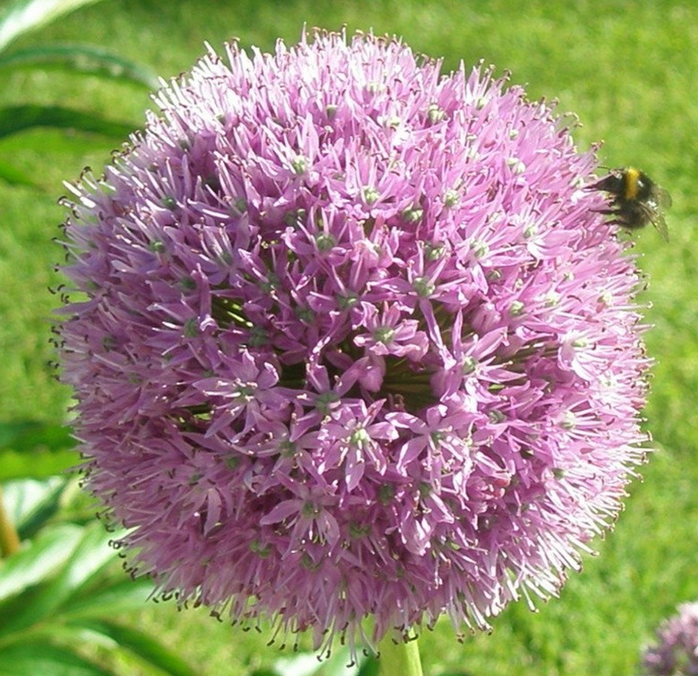
May and June belong to the season of Allium giganteum. If you see clumps of tall and unique spherical large flowers in the garden, they are most likely Allium giganteum. Dotted among flower beds or shrubbery, they break up rigid lines, and the dazzling purple or deep blue and red make the whole flower bed feel rhythmic.
The flower of Allium giganteum is a capitulum made up of countless small flowers. It is a perennial herbaceous plant of the genus Allium in the Liliaceae family. The bulbs are imported from abroad at the end of November each year, planted around December, sprout around March of the following year, and bloom in May and June. Because of its unique flower shape and tall stems, it is very suitable for decorating rock gardens, waterside areas, and flower beds.
Allium giganteum is native to Central Asia and the Mediterranean region. It likes a sunny and cool environment and is not strict about soil quality. It can grow normally in loose, breathable, well-drained sandy soil. If a little base fertilizer is applied before planting and phosphorus and potassium fertilizer is applied frequently before flowering, Allium giganteum will bloom even more brilliantly.
How do you grow Allium giganteum at home? After receiving the bulbs, you can take an appropriate amount of carbendazim and mix it with water to soak the bulbs for about two hours, then place them in a cool, ventilated place to dry. The planting spacing is 0.5 m to 1 m, and the depth requires covering the soil at 20-30 cm or more. Allium giganteum is very tall, and if the bulbs are buried too shallowly, it may cause poor growth and lodging. If growing in pots, choose a flowerpot with a height greater than 45 cm, and place coarse ceramsite at the bottom for drainage, and you can spread a layer of compound fertilizer as base fertilizer.
If you are in a rainy southern region, it is best to lift the bulbs after Allium giganteum has completely withered and store them in a cool, dry, and ventilated place to prevent bulb rot caused by excessive rain, and then plant them again in December of that winter.
The planting methods and sowing time of Allium giganteum are introduced here. It is also very suitable to grow at home.
How to grow Allium giganteum: Cultivation and management techniques for Allium giganteum
Allium giganteum is also called Ji'an flower. Its flower colors are brilliant and its flower shape is unique, and it is deeply loved by people. So what are the methods for growing Allium giganteum? And what about cultivation and management techniques? Let's take a look together next.
I. Methods for growing Allium giganteum
1. Allium giganteum is a flower with an extremely low natural multiplication rate of bulbs, but if the flower scape is removed as early as possible after it appears, so that nutrients are concentrated on the development of the renewal bulb and daughter bulbs, the number of small bulbs can be appropriately increased. In summer the aboveground parts die back, and the bulbs can be dug out, separated by size, and placed in a ventilated place to spend the summer.
2. Allium giganteum is planted after autumn. Those with bulbs reaching more than 3 cm can bloom after planting, while those smaller than 3 cm need to be grown for one year before they can bloom. Bulb multiplication rate Allium giganteum likes a cool, sunny environment, requires loose and fertile sandy loam, and avoids waterlogging. It is suitable for cultivation in northern China.
3. For open-field cultivation of Allium giganteum, choose sandy loam land with a low groundwater table, good drainage, and loose, fertile soil as the cultivation site. The best time to plant bulbs is mid-to-late September to early October, with a plant and row spacing of 20 x 30 cm. The planting depth is such that the soil covering above the bulb is 2-3 times the height of the fresh bulb.
4. After planting Allium giganteum, slightly press flat the surface of the hole, then water. In winter it is not necessary to cover for cold protection. In March of the following spring, when the leaves emerge from the soil, loosen the soil and water in time. Along with liquid topdressing, water once every 10-15 days. Pay attention to intertillage, soil loosening, and weeding. In places with dry air, appropriately add a small amount of artificial misting or shading, which can ease the yellowing of leaves in early summer.
5. After flowering, the stems and leaves of Allium giganteum wither. Dig up the bulbs early before the rainy season to avoid rot after rain. Place them in a ventilated and dry place to dry, then collect them, spread them out in a ventilated indoor place for storage, and wait until September-October to plant. The planting site should not be continuous cropping. Pay attention to applying decomposed organic fertilizer. Summers are rainy, so drainage must be timely. Allium giganteum gets its name because of its huge inflorescence.
II. Cultivation and management techniques for Allium giganteum
Both sowing and bulb division propagation are possible.
1. Sowing: After the seeds mature in July, they can be sown in open ground in a sunny place or in pots in a cold room from September to October. They germinate and emerge in March of the following year. From sowing to flowering takes about 4 years.
2. Bulb division: Young small bulbs grow slowly. Bulb division propagation is best carried out during the summer and autumn dormancy period. After larger bulbs are planted, they can bloom the following year. In summer the aboveground parts die back, and the bulbs can be dug out, separated by size, and placed in a ventilated place to spend the summer. Planted after autumn, those with bulbs reaching more than 3 cm can bloom after planting, while those smaller than 3 cm need to be grown for one year before they can bloom. The bulb multiplication rate is very low.
3. Cultivation techniques: Allium giganteum likes sunny, cool-climate, well-drained, fertile sandy loam, is cold-resistant, and avoids damp heat. When planting, choose a well-drained, slightly shaded place, and the soil covering depth is 3 times the height of the bulb. The planting period is September to October. After the leaves emerge from the soil in March of the following year, water, loosen the soil, and topdress in time, and thereafter topdress once every 20-30 days. After flowering, cut off the spent flowers and flower stems to promote bulb development. In rainy areas, after the aboveground parts wither, the underground bulbs should be dug up in time to avoid rot after rain. The planting site should not be continuous cropping. Pay attention to applying decomposed organic fertilizer. Summers are rainy, so drainage must be timely.
The above isAllium giganteum growing methodsintroduced. Friends who like Allium giganteum might as well learn about the growing methods, and when conditions allow in the future, you can grow it yourself.
Is Allium giganteum easy to grow? Planting methods for Allium giganteum
Allium giganteum is also called Ji'an flower, giant onion, tall onion, large onion, etc. It is a perennial bulbous flower of the genus Allium in the Liliaceae family. It is native to Central Asia and the Mediterranean region. In China it is mainly distributed in northern regions. As a variety for decorating and beautifying flower borders, rock gardens, or lawns, it has high ornamental value. Let's take a look together at the growing methods for Allium giganteum!
Growth habits of Allium giganteum
Allium giganteum is native to Central Asia and the Mediterranean region, and in China it is mainly concentrated in northern regions. Its flowering period is spring and summer. It likes a cool, sunny environment, avoids damp heat and heavy rain, avoids continuous cropping and semi-shade, and its suitable temperature is 15-25°C. It requires loose and fertile sandy loam and avoids waterlogging. It is suitable for cultivation in northern China.
Propagation methods for Allium giganteum
1. Seed propagation: After the seeds of Allium giganteum mature in early July, collect them and dry them in the shade, store them at a low temperature of 5-7°C, sow in autumn from September to October, and they germinate and emerge in March of the following year. In summer the aboveground parts also wither, forming small bulbs. Seedling plants need about 5 years of cultivation before they can bloom.
2. Division propagation: Bulb division propagation is carried out in summer and autumn. Peel off the daughter bulbs around the main bulb, and choose sandy loam soil with a low groundwater table, good drainage, and loose, fertile soil as the cultivation site. Each mother bulb can be divided into 1-3 small bulbs, among which the larger bulbs can bloom the following year after planting.
Growing methods for Allium giganteum
1. Allium giganteum is a flower with an extremely low natural multiplication rate of bulbs, but if the flower scape is removed as early as possible after it appears, so that nutrients are concentrated on the development of the renewal bulb and daughter bulbs, the number of small bulbs can be appropriately increased. In summer the aboveground parts die back, and the bulbs can be dug out, separated by size, and placed in a ventilated place to spend the summer.
2. Allium giganteum is planted after autumn. Those with bulbs reaching more than 3 cm can bloom after planting, while those smaller than 3 cm need to be grown for one year before they can bloom. Bulb multiplication rate Allium giganteum likes a cool, sunny environment, requires loose and fertile sandy loam, and avoids waterlogging. It is suitable for cultivation in northern China.
3. For open-field cultivation of Allium giganteum, choose sandy loam land with a low groundwater table, good drainage, and loose, fertile soil as the cultivation site. The best time to plant bulbs is mid-to-late September to early October, with a plant and row spacing of 20 x 30 cm. The planting depth is such that the soil covering above the bulb is 2-3 times the height of the fresh bulb.
4. After planting Allium giganteum, slightly press flat the surface of the hole, then water. In winter it is not necessary to cover for cold protection. In March of the following spring, when the leaves emerge from the soil, loosen the soil and water in time. Along with liquid topdressing, water once every 10-15 days. Pay attention to intertillage, soil loosening, and weeding. In places with dry air, appropriately add a small amount of artificial misting or shading, which can ease the yellowing of leaves in early summer.
5. After flowering, the stems and leaves of Allium giganteum wither. Dig up the bulbs early before the rainy season to avoid rot after rain. Place them in a ventilated and dry place to dry, then collect them, spread them out in a ventilated indoor place for storage, and wait until September-October to plant. The planting site should not be continuous cropping. Pay attention to applying decomposed organic fertilizer. Summers are rainy, so drainage must be timely. Allium giganteum gets its name because of its huge inflorescence.