What to Do When a Yunnan Pistache Drops Its Leaves? Detailed Guide to Growing Methods and Precautions
Many people love to grow Yunnan Pistache (Pistacia weinmannifolia) at home. It has a fresh, fragrant scent, and its leaves are also very green. What are the growing methods for Yunnan Pistache? What precautions should be taken during the growing process? And what can be done if it starts dropping leaves?
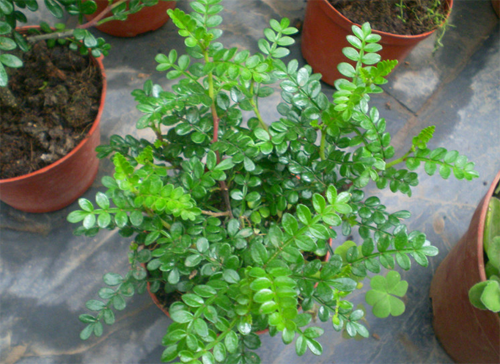
Growing methods for Yunnan Pistache:
Soil:
It has low soil requirements and can survive in dry, infertile soil. It prefers soil that is well-aerated and easy to drain, containing river sand or perlite. Do not let water accumulate in the pot; keep the soil dry and loose. Its transplant soil can be prepared by mixing peat soil, loam soil, and humus soil in equal proportions.
Light: Yunnan Pistache needs sufficient light and can receive light every day. It can usually be placed on a balcony or in a bright indoor spot, avoiding prolonged direct strong light, and it should not be placed in a shaded area. In addition, it is slightly shade-tolerant and can still grow normally without light for a few days.
Temperature: It is best to keep the temperature at 20-25°C. Seedlings are not cold-tolerant, so insulation measures should be taken in cold winter regions. The plant can withstand winter lows of -10°C, and if brought indoors, it can overwinter successfully.
Watering: Yunnan Pistache likes dry conditions. Generally, water once every 3-5 days, and wait until the potting soil is completely dry before watering. Do not water too frequently; adjust according to climate conditions. Water thoroughly so that water penetrates to the bottom, but do not use too much, to avoid root rot. The surrounding air humidity should be around 60%.
Fertilizing: Yunnan Pistache does not like fertilizer and is greatly affected by it. Seedlings should be given little or no fertilizer, otherwise problems such as fertilizer burn or leggy growth may occur. Apply a light diluted fertilizer at the appropriate time.
Pests: It generally does not suffer from pests or diseases. If scale insects appear on the branches and leaves or red spider mites appear on the leaves, pesticides such as chlorpyrifos and methidathion can be used to control scale insects, while red spider mite infestations can be treated with hexythiazox, dicofol, and similar products.
Pruning: The plant grows relatively slowly and is easy to shape. Through professional pruning techniques, proper pruning and care according to the growth trend of the branches can create a highly ornamental potted plant with a rustic charm.
Precautions for Yunnan Pistache:
Transplanting: If you want to transplant the plant, it may drop leaves after transplanting. Generally speaking, this is normal.
Wind: Because the connection points are relatively weak, the plant cannot withstand strong winds. If the wind is too strong, it will blow the leaves off.
Placement: If the Yunnan Pistache is growing poorly or even looks diseased and weak, please do not place it near a computer for a long time, as the radiation and released heat may affect the plant.
What to do when Yunnan Pistache drops leaves?
Check whether the Yunnan Pistache has dried out and whether the sunlight is too strong. If leaf drop occurs: water 3 times a week. Place it on a balcony with good ventilation, not in direct sunlight, but in bright indirect light.
Why Does Yunnan Pistache Keep Dropping Leaves? Growing Methods and Precautions for Yunnan Pistache
Yunnan Pistache is a herbaceous plant, and many people like to grow it as a bonsai. Those who grow it will ask, why does Yunnan Pistache keep dropping leaves? Below is a share of the growing methods and precautions for Yunnan Pistache.
Why does Yunnan Pistache keep dropping leaves?
Yunnan Pistache is quite sensitive to fertilizer. Seedlings should be fertilized as little as possible or not at all to avoid fertilizer burn or leggy growth caused by excessive fertility. Cuttings can be taken in both spring and autumn. Using plant non-test-tube rapid propagation technology, it can be done year-round. During the growing season, take one leaf and one bud; during the dormant period, take one branch segment. During the tree's dormant period, select 1-year-old robust branches from a vigorous mother tree.
Yunnan Pistache usually drops leaves because of improper watering. Watering should follow the principle of not watering until dry, and when watering, water thoroughly. Do not keep it wet and waterlogged for long periods or allow water to sit in the tray for a long time!! Also, never just wet the surface when watering; it must be watered thoroughly! Generally speaking, watering for more than 10 seconds up to several minutes (depending on pot size and soil type) until water drains from the bottom is sufficient.
Another cause is unsuitable light. This condition easily appears when there is a long-term lack of light. Poor ventilation can also cause Yunnan Pistache to drop leaves. Good ventilation conditions should be maintained.
If there are scale insects on the branches and leaves or red spider mite damage on the leaves, special pesticides can be sprayed for control, such as methidathion and chlorpyrifos for scale insects, and dicofol, hexythiazox, etc. for red spider mites.
Growing methods for Yunnan Pistache:
1. Watering and soil. Do not water Yunnan Pistache too frequently; once every 3-5 days is suitable. Each time you water, be sure to water thoroughly, meaning the water must moisten the bottom. Too much watering will cause root rot. The soil must have good drainage. The soil provided at purchase is fine.
2. Transplanting issue. After buying it, because the original flower pot was unattractive, it was transplanted. The problem is that Yunnan Pistache will drop leaves after transplanting. This is a normal reaction, so do not worry too much.
3. Temperature. As long as it is placed indoors, winter is not a problem. This is because indoor temperatures in winter are still a decent ten-plus degrees.
4. Sunlight. Yunnan Pistache likes light and can be placed in the sun every day, but do not expose it to strong sun for long periods. Generally, placing it on a balcony or in a sunny indoor spot is fine. Yunnan Pistache is also slightly shade-tolerant, so it is fine not to put it in the sun for a few days.
5. When the plant is weak, it is not recommended to place it next to a computer for a long time; radiation and computer heat are still quite harmful.
6. Wind. Yunnan Pistache cannot withstand strong wind; if the wind is strong, the leaves will drop. This is because the connection points of the Yunnan Pistache leaves are very fragile.
Precautions for growing Yunnan Pistache:
1. Transplanting issue. After buying it, because the original flower pot was unattractive, it was transplanted. The problem is that Yunnan Pistache will drop leaves after transplanting. This is a normal reaction, so do not worry too much.
2. Wind issue. Yunnan Pistache cannot withstand strong wind; if the wind is strong, the leaves will drop. This is because the connection points of the Yunnan Pistache leaves are very fragile.
3. Placement issue. When the plant is weak, it is not recommended to place it next to a computer for a long time; radiation and computer heat are still quite harmful.
Solutions to common problems in growing Yunnan Pistache:
(1) Symptoms: The plant stops growing. In the early stage, the leaves droop, then gradually fall. By the time the leaves begin to fall, the root system has already rotted very severely, ultimately causing the plant to die.
Cause: Be sure to remember that Yunnan Pistache fears waterlogging and tolerates dryness. The above symptoms appear precisely because the grower did not grasp this care point, and excessive watering caused root rot and plant death.
Solution: In the early stage, when the leaves first begin to droop, remove the plant from the pot and check the root system. If the rot is not severe, immediately prune the rotten roots, place the bare-rooted plant in a ventilated place, but do not let wind blow on it continuously. After allowing it to dry slightly, put the plant back into the pot. It is best to drill holes in the original pot to achieve aeration. Unless the medium is very dry, do not water. Wait for the plant to recover and begin growing new roots, which indicates the plant has been successfully saved.
(2) Symptoms: The color of the plant's leaves gradually becomes dull, accompanied by leggy branches and weak, insufficiently robust growth.
Cause: The plant has been kept in a dark place for a long time, unable to receive the light it needs, and cannot effectively carry out necessary photosynthesis.
Solution: Move the plant to a location with sufficient light for care, and obvious changes will soon appear.
(3) Symptoms: The edges of new leaves turn black, and then the blackened areas become soft and collapse. In severe cases, the entire plant's leaves turn black and the plant dies.
Cause: Fertilizer damage caused by excessive fertilizing.
Solution: If the fertilizer damage is not too severe, it is recommended to immediately pull up the plant, wash the root system clean in clear water, cut off the rotten roots, then place the root system in a cool place for about half a day, replace the soil, and replant. If the fertilizer damage is severe, repeatedly flush with clear water at 5-10 times the usual watering amount.
To care for Yunnan Pistache, you only need to grasp three key points: it fears waterlogging and tolerates dryness, fears heavy fertilizer, and fears darkness. Care will then become a very simple matter.
Growing Methods for Yunnan Pistache: Growing Methods and Precautions for Yunnan Pistache
Yunnan Pistache is mostly found in the high-altitude dry-hot valley areas of central and northern Yunnan and southern Sichuan in China. Yunnan Pistache is shade-tolerant, likes warmth, grows slowly, and has a long lifespan. When planting in northern regions, pay attention to cold protection for seedlings.
Growing Methods for Potted Yunnan Pistache
Choose a suitable plant
Yunnan Pistache is very popular among flower enthusiasts and is a very ideal potted plant. Placing a Yunnan Pistache bonsai indoors can create a feeling of wild mountains, water, and trees being brought into the home, natural and fresh. Therefore, potting is the first important step for potted Yunnan Pistache.
Choose a Yunnan Pistache seedling with a curved trunk and slightly deformed shape, or an old trunk that looks slightly aged and has a quaint, beautiful tree shape. Wild tree stumps are the best, but to protect the environment, flower enthusiasts are not advised to do this!
Prune
After selecting the Yunnan Pistache plant, the next step is pruning and shaping.
After planning the shape and placement, prune according to the indoor space and actual environment. Through methods such as shortening and thinning cuts, remove diseased and pest-damaged branches, leggy branches, and crossing or overlapping branches.
Potting and shaping
Choosing a purple clay pot with good aeration as the home for a potted Yunnan Pistache or bonsai is most suitable. After potting, compact the soil and water to keep the soil moist.
Yunnan Pistache is a sun-loving plant. Placing it on a balcony or windowsill, in these ventilated and bright places, will allow it to grow very well. In daily care, also pay attention to adjusting and correcting the plant's growth and shaping it as needed.
Usually, after several years of care and management, you can have a great Yunnan Pistache bonsai/potted plant!
Care precautions for Yunnan Pistache
Transplanting and repotting
Many flower enthusiasts repot and transplant Yunnan Pistache after buying it. Leaf drop may occur after transplanting, which is a normal reaction, so flower enthusiasts need not worry too much.
Soil and moisture
Yunnan Pistache does not need frequent watering. Generally, once every 3-5 days is fine, and it must be watered thoroughly (moisten the bottom). Too much water easily causes root rot (what is commonly called burning), so the soil also needs to be a type with good drainage and permeability.
Outdoor environment
The main factors are wind and sunlight. As for sunlight, it can be given daily because Yunnan Pistache likes light, but avoid exposure to strong sun. Usually, a balcony or a sunny indoor spot is best. It does not matter even if it does not get sun, because Yunnan Pistache has a certain shade tolerance.
As for wind, Yunnan Pistache has little resistance. When grown at home, try to avoid letting your beloved plant be battered by the wind! The tiny leaf connection points can easily turn your Yunnan Pistache into a "Mediterranean"...
Temperature and placement
Usually there is no problem placing it indoors. Considering that green plants release carbon dioxide and absorb oxygen at night, it is better not to place it in the bedroom. In winter, as long as the room temperature is in the teens, there is no problem.
In addition, when the plant is weak, do not place Yunnan Pistache in front of a computer to receive heat and radiation.
Editor's summary
The above are the growing methods and precautions for Yunnan Pistache! After reading the editor's introduction, do you want to rush out and buy one? Take action now and have your own Yunnan Pistache!