Detailed Guide to Norfolk Island Pine Propagation and Watering Methods
Norfolk Island pine is a houseplant that many people love, and once you have bought one, you may want to grow several more. What are the propagation methods for Norfolk Island pine? How should you water it indoors to keep it healthy?
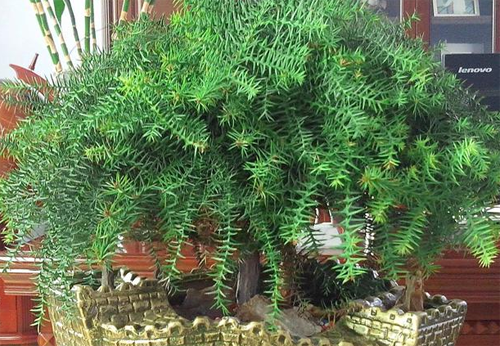
Propagation methods for Norfolk Island pine:
Norfolk Island pine mainly relies on seed propagation, but cuttings can also produce new plants.
1. Seedlings grown from seed are sturdy and strong, with vigorous growth, making them suitable for propagation in batches.
Generally, between July and August, scarify the seed coat of freshly collected seeds first to promote germination; otherwise, leaving them in the soil too long can easily cause the seeds to rot. Then sow the treated seeds in a sand bed, covering them with about 1.5-2 cm of fine sand. Under conditions of 25-28°C and a certain level of humidity, they will germinate in about 2-3 weeks. Plant them immediately after germination.
2. When taking cuttings, if you choose the main axis or a leggy branch as the cutting, it can easily cause the plant's crown shape to become distorted.
It can only grow horizontally, which affects its ornamental value. Cut the tip of a healthy, easy-to-root branch with 2-3 nodes as the cutting, remove some leaves, soak it in clean water overnight, and then insert it into a sand bed using coarse sand or vermiculite as the substrate. Maintain a temperature of 20-25°C and relatively high air humidity, and it will root after about 3 months.
Watering methods for Norfolk Island pine:
During care, how often to water Norfolk Island pine depends on the moisture level of the potting soil. In summer, generally watering twice a week is enough. In winter, watering can be reduced by one time compared with summer.
From spring to autumn, Norfolk Island pine bonsai should be watered more, but avoid water accumulating in the pot. During high temperatures and dry conditions, spray water on the potted plant and the nearby ground to lower the temperature and increase humidity. Water promptly; do not wait until the soil is dry before watering. From late autumn onward, gradually reduce watering to enhance its cold resistance.
In summer, water when the potting soil is half dry, and when watering, just go around the edge of the pot once. If the weather is very dry, spray water around the Norfolk Island pine bonsai to increase air humidity and create a humid, suitable environment for it.
That concludes the introduction to Norfolk Island pine propagation methods and watering methods. Norfolk Island pine only looks good when it is grown lush and full.
How to Grow Norfolk Island Pine: Cultivation Methods and Precautions for Norfolk Island Pine / Prefers Diffused Light
Norfolk Island pine is one of the world's three major ornamental trees. What is commonly kept indoors in pots is the young tree, usually under 2 m tall. It has a graceful shape, strong ornamental value, and is also excellent at purifying air, so it is deeply loved by gardening enthusiasts. In daily life, many gardening enthusiasts want to know how to grow Norfolk Island pine. Next, let's take a look at the cultivation methods and precautions for Norfolk Island pine.
I. How to Grow Norfolk Island Pine: Understand Its Habits
Norfolk Island pine prefers a warm, humid environment, is relatively shade-tolerant, avoids strong light, and is not tolerant of cold or drought. When growing it indoors, place it in a semi-shaded spot with ample light, water it appropriately, and take good measures to keep it warm in winter. As for the growing medium, it is best to use a well-drained, humus-rich, slightly acidic sandy loam. So how do you grow Norfolk Island pine? It's simple: just meet its growth habits.
II. Cultivation Methods and Precautions for Norfolk Island Pine
1. Soil
How to grow Norfolk Island pine? First, you should reselect the potting soil. The reason is that many gardeners' Norfolk Island pine bonsai are existing potted plants bought from flower shops or online; normal care can keep the plant growing. But that soil is very cheap, and if you want Norfolk Island pine to grow well, it is best to choose new soil.
Soil selection: According to the growth habits of Norfolk Island pine, we know it prefers well-drained, humus-rich, slightly acidic sandy soil. For this, the editor recommends using a substrate mixed from garden soil, leaf mold, and peat moss.
2. Light
As a green plant, Norfolk Island pine has a high demand for light. However, Norfolk Island pine prefers diffused light and fears strong light, so when growing it indoors, place it in a bright spot. If indoor light is not strong enough, move it into sunlight for appropriate exposure every few weeks; this way its leaves will be more vividly green.
3. Temperature
How to grow Norfolk Island pine? Adjusting the temperature in a timely way is also very important. Norfolk Island pine prefers a warm environment, and the most suitable growth temperature is 10-25°C. At this temperature, it can grow all year round. However, Norfolk Island pine dislikes high temperatures and is not cold-tolerant. Its growth temperature in summer must not exceed 32°C, and in winter must not fall below 5°C.
4. Watering
Water is the source of life, so in the cultivation methods and precautions for Norfolk Island pine, watering is a very important part. Norfolk Island pine prefers a humid environment, and the potting soil should be kept moist. In summer, in addition to watering, increase the frequency of misting and sprinkling to raise air humidity.
Watering method: Spring and autumn are the peak growth seasons for Norfolk Island pine. At this time, water more, and water promptly; do not wait until the soil is dry before watering, but avoid water accumulating in the pot. In summer, water when the potting soil is half dry, keeping the interval at watering twice a week. In winter, control watering and reduce it by one time compared with summer.
5. Fertilizing
After watering, let's talk about fertilizing, which is also indispensable in the growth of Norfolk Island pine. During the spring and autumn growth seasons, fertilize Norfolk Island pine once every 2 weeks, preferably with a compound fertilizer containing nitrogen and potassium. Do not neglect fertilizing, because once nutrients are insufficient, it can easily cause Norfolk Island pine leaves to turn yellow, which will affect the plant's ornamental value.
6. Repotting and Changing Soil
In the cultivation methods and precautions for Norfolk Island pine, repotting and changing soil is also a point that cannot be ignored. This is because any potted plant's soil will eventually become poor, so timely repotting is essential. Repot once every 2-3 years, using the growing medium mentioned above. As for pruning, under normal circumstances, Norfolk Island pine does not need branch pruning; just let it grow naturally.
Cultivation Methods and Precautions for Norfolk Island Pine; The Benefits of Norfolk Island Pine
Norfolk Island pine is one of the world's three famous ornamental plants, and it is also one of the best at purifying air. It is very suitable for long-term care indoors in low-light conditions. So do you know how to grow Norfolk Island pine? Today let's talk about the cultivation methods and precautions for Norfolk Island pine and the benefits of Norfolk Island pine.
Introduction to Norfolk Island Pine:
Evergreen tree; potted specimens are generally young trees, under 2 m tall. The crown is spire-shaped and dark green, and the bark of the crown often splits horizontally or peels off in strips; the new bark has a bronze sheen. The stem is upright, with lateral branches in whorls spreading horizontally. Branchlets are alternate in two rows, extending horizontally or slightly drooping. Leaves are of two types: leaves on young trees or lateral branches are awl-shaped, curved upward, about 12 cm long, loosely arranged, and bright green; leaves on mature trees or old branches are ovate or triangular-ovate, about 6 cm long, and closely arranged. Cones are nearly round.
Cultivation methods for Norfolk Island pine:
1. Soil: Norfolk Island pine is suitable for well-drained, humus-rich, slightly acidic sandy loam. When potting, a substrate mixed from garden soil, leaf mold, and peat moss is best.
2. Watering: From spring to autumn, Norfolk Island pine should be watered more, but avoid water accumulating in the pot. During high temperatures and dry conditions, spray water on the potted plant and the nearby ground to lower the temperature and increase humidity. Water promptly; do not wait until the soil is dry before watering. From late autumn onward, gradually reduce watering to enhance its cold resistance.
3. Light: Norfolk Island pine likes diffused light and should be placed in a bright spot in a greenhouse. If it is kept in a dark place for a long time, move it into sunlight for appropriate exposure every few weeks; this can keep the deep green leaves in beautiful color.
4. Temperature: The growing season is long. Except when the summer temperature exceeds 32°C, Norfolk Island pine can grow all year round.
5. Fertilizing: During the growing season, apply fertilizer once every 2 weeks, preferably with a compound fertilizer containing nitrogen and potassium. Insufficient fertilizer can easily cause the branches and leaves to turn yellow.
6. Pests and diseases: Norfolk Island pine has very few pests and diseases. When cared for indoors, scale insects are commonly seen. They can be controlled by spraying methidathion, chlorpyrifos emulsifiable concentrate, Guoguang Jiebis i, and similar products, with good results.
Precautions for growing Norfolk Island pine:
1. Summer and autumn are the growing seasons. Potted plants can be placed in a semi-shaded spot outdoors or kept in a ventilated spot with light near a window. Avoid exposure to blazing sun above 35°C, and do not keep them in a lightless, shaded place for long periods. Either of these can cause the branches and leaves to wither and yellow or to grow leggy, affecting ornamental value.
2. During growth, to prevent the trunk from leaning to one side, it is best to turn the pot once every half month so the plant receives light evenly. In addition, young tree trunks are fragile and easily bent and deformed, so from the young plant stage it is best to set up a support to stabilize the trunk. To prevent the plant from growing too tall, repot once every 2-3 years after the weather warms in spring. Usually, take care to protect the side branches so they are not damaged and affect the plant's shape.
3. Under normal circumstances, Norfolk Island pine does not need branch pruning; let it grow naturally. The suitable growth temperature is 10-25°C, and the overwintering temperature is above 5°C. During the overwintering season, give it a certain amount of light, do not let the potting soil become too dry, and on clear days spray water to increase humidity.
The benefits of Norfolk Island pine:
Norfolk Island pine is suitable for placing in a spacious living room or as an ornamental bonsai in a company lobby. It can absorb carbon dioxide and regulate indoor air humidity, making it a powerful natural "humidifier." It can absorb water through its roots, then use 1% of that water to sustain its own life, while the remaining 99% is released into our living space. Moreover, no matter what kind of water you give them, what finally evaporates is 100% pure water.
Norfolk Island pine releases oxygen through photosynthesis, so there is no need to worry about it competing with us for oxygen when placed in a room. It can also add enjoyment to life, cultivate character, and supplement oxygen. It is a very good kind of "plant pet"!
Just like many evergreen plants, Norfolk Island pine is also a very good "eye fatigue reliever": in daily life, because we work in front of computer screens at close range for long periods, many of us experience eye fatigue, declining vision, and sore arms or shoulders. Data analysis and testing show that regularly looking at green plants such as Norfolk Island pine can significantly reduce visual fatigue and can also help prevent the occurrence of dry eye syndrome.