What to Do When Calathea insignis Leaves Turn Yellow and Curl? Care Methods and Precautions
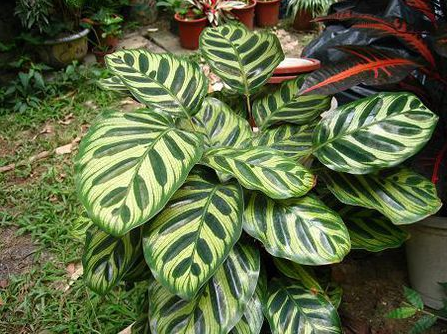
What does Calathea insignis look like? How did it get such an elegant name? Because the leaves of Calathea insignis look just like peacock feathers, they are extremely beautiful. What are the care methods for Calathea insignis? What precautions are there? What should be done when the leaves turn yellow and curl?
1. Light
It really dislikes harsh sun exposure, which can scorch the leaves and leave ugly marks. Of course, bright light in general is fine. It tolerates partial shade. Make sure there is good ventilation, as Calathea insignis strongly dislikes hot, stuffy environments.
It is recommended to keep it on a north-facing balcony, so if you ask me what to grow on a partially shaded balcony, bring home a Calathea insignis.
2. Watering and Humidity
As an excellent air-purifying plant, Calathea insignis does not demand too much from its environment. Normally, keep the potting soil slightly moist, just do not let it get too dry. Of course, it must not become waterlogged. If the roots rot, I take no responsibility.
Water regularly, and mist more on good-weather days (sunny days). Do not let the potting soil stay dry for too long. Many plant friends come back from business trips or vacations only to find their Calathea insignis lying flat on the ground and unable to get up. The soil was too dry. That will not do. If you will be away from home for a long time, ask a friend to care for it or make a simple automatic watering device.
3. Fertilizing
During the growing season (except the hot summer and winter), fertilize about once a month. Of course, follow the principle of light, frequent feeding. Choose an indoor foliage fertilizer. I will not recommend specific brands, and I do not have any either.
Note: Fertilize less or not at all in winter and summer. Do not let liquid fertilizer remain on the leaves.
4. Temperature
As a plant that loves warmth and humidity, it is of course not cold-hardy. Move it indoors in winter. Temperatures above 10°C are safe, above 15°C is best, and the growing temperature is around 15-25°C. In high temperatures, ventilation is essential. In hot, stuffy conditions, mist more to cool it down.
5. Potting Soil Selection
Calathea insignis likes well-drained, fertile, loose, slightly acidic humus soil (it looks black, feels loose, and water passes through easily when watering). The growing medium can be mixed with a small amount of decomposed base fertilizer, leaf mold, peat soil and river sand, so that the potting soil better meets its growing needs.
Pest and Disease Protection for Calathea insignis:
When properly cared for, Calathea insignis rarely gets sick. It can develop problems under dry air, poor ventilation, hot and stuffy conditions, or overwatering. If it is root rot, then you need to control watering and improve ventilation. It is usually caused by watering too frequently, waterlogged potting soil, or soil that is not loose enough.
Regularly remove diseased leaves in time. Do not leave dead leaves in the potting soil. Keep the environment clean.
Dry, stuffy conditions easily lead to pests such as scale insects and whiteflies. They can be controlled by spraying with a 1000-fold dilution of 25% phosmet emulsifiable concentrate or a 1500-fold dilution of 40% omethoate.
Propagation Methods for Calathea insignis:
The easy method is division. Separate the side shoots and plant them in slightly moist sandy soil. Keep them in a partially shaded, ventilated spot. Do not water too much at first, as that makes rooting difficult.
Precautions: Generally do this in spring and autumn. It is best combined with repotting. The survival rate is highest when done at around 20°C. Of course, you can also cut apart a lush rhizome for division, but that is too cruel.
What to Do About Curled Leaves and Yellow Leaves on Calathea insignis?
It is usually caused by watering too little. Water regularly. During the growing season, water once the soil is dry. In winter, prevent cold damage.
Of course, preventing cold damage is also very important. Move it to a warm place. Of course, the weather has already warmed up now.
When the summer temperature is above 35°C, it stops growing and the leaf color turns yellow. In winter, when it is below 10°C, the leaves tend to curl. Below 5°C, it is prone to cold damage, and in severe cases it may die. In winter, pay attention to cold protection and insulation. Indoor room temperature should be kept above 13°C.
That is all for the care methods for Calathea insignis and the problems that arise during care. Hurry and add a bit of green to your home.
What to Do When Calathea insignis Leaves Curl? Does Calathea insignis Bloom?
Calathea insignis is an ideal indoor greenery plant. Many people like to grow Calathea insignis at home for indoor display. But what should be done when the leaves curl during care? Does Calathea insignis bloom? Today let us look at the answers together.
What to Do When Calathea insignis Leaves Curl?
1. Cause: Unsuitable environmental temperature and humidity
Symptoms: Calathea insignis leaves shrink and curl and no longer extend freely. If no measures are taken, over time the leaves and roots will rot, and it may even wither and die.
Solutions:
1. Strengthen daily water and fertilizer management.
2. Misting: Except on rainy days, mist the plant and the surrounding environment 3 times a day.
3. Bagging: If the leaves are especially severely shrunken, you can cover the entire plant with a plastic bag and poke some small holes about 5 mm above the pot rim. This can maintain a certain humidity while allowing proper ventilation, which helps it recover.
2. Cause: Too little watering and too low humidity.
Symptoms: Calathea insignis leaves curl and some parts die off, with lower leaves turning yellow and withered.
Solution: Calathea insignis is native to the tropical rainforests of South America and requires a very humid special environment. In addition to keeping the potting soil moist, not waiting until the soil dries out before watering, and avoiding waterlogged roots, you should also maintain relatively high air humidity in the surrounding environment. For this reason, in summer it should be placed in a partially shaded location, mist the leaf surface 2 to 3 times a day, and sprinkle water on the surrounding ground to increase humidity and lower temperature, promoting healthy growth of the plant.
In addition, absolutely avoid water accumulation in the potting soil, and do not apply raw fertilizer, concentrated fertilizer or heavy fertilizer, otherwise the fine nutrient roots will rot, which will likewise cause its leaves to curl and turn yellow.
Does Calathea insignis Bloom?
Calathea insignis can bloom, but only if the temperature conditions are met. Calathea insignis is a foliage plant, and its flowers are actually not very attractive. In northern regions, it is not easy to bloom due to climate and temperature conditions, while in the south it can bloom every year. Some people cut off the flower buds to avoid nutrient consumption.
More InformationWhat to Do When Calathea insignis Leaves Curl: Regulate Temperature, Increase Humidity / Water Moderately
For Calathea insignis, friends who have seen it should be deeply impressed. Its leaves are not only evergreen all year round, but also have a peacock feather pattern on them. It is truly amazing. Because of its ornamental value, many people keep Calathea insignis at home, but as they grow it, the leaves curl. What is going on? Today the editor will tell you the answer.
1. Find the Cause of Curled Leaves on Calathea insignis
Calathea insignis is a tropical plant. It likes high temperature and high humidity. When grown indoors, because the environment does not meet its needs, Calathea insignis often develops curling, the leaves cannot extend freely, and the lower leaves of the plant turn yellow and withered. So what should be done when Calathea insignis leaves curl? For this, the editor has summarized 4 causes and attached solutions. Let us continue reading.
2. Causes and Solutions for Curled Leaves on Calathea insignis
1. Improper temperature and humidity
According to the editor's research, curled leaves on Calathea insignis are generally caused by inappropriate temperature and humidity.
① Temperature too low
Calathea insignis is a tropical plant. It likes a high-temperature growing environment. When grown indoors, if the temperature is too low, it will develop curling.
Solution: Very simple. Move Calathea insignis to a place with a higher temperature (above 16°C). However, note that you should not move it somewhere with too high a temperature all at once. With careful care for a period of time, the leaves will return to health.
② Humidity not enough
Besides liking high temperatures, Calathea insignis also likes a highly humid environment. Normally we should ensure that both the potting soil and the air remain at relatively high humidity. Once the humidity is insufficient, the leaves of Calathea insignis will curl.
Solution: Sprinkle water around Calathea insignis to increase air humidity. In addition, everyone should also frequently mist the leaf surface to cool and retain moisture. Humidity is best kept at 70%-80%.
2. Improper watering
Besides improper humidity, if the watering method is wrong, such as watering too much or not watering thoroughly for a long time, curled leaves on Calathea insignis can also occur.
① Too little watering
Calathea insignis likes a moist environment. Normally it should be watered more to keep the potting soil moist. Once watering is too little, the water supply is insufficient to meet the growth needs of Calathea insignis, and its leaves will also show curling symptoms.
Solution: Replenish water for Calathea insignis, but do not water too much at once. Just keep the potting soil moist.
② Too much watering
In addition, watering too much and causing water accumulation in the pot is also a cause of curled leaves on Calathea insignis. Calathea insignis likes moisture, but if water accumulates in the pot, it will cause root rot, and the leaves will curl and turn yellow.
Solution: Move Calathea insignis to a ventilated spot with indirect light so the water evaporates quickly. In severe cases, take it out of the pot, replace it with fresh growing medium, and replant it.