When Does Water Jasmine Bloom? A Detailed Guide to Growing and Care
Water jasmine also goes by other names, such as water jasmine; it blooms in small, dainty flowers that are incredibly charming and beautiful, with a fresh, delicate fragrance. What is the method for growing water jasmine? When will it bloom?
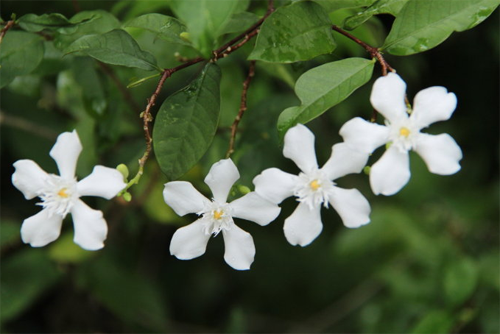
How to grow water jasmine:
1. Daily care:
Water jasmine is also called water jasmine, and it can be grown on a family balcony. It likes warm, humid environments; northern growers may protest, but it is very well suited to southern courtyard plants.
In summer it needs a cool, well-ventilated environment. Its drawback is that it is not cold-tolerant, and the overwintering temperature must be above 5°C. Apart from a little shade during the high heat of summer, water jasmine can take full sun the rest of the year.
Its optimum growing temperature is 15-25°C, and it likes well-drained humus soil.
2. Temperature and water
Water jasmine likes full sun or partial sun, and the soil must have good water retention; fertile loam is the most suitable for cultivation. During the high-temperature period in summer, water must be supplied abundantly, so that the water jasmine plant does not suffer from lack of water, which would affect growth and blooming.
3. Timely pruning
The branches tend to sprawl in all directions, so they must be pruned and shaped.
Water jasmine is propagated by air layering or cuttings. In late spring or early autumn, cut branches for cuttings; sturdy branches about 15cm long root easily. Insert them into slightly moist sandy soil and keep them in a cool, shaded place.
Note: the stems of water jasmine contain certain toxins that are more or less harmful to humans, but as long as you do not pick them at will, or let children play with the flowers and fruits, and prevent them from entering the mouth or eyes, they generally will not cause poisoning. Accidental ingestion can cause vomiting.
When does water jasmine bloom:
From spring all the way to autumn it is covered with elegant flowers. In the plum rain season in the south, during periods of abundant moisture, the flowers' tranquil, sweet fragrance becomes even more pleasant; after rain and in high-humidity environments, the scent is even more noticeable.
With such a fragrant water jasmine, why not give it a try right away and let your sense of smell enjoy this scent too.
How to grow bougainvillea, why bougainvillea does not bloom, bougainvillea pictures
✿ Related reading recommendations
✿ Reed pictures
✿ Home flower growing
✿ Rose blooming season ✿ Luoyang peony pictures
(◕‿◕✿) For flowers and bonsai, and plant growing, please follow the Meilele Flowers and Bonsai section!
.....
Green leaves set off the bright red bracts, like a peacock spreading its tail, especially dazzling and eye-catching. This is bougainvillea. In its native Brazil, women often wear it in their hair as an ornament, which is quite unique. Today the editor will briefly introduce the growing methods for bougainvillea and let everyone enjoy bougainvillea pictures.
.....
Appreciating bougainvillea pictures; first, the editor will introduce the cultivation part of bougainvillea growing methods. Bougainvillea cuttings first sprout buds and grow branches, and then root. Therefore, when the branches are sprouting buds and growing leaves, do not transplant or loosen the soil, so as not to affect the rooting of the branches.
.....
.....
Bougainvillea likes high temperatures and ample sunlight. As long as the soil stays moist, it is not afraid of blazing sun. When autumn arrives that year, you should intentionally subject it to a month of root restriction, that is, after its branches and leaves are lush, water it less and keep it half-dry and half-moist, letting its green leaves drop and its flower buds grow vigorously. "Picking leaves can trigger sprouting, controlling water can produce flowers" - this is the peculiar character of bougainvillea.
.....
.....
Appreciating bougainvillea pictures, what about the growing methods for bougainvillea? Bougainvillea grows quickly, and during the growing period you must pay attention to shaping and pruning to promote side branch growth and produce more flowering branches. The number of prunings is generally 1 to 3 times; too many is not advisable, otherwise it will affect the number of bloomings.
.....
.....
After each blooming, promptly remove the spent flowers to reduce nutrient consumption. After the flowering period, thin out overly dense branches, inner branches, leggy branches and weak branches; other branches are generally not pruned, or only the tips are lightly trimmed. Heavy pruning is not advisable, so as to shorten the next growth period and encourage earlier and repeated blooming.
.....
.....
Appreciating bougainvillea pictures; in bougainvillea growing methods, watering and fertilizing are very important, so how should you water?
Watering
In the early summer growing season, water once a day to ensure branch and leaf growth. From June to July, depending on the variety, control water appropriately 3 to 4 times; the degree of water control is to make the branch tips and leaves slightly wilt. After moving indoors in winter, keep to "do not water until dry, and when you water, water thoroughly."
.....
.....
Fertilizing
Bougainvillea blooms a lot and has a long flowering period, consuming many nutrients; added to the limited pot soil, fertilizer must be supplemented regularly. When repotting in spring, apply sufficient base fertilizer. During the vigorous growth period, apply decomposed cake fertilizer water every 7 days to accelerate flower bud differentiation. When flower buds appear at the leaf axils, you can apply more fertilizer and heavier fertilizer, mainly phosphorus and potassium fertilizer.
.....
.....
Appreciating bougainvillea pictures; after introducing the growing methods for bougainvillea, let us learn why bougainvillea does not bloom.
1. Bougainvillea is native to tropical regions and likes strong light. Throughout its growing period it needs ample light; the longer the sunshine, the more it blooms and the more vivid the flower color. Conversely, if bougainvillea cannot get sunlight for a long time, not only will it fail to bloom, but even the leaf color will gradually fade, and the leaves may even drop.
2. Whether bougainvillea blooms is also somewhat related to the size of the flower pot. Bougainvillea has a well-developed root system; planted in the open, its roots can extend several meters, so the pot should be changed often according to the size of the plant.
3. The last and most important point is water control and fertilizer control. Before the bougainvillea flowering period arrives, control the amount of watering, and water appropriately only when the leaves are slightly wilted. Stop applying nitrogen fertilizer and increase phosphorus and potassium fertilizer.
.....
Bougainvillea has very high ornamental value. In southern China it is used as a climbing flower cultivated on walls, while in the north it is used as a potted flower mainly for winter flower viewing. Today the editor's introduction to bougainvillea growing methods and why it does not bloom ends here. Thank you all for reading.
How to Grow Bougainvillea: An Analysis of Why Bougainvillea Does Not Bloom
In early summer, bougainvillea blooms enthusiastically in Shenzhen. Ordinary and unpretentious bougainvillea can be seen everywhere in this city. A tropical plant, bougainvillea likes a warm, humid climate and is not cold-tolerant. People also call it paperflower, false hop, and so on. The flower colors are vivid and the leaves lush, and the flowering period is accompanied by leaf drop. In the south, with proper management, bougainvillea can bloom continuously all year round, and its flowering period is generally between November and December. In the growing methods for bougainvillea, the editor of Decoration will comprehensively introduce some details of bougainvillea cultivation and reveal the reasons why bougainvillea does not bloom!
[How to Grow Bougainvillea]
1. Soil: Bougainvillea is not strict about soil. It grows well in well-drained, mineral-rich heavy loam; it tolerates poor soil, alkali and drought, and hates waterlogging. Slightly acidic soil is most favorable for bougainvillea growth.
2. Watering: In spring and autumn, water once a day; in summer, water once each morning and evening; in winter, control watering. After flower buds appear, water once each morning and evening, and at the same time spray the leaf surface 1-2 times. During the plum rain season, prevent waterlogging so the plant does not rot at the roots and die.
3. Temperature: The optimum growing temperature is 15-30°C. In summer, provide appropriate shade or take measures such as spraying water and ventilation; in winter, maintain an ambient temperature of no less than 5°C.
4. Fertilizing: In addition to applying sufficient base fertilizer in the pot soil, topdressing should also be done during the growing season. Add a small amount of monopotassium phosphate, and at the same time spray the leaf surface with a 0.1%-0.2% monopotassium phosphate solution. During the full flowering period, water with alum fertilizer water once a week and spray the leaf surface with 0.2% monopotassium phosphate.
5. Light: Throughout the year, except that newly potted seedlings should first be placed in partial shade. In winter, place it by a south-facing window, and the light duration must not be less than 8 hours.
6. Propagation: Selection of cuttings: bougainvillea branches, whether as thick as an arm or as thin as incense, can be used for cuttings; thick branches root slowly but take shape quickly; one-year-old lignified green branches easily produce new roots and have a high survival rate. Generally choose tightly structured, sturdy 1-2 year old outer sun-facing branches (do not use overly thin branches, immature branches, leggy branches or shaded branches). Use a sharp small knife to cut them into sections of 3-4 nodes (about 8-10cm long); the lower oblique cut surface should be 5-10 millimeters below a node. Remove the lower leaves and keep the upper two and a half (whole) leaves as the cutting.
7. Pruning: Paperflower has strong growth vigor, so it needs shaping and pruning every year. Paperflower is commonly propagated by cuttings, and raising seedlings is easy. In May and June, cut mature lignified branches 20 cm long and insert them into a sand pot, cover with glass, and keep moist; they can root in about a month, and after two years of cultivation they can bloom. Pruning method: after blooming, prune moderately, cut off the flower stalk, shorten the flowering branch by 1/3 of its length, and thin out weak branches, short branches and inner branches. In winter, prune together with changing the pot soil. Pruning should grasp: short, heavy, thin. Short means short cutting, keeping 1/3 of the branch; heavy means heavy pruning of long flowering branches; thin means thinning out weak branches so they regrow strong branches, also called renewal pruning. The cut branches can be kept as cuttings for propagation. In the south, where bougainvillea is planted for flower stands, fences and doorways, it does not go dormant or drop leaves in winter, so only light pruning is done, but binding, distributing and training should be done so that the branches on the flower stand are evenly and reasonably distributed and cover the whole stand.
8. Pest and disease control: Bougainvillea brown spot disease damages leaves, producing yellow-brown to light-brown lesions 0.1-0.5 cm in diameter on the leaf surface. When a small number of diseased leaves are found, remove and burn them promptly. At the early stage of the disease, use 70% mancozeb wettable powder at 400 times dilution, spraying once every 10 days, for 3 to 4 times in succession. Bougainvillea leaf spot disease: the lesions are initially yellow-brown with a yellow-green halo around them, then expand into nearly round or irregular lesions with dark brown edges, and in the later stage small black dots appear on the lesions. When a small number of lesions are found, you can apply miconazole nitrate cream on them, cut off the branches with more disease, and at the early stage of the disease generally use 50% carbendazim wettable powder at 500 times dilution for control, spraying once every 7-10 days; in severe cases, according to actual experience, spray once more on the fourth day, then once every 7 days. For 3-4 times in succession, the control effect is good. Scale insects: in environments with poor light, inadequate ventilation, and high temperature and humidity, various scale insects are prone to sucking and causing damage; they can be killed by spraying 45% malathion emulsifiable concentrate at 1000 times dilution.
[Summary of Bougainvillea Growing Problems]
1. In hot summer and winter, because the plant grows slowly or is dormant, stop fertilizing.
2. Do not apply concentrated fertilizer or raw fertilizer.
[Why Bougainvillea Does Not Bloom (Causes + Solutions)]
1. Whether bougainvillea blooms is also somewhat related to the size of the flower pot. Bougainvillea has a well-developed root system; planted in the open, its roots can extend several meters, so the pot should be changed often according to the size of the plant.
2. Bougainvillea is native to tropical regions and likes strong light. Throughout its growing period it needs ample light; the longer the sunshine, the more it blooms and the more vivid the flower color. Conversely, if bougainvillea cannot get sunlight for a long time, not only will it fail to bloom, but even the leaf color will gradually fade, and the leaves may even drop.
3. Too many or too dense bougainvillea branches will also affect the distribution of nutrients and cannot promote flower bud formation. During care, according to the shape of the plant, thin out overly dense and excess branches at irregular intervals.
4. The last and most important point is water control and fertilizer control. Before the bougainvillea flowering period arrives, control the amount of watering, and water appropriately only when the leaves are slightly wilted. Stop applying nitrogen fertilizer and increase phosphorus and potassium fertilizer.
[Bougainvillea Flower Language]
In terms of love, the flower language of bougainvillea means fickleness in love. There is another flower language: passion, perseverance, and a tenacious, striving spirit.