How to grow winter red fruit as a potted plant, and can the fruit be eaten
Winter red fruit can now be grown in pots, but many people find that potted winter red fruit never grows well, so what should be done? What exactly is the method for growing winter red fruit in pots? Is winter red fruit edible?
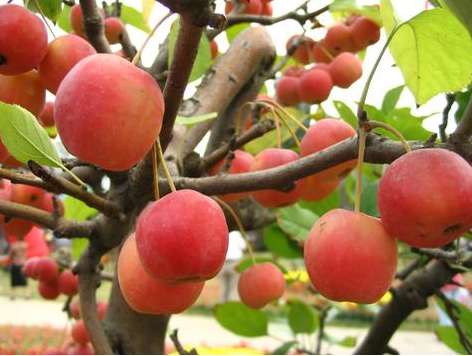
Method for growing winter red fruit in pots:
Winter red fruit likes a sunny, cool and dry environment, is tolerant of cold, afraid of damp heat, and is suitable for growing in sandy soil rich in humus, loose and fertile, and well drained.
It is generally transplanted or potted in spring each year, and the growing period requires plenty of sunlight. If the light is insufficient, it will affect the color of the fruit, the plant shape, and the fruiting situation. Therefore, when planted in the ground it can be placed in a sunny and ventilated spot in the courtyard, while potted plants should be placed in a spot with plenty of sunlight.
1. Watering
During the growing period of winter red fruit, keep the soil moist but not waterlogged. June each year is the flower bud differentiation period, and watering should be controlled for 2 to 3 weeks, then resumed when the young leaves wilt, in order to promote the formation of flower buds.
2. Fertilizing
In the early stage of plant growth, nitrogen fertilizer can be appropriately increased. After June, nitrogen fertilizer should be controlled or stopped, and the application of phosphorus and potassium fertilizers as well as trace elements such as calcium and magnesium should be increased, in order to improve fruit quality and ornamental effect, and to make the branches develop fully, which is beneficial to the formation of flower buds.
3. Pruning
And promptly remove the tender tips at the ends of the branches, to stop the branches from extending and make them redistribute nutrients, which is beneficial to the development of the fruit.
4. Sunlight and shaping
Winter red fruit is not tolerant of high temperatures. In summer, if the temperature is above 35°C for a long time, appropriate shading and ventilation can be used to lower the temperature. In winter, potted plants can have their pots buried outdoors in a wind-sheltered, sunny spot or placed in a cold room at 0°C to 10°C to overwinter. Before sprouting in spring, prune and shape the plant once, cutting off diseased and dead branches, crossing branches, overly dense branches, and leggy branches, and shortening overly long branches, to facilitate ventilation and light penetration and maintain a beautiful tree shape.
5. Repotting and soil selection
Winter red fruit is generally repotted once every 1 to 2 years in spring before budding. The potting soil can use 1 part leaf mold and 1 part garden soil, 0.5 part coarse sand, and add a small amount of hoof pieces or decomposed animal manure as base fertilizer.
Is winter red fruit edible?
Winter red fruit is an ornamental plant. The fruit can be eaten and will not cause poisoning, but this fruit is not suitable for everyone's constitution, so if you can avoid eating it, then do not eat it.
Brief introduction to winter red fruit:
Winter red fruit is a deciduous shrub or small tree in the rose family, Malus genus. The plant is short, the branches are grayish brown, and the leaves are elliptical to broadly elliptical, green, with rounded blunt serrations along the edges.
The corymb inflorescence has light pink flowers and opens in spring.
The fruit is ellipsoidal, relatively small, green at first, gradually turning yellow as it matures, and bright red when mature. The skin is smooth and it does not fall through winter, and can remain until February to March of the following year before gradually falling off.
That is all for the related introduction to winter red fruit. Hurry and grow one; it looks just like a little apple.
Growing environment of winter red fruit: how to care for potted winter red fruit
Winter red fruit is a deciduous shrub or small tree in the rose family, Malus genus. Next, let us take a look at the care methods for potted winter red fruit.
The winter red fruit plant is short, the branches are grayish brown, and the fruit is ellipsoidal, with a single fruit weight of 10 grams to 20 grams. It is green at first, then gradually turns yellow, and bright red when mature. The skin is smooth and it does not fall through winter, and can remain until February to March of the following year before gradually falling off. For propagation of winter red fruit, seedlings of crabapple, Malus baccata, or apple can be used as rootstock, and healthy branches or plump buds slightly above the middle can be used as scion, grafted by cleft grafting, cut grafting, or bud grafting.
For propagation of winter red fruit, seedlings of crabapple, Malus baccata, or apple can be used as rootstock, and healthy branches or plump buds slightly above the middle can be used as scion, grafted by cleft grafting, cut grafting, or bud grafting.
Winter red fruit is a variety of apple. Its tree shape is compact, in spring light pink flowers cover the branches, and in autumn and winter the tree is covered with exquisite and lovely fruits. Its fruit shape closely resembles an apple, and it is suitable for garden planting or potted ornamental display and for making bonsai.
Winter red fruit likes a sunny, cool and dry environment, is tolerant of cold, afraid of damp heat, and is suitable for growing in sandy soil rich in humus, loose and fertile, and well drained. It is generally transplanted or potted in spring each year, and the growing period requires plenty of sunlight. If the light is insufficient, it will affect the color of the fruit, the plant shape, and the fruiting situation. Therefore, when planted in the ground it can be placed in a sunny and ventilated spot in the courtyard, while potted plants should be placed in a spot with plenty of sunlight.
During the growing period of winter red fruit, keep the soil moist but not waterlogged. June each year is the flower bud differentiation period, and watering should be controlled for 2 to 3 weeks, then resumed when the young leaves wilt, in order to promote the formation of flower buds. In the early stage of plant growth, nitrogen fertilizer can be appropriately increased. After June, nitrogen fertilizer should be controlled or stopped, and the application of phosphorus and potassium fertilizers as well as trace elements such as calcium and magnesium should be increased, in order to improve fruit quality and ornamental effect, and to make the branches develop fully, which is beneficial to the formation of flower buds. And promptly remove the tender tips at the ends of the branches, to stop the branches from extending and make them redistribute nutrients, which is beneficial to the development of the fruit.
Winter red fruit is not tolerant of high temperatures. In summer, if the temperature is above 35°C for a long time, appropriate shading and ventilation can be used to lower the temperature. In winter, potted plants can have their pots buried outdoors in a wind-sheltered, sunny spot or placed in a cold room at 0°C to 10°C to overwinter. Before sprouting in spring, prune and shape the plant once, cutting off diseased and dead branches, crossing branches, overly dense branches, and leggy branches, and shortening overly long branches, to facilitate ventilation and light penetration and maintain a beautiful tree shape.
Winter red fruit belongs to the rose family. The flowers are borne in clusters of 5-12, light pink, opening in spring. The skin is smooth and it does not fall through winter.
If you want to learn more related information, you can continue to follow No. 1 Home Network.
Winter red fruit bonsai, is winter red fruit edible, winter red fruit pictures, winter red fruit price, winter red fruit varieties
Winter red fruit
Malus is 1 genus of the Maloideae subfamily of the rose family. Deciduous, rarely semi-evergreen, trees or shrubs, with imbricate scales on the winter buds. Leaf edges are serrated or lobed, folded or rolled in the bud, with stipules. The inflorescence is umbel-like racemose, and the petals are white to pink. Stamens 15-50, with yellow anthers; ovary inferior, 2-5 locules; styles 2-5, often connate at the base. The fruit is a pome, without or with a small amount of stone cells. There are about 35 species worldwide, mainly distributed in the northern temperate zone, including Asia, Europe, and North America. China has 23 species, widely distributed, but mainly in the 3 provinces of Shaanxi, Gansu, and Sichuan, where theyWinter red fruit bonsai
Winter red fruit bonsai can be cared for in a place with plenty of sunlight and good ventilation. The growing period requires plenty of sunlight. If the light is insufficient, it will affect the color of the fruit, the plant shape, and the fruiting situation. Keep the soil moist but not waterlogged. June each year is the flower bud differentiation period, and watering should be controlled for 2 to 3 weeks, then resumed when the young leaves wilt, in order to promote the formation of flower buds. In the early stage of plant growth, nitrogen fertilizer can be appropriately increased. After June, nitrogen fertilizer should be controlled or stopped, and the application of phosphorus and potassium fertilizers as well as trace elements such as calcium and magnesium should be increased, in order to improve fruit quality and ornamental effect, and to make the branches develop fully, which is beneficial to the formation of flower buds. Promptly remove the tender tips at the ends of the branches, to stop the branches from extending and make them redistribute nutrients, which is beneficial to the development of the fruit.
Is winter red fruit edible
Winter red fruit is used for ornamental purposes, not as an edible fruit.
Winter red fruit price
It is not very expensive. A single plant costs about ten to a few dozen yuan or so, which is still relatively cheap. And winter red fruit is a variety of apple. Its tree shape is compact, in spring light pink flowers cover the branches, and in autumn and winter the tree is covered with exquisite and lovely fruits. Its fruit shape closely resembles an apple, and it is suitable for garden planting or potted ornamental display and for making bonsai.
Winter red fruit varieties
It is a variety of apple. Its tree shape is compact, in spring light pink flowers cover the branches, and in autumn and winter the tree is covered with exquisite and lovely fruits. Its fruit shape closely resembles an apple, and it is suitable for garden planting or potted ornamental display and for making bonsai. Winter red fruit is a variety of apple! Winter red fruit belongs to the rose family. The flowers are borne in clusters of 5-12, light pink, opening in spring. The skin is smooth and it does not fall through winter.
Winter red fruit cultivation
Winter red fruit likes a sunny, cool and dry environment, is tolerant of cold, afraid of damp heat, and is suitable for growing in sandy soil rich in humus, loose and fertile, and well drained. It is generally potted in spring each year. The growing period requires plenty of sunlight. If the light is insufficient, it will affect the plant shape, the color of the fruit, and the fruiting situation.
During the growing period, keep the soil moist but not waterlogged. June each year is the flower bud differentiation period, and watering should be controlled for 2 to 3 weeks, in order to promote the formation of flower buds. In the early stage of plant growth, nitrogen fertilizer can be appropriately increased. After June, nitrogen fertilizer should be controlled or stopped, and the application of phosphorus and potassium fertilizers as well as trace elements such as calcium and magnesium should be increased, in order to improve fruit quality and ornamental effect, and to make the branches develop fully, which is beneficial to the formation of flower buds. Promptly remove the tender tips at the ends of the branches, which is beneficial to the development of the fruit.
Related encyclopedia
Pocket scale non-woven bag lamp rush bamboo shoot crab claw redmi note 3 ykk zipper ybs zipper Prunus sargentii creeping wall plum wild senna winter plum green pine watch Omega Longines famous watch children's building blocks flint crested coralroot curling iron sugar apple