Lipstick Plant Care Guide: How to Grow, Key Tips, Blooming Time and Price
There are many kinds of spider plants, and one of them is the lipstick plant, which is extremely beautiful, with flowers that look just like a person's small cherry lips. What are the care methods and key points for the lipstick plant? When does it bloom? What is the price?
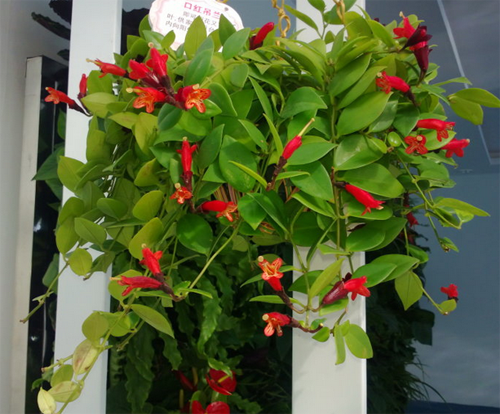
Care methods and key points for the lipstick plant:
The lipstick plant is suited to rough, low-maintenance care, and loose, fertile sandy loam is best, as long as drainage is good. Keep it in a cool, ventilated place where it can receive scattered light; avoid direct strong sunlight.
The suitable growing temperature is about 15-25°C. During the peak growth period from March to September, water demand is relatively high, so water and mist frequently to increase humidity; after autumn, gradually reduce watering to improve the plant's cold resistance. Throughout the year, except for the strong light at noon in midsummer, which should be appropriately shaded, it should be given sufficient light at other times, especially in winter.
It likes a semi-shaded environment. If the light at its location is too strong or insufficient, the leaves easily turn pale green or yellow-green, lose their vitality, and lose their ornamental value, and may even wither and die;
Direct sunlight and dry air are most likely to cause scorching, so it should be placed in a cool, ventilated place, and attention should be paid to maintaining environmental humidity. Avoid continuous high temperature and high humidity; poor drainage and ventilation will cause rot.
1. Potting soil selection
For the lipstick plant, loose, fertile sandy loam is best, and drainage should be as good as possible. For potted soil, slightly acidic soil is preferable; you can use a potting mix made from peat soil, sand and vermiculite, and add an appropriate amount of superphosphate.
2. Suitable placement location
The lipstick plant should be placed in a cool, ventilated place, and attention should be paid to maintaining environmental humidity. Avoid continuous high temperature and high humidity; poor drainage and ventilation will cause rot. The lipstick plant is not cold-tolerant, and in winter it needs to be brought indoors to overwinter.
3. Light requirements
It likes a semi-shaded environment. Throughout the year, except for the strong light at noon in midsummer, which should be appropriately shaded, it should be given sufficient light at other times, especially in winter. If the light at its location is too strong or insufficient, the leaves easily turn pale green or yellow-green.
4. Watering
The potting soil should be kept moist frequently, and water must never accumulate in the pot, so as to avoid root rot. During the peak growth period from March to September, water demand is relatively high, so water and mist frequently to increase humidity; in autumn, as the weather gradually turns cooler, gradually reduce watering and fertilizing. In winter, the potting soil should be slightly dry.
5. Pruning
When growth is vigorous, you can appropriately pinch off the growing tips to promote branching. After the winter flowering period, promptly cut off the spent stems that have already bloomed, which can save nutrients, promote new shoots, and help it produce more buds and flowers.
Propagation methods for the lipstick plant:
Carry out cuttings propagation in spring and autumn. Select robust, thick branches, cut every 7-10 cm into 1 segment, and insert them into loose sandy soil, or a potting mix made of 50% fine tree fern fiber, 20% perlite and 30% coarse sand. Maintain appropriate humidity and receive about 50-60% sunlight. After about 30-40 days, they can take root and become seedlings. After the root mass grows vigorously, transplant them into pots or cultivate them in flower beds.
PS: During the flowering period, apply less nitrogen fertilizer, increase the indoor light intensity, and control a relatively low room temperature, which helps promote flowering. After the winter flowering period, promptly cut off the spent stems that have already bloomed, which can save nutrients, promote new shoots, and help it produce more buds and flowers.
Sometimes the terminal buds of the lipstick plant will necrose for no apparent reason, which is caused by a lack of calcium fertilizer. At this time, apply an appropriate amount of calcium fertilizer, and the terminal bud necrosis will disappear.
Pest and disease protection for the lipstick plant:
The lipstick plant is robust and not prone to pests and diseases, but if the potting soil is waterlogged and ventilation is poor, besides causing root rot, root rot disease may also occur.
When the disease occurs, spray or drench the affected plant with 40% root rot fungicide, or drench the roots with 402 emulsifiable concentrate.
When does the lipstick plant bloom:
The flowering period of the lipstick plant is generally from November of the current year to June of the following year, and some sources say the flowering period lasts until February of the following year. This still depends on the actual situation; with different temperatures and sunlight, the blooming time is indeed different.
Lipstick plant price:
A relatively small lipstick plant is 10 yuan per pot. This mainly depends on the size of the lipstick plant, whether it grows well, and whether the plant shape is good.
That is all for the introduction to the lipstick plant. Hurry and get a few small cherry lips for your home.
Care Methods and Key Points for the Lipstick Plant; When Does the Lipstick Plant Bloom
The lipstick plant, also known as flower vine grass, is an evergreen trailing herbaceous flower. When does the lipstick plant bloom? Let's take a look below at the answer and knowledge about lipstick plant care methods and key points.
Care methods for the lipstick plant:
1. Suitable soil: For the lipstick plant, loose, fertile sandy loam is best, and drainage should be as good as possible. For potted soil, slightly acidic soil is preferable; you can use a potting mix made from peat soil, sand and vermiculite, and add an appropriate amount of superphosphate.
2. Light: It likes a semi-shaded environment. Throughout the year, except for the strong light at noon in midsummer, which should be appropriately shaded, it should be given sufficient light at other times, especially in winter. If the light at its location is too strong or insufficient, the leaves easily turn pale green or yellow-green.
3. Temperature: The lipstick plant should be placed in a cool, ventilated place, and attention should be paid to maintaining environmental humidity. Avoid continuous high temperature and high humidity; poor drainage and ventilation will cause rot. The lipstick plant is not cold-tolerant, and in winter it needs to be brought indoors to overwinter.
4. Watering frequency: The potting soil should be kept moist frequently, and water must never accumulate in the pot, so as to avoid root rot. During the peak growth period from March to September, water demand is relatively high, so water and mist frequently to increase humidity; in autumn, as the weather gradually turns cooler, gradually reduce watering and fertilizing. In winter, the potting soil should be slightly dry.
5. Pruning tips: When growth is vigorous, you can appropriately pinch off the growing tips to promote branching. After the winter flowering period, promptly cut off the spent stems that have already bloomed, which can save nutrients, promote new shoots, and help it produce more buds and flowers.
Key points for growing the lipstick plant:
1. If the terminal buds of the lipstick plant necrose for no apparent reason, you can apply an appropriate amount of calcium fertilizer, and the terminal bud necrosis will disappear.
2. During the flowering period of the lipstick plant, apply less nitrogen fertilizer and appropriately apply some nitrogen fertilizer. Increase the indoor light intensity and control a relatively low room temperature, which helps promote flowering.
3. After the winter flowering period, promptly cut off the spent stems that have already bloomed, which can save nutrients, promote new shoots, and help it produce more buds and flowers.
4. Under normal circumstances, when growing the lipstick plant, apply less fertilizer or no fertilizer.
When does the lipstick plant bloom
The flowering period of the lipstick plant is generally from November of the current year to June of the following year, and some sources say the flowering period lasts until February of the following year. It cannot be said that the statements in the sources are incorrect, but the actual situation should still be taken as the standard.
The main reasons for the large differences in flowering period are the great climate differences between north and south; the strong ability of humans to change the environment has affected the blooming time of the lipstick plant.
In addition to differences in flowering period, if care is not paid attention to when growing the lipstick plant, it is very likely to cause the phenomenon of the lipstick plant not blooming.
More informationHow to grow the lipstick plant, care methods and key points for the lipstick plant
The lipstick plant is a perennial evergreen plant, famous because its leaves are especially shaped like lipstick, and it is currently cultivated in many regions in China. So how do you grow the lipstick plant? Today the editor will introduce to everyone the care methods and key points for the lipstick plant.
Care methods for the lipstick plant
Soil selection: The lipstick plant likes loose, fertile sandy soil, so when potting, you should choose a potting mix made from peat soil, sand and vermiculite, and add an appropriate amount of superphosphate. In this way, the soil is not only loose and fertile, but also has especially good drainage.
Light requirements: The lipstick plant is especially fond of sunlight. Except for the strong light at noon in midsummer, which should be appropriately shaded, it should be given sufficient light at other times, especially in winter. If the lipstick plant does not get enough light, the leaves easily turn pale green or yellow-green.
Temperature control: The lipstick plant should be placed in a cool, ventilated place, and attention should be paid to maintaining environmental humidity. Avoid continuous high temperature and high humidity; poor drainage and ventilation will cause rot. The lipstick plant is not cold-tolerant, and in winter it needs to be brought indoors to overwinter.
Watering frequency: The lipstick plant likes a moist environment, but water must not be allowed to accumulate in the pot, so as to avoid root rot. March to September is the peak growth season for the lipstick plant, when water demand is relatively high, so water and mist frequently to increase humidity. In autumn, as the weather gradually turns cooler, gradually reduce watering and fertilizing. In winter, the potting soil should be slightly dry.
Pruning basics: When growth is vigorous, you can appropriately pinch off the growing tips to promote branching. After the winter flowering period, promptly cut off the spent stems that have already bloomed, which can save nutrients, promote new shoots, and help it produce more buds and flowers.
Key points for growing the lipstick plant
During the flowering period of the lipstick plant, apply less nitrogen fertilizer, increase the indoor light intensity, and control a relatively low room temperature, which helps promote flowering. After the winter flowering period, promptly cut off the spent stems that have already bloomed, which can save nutrients and promote new shoots. In addition, sometimes the terminal buds of the lipstick plant will necrose for no apparent reason, which is caused by a lack of calcium fertilizer. At this time, apply an appropriate amount of calcium fertilizer, and the terminal bud necrosis will disappear.
The above are the care methods and key points for the lipstick plant. Do you still have questions about how to grow the lipstick plant? If you still have questions in this area, you can write to consult the editor, and everyone can make progress and learn together on the road of growing the lipstick plant!
Further reading:
Spider plant types and names with pictures, how to grow them, cultivation and planting methods and key points