How to grow Kalimeris indica and how it differs from iris
Kalimeris indica blooms with pink flowers that are extremely beautiful, with a flower shape that looks as if it is smiling. Many people want to grow Kalimeris indica. What are the cultivation methods for Kalimeris indica? How does it differ from iris?
Cultivation methods for Kalimeris indica:
1. Soil and fertilizer
Kalimeris indica has strong adaptability to soil, and well-drained sandy loam is best. Before transplanting, remove the weeds in the soil, or spray them with a pollution-free herbicide, so that the base fertilizer is sufficient and the soil and fertilizer are well blended, laying a good foundation for the long-lasting and vigorous growth of Kalimeris indica.
2. Transplanting
Kalimeris indica is generally transplanted in September, and in November it can be covered with plastic. Make sure the heat preservation performance is good.
During the autumn and winter growth period of Kalimeris indica, no serious pests or diseases have occurred, so there is no need to spray pesticides for prevention and control. If dotted leaf spot occasionally occurs, it can be controlled by spreading plant ash.
When harvesting and cutting, be careful to retain the short young shoots. After cutting, the young shoots should be placed in a damp, shaded pottery jar and sprayed with fine water to prevent wilting. They can be eaten!
3. Harvesting
After each harvest, nitrogen fertilizer should be applied in time. Because the harvest interval is relatively short, decomposed and diluted human manure and urine should be applied, or green and environmentally friendly quick-acting organic granular fertilizer, or green and environmentally friendly quick-acting organic liquid fertilizer. Do not apply quick-acting chemical nitrogen fertilizer.
Under artificial cultivation conditions, Kalimeris indica is a vegetable that can be harvested all year round, and once planted it can be harvested continuously for many years.
As long as the young shoots are continuously cut off throughout the year, it will continuously grow new young shoots, will not bloom, and will not set seed, continuously providing people with shoots to cut and eat.
After Qingming, remove the plastic film and let it grow naturally. As long as it is managed diligently and fertilized diligently, the yield of its young shoots is even higher than during the period covered by the greenhouse, and the fragrance is rich and the quality is excellent;
Kalimeris indica has strong resistance to pests and diseases, and generally does not need pesticide treatment for pest control and disease prevention.
Propagation methods of Kalimeris indica:
The propagation methods of Kalimeris indica are divided into two types: seed propagation and division propagation.
Seed propagation is generally not used because seed collection is difficult and the emergence rate is extremely low. Using division propagation (vegetative propagation) is not only simple and easy, with low cost and a high survival rate, but also, if planted in the same year the seeds are collected, it can be harvested in the same year.
Method: In September, use a shovel or hoe in the wild to lift (dig) the seed roots of Kalimeris indica together with the roots and soil, break the large seed clumps into several small seed roots with main branches and rhizomes, each small seed root having 3 to 4 main stems of Kalimeris indica, and then transplant them into the soil at a certain row and plant spacing.
When transplanting, compact the seed roots so that they are tightly combined with the soil; after planting, water thoroughly in time to prevent wilting, so as to help increase the survival rate.
When collecting seed roots in the fields for propagation of Kalimeris indica, just collect those rhizomes. Choose plants with thick, short, slightly reddish rhizomes, prostrate growth, dark green leaves, obovate-oblong or oblanceolate leaf blades, and leaf margins with teeth or pinnate shallow lobes.
Select and breed varieties with good regeneration, fast growth, wide adaptability, easy cultivation, strong stress resistance, environmentally friendly type (no need to prevent and control pests and diseases), and a fresh and delicious taste.
Differences between Kalimeris indica and iris:
The flowers of Kalimeris indica are very simple, without any markings, and are relatively elegant and refined;
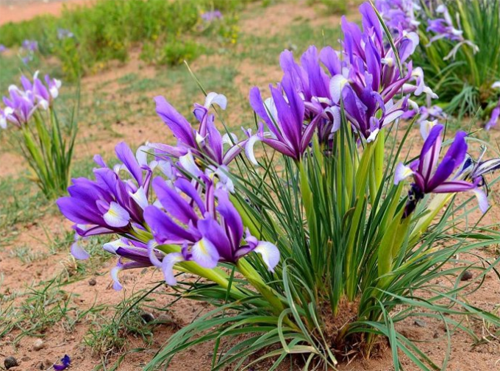
while the petals of iris are very large, with beautiful patterns on the petals, and the stamens extend out long. To each their own!
The leaves of Kalimeris indica are pointed and small, while those of iris are large and wide.
The picture above shows “Kalimeris indica”
The picture above shows “iris”
It is widely distributed in southern and eastern Asia. At present, artificial cultivation has been carried out in some large and medium-sized cities in China. Its young leaves are usually eaten as a vegetable, commonly known as “malantou”, and have become a green leafy vegetable very popular in the market in early spring and autumn.
It is a perennial herbaceous plant, upright and clumping, with a plant height (that is, leaf length) of about 30 cm, a leaf width of about 6 mm, and blue-purple flowers opening among the fourth and fifth.
It is widely distributed in southern and eastern Asia. At present, artificial cultivation has been carried out in some large and medium-sized cities in China. Its young leaves are usually eaten as a vegetable, commonly known as “malantou”, and have become a green leafy vegetable very popular in the market in early spring and autumn. There are also plants of the same name in the Iridaceae and Cyperaceae families.
It is a perennial herbaceous plant, upright and clumping, with a plant height (that is, leaf length) of about 30 cm, a leaf width of about 6 mm, and blue-purple flowers opening among the fourth and fifth. Its natural distribution is extremely wide. Iris lactea has a well-developed root system, extremely strong resistance and adaptability, and tolerance to saline-alkali soil. These characteristics determine that it is very suitable for soil and water conservation in the dry climate and desertified soil areas of the north and for greening transformation of saline-alkali land.
It likes fertile soil, is tolerant of drought and waterlogging, and has strong vitality. It grows in vegetable gardens, farmland, and roadsides, and is a common weed in fields.
The cultivation methods for Kalimeris indica are introduced here, and the differences from iris have also been introduced. Hurry and grow Kalimeris indica at home to delight your mood.
Other names for Kalimeris indica:
Also known as malantou, roadside chrysanthemum, field-edge chrysanthemum, loach string, loach vegetable.
Kalimeris indica Kalimeris indica Illustrated Guide: How to grow Kalimeris indica / How to propagate Kalimeris indica
Kalimeris indica profileKalimeris indica
Cultivation methods and precautions for Kalimeris indica, introduction to Kalimeris indica
Kalimeris indica, also known as malantou, roadside chrysanthemum, field-edge chrysanthemum, loach string, loach vegetable, is a perennial herbaceous plant of the Asteraceae family. The whole plant is used medicinally, with effects of clearing heat and detoxifying, resolving food stagnation, promoting urination, and dispersing blood stasis and stopping bleeding. It is widely distributed in southern and eastern Asia. At present, artificial cultivation has been carried out in some large and medium-sized cities in China. Its young leaves are usually eaten as a vegetable, commonly known as "malantou", and have become a green leafy vegetable very popular in the market in early spring and autumn. There are also plants of the same name in the Iridaceae and Cyperaceae families.
It is a perennial herbaceous plant, upright and clumping, with a plant height (that is, leaf length) of about 30 cm, a leaf width of about 6 mm, and blue-purple flowers opening among the fourth and fifth. Its natural distribution is extremely wide. Iris lactea has a well-developed root system, extremely strong resistance and adaptability, and tolerance to saline-alkali soil. These characteristics determine that it is very suitable for soil and water conservation in the dry climate and desertified soil areas of the north and for greening transformation of saline-alkali land.
Morphological characteristics of Kalimeris indica
Kalimeris indica (Kalimeris indica (Linn.) Sch.), Asteraceae. Perennial herb, with slender rhizomes underground, prostrate and flat, white and jointed. In early spring there are only basal leaves, and the stem is not obvious. In early summer the aboveground stem increases in height, with the base green tinged with purplish red, smooth and hairless. Leaves simple, alternate, nearly sessile, leaf blades obovate, elliptic to lanceolate. It blooms in late autumn, with capitula. Achenes flat and obovate, pappus relatively few, weak and easily falling off. Stem upright, 30-80 cm tall. Cauline leaves lanceolate, obovate-oblong, 3-7 cm long, 1-2.5 cm wide, with 2-4 pairs of shallow teeth above the middle of the margin, upper leaves small, entire. Capitula in loose corymbs, involucre hemispherical, 6-9 mm in diameter, involucral bracts in 2-4 layers. Marginal flowers ligulate, purple; inner flowers tubular, yellow.
Ecological habits of Kalimeris indica
It likes fertile soil, is tolerant of drought and waterlogging, and has strong vitality. It grows in vegetable gardens, farmland, and roadsides, and is a common weed in fields.
Cultivation techniques and field management of Kalimeris indica
Kalimeris indica has strong adaptability to soil, but sandy loam with good water conservancy facilities and convenient irrigation and drainage is best. Before transplanting, pull out weeds by hand, or spray them with a pollution-free herbicide. At the same time, in combination with plowing, apply about 5000 kg of fermented and decomposed high-quality pig manure or cow manure per 667 sq m, so that the base fertilizer is sufficient and the soil and fertilizer are well blended, laying a good foundation for the long-lasting and vigorous growth of Kalimeris indica. Then prepare the land and make beds. The width and length of the beds are determined according to the size of the field and the standards for greenhouse covering, and generally the land utilization rate is required to be above 90%. Doing a good job in weed control and applying sufficient base fertilizer is the foundation for obtaining safe, high-quality, and high-yield Kalimeris indica, and should not be taken lightly.
Transplanting
Kalimeris indica is generally transplanted in September, and covered with a plastic greenhouse in early November. For the greenhouse, a simple bamboo greenhouse can be selected, or a movable steel-frame greenhouse, etc. The width and height of the greenhouse are the same as those of conventional vegetable greenhouses, and it is required to have good heat preservation performance and convenient field operations, so as to facilitate the growth of Kalimeris indica and field work.
Green management should be implemented for greenhouse Kalimeris indica. After more than 4 years of practice, during the autumn and winter growth period of greenhouse Kalimeris indica, no serious pests or diseases have occurred, so there is no need to spray pesticides for prevention and control. If dotted leaf spot occasionally occurs, it can be controlled by spreading plant ash. Therefore, greenhouse-cultivated Kalimeris indica is even more favored by consumers.
When the seedlings are 10-15 cm tall, you can begin to use scissors to cut the young shoots for market. Generally, cut once every 10-15 days. When cutting, be careful to retain the short young shoots to ensure later yield. After cutting, the young shoots should be placed in a damp, shaded pottery jar and sprayed with fine water to prevent wilting, then packed in fresh-keeping bags and sent to the market in time for sale, so as to cut on time and sell fresh.
Harvesting
After each harvest, nitrogen fertilizer should be applied in time. Because the harvest interval is relatively short, decomposed and diluted
human manure and urine should be applied, or green and environmentally friendly quick-acting organic granular fertilizer, or green and environmentally friendly quick-acting organic liquid fertilizer. Do not apply quick-acting chemical nitrogen fertilizer, so as to ensure the safety and high quality of greenhouse Kalimeris indica.
Under artificial cultivation conditions, greenhouse Kalimeris indica is a vegetable that can be harvested all year round, and once planted it can be harvested continuously for many years. As long as the young shoots are continuously cut off throughout the year, it will continuously grow new young shoots, will not bloom, and will not set seed, continuously providing people with shoots to cut and eat. After Qingming, remove the plastic film from the greenhouse frame and let it grow naturally. As long as it is managed diligently and fertilized diligently, the yield of its young shoots is even higher than during the period covered by the greenhouse, and the fragrance is rich and the quality is excellent; because Kalimeris indica has strong resistance to pests and diseases, it generally does not need pesticide treatment for pest control and disease prevention. Especially in the off-season for vegetables in July and August, artificially cultivated Kalimeris indica fills the gap in leafy vegetables during the off-season. Although the price is lower than during the Spring Festival, its economic benefit is still 1-2 times higher than that of general vegetables.
Propagation methods of Kalimeris indica
The propagation methods of Kalimeris indica are divided into two types: seed propagation and division propagation. Seed propagation is generally not used because seed collection is difficult and the emergence rate is extremely low. Using division propagation (vegetative propagation) is not only simple and easy, with low cost and a high survival rate, but also, if planted in the same year the seeds are collected, it can be harvested in the same year, and with proper management, the cost can be recovered in the same year with a slight surplus. The method is: in September, in the wild (such as field corners, both sides of ditches, and mountain slopes), use a shovel or hoe to lift (dig) the seed roots of Kalimeris indica together with the roots and soil, break the large seed clumps into several small seed roots with main branches and rhizomes, each small seed root having 3-4 main stems of Kalimeris indica, and then transplant them into the field at a row and plant spacing of 10 cm x 10 cm. When transplanting, compact the seed roots so that they are tightly combined with the soil; after planting, water thoroughly in time to prevent wilting, so as to help increase the survival rate.
There are many varieties of Kalimeris indica, with 3 common varieties and 3 variants. When collecting seed roots in the fields, collect those plants with thick, short, slightly reddish rhizomes, prostrate growth, dark green leaves, obovate-oblong or oblanceolate leaf blades, and leaf margins with teeth or pinnate shallow lobes. Only by selecting and breeding varieties with good regeneration, fast growth, wide adaptability, easy cultivation, strong stress resistance, environmentally friendly type (no need to prevent and control pests and diseases), and a fresh and delicious taste can the high quality, high yield, and good benefits of malantou be guaranteed. This is one of the key technical steps for growing Kalimeris indica well.
Distribution area of Kalimeris indica
Kalimeris indica is widely distributed in the eastern, central, western, and southern parts of China, as well as in areas south of the northeast. Kalimeris indica is also distributed in northern China, and is planted in large quantities in places such as Dongying, Shandong. The varieties in this area have good alkali tolerance and are excellent crops for greening alkali land. In spring it blooms with purple or yellow flowers, which is very beautiful. Dongying Bohai Horticulture Company grows it in large quantities.
Medicinal dietary or medicinal value of Kalimeris indica
The medical information and healthy dietary information on Huhua Network are for reference only and cannot be used as a basis for diagnosis or medical treatment. Any health problem should be consulted with professional medical personnel, and the treatment of any disease should follow medical advice.
Ultimate flower-protecting mission: To love yourself, start from reality and follow medical advice carefully. For illness, do not be careless, do not delay, do not give up hope, face it bravely, use love to warm the silent world, and use your heart to care for the flower field within.
Pharmacology
(1) In vitro experiments show anticancer activity.
(2) The water infusion has an antitumor effect on leukemia cells in tumor tissue culture.
(3) The water infusion has an inhibitory effect on Staphylococcus aureus.
Efficacy
Eliminating toxins and fighting cancer, cooling blood and dispersing stasis, clearing heat and draining dampness, reducing swelling and relieving pain.
Indications
It can clear heat and detoxify, disperse stasis and stop bleeding, drain dampness, promote digestion, and resolve food accumulation. It is used for colds and fever, cough, acute pharyngitis, tonsillitis, epidemic parotitis, infectious hepatitis, gastric and duodenal ulcers, infantile malnutrition, enteritis, dysentery, hematemesis, metrorrhagia and metrostaxis, and irregular menstruation; external use for sores, boils, swelling and pain, mastitis, and traumatic bleeding; dysentery or damp-heat diarrhea; sore throat and swollen painful sores; blood-heat epistaxis and bloody stool; damp-heat jaundice; or edema and difficult urination; food stagnation and abdominal distension.
[Discovery] [Shizhen says] Kalimeris indica is pungent and neutral, and can enter the blood division of Yangming, so it treats blood similarly to Lycopus lucidus. Recently people say it is effective for treating hemorrhoids and fistula. Take the fresh ones in spring and summer, and the dried ones in autumn and winter. Do not use salt or vinegar; boil in plain water and eat, and also drink its juice. Or boil it in wine, roast and grind it, make a paste and form pills, and take them daily with rice water. Also use the decoction with a little salt added to fumigate and wash daily. "Yixue Jicheng" says: To treat hemorrhoids, use the root of Kalimeris indica, pound and apply for a short time, and remove it when the flesh looks level. If delayed slightly, it is feared the flesh may protrude instead.
Attached formulas
1. Eliminating toxins and fighting cancer, used for accumulated cancer toxins: parotid cancer. Appropriate amounts of Kalimeris indica and wild scallion heads, pound and apply externally. It can make the cancerous swelling subside. Leukemia. 30 grams each of Guanlan, Rehmannia, Verbena, Hedyotis diffusa, Chinese fan palm seeds, and Plumbago zeylanica, and 15 grams of Prunella vulgaris. Decoct twice in water, and take in divided doses in the morning and evening. It is suitable for acute leukemia patients with bleeding phenomena.
2. Cooling blood and dispersing stasis, used for stasis-heat bleeding: stasis-heat hematemesis and epistaxis. 60 grams of Kalimeris indica, 30 grams of Cirsium root, and 9 grams of soot from the bottom of a cooking pot. Decoct in water and take. Also pound fresh Kalimeris indica and insert into the nose.
3. Clearing heat and draining dampness, used for damp-heat inflammation: damp-heat enteritis. 30 grams of Kalimeris indica, and 15 grams each of purslane and plantain. Decoct in water and take. Heat strangury with difficult urination. 30 grams of fresh Kalimeris indica, and 9 grams each of black beans and wheat. Decoct with half wine and half water, and take warm before meals. It can disperse heat and promote urination.
4. Reducing swelling and relieving pain, used for sores, carbuncles, swelling and pain: furuncle inflammation and swelling. An appropriate amount of fresh Kalimeris indica leaves and winter honey, pound evenly and apply, changing twice a day. Carbuncles, sores, and boils. An appropriate amount of tender leaves of Kalimeris indica, add a little table salt, pound and apply to the affected area. It also treats bee stings and snake bites.
Usage and dosage
External use: appropriate amount, 0.5-1 liang; pound fresh product and apply to the affected area.
Decoction: decoct in water, cook and eat, or squeeze the juice and take. 36-60 grams (when using squeezed juice). The decoction is used for chronic bronchitis and has a relatively good cough-relieving effect.
Notes on attached formulas
For bleeding syndromes due to reckless movement of blood caused by blood heat, it can be used together with hemostatic drugs such as Agrimonia pilosa, Acalypha australis, Gynura japonica, and Platycladus orientalis leaves; for sore throat, it can be used together with heat-clearing and detoxifying drugs such as Isatis root and Ajuga; for damp-heat jaundice, it can be used together with drugs such as Artemisia capillaris, gardenia, rhubarb, and Lycoris radiata; for damp-heat pouring downward into the bladder with dribbling and stinging urination, it can be used together with drugs such as Pteris multifida, Polygonum aviculare, Dianthus superbus, Lygodium japonicum, and plantain. In addition, it can also be used for venomous snake bites. The fresh whole plant can be washed, pounded, and applied externally to the affected area, or used together with wild chrysanthemum and Scutellaria barbata.
1. Kalimeris indica and Agrimonia pilosa decoction: 15 g each of Kalimeris indica (whole plant), Agrimonia pilosa, and plantain. Add water, decoct, and take.
Agrimonia pilosa can detoxify and stop bleeding, and plantain can clear heat and detoxify and promote urination. Together with Kalimeris indica, they jointly have the effects of clearing heat and detoxifying, draining dampness, and stopping bleeding. It is used for dysentery with pus and blood in the stool, and short, red urine.
2. Kalimeris indica decoction: 60-120 g of fresh Kalimeris indica (tender stems and leaves), "do not use salt or vinegar; boil in plain water and eat, and also drink its juice."
Originating from "Compendium of Materia Medica". This formula uses the heat-clearing, detoxifying, and bleeding-stopping effects of Kalimeris indica, and is used for hemorrhoid swelling and pain, and bloody stool.
3. Purple chrysanthemum and lotus seed decoction: 30 g each of fresh Kalimeris indica and Imperata cylindrica root. Add water and decoct thickly, remove the residue and take the juice; add 15 g each of lotus seeds and jujubes, simmer over low heat until cooked, and eat and drink slowly.
Originating from "Jicheng Liangfang Sanbai Zhong". This formula uses Kalimeris indica with Imperata cylindrica root to cool blood and stop bleeding, and lotus seeds and jujubes to nourish the spleen and stomach. It is used for vomiting with blood loss, deficiency of the spleen and stomach, and a red tongue with little coating.
4. Kalimeris indica, plantain, and Artemisia capillaris decoction: 30 g each of Kalimeris indica and plantain, and 15 g of Artemisia capillaris. Add water, decoct thickly, and take.
This formula has the effects of clearing heat, draining dampness, and reducing jaundice. It is used for damp-heat jaundice and short, red urine. Modern use is for acute icteric hepatitis.
5. Kalimeris indica and radish seed decoction: 60 g of fresh Kalimeris indica (whole plant), 15 g of radish seeds, and 10 g of scorched rice (japonica rice scorched until charred). Add water, decoct, and take.
This formula uses Kalimeris indica and radish seeds to resolve food accumulation and fullness, and scorched rice to promote digestion and stop diarrhea. It is used for overeating, indigestion, fullness, and diarrhea.
Discussions by famous experts
1. "Gangmu": Kalimeris indica treats blood similarly to Lycopus lucidus. Recently people say it is effective for treating hemorrhoids and fistula. Take the fresh ones in spring and summer, and the dried ones in autumn and winter. Do not use salt or vinegar; boil in plain water and eat, and also drink its juice. Or boil it in wine, roast and grind it into a paste and form pills, and take them with rice water. Also use the decoction, add a little salt, and fumigate and wash daily.
2. "Bencao Zhengyi": Kalimeris indica best resolves heat toxin, and can specifically enter the blood division. Stopping bleeding and cooling blood are especially its strong points. For all warm-heat pathogens that have deeply entered the nutrient division, as well as sores and ulcers with blood heat, putrefaction and ulceration, and other such syndromes, it is truly a specific drug. Taken internally or applied externally, its uses are very broad, and it is also an important article for clearing heat and detoxifying. If one says it breaks old blood and generates new blood, then that is saying too much.
3. "Rihua Zi Bencao": Root and leaves break old blood, nourish new blood, stop nosebleeds and hematemesis, heal metal wounds, stop bloody dysentery, resolve alcohol jaundice and various fungal toxins; pound fresh and apply for snake bites.
4. "Gangmu": Root and leaves mainly treat various malarial diseases and acute abdominal pain, and hemorrhoids.
5. "Bencao Fengyuan": Treats women's strangury and turbidity, and hemorrhoids and fistula.
6. "Yilin Zuanyao": Tonifies kidney life, removes cold-dampness, warms the uterus, and kills parasites. Treats infantile malnutrition.
7. "Zhiwen Bencao": Pound the juice and apply to yellow water sores and unnamed swellings and toxins. Use the leaves pounded evenly with winter honey and apply to yang-type unnamed swellings and toxins; if not yet ulcerated, it can disperse them.
8. "Fujian Folk Herbs": Activates blood stasis and stops bleeding, reduces carbuncles, and detoxifies.
9. "Sichuan Traditional Chinese Medicine Records": Resolves food accumulation and fullness, and chest binding and qi distension, removes damp-heat, promotes urination, reduces fever, stops cough, detoxifies, and treats snake bites.
10. "Yunnan Chinese Herbal Medicine": Root: dispels wind and disperses cold, stops cough and calms wheezing. Treats bronchitis, bronchial asthma, rheumatic arthralgia, and infantile hernia.
11. "Guangxi Medicinal Plant Directory": Clears heat and releases the exterior. Treats externally contracted wind-heat.
Edible value
The tender aboveground stems and leaves of Kalimeris indica can be eaten as a nutritious and health-protective vegetable. It can be stir-fried, served cold, or made into soup, with a rich fragrance and abundant nutrition. It is native to southern and eastern Asia. It is extremely common throughout China, and is relatively widely distributed in the Yangtze River basin. People throughout China have long had the habit of gathering and eating Kalimeris indica in spring.
Nutritional introduction
Nutritional components per 100 grams of Kalimeris indica: energy 25 kcal, protein 2.4 g, fat 0.4 g, carbohydrates 4.6
g, dietary fiber 1.6 g, vitamin A 340 micrograms, carotene 2040 micrograms, thiamine 0.06 mg, riboflavin 0.13 mg, niacin 0.8 mg, vitamin C 26 mg, vitamin E 0.72 mg, calcium 67 mg, phosphorus 38 mg, potassium 285 mg, sodium 15.2 mg, magnesium 14 mg, iron 2.4 mg, zinc 0.87 mg, selenium 0.75 micrograms, copper 0.13 mg
This product is the whole plant and root of the Asteraceae plant Kalimeris indica. It is a perennial herb. The whole plant is harvested in summer and autumn, washed, and used fresh or dried in the sun.
The rhizome of Kalimeris indica is slender and cylindrical, bearing many light brownish-yellow fine roots and fibrous roots. The stem is cylindrical, 2 to 3 mm in diameter, with a yellow-green surface and fine longitudinal striations, brittle and easy to break, with white pith in the center of the cross-section. Leaves are alternate, with leaf blades shrunken and curled, mostly already fallen and broken; when complete and flattened, they are obovate, elliptic, or lanceolate, covered with short hairs. Some capitula can be seen at the branch tips, with pale purple flowers, or they may have already fruited. Achenes obovate-oblong, flat, hairy. Slight odor, taste bland and slightly astringent.
Kalimeris indica contains a variety of nutritional components, rich mineral elements and vitamins and beta-carotene, 17
or more kinds of amino acids, of which 7 are essential to the human body. The content of nutritional elements from high to low is approximately: K, Ca, Na, Mg, Zn, Fe, Cu, Li, Mn, Ni, V, Se, Co. Among them, the potassium content is 20 times that of ordinary vegetables. Compared with general vegetables, its Se, Zn, Mg, and Ca contents are richer.
The tender stems and leaves contain moisture, calcium, phosphorus, iron, carotene, potassium, vitamin B, nicotinic acid, etc. Kalimeris indica is rich in inorganic salts. Every 100 g of tender stems and leaves of Kalimeris indica contains 86.4% moisture, 3 g protein, 0.9 g fat, 5.2 g carbohydrates, 1.1 g crude fiber, 36 mg-69 mg VC, 31.5 mg carotene, 0.36 g VB, 2.5 g nicotinic acid, 530 mg potassium, 145 mg calcium, 46.8 mg magnesium, 70 mg phosphorus, 0.24 mg copper, 4 mg iron, 0.43 mg zinc, and 1 mg sodium. The whole plant contains volatile oil. The components in the oil include bornyl acetate, bornyl formate, phenols, sesquiterpenes, dimeric alkenes, and octanoic acid, etc.
A few days ago my wife came back from buying vegetables at Xidan Market and mentioned that shepherd's purse was being sold there, which made me think of things in eastern Zhejiang. Shepherd's purse is a wild vegetable commonly eaten by people in eastern Zhejiang in spring. Needless to say in the countryside, even in the city, any household with a back garden can gather and eat it at any time. Women and children each take a pair of scissors and a "seedling basket", and squat on the ground searching. It is an interesting kind of playful work. At that time the children sang: "Shepherd's purse and malantou, sister marries at the back gate." Later, people from the countryside brought malantou into the city to sell, but shepherd's purse was still a wild vegetable and had to be gathered by oneself. -----Excerpted from "Wild Vegetables of My Hometown"
Edible recipes
Tossed malantou:
Select and wash the fresh tender malantou, put it into boiling water and blanch thoroughly, spread it out to cool, squeeze out the water, and cut into fine pieces. Cut the dried tofu into fine grains and mix with the chopped malantou, then put on a plate. Put refined salt, monosodium glutamate, white sugar, and sesame oil on the malantou and dried tofu, and mix well to serve.
Longevity Kalimeris:
Ingredients: 250 g fresh Kalimeris indica, 5 pieces of fragrant dried tofu, 50 g five-spice roasted peanuts, appropriate amounts of soy sauce, sesame oil, refined salt, white sugar, and monosodium glutamate.
Preparation method:
1. Remove the skins from the five-spice roasted peanuts, stir-fry over low heat until yellow, grind into a fine powder and set aside.
2. Blanch the dried tofu briefly in boiling water, then cut into fine pieces.
3. Wash the Kalimeris, blanch in boiling water until cooked, squeeze dry, and chop into fine pieces. Mix all the ingredients together and add the seasonings.
Effects: Clears heat, stimulates appetite, and promotes longevity. Suitable for people with a yang-predominant constitution who are prone to internal heat with red eyes, sore throat, or skin boils and swellings. Also suitable for those with chronic bronchitis and food stagnation.
Fragrant dried tofu with Kalimeris:
Wash the Kalimeris, blanch briefly, drain well, chop finely and set aside.
Blanch the fragrant dried tofu briefly, then cut into fine dice.
Heat oil in a wok, stir-fry the diced fragrant dried tofu, add salt, chicken essence, and granulated sugar and mix well, turn off the heat, add the Kalimeris and sesame oil and mix well.
Cultural background and alternative names of Kalimeris
Yuqiuchuan, niqiuchuan, tianbianju, lubianju, suoyicao, picao, ziju, honggengcai, sanxuecao. Malan, ziju in Bencao Shiyi, jieqianju in Lüchanyan Bencao, ji'erchang (misused), malantou in Jiuhuang Bencao, malanju in Yilin Zuanyao, pengmaju in Zhiwen Bencao, honggengcai in Bencao Zhengyi, tianbianju in Guangzhou Zhiwuzhi, tianju (Fujian), hongmalan, malanqing (Zhejiang), lubian, pangmatoucao (Shanghai), suoyicao (Yunnan), Miao medicinal name Mas lanx Band, malandan (Songtao, Guizhou), Ghab jongx vob nail lies ga gong a nei liu (Qiandongnan, Guizhou), Uab duat gheib wa duo gai (Qiannan, Guizhou), Gaok gend gao geng (Bijie, Guizhou)
Note: Kalimeris was once mistakenly called ji'erchang; the latter is a species in the genus Aster and is not used as food.
Kalimeris pictures
Cultivation methods and precautions for Iris lactea
Chinese scientific name: MalinLatin scientific name: Iris lactea Pall. var. chinensis (Fisch.) Koidz.Alternative names: Malian, Malan, Malanhua, Hanpu, Lishi, Licao, Jucao, Shishou, Sanjian, MajiuTwo-name method: Iris lactea var. chinensisKingdom: PlantaeDivision: AngiospermsClass: MonocotyledonsOrder: LilialesFamily: IridaceaeGenus: IrisSpecies: Iris lacteaVariety: Iris lactea var. chinensisNaming author and year: Fisch., 1925English name: Chinese IrisIris lactea (scientific name: Iris lactea Pall. var. chinensis (Fisch.) Koidz.) is a variety of Iris lactea and a perennial densely tufted herb. The rhizomes and leaves are robust, and the fibrous roots are dense and well developed, reaching more than 1 m in length and distributed in an umbrella shape. The leaves are basal, broadly linear, up to 1250px in height and 0.4-25px in width, grayish green; the flowering stems are about 250px tall, with 2-4 flowers; the flowers are light blue, blue, or blue-purple, with darker stripes on the perianth; the capsule is long elliptic-cylindrical, with 6 obvious ribs and a short beak at the tip; 4-150px long; the seeds are irregular polyhedra, brown, slightly glossy, and mature in September. The flowering period is May-June, and the fruiting period is June-September. It grows in wastelands, roadsides, and hillside grasslands, especially in overgrazed salinized grasslands. It is distributed in Korea, Russia, India, and China.1. Morphological characteristics
Iris lactea is a variety of Iris lactea and a perennial densely tufted herb. The rhizome is robust, woody, obliquely extending, covered with large amounts of dense red-purple broken old leaf residual sheaths and hair-like fibers; the fibrous roots are thick and long, yellow-white, and sparsely branched. The leaves are basal, tough, grayish green, linear or narrowly sword-shaped, about 50 cm long and 4-6 mm wide, acuminate at the tip, sheath-like at the base, tinged with red-purple, without an obvious midvein. The flowers are light blue, blue, or blue-purple, with darker stripes on the perianth; the flowering stem is smooth, 5-10 cm tall; the bracts are 3-5, herbaceous, green, with white edges, lanceolate, 4.5-10 cm long and 0.8-1.6 cm wide, acuminate or long-acuminate at the tip, containing 2-4 flowers inside; the flowers are milky white, 5-6 cm in diameter; the pedicel is 4-7 cm long; the perianth tube is very short, about 3 mm long; the outer perianth lobes are oblanceolate, 4.5-6.5 cm long and 0.8-1.2 cm wide, obtuse or acute at the tip, with a wedge-shaped claw; the inner perianth lobes are narrowly oblanceolate, 4.2-4.5 cm long and 5-7 mm wide, with a narrowly wedge-shaped claw; the stamens are 2.5-3.2 cm long, the anthers are yellow, and the filaments are white; the ovary is spindle-shaped, 3-4.5 cm long.The capsule is long elliptic-cylindrical, 4-6 cm long and 1-1.4 cm in diameter, with 6 obvious ribs and a short beak at the tip; the seeds are irregular polyhedra, brown, and slightly glossy. The flowering period is May-June, and the fruiting period is June-September.
2. Growth habits
It grows in wastelands, roadsides, and hillside grasslands, especially in overgrazed salinized grasslands. It is salt-alkali tolerant and trampling tolerant, with a well-developed root system, and can be used for soil and water conservation and for improving saline-alkali soil.
3. Geographic distribution
Distributed in Heilongjiang, Jilin, Liaoning, Inner Mongolia, Hebei, Shanxi, Shandong, Henan, Anhui, Jiangsu, Zhejiang, Hubei, Hunan, Shaanxi, Gansu, Ningxia, Qinghai, **, Sichuan, and Tibet in China. It is also produced in Korea, Russia, and India.4. Plant characteristics
Drought resistance
Iris lactea has a well-developed root system, with roots penetrating more than 1 m deep, and dense and well-developed fibrous roots distributed in an umbrella shape. This not only strongly guarantees its extremely strong resistance and adaptability, but also gives it a strong ability to bind soil and conserve water. The upright leaves of Iris lactea can effectively reduce water evaporation, alleviate the direct impact of rainwater on the ground surface, and also facilitate root aeration. Under harsh environmental conditions, the aboveground part of Iris lactea becomes relatively shorter, with aboveground growth reduced by more than 20%, while the root system becomes more developed, increasing by more than 10%. All of this helps it survive normally in adverse environments such as high temperature and drought, and waterlogging.Salt-alkali tolerance
Iris lactea is a plant tolerant to heavy saline-alkali conditions. Its seeds germinate normally at a salt content of 0.44%; at a salt content of 0.51%, the germination rate decreases noticeably; at a salt content of 0.75%, germination ability is lost. The seedlings after germination can still grow normally and flower and set seed under conditions of soil salt content up to 0.27% and pH 7.9-8.8, making it a rare good material for greening and improving saline-alkali land.Green leaf retention
In northern China, Iris lactea generally turns green at the end of March, begins flowering in late April, enters full bloom from mid-May to the end of May, finishes flowering in mid-June, and turns yellow in early November, with a green period of more than 280 days. Iris lactea is green in color, with elegant and beautiful flowers and fragrant nectar, and the flowering period lasts more than 50 days.Disease and pest resistance
Iris lactea has extremely strong resistance to diseases and pests. Not only do diseases and pests never occur in pure Iris lactea communities, but because of its special secretions, diseases and pests also rarely occur after it is mixed with other plants, greatly reducing the input and cost required for pest and disease control after green ground cover is established.5. Ecological functions
Iris lactea likes sunlight and is slightly shade tolerant. In North China, the aboveground stems and leaves wither in winter. It is tolerant of high temperature, drought, waterlogging, and saline-alkali conditions, and is a ground cover flower with extremely strong adaptability. Under harsh soil fertility conditions of drought and barrenness, the aboveground stem and leaf growth of Iris lactea is reduced by more than 20%, while root growth increases by more than 10%. It can still flower and fruit normally under conditions of soil salt content up to 7% and pH 7.9-8.8.Iris lactea has a very wide natural distribution. It has a well-developed root system, extremely strong resistance and adaptability, and is salt-alkali tolerant. These characteristics determine that it is very suitable for soil and water conservation and greening improvement of saline-alkali land in the dry-climate and soil-desertified areas of northern China.
The upright leaves of Iris lactea can effectively reduce water evaporation, alleviate the direct impact of rainwater on the ground surface, and also facilitate root aeration. The growth of Iris lactea has a high infiltration function, rapidly infiltrating and retaining precipitation, conserving groundwater sources, and creating a wetland environment with obvious effects. Under harsh environmental conditions, the aboveground part of Iris lactea becomes relatively shorter (aboveground growth reduced by more than 20%), while the root system becomes more developed (root system increased by more than 10%). This helps it survive normally in adverse environments such as high temperature and drought, saline-alkali conditions, waterlogging, and barrenness. Iris lactea is also a plant tolerant to heavy saline-alkali conditions, and can still grow normally and flower and set seed under conditions of salt content up to 7% and pH 7.9-8.8, making it a rare good material for greening and improving saline-alkali land.
A clear example of the naturally tenacious growth of Iris lactea is found in the no-man's land of Lop Nur in China's great northwest, in the Kongqi River basin of the ancient Loulan kingdom, where other plants no longer exist, yet Iris lactea is indeed scattered there, fully demonstrating the tenacious vitality of the survival of the fittest. In the extreme drought and violent sandstorms of Lop Nur, in a no-man's land for a thousand years, only Iris lactea's green and flowers provide this bright landscape, fully proving the survival miracle of Iris lactea. It gives a shining green light for green vegetation to China and the world in combating desertification. The leaves of Iris lactea and its regulation of water and its ecological characteristics provide space for the survival and development of fungi and insects, are essential conditions for the survival of various natural and wild animals, are the prerequisite foundation of the biological chain, and are also the preferred strategy for improving the ecological environment and combating desertification. For improving the fragile vegetation ecological environment of China's great northwest, using its native existing plant vegetation is an effective measure to fundamentally solve ecological deterioration, rather than introducing foreign imported plants that can adapt and be practical only in the short term. From the overall value perspective of the diseases introduced along with foreign imported plant species, the gain is not worth the loss. Because of its root infiltration function, its role in conserving groundwater sources, and its shading effect in controlling water evaporation, Iris lactea gradually creates a wetland environment after vegetation establishment, creating a new pattern for the overall biological chain.
Iris lactea reproduces simply and rapidly, has strong vitality, and possesses the characteristics necessary for establishing artificial vegetation. Iris lactea can be propagated both by seed and asexually. The germination rate of directly sown seeds is more than 80%, and the survival rate of propagation by division and transplanting using mature Iris lactea is also very high. New seedlings grow rapidly and can mature the following year. Iris lactea has strong stress resistance. It is not only drought resistant, cold resistant, salt-alkali resistant, and trampling tolerant, but also has extremely strong disease and pest resistance. Not only do diseases and pests never occur in Iris lactea vegetation, but because of its special secretions it is also free from rodent damage; rats never dig holes or build nests in Iris lactea grassland. After it is mixed with other plants, diseases and pests also rarely occur. Once the vegetation is established, no later maintenance is needed, achieving a once-and-for-all effect.
In addition to its soil and water protection function, Iris lactea also has relatively high ornamental and economic value. Iris lactea is green in color, and in northern China the green period can reach more than 280 days: the flowers of Iris lactea are elegant and beautiful, densely arranged and fragrant, and the flowering period lasts up to 50 days; it can also be used as cut flower material: Iris lactea is trampling tolerant, and after being trampled it can recover by itself without cultivation: the Iris lactea plant is moderate in height, with many leaves growing upright, and has a strong effect in absorbing dust, reducing noise, and lowering temperature. Iris lactea has strong vitality and basically requires no daily maintenance, saving water, fertilizer, and management input: when planted in open urban areas or used as livestock feed, it can produce 500 kg of hay per mu, and can also generate certain economic benefits.
6. Propagation and cultivation
Iris lactea can be propagated both by seed and asexually, but the seedling emergence rate of direct sowing is relatively low, while the survival rate of propagation by division and transplanting using mature Iris lactea is relatively high. The vast majority of mature wild seeds have vitality, and the intrinsic germination potential of the seeds is great. According to biochemical rapid testing of seed viability, the germination vigor of seeds stored indoors and seeds stored buried outdoors in soil was 90% and 88% respectively, but at room temperature the seed germination rate and germination vigor are very low. Seeds stored at room temperature for more than 5 years decline in vigor. Variable-temperature storage of seeds and outdoor soil burial overwintering treatment give a higher germination rate than storage at room temperature. The temperature range for seed germination is 15-30°C. They do not germinate below 10°C or above 35°C. Under constant temperature conditions, the germination rate is generally very low. Generally, warm water soaking or stratification treatment is used before sowing to increase the seedling emergence rate. Iris lactea seeds have a relatively high hard seed rate, so that under normal indoor culture conditions the average germination rate of Iris lactea seeds is only 10%-20%. Wild Iris lactea mostly reproduces asexually by tillering.Seed propagation method: Fine-rake and level the nursery land, make beds 2 m wide, sow the seeds in strip-shaped furrows, cover with soil to a thickness 2 times the seed diameter, use about 15 g of seed per square meter, produce more than 300,000 seedlings per mu, and reach physiological maturity in 2-3 years, flowering and fruiting.
Division propagation method: Iris lactea can be divided when the rhizome elongates and grows large. Generally, division can be done once every 2-4 years, in spring, autumn, or after flowering. When dividing the rhizome, each segment should carry 2-3 buds. After cutting, smear the cut surface with plant ash or sulfur, let it dry slightly in the shade, and then plant. Generally, a row spacing of 15-500px is used, with about 30 seedlings per square meter. Tillering begins after three months, and a fixed clump forms in two years.
Improving seed germination is one of the key technologies for establishing green ground cover through sexual propagation of Iris lactea seeds. Methods such as warm water soaking, stratification treatment, and concentrated sulfuric acid soaking before sowing can all break seed hardness and increase the germination rate and seedling emergence rate. For example, after wild Iris lactea seeds collected are soaked in concentrated sulfuric acid solution, their germination rate increases by an average of 30%-50%. At the same time, artificial seed production bases have already been built in China. For example, commercial Iris lactea seed production bases of initial scale have been built in Jilin and Gansu and other areas, which can provide seed sources for large-area establishment.
To overcome the limitations of using Iris lactea seed germination for sexual propagation, the Beijing Grass Industry and Environment Research and Development Center and the Beijing Agricultural Biotechnology Research Center carried out cooperative research in 2002 and screened out the best culture media and operating procedures for each stage of the whole process, including "mature embryo - callus induction - green shoot differentiation - subculture proliferation - rooting - test-tube seedling transplanting," thereby establishing an effective Iris lactea tissue culture rapid propagation system, laying the foundation for realizing rapid asexual propagation of Iris lactea and greatly reducing the cost of Iris lactea establishment. At the same time, it also laid a reliable technical foundation for future biotechnology breeding work such as screening Iris lactea somaclonal variants and even genetic engineering improvement.
7. Economic value
Iris lactea has been widely planted in China since ancient times. It is recorded in Confucius's Jiayu, Qu Yuan's Lisao, and Li Shizhen's Bencao Gangmu, among others. As an excellent soil and water conservation, grazing, ornamental, and medicinal plant, it occupies a place in history and nature.Greening function
Iris lactea has a well-developed root system, abundant leaves, strong adaptability to the environment, vigorous growth, and extensive management. It is an excellent ornamental ground cover plant that is water saving, drought resistant, salt-alkali tolerant, and resistant to weeds, diseases, pests, and rodents. In northern China, the green period of Iris lactea can reach more than 280 days. Its leaves are emerald green and soft, its orchid-purple flowers are elegant and beautiful, and its nectar is fragrant. The flowering period lasts up to 50 days and can form a beautiful garden landscape. Iris lactea is trampling tolerant, and after being trampled it can recover by itself without cultivation. Iris lactea has strong functions in storing water and conserving soil, regulating air humidity, and purifying the environment. Therefore, in the establishment of open urban green spaces, green isolation belts on both sides of roads, and flower-dotted grasslands, Iris lactea is an indisputably high-quality material. Because of its very well-developed root system and strong drought resistance and soil stabilization ability, Iris lactea is also an ideal plant for soil and water conservation and slope stabilization.Medicinal uses
Iris lactea has important medicinal, forage, and industrial value. Iris lactea has a long utilization period, high grass yield, and rich nutritional content, and is favored as food by various livestock, especially sheep. The flowers, seeds, and roots of Iris lactea can all be used as medicine. The flowers, when dried in the sun and taken, can promote urination and relieve constipation; the seeds and roots can remove damp-heat, stop bleeding, and detoxify; the seeds have the effects of reducing fever, detoxifying, and expelling parasites. As a fiber plant, it can replace hemp in producing paper and rope. The leaves are a raw material for weaving handicrafts, and the roots can be made into brushes. It can truly be said that "every part of Iris lactea is a treasure."Supplementary prescriptions
The roots, leaves, flowers, and seeds of Iris lactea can all be used medicinally.
Harvesting and processing
Iris lactea flowers: Pick on sunny days after flowering, and dry in the shade or in the sun.
Iris lactea seeds: In August-September when the fruit is ripe, cut off the fruit spikes, dry in the sun, thresh out the seeds, and remove impurities.
Iris lactea roots and leaves: Harvest in August-September and dry in the sun.
Efficacy and indications
Iris lactea flowers: Salty, sour, slightly bitter in taste, cool in nature, can clear heat and detoxify. Stop bleeding and promote urination, mainly treating throat obstruction, vomiting blood, nosebleeds, difficult urination, and gonorrhea
, hernia, carbuncles, and other conditions.
Iris lactea seeds: Sweet in taste, neutral in nature. Can clear heat and detoxify, stop bleeding, mainly treating jaundice, diarrhea and dysentery, leukorrhea, carbuncle swelling, throat obstruction, boils, wind-cold-dampness impediment,
vomiting blood, nosebleeds, profuse uterine bleeding, and other conditions.
Iris lactea leaves: Treat throat obstruction, carbuncles, and gonorrhea.
Iris lactea roots: Can clear heat and detoxify, treat throat obstruction, carbuncles, and rheumatic impediment pain.
Single prescriptions and proven prescriptions
(1) To treat throat obstruction with inability to pass: Iris lactea flowers and vitex seeds 30 g each, grind together into a fine powder, take 1 g each time, several times a day, swallowed with boiled water.
(2) To treat difficult urination: Iris lactea flowers, fennel, and tinglizi 10 g each, stir-fry all and grind into powder, take 6 g each time, mixed with warm wine.
(3) To treat hernia: Iris lactea flowers (stir-fried together with radish seeds) 60 g, Sichuan chinaberry seeds (stir-fried together with tangerine seeds) 45 g, evodia (soaked in wine and stir-fried
) 30 g, costus root 6 g, grind together into a fine powder, take 3-6 g each time, mix evenly with yellow wine, and take on an empty stomach.
(4) To treat sores, boils, and swellings: Iris lactea flowers 6 g, dandelion 30 g, and Viola philippica 30 g, decoct in water, 1 dose per day.
(5) To treat bone tuberculosis: Dry Iris lactea seeds in an iron wok, grind into powder, take with water, 3 times a day, 5-7 g each time, reduced for children. Separately use its
powder 2 parts and vaseline 5 parts, mix into an ointment for external application.
(6) Contraception: Iris lactea seeds 50 g, crush, add 2 bowls of water, boil down to 1 bowl, add yellow wine 250-500 g, boil briefly, and divide the liquid together
with the residue into 6 portions. Take twice daily during menstruation for 3 consecutive days.
(7) To treat rheumatoid arthritis: Iris lactea roots and cocklebur roots 100 g each, sugar 50 g. Add 2000 mL of water, boil down to 1000 mL.
Take 70-80 mL each time, 3 times a day.
(8) To treat chronic bronchitis: Iris lactea roots 15 g, decoct in water, 1 dose per day.
(9) To treat excessive menstruation: Iris lactea seeds 9 g, Iris lactea flowers 9 g, pomegranate peel 12 g, grind together into a fine powder, and take in 3 divided doses a day.
(10) Iris lactea seed quinone.
Drug name: Anka. Alternative name: 6-methoxy-2-cis-heptadecenyl-1,4-benzoquinone
Action and use: This product is a radiosensitizer, used for radiotherapy in patients with lung cancer, esophageal cancer, and head and neck cancer.
Usage and dosage: Oral after meals, twice a day, 2 capsules each time, taken before and after radiotherapy respectively, reduced for children. This product should be taken starting 2-3 days before receiving radiotherapy
and taken continuously until radiotherapy ends.
Discussions by various authors
(1) Rihua Zi: "Iris lactea can also be eaten as a vegetable, with stems and leaves used together."
(2) Bencao Tujing: "Now it is also found in the commanderies of Shaanxi and in Ding and Li prefectures, and especially abundant near the capital. The leaves resemble those of Chinese onion but are longer and thicker. It blooms purple-blue flowers in the third month and bears fruit in the fifth month, forming pods like sesame but red with ridges. The roots are slender and long, entirely yellow, and people take them to make brushes. It blooms in the third month and the fruit is collected in the fifth month, and both are dried in the shade for use. Shuowen says: li resembles cattail but is smaller, and its root can be made into a brush. Guangya says: Iris lactea is li. Cai Yong and Gao You say: li emerges upright, but Zheng taking lit ing as the name is mistaken. This plant grows everywhere in the plains and marshes of Hebei, and is quite abundant in Jiangdong, planted in courtyards, but is called hanpu, so people do not recognize it as Iris lactea. Its flowers and fruits both enter medicine. Liexian Zhuan: Mr. Kou was a man of Song, loved planting li, and ate its flowers and fruits. Nowadays mountain people also take its fruit alone, saying it is very warm, benefits the lower body, and has quite remarkable effects. Cui Yuanliang treated throat obstruction and swelling pain by taking li flowers, bark, and roots altogether twelve parts, with one sheng of water, boiling to take six ge, removing the dregs and holding it in the mouth, swallowing the juice little by little, and stopping when cured."
(3) Bencao Yanyi: "Lishi, Tao Yinju said: it is no longer used in prescriptions, and ordinary people do not recognize it. The annotations by various authors in the Benjing do not correspond. If it really is Iris lactea, then Rihua Zi should not further say it can also be eaten as a vegetable. Probably Iris lactea: its leaves are eaten by neither horses nor cattle, because as soon as they emerge from the soil the leaves are already hard, and moreover they have no flavor, so how could they be fit for people to eat? Now I dare not take lishi to be Iris lactea seed, and will wait for a broadly knowledgeable person."
8. Plant culture
Poem "Iris lactea Grass" (Ming dynasty, Wu Kuan)So luxuriant are the leaves, it can bear the name of abundant grass.
Its flowers bloom like orchids and thoroughworts, yet when smelled they have no fragrance.
It is not valued by people; only its long roots are taken.
Made into brooms or whisks, its material is also good for use.
Since the roots are long and enter the soil, it is planted in many places beside riverbanks.
Only when the bank collapses is it not good; orchids and thoroughworts are also ordinary.