Detailed Explanation of Pitcher Plant Propagation Methods, Know the Rooting Time in Advance
The pitcher plant is a plant that everyone likes, it looks extremely beautiful, and especially, it can eat flies. What are the propagation methods of the pitcher plant? If you want to grow a few more at home, what are the steps of the pitcher plant cutting method? How long does it take to grow roots?
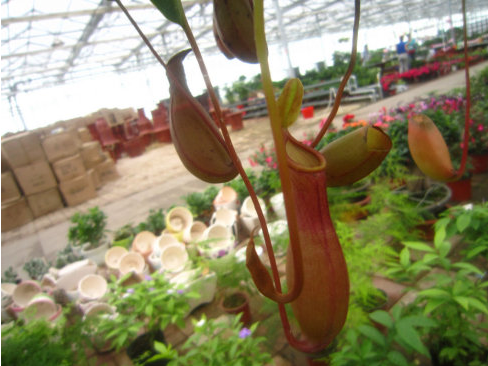
1. Cut according to the bud points
First, we must make clear that the cut pitcher plant stem must carry a bud point (you can find it if you look carefully), and the cut section of stem must carry one leaf.
The new stem will develop from the bud point; without a leaf there is no “pitcher”.
2. How long to cut?
The cutting has no roots, so the stem used for stem cuttings should not carry too many leaves, otherwise the cutting will easily wither.
The best cut stem length is one with two or three bud points, and part of the leaves on the stem should also be cut off.
Cut off 1/2~2/3 of the leaf blade vertically along the veins, cut off part of the leaf; only by being willing to remove part of the leaves can you get a better plant.
Do not cut off all the leaves completely; the leaves can produce the nutrients and growth hormones needed for growing new stems and roots, and without leaves it cannot grow either.
3. How to cut?
When taking a stem, the cut should be smooth; generally use gardening-specific scissors or a blade (use with caution), cutting the stem perpendicular to the stem direction.
Do not cut the stem at an angle, to reduce the injured area of the stem, and even more do not use blunt tools to cut the stem, otherwise the broken cut will make the plant more susceptible to microbial infection.
4. Cultivation
Insert the prepared stem into the growing medium. If the stem has only one bud point, the depth of insertion into the soil should be such that the bud point is exposed above the soil surface;
if the stem has two or three bud points, the lowest bud point should be inserted into the soil.
5. Selection of potting soil medium
For the growing substrate used for cuttings, it is best to use a new substrate to reduce the chance of infection by fungi or bacteria in the soil. Sphagnum moss is a commonly used cutting substrate, and peat can also be used. Before inserting the stem into the growing substrate, you can dip the cut end of the stem in a little rooting agent, which can increase the success rate of cuttings. Using a fungicide can reduce the probability of the stem becoming infected.
6. Cultivation environment
Place the stem inserted into the growing substrate in a high-humidity environment. A transparent plastic bag can be used to cover the plant to increase humidity.
The cutting can be placed near the original mother plant. The cutting needs bright light, but sunlight must never shine directly on the stem, to avoid overheating. Usually shade netting can be used for shading, and it can also be placed in the shade of other taller plants.
7. When does it grow roots?
The regeneration of new shoots and roots is a slow process, usually taking several months. Because the development of roots cannot be observed, the formation of new shoots can be regarded as an indicator of whether the stem cutting has succeeded.
When the cutting succeeds, a small protrusion will grow on the top bud point, gradually swelling day by day, forming a new shoot;
after the new shoot produces two to three leaves, transplanting can be done as needed, and the environmental humidity can also be gradually reduced.
Notes:
When cutting, put the prepared substrate into a sterilized plug tray, smooth it, and after firming it, insert the prepared stem diagonally into the substrate;
for a stem with two or three bud points, it is best to insert the lowest bud point into the substrate;
finally, place the cut stem in a cool, ventilated place, spray with 800 to 1500 times carbendazim solution to rinse the leaf surface and disinfect and sterilize, and finally water the substrate thoroughly with neutral pH pure water, and cover.
The pitcher plant propagation methods are introduced here. Everyone can try growing one; maybe your home is suitable for growing pitcher plants?
Bamboo Bambusoideae Bamboo Illustrated Guide: How to Grow Bamboo / How to Propagate Bamboo
Bamboo ProfileBamboo Bambusoideae
Alias: Bamboo
Classification: Perennial herbaceous flower
Family and genus: Plantae, Angiosperms, Monocotyledoneae, Poales, Poaceae, Bamboo genus
Full bloom period: Does not bloom
Bamboo is a giant grass, a plant in the grass family. It is an evergreen (a few bamboo species shed leaves in the dry season) shallow-rooted plant, and the stem is generally cylindrical with nodes; however, one type, square bamboo, has a square culm. Bamboo is one of the important forest resources, with characteristics such as wide distribution, fast growth, many uses, and high ecological and economic value, and is praised as the "green gold mine." Bamboo is also called zhu, a perennial grass plant with a woody stem, a branch of the grass family, scientific name Bambusoideae (Bambusaceae or Bamboo), distributed in tropical and subtropical regions, East Asia, ...
Bamboo Cultivation Methods and Precautions Bamboo Introduction
Bamboo is a giant grass, a plant in the grass family. It is an evergreen (a few bamboo species shed leaves in the dry season) shallow-rooted plant, and the stem is generally cylindrical with nodes; however, one type, square bamboo, has a square culm. Bamboo is one of the important forest resources, with characteristics such as wide distribution, fast growth, many uses, and high ecological and economic value, and is praised as the "green gold mine."
Bamboo is also called zhu, a perennial grass plant with a woody stem, a branch of the grass family, scientific name Bambusoideae (Bambusaceae or Bamboo), distributed in tropical and subtropical regions, with the most concentrated distribution in East Asia, Southeast Asia, and the Indian Ocean and Pacific islands, with many species, some low like grass, some tall like big trees, and growing rapidly. It usually grows in patches through underground creeping rhizomes, and can also reproduce by flowering and setting seed; the seeds are called bamboo rice. Some types of bamboo shoots can be eaten. Bamboo branches and culms are upright and slender, green in all four seasons, and stand proudly against frost and rain, and are much loved by Chinese people. Together with plum, orchid, and chrysanthemum they are called the Four Gentlemen, and together with plum and pine they are called the Three Friends of Winter. Many literati and poets, ancient and modern, love bamboo and recite poems about bamboo.
Morphological Characteristics of Bamboo
Bamboo is a tall tree-like grass plant. More than 70 genera and over 1000 species have been recorded, but many of them are synonyms. Bamboo is a tall, fast-growing grass plant with a woody stem. It is distributed in tropical, subtropical to warm temperate regions. It is most concentrated and has the most species in East Asia, Southeast Asia, and the Indian Ocean and Pacific islands. Bamboo's aboveground stem is woody and hollow (what we call the bamboo culm), and grows in clusters from the bamboo's underground stem (rhizome).
The shortest bamboo species has a culm height of 10 to 15 cm, and the largest bamboo species has a culm height of more than 40 m. Mature bamboo produces horizontal branches, the leaves are sword-shaped, with petioles, and the leaves of young plants grow directly from the stem. Although the culms of some species grow rapidly (can grow 0.3 m per day), most species only flower and set seed after growing for 12 to 120 years. Bamboo flowers and sets seed only once in its life.
The bamboo's underground stem (commonly called the bamboo rhizome) grows horizontally, is slightly hollow in the middle, also has nodes and they are numerous and dense, and many fibrous roots and buds grow on the nodes. Some buds develop into bamboo shoots that emerge from the ground and grow into bamboo, while some buds do not emerge from the ground but grow horizontally, developing into new underground stems. Therefore, bamboo always grows in patches and groves. Tender bamboo rhizomes and bamboo shoots can be eaten.
In autumn and winter, the bamboo buds have not yet emerged from the ground; digging them out at this time is called winter bamboo shoots; in spring, when the bamboo shoots emerge from the ground they are called spring bamboo shoots. Winter bamboo shoots and spring bamboo shoots are both common foods in Chinese dishes. In spring, bamboo buds wait for spring rain in the dry soil; if a rain falls, the spring bamboo shoots will emerge from the ground at a very fast speed.
Although people often call bamboo a tree, it is a herbaceous plant and its xylem is not well developed. Bamboo leaves are narrowly lanceolate, 7.5-16 cm long and 1-2 cm wide, with an acuminate apex, an obtuse base, a petiole about 5 mm long, one side of the margin relatively smooth and the other side with small serrations and rough; parallel veins, 6-8 pairs of secondary veins, and very prominent small transverse veins; the leaf surface is dark green and hairless, the back is lighter in color with fine hairs at the base; thin and rather brittle. Bamboo shoots are 10 to 30 cm long, and adult bamboo is generally green throughout with a number of nodes usually between 10 and 15.
Most bamboos have underground rhizomes with obvious nodes, buds growing at each node, and the buds at each node of the underground stem can sprout into underground horizontally running bamboo rhizomes or aboveground bamboo culms. The buds on the culm nodes often form branches at each node. The leaves on the branches are vegetative leaves, lanceolate, with short petioles.
In some areas bamboo rhizomes also include clumping bamboos, whose underground stems form multi-noded false rhizomes, with no buds and no roots at the nodes, and the terminal bud emerges from the soil to form culms, and the whole plant grows and is distributed in clumps, typical examples being Phoenix-tail bamboo, Sinocalamus affinis, Dendrocalamus latiflorus, and hedge bamboo. They generally grow in areas with relatively sufficient water and heat conditions.
Bamboo is also the fastest-growing plant in the world; the hollow aboveground stems of some bamboos can grow 40 cm per day, and after fully growing the height can reach 35-40 m. The reason bamboo grows fast is that its stems are segmented, so when other plants only have the apical meristem growing, bamboo is growing at every node at the same time. However, as the bamboo keeps growing, the sheath wrapping the outside of the bamboo nodes will fall off, and the height growth of the bamboo stops, but the internal tissue growth and filling still continue. It is widely distributed and easy to keep alive.
Bamboo differs greatly from ordinary trees. The aboveground part of bamboo is composed of noded culms, branches, and leaves. The base of the culm connects to the underground stem, and the underground stem is also noded. The slender roots at the nodes of the underground stem, called fibrous roots, are the true roots. Bamboo's tensile strength and load-bearing capacity are 1-3 times that of ordinary trees, and it has very good elasticity, making it a good material for construction. As early as the Han Dynasty in China, bamboo began to be used as a papermaking raw material; moso bamboo, because of its unique fine and even texture and hard texture, is very suitable for producing flooring and other decorative boards, and bamboo can of course also be made into commonly used bamboo cutting boards, bamboo mats, bamboo beds, bamboo cabinets, bamboo chairs, etc. In addition, bamboo can also be used to make musical instruments, such as the sheng, guan, and xiao; bamboo woven handicrafts are also dazzling in variety and highly ornamental. Crisp and sweet bamboo shoots can also be eaten, and bamboo can also be used as medicine. Among more than 1200 kinds of bamboo, moso bamboo is one of the excellent timber bamboo species; its texture is hard and its surface texture is elegant and beautiful, making it the best decorative material of the new century.
Bamboo grows quickly; some can grow more than one meter within a single day, and can fully develop in just two or three months, after which they no longer grow taller or thicker, forever maintaining this size until they die. Bamboo's life cycle is not long, only a few years, and when the bamboo grows old it will flower and then die, in order to eliminate old bamboo and preserve new plants, to promote the growth vitality of the bamboo forest, but bamboos often flower and die together.
Ecological Habits of Bamboo
The annual average temperature of climate suitable or relatively suitable for bamboo is 12 to 22°C, the January average temperature is 5 to 10°C, and the extreme minimum temperature is -20°C; annual precipitation is 1000 to 2000 mm, and the annual average relative humidity is 65% to 82%. North China, however, has a typical continental climate, with severe cold in winter and intense heat in summer. Although there is more rainfall in July and August, the annual average precipitation is only 500 to 600 mm, so it is not an ideal climate condition for bamboo growth. Therefore, relatively cold-resistant scattered bamboo varieties should be selected, such as yellow-groove bamboo, golden-jade bamboo, yellow-culm Beijing bamboo, black bamboo, and early garden bamboo. The above varieties not only have strong cold resistance, but also have many successful experiences in northern garden construction that can be referenced.
Bamboo is a perennial monocarpic plant, and bamboo flowering is a normal natural phenomenon, belonging to a process of bamboo seed reproduction. The ancient Chinese had long observed this phenomenon, and in the Classic of Mountains and Seas more than 2000 years ago there is the record: "When bamboo produces flowers, that year it withers." In the Bamboo Manual written by Dai Kai of the Jin Dynasty it is recorded: "Medicine must be sixty, and again also six years.
" Its annotation is: "Bamboo at sixty years also changes roots, and when it changes roots it then bears fruit and dies." However, bamboo mainly reproduces asexually; every spring shoots grow from the underground bamboo rhizome, and then develop into new bamboo. The bamboo rhizome is not its root, but an underground stem. Underground stems can be divided into three types: the monopodial type of underground stem can continue growing, with buds borne on both sides, and the lateral buds develop into shoots; the sympodial type's terminal bud develops into a shoot, and the lateral buds produce new underground stems, connected to form a sympodium, and the underground stems produce bamboo culms densely clustered, and the Yushan bamboo and Fargesia that giant pandas like to eat belong to this category; in addition, there is also an amphipodial type, which is a mixed type of the above two. Bamboo's sexual reproduction, like other flowering plants, first flowers, then sets seed, completing the whole growth cycle. The flowering cycle of bamboo also has three types depending on the bamboo species: a few bamboos can flower every year, and after flowering the culms do not die and can still send out rhizomes and grow shoots; most bamboos flower only once in the whole growth process, and with a certain cycle, ranging from 40 to 80 years, and after flowering the culms and leaves turn yellow and wither, dying in patches, and the underground stems gradually turn black and lose sprouting ability, and the seeds formed, the so-called bamboo rice, after sowing and sprouting and growing, can grow into new bamboo; arrow bamboo and Fargesia belong to this type; there is also a type that flowers sporadically and irregularly, and after flowering the bamboo forest does not die, for example Sinocalamus affinis is one of them.
Fargesia, Yushan arrow bamboo, and others all belong to the type that flowers regularly in patches. The interval between flowerings of this type of bamboo is very long, generally 50-60 years; some even flower only once in nearly a hundred years. However, no matter which year the culms grew, as long as the age of the bamboo rhizome is the same or similar, then the flowering time will be roughly the same. Even if the ecological environment differs greatly, such as sunny slope, shady slope, steep slope, gentle slope, different soils, and different altitudes, they can all flower at the same time.
Bamboo Cultivation Techniques Selecting Suitable Varieties
The annual average temperature of climate suitable or relatively suitable for bamboo is 12 to 22°C, the January average temperature is 5 to 10°C, and the extreme minimum temperature is -20°C; annual precipitation is 1000 to 2000 mm, and the annual average relative humidity is 65% to 82%. North China, however, has a typical continental climate, with severe cold in winter and intense heat in summer. Although there is more rainfall in July and August, the annual average precipitation is only 500 to 600 mm, so it is not an ideal climate condition for bamboo growth. Therefore, relatively cold-resistant scattered bamboo varieties should be selected, such as yellow-groove bamboo, golden-jade bamboo, yellow-culm Beijing bamboo, black bamboo, and early garden bamboo. The above varieties not only have strong cold resistance, but also have many successful experiences in northern garden construction that can be referenced.
Scientific Planting
According to the climate characteristics of bamboo liking warmth and moisture, when planting, choose a wind-sheltered and sunny location, such as the sunny side of rockeries, buildings, and hills.
The soil at the planting site is best loam or sandy loam; if the soil is too clayey or pure sand, soil improvement should be carried out. On the basis of applying sufficient base fertilizer (mainly organic fertilizer, about 4 cubic meters per mu), plow and turn, with a depth of no less than 40 cm.
The bamboos planted in northern China are mostly scattered bamboos, and generally the method of transplanting bamboo or transplanting rhizomes is used. Whichever method is used, choose a bamboo rhizome 1 to 2 years old, very strong, free of pests and diseases, with fresh yellow rhizome and plump buds. When transplanting bamboo, it is also necessary to bring the underground bamboo rhizome, otherwise it is difficult to survive.
The best planting season is late spring and early summer. If too early, then due to drought and little rain, dry climate, and much wind, survival will be affected; if planted too late, the bamboo has already entered the rapid growth period, and too much root damage is also unfavorable for survival. If local seedling sources are used, transplanting can also be done in the rainy summer, but it must be with a soil ball.
The planting depth should be determined according to the degree of soil clayeyness, generally 20 to 25 cm. If too deep, bamboo shoots have difficulty breaking through the soil; if too shallow, after the bamboo shoots emerge they are thin and weak. According to the length of the bamboo rhizome (generally 40 to 50 cm), dig a long strip hole, bury the bamboo rhizome, cover with soil and firm it, and water thoroughly.
Management After Planting
Bamboo likes moisture, and after planting the soil should often be kept moist, especially during the shoot emergence period or young bamboo growth period, when water must be supplied in time. When transplanting and planting, spray water on the aboveground plants in time; where conditions permit, spray water on the bamboo leaves before 9 a.m. and after 3 p.m. every day, and 30% to 50% shade netting can also be used for shading. If planted on flat ground, windbreak barriers need to be set up on the northwest, north, and northeast sides.
When transplanting bamboo and planting, there is a "false death phenomenon"; under improper management, the bamboo leaves may partially or completely fall off. But as long as the branches and stems always remain fresh green and attention is paid to moisture retention, they can all sprout and unfold leaves again.
Strengthen the prevention and control of pests and diseases. Bamboo aphids are one of the main pests harming bamboo, and the annual peak occurrence period is mostly from August to October in the north. They can be killed by spraying 50% zinc phoxim and 50% fenitrothion each at 1000 times solution. There are also pests such as whitefly, all of which should be controlled in time. Bamboo sooty mold is one of the bamboo leaf diseases, mostly caused by bamboo insects, and is extremely prone to occur under conditions of high temperature and humidity and poor ventilation. In addition to strengthening bamboo garden management and improving poor environmental conditions, eliminating bamboo aphids is the fundamental measure for controlling sooty mold.
Bamboo Cultivation Methods
Bamboo growth has its particularity: it relies on the shoot buds on the underground stem (commonly called the bamboo rhizome) to develop into bamboo shoots, and then grow into new bamboo. New bamboo can complete height and diameter growth within 1-4 months, and after that no longer increases. Bamboo sends out shoots and grows bamboo every year. Therefore, ornamental bamboo planting techniques are also different from other nursery stock, and the planting methods for early garden bamboo, Phyllostachys, golden-jade bamboo, yellow-groove bamboo, yellow-culm Beijing bamboo, black bamboo, and Indocalamus are broadly the same.
One,Planting Time
1. Scattered bamboo
Scattered bamboo usually begins to send out shoots in spring from March to May, most bamboo species basically complete height growth by June and send out branches and grow leaves, from August to September a large number of rhizomes grow, and after entering November, as the temperature drops, physiological activity gradually slows, until February of the next year, along with the rise in temperature, physiological activity gradually recovers. According to this growth rhythm, the ideal bamboo planting time for scattered bamboo should be from October to February of the next year, especially the "little Indian summer" of October is best. Planting bamboo in winter from November to December, although there is little rain and the weather is dry, at this time the physiological activity of the bamboo weakens and transpiration is not strong, so the survival rate of planted bamboo is also relatively high. In the middle and lower reaches of the Yangtze River, bamboo transplanting afforestation can be used in normal years during the plum rain season. But it is only suitable for short-distance transplanting, and only with a root ball with soil can a high survival rate be ensured. In northern regions, due to severe winter cold, it is suitable to plant bamboo in October of autumn and February of early spring. It is worth noting that the shoot emergence period from March to May in spring is not suitable for planting bamboo. "There is no fixed time for planting bamboo; move it after rain." As long as the quality of the mother bamboo is ensured, management is careful, and water balance is maintained, it can be planted at other times of the year except the hot dog days and the severe cold sanjiu days. If container bamboo seedlings are used, then both northern and southern regions can plant bamboo in all four seasons, ensuring survival.
2. Clumping bamboo
Generally the culms sprout from March to May, and shoots are sent out from June to August, and clumping bamboo is not resistant to severe cold. Therefore, clumping bamboo is best planted in spring in February, before the bamboo buds have sprouted and before the bamboo sap begins to flow. Likewise, if management conditions are good or container bamboo seedlings are used, bamboo can also be planted in all four seasons.
3. Mixed bamboo
The growth and development rhythm of mixed bamboo lies between scattered bamboo and clumping bamboo; it sends out shoots and grows bamboo from May to July, so the bamboo planting season is suitable in autumn and winter from October to December and in spring from February to March.
Two,Planting Site Preparation
Bamboo growth requires a soil layer depth of 50-100 cm (50 cm is enough for small- and medium-diameter bamboo, while large-diameter bamboo such as moso bamboo requires 80-100 cm), fertile, moist sandy loam with good drainage and aeration, slightly acidic or neutral, with pH 4.5-7.0 being suitable, and the groundwater level below 1 m (moso bamboo) or below 50 cm (small- and medium-diameter bamboo). Site preparation is an important link before bamboo planting, and whether the site preparation is good or bad directly affects the quality of bamboo establishment and the speed of forming a forest. For the site preparation method, full site preparation is best, that is, fully plowing and turning the planting site to a depth of 30 cm, and removing stones, weeds, tree roots, and other debris from the soil. If the soil is too clayey, saline-alkali soil, or has too much construction waste, then methods such as increasing organic fertilizer, replacing soil, or filling with borrowed soil should be used for improvement. After preparing the site, planting holes can be dug. The density and specifications of planting holes are determined specifically according to different bamboo species, bamboo seedling specifications, and project requirements. In landscaping projects, generally small- and medium-diameter bamboo is 3-4 plants per square meter, with a plant-row spacing of 50-60 cm, and the specifications of the planting holes are 40 cm in length and width and 30 cm in depth.
Three,Requirements for Mother Bamboo
The quality of the mother bamboo has a great influence on the quality of bamboo establishment. High-quality mother bamboo is easy to survive and establish into a forest when planted, while inferior mother bamboo is not easy to plant alive or difficult to establish into a forest. The quality of mother bamboo is mainly reflected in aspects such as age, thickness, growth vigor, and soil ball size.
① Mother bamboo age: best is current year to 2-year-old. Because the bamboo rhizome connected to current year to 2-year-old mother bamboo is generally at the prime age stage, with plump rhizome buds and sound rhizome roots, so it is easy to plant alive and grow new bamboo and new rhizomes, and establish into a forest faster. Old bamboo (over 3 years old) is not suitable as mother bamboo.
② Mother bamboo thickness: for medium-diameter bamboo (bamboo species such as Phyllostachys praecox and early garden bamboo), a diameter at breast height of 2-3 cm is suitable; for small-diameter bamboo (black bamboo, golden-jade bamboo, mottled bamboo, etc.), a diameter at breast height of 1-2 cm is suitable.
③ The mother bamboo should preferably be robust in growth, with relatively low branching, luxuriant branches and leaves, and free of pests, diseases, and signs of flowering.
④ The soil ball diameter is preferably 25-30 cm. If the soil ball is too small, the mother bamboo easily loses too much water, reducing survival, and the bamboo rhizome is short with few roots, so forest establishment is slow. If the soil ball is too large, then transportation is inconvenient. Small- and medium-sized ornamental bamboo usually grows relatively densely, so several culms can be dug up together as one "plant" of mother bamboo. The specific requirements are: scattered bamboo 1-2 culms per plant, mixed bamboo 2-4 culms per plant, and clumping bamboo can be dug up and then divided into 3-5 culms per clump. After the mother bamboo is dug up, the bamboo tip should generally be cut off, retaining 4-5 disks of branches, and pruning overly dense branches and leaves to reduce water evaporation and increase the planting survival rate. When mother bamboo is transported over long distances, if the soil ball is loose, it must be wrapped, using straw, woven bags, etc. to wrap the soil ball well. After loading onto the vehicle, first spray a small amount of water on the bamboo leaves, then fully cover the bamboo with a tarpaulin to prevent wind and reduce water loss. Short-distance transport of mother bamboo does not need wrapping, but damage to rhizome buds and "screws" and shaking off of the original soil must be prevented.
Four,Planting of Mother Bamboo
After the mother bamboo is transported to the planting site, it should be planted immediately. Bamboo should be planted shallowly, not deeply; the surface of the mother bamboo root ball being 3-5 cm lower than the planting hole surface is enough. First, mix topsoil or organic fertilizer with topsoil and backfill it into the planting hole, generally 10 cm thick. Then remove the wrapping from the mother bamboo root ball, place the mother bamboo into the hole, keep the root ball surface parallel to the ground surface, make the rhizome roots spread out, and the lower part closely contact the soil, then first fill topsoil, then fill subsoil, pick out stones, tree roots, and other debris, and firm layer by layer, so that the root system and soil are closely connected.
During the process of filling soil and firming, be careful not to damage the rhizome buds. Then water thoroughly with "settling water" to further make the roots and soil closely connected. After the water has completely infiltrated into the soil, cover with a layer of loose soil, piling it into a steamed bun shape at the base of the culm. Finally, a layer of straw can be added on top of the steamed bun-shaped soil pile to prevent water evaporation from the planting hole. If the mother bamboo is tall or the place is windy, support frames need to be added to prevent the wind from shaking the culm, which would prevent the roots and soil from closely connecting and reduce the survival rate.
Pot Cultivation and Care of Bamboo
Bamboo is upright and elegant, with varied branches and leaves, and evergreen in all four seasons, and is a traditional Chinese courtyard ornamental plant. Together with plum, orchid, and chrysanthemum it is called the "Four Gentlemen." The Song Dynasty poet Su Dongpo said: "I would rather eat without meat than live without bamboo." Today, bamboo is also regarded by people as an excellent product for decorating the home and environment. Northern people especially love bamboo, but because outdoor planting cannot survive due to excessively low winter temperatures, placing potted bamboo indoors for viewing is a better way.
Ornamental Potted Bamboo Species
Ornamental potted bamboo is best with small- and medium-sized and ground-cover bamboo types with peculiar culm shapes, beautiful branches and leaves, and colored culms and leaves, including several major categories such as culm shape, culm color, leaf color, and plant shape. Some excellent ornamental potted bamboo species are categorized as follows:
1. Culm shape category
① Arhat bamboo (human-face bamboo) Ph.aurea: several nodes at the base or below the middle of the culm are abnormally shortened, and the internodes are swollen or constricted, shaped like a human face;
② Small Buddha-belly bamboo B.ventricosa: the culms are short and clumping, and the internodes are shortened and swollen, shaped like a "Buddha's belly";
③ Large Buddha-belly bamboo B.vulgaris cv.Wamin: the culms are relatively large, up to 8 cm in diameter, and the internodes of the culms and branches are shortened and swollen in a Buddha-belly shape;
④ Square bamboo Ch.quadrangularis: the base culm is square, and the lower part of the culm is square while the upper part is round;
⑤ Qiong bamboo Q.tumidinoda: the culm rings are strongly raised like two plates buckled together, shaped like abacus beads.
2. Culm color category
① Black bamboo (ink bamboo) Ph.nigra: new culms are green, gradually becoming purple-black in autumn and winter of the same year;
② Mottled bamboo (Xiangfei bamboo) Ph.bambusoides f.lacrima-deae: the culm is green with purple-black patches and spots;
③ Golden bright bamboo Ph.bambusoides var.castillonis: the culms and branches are yellow, the longitudinal grooves are bright green, the bamboo leaves are deep green, and the branches spread out;
④ Yellow-culm black-skinned bamboo Ph.vivax f.aureocalis: culm diameter 3 to 5 cm, the culm is a unique golden yellow, with irregular dark green stripes of varying thickness below the middle;
⑤ Yellow-stripe bamboo Ph.vivax f.huanwenzhu: the culm is green, and the longitudinal groove on one side of the branch is golden yellow. In addition, there are also golden-jade bamboo Ph.aureosulcata f.spectabilis (culm golden yellow, groove green), yellow-culm Beijing bamboo Ph.aureosulcata f.aureocaulis (the whole culm is golden yellow), yellow-groove stone-green bamboo Ph.arcana f.luteosulcata (culm green, longitudinal groove yellow), and golden-striped green bamboo B.vulgaris cv.Vittata (large clumping bamboo, culms and branches golden yellow with green longitudinal stripes), etc.
3. Leaf color category
① White-striped Hibanobambusa Hi.tranguillans f.shiroshima: the culms are obvious, 1.5 m tall, the leaves are broad and large, with relatively wide yellow stripes, native to Japan;
② Fortune's bamboo Sasa fortunei: a ground-cover bamboo, culm height 25 cm, leaves green with obvious white or pale yellow broad stripes;
③ Yellow-striped Sasa Pl.kongosanensis f.aureostriaus: a ground-cover bamboo, culm height 30 cm, leaves relatively broad and large, green, with irregular yellow stripes; ④ Indocalamus In.herklosii: culm height 1.5 m, bamboo leaves broad and large, evergreen in all four seasons.
4. Plant shape category
① Phoenix-tail bamboo B.glaucenscens var.riviererum: a clumping bamboo, leaves small, arranged in two rows on the branchlets, shaped like pinnate compound leaves, often pruned into a spherical shape;
② Small harp-string bamboo (flowering hedge bamboo) B.glaucenscens f.alphonse-karr: a clumping bamboo, new culms light red, old culms golden yellow, with irregular green longitudinal stripes;
③ Olive bamboo Acidosasa gigantea: the culm is upright, branches spread out, bamboo leaves dense, the bamboo crown layered, and the leaves soft and slightly wrinkled.
Potted Facilities and Materials
1. Greenhouse
Newly planted potted bamboo should be kept under shade conditions for care, and in the north it must overwinter indoors during winter. Therefore, before potting bamboo, facilities should be set up and shade nets covered to ensure shade in the hot summer and warmth in the cold winter; if conditions allow, heating equipment can also be provided.
2. Water source
In the management of potted bamboo, water management requires the most labor and directly affects survival. Therefore, the planting site must have an adequate water supply to meet production needs.
3. Potting soil
Bamboo prefers acidic, slightly acidic, or neutral soil, with pH 4.5 to 7.0 being suitable, and it dislikes heavy clay and alkaline soil. Northern soil is strongly alkaline, so 0.2% ferrous sulfate can be added. The potting soil is best a loose, fertile, well-drained sandy loam, and can be made by mixing farmland soil with red-yellow soil, humus soil, and fine sand. If common potting soil is used for Shibataea kumasaca, the survival rate is low; vermiculite or peat mixed with perlite can be used as the substrate, giving a higher survival rate.
4. Fertilizer
Bamboo fertilizer is mainly organic fertilizer, and decomposed livestock manure, garbage compost, and river mud are all suitable. Organic fertilizer is mainly used as a base fertilizer, mixed into the potting soil; the amount is generally 10% to 15% of the potting soil volume.
5. Pot body
The pot body for potted bamboo can be plastic flower pots, plastic buckets, nutrient pots, seedling bags, clay pots, and ceramic pots, among which nutrient pots and seedling bags are the most economical and also work well. Choose pots according to the size of the bamboo. For ground-cover bamboo such as Shibataea kumasaca, 10×10 and 13×12 cm nutrient pots can be used; for small bamboo such as Buddha belly bamboo, 30×30 cm nutrient pots can be used; for medium bamboo such as Phyllostachys bambusoides f. castillonis, 30×45 and 35×50 cm seedling bags can be used.
Potting process
1. Potting time
For scattered bamboo, the best potting time is February and March before the bamboo shoots emerge in spring and September and October in autumn, among which February is best for ground-cover bamboo. Because clumping bamboo produces shoots in summer and autumn, March to May in spring is better.
2. Potting requirements
From the bamboo nursery, dig up ornamental bamboo with low branching, lush leaves, and beautiful plant form, 2 to 3 culms per clump. When digging, retain plenty of native soil to ensure the rhizome buds and rhizome roots remain intact. After digging, immediately transport them to a shady place and spray water on the leaves. When digging and transporting bamboo, do not shake the culms, so as to avoid damaging the "screw nails" and affecting survival. If the bamboo is too tall, the tip should be cut off; if there are too many leaves, some leaves can be removed. When placed indoors, control the bamboo height at about 2 m.
3. Key points for potting
When potting, first place the pot level, and line the bottom with a layer of breathable material such as crushed stone pieces or coal cinders. Then fill in a layer of potting soil and place the bamboo into the pot. Finally, add more soil, and while filling, use a wooden stick to tamp the soil firmly around the pot. After potting, immediately water thoroughly until water flows out from the bottom of the pot.
Care and management
To ensure the survival, robust growth, and verdant elegance of potted bamboo, care and management must be strengthened. The main tasks include the following aspects:
1. Water management
Bamboo likes moisture and fears waterlogging. After potting, the first watering should be thorough, and afterward keep the potting soil moist; do not water too much, otherwise the rhizomes and roots rot easily. From potting to survival, also spray water on the leaves frequently. If the potting soil lacks water, the bamboo leaves will curl; at this time, water promptly, and the bamboo leaves will unfold again. In summer, water once every 1 to 2 days on average; in winter, water less, but keep the potting soil moist to prevent "dry freezing."
2. Fertilizer management
Potted bamboo fertilizer is mainly the organic fertilizer mixed into the potting soil at potting time. After the bamboo survives, apply additional fertilizer appropriately, "light fertilizer applied frequently," applying 0.5% urea or 1.0% compound fertilizer with water in spring and summer.
3. Pest and disease control
The main insect pests of potted bamboo are aphids, scale insects, and others, which can be sprayed with 80% dichlorvos emulsion or 40% dimethoate emulsion at 1000 times dilution; the main diseases are sooty mold, witches' broom, and others, so management should be strengthened and diseased plants pruned promptly.
4. Other management
In high-temperature seasons, potted bamboo should be moved to a shady place to avoid direct sun exposure. Greenhouses should be covered with shade nets, and water should be sprayed on the leaves to keep the leaf color verdant. In winter, potted bamboo must be moved to a wind-sheltered, sunny place or indoors, and greenhouses should be covered with plastic film for insulation.
Bamboo propagation methods
Bamboo is mostly propagated by division, burying culms, transplanting rhizomes, and sowing.
The bamboo rhizome has strong sprouting ability and clumping habit. Before sprouting in early spring, cut the rhizome and plant it separately together with the culms, and new bamboo can grow in the summer of the same year. Seeds from bamboo after flowering can also be sown.
For planting bamboo, choose a wind-sheltered, sunny, and moist environment. Bamboo grows fast and has a large growth volume, with high water and fertilizer requirements; it needs ample moisture but also good drainage. It requires deep, fertile soil rich in organic matter and mineral elements, and slightly acidic soil. Common courtyard plantings include moso bamboo, fernleaf hedge bamboo, Phyllostachys glauca, Phyllostachys praecox, and Phyllostachys sulphurea.
1. Rhizome burial propagation
Suitable for scattered bamboo species and mixed bamboo species. The method is: dig out strong rhizomes, retain rhizome roots and rhizome buds, keep plenty of native soil, cut the bamboo rhizomes into 50-60 cm sections, lay them flat on the seedbed, cover with soil 5-8 cm thick, and keep the seedbed moist. The best time for rhizome burial is about one month before bamboo shoots emerge in early spring. After burying the rhizomes, pay attention to watering in dry weather and drainage in rainy weather. After seedlings emerge, apply nitrogen fertilizer such as urea, ammonium sulfate, and decomposed human manure at the appropriate time, and also weed promptly. With proper management, after one year each rhizome can produce 2-3 bamboo seedlings for afforestation the following spring.
2. Culm burial propagation
Suitable for clumping bamboo species. The method is: select 2-year-old robust culms, dig them up with the base or cut them off without the base, keep one branch node on each node of the culm, cut off and remove the tip of the culm, and every 1 to 2 nodes, chop or saw a notch in the middle of the node. Soak the culm in clean water, and after the culm cavity is filled with water, seal the cut with clay. Open level trenches in the seedbed, place the culm flat (with the cut facing upward), then cover with soil 5 to 10 cm and keep the seedbed moist. After about 1 month, the buds at the culm nodes gradually sprout and emerge. After half a year to one year, the culm can be dug up and cut into individual bamboo seedlings for afforestation. The best time for culm burial propagation is about 1 month before bamboo sprouting.
3. Node burial propagation
This method is also suitable for clumping bamboo species, especially clumping bamboo with dormant buds at the base of lateral branches, such as Bambusa pervariabilis, Bambusa textilis, Bambusa beechyana, and Bambusa dissimulator. The method is: saw the culm into sections node by node or every two nodes, then transplant and bury them in the seedbed, cover with soil, and keep moist. Its management requirements are the same as for culm burial propagation.
4. Lateral branch propagation
This method is also applied to clumping bamboo species. The method is: remove lateral branches (secondary branches) from nodes of culms more than 2 years old, cut off excessive branch tips and bamboo leaves, retain 5 to 8 nodes, and protect the buds at the base. Insert the lateral branches into the seedbed with the upper half of the branches and leaves exposed, set up a shade frame over the seedbed, and spray water frequently to keep moist. After 1 to 2 weeks, the base of the secondary branch grows roots, new buds grow on the branch nodes, and they gradually develop into independent bamboo plants. Generally, lateral branch cuttings have the best effect when done during the period of most vigorous bamboo growth. After one year of cultivation, the lateral branch seedlings tiller into bamboo clumps and can then be used for afforestation.
Bamboo propagated by any asexual method is a mutation, which leads to flowering.
Bamboo disease control
The main insect pests of potted bamboo are aphids, scale insects, and others, which can be sprayed with 80% dichlorvos emulsion or 40% dimethoate emulsion at 1000 times dilution; the main diseases are sooty mold, witches' broom, and others, so management should be strengthened and diseased plants pruned promptly.
Bamboo variety classification: contemporary varieties
1. Neosinocalamus affinis
Neosinocalamus affinis is a clumping type. It is a typical representative of bamboo: tall, with long internodes and lush leaves. Its biological characteristics:
(1) Growth characteristics of the aboveground part: shoot buds emerge from June to August, and growth basically stops in mid-October. Generally 20-30 nodes, 8 to 13 m tall; the longest lifespan is 9 years; 1-2 year old mother bamboo has the strongest shoot-producing ability, and 3-5 connected generations show a large increase rate of new shoots and can cultivate large timber; leaves are replaced once a year; flowering is unrelated to age and related to moisture and nutrients; before flowering the leaves turn yellow, and after flowering the leaves gradually fall off, the plant gradually dies, and the wood becomes brittle; 1-year-old is young bamboo, 2-3 year old is mature bamboo; 4-5 year old is old bamboo. The sheaths are hairy.
(2) Growth characteristics of the underground part: the culm base has 6 nodes, among which only one node produces shoots (the part connecting the culm base to the old bamboo); the underground parts are densely clustered together, do not extend elsewhere, and have a tendency to arch upward toward the ground; a single clump of bamboo has well-developed fibrous roots on the underground stem, mostly in the surface layer, reaching as deep as 2 m. New young bamboo does not produce roots in the same year, forms a root system in the second year, and then gradually weakens; 6-7 year old old bamboo has very few living roots; stems that have lost the aboveground part can remain underground for more than ten years before rotting, and if not treated in time, they coil layer upon layer, affecting shoot formation and bamboo forest growth. The connection between the bamboo plant and the old stump should be cut off, which is called "digging out the stump."
Neosinocalamus affinis culms have strong fiber toughness, sparse nodes, and long internodes, and are a superior material for bamboo weaving crafts. Neosinocalamus affinis is the main bamboo species in Qingshen, and in rural areas almost every household plants it.
2. Danzhu
Commonly known among the people as "bitter ci," it is a high-quality Neosinocalamus in the genus Neosinocalamus with the longest internodes (more than one meter long). The bamboo is fine-textured, with extremely strong fiber toughness, and can be split into bamboo strips as thin as cicada wings and as fine as hair, woven into fine bamboo crafts like silk or gauze. This kind mostly grows in fertile shady mountain areas and is the best material for bamboo weaving. Besides Qingshen, some of this "bitter ci" bamboo also grows in the Meishan and Qionglai areas.
3. Sijizhu
This is a high-quality bamboo species introduced to Qingshen in recent years. It is a clumping type and is named for producing shoots in all four seasons. It is a species in the genus Neosinocalamus. Its greatest features are thick, tall, and straight culms, each weighing several dozen jin, with fine fibers and fast reproductive growth; it is a good material for papermaking and has great economic value. In townships such as Xilong, Guanjin, Guihua, Baiguo, and Luowan in Qingshen, there are more than 100,000 mu of this bamboo base. This bamboo originated in Daping Township, Yuanling County, Hunan.
4. Yingtouhuang
Clumping type, with tall, straight, hard culms, thick walls, and small cavities, so it is mostly used for building materials, and in rural areas it is used for load-bearing and for carrying and lifting things. Planting volume is small.
5. Mottled bamboo
Also known as Xiangfei bamboo, it is a scattered type, with tall, straight, upright culms, large diameter, and hard texture. There are brown spots on the bamboo surface. Legend says they were formed by the tears of Emperor Yao's two daughters sprinkling on it, hence the name "mottled bamboo." This bamboo is mostly used for building materials and can also be split into strips for weaving. In ancient times, tow ropes for pulling boats were mostly made from strips of this bamboo. Its characteristics are that it is not easily eroded by water, is light, and has strong tensile strength. The planting volume in Qingshen is not large. It is mainly produced in the Xiang River basin of Hunan.
6. Nan bamboo
Also known as moso bamboo, it is the representative of scattered bamboo. The culms are tall and straight, and hard. The diameter is about 20 cm, and it is a good material in construction; the bamboo base is a good material for carved crafts; bamboo shoots are an excellent dish, called "jade nan slices." In Qingshen it is planted in places such as Zhongyan Temple and Deyun Temple. It is abundantly produced in Changning, Sichuan, Chishui, Guizhou, Jiangxi, Zhejiang, Hunan, and other places.
7. Thorny nan bamboo
A species in the genus Nan bamboo, named because both the culms and branches have hard "thorns." Clumping type, with tall, straight culms, upright and thick (diameter more than 10 cm), thick flesh, small cavity, hairless shoot sheaths, and few leaves. Mostly used for building materials. A small amount is planted in places such as Qingshen Bamboo Art City and Tianmiao.
8. Water bamboo
Scattered type, with slender, hard culms shaped like steel pipes, sparse leaves, and relatively strong bamboo toughness. Mostly used as material for making bamboo furniture; when growing in large expanses, it can be used as papermaking material. There was once a patch of water bamboo in Luowan, Qingshen, called a "bamboo sea."
9. Ink bamboo
Scattered type, a rare bamboo species. Named because both the culms and branches are black; the outer shell of the shoot tip is reddish brown, and it matures in one year. It is the best material for making flute and xiao pipe instruments. There is very little in a few places in Qingshen.
10. White powder bamboo
Clumping type, genus Neosinocalamus, with long internodes, shaped like "bitter ci," named because there is a thin layer of white powder on the surface of the bamboo culms.
Ornamental bamboos introduced by Qingshen "Bamboo Art City" include:
11. Buddha belly bamboo
Clumping type, with not tall culms, a large head, and a small upper body; the several nodes at the head bulge out like a "Buddha's" belly, hence the name. It can be used as craft material.
12. Qinsi bamboo
Clumping type, some tall and some short, with culm surfaces pale yellow and green thick and thin alternating lines on them, named because they look like "qin strings."
13. Fernleaf hedge bamboo
Clumping type, with slender and short culms and very fine branches and leaves, named because it looks like a phoenix tail.
14. Square bamboo
Mixed type, named because the bamboo culms are roughly square. The surface is pale yellow, and there is a ring of small thorns on the node ring, so it is also called "thorn bamboo." It can be used as craft processing material. This bamboo is rare and is a rare bamboo type. There is a precious patch of "square bamboo" in Fengli Village, Zhayang Township, Tuorong County, Fujian.
15. Palm bamboo
Mixed type, its stem resembles bamboo but is not bamboo, black with skin, solid in the center, with white mane-like patterns in the flesh.
16. Bamboo hat bamboo
Mixed type, with slender, straight, hard culms and broad leaves, and strong reproductive capacity. In ancient times the culms were used to make arrow shafts. People in Qingshen often put the leaves inside woven bamboo hats for rain protection or sunshade, hence the name "bamboo hat bamboo."
17. The largest bamboo in the world, dragon bamboo
Produced in the Yunnan region of China, where local people can use it to make buckets or large utensils. Some professionals say it is golden thunder bamboo.
Ancient bamboo species
Recorded in the Jin Dynasty's Dai Kaizhi's "Bamboo Classic" and the Ming Dynasty's Xu Guangqi's "Complete Book of Agricultural Administration"
1. Twelve-hour bamboo: the bamboo nodes are ringed with protruding characters. The twelve characters chou, yan, mao, si, wu, wei, shen, you, xu, hai, and so on. The family of Zhou Junshu in Anfu, Qizhou had this bamboo, also a wonder of creation.
2. Xilao bamboo: from Xinzhou, one branch with a hundred leaves, its sharp skin can be used to make armor-polishing material; after long use it becomes slightly smooth, but after soaking overnight in sour liquid it becomes sharp again as before. It is often used to make crossbow arrows.
3. Human-face bamboo: from Tanshan, the bamboo diameter is a few cun, and near the base up to two chi, the nodes are crowded and uneven on four sides, the bamboo skin is like fish scales, and the surface protrusions somewhat resemble a human face. Large bamboo is like a bowl mouth, small bamboo is like a finger; it is a treasure for craft processing.
4. Peach silk bamboo: leaves like palm, body like bamboo, dense nodes and solid, thick outside and thin-boned, a natural walking stick, produced in the Bayu area; the kind produced in Yu has fine veins, with one internode four chi.
5. Gold-inlaid jade-set bamboo: produced in Chengdu, no different from ordinary bamboo, but on the culm each node alternates two green and two yellow.
6. Filial piety bamboo: culms slender and long, used for making large threads; in summer the shoots emerge from the middle, yielding to the mother bamboo; in winter the shoots protect from the outside, with the mother bamboo wrapping inside, hence it is called compassionate teaching.
7. Qi bamboo: from Qizhou in Chu; local people take the glossy, moist-colored ones to make mats, and the ones with sparse nodes to make xiao pipes (flutes).
8. Double bamboo: grows in Wulin West Mountain in Zhejiang; its wonder is in its slender bamboo and tender shoots, which sprout in pairs and intertwine, with the most lovely color.
9. Dragon Lord bamboo: produced in Luofu Mountain, its diameter is about seven chi, the internode is one zhang two chi long, and the leaves are like banana.
10. Bow bamboo: produced in the East, originally growing a hundred xun; it is curved like a vine and must rely on a large tree to climb up, with a textured quality.
11. Keting bamboo: produced south of Yunmeng; its culms are cut into musical instruments after a certain number of years, and the sound is the clearest and brightest.
12. Cinnamon bamboo: from Nankang Prefecture, culms four or five zhang tall, about one chi in circumference, shaped like licorice skin but red in color.
13. Simo bamboo: the wonder is that shoots grow from the nodes, and after the culm has formed, shoots grow again from its nodes; produced overseas.
14. Plum green bamboo: its culms resemble Xiangfei bamboo but are slender, the skin has no spiral patterns, and the color is also dark, but much inferior; it is mostly taken to make fan ribs.
15. Dafu bamboo: named for its slender length, with straight culms reaching the clouds and a circumference of three chi; produced in Luyan.
16. Dragon whisker bamboo: grows in Chenzhou and among the valleys of the three mountains in Zhejiang, less than one chi tall, with branches and culms as fine as needles; it can be used as a potted ornamental, but in winter it must not be exposed to frost and snow.
17. Linhe bamboo: its culms are so large that they reach ten arm spans, even more remarkable than dragon lord bamboo. Produced in Linhe.
18. Acacia bamboo: from Guangdong, resembling double bamboo but somewhat larger, always growing in pairs facing each other.
19. Sparse-node bamboo: its culms are the tallest, with each internode about one cun different; from the south side of Limu Mountain.
20. Danqing bamboo: from Xiong'er Mountain, its leaves have three colors, yellow, green, and red growing alternately.
21. Through-node bamboo: produced in Qinzhou, its culms grow straight upward without nodes, and the center is hollow without partitions; it is also an exotic species.
22. Condensed wave bamboo: its branches and leaves all resemble ordinary bamboo, but it has red flowers that open like pomegranate; it is also a wondrous bamboo.
23. Pei bamboo: it was once said that this bamboo grows a hundred zhang and comes from a city in the southern wilderness; it is attached here to record the marvel.
24. Flat bamboo: its culms are extremely flat; from Mount Kuanglu.
25. Boat bamboo: from Yuanqiu, as large as a bathtub.
26. Qiong bamboo: Emperor Wu of Han sent people to open a route and bring Qiong bamboo canes.
27. Guanyin bamboo: from Zhancheng Wei.
28. Ordinary bamboo: none.
Famous types
Phyllostachys sulphurea, Phyllostachys glauca, mottled bamboo, arrow bamboo, square bamboo, moso bamboo (Mengzong bamboo, nan bamboo), green bamboo, thorn bamboo, long-branch bamboo, hemp bamboo, cinnamon bamboo, purple bamboo, fernleaf hedge bamboo.
Bamboo is the general term for Bambusoideae, a branch of the grass family Poaceae, distributed in subtropical regions, also called bamboo or bamboos. Some are low like grass, and some are tall like large trees. They usually grow in patches through creeping underground rhizomes. They can also reproduce by flowering and setting seed. They are perennial plants. The shoots of some species are edible. About 150 genera and 1,225 species are known worldwide.
The classification system of bamboo is imperfect. Due to growth characteristics, bamboo does not flower often, and its appearance is very similar, so the current classification of bamboo is based on the sheath covering the bamboo shoots. However, the traits of the sheath are not stable, so in many cases this causes ambiguity, making it impossible to reach a unique conclusion on the boundaries between some bamboo populations. The following incomplete statistics are provided for reference:
There are many kinds of bamboo, totaling more than 500 species, varieties, forms, and cultivars, most of which can be used for courtyard ornamental display. Famous varieties include: nan bamboo, fernleaf hedge bamboo, small qinsi bamboo, Buddha belly bamboo, large Buddha belly bamboo, cold bamboo, Xiangfei bamboo, cold arrow bamboo, large arrow bamboo, Tang bamboo, Thai bamboo, large Thai bamboo, filial piety bamboo, ox-ear bamboo, square bamboo, Sichuan square bamboo, dragon-crook bamboo, cart-barrel bamboo, green skin bamboo, pink dan bamboo, short-spike bamboo, yellow bamboo, striped yellow bamboo, giant dragon bamboo, crutch bamboo, smooth giant bamboo, broad-leaf indocalamus, mercury bamboo, human-face bamboo, moso bamboo, striped moso bamboo, flower bamboo, purple bamboo, mottled bamboo, tortoise-shell bamboo, Phyllostachys glauca, Phyllostachys sulphurea, bitter bamboo, golden bamboo, tortoise-pattern bamboo, silver-chain bamboo, jade-edge bamboo, tea-pole bamboo, arrow bamboo, bubble bamboo, Buddha belly bamboo, seedling bamboo, goose-feather bamboo, thorn bamboo, Phil yellow bamboo, Chinese indocalamus, ink bamboo, etc.
Bamboo is evergreen through the four seasons, upright and elegant, colorful, and in a thousand forms. Fernleaf hedge bamboo has upright, graceful, slender branches and leaves; qinsi bamboo has green lines inlaid on golden-yellow branches; Xiangfei bamboo has mottled patterns on its branches, green and graceful; spotted-leaf bitter bamboo has white spotted patterns on its leaves; purple bamboo, yellow bamboo, and red bamboo have branches respectively tinged with purple, yellow, and purplish red; flower-body bamboo has yellow lines inlaid on green culms; Buddha belly bamboo has short, thick branches that bulge outward, like the big belly of a luohan. In addition, dragon-scale bamboo, jasper bamboo, chicken-claw bamboo, and others are also rare varieties among bamboos.
Because bamboo does not flower often, the shooting period is short, and the shooting time varies, it is difficult to collect all organ specimens at the same time, which brings difficulties to research work and makes the study of the Bambusoideae classification system one of the more disputed parts of plant systematics research. There are about 70-80 genera and more than 1,000 species of Bambusoideae plants worldwide. China is the country with the richest bamboo resources and the longest history of bamboo cultivation and utilization in the world, and it ranks among the international leaders in bamboo research, bamboo forest cultivation, and product development, and is known as a "world bamboo industry power."
China is one of the world's central bamboo production areas and one of the countries with the richest bamboo resources, the largest bamboo forest area, the highest output, the longest cultivation history, and relatively high management levels in the world; its bamboo forest area accounts for 1/5 of the world's bamboo forest area. China has about 300 bamboo species and is not only a major origin center of Asian bamboo but also a center of modern bamboo differentiation and distribution. Bamboo grows fast and can be cut for use four years after planting; one planting can be used many times. Because the material is easy to obtain, light, and strong, it has been widely used by humans since ancient times. From its culms, branches, leaves, sheaths, rhizome roots, and young shoots, there are hundreds of uses in building materials, food, papermaking, packaging, crafts, and other fields. Therefore, bamboo is an extremely important economic crop. Archaeology confirms that our ancestors used bamboo for hunting and warfare ten thousand years ago. Bamboo slips, bamboo and silk, and writing brushes, these bamboo cultural utensils, recorded history.
In China, in addition to a large number of writings on bamboo in ancient books, scholars began modern taxonomic research on bamboo in the 1930s. The late Professor Geng Yili (1897-1975) edited "Major Plants of China: Gramineae" in 1959 and made a preliminary systematic arrangement of the genera and species of Bambusoideae in China; at that time it included 20 genera, 71 species, varieties, and types, including 12 bamboo species from Yunnan. According to "Flora of China," the bamboo species now reported number 37 genera and about 500 species, with both the number of genera and the number of species accounting for 1/2 of the world, of which about 1/3 of the genera and species are endemic components.
More systematic research on Bambusoideae in Yunnan began to make great progress in the 1970s, among which the contributions made by the famous bamboo taxonomist Professor Xue Jiru were especially notable. He began this work in the 1950s, and by the 1980s had successively discovered 5 new genera, 6 newly distributed genera, and 120 new species. Systematic literature includes "Bamboo Resources in Yunnan and Their Development and Utilization" (edited by Xue Jiru, Yang Yuming, Hui Chaomao, and others), "Bamboo Cultivation and Utilization" (edited by Hui Chaomao, Du Fan, and Yang Yuming), "Industrial Utilization of Timber Bamboo Resources" (compiled by Hui Chaomao and Yang Yuming), "Industrialized Development of High-Quality Shoot Bamboo" (edited by Yang Yuming and Hui Chaomao), "Bamboo of the Nujiang" (compiled by Hui Chaomao and others), and other monographs.
According to the ancient Chinese works "Detailed Record of Bamboo Genealogy" and "Complete Book of Agricultural Administration": "There are sixty-one categories and three hundred fourteen species of bamboo." According to recorded data: there are 65 genera and 1,250 species of bamboo worldwide. China is the country richest in bamboo resources and has long been known as the "Kingdom of Bamboo." At present, there are 39 genera and more than 500 species of bamboo, with a bamboo forest area of 7.2 million hectares. The variety, area and standing stock of bamboo forests all rank among the highest in the world. Zhang Qisheng, an academician of the Chinese Academy of Engineering and an expert in bamboo charcoal research, once said in an interview with reporters that bamboo charcoal products represent the current popular consumption trend both at home and abroad, that China's bamboo resources are very abundant, and that the bamboo charcoal industry has broad market prospects. At present, the bamboo in Taiwan, China can be divided into 5 genera, totaling about 170-plus species. There are six common major categories in Taiwan, China: moso bamboo, ma bamboo, thorny bamboo, evergreen branch bamboo, hemp bamboo, and green bamboo.
There are about 70-plus genera and 1,200-plus species of bamboo plants worldwide, mainly distributed in tropical and subtropical regions, with a few bamboo species distributed in temperate and frigid zones. Bamboo has high and very sensitive requirements for water and heat conditions, and the distribution of water and heat on the Earth's surface governs the geographical distribution of bamboo. Southeast Asia is located in the tropics and southern subtropics and is also affected by the convergence of the Pacific and Indian Ocean monsoons, with abundant rainfall and stable heat, making it an ideal ecological environment for bamboo growth and the center of bamboo distribution in the world; bamboo is mainly distributed in temperate regions around 30 degrees north latitude.
Identifying the types of bamboo is based on its growth characteristics. It is mainly identified from its reproduction type, the outer shape of the bamboo culm, and the shape characteristics of the bamboo sheath. According to reproduction type, bamboo is divided into three major categories: clumping type, running type, and mixed type.
Clumping type
This means new bamboo is reproduced from buds at the base of the mother bamboo. New bamboo grows from the lateral buds of the culm rhizome of the old bamboo, so it appears clustered together, clump by clump. Folk tradition calls this "bamboo clumps producing shoots." Examples include Cizhu bamboo, Yingtouhuang bamboo, hemp bamboo, Danzhu bamboo, green bamboo, thorny bamboo, long-branch bamboo, and Penglai bamboo.
Running type
This means new bamboo is reproduced from buds on the rhizome roots (commonly known as horse whips). Examples include moso bamboo, spotted bamboo, water bamboo, black bamboo, and so on.
Mixed type
This means reproduction both from buds at the base of the mother bamboo and from buds on the bamboo rhizome roots. Their long underground stems creep beneath the ground! New bamboo then emerges from these underground stems, so the new bamboo grows near the old bamboo and appears to grow independently, one stalk after another. Examples include moso bamboo, moso bamboo (Gui bamboo), human-face bamboo, ink bamboo, Tang bamboo, square bamboo, bitter bamboo, palm bamboo, arrow bamboo, and Japanese red bamboo.
Distribution areas of bamboo
Bamboo belongs to the monocotyledonous grass family. Bamboo is widely distributed and grows throughout the world. There are about 65 genera and more than 1,250 species worldwide. Bamboo likes to grow in warm and humid climates, and therefore is mainly distributed in low-latitude tropical or subtropical monsoon climate zones. Asia is a center of bamboo growth, and bamboo is a specialty of the East. About 79 species currently grow in Taiwan, China, of which 17 are fixed species. Its distribution runs from north to south, and it can be seen from sea level to high mountains above 3,000 meters.
World bamboo types and distribution
Bamboo is mainly distributed in tropical, subtropical and warm temperate regions between 46 degrees north latitude and 47 degrees south latitude on Earth. In the world, apart from the European continent, native bamboo species dating from after the fourth glaciation can be found on all other continents. Large numbers of different types of bamboo are distributed in Zhejiang, Jiangxi, Fujian, Hunan, Yunnan and Sichuan in China. The Asia-Pacific region and the Americas are also major bamboo distribution areas.
Bamboo originated in the tropics but still has strong adaptability, and is distributed from the tropics to the temperate zone. Some species can be distributed into cold temperate zones and the upper parts of mountains at elevations as high as 4,500 m. In the world, apart from Europe, which has no natural bamboo species, all other continents have natural distribution, though most species are concentrated in the humid and warm tropical and subtropical regions. From a global perspective, bamboo can be divided into three major regions in terms of geographical distribution.
Asia-Pacific bamboo region
This region is the largest bamboo region, extending south to 42 degrees S in Singapore, north to the central part of Sakhalin at 51 degrees N, east to the Pacific islands, and west to the southwestern Indian Ocean. About 40 to 50 genera and nearly 900 species of bamboo are distributed here. The Southeast Asian area of this region is the world center of origin of bamboo and is also one of its centers of modern distribution. In particular, central and southern Yunnan in China is extremely rich in bamboo species, and its floristic geographical elements are also relatively complex, with a large number of bamboo species of high economic value.
American bamboo
It spans South America, extending south to 47 degrees S in southern Argentina and north to 40 degrees N in the eastern United States, with about 18 genera and 270 species in total. In the cultural development, production and daily life of the people of the Americas, bamboo is far less important than in Asia.
African bamboo region
The distribution range of bamboo in this region is relatively small, extending south to 22 degrees and north to 6 degrees N in eastern Sudan. Among these, the bamboo flora of the African continent is poor, with few native bamboo species, but it forms large areas of bamboo forest, or is associated with other tree species to form the lower and middle layers of mixed forests. However, on the island of Madagascar in East Africa there are 11 genera and 40 species, far richer than the African continent.
Distribution of bamboo in China China is one of the countries richest in bamboo in the world. In terms of distribution, it has obvious zonality and regionality and can be divided into 5 major bamboo regions.
Northern running bamboo region
It includes southeastern Gansu, northern Sichuan, southern Shaanxi, Henan, Hubei, Anhui, Jiangsu, as well as southern Shandong and southwestern Hebei, with about 10 genera, 29 species, 10 varieties and forms of bamboo distributed there. Bamboo in this region is mainly running bamboo, such as Bashania and Phyllostachys. Based on the horizontal distribution of bamboo, it can further be divided into 3 natural distribution areas: the northern subtropical Huai River and upper Han River bamboo area; the warm temperate middle and lower Yellow River bamboo area; and the warm temperate Shaanxi-Gansu-Ningxia bamboo area.
Jiangnan mixed bamboo region
This region includes southeastern Sichuan, Hunan, Jiangxi, Zhejiang and northwestern Fujian, roughly equivalent to 25-30 degrees N, and has the characteristic of mixed distribution of running bamboo and clumping bamboo. It has both running bamboo types such as Phyllostachys, Indocalamus and Pleioblastus, and clumping bamboo types such as Cizhu bamboo and Bambusa. This region is the area with the largest artificial bamboo forest area and the highest bamboo timber output in China, especially moso bamboo. It is the central distribution area of moso bamboo in China, and bamboo industry production is relatively developed.
Southwestern alpine bamboo region
It includes southeastern Tibet, northwestern and northeastern Yunnan, and western and southern Sichuan, located in the Hengduan Mountain area. It is mainly dominated by sympodial running alpine bamboo types such as Fargesia and Yushania, generally distributed at elevations of 1,500-3,800 m or higher. Species of Indocalamus, Chimonocalamus and Chimonobambusa are occasionally distributed in this region.
Southern clumping bamboo region
According to differences in bamboo species composition and habitat conditions, it is divided into two subregions. South China subregion: includes Taiwan, China, the coastal area of Fujian, the area south of the Nanling Mountains in Guangdong, and southeastern Guangxi, located in the present subtropical monsoon evergreen broad-leaved forest zone and tropical rainforest and rain forest area. Representative bamboo types include clumping bamboos such as Bambusa and Schizostachyum. Bambusa has the most species and is the distribution center of the genus. This subregion also has mixed sympodial types such as Sinobambusa. Southwest subregion: includes western Guangxi, southern Guizhou and most of Yunnan, mainly clumping bamboos such as Dendrocalamus, Gigantochloa, Cephalostachyum and Thyrsostachys, especially Dendrocalamus, which is the geographical distribution center of the genus.
Qiong-Dian climbing bamboo region
It includes central and southern Hainan Island, southern and western margins of Yunnan, and the southern margin of Tibet. The main characteristic of bamboo in this region is that it has a variety of climbing clumping bamboos, such as some species of Melocalamus, Dinochloa, Schizostachyum and Bambusa.
The region richest in Bambusoideae plant species in China is Yunnan. At present, 28 genera and 220 species have been discovered and reported, with the number of genera accounting for 3/4 of the national total and the number of species accounting for nearly 1/2 of the national total. The academic community generally recognizes that Yunnan is one of the places of origin and centers of modern distribution of bamboo plants in the world, and it has the reputation of "the hometown of bamboo in the world."
Yunnan Province is the richest and most distinctive region for bamboo plants in the world and is the place of origin and center of modern distribution of bamboo plants in the world. Its distributed bamboo species reach more than 28 genera and 220 species, with the number of genera accounting for 40% of the world and 75% of China, and the number of species accounting for 25% of the world and 50% of China. The richness of bamboo species in Yunnan cannot be matched by any other country or region in the world. It is also a world-famous natural bamboo forest distribution area, with a bamboo forest area of 331,000 hectares, and is known as "the hometown of bamboo in the world," "the hometown of large clumping bamboo," and "the hometown of ethnic bamboo culture."
The geographical distribution of bamboo in Yunnan can be divided into 7 regions: the southern Yunnan hot large clumping bamboo region, the southwestern Yunnan hot and warm-hot large and medium-sized clumping bamboo region, the southeastern Yunnan hot and warm-hot large and medium-sized mixed bamboo region, the central Yunnan warm medium-sized mixed bamboo region, the western Yunnan warm-temperate small and medium-sized mixed bamboo region, the northwestern Yunnan cold-temperate small mixed bamboo region, and the northeastern Yunnan cool small and medium-sized running bamboo region.
Hundred Bamboo Garden
Bamboo originated in the rainy tropical and subtropical regions. Yunnan has complex terrain and large elevation differences, and its climate is affected by both the southeast monsoon and the southwest monsoon. All of these provide favorable conditions for bamboo growth. Therefore, Yunnan is the center of origin of bamboo in Asia and also a center of origin of bamboo in the world. Many bamboo types are distributed with Yunnan as the center or are endemic there. Among the bamboos of Yunnan, many are large and medium-sized bamboo types excellent for both shoots and timber, as well as precious economic bamboos with extremely high ornamental value.
The Hundred Bamboo Garden was established in 1965 and has introduced and cultivated more than 250 kinds of bamboo. It has collected most species from southern Yunnan, Guangdong, Guangxi, Hainan and the tropical regions of Southeast Asia, as well as a small number of species from Yunnan. There are many precious bamboo species in the garden, such as giant dragon bamboo with culms up to 25 cm thick, Buddha-belly bamboo with internodes resembling a Buddha's belly, golden-green bamboo with alternating yellow and green, thorny bamboo whose branches are covered with hooked thorns, glutinous rice fragrant bamboo used by the local Dai people to make bamboo tube rice, and even the rare vine bamboo that climbs trees and twines around branches, as well as phoenix-tail bamboo with strong Dai ethnic flavor.
The functions and uses of bamboo
Bamboo is evergreen through the four seasons and has a wide range of uses. In courtyards, it is an indispensable plant for accenting rockeries and waterside pavilions. Bamboo is evergreen through the four seasons, and bamboo absorbs a large amount of water. Planting some bamboo in front of and behind a house can not only beautify the environment but also make it very shady in summer. Mr. Dongpo once said: "I would rather eat without meat than live without bamboo." This shows that bamboo is very closely related to people's lives. Phoenix-tail bamboo is widely planted along the Li River in Guilin, forming a unique landscape. Anji Great Bamboo Sea, Shunan Bamboo Sea and Gannan Bamboo Sea are famous bamboo sea landscapes in China.
Because bamboo material is elegant, products made from it are sturdy and durable, comfortable to sit or lie on, and inexpensive, and have a strong rustic flavor and ethnic atmosphere, bamboo is commonly used by people in daily life. The art of bamboo craft has thus been preserved, created and continued. Bamboo grows quickly. In recent years, for environmental protection considerations, large amounts of furniture and paper have switched to being made from bamboo. Bamboo can also be used to make handicrafts, musical instruments, and so on.
Bamboo art
Bamboo handicrafts include: bamboo slips, bamboo plaques, bamboo hanging paintings, bamboo slip calligraphy and painting, bamboo-carved bamboo brush pots, bamboo-carved liuqing arm rests, bamboo root carvings, and various other categories.
Bamboo furniture
In ancient China, furniture mainly included mats, beds, screens, mirror stands, tables, chairs, cabinets, and so on. The mat was the oldest and most primitive furniture. It was first woven from leaves, and later most were woven from reeds and bamboo strips.
Bamboo artworks
Painters of successive dynasties in China often took bamboo as their creative subject, such as Wen Tong (1017-1079), Ni Zan (1301-1374), Xia Chang (1388-1470), Zheng Banqiao (1693-1765), Zhu Xuanxian (1927-2002), and others. They all created many excellent works in this area.
In addition, it can be used for furniture, papermaking, handicrafts, musical instruments, and as building material to build sheds, flooring, and so on, and for daily necessities such as brooms and summer mats. In recent years, bamboo fiber made from bamboo material by engineering methods through physical and chemical action has been used as textiles to make towels and clothing, and so on.
Bamboo material is roasted to make bamboo charcoal, which is used on many occasions, including removing environmental odors and in specially flavored foods. Activated carbon made from bamboo charcoal through crushing and activation has good adsorption and purification effects and is used in automobiles and homes, as well as in sewage treatment, and so on.
It is mainly divided into four major categories: for shoots, for ornamental use, for traditional timber use, and for industrial timber use:
For shoots
This mainly refers to bamboo shoots and dried bamboo shoots. China's excellent main bamboo species for shoots include moso bamboo and early bamboo in the middle and lower reaches of the Yangtze River, and hemp bamboo and green bamboo in the Pearl River basin, Fujian, Taiwan, China, and other places. Bamboo shoots are rich in protein, amino acids, fat, carbohydrates, calcium, phosphorus, iron, carotene, and vitamins B1, B2 and C, and are an excellent health vegetable.
Bamboo green is a traditional Chinese medicinal material for reducing internal heat and cooling. The juice obtained by roasting fresh bamboo slices over fire is called bamboo leachate and is used to treat cough and resolve phlegm. Bamboo shoots are a common delicacy. The seeds of bamboo are called bamboo rice, and because they are not easy to obtain, they are a precious delicacy.
In Japan and South Korea, some people mix it with sea salt, yellow earth, and so on, and process it into green bamboo salt (also called bamboo salt) by a method similar to steelmaking, using it as a seasoning and even adding it to personal hygiene products. Bamboo salt toothpaste is one of the better-known products among them. It is claimed to have anti-inflammatory and antibacterial effects, prevent allergies and cavities, maintain gum collagen, and prevent gum degeneration and periodontal disease.
For ornamental use
This mainly refers to ornamental garden bamboo, a type of bamboo plant specially cultivated for ornamental garden application, generally with relatively unusual forms such as culms and leaf color. Common ornamental bamboos include: running types such as black bamboo, moso bamboo, Phyllostachys bamboo, Gui bamboo and square bamboo; clumping types such as Buddha-belly bamboo and hedge bamboo; and mixed types such as Indocalamus and tea-pole bamboo.
Traditional timber use
1. Household items: bamboo brooms, bamboo fences, bamboo pig cages, bamboo greenhouses, bamboo waterwheels, bamboo vegetable baskets, bamboo ladders, bamboo rafts, flagpoles, bamboo stools, bamboo stacks, bamboo mats, bamboo mats, bamboo cushions, bamboo fans, toothpicks, bamboo cups, fishing rods, bamboo umbrellas, and so on
2. Pure handicrafts: bamboo wind chimes, bamboo carvings, bamboo woven products, bamboo musical instruments, and so on
3. Building materials: bamboo plywood, bamboo flooring, and so on
4. Other timber uses: bamboo charcoal, bamboo vinegar liquid, bamboo pulp papermaking, medicinal use of bamboo leaves, and so on
Industrial timber use
Although bamboo material has many advantages such as fast growth, high yield, strong toughness and abundant reserves, its characteristics of being hollow, having many nodes, and being prone to longitudinal splitting mean that bamboo material performs far less well than wood in the field of industrial application.
In terms of industrial application, the only bright spot perhaps is bamboo pallet products. It is understood that the bamboo pallet products produced by Nanjing Hanqing Bamboo Industry Co., Ltd. have the advantages of being fumigation-free, high in strength, strong in load-bearing capacity, strong in impact resistance, recyclable, easy to repair, waterproof, mildew-proof, and insect-proof, giving 100% play to the characteristics and advantages of bamboo material and being in line with the concept of green environmental protection.
In the near future, in addition to pallet products, bamboo panels will also be widely used in various fields such as packaging boxes, boards for vehicles and ships, boards for containers, building formwork, and courtyard landscaping. By then, the industrial application value of bamboo will be fully brought into play.
Natural and simple: Since ancient times, bamboo has been a symbol of elegance, chastity and auspiciousness. In the eyes of poets, bamboo is a green line of verse; under the brush of painters, bamboo is a green scroll painting; in the hearts of farmers, bamboo is green wealth.
Characteristics of its functions and uses
Protecting nature: Bamboo is a highly renewable resource, and its growth cycle is short (only 3-5 years). As long as it is harvested reasonably, it will not only fail to damage the ecological environment, but can also better promote the regeneration of bamboo resources, protect the environment, and achieve everlasting green mountains and sustainable use.
Revering nature: Bamboo flooring and bamboo decorative panels cater to modern people's trend of returning to simplicity and revering nature. Bamboo has clear grain, a beautiful surface, natural color, simple and dignified appearance, pleasant bamboo fragrance, and an elegant and imposing texture.
Sturdy and durable: Bamboo flooring retains the excellent inherent characteristics of bamboo material, such as high density, good toughness and high strength. It has the characteristics of durability, flame retardancy, bending resistance, insect resistance and corrosion resistance. It is not only beautiful but also durable, and is recognized as a new type of decorative material.
The dietary therapy or medicinal value of bamboo
The medical information and healthy dietary therapy information on Hugarden are for reference only and cannot be used as a basis for diagnosis or medical treatment. Any health problem should be consulted with professional medical personnel, and the treatment of any disease should follow a doctor's advice.
Ultimate flower-protecting mission: Love yourself, start from reality, and strictly follow a doctor's advice. For illness, do not be careless, do not delay, do not give up hope, face it bravely, warm the silent world with love, and care for the flower field in your heart with your heart.
Ingredients
Bamboo shoots are a common delicacy; the seeds of bamboo are called bamboo rice, and because they are not easy to obtain, they are a precious delicacy. In addition to being ornamental, bamboo is also an excellent building material. Bamboo shoots are a delicacy and can be made into dried bamboo shoots or canned goods, and so on. This mainly refers to bamboo shoots and dried bamboo shoots. China's excellent main bamboo species for shoots include moso bamboo and early bamboo in the middle and lower reaches of the Yangtze River, and hemp bamboo and green bamboo in the Pearl River basin, Fujian, Taiwan, China, and other places. Bamboo shoots are rich in protein, amino acids, fat, carbohydrates, calcium, phosphorus, iron, carotene, and vitamins B1, B2 and C, and are an excellent health vegetable.
The medical content on Hugarden is for reference only and cannot be regarded as professional advice. Any health problem should be consulted with professional medical personnel.
Medicinal use: Bamboo green is a traditional Chinese medicinal material for reducing internal heat and cooling. The juice obtained by roasting fresh bamboo slices over fire is called bamboo leachate and is used to treat cough and resolve phlegm. The underground stem of bamboo is generally called bamboo rhizome, and its emerging shoot is called gou or sun. "Compendium of Materia Medica" quotes Lu Dian as saying: "Within ten days it is gou, after ten days it is bamboo, so the character xun follows xun." This describes how fast it grows. There are also many kinds of shoots, including winter shoots, spring shoots and whip shoots, all of which can be used as food. In the folk traditions of Jiangsu and Zhejiang, insect-bored shoots are used as medicine and are called "insect shoots." Tender bamboo leaves, bamboo shavings and bamboo astringent are all used medicinally.
Medicinal information on bamboo
[Nature and flavor] Sweet, slightly cold, non-toxic.
[Composition] Shoots contain protein, amino acids, fat, carbohydrates, calcium, phosphorus, iron, carotene, and vitamins B1 and B2.
[Functions] Treats wasting-thirst, promotes water passages, clears the lungs and resolves phlegm. Insect shoots are an effective diuretic and are suitable for edema, ascites, swollen feet due to beriberi, edema from acute nephritis, wheezing and coughing, diabetes, wasting-thirst with restlessness and heat, and so on.
[Edema and ascites (including ascites caused by nephritis, heart disease, liver disease, and advanced schistosomiasis)]
Take 60 grams each of insect shoots and aged bottle gourd, and decoct in water. It is even better to add 30 grams of winter melon rind. [In children with measles, rubella or chickenpox at the initial stage, with fever, thirst and difficult urination] Stew fresh bamboo shoots with crucian carp into soup and have the child drink it; it has the effect of promoting rapid eruption and early recovery.
[Chronic diarrhea, chronic dysentery, and rectal prolapse] Eating rice porridge cooked with fresh bamboo shoots is effective.
[Deficiency restlessness and insomnia] Take 30 grams of rolled cores of tender bamboo leaves and 3 grams of rush pith, decoct in water, and drink before going to sleep.
[Postpartum deficiency heat and restlessness, heat in the palms and soles] Take 30 grams each of fresh bamboo shavings and bamboo leaf cores, and decoct in water.
[High blood pressure, headache, red face, excessive thirst, and restless sleep at night] Take 30-60 grams of fresh bamboo leaf cores, 15 grams of Prunella vulgaris, and 9 grams of sophora flowers, and decoct in water.
[Children's head sores, pemphigus, and impetigo]
Little Jujube and Bamboo Leaf Soup:
"Local Folk Prescription": Use red dates plus washed bamboo leaves to make soup, which has a cooling effect. It is especially effective for children under 10 years old who develop small red dot-like blisters on the body due to excessive internal heat.
Bamboo flowering Bamboo flowering
Whether in China or India, there is a legend that bamboo flowering brings disaster. China often used to say, "When bamboo trees flower, great disaster will surely come," and India also has the legend that "when bamboo trees flower, famine occurs."
Once bamboo flowers, nearby bamboo will also flower one after another, causing large areas of bamboo forest to die, which is bound to cause devastating harm to some animals that rely on bamboo as a staple food. The first to suffer is the giant panda.
Some elderly people often say that "when bamboo trees flower, great disaster will surely come," and this is not merely superstition or rumor. Scientists have found that before some catastrophic droughts, bamboo trees will flower on a large scale and wither. It is said that this is because bamboo can sense certain changes in the soil, so it spreads seeds to migrate to suitable new land, or waits in the original place for an appropriate time (such as after the drought). In addition, there is also the phrase "iron tree blooms."
On the other hand, bamboo rice (the seeds of bamboo) is also excellent food for rodents. Scientists have calculated that when the once-in-50-years bamboo flowering cycle occurs in northeastern India, the number of rats surges 4 times. The sudden increase in the rat population causes the grain stored in villages to be consumed rapidly, leading to famine. Therefore, there is also a saying that the occurrence of famine is only because of the sudden proliferation of rodents, and not because of natural disaster.
As for which saying is true, there is still no conclusion at present.
The flowering cycle of bamboo is quite long, usually ranging from several decades to more than a hundred years. Most bamboo flowers are the color of withered grass and shaped like rice ears.
It is known that Cephalostachyum scandens in the Gaoligong Mountains has bright red flowers.
The cultural background of bamboo
Bamboo It is said that the great painter Zheng Banqiao could not live without bamboo, leaving behind a large number of bamboo paintings and poems praising bamboo. The great poet Su Dongpo left behind the famous saying, "I would rather eat without meat than live without bamboo."
Cultural significance
Confucius's student Zilu believed that he himself was a bamboo from the southern mountains, and that after being sharpened to a point it could penetrate the thick hide of a rhinoceros, meaning that his natural endowment was very good. "The School Sayings of Confucius" says: "The bamboo south of the mountain, without being bent, is straight by itself; cut it to make arrows, and when shot they reach far." "Record of a Journey to Lingnan": "People of Lingnan should feel ashamed before bamboo. Those who eat use bamboo shoots, those who shelter use bamboo tiles, those who carry use bamboo rafts, those who cook use bamboo firewood, those who clothe themselves use bamboo skin, those who write use bamboo paper, those who wear shoes use bamboo shoes. It can truly be said that not a single day can pass without this gentleman!" Wang Huizhi lived in an empty house and ordered bamboo to be planted, saying: "How can a single day pass without this gentleman?" [2]. "Old Book of Tang: Biography of Li Mi": "Exhaust the bamboo of the southern mountains, and the crimes still cannot be fully written; breach the waves of the Eastern Sea, and the evil still cannot be fully washed away." Wang Bo's "Rhapsody on Kind Bamboo": "Like the linked belt of mother and child, like the fraternal friendship within the women's quarters; fearing that standing out alone will bring danger, it always keeps itself in groups." Su Dongpo said, "One may make one's food lack meat, but one cannot make one's dwelling lack bamboo. Without meat one becomes thin; without bamboo one becomes vulgar." [3]. Also, "Record of the Ink Gentleman Hall" praises bamboo: "Through severe wind and snow, observe its conduct; through rugged cliffs and rocks, bring out its integrity. When successful, it flourishes but is not arrogant; when unsuccessful, it withers and grows thin but is not humiliated. In groups it does not lean on others; standing alone it is not afraid." Wang Dangui's "Moon over the Qin Tower: Ode to Bamboo": "Its nature is chaste and pure; its soft branches and tender leaves are fit to be painted. Fit to be painted, it accompanies throughout the four seasons the thatched cottage, wind and moon. Lofty and aloof with strong joints, naturally distinct; empty-hearted and forever without withering. Without withering, its green shade sways, and its auspicious sound is pure and unmatched."
In Chinese bird-and-flower painting, the Four Gentlemen - plum, orchid, bamboo and chrysanthemum - are important subjects, each representing certain virtues. The bamboo painted by the Northern Song painter Wen Tong was famous far and wide.
Chinese idioms often mention bamboo: green plums and bamboo horse, sweeping through like splitting bamboo, and having a bamboo in the chest. Bamboo, pine and plum are together called the "Three Friends of Winter." The hollowness of bamboo was extended by Chinese literati to mean "humility." Bai Juyi's "Record of Cultivating Bamboo" says: "The bamboo heart is empty, and through emptiness it embodies the Way; when a gentleman sees its heart, he thinks of accepting things with emptiness." The nodes of bamboo were extended to mean "moral integrity"; the cold resistance and evergreen nature of bamboo were regarded as "unyielding" [4]; the tall uprightness of bamboo was regarded as "lofty"; and the elegant and refined beauty of bamboo was extended to mean "gentleman."
Legend says that before the invention of firecrackers, people used the crackling sound produced by burning bamboo to drive away evil spirits. Hence there is the idiom "bamboo reports peace" (bamboo bursts for peace), meaning seeking good fortune and avoiding disaster.
Humanistic value
Bamboo: It displays integrity. Though not thick and strong, it is upright, tough and tall; it does not fear severe cold or intense heat and remains evergreen through all ages. Bamboo is the incarnation of the gentleman, the gentleman among the "Four Gentlemen." The seven virtues of bamboo: The bamboo body is upright and straight, preferring to break rather than bend; this is called uprightness. Although bamboo has nodes, it does not stop advancing; this is called enterprise. Bamboo is straight outside and hollow within, with a broad mind like a valley; this is called humility. Bamboo has flowers but does not open them, facing the sky with a plain face; this is called simplicity. Bamboo stands aloof and independent, holding up the sky and standing on the earth; this is called eminence. Although bamboo is eminent, it is not like the pine; this is called being good at community. Bamboo carries culture and transmits it to later generations, bearing hardship and complaint without resentment; this is called responsibility.
Bamboo reports peace Bamboo: bamboo slips. Bamboo report: an old alternative name for family letters. It refers to a letter reporting peace at home. Tang dynasty, Duan Chengshi, "Youyang Zazu Continued Collection: Supporting Plants Below": "In the north, only Tongzi Temple has one clump of bamboo, only a few chi tall. It is said that the temple's manager reported the bamboo's peace every day."
Bamboo flourishing and pine luxuriant The roots are as firm as bamboo, and the branches and leaves are as luxuriant as those of a pine tree. Used as a congratulatory phrase for longevity or the completion of a palace or house, and also as a metaphor for a prosperous family. "Book of Songs: Lesser Odes: Si Gan": "Like bamboo flourishing, like pine luxuriant." Ming dynasty, Fan Shiyan, "Record of Polishing Loyalty": "Wishing for longevity and enjoyment, may it be like bamboo flourishing and pine luxuriant, with sun and moon enduring long."
Green plums and bamboo horse Green plums: green plum fruits. Bamboo horse: a bamboo pole ridden by children as if it were a horse. A metaphor for the innocent and guileless feelings of boys and girls playing together. Tang dynasty, Li Bai, "Ballad of Changgan": "My lord came riding a bamboo horse, circling the bed and playing with green plums. Living together in Changgan Lane, the two little ones had no suspicion or guess."
Dense woods and tall bamboo Tall: long. Dense and tall forests and bamboo groves. Jin dynasty, Wang Xizhi, "Preface to the Gathering at the Orchid Pavilion": "This place has high mountains and steep ridges, dense woods and tall bamboo."
Sweeping through like splitting bamboo The situation is like splitting bamboo: after the upper end is split open, the lower part follows and separates along the blade. It describes winning victory after victory with no obstruction. It also describes an unstoppable momentum. "Book of Jin: Biography of Du Yu": "The military prestige has already been aroused, like splitting bamboo; after several nodes, it splits open as it meets the blade." Ming dynasty, Shi Naian, "Water Margin": Chapter 99: "Guan Sheng and the others took advantage of the momentum and drove straight on, sweeping through like splitting bamboo, and captured Dagu County."
Seven Worthies of the Bamboo Grove The collective name for seven literati and famous scholars during the Wei and Jin periods. "Annals of the Wei Clan": "Xi Kang was on friendly terms with Ruan Ji of Chenliu, Shan Tao of Henei, Xiang Xiu of Henan, Ruan Xian the nephew of Ruan Ji from Langya, Wang Rong, and Liu Ling of Pei, and they wandered in the bamboo grove, and were known as the Seven Worthies."
Pine, bamboo and plum - the Three Friends of Winter Pine and bamboo do not wither through winter, and plum endures cold and blooms. They are called the Three Friends of Winter. Ming dynasty Cheng Minzheng wrote "Rhapsody on the Painting of the Three Friends of Winter."
Bamboo Mountain Lyrics A collection of ci poetry. Written by Jiang Jie (sobriquet Bamboo Mountain) at the end of the Song dynasty.
Bamboo Slope Lyrics A collection of ci poetry. Written by Zhou Zizhi of the Song dynasty. Zhou Zizhi, courtesy name Shaoyin, sobriquet Layman of Bamboo Slope, once flattered Qin Hui, and contemporary opinion held him in low regard.
Bamboo and white silk Bamboo slips and white silk, referring to books and history. Zhang Xie, "Miscellaneous Poems," No. 9: "Wandering thoughts in the ~~ garden, lodging words in the forest of brush and ink." "Baopuzi: On Immortals": "How much more so the people among the ranked immortals, filling the ~~."
Bamboo Branch Lyrics The name of a "Modern Tune" in Yuefu. Also called "Bamboo Branch." A tune name in the Tang court music academy. Later used as a cipai. Sometimes the ci and tune are together called "Bamboo Branch." Originally a folk song of the Bayu area (present-day eastern Sichuan). The Tang poet Liu Yuxi adapted it into new lyrics based on folk songs, singing of the scenery of the Three Gorges and love between men and women. After this, many poets of later dynasties wrote "Bamboo Branch Lyrics," mostly also singing of local customs and love between men and women.
Listening to the Qin at the Bamboo Dock Full title "Qin Youran Listening to the Qin at the Bamboo Dock." A zaju play script. Written by Shi Zizhang of the Yuan dynasty. It tells the story of the Daoist nun Zheng Cailuan playing the qin at a bamboo dock, meeting the scholar Qin Xiuran, and the two falling in love with each other and marrying.
Cultural symbols
When culture is mentioned, people naturally think of writing, art, science, and so on, but the emergence and development of culture cannot be separated from a given natural ecological environment and is inevitably affected by many factors such as geography, climate, and animal and plant resources. Among the plant resources that have had the deepest influence on Chinese culture, none is more so than bamboo. The British scholar Joseph Needham put it well: East Asian civilization is "bamboo civilization." Chinese literati and writers endowed bamboo's growth characteristics - hollow, upright, and evergreen through the four seasons - with personified spiritual and cultural symbols such as elegance, purity, humility, integrity and uprightness: "Through severe cold and intense heat it is always fresh; beaten by rain and broken by wind, it does not bend its body. In one night it draws itself up a thousand chi; reaching the clouds with proud bones, all the more humble. (Zuo Heshui)" And painting bamboo became an important painting category in Chinese bird-and-flower painting. In the Qing dynasty in China, Zheng Banqiao was world-famous for painting bamboo.
In Chinese gardens past and present, there is hardly a garden without bamboo. When one lives with bamboo, its secluded groves brush the window and a clear spirit fills the courtyard; the bamboo shadows dance, their bearing fit for a painting, and the green leaves do not wither through winter, elegant yet unrestrained. Through the ages, "a person's worth lies in having bamboo in the heart" has become the preference of many literati and refined scholars, who often use plum, orchid, bamboo and chrysanthemum to express their lofty, unconventional tastes, or as a mirror for their own moral character, such as the contemporary poet Zhou Tianhou's "Ode to Bamboo": Bitter joints prized by themselves, after rain even more dust-free. In the cold season we judge the gentleman, green weaving in the new spring.
China is the homeland of bamboo. There are about 100 to 1,000 species of bamboo in the world, while China has 37 genera and about 500 species, mainly in the Sichuan region. Not only are bamboo species and bamboo resources abundant, but the history of cultivating and using bamboo is long. An ancient folk song, "Tan Ge," sings: "Cut bamboo, join bamboo, fly earth, chase meat." This shows that as early as 7,000 years ago, our ancestors already used bamboo to make arrowheads, crossbows and other weapons for entertainment, hunting or war. Bamboo has formed an indissoluble bond with human cultural life, and in the daily clothing, food, housing and transportation of the Chinese nation, the graceful figure of bamboo is everywhere. The great Song dynasty writer Su Dongpo once exclaimed: "Those who eat use bamboo shoots, those who shelter use bamboo tiles, those who ride use bamboo rafts, those who cook use bamboo firewood, those who dress use bamboo skin, those who write use bamboo paper, those who walk use bamboo shoes - truly, one cannot go a single day without this gentleman."
Bamboo: it displays integrity; though not thick and strong, it is upright, tough and erect; it fears neither severe cold nor scorching heat, and remains green forever.
Bamboo is the incarnation of the gentleman, and a member of the "Four Gentlemen."
Bamboo, plum blossom and pine are the "Three Friends of Winter": pine symbolizes evergreen longevity, bamboo symbolizes the way of the gentleman, and plum symbolizes purity and chastity.
The Ten Virtues of Bamboo
Bamboo's form is straight, preferring to break rather than bend - this is called uprightness; though bamboo has joints, it does not stop advancing - this is called enterprise; bamboo is straight outside and hollow within, with a mind like a valley - this is called humility; bamboo's flowers are buried deep, facing the sky plainly - this is called simplicity; bamboo flowers once in its life and dies without regret - this is called dedication; bamboo stands in the wind like jade, holding up heaven and standing on earth - this is called eminence; though bamboo is eminent, it is not like the pine - this is called sociability; bamboo's texture is like stone, only then can it become useful - this is called firmness of nature; bamboo becomes a tally token, held by Su Wu - this is called integrity; bamboo carries writing and passes it down through the ages, bearing hardship without complaint - this is called responsibility.
When we stroll along a park path, or pass by a riverbank ferry, or tour the deep secluded places of famous mountains and great rivers, we may be joyfully intoxicated by the beautiful scenery, or perhaps worn out and weary from the journey. Suddenly, several plants with strong, upright joints come into view: they stand straight and dignified, yet seem to lower their heads somewhat shyly, bowing and saluting us; when the breeze blows gently, that natural swaying to and fro seems like they are bowing to pay their respects to us.[6]
We suddenly feel: nature is so gracious too; we share one blue sky above and prosper together on the earth, yet they know how to set aside arrogance and live in harmony, and toward passing strangers they are also so humble and courteous...
Related Poems
Ode to Bamboo (Qi dynasty, Xie Tiao)
A clump of bamboo before the window, clear and green, uniquely wondrous. Southern branches cross northern leaves, new shoots mix with old stems. Moonlight, sparse then dense, wind sound rises then falls. Blue birds fly without hindrance, yellow beaks peek alone. I only regret the sheath that follows the wind, root and stem ever parted.
Bamboo (Liu Xiaoxian)
Bamboo grows in the empty wilds, its tip towering a hundred xun into the clouds. No one appreciates its lofty joints; it vainly holds its faithful heart. Ashamed to be stained with the tears of the Xiang concubine, ashamed to enter the palace zither. Who will make a long flute, and for it pour out a dragon's chant.
Rhapsody on the Tender Bamboo Before the Steps (Chen dynasty, Zhang Zhengjian)
Emerald clouds and tips form clumps of themselves, light flowers and tender shoots about to soar into the sky. Along the winding terrace horizontal branches repeatedly shed their sheaths, at the steps sparse leaves force in the wind. If you want to know where it embraces its joints and becomes a dragon, it should be in the Ge Pi mountain road.
Ode to Bamboo (Tang dynasty, Li Qiao)
Tall stalks on the Chu River bank, gracefully holding the dawn air. White flowers shake in the wind's shadow, green joints stir with dragon patterns. Leaves sweep the southeast sun, branches brush the northwest clouds. Who knows that on the Xiang River, weeping alone, one thinks of you.
A Hundred Poems on Bamboo Planted at the Left of the Prefectural Study (Tang dynasty, Linghu Chu)
In the study dwelling I planted bamboo by the north window, on the plain wall newly opened it reflects fresh green. The green mist is near where I walk among herbs, the green shade reaches deep before my sleeping curtain. The wind startles the dawn leaves like hearing rain, the moon passes the spring branches as if trailing mist. The old man recalling the mountains lets his heart briefly relax, after retiring from office sits at leisure facing the graceful one.
Facing Bamboo at Baisha Lodge on an Autumn Day (Tang dynasty, Xu Hun)
Soughing, braving snow and frost, its dense green differs from the Three Xiang.
Sparse shadows as the moon moves along the wall, cold sound as wind fills the hall. Rolling up the curtain, autumn comes even earlier; lying on a high pillow, the night is especially long. Suddenly I recall the road by the Qin Stream, where ten thousand stalks are now just turning cool.
Tasting Bamboo Shoots for the First Time, Presented to Those Seated (Tang dynasty, Li Shangyin)
Tender sheaths and fragrant buds first emerge from the grove, in Yuling their price is weighed as heavy as gold. In the imperial capital and across land and sea there should be countless, how can one bear to cut this inch of cloud-piercing gold.
Ode to Bamboo (Tang dynasty, Zheng Gu)
Fit for mist, fit for rain, and fit for wind, brushing the water, hiding the village, and mingling with pines. Moved here, soughing, from a distant temple; washed clean, sparse and clear, revealing the front peak. Invading the steps, moss splits as spring buds burst; around the path, sedge is fine, summer shade is dense. Blaming the apricot blossoms for their many moods, several branches pierce the emerald, lovely in mutual accord.
Bamboo in the Mountains on a Spring Day (Tang dynasty, Pei Shuo)
Several stalks of dark green like dragon forms, steep and towering, must be made to grow here. Countless wild flowers cannot bloom, and half the mountain's cold color contends with spring.
Ode to Bamboo (Tang dynasty, Zhang Bi)
Tree colors reach the clouds as ten thousand leaves open, the noble descendant never tires of planting a whole courtyard. Braving frost with all its joints, no one sees; all day empty-hearted, waiting for the phoenix to come. Who permits its elegance to add inspiration for verse, pitying itself, unrestrained, rising above the dust. Before vermilion gates there is much idle ground everywhere, just right for moving clouds and stroking the green moss.
Frost Bamboo Pavilion (Song dynasty, Su Shi)
Shedding its sheath, the new bamboo cannot hold itself; graceful, it already has the bearing of winter. If you want to see its stern intent before the frost, you must wait until the autumn wind and the time when its powder falls.
Rhapsody on All That Is in the Garden (Song dynasty, Su Zhe)
In cold lands bamboo does not grow; even if it grows it often seems sick. Digging up roots to plant by a secluded terrace, how fiercely it opens its leaves. Graceful with the bearing of ice and snow, scattered and disordered in wind and sun shadows. In its flourishing one sees solitary depth, one stalk matching a thousand qing. It makes one recall the riverside, dense and towering, strong along the cliffs. Without wind the sheaths drift of themselves, ceaselessly rustling on the desolate path.
New Bamboo (Song dynasty, Yang Wanli)
The east wind plays its tricks to patch the broken mountain, in one night blowing in a few more stalks of jade. Half-shedding its brocade robe yet still half-wearing it, the sheath dragon does not believe it fears the spring cold.
Ode to the New Bamboo of East Lake (Song dynasty, Lu You)
Planting thorns and weaving a fence to carefully protect it, raising it into cold emerald reflecting the rippling water. A clear breeze sweeps the ground and autumn arrives first; the red sun moves across the sky and at noon one does not notice. When it sheds its sheaths, from time to time one hears a rustling sound; as it releases its tips, for the first time one sees leaves hanging thick. With official duties idle, I want to come here often, and still have my pillow and mat follow me wherever I go.
Wild Bamboo (Yuan dynasty, Wu Zhen)
Wild bamboo, wild bamboo, utterly lovable, branches and leaves spread out with true bearing. All its life it has kept itself far from thorns and brambles, running along walls and cliffs, piercing stone dikes. Empty-hearted, embracing its joints by the mountain's river, with clear wind and white moon it idly dances. Its cold tips a thousand chi tall - what of it? By the Wei River and Qi Bay there is much wind and mist.
Song of New Shoots (Ming dynasty, Yue Dai)
The whole grove of yellow birds cannot stop singing, beneath the grove the new shoots are level with a person. The spring wind closes the door as mountain hares run; in broad daylight dew drips and startles the bamboo partridge. Three days of rain and spring has already passed, and near the stone bed a few more are added. They vie to turn their heads and horns toward the blue clouds, not caring that the green moss before the steps is broken.
Bamboo and Stone (Qing dynasty, Zheng Xie)
Biting firmly into the green mountain and never letting go, its roots are set originally in broken rock. Through a thousand grindings and ten thousand blows it stays strong and firm, let you blow from east, west, south or north.
Bamboo (Qing dynasty, Zheng Xie)
One joint after another, a thousand branches gathering ten thousand leaves. I myself do not bloom, to avoid provoking bees and butterflies.
The Flower Language of Bamboo
Through the ages, in the minds of Chinese people, bamboo is the symbol of a tough, upright character with a humble, jointed nature, and an ideal of personality. In Chinese tradition, bamboo symbolizesthe resilience of life, longevity, happiness and spiritual truth。
Bamboo, elegant and full of spirit, slender and graceful, ever green and never fading, symbolizes eternal youth and youthfulness; in spring (spring mountains) bamboo is unrestrained and upright, clear and refined, with the bearing of a gentleman; bamboo is hollow, symbolizing modesty. Its character is modest and able to hold itself; bamboo's nature is to bend without breaking, and to break without snapping, symbolizing the principle of being soft yet strong within, with cloud-reaching intent, standing firm against wind and snow, falling yet rising again; bamboo's joints are always exposed, its tips rise high, a metaphor for lofty integrity; noble and uncommon in character, born with joints, regarded as a symbol of integrity. In the Tang dynasty, Zhang Jiuling praised bamboo, saying, "People respect its lofty joints; the world knows its humble heart" ("Harmonizing with Huangmen Lu Shilang's Ode to Bamboo"). Indifferent to fame and gain, aloof and upright - the personality pursuit of Chinese literati. In the Yuan dynasty, Yang Zai's "Inscribed on Ink Bamboo": "Its flavor is already indifferent, its color is not flattering. Growing alone among cliffs and valleys, it has this cloud-reaching spirit."
Bamboo, towering and erect, beautiful and varied, stirs the imagination and prompts deep thought. She is strong and upright, plain and unadorned, neither haughty nor humble. She "roots in the great earth, drinks sweet springs when thirsty, and has joints even before emerging from the soil. Her branches stretch across Cloud Dream, her leaves beat the blue sky, and even where she reaches the clouds she remains humble." She is regarded as the incarnation of the traditional virtues of the Chinese nation, symbolizing lofty integrity.
In Japan, bamboo is a symbol of truth and dedication. Throughout all regions of the East, bamboo has been used as a writing tool; for Buddhist and Daoist writers and artists, bamboo's straight lines and hollow structure themselves carry extremely profound symbolic meaning. Native tribes of South America use bamboo as knives and axes to cut other objects, and also use bamboo to make blowguns and musical instruments for sacred music. Some tall bamboos are greatly worshipped and regarded as the tree of life. In Africa, bamboo also holds a very sacred symbolic status, because people use bamboo to perform circumcision on males.
Other Information About Bamboo
Bamboo Clappers
Also called "kuaiban shu." One of the forms of storytelling musical arts; during performance the hands strike bamboo clappers, accompanying in fast, clear rhythm.
Bamboo Weaving
Baskets and basket products woven from bamboo strips; the handle part is a whip made of bamboo.
Bamboo Flute
A flute made of bamboo
Qingzhu, a place name, in Linyi City
Bamboo Raft
A raft bound together from thick bamboo. Also called "bamboo raft."
Bamboo Shop
A shop that sells bamboo
Galloping to the bamboo shop to call out. - Qing dynasty, Shao Changheng, "Remaining Drafts of Qingmen"
Bamboo Slips
Bamboo strips used for writing in ancient times
Bamboo Basket
Drawing water with a bamboo basket - a metaphor for exerting effort with no result
1. Tang Er Guguai and Tang Chunzao, father and son, year after year drew water with a bamboo basket, both hands empty. - Liu Shaotang, "Moth-Eyebrows"
2. Also written as "drawing water with a bamboo basket - all in vain"
Drawing water with a bamboo basket - all in vain; "drawing water with a bamboo basket" is also written as "drawing water with a bamboo basket - all in vain"
Alas, this enterprise, drawing water with a bamboo basket - all in vain! - Liang Bin, "Red Flag Spectrum"
Bamboo Curtain
A curtain made of bamboo, especially one used at a doorway
Bamboo Grove
Avoiding the sentry in the bamboo grove. - Song dynasty, Wen Tianxiang, "Postface"
Bamboo House
A small building built with bamboo as the main building material.
Bamboo Horse
A children's toy, typically a pole with a horse-head model at one end and sometimes a wheel at the other, which a child straddles and pretends to ride. A prop tied from bamboo strips, used in the folk dance "bamboo horse lantern."
Bamboo Strips
Flat bamboo strips used for weaving bamboo articles.
Bamboo Tiles
Bamboo tiles refer to mahjong; bamboo articles are objects made from bamboo.
Bamboo Qin
A Malay musical instrument made from suspended bamboo tubes.
Bamboo Shoots
Tender developing buds sent out from the rhizome of bamboo, cut down as a vegetable once they emerge from the ground, especially eaten by Chinese and Japanese people.
Bamboo Vine
A kind of Smilax with a four-angled stem, having a star-shaped chaff-like base.
Bamboo Tube
A vessel made from bamboo material for holding liquids. Carrying a bamboo tube and a copper-wire cage. - "Strange Tales from a Chinese Studio: Promoting Cricket"
Zhuxi
A pavilion name. Outside the north gate of Yangzhou city.
The fine place of Zhuxi, the famous capital of Huainan. - Song dynasty, Jiang Kui, "Slow Song of Yangzhou"
Zhuyeqing (Green Bamboo Snake)
A venomous snake, green in body, with yellow-white stripes running from below the eyes along both sides of the belly to the tail tip, and a reddish-brown tail tip. It lives in trees in temperate and tropical regions.
A slightly yellow-green liquor made by soaking various medicinal herbs in Fenjiu as the base liquor.
Arrowroot
A perennial herb of the Maranta genus native to tropical America, with fleshy rhizomes rich in starch, which can be boiled for food or used to extract starch; cultivated in southern China. A general term for plants of the Maranta genus.
Bamboo Paper: a kind of paper made from tender bamboo as material
Bamboo shoot soup (bamboo board); bamboo wife (a hollow, perforated bamboo-woven bed item); bamboo box (a bamboo-woven carrying box); bamboo sheath (the skin of bamboo shoots; shoot clothing); bamboo chest (a bamboo box); bamboo scourge (a bamboo stick; a strip split at one end, used as a tool of punishment for beating people); bamboo fence (a bamboo hedge); bamboo skin (shoot shell); bamboo mother (a bamboo rhizome with shoot buds); bamboo worker (a craftsman who makes bamboo articles); bamboo artisan (a handicraftsman who weaves articles from bamboo); bamboo mat (a bedding item woven from bamboo strips); bamboo mat (a coarse bamboo mat); bamboo hat (a hat woven from bamboo filaments or bamboo strips).
Bamboo Law
Criminal law provisions recorded on bamboo slips.
Bamboo and Silk
Bamboo slips and white silk used by the ancients to record writing.
Bamboo Books
In ancient times there was no paper; events were recorded and written on bamboo slips.
Bamboo Musician
A musician who plays bamboo-made instruments.
Bamboo Flesh
Silk broadly refers to instrumental and vocal music.
Bamboo Pipe
Refers to bamboo wind instruments such as the xiao and the flute.
Bamboo Pictures
Lucky Bamboo Dracaena sanderiana Lucky Bamboo Illustrated Guide: How to Grow Lucky Bamboo / How to Propagate Lucky Bamboo
Lucky Bamboo ProfileLucky Bamboo Dracaena sanderiana
Lucky Bamboo Growing Methods and Precautions: An Introduction to Lucky Bamboo
Lucky Bamboo, also known as Lily Bamboo and Fortune Bamboo, is a foliage plant that has become deeply beloved in recent years. Lucky Bamboo can be grown both hydroponically and in pots; comparatively, potted cultivation gives a longer lifespan, more vigorous growth, and easier management than hydroponic cultivation. Lucky Bamboo is a shade-loving plant that rarely flowers, and when it does bloom it is said to bring you good luck. It grows coarsely and vigorously, with upright stems and deep green leaves, remaining evergreen through winter and summer. Whether potted, or with stems cut and placed in a vase, or processed into "Fortune Bamboo" or "Curved Bamboo," it always looks lofty and elegant, with slender stems and leaves, soft and graceful, with a free and easy posture and a rich bamboo charm, offering exceptionally high ornamental value. The beauty of Lucky Bamboo is inseparable from its auspicious name. It has slender, graceful leaves and emerald green foliage, and its stem nodes show a feature resembling bamboo joints, though it is not true bamboo. China has the well-wishing phrase "when flowers bloom, prosperity comes; when bamboo is reported, peace prevails." Because Lucky Bamboo has slender stems and leaves, is soft and graceful, and is richly imbued with bamboo charm, it is very much loved by people. Lucky Bamboo is easy to manage, has few pests and diseases, is easy to cultivate, and symbolizes "great fortune and great prosperity."
Lucky Bamboo is a tropical evergreen foliage plant that prefers a high-temperature, high-humidity growing environment. It likes light yet can tolerate shade, likes moisture yet can tolerate drought, and can be kept indoors for long periods without deliberate care; as long as there is enough water, it will keep growing. It can be said to be a coarsely grown, coarsely raised crop that generally needs no special care to grow normally. However, to keep it full of vitality, proper care is very necessary. Lucky Bamboo is most averse to cold and frost; generally, if the temperature is around zero degrees and it is placed outdoors, it will freeze to death. This is why outdoor greenhouse cultivation is possible in southern China, while in the north it can only be grown indoors. At the same time, if it is exposed to strong direct light outdoors, it grows slowly. Therefore, if it is to be grown extensively as a cash crop, it is necessary to set up posts and build a shed, cover the top with shade netting, and carry out reasonable fertilizer and water management, so that it can grow smoothly. The umbel inflorescence has 3 to 10 flowers borne in the leaf axils or opposite the upper leaves; perianth 6, corolla bell-shaped, purple. The berry is nearly spherical, black. Lucky Bamboo is a perennial evergreen herb, with a plant height that can reach 1.5 to 2.5 m or more. For commercial or ornamental purposes, a cultivation height of 80 to 100 cm is appropriate. It is mostly cultivated in gardens and nurseries, and also grows wild. It prefers shady, humid conditions, has thick stems and leaves, and dark green leaves, and is mainly used as an ornamental plant. Lucky Bamboo can be grown both in pots and hydroponically.
Morphological Characteristics of Lucky Bamboo
Evergreen subshrub-like plant. Plant height over 1 m; the plant is slender, upright, with branches on the upper part. Rhizome horizontal, nodular. Leaves alternate or nearly opposite, papery, leaf blade long lanceolate, with 3 to 7 obvious main veins, short petiolate, deep green. The umbel inflorescence has 3 to 10 flowers borne in the leaf axils or opposite the upper leaves; perianth 6, corolla bell-shaped, purple. The berry is nearly spherical, black. Lucky Bamboo is a perennial evergreen herb, with a plant height that can reach 1.5 to 2.5 m or more. For commercial or ornamental purposes, a cultivation height of 80 to 100 cm is appropriate. It is mostly cultivated in gardens and nurseries, and also grows wild. It prefers shady, humid conditions, has thick stems and leaves, and dark green leaves, and is mainly used as an ornamental plant. Cultivating Lucky Bamboo has the advantages of high yield and high economic benefit. At present, the general market price can reach 3 to 5 yuan or more per plant, 18,000 to 25,000 plants can be planted per mu, and the annual output value per mu can reach 30,000 to 50,000 yuan. Cultivation of Lucky Bamboo begins in spring at the Awakening of Insects solar term, and it can be harvested in mid-to-late December. This variety is easy to manage, and soil that is loose and fertile, such as rice fields or sloping land, can be chosen for cultivation.
Ecological Habits of Lucky Bamboo
Lucky Bamboo prefers shady, humid, high-temperature conditions; it tolerates shade, waterlogging, and strong fertility, and has strong cold resistance; it likes a semi-shady environment. It is suitable for growing in well-drained sandy soil or semi-muddy sand and alluvial clay, with a suitable growing temperature of 20-28°C. It can tolerate low temperatures of 2-3°C, but frost protection is needed in winter. The high-temperature, humid seasons of summer and autumn are very favorable for the growth of Lucky Bamboo and are its best growing period. It is not strict about light requirements and is suitable for growing under bright scattered light; too-strong light or exposure to the sun can cause leaves to turn yellow, lose green color, and grow slowly. Therefore, when planting in the field, a shade net shed 1.7-1.8 m high should be built, with a shading rate of 75% being appropriate, to create an environment of half shade and scattered light. Especially from April to September, direct strong light, sun exposure, or excessive drought should be avoided; otherwise the leaf surface is easily roughened, scorched, and weak in growth, and the leaves lack luster, reducing ornamental value. During the growing season, the soil should be kept moist at all times, and water should often be sprayed or sprinkled on the leaf surface to increase air humidity; after heavy rain, standing water in the field should be drained to prevent lodging. In winter, attention should be paid to cold protection and frost protection; at temperatures below 10°C the leaves will turn yellow and wither and fall. At this time, the soil should be kept alternately dry and moist, but not drought-stricken or overly wet; watering should be reduced and fertilizing stopped.
Lucky Bamboo is an evergreen small tree with upright stems, a delicate plant form, and thick, sturdy stems reaching over 2 m in height. Its leaves are long lanceolate, the foliage is deep green, its growth is robust, and it is easy to keep alive in water. Its varieties include green-leaf, green-leaf with white edges (called silver edge), green-leaf with yellow edges (called gold edge), and green-leaf with a silver center (called silver center). Green-leaf Lucky Bamboo is also called Evergreen Bamboo; its leaves are deep green, its growth is vigorous, and it is relatively widely cultivated. It is generally mostly used for home vase arrangements or potted maintenance, especially the "pagoda-shaped" form that spread from Taiwan, China, also known as "Fortune Bamboo," which has high ornamental value and is quite popular on the international market.
Lucky Bamboo grows coarsely and vigorously, with upright stems and deep green leaves, remaining evergreen through winter and summer. Whether potted, or with stems cut and placed in a vase, or processed into "Fortune Bamboo" or "Curved Bamboo," it always looks lofty and elegant, with slender stems and leaves, soft and graceful, with a free and easy posture and a rich bamboo charm, offering exceptionally high ornamental value.
Distribution Region of Lucky Bamboo
Native to the Canary Islands and the tropical regions of Africa and Asia. It was introduced to China in large quantities in the late 1980s.
Propagation Methods of Lucky Bamboo
Lucky Bamboo has strong growth vigor and strong ability to produce roots and sprout buds, and is often propagated by cuttings, which can be done throughout the year as long as the temperature is suitable. Generally, leafless stem segments are cut as cuttings, 5-10 cm long, preferably with 3 internodes, and inserted into a sand bed or semi-muddy sandy soil. In the south, in spring and autumn, roots and buds generally sprout in 25-30 days, and after 35 days they can be potted or transplanted to the field. Water cuttings can also produce roots, and soilless cultivation can also be carried out. In recent years, various places in Guangdong have used top spike branches (that is, tender stems) cut into 20-25 cm lengths and inserted directly into sandy loam or semi-muddy sand or alluvial clay fields; with careful maintenance and cultivation, they can be cut for vase material during the Spring Festival of the same year. In areas south of Guangzhou, such as farmers in Haiyan Town, Taishan City, they insert them directly into the field in spring and autumn; alternatively, in October-December, top spike branches or internodal top shoots or lateral bud top spikes can be cut into 15-20 cm cuttings and inserted into coarse sand or semi-muddy sand fields, buried 2 nodes into the soil, watered once a day, and kept moist; generally roots form in 35-45 days. Spring cuttings are best done from late January (after Great Cold) to mid-to-late February (around Rain Water), and can be inserted directly into the field in the open; roots generally form in 30-35 days. They can also be cut from mid-March to early April (Spring Equinox to Clear and Bright); it is best to plant in late March, because during this period the temperature gradually rises and the humidity is suitable, and roots can form about 7-15 days after cutting, with a survival rate of 100%; with good management, they can be marketed in the same year.
Lucky Bamboo is strongly tolerant of moisture and waterlogging. During the growing period, it is best to keep it moist, and the furrow should maintain a shallow water layer. During high temperature and drought, water should be irrigated into the furrow and sprinkled to lower temperature and preserve moisture, so that the plants grow vigorously. Each time fertilizer is applied, a thin watering should be given to promote dissolution of the fertilizer so that the roots can absorb it quickly. In case of heavy or torrential rain, standing water in the field should be drained, and fertilizing should be avoided to prevent disease. Pay attention to typhoon strikes, reinforce the shade shed, and use bamboo poles to steady the plants and prevent lodging. When dry north winds blow in winter, the soil should be kept moist, with watering or irrigation into the furrow.
Potted Maintenance
For potted Lucky Bamboo, a mix of leaf mold soil, vegetable garden soil, and river sand can be used for planting, or coconut coir, leaf mold soil, and coal cinder ash mixed with a small amount of chicken manure, peanut meal, and compound fertilizer can be used as the growing medium. It is appropriate to plant 3-6 plants per pot. For plants that have survived cutting, the key is to master temperature and humidity well. During the growing season, the potting soil should often be kept moist; never let the potting soil dry out, especially in midsummer, when water should often be sprayed on the leaf surface, as excessive dryness will cause leaf tips and leaves to dry up. In winter, the potting soil should not be too wet, but water should often be sprayed on the leaf surface, and cold and freeze protection measures should be taken to prevent leaves from turning yellow, shrinking, and falling off. Potted Lucky Bamboo should be repotted and have its soil changed every 2-3 years; apply a nitrogen, phosphorus, and potassium compound fertilizer once every 20-25 days, keep the potting soil moist, and prevent leaf tips from drying up. It is better to place it on a balcony facing away from the north and toward the sun. In spring and autumn, give it appropriately more light, 3-4 hours of light per day, to maintain the bright color of the leaves. In summer and autumn, provide appropriate shading and spray water once a day to clean dust from the leaf surface, so that growth is more vigorous and the leaf color more green.
Field Cultivation
Lucky Bamboo is strongly tolerant of fertility and likes high nitrogen, high phosphorus, and high potassium. The principle of fertilization is light at the beginning, heavy in the middle, and light at the end. When planting in the field, deep, fertile sandy loam or semi-muddy sandy soil can be chosen, or alluvial clay can also be chosen. First plow the soil and turn it deeply twice, then form beds for planting, with a bed width of 1.2-1.5 m, apply 75-100 kg of phosphate fertilizer per mu on the bed surface, with a furrow depth of 20-30 cm and a furrow bottom width of 40-50 cm, row spacing of 23 cm, and plant spacing of 16 cm. Generally, about 13,000-16,000 plants can be planted per mu.
When the plants have 7-8 roots and the roots are 5-6 cm long, during the seedling stage apply a fast-acting nitrogen fertilizer once every 15 days, with 15-17.5 kg of urea, 15 kg of potash fertilizer, and 25 kg of phosphate fertilizer per mu. Or 35-40 kg of compound fertilizer containing nitrogen, phosphorus, and potassium (N:15, P:15, K:15), or 2,000 kg of decomposed human manure urine water fertilizer applied as a liquid, to promote root growth, leaf growth, and thick, sturdy stems. In the early growth stage, loosen the soil appropriately and remove weeds in time. From April to July, nitrogen fertilizer should be the main type, combined with phosphorus and potassium fertilizer, applying 1-2 times per month a sulfuric acid compound fertilizer containing nitrogen, phosphorus, and potassium, 40-50 kg per mu, to promote stem and leaf elongation and thickness. In May-June, peanut meal can be applied once, 40-50 kg per mu, either composted and applied as a liquid or crushed and broadcast, along with 50 kg of phosphate fertilizer. Or 600-800 kg of decomposed chicken manure. From August to September, topdressing can be applied as appropriate according to the growth of Lucky Bamboo, mainly compound fertilizer, with less nitrogen fertilizer, to prevent excessive leaf growth. More phosphorus and potassium fertilizer and foliar fertilizer should be applied. Every 10-15 days, spray a foliar fertilizer of 3% urea + 5% monopotassium phosphate + Lüwang + plant protection hormone + Yunda-120, etc., to promote thick, sturdy stems, height growth, thick leaves, and dark green, bright leaf color.
Vase Water Culture
1. Before inserting into the bottle, remove the leaves from the base of the cutting and cut the base with a knife at a slant; the cut should be smooth to facilitate the absorption of water and nutrients. Change the clean water once every 3-4 days. Do not move the position or change the direction within 10 days. After about 15 days, Lucky Bamboo can grow silvery white fibrous roots.
2. After rooting, it is not advisable to change the water; only add water in time after the water evaporates and decreases. Frequent water changes easily cause the leaves to turn yellow and wither.
3. After Lucky Bamboo has rooted, a small amount of compound chemical fertilizer should be applied in time, so that the leaves are glossy green and the branches and stems are thick and sturdy. If no fertilizer is applied for a long time, the plant grows thin and weak, and the leaves easily turn yellow. However, fertilizer must not be applied too much, to avoid "burning the roots" or causing excessive growth. In spring and autumn, apply compound chemical fertilizer once a month. According to sources, to prevent excessive growth in water-cultured Lucky Bamboo, do not apply chemical fertilizer; it is best to inject a few drops of brandy into the bottle about every 3 weeks and add a small amount of nutrient solution, which can keep the leaves emerald green.
4. Do not place Lucky Bamboo beside a television or in places where an air conditioner or electric fan often blows, to avoid drying of the leaf tips and leaf edges.
Variety Classification of Lucky Bamboo
Today the more common varieties of Lucky Bamboo are 4 kinds, namely Golden Heart Lucky Bamboo, Silver Heart Lucky Bamboo, Silver Edge Lucky Bamboo, and Gold Edge Lucky Bamboo. Different kinds have different characteristics and are suitable as decorations for different styles of home.
Golden Heart Lucky Bamboo
The middle part of the plant has green-yellow or golden-yellow longitudinal stripes, which is rather special; the plant of this Lucky Bamboo is relatively thick and sturdy, and the leaves are dark green.
Silver Heart Lucky Bamboo
Unlike Golden Heart Lucky Bamboo, the center of the leaf of this Lucky Bamboo has a silvery white longitudinal stripe.
Silver Edge Lucky Bamboo
The green leaf has a broad silvery white band or border along the edge, very obvious and eye-catching.
Gold Edge Lucky Bamboo
Together with Silver Edge Lucky Bamboo, it forms a pair of sister-type varieties; the difference is that the border along the leaf edge is golden yellow.
Ornamental Varieties
Fortune Bamboo
Fortune Bamboo is also called Fortune Tower, Bamboo Tower, or Tower Bamboo. It spread from Taiwan, China, has high ornamental value, and is quite popular in the market; it has now been fashionable for more than ten years. Due to the relatively high cost of packaging and transportation, exported Fortune Bamboo is mostly products of two to five tiers.
Curved Bamboo
Curved Bamboo, also called Turn-of-Luck Bamboo. This product is a new variety that only began to become popular in the past two or three years. It was invented and promoted by flower farmers in Haiyan Town, Taishan City, Guangdong Province, and requires a large amount of manpower input during cultivation and processing, so its production cost is relatively high. However, because its shapes vary greatly (spiral, heart-shaped, figure-8, etc.), it is highly ornamental when combined, and people hope it can turn good luck their way, so it is deeply loved and its market share is above that of Fortune Bamboo. It is currently the mainstream Lucky Bamboo product on the market. The region with the most mature Curved Bamboo technology nationwide is Haiyan Town, Taishan City, Guangdong Province.
Bamboo Cage
Bamboo Cage is artificially woven into a cage shape during cultivation, taking the meaning of rich and lingering affection, pig cage entering water, and abundant wealth rolling in. Generally, only after it has rooted in the tray and grown to a certain height are the lower bamboo leaves peeled off and the leaves and buds on the top 20 cm-30 cm retained before it can be woven. Some people, seeking quick profit, use long branches that have just been planted and have not yet rooted to weave cages for sale, causing the top leaves to easily wither and turn yellow; this harms consumers and is truly inadvisable.
Straight Branches
For straight branches, the material selected is generally more than 0.8 cm in diameter, and different lengths are cut according to different merchants' requirements. Several branches are tied into a bundle or scattered in a vase; the shape is vivid, and after the top buds of each branch open into leaves, it looks even more full of vitality, with a strong momentum of rising higher step by step.
Thousand-Hand Fortune Tray
First, multiple Lucky Bamboo branches are planted in a tray in a regular pattern, and during cultivation they are artificially woven into a shape like Thousand-Hand Guanyin, auspicious and lucky.
Bamboo Basket
Straight branches are used to tie the base of the basket, and two 7-shaped curved bamboo pieces are used as the basket handle; two O-shaped curved bamboo pieces can also be added as decoration. Of course, this kind of shape has no fixed format, and creative artistic shapes can be made according to various needs.
Vase
It is mainly tied from straight branches, with a hollow center for inserting flowers, and curved bamboo can also be used as a foil. Some also use straight branches to weave a vase-shaped bamboo cage.
Processing Steps of Lucky Bamboo
High-quality finished Lucky Bamboo products must undergo repeated selection and be processed strictly according to each step.
Processing Fortune Bamboo (Tower)
1. Remove the leaves from the raw bamboo harvested from the field and wash it in clean water.
2. Use scissors to cut the bamboo into segments, classify and bundle the bamboo stems with strong vitality according to length, and carry out strict chemical disinfection, sterilization, and mold removal. This determines whether the bamboo stems will deteriorate or die later.
3. Select high-quality bamboo stems and place them in a greenhouse to force buds. During the bud-forcing process, the greenhouse temperature and humidity must be well controlled.
4. Carefully select, bundle, and process the sprouted bamboo stems; the same product requires consistent bud length.
5. Care for the finished product and pack it for shipment from the factory.
Processing Curved Bamboo
1. Remove the leaves from the raw bamboo harvested from the field and wash it in clean water.
2. Use sharp scissors to cut the bamboo material, classify and bundle it according to the diameter and length of the bamboo material, generally 10 pieces per bundle (not absolute).
3. Carry out strict chemical disinfection, sterilization, and mold removal to ensure that the bamboo branches do not deteriorate.
4. Place the bamboo bundles by category into a greenhouse for bud forcing and root forcing. Pay attention to controlling the greenhouse temperature and humidity.
5. Care for the finished product and pack it for shipment from the factory.
Note: The processing steps for other varieties are largely the same as above, but the step of chemical disinfection, sterilization, and mold removal absolutely cannot be omitted.
Cultivation Techniques of Lucky Bamboo: Soil Culture
It prefers shady, humid, high-temperature conditions; tolerates waterlogging; is strongly tolerant of fertility; and has strong cold resistance; it likes a semi-shady environment. It is suitable for growing in well-drained sandy soil or semi-muddy sand and alluvial clay, with a suitable growing temperature of 20-28°C. It can tolerate low temperatures of 2-3°C, but frost protection is needed in winter. The high-temperature, humid seasons of summer and autumn are very favorable for the growth of Lucky Bamboo and are its best growing period. It is not strict about light requirements and is suitable for growing under bright scattered light; too-strong light or exposure to the sun can cause leaves to turn yellow, lose green color, and grow slowly.
Therefore, when planting in the field, a shade net shed 1.7-1.8 m high should be built, with a shading rate of 75% being appropriate, to create an environment of half shade and scattered light. Especially from April to September, direct strong light, sun exposure, or excessive drought should be avoided; otherwise the leaf surface is easily roughened, scorched, and weak in growth, and the leaves lack luster, reducing ornamental value. During the growing season, the soil should be kept moist at all times, and water should often be sprayed or sprinkled on the leaf surface to increase air humidity; after heavy rain, standing water in the field should be drained to prevent lodging. In winter, attention should be paid to cold protection and frost protection; at temperatures below 10°C the leaves will turn yellow and wither and fall. At this time, the soil should be kept alternately dry and moist, but not drought-stricken or overly wet; watering should be reduced and fertilizing stopped.
Lucky Bamboo has strong growth vigor and strong ability to produce roots and sprout buds, and is often propagated by cuttings, which can be done throughout the year as long as the temperature is suitable. Generally, leafless stem segments are cut as cuttings, 5-10 cm long, preferably with 3 internodes, and inserted into a sand bed or semi-muddy sandy soil. In the south, in spring and autumn, roots and buds generally sprout in 25-30 days, and after 35 days they can be potted or transplanted to the field.
Water Cuttings
Water cuttings can also produce roots, and soilless cultivation can also be carried out. In recent years, various places in Guangdong have used top spike branches (that is, tender stems) cut into 20-25
cm lengths and inserted directly into sandy loam or semi-muddy sand or alluvial clay fields; with careful maintenance and cultivation, they can be cut for vase material during the Spring Festival of the same year. In areas south of Guangzhou, such as farmers in Haiyan Town, Taishan City, they insert them directly into the field in spring and autumn; alternatively, in October-December, top spike branches or internodal top shoots or lateral bud top spikes can be cut into 15-20 cm cuttings and inserted into coarse sand or semi-muddy sand fields, buried 2 nodes into the soil, watered once a day, and kept moist; generally roots form in 35-45 days.
Spring cuttings are best done from late January (after Great Cold) to mid-to-late February (around Rain Water), and can be inserted directly into the field in the open; roots generally form in 30-35 days. They can also be cut from mid-March to early April (Spring Equinox to Clear and Bright); it is best to plant in late March, because during this period the temperature gradually rises and the humidity is suitable, and roots can form about 7-15 days after cutting, with a survival rate of 100%; with good management, they can be marketed in the same year.
Shading
Building a shade shed means covering with shade netting. Around the rice field, use wooden posts or cement stakes to set up a frame. Wooden posts are required to be 2.4 m high and buried 0.4 m deep. If calculated at four wooden posts (or cement posts) per 20 sq m, about 30-35 wooden posts are needed per mu, and the top of the shed is fastened tightly with iron wire or nylon rope. Then, according to 10 bundles of plastic shade netting per mu (1.5 m wide/100 m, 55 yuan/bundle), cover it for shade, and tie it well all around with nylon rope.
Reasonable Dense Planting
When preparing the land, the bed surface height is 15-20 cm, the bed surface width is 120-150 cm, and the bed ditch is 25 cm. Apply 30 loads of decomposed farmyard manure per mu, level it fully, then insert the seedlings. The planting specification is 8 x 5 cun or 6 x 5 cun, and more than 15,000-20,000 plants can be planted per mu. Generally, planting should not be too dense. The planting depth is best at 2.5-3.5 cm (that is, with seedlings having 4 nodes, inserting 2 nodes is enough), maintaining appropriate space for ventilation and light transmission.
Scientific Fertilization
Lucky Bamboo can grow on sloping land or semi-dry paddy fields. To accelerate its growth, shorten the production cycle, and improve economic benefit:
1. Apply sufficient base fertilizer: when inserting and planting, apply Jinzhi Yuye (rich in nitrogen, phosphorus, potassium, calcium, magnesium, iron, zinc, copper, etc.) as a base fertilizer, then insert and plant.
2. Apply seedling fertilizer appropriately: 20 days after planting, the plants begin to send out new roots; 30-40 loads/mu of manure water can be applied once. After 30-40 days, according to the growth of the seedlings, apply a seedling-promoting fertilizer once, generally mainly compound fertilizer, 15-20 kg per mu, and earth up after application. When the plants grow to 35-45 cm tall, their nutrient needs also increase, and this is the stage when plant growth begins to flourish. Therefore, topdressing at this stage should be heavy: 25-30 kg of compound fertilizer per mu and 10-15 kg of urea are appropriate. At the same time, foliar fertilizer can be sprayed in combination, using Xinzhisu or Penshibao and other plant growth hormones, to promote balanced growth, lush leaves and thick stems, and improve stress resistance.
Pest Control
When planting Lucky Bamboo, pay attention to draining waterlogging on rainy days, preventing drought on dry days, and preventing frost on cold days. If dry weather occurs, pay attention to running horse water to keep the field bed surface moist. In Lucky Bamboo fields covered with shade netting, adult Lepidoptera have difficulty flying in to lay eggs and reproduce, so there are fewer pests. Only a small amount of stem borers were found, and no diseases were found. From cultivation in early March to harvest in mid-to-late December, spraying insecticide only twice is enough.
Cultivation Essentials
1. Remove leaves from the base and cut a slanted opening: before placing in the vase, remove the leaves from the base of the cutting, and use a sharp knife to cut the base into a slanted opening. The cut must be smooth to increase the area for absorbing water and nutrients. Change the clean water once every 3 to 4 days. A few small pieces of charcoal can be added to prevent rot. Do not move the position or change the direction within 10 days. After about 15 days, silvery white fibrous roots can grow.
2. Change water to adding water: after rooting, it is not advisable to change the water; only add water in time after the water evaporates. Frequent water changes easily cause yellow leaves and withered branches. The water added is best well water; if tap water is used, it should first be stored in a container for one day. The water should remain clean and fresh; dirty water, hard water, or water mixed with oil must not be used, otherwise the roots will easily rot.
3. Fertilize in time: to prevent excessive growth in water-cultured Lucky Bamboo, do not apply chemical fertilizer; it is best to inject a few drops of brandy into the bottle about every 3 weeks and add a small amount of nutrient solution; alternatively, dissolve half an aspirin tablet or one VC tablet crushed into powder in 500 g of water, and drip a few drops in when adding water, which can keep the leaves emerald green (no need after roots have grown).
4. Avoid wind: do not place Lucky Bamboo beside a television or in places where an air conditioner or electric fan often blows, to avoid drying of the leaf tips and leaf edges.
Cultivation Tips
In northern China, April to October is the growing season for Lucky Bamboo. The potting soil should be kept moist, and a humic acid liquid fertilizer should be applied once every half month. In summer, if maintained outdoors, it should be shaded; too-strong light will cause the leaves to turn yellow, so it is better to place it on a north-facing balcony or under light shade. When the climate is dry, pour water on the ground and leaves 1 to 2 times a day. From November to March of the following year, it should be maintained indoors, placed in a sunny spot by a south-facing window, and kept above 10°C, where it can grow slowly. In spring, from March to April, repot and change the soil; the growing medium can be prepared with peat soil plus 50% garden soil. First place 2 cm to 3 cm of ceramic granules or coarse gravel at the bottom of the pot as a drainage layer, then add the growing medium. After planting, keep the potting soil slightly moist, and after new buds emerge, normal water and fertilizer management can be carried out. After about two years of cultivation, the stems should be cut back and replanted; the plant can be cut back leaving 5 to 6 nodes, and the cut-off parts can be used for cuttings or water culture.
"Fortune Bamboo" tied into shapes is mostly water-cultured. On ordinary days it should be placed in a bright indoor spot. When the temperature is relatively low, change the water once every 7 to 10 days; in the peak growing seasons of spring and autumn, change the water once every 3 to 5 days; a complete-element compound fertilizer can be added to the water. In the high-temperature period of summer, it is best to use cooled boiled water for water culture, to avoid root rot or the breeding of algae. Stop fertilizing in winter. In severe cold seasons in the north, water culture indoors without heating facilities is susceptible to freeze damage; in early October, it can be planted in river sand, and when cold, cover the pot with a plastic bag and place it indoors where cold wind cannot reach it; it can overwinter safely at around 5°C.
In spring, it can be potted in growing medium or, after washing off the river sand, grown in water. During maintenance, if there are rotten stems or rotten roots, they should be removed in time, soaked in a 1000-fold aqueous solution of 75% chlorothalonil for 30 minutes, rinsed with clean water, and then continued in water culture. If the plant is already very weak, it should be planted in soil to restore vigor.
Water-cultured Lucky Bamboo likes stale water. After rooting, it is not advisable to change the water; only add water in time after the water evaporates and decreases. Frequent water changes easily cause yellow leaves and withered branches. To prevent excessive growth, do not apply chemical fertilizer; it is best to inject a few drops of brandy into the bottle about every 3 weeks and add a small amount of nutrient solution, which can keep the leaves emerald green.
After soil-cultured plants root, a small amount of compound chemical fertilizer should be applied in time, so that the branches and stems grow thick and sturdy and the leaves are glossy green. In spring and autumn, apply compound fertilizer once a month.
Do not place Lucky Bamboo beside a television or in places where an air conditioner often blows, to avoid drying of the leaf tips and leaf edges.
Propagation Tips
In spring, cut the cut-off stems into 5 cm to 10 cm leafless stem nodes, or cut the basal tips, which easily dry up. For branched stems with stem tips that have grown for a long time in indoor shaded areas, insert them into clean coarse river sand, water thoroughly, cover with a plastic bag, keep the substrate moist, and place in a bright indoor spot; roots can form in about 25 days. Or insert the cut branches into water; at 25°C, roots can form in about half a month.
Special Reminder
In the north, it is better to buy Lucky Bamboo in spring; after purchase, it immediately enters a suitable growing period. If there are heating facilities in winter, it can also be purchased before the New Year festival. For potted plants, choose robust plants with deep green, glossy leaves, bright golden edge stripes, no dry tips, no bare lower stems, a plant height below 30 cm, and 3 to 6 branches. For water-cultured plants of various shapes, choose plants with evenly thick stems, beautiful shapes, and no rot at the base and root system. A special reminder is that Lucky Bamboo grows poorly in alkaline soil and dry climates, with thin, weak leaves and dull, lusterless leaf color, which should be noted.
Winter Cultivation
The suitable temperature for Lucky Bamboo development is 22°C-25°C; it is not tolerant of high temperatures, and growth slows when the temperature exceeds 32°C. During overwintering, the indoor temperature should be maintained above 10°C, fertilizing should be stopped, and watering should be controlled, so that it can overwinter safely. Below 13°C the plant goes dormant and stops growing. When the temperature is too low, because the root system absorbs insufficient water, yellow-brown patches will appear on the leaf tips and leaf edges.
It also depends on how your Lucky Bamboo was cultivated. Currently there are three main cultivation methods for Lucky Bamboo: first, soil culture; second, water culture; third, vase insertion. For water-cultured plants in winter, change the clean water about once a week as appropriate.
In winter, prevent freeze damage. In the north, do not place it outdoors, and the indoor temperature should preferably not be lower than 10 degrees. Otherwise, the leaves easily turn yellow. For water culture, avoid the water freezing and freezing the roots.
It is best to place it in a spot with sufficient light. For vase water culture of Lucky Bamboo, the following key points should be grasped:
1. Before placing it in, remove the leaves from the base of the cutting, and use a sharp knife to cut the base into a slanted opening. The cut should be smooth to facilitate the absorption of water and nutrients. Change the clean water once every 3-4 days. Do not move the position or change the direction within 10 days. After about 15 days, snow-white fibrous roots can grow.
2. After rooting, it is not advisable to change the water; only add water in time after the water evaporates and decreases. Frequent water changes easily cause yellow leaves and withered branches.
3. After rooting, apply a small amount of compound chemical fertilizer in time, so that the leaves are glossy green and the branches and stems are thick and sturdy. If no fertilizer is applied for a long time, the plant grows weakly and the leaf color easily turns yellow. However, fertilizer must not be applied too much, to avoid "burning the roots" or causing excessive growth. In spring and autumn, apply compound chemical fertilizer once a month. According to sources, to prevent excessive growth in water-cultured Lucky Bamboo, do not apply chemical fertilizer; it is best to inject a few drops of brandy into the bottle about every 3 weeks and add a small amount of nutrient solution, which can keep the leaves emerald green.
4. Do not place Lucky Bamboo beside a television or in places where an air conditioner or electric fan often blows, to avoid drying of the leaf tips and leaf edges. How to grow Lucky Bamboo in winter is not so scary. Many netizens say that Lucky Bamboo easily dies as soon as winter comes. After reading the above knowledge on how to grow Lucky Bamboo in winter, deaths should no longer occur.
Disease Prevention and Control of Lucky Bamboo
Lucky Bamboo Anthracnose
It is a common disease and occurs quite generally; it is a serious disease harming Lucky Bamboo in the south. Because the temperature was high last winter and this spring and the drought lasted a long time, early-planted Lucky Bamboo in Zhanjiang, Guangzhou, Taishan, and other areas of Guangdong had already grown luxuriantly. According to many flower farmers, in many Lucky Bamboo plants the leaf tips to the leaf blades had dried up, and the damage kept spreading and extending upward to the upper leaves; because of the long period of drought and high temperature, the arrival of rainfall led to an outbreak of the disease. Diagnosis showed that it was an epidemic outbreak of Lucky Bamboo anthracnose, and it occurred early in mid-March.
[Symptoms] The disease initially mostly occurs on leaf tips, leaf edges, and leaf blades. In the early stage, the diseased part shows water-soaked dark green irregular lesions, and gradually spreads and expands upward to the upper leaves; in the middle stage, they are semicircular to irregular, with dark brown edges and obvious boundaries; in the later stage, the outer edge of the leaf lesion has a yellow halo, and the center of the spot is grayish brown or grayish white to yellowish brown. The concentric rings on the spot surface are obvious or not obvious, and small black dots appear on the lesions, and the leaves gradually turn yellow and die. Once the lesions spread and extend to the leaf blades, young leaf buds, main stem, and base of the leaf stem, when the disease is severe, the stems and leaves quickly wilt and die. Under weather conditions of continuous overcast rain and abundant fog and dew, the lesions spread on the leaves, the plants grow poorly, and the leaf-viewing effect is seriously affected.
[Control Methods] Strengthen the maintenance and management of Lucky Bamboo; planting should not be too dense; pay attention to avoiding freeze damage and frost damage; irrigate moistly, fertilize reasonably, and apply more phosphorus and potassium fertilizer to promote growth and improve disease resistance. In winter and spring, cut off diseased leaves and clear away dead leaves, and burn them in a centralized manner to reduce disease occurrence, and spread quicklime once to sterilize and disinfect the soil; or spray a 500-fold solution of 50% compound carbendazim once to prevent disease, with good preventive effect. Improve the permeability of the field or garden; for open-field cultivation, pay attention to digging ditches after rain to drain waterlogged water, reduce field humidity, and avoid partial application of nitrogen fertilizer. During the growing period, build shade netting to reduce high-temperature strong-light exposure. Kill spiders, longhorn beetles, leaf mites, scale insects, etc. in time to reduce transmission vectors.
When diseased plants are found, spray chemicals in time to control the disease. In the early stage of disease, alternately spray 75% chlorothalonil + 70% thiophanate-methyl wettable powder (1:1) 600-
800-fold solution, or 50% compound sulfur fungicide 800-fold, or 50% Kasugamycin-copper wettable powder 600-800-fold solution, or 12.5% emulsifiable concentrate Jiaobantuo 1000-1500-fold solution, 25% TanteLing wettable powder 500-fold solution, or 50% anthracnose thiram wettable powder 500-fold, 50% Shibaogong wettable powder 1000-fold solution, or 75% chlorothalonil + 70% Daigaole (1:1) 1000-1200-fold solution; the control effect is good. The above agents should be used alternately, once every 7 days, for 3-4 consecutive sprays. Generally, spraying quickly before or after heavy rain to control the production and spread and infection of pathogen spores and conidia gives a relatively good control effect.
Lucky Bamboo Leaf Spot
[Disease Symptoms] It occurs on the leaves. In the early stage, the lesions are brown spots with yellow edges; after expansion, the lesions are nearly round, gray inside, dark brown at the edges, and yellow around them; under humid conditions, black granular objects appear on the lesions.
[Cause of Disease] It is a fungal disease. The pathogen survives on diseased plant residues and spreads by air currents, insects, etc., and can directly infect and harm through leaf stomata. It easily occurs year-round in greenhouse environments; under humid conditions the disease is severe.
[Control Methods] During the maintenance period, control the planting density and maintain ventilation and light transmission. In the early stage of disease, spray fungicides such as Ribangkangjun and ethylic phosphite aluminum manganese zinc.
Lucky Bamboo Stem Rot
This disease causes the death of Lucky Bamboo and reduces its ornamental value. It occurs more often from May to September under high temperature and high humidity, and mainly harms leaves and stems.
Symptoms: Leaves at the base of the stem of the seedlings turn yellow; the stem base rots, turning yellow and soft; the interior of the stem turns red; the pathogen spreads gradually upward from the lower cut surface.
[Control methods]:
(1) Cultivate robust seedlings with well-filled tissue; remove diseased plants and burn them in a centralized manner; dig deep drainage ditches and plant on raised beds 25 cm high.
(2) Soak the lower cut surface of the seedlings for 24 hours in a 3000-fold dilution of 42% Kejunjing powder, or a 1000-fold dilution of 88% oxytetracycline.
Yellowing leaves
During the growth of lucky bamboo, yellowing leaves often occur, mostly caused by improper cultivation management. Too much or too little water, too strong or too weak sunlight, and too much or too little fertilizer can all cause leaf yellowing, but the yellowing appears differently. Observe carefully, analyze the cause, and correct it.
Water-induced yellowing
Young leaves turn dull yellow and lack luster, old leaves show no obvious change, stems are thin and yellow-green, and new shoots shrink and stop growing, indicating overwatering. Take the plant out of the pot, place it in a ventilated, shady spot to let the soil ball dry on its own, then put it back in the pot.
Drought-induced yellowing
Yellowing from lack of water differs from yellowing from too much water. Drought-induced yellowing shows withered, dried leaf tips or edges, with old leaves turning yellow and dropping from the bottom upward, while new leaves grow relatively normally. Just be careful to water thoroughly and sufficiently.
Scorch-induced yellowing
Strong direct sunlight falling on some shade-loving flowers (such as spider plant, hosta, etc.) easily causes the leaf tips and leaf edges to wither, with yellow patches appearing on the sun-facing parts of the leaves. Simply move them to a shady spot.
Light-deficiency yellowing
When placed in a shaded environment for a long time, the leaves cannot receive enough sunlight and cannot form chlorophyll, so the whole plant's leaves turn yellow and then drop. Supplementing light can prevent this problem.
Fertilizer-induced yellowing
Yellowing of flowers caused by excessive fertilization or too high a concentration shows as dry brown tips on new leaves; generally the leaf surface is thick and lacks luster, and is uneven and not smooth, while old leaves turn scorched yellow and drop. Stop fertilizing immediately, and in severe cases flush out part of the fertilizer with a large amount of clean water.
Nutrient-deficiency yellowing
This shows as young leaves becoming lighter in color, turning yellow or pale green, while old leaves remain relatively normal or gradually turn from green to yellow. Check the potting soil; if there is caking, replace the soil. Normally apply light fertilizer frequently and water with some alum solution at the right time (lucky bamboo is a foliage plant and should be given fertilizer mainly based on nitrogen). Steps for growing lucky bamboo in water
1. At the beginning of growing it, cut off the leaves at the bottom to prevent them from inhibiting the bamboo's own growth. The specifics depend on the size and length of the bottle. Be careful to cut off the leaves below the bottle mouth. Also, cut off a small section from the bottom of the root at an angle, making sure the cut is smooth, so that the lucky bamboo can absorb water better.
2. Control the water volume and choose water selectively. The water volume only needs to be about one-third to two-thirds of the bottle. Also, before roots grow, change the water frequently, once every 3-4 days. After rooting, you can basically stop changing the water and just add an appropriate amount of water to the bottle. In summer and other dry weather, spray more water on the leaf surface.
3. Manage the indoor water-culture temperature for lucky bamboo well, because lucky bamboo prefers warmth, with 16°C to 25°C being suitable. It is not suitable for cultivation in cold places, so take good freeze-protection measures.
4. Give lucky bamboo enough lighting time. Even when grown indoors, let it receive moderate sunlight; just place it in a ventilated spot with ample light.
5. Depending on the actual situation, fertilizer can be applied about once every 30 days on average. Moderate fertilization can keep its leaves glossy green and spread out for a long time, or an appropriate amount of nutrient solution can be added instead.
Other control methods
While growing it, you should also pay more attention to the following issues:
1. If the leaves turn yellow, check whether there is insufficient light or excessive fertilization.
2. If there are rotten leaves or rotten roots, remove them promptly.
3. Change the water frequently, and if an unusual odor is found, change the water immediately.
4. Do not place it next to electrical appliances.
The role and uses of lucky bamboo: ornamental value
Lucky bamboo is an evergreen small tree. The beauty of lucky bamboo is inseparable from its auspicious name. It has slender, elegant leaves and emerald-green foliage, and its stem nodes show a feature resembling bamboo joints, though it is not true bamboo. In China there is the congratulatory phrase "when flowers bloom, prosperity and honor come; when bamboo is reported, peace prevails." Because lucky bamboo has delicate stems and leaves, is soft and elegant, and is full of bamboo charm, it is very popular. Lucky bamboo is easy to manage, has few pests and diseases, is easy to cultivate, and symbolizes "great fortune and great profit."
(1) Fortune-opening bamboo, also called lucky pagoda, bamboo pagoda, or pagoda bamboo. Its tiers are staggered in an orderly way, its shape is noble and elegant, rising higher section by section, with green emerging layer upon layer, resembling a treasure pagoda.
(2) Curved bamboo, also called fortune-turning bamboo, comes in combinations such as spiral, heart, and figure-8 shapes, meaning turning in good fortune.
(3) Bamboo cage, artificially woven into a cage shape during cultivation, taking the meaning of wealth and lingering affection, the bamboo cage entering water, and abundant financial resources.
(4) Straight stems, with multiple stems tied into a bundle or inserted loosely in a vase. The shape is vivid, and once the terminal buds of each stem open into leaves, it looks even more full of vitality, with a strong momentum of rising higher section by section.
(5) Thousand-hand fortune plate: first plant multiple lucky bamboo stems regularly in a tray, then weave them artificially during cultivation, shaped like Thousand-Hand Guanyin, auspicious and wishes fulfilled.
(6) Bamboo basket: use straight stems to tie the base of the basket, and use two 7-shaped curved bamboo stems as the basket handle. Two O-shaped curved bamboo stems can also be added for decoration, creating an artistic basket shape.
(7) Vase: made by tying straight stems together with a space left in the middle for flower arranging, and curved bamboo can also be chosen as a foil.
Feng shui role
Fortune-opening bamboo is what we commonly call lucky bamboo, also called fortune pagoda, treasure pagoda, or pagoda bamboo. It spread from Taiwan, China, has high ornamental value, and is quite popular in the market. It has now been popular for more than ten years. The reasons for choosing lucky bamboo as a green plant:
1. It can be placed anywhere indoors.
2. It can grow with water and a little sunlight.
3. Its emerald-green color makes you feel happy in body and mind.
4. It can absorb harmful gases and dust indoors and regulate air humidity.
5. It takes very little of your time to care for and is easy to manage.
6. It can remain lush for a long time and has a long survival period.
Feng shui and placement
Plants occupy a very important position in feng shui, because they are easy to buy and also conform to natural feng shui principles.
Plants are used in a very wide range of feng shui applications, some for blocking evil influences and some for promoting wealth. However, many people only have partial understanding and think that placing plants is definitely good. In fact, using plants to enhance feng shui is also a profound subject.
In feng shui methods, lucky bamboo is used to promote official career luck and academic luck. If you are going to take an exam, be promoted, or write next year, you can place four lucky bamboo stalks in the Wenchang position of your home. The Wenchang pagoda and brush holder also have the effect of promoting official career luck and academic luck. These can be used at the same time to increase the power of the Wenchang position.
Plants placed in the wealth position should have large leaves, and plants with pointed, long leaves should absolutely not be planted. Gardening and Flower Network reminds you: lucky bamboo should not be placed in the wealth position. Placing it in the wealth position or an evil position will only make your fortune worse. Many people misunderstand lucky bamboo as a feng shui item for improving wealth luck. In fact, this name was only added by later people. Placing lucky bamboo in the wealth position of the whole house can lead to losses in wealth luck.
Landscape uses of lucky bamboo
Overview
Placing lush flowers and plants indoors is not only a good decoration, but also has a certain effect on improving the temperature, humidity, and air quality of the local environment. However, the potting soil in flowerpots often gives off an unpleasant smell, and after fertilizing, it can also breed small insects. In fact, growing some water-culture plants indoors has a better effect.
Advantages of water culture
First, because water can evaporate freely, in the same environment it has a more obvious effect than soil-cultured plants in regulating air humidity.
Second, water-culture plants can omit the management work of potting soil, are clean and hygienic, and are simple to care for.
Third, if you choose some plants whose root systems can be exposed to light and match them with a suitable container, the whole plant can be viewed, giving higher ornamental value.
Matching with home decor
1. Create a home style that pursues wealth and aspires toward goals. Lucky bamboo means wishing the owner prosperity and a flourishing life, so the home style that such a plant with a good meaning should present is self-evident.
2. Lucky bamboo creates a style showing the owner's integrity. "One would rather eat without meat than live without bamboo." It can be seen that since ancient times, bamboo has had a great effect on the formation of character. With it guiding us in how to conduct ourselves, we can surely live out our own style.
3. In addition to the two obvious home styles above, beauty and practicality are also very prominent home effects of lucky bamboo. Plant one, and your home furnishings will surely surprise you. Growing some water-culture plants indoors has a better effect.
The flower language of lucky bamboo
When flowers bloom, prosperity and honor come; when bamboo is reported, peace prevails; a lifetime of wealth and honor; great fortune and great profit; pine, bamboo, and plum are the Three Friends of Winter.
Lucky bamboo pictures