Can Pilea absorb toxins? Detailed guide to propagation methods
Pilea grows lush and green, and just looking at it can put people in a great mood. If you want to grow several more Pilea plants at home, what are the propagation methods for Pilea? Can it absorb toxins?
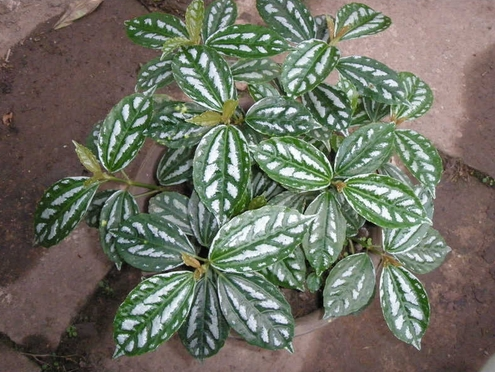
Propagation methods for Pilea:
1. Cuttings propagation
Cuttings propagation is generally the way to go, simple and effective. Spring is usually best, summer is barely acceptable. Cut a 5-8 cm long stem section as the cutting, keep some of the upper leaves, and insert it into slightly moist sandy soil. Keep it in a shaded, ventilated spot!
The best temperature is 18-20°C. If the potting soil is dry, you can spray a little water on it. Roots usually form in 2-3 weeks, and after 1-2 months it can be transplanted or potted up.
2. Division propagation
Division is the simplest. When repotting, pull apart some offshoots and cut off the old withered rhizomes from the old stems. They take root very easily!
Notes: The optimal temperature for both cuttings and division propagation is around 20°C. Judge it yourself. If the weather suddenly turns cold, cover it with plastic film (to keep warm and retain moisture). If the temperature gets too high, above 27°C, then spray water around it more often.
Pest and disease control for Pilea:
1. Leaf spot
For leaf spot, spraying Bordeaux mixture as a preventive measure is enough. It is usually caused by potting soil that is too wet, and it can also easily trigger root rot. For root rot, promptly drench with thiophanate and control watering frequency.
Note: If you see root-knot nematodes in the potting soil (they grow on the roots, only discoverable when repotting), use carbofuran to kill them. Just bury it shallowly in the soil.
2. Scale insects
When scale insects are found, spraying omethoate is the most effective way to kill them. Of course, if there are just one or two, simply crush them to death. For other large insects, just pick them off directly and quietly remove them!
Can Pilea absorb toxins?
There is no information showing that it can absorb toxins. According to current claims, any green plant can absorb formaldehyde, but when these plants absorb toxic substances, they can only absorb them onto the surface of the leaves and cannot decompose them on their own. To decompose them, the plant needs to be grown outdoors for a period of time.
How to grow curly mint and its differences from round-leaf Pilea
Curly mint is also a type of mint, and it really does look quite similar to mint. What are the growing methods for curly mint? What are the differences between curly mint and round-leaf Pilea:
How to grow curly mint:
Curly mint is a slightly frost-tolerant plant. A brief period of low temperature in winter will not kill it. Just keep the minimum care temperature above 0°C.
In summer, curly mint can be given appropriate shade to avoid excessive exposure to the sun. Also, water more during high temperatures; you can water thoroughly once a day to avoid the soil becoming excessively dry.
Curly mint has a certain drought tolerance. Don't be afraid that the soil is too dry and it will die. When you see the leaves slightly wilted, you can still water thoroughly, and it will quickly recover its growth.
If you want a potted curly mint to grow more luxuriant as quickly as possible, you can prune it regularly. When you see longer stems, you can cut them off, which promotes continuous branching. Also, regularly check the potted plant and promptly cut off diseased and yellow leaves, and periodically spray carbendazim or chlorothalonil.
Propagating curly mint is also very simple. Just cut a few stem sections about 7-9 cm long, then cut off all the leaves at the bottom of the stems, and directly soak 2-3 cm of them in clean water. Then change the water once every 2 days, and they will root within a week.
Curly mint does not need much light to grow; it can grow in shaded areas. However, if you want it to grow faster, it is best to give it some scattered light each day, which promotes faster growth.
Keep the care environment ventilated, warm and humid, and avoid excessively dry air.
Curly mint is not too sensitive to ambient temperature. Its growing temperature is between 15-30°C. Just keep the year-round care temperature above 15°C and the maximum temperature below 30°C. Its adaptability to the environment is quite good.
Keeping a few pots of curly mint at home is quite nice. It can purify most harmful gases and also has a certain bactericidal effect. Moreover, curly mint is completely non-toxic and harmless. Properly grown leaves can even be used for eating, so there is no need to worry about poisoning from accidentally eating them.
Differences between curly mint and round-leaf Pilea:
The plant in the picture above is curly mint. People at flower markets and flower shops call it "toxic-absorbing grass." It has a certain ability to purify the air. It is a small herbaceous plant that even beginners can easily keep alive. It is suitable for indoor potted care, tolerates shade and drought, and if you want it to grow luxuriantly, you just need to keep pruning it.
The plant in the picture above is round-leaf Pilea. You can see that its leaf shape looks quite similar to curly mint. Both have wavy, crinkled leaves, and the leaf veins are similar too. However, the leaf surface of round-leaf Pilea has raised spikes, while curly mint does not.
That's all for the introduction to curly mint. Now you can clearly understand the differences between curly mint and round-leaf Pilea!
Pilea notata C. H. Wright Pilea profile: how to grow Pilea / how to propagate Pilea
Pilea fact cardPilea notata C. H. Wright
Pilea growing methods and precautions, introduction to Pilea
Perennial herb. Stems fleshy, 25-65 cm tall, hairless. Leaves opposite, the 2 leaves slightly unequal in size; petioles of each pair unequal in length, 0.5-7 cm long; leaf blades membranous, narrowly ovate or ovate, 4-11 cm long, 1.6-4.8 cm wide, apex acuminate or long acuminate, base rounded or broadly cuneate, margin with shallow serrations or shallow teeth above the base, cystoliths linear, obvious and dense on both surfaces of the leaf, also present on the veins; basal veins 3. Dioecious; male inflorescence cymose, up to 4 cm long; male flowers about 1.5 mm in diameter, tepals 4, stamens 4, longer than the tepals, anthers white; female inflorescence shorter and denser, less than 1.2 cm long; female flowers with 3 tepals, narrowly ovate, about 0.5 mm long, the middle one longer, with cystoliths outside, stigma penicillate. Achene ovate, slightly oblique, pale yellow, surface with wart-like dots. Flowering period July-September, fruiting period September-November. A common cultivated variety is: Dense Pilea (P. c. cv. Nana): branches and leaves dense, plant relatively short, less than 20 cm.
Morphological characteristics of Pilea
Perennial herb, with creeping stems. Stems fleshy, slender, slightly swollen in the middle, 25-70 cm tall, 2-4 mm thick, hairless, rarely with short pubescence on the upper part, densely covered with linear cystoliths. Leaves papery, nearly equal in size within the same pair, narrowly ovate, ovate-lanceolate, or ovate, 4-11 cm long, 1.5-4.5 cm wide, apex caudate-acuminate or acuminate, base rounded, rarely broadly cuneate, margin with shallow serrations from the lower part to the apex, rarely double serrate, upper surface dark green and glossy, lower surface light green, cystoliths linear, 0.5-0.6 mm long, densely distributed on both surfaces, obvious, basal veins 3, the two lateral ones arcuate, extending to the upper part and anastomosing with the lateral veins, lateral veins 8-13 pairs, slightly spreading and forming a network; petioles slender, 17 cm long, usually hairless, rarely with short pubescence; stipules large, greenish, oblong, 8-12 mm long, deciduous. Flowers dioecious; male inflorescence cymose-racemose, 2-5 cm long, with a few branches, glomerulate flower clusters loosely borne on the flowering branches; female cyme shorter and denser. Male flowers pedicellate or nearly sessile, about 1 mm long in bud; tepals greenish-yellow, 4-parted nearly to the base, ovate-oblong, apex acute, with a short horn-like protrusion near the apex outside; stamens 4, anthers white or pinkish, filaments and connective red; pistillode small, conical. Achene small, round-ovate, apex oblique, nearly 0.8 mm long, greenish-brown when mature, with obvious prickly small wart-like protrusions; persistent tepals 3-parted nearly to the base, equal in size, ovate-oblong, apex obtuse, about 1/3 the length of the fruit. Flowering period June-September, fruiting period September-November.
Variety classification of Pilea
Pilea is also the collective name for plants in the genus Pilea. In addition to the above species, common ones include Pilea cadierei Gagnep. et Guill., Pilea japonica (Maxim.) Hand.-Mazz., Pilea mongolica Wedd., Pilea microphylla, Pilea mollis, etc. Among them, the most commonly cultivated species is Pilea cadierei, commonly called Pilea. It is also called snow grass, aluminum leaf grass, cold water grass, etc. A common cultivated variety is: Dense Pilea (P.c.cv.Nana): branches and leaves dense, plant relatively short, less than 20 cm.
There are many types of Pilea, with beautiful leaf patterns. It is an indoor foliage flower with strong shade tolerance. It can be used for indoor potted display and hanging basket display, and is also a ground-planting material for arranging indoor gardens.
There are about 200 species in the same genus, distributed in tropical and subtropical regions. Among them, Pilea cadierei can also be used as an indoor plant that absorbs toxic substances.
Other commonly cultivated ones include:
Pilea nummulariifolia, also called hairy frog grass, is a perennial herb. The plant spreads creeping, with fine and numerous branches, rooting very easily at the nodes where they touch the ground. Leaves round, light green, with blister-like protrusions on the leaf surface. Flowers small, borne in the leaf axils. Dioecious.
Pilea mollis, also called frog grass or moon-faced Pilea, is a perennial evergreen herb, plant height 20-50 cm. Leaves decussate, leaf veins reddish-brown, main color of the leaf surface yellow-green, leaf surface wavy and crinkled, beautiful and charming. Flowers pale pinkish-white, in umbels, flowering in spring and summer.
Pilea spruceana, also called silver-veined frog grass, upright, easy to branch. Leaves dark green, with a beautiful silver-white stripe in the center, extending from the leaf base to the tip, quite ornamental.
Distribution area of Pilea
Produced in Guangdong, Guangxi, Hunan, Hubei, Guizhou, Sichuan, southern Gansu, southern Shaanxi, southern Henan, southern Anhui, Jiangxi, Zhejiang, Fujian, and Taiwan. Grows in valleys, beside streams, or in shaded and damp places under forests, at an altitude of 300-1500 m. Also distributed in Japan.
Ecological habits of Pilea
Pilea is relatively cold-tolerant. It will not freeze if the winter room temperature is not lower than 6°C, and it begins to grow above 14°C. It likes warm and humid climatic conditions and is afraid of direct sunlight. In a lightly shaded environment, the leaf color is clearly white and green, the internodes are short and compact, and the leaf surface is translucent and glossy. In a fully shaded environment, it often grows leggy, with longer internodes, soft stems, easy lodging, and a loose plant shape. It has no strict requirements for soil, can tolerate weak alkalinity, is relatively tolerant of water and moisture, and is not drought-tolerant.
Cultivation techniques for Pilea
Pilea likes a warm, humid climate and prefers loose, fertile sandy soil. The suitable growing temperature is 15°C to 25°C, and in winter it must not go below 5°C. Specific management:
1. Light management: Pilea is an indoor flower with very beautiful leaf color. It is very shade-tolerant, but prefers sufficient light and should avoid direct strong light. In summer, place the pot at a north window; in winter, place it at a south window. If the light is too dim, the leaf color will fade; if the sunlight is too strong, the leaves will be scorched.
2. Fertilizer and water management: Follow the principle of moist management. Keep the potting soil dry without cracking, and moist without being wet. In summer, frequently spraying water on the leaf surface can keep the leaves clean and glossy. In winter, spray less water on the leaf surface, otherwise black spots may appear on the leaves, or they may even turn black and rot. During the growing season, apply a 20% or 30% nitrogen liquid fertilizer about once every two weeks to promote robust plant growth. After autumn, increase phosphorus and potassium fertilizer to strengthen the stems and prevent lodging.
3. Propagation mostly uses cuttings, which can be done in both spring and autumn. For home growers with few plants, use the stem tip as the cutting in May. The medium is river sand or vermiculite. Under suitable temperature conditions (20°C to 25°C), roots develop in about 10 days. After the new shoots extend 3 cm to 5 cm, pot them up in sandy soil. Water thoroughly to settle the roots, then switch to normal management.
Generally, cuttings propagation is used, and division propagation can also be used.
1. Cuttings propagation: Cuttings can be done in both spring and summer. The high-temperature summer season is not suitable for cuttings, and winter cuttings grow relatively slowly. Select fully grown branches, cut the stem tip 5-8 cm long as the cutting, retain a few leaves at the tip, and insert directly into a sand bed with vermiculite or plain sand as the substrate, or insert into potting soil mixed with peat and soil. The insertion depth should not exceed 2 cm. Place in a semi-shaded place, keep the soil temperature at 18-20°C, and when dry, spray water with a watering can. Roots will form in about 2-3 weeks, and after 1-2 months it can be transplanted or potted up.
2. Division propagation: Pilea has a very strong clumping habit. When repotting and changing soil, the whole clump can be divided into several parts and potted separately. At the same time, shorten the old stems, retaining 2-3 nodes at the base of the stems. After surviving, the axillary buds will quickly sprout and produce new side branches.
Water: Likes moisture. In summer, keep the potting soil moist, and spray and water the leaf surface every day to keep the leaf color bright.
Fertilizer: From April to September, fertilize once every half month.
Soil: Likes loose, well-drained soil. Can be prepared by mixing loam, river sand, and leaf mold.
Temperature: Likes warmth. The suitable growing temperature is 15-25°C. Overwinter indoors in winter, with the temperature around 5°C.
Light: Relatively shade-tolerant, avoids scorching sun, likes scattered light.
4. Other management: Repot once a year. When the old plant's shape becomes messy and its ornamental value decreases, use cuttings propagation to raise young plants for renewal, so as to improve ornamental value. At the same time, it can also reduce pest and disease damage. In poorly ventilated conditions, it is prone to aphid damage. When the potting soil is muddy for a long time, the roots often rot, so attention should be paid to reasonably controlling water and soil.
Cultivation key points
1. Soil
For potted Pilea, it is best to use a culture soil made by mixing leaf mold or peat soil and garden soil with about 1/5 river sand or perlite and a small amount of decomposed cake fertilizer.
2. Fertilizer
During the vigorous growth period, apply a thin liquid fertilizer once a month. If too much fertilizer is applied, it easily causes leggy growth. After autumn, reduce fertilization, and stop fertilizing in winter.
3. Moisture
Water when the soil looks dry, but never allow waterlogging.
4. Temperature
The optimal temperature is 15-25°C. In winter, the room temperature cannot be lower than 5°C:
5. Light
In summer, it is best to place it indoors in a well-ventilated spot with bright scattered light. In winter, it is best to place it on a south-facing windowsill. If placed in a place lacking light for a long time, it will not only easily cause longer internodes, soft stems, loose plant shape, thinner leaves, and faded and lusterless leaf color.
6. Pruning and pinching
When growing Pilea, pay attention to timely pinching to promote more side branches and make the plant short, sturdy, and full. When the seedlings grow to 12-15 cm, they can be pinched to promote axillary bud germination and produce side branches. However, pinching should not be done too early or too many times, so as not to weaken the plant's growth. Pilea grows relatively fast. After 2-3 years of cultivation, the taller old branches should be heavily pruned from the base before early spring budding to promote new branches. Sprout new leaves, so as to maintain a compact plant shape and glossy, bright leaves regularly. But if the plant is not renewed in time, the plant shape will become messy and the ornamental effect will be poor.
Propagation methods of Pilea
Generally, cuttings propagation is used, and division propagation can also be used.
1. Cuttings propagation: Cuttings can be done in both spring and summer. The high-temperature summer season is not suitable for cuttings, and winter cuttings grow relatively slowly. Select fully grown branches, cut the stem tip 5-8 cm long as the cutting, retain a few leaves at the tip, and insert directly into a sand bed with vermiculite or plain sand as the substrate, or insert into potting soil mixed with peat and soil. The insertion depth should not exceed 2 cm. Place in a semi-shaded place, keep the soil temperature at 18-20°C, and when dry, spray water with a watering can. Roots will form in about 2-3 weeks, and after 1-2 months it can be transplanted or potted up.
2. Division propagation: Pilea has a very strong clumping habit. When repotting and changing soil, the whole clump can be divided into several parts and potted separately. At the same time, shorten the old stems, retaining 2-3 nodes at the base of the stems. After surviving, the axillary buds will quickly sprout and produce new side branches.
Cutting substrate
This refers to nutrient soil, river sand, peat soil, and other materials used for cuttings. For home cuttings, due to limited conditions, it is difficult to obtain an ideal cutting substrate. It is recommended to use a ready-mixed and sterilized cutting substrate; medium-coarse river sand can also be used, but it should be rinsed several times with clean water before use. Do not use sea sand or river sand from saline-alkali areas, as they are not suitable for the growth of flowers and plants.
Cutting selection
The branches used for cuttings are called cuttings. Cut the stems into sections 5-8 cm long, each with more than three leaf nodes. The top shoot can also be used as a cutting.
Cutting management
[Temperature]: The optimal temperature for cutting rooting is 18°C-25°C. Below 18°C, rooting is difficult and slow; above 25°C, the cut surface of the cutting is easily infected by pathogens and rots, and the higher the temperature, the greater the proportion of rot. When low temperatures are encountered after cuttings, the main measure for keeping warm is to wrap the pot or container used for cuttings with plastic film; when the temperature is too high after cuttings, the main cooling measure is to shade the cuttings, blocking 50-80% of sunlight, and at the same time spray the cuttings 3-5 times a day. On sunny days with higher temperatures, spray more often; on cloudy and rainy days with lower temperatures and higher humidity, spray less or not at all.
[Humidity]: After cuttings, the relative air humidity must be maintained at 75-85%. Humidity can be increased by spraying the cuttings 1-3 times a day. On sunny days with higher temperatures, spray more often; on cloudy and rainy days with lower temperatures, spray less or not at all. However, excessive spraying makes the cuttings easily infected by pathogens and rot, because many kinds of pathogens exist in water.
[Light]: Cuttings propagation cannot do without sunlight, but the stronger the light, the higher the temperature inside the cuttings, the more vigorous the transpiration, and the more water consumed, which is not conducive to the survival of the cuttings. Therefore, after cuttings, 50-80% of sunlight must be blocked.
[Potting up]: When potting small seedlings, first place a 2-2 cm thick layer of coarse-grained substrate or ceramic granules at the bottom of the pot as a drainage layer, sprinkle a layer of fully decomposed organic fertilizer on top as base fertilizer, about 1-2 cm thick, then cover with another layer of substrate about 1-2 cm thick, and then place the plant in, so as to separate the fertilizer from the
root system and avoid burning the roots. The substrate used for potting up can be selected from one of the following.
[Garden soil]: slag = 3:1; or garden soil: medium-coarse river sand: sawdust (mushroom residue) = 4:1:2; or one of paddy soil, pond mud, or leaf mold. Or peat + perlite + ceramic granules = 2 parts + 2 parts + 1 part; garden soil + slag = 3 parts + 1 part; peat + slag + ceramic granules = 2 parts + 2 parts + 1 part; sawdust + vermiculite + medium-coarse river sand = 2 parts + 2 parts + 1 part. After potting up, water thoroughly once and place in a shaded environment for care.
[Humidity management]: Likes a humid climate environment. The relative air temperature of the growing environment should be 60-75%.
[Temperature management]: The optimal growing temperature is 18°C-30°C. It dislikes cold and frost. The overwintering temperature needs to be kept above 10°C. When the winter temperature drops below 14°C, it enters a dormant state. At 5°C, it is prone to cold damage. If the ambient temperature approaches 0°C, it will die from frostbite.
Precautions
In summer:
1. Strengthen air convection so that the internal temperature can be dissipated;
2. Place in a semi-shaded area, or give it 50% shade;
3. Spray it appropriately, 2-3 times a day.
In winter:
1. Move indoors to a place with bright light for care;
2. Outdoors, it can be wrapped in plastic film to overwinter, but every two days at noon when the temperature is higher, the film should be opened to let it breathe;
Light management: It is afraid of direct strong light and needs to be placed in a semi-shaded area for care, or given 70% shade.
If kept indoors, place it in a bright place as much as possible, and move it outdoors to a semi-shaded area or shaded care for one month every one or two months, so that it can accumulate nutrients and recover its growth.
[Fertilizer and water management]: It has high requirements for fertilizer and water, but it is most afraid of random fertilization, concentrated fertilizer, and partial application of nitrogen, phosphorus, and potassium fertilizers. It is required to follow the fertilization (watering) principle of "light fertilizer applied frequently, small amount and many times, complete nutrition":
Spring, summer, and autumn: These three seasons are its peak growing seasons. Fertilizer and water management follows the cycle of "Hua Bao" - "Hua Bao" - clear water - "Hua Bao" - "Hua Bao" - clear water (at least two "Hua Bao" applications per week). The interval cycle is about: 1-4 days for outdoor care. On sunny days or during high temperatures, the interval is shorter; on cloudy and rainy days or during low temperatures, the interval is longer or no watering. For indoor care, 2-6 days. Try to arrange watering in the morning when the temperature is lower. In summer, water in the morning or evening when the temperature is low, and also frequently spray the plant.
Winter: Pilea is in its dormant period in winter. The main task is to control fertilizer and water well. Fertilizer and water management follows the cycle of "Hua Bao" - clear water - clear water - "Hua Bao" - clear water - clear water. The interval cycle is about 7-10 days. Try to arrange watering at noon on sunny days when the temperature is higher.
Medicinal or dietary value of Pilea
The medical information and health dietary information on Huahua.com are for reference only and cannot be used as a basis for diagnosis or medical treatment. For any health problems, consult professional medical personnel, and for the treatment of any disease, please follow doctor's advice.
Ultimate flower care mission: Love yourself, start from reality, and strictly follow doctor's advice. For illness, do not be careless, do not delay, do not give up hope, face it bravely, use love to warm the silent world, and use your heart to care for the flower field within.
Medicinal value
The whole plant is used medicinally. It has the effects of clearing heat and draining dampness, promoting fluid production and quenching thirst, and reducing jaundice and protecting the liver. [2]
[Medicinal material name] Pilea [4]
[Aliases] Water hemp leaf, soil licorice, goat blood, white goat, sweet grass, transparent grass, white-penetrating grass, aluminum leaf grass, snow grass, flower-leaf nettle
[Source]
Medicinal material basis: the whole plant of Pilea notata in the Urticaceae family.
Harvesting and storage: Harvest in summer and autumn, use fresh or dry in the sun.
[Habitat Distribution]
Ecological environment: grows in shaded, damp places under forest or beside ditches at an altitude of 350-1400 m.
Resource distribution: distributed in Central and South China as well as Shaanxi, Gansu, Jiangsu, Anhui, Zhejiang, Jiangxi, Fujian, Taiwan, China, Sichuan, Guizhou and other places.
[Nature and Flavor]Bland; slightly bitter; cool in nature
[Functions and Indications]Clears heat and drains dampness; reduces jaundice; reduces swelling and dissipates masses; strengthens the spleen and harmonizes the stomach. Mainly used for damp-heat jaundice; reddish and whitish vaginal discharge; strangury and turbid urine; hematuria; summer fever in children; malarial splenomegaly; indigestion; traumatic injuries; traumatic infection
[Usage and Dosage]Internal use: decocted in water, 15-30 g; or steeped in liquor. External use: appropriate amount, pounded and applied topically.
[Caution]Use with caution during pregnancy; contraindicated in pregnant women.
[Excerpt]"Chinese Materia Medica"
The Role and Uses of Pilea cadierei: Ornamental Value
Pilea cadierei is a rather fashionable small foliage plant. Because it is highly adaptable, easy to propagate and relatively easy to grow, with a small, delicate and elegant clump, clearly defined green and white leaves and beautiful patterns. Placed in a study or bedroom, it is fresh and pleasant. It can also be hung in front of a window, with the green leaves trailing down, charming and lovely. The inflorescence emerges from the leaf axils, the peduncle is light brown, semi-transparent, and the terminal cyme has no ornamental value.
The Cultural Background of Pilea cadierei
When people have happily finished decorating their new home, they often consider what green ornamental plants to use to beautify the room and raise its appearance and comfort to an even higher level. Indeed, this is very important. It has gradually become popular to use pothos, money tree, Brazil wood, giant taro, split-leaf philodendron and the like to add brilliance and vitality to living rooms. Besides beauty, some shade-grown plants also have extremely strong pollution-resistant and toxin-absorbing functions, which are of great benefit to household hygiene and human health.
Here, I introduce to friends a plant called the "new star of pollution resistance", Pilea cadierei. Several years ago, botanists discovered an unnamed wild grass in the mountainous areas of Vietnam. The plant is about a chi tall, with many branches, elliptical leaves with serrated edges, slightly sunken veins, slightly silvery white, and somewhat thick leaves that are supple like a sponge. In summer and autumn it bears small yellowish-white flowers, delicate and elegant, and the whole plant stands gracefully like a young girl draped in a light emerald gauze. This unique temperament is not inferior to many famous flowers and grasses. It turns out that this is Pilea cadierei, also known as "white snow grass", a perennial herb belonging to the Urticaceae family. Through artificial cultivation and years of research by botanists, it has been domesticated into an ornamental plant with relatively strong adaptability. Besides loving warm and humid places, it is also fairly shade-tolerant, and can be planted in garden landscapes as well as used as an indoor potted ornamental.
According to newspaper reports, when Dutch florists first dealt in Pilea cadierei, sales were less than satisfactory because it is not as showy as precious flowers such as tulips, hyacinths and golden lilies. Later, after experimental observations by American environmental protection experts, a surprising set of data and a conclusion were published, and only then did Pilea cadierei, like an ugly duckling turning into a white swan, become greatly favored by people. That is, experiments proved that Pilea cadierei's ability to absorb carbon dioxide is 2.5 times higher than that of ordinary flowers, and it can also eliminate harmful gases released by building materials and furniture paint used in indoor decoration, rapidly purifying indoor air. People greatly love this economical and practical natural air freshener. In fact, Pilea cadierei is not hard to find or care for. According to the excavation of horticultural experts, there are more than 200 species of plants in the same genus as Pilea cadierei worldwide, such as Pilea involucrata from Colombia and Pilea nummulariifolia from Peru, both of which have this pollution-resistant and toxin-absorbing function. They are just like a large environmental protection family, spread all over the world. China also has Pilea cadierei in Guangdong, first introduced from Hong Kong, China. It is suitable for growing at a temperature of 15 to 25°C, likes humidity, and the relative humidity of the air is best at about 60%. It can be transplanted by cutting propagation. If potted at home, it is best to use a mixture of humus soil, vegetable garden soil, fine river sand and a small amount of dry livestock and poultry manure, appropriately creating a relatively moist environment and microclimate.
Pilea cadierei pictures