Does Peperomia argyreia like water? A detailed guide to growing it
When it comes to Peperomia, Peperomia argyreia is certainly the more popular one. This Peperomia grows looking just like a watermelon rind, stripes and all, just that stubborn, exactly like a watermelon rind. So what is the growing method for Peperomia argyreia? Does Peperomia argyreia like water? Or does it prefer drought?
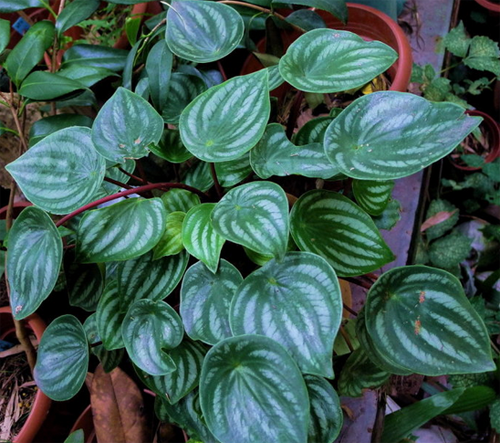
Growing methods for Peperomia argyreia:
The watermelon rind look is quite cute, but is it easy to grow? Actually, it is not easy to grow! It is much harder to grow than Peperomia obtusifolia, even though it is also called the obtusifolia Peperomia!
It is neither cold-tolerant nor heat-tolerant. The suitable growing temperature is 20-28 degrees; below 15 degrees or above 30 degrees will not do! In winter it is prone to freezing, and at around 10 degrees it needs to be moved indoors for warmth!
1. Pot and soil selection
It likes fertile, loose, well-drained sandy soil. Clay soil and yellow earth soil will not do. Leaf mold plus a little coarse sand, or of course you can buy some peat soil and perlite mixed together, which is also a common formula for succulents! The main thing is good air permeability and water drainage!
2. Suitable temperature and light
Because this thing cannot be exposed to too much sun and cannot freeze, it must be shaded in summer. Actually, keeping it in a bright spot is enough; it does not need too much sunlight, though a little morning and evening sun will make it healthier. Winter warmth must be done well. If the temperature is not 10 degrees, then cover it with plastic film! Open it at noon for ventilation.
3. Proper watering
Peperomia argyreia likes a warm, humid environment. As long as water does not accumulate in the pot, it is fine. Normally keep it slightly moist, which is why it was said above that only well-drained, breathable soil can grow it well!
In the hot summer weather, spray it with water appropriately (on normal nice days, spray more water too) to increase humidity and lower temperature. Doing this will make its stripes even more attractive! In winter when the temperature is low, water slightly less, and water again only when the potting soil is dry!
4. Fertilizing
This thing is not suited to strong fertilizer. Only in seasons with suitable temperatures should you apply diluted cake fertilizer water once a month. Apply less nitrogen fertilizer, and more phosphorus fertilizer is fine.
When fertilizing, do not pour it on the leaves. Just pour it along the edge of the pot. Overly strong fertilizer will kill the plant.
Does Peperomia argyreia like water?
Peperomia argyreia cannot be said to like water or not like water. Peperomia argyreia quite likes a humid environment, but water must not accumulate. Water accumulation easily causes yellow leaves.
How to grow Peperomia argyreia: growing methods for Peperomia argyreia
Peperomia argyreia originates from South America and tropical regions. Its leaf surface is interspersed with regular silver-white bands, shaped like watermelon stripes. It is a perennial herbaceous plant, evergreen all year round, with a flowering period from March to May. Many people do not understand how to grow Peperomia argyreia. Below, the editor will introduce to everyone the growing methods and cultivation techniques of Peperomia argyreia and related knowledge.
Introduction to Peperomia argyreia
Peperomia argyreia, also called obtusifolia Peperomia, is a perennial herbaceous plant, evergreen all year round. Peperomia argyreia originates from South America and tropical regions. The stem is short and clumping, and the leaf stalks are reddish brown. The leaves of Peperomia argyreia are ovate, with pointed tips, about 6 cm long. The leaf veins radiate from the center to all sides, with 8 main veins, dark green, and the spaces between the veins are silver-gray, shaped like watermelon rind, hence the name Peperomia argyreia.
I. Morphological characteristics
Plant: Peperomia argyreia is a clumping plant, with watermelon-rind-like peltate leaves clustered on short stems. The plant height is about 15-20 cm.
Leaves: The leaves of Peperomia argyreia are ovate, 3-5 cm long and 2-4 cm wide. The leaf stalks are reddish brown, 10-15 cm long. The leaf veins radiate from the center to all sides; there are 11 main veins, dark green, and the spaces between the veins are silver-gray, just like watermelon rind. The stem is short, with dark red leaf stalks. The leaves are dense, fleshy, peltate or broadly ovate, 2-5 cm long. The leaf surface is green and the leaf underside is red. The veins are green, and the leaf surface is interspersed with regular silver-white bands, shaped like watermelon stripes.
Flowers: Peperomia argyreia has spike inflorescences, with small white flowers. The flowering period of Peperomia argyreia is March to May.
II. Ecological habits
The suitable growing temperature for Peperomia argyreia is 20-28°C. Above 30°C and below 15°C, growth slows down.
Peperomia argyreia has poor cold tolerance. In winter, the minimum indoor temperature must not be lower than 10°C, otherwise it is prone to cold damage.
III. Propagation methods
1. Division propagation
This can be done in spring and autumn. Select plants that have new shoots growing at the base of the mother plant. Along with repotting and changing the soil, take out the plant, shake off the attached soil, and use a sharp knife to cut off new shoots according to their positions and pot them. When dividing, be careful to protect the root systems of the mother plant and the new shoots. You can also, when the plant has filled the pot, take the plant out and divide it into several pots for planting. Cutting propagation is further divided into stem cuttings and leaf cuttings.
Stem cuttings can be done in spring and summer. Select robust branches, cut 5-8 cm cuttings, remove the lower leaves, let the cut dry, then insert them into a moist sand bed. In semi-shade, maintaining a temperature of 18-25°C, they will root.
2. Leaf cutting propagation
Mostly done from May to October. For leaf cuttings, select robust, plump leaves, remove all plump leaves with leaf stalks, keeping 2-3 cm of leaf stalk, let them dry for 2-3 hours until the wound is slightly dry, then insert them obliquely into a sand bed or pot, with the angle between the leaf stalk and the seedbed at 35-45 degrees. The substrate is washed river sand mixed with 20%-30% vermiculite. Keep moist, place in semi-shade, at 20-25°C, and in about 4-5 weeks adventitious roots and adventitious buds will grow. In about 2 months, small seedlings will form. When the seedlings grow to 4-5 cm, transplant them into pots. But avoid an overly wet medium to prevent the cuttings from rotting. When cutting, avoid covering with plastic film or glass, otherwise they easily rot.
Cultivation techniques for Peperomia argyreia
Peperomia argyreia likes a high-temperature, humid, semi-shaded environment with relatively high air humidity. To keep the beautiful stripes on the leaves, the following points must be achieved:
1. Substrate: It needs to be grown in loose, fertile, well-drained soil; it grows poorly in clay soil. The potting soil should preferably be leaf mold mixed with coarse sand or coal cinder ash. Peat soil + perlite can also be used.
2. Temperature: Peperomia argyreia is neither tolerant of severe cold nor of intense heat. The optimal growing temperature is 20-30°C. When the temperature exceeds 30°C and is below 15°C, growth slows down. In winter, the minimum temperature must not be lower than 10°C, otherwise it is prone to cold damage. Physiological diseases may even appear.
3. Soil: The potting soil should be a culture soil mainly of leaf mold with a small amount of river sand mixed in.
Light: Because Peperomia argyreia is relatively shade-tolerant, it should usually be placed in a spot with bright scattered light indoors, and strong direct light must be avoided. In spring and autumn, it should be moved outdoors to a well-ventilated place with a little sunlight for care. It likes semi-shade or scattered light. Only in winter can it be grown in full sun; in summer it must be shaded 50%, otherwise the leaves are easily scorched. But if it is too shady, the leaf color becomes dull, grayish green, and the stripes are not obvious.
Water: During the growing season, keep the potting soil moist, but water must not accumulate in the pot, otherwise it easily causes root rot and leaf drop, or even the death of the whole plant. In summer and dry seasons, spray water on the leaf surface 2-3 times a day to increase air humidity and promote the formation of leaf stripes. It fears both drought and waterlogging. Drought causes wilting, yellowing, or even death; waterlogging causes root rot. Keeping the potting soil slightly moist is enough. You can also water when the surface of the potting soil looks dry. In winter, if the temperature is slightly low, watering should be controlled, letting the potting soil alternate between dry and wet.
Fertilizer: Usually apply diluted cake fertilizer water or compound fertilizer once a month. Nitrogen fertilizer must not be excessive. If phosphorus fertilizer is lacking, it easily causes the leaf stripes to disappear and reduces the ornamental effect. Use a balanced fertilizer; do not apply nitrogen fertilizer alone, otherwise the "watermelon" stripes will not be obvious and the ornamental value will be greatly reduced. It is best to use diluted liquid fertilizer to water the potting soil. Overly strong fertilizer easily causes plant death.
Humidity: It needs relatively high air humidity and is not tolerant of dryness. In addition to normal watering, also spray the plant frequently. If conditions permit, it is best to sprinkle water in the growing environment to increase humidity, which gives good results. In a dry environment, leaf growth is extremely abnormal.
Growing methods for Peperomia argyreia
1. Potting soil
For potting Peperomia argyreia, choose a culture soil mainly of leaf mold with a small amount of river sand added.
2. Placement environment
Usually it can be placed in a spot with bright scattered light indoors for growing, and strong direct light must be avoided.
3. Fertilizing and watering
Apply diluted decomposed cake fertilizer water once a month. If too much fertilizer is applied, especially too much nitrogen fertilizer, and phosphorus fertilizer is lacking, it easily causes the leaf stripes to disappear and reduces the ornamental value. During the growing season, keep the potting soil moist, but water must not accumulate in the pot, otherwise it easily causes root rot and leaf drop, or even the death of the whole plant. Apply diluted cake fertilizer water or complete-element chemical fertilizer once a month.
4. Substrate preparation
Use loose, well-drained and well-aerated imported peat of 5-40 mm specification. Break up the peat, add water and mix evenly (water standard: after adding water and mixing evenly, squeeze a handful of peat tightly, and water seeps out from between the fingers). Then plant in cups. A 9 cm pot uses about 250 ml of peat per pot. One 300-liter bag of imported peat can fill about 1200 cups.
5. Potting up
Requirements for seedlings to be potted: choose high-quality seedlings from professional production, with seedling height 5-8 cm, leaf number 6-10, free of pests and diseases, and free of dead leaves and yellow leaves.
For reused old pots, they must be soaked in 1000 times diluted potassium permanganate solution for more than half an hour, then rinsed with clean water and dried for use. New pots can be used directly. Generally, first use smaller flower pots (9 cm plastic pots) for planting. When planting, first place an appropriate amount of substrate at the bottom of the cup, then move the screened seedlings into the cup. Small seedlings can be planted slightly deeper, with the base of the plant level or slightly above as suitable, 1 clump/pot; the substrate should be moderately firm, filled to 9/10 of the cup, gently shake the pot soil, and water with half-soaked water or surface water to settle the roots.
6. Cultivation characteristics
Peperomia argyreia likes a high-temperature, humid, semi-shaded environment with relatively high air humidity. It is neither cold-tolerant nor tolerant of intense heat. For potted containers, choose clay pots or coarse sand pots with a rough texture and strong water permeability. For potting, choose a culture soil mainly of leaf mold; equal parts of leaf mold, garden soil and river sand can be mixed. When potting seedlings, be careful to protect the root system. After planting, water once thoroughly and place in a ventilated, shaded place to recover for about a week, after which normal management can begin. Usually place it in semi-shade for growing, and strong direct light must be avoided. It likes sufficient scattered light.
Too strong light is unfavorable for growth. Too much shade easily causes leggy growth and loss of the beautiful stripes, reducing the ornamental effect. The branches and leaves are nearly fleshy and have the function of storing water, so they have a certain drought resistance. Avoid overwatering; overly wet potting soil will cause root rot and plant death. During the growing season, keep the potting soil moist, but water must not accumulate in the pot, otherwise it easily causes root rot and leaf drop, or even the death of the whole plant. Watering or spraying the plant with slightly warm, calcium-free soft water gives better results; water that is too cold can also cause the plant to rot. After winter begins, watering must be controlled even more, and the water temperature must not be lower than room temperature. Apply diluted decomposed cake fertilizer water once a month. Avoid strong fertilizer when fertilizing, and avoid contaminating the leaves. If too much fertilizer is applied, especially too much nitrogen fertilizer, and phosphorus fertilizer is lacking, it easily causes the leaf stripes to disappear and reduces the ornamental value. 0.1%-0.2% urea can also be used as a foliar top dressing.
7. Humidity requirements
It has relatively high requirements for air humidity. In summer and dry seasons, it is best to spray water on the leaf surface 1-2 times a day, and also sprinkle water on the ground around the flower pot to maintain relatively high air humidity and promote the formation of leaf stripes. In spring and autumn, it is best to move it outdoors to a well-ventilated place with a little sunlight, care for it there for a period, then move it back indoors, so that the plant grows robustly. Repot once every 1-2 years. Since old plants cannot maintain a strong ornamental effect, they should be renewed regularly. When ventilation is poor, it is easily harmed by scale insects; remove them promptly or spray 40% omethoate emulsifiable concentrate diluted 1000 times for control. When the soil is too wet or even waterlogged, it easily causes root rot; drain promptly or repot, and improve the soil.
Pest and disease control for Peperomia argyreia
1. Disease control
Peperomia argyreia has relatively few diseases. The common disease is leaf spot, which can be controlled by spraying carbendazim, prochloraz and the like.
2. Pest control
The main pests of Peperomia argyreia are red spider mites and scale insects, which are commonly seen. Spraying specific pesticides is enough, such as dicofol and hexythiazox for red spider mites; methidathion and chlorpyrifos for scale insects. Attention should be paid to disinfecting the cultivation site, pots and containers, and soil. For damage from root and crown rot and canker, spraying Bordeaux mixture can control the spread of the disease.
Landscape uses of Peperomia argyreia
Peperomia argyreia has a short plant shape and luxuriant growth. Whether as a potted display or hanging for appreciation, it is very suitable. The leaf color stripes of Peperomia argyreia resemble watermelon. It is suitable for pot cultivation or hanging cultivation.
The green leaves of Peperomia argyreia are thick, glossy and emerald, evergreen all year round. It is a common small foliage plant. It is suitable for potted planting and hanging basket planting, and is often used for indoor decorative appreciation.
Growing methods for Peperomia argyreia
Alias: obtusifolia Peperomia.
Family: Piperaceae, Peperomia genus.
Characteristics: It is a perennial evergreen herbaceous plant. The leaves are clustered, ovate, with reddish-brown leaf stalks and light green leaf surfaces. The leaf veins radiate from the center to all sides, with 8 main veins that are dark green, and the spaces between the veins are silver-gray, closely resembling watermelon rind, hence the name Peperomia argyreia.
Origin: Brazil.
Habits: It likes a warm, humid, semi-shaded environment with relatively high air humidity. The suitable growing temperature is 19-29°C. Above 30°C and below 16°C, growth slows down. It has poor cold tolerance. In winter, the minimum temperature should not be lower than 13°C, otherwise it is prone to cold damage.
Propagation: Leaf cuttings and division are commonly used. For leaf cuttings, in spring and summer select mature leaves, insert them with 2 cm of leaf stalk into a sand bed. The leaves can also be cut lengthwise into 2 pieces and inserted directly into the seedbed, maintaining a certain humidity; 20-30 days after insertion they will root. The division method can be done in early spring along with repotting.
Care: For potting, choose loose, well-drained and well-aerated materials as the substrate. During the growing season, keep the potting soil moist, but water must not accumulate in the pot, otherwise it easily causes root rot and leaf drop, or even the death of the whole plant. Usually place it in semi-shade for growing, avoiding strong direct light. Especially in summer, more attention should be paid to shading. In spring and autumn, light can be appropriately increased. During the growing period, apply diluted cake fertilizer water or compound fertilizer liquid 1-2 times a month. If too much fertilizer is applied, especially too much nitrogen fertilizer, it easily makes the stripes inconspicuous and damages the ornamental effect. When the climate is dry and in summer, spray clean water on the leaf surface 1-2 times a day, and sprinkle water on the ground around the flower pot to maintain relatively high air humidity and promote the formation of leaf stripes. It is best in spring and autumn to move the potted flower outdoors, place it in a well-ventilated spot with a little sunlight for care for a period, then move it back indoors for appreciation. In this way the plant grows robustly, the stripes on the leaves are obvious, and the ornamental value is high.
Value: The Peperomia argyreia plant is small and cute, with unique leaf color, shaped like watermelon rind hanging obliquely under the leaf stalk, novel and interesting. In the hot summer, placing it or hanging it indoors can give people a fresh and cool feeling. Placed as a potted plant on a bookcase, writing desk or coffee table, it is strikingly original.