How much is a pot of Polyscias fruticosa? Detailed guide to care methods, precautions and symbolism
Speaking of Polyscias fruticosa, it is a symbol of wealth, and many people like to grow it, but some people just cannot grow it well. What are the care methods and precautions for Polyscias fruticosa? What symbolism does it have? How much does a pot sell for?
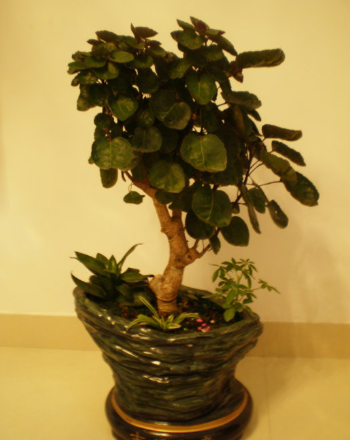
Care methods and precautions for Polyscias fruticosa:
Polyscias fruticosa is native to the Pacific Islands. It likes a warm, humid environment with plenty of sunlight, tolerates partial shade, is not cold-hardy, and fears drought.
Polyscias fruticosa likes light and also has fairly strong shade tolerance, so it should be given an environment with good sunlight but also a certain degree of shade.
It dislikes direct strong light, and especially should be kept away from the scorching sun after long rain and sudden clearing in late spring and early summer, as well as the 5~6 hours of unobstructed strong light baking around midday in summer, otherwise the newly sprouted tender leaves are very easily sunburned.
Polyscias fruticosa likes bright light, likes warmth, is not cold-hardy, and likes humidity. The suitable growing temperature is 22-28°C. In spring, autumn and winter, water again when the surface of the potting soil looks dry; in summer, water in the morning and evening.
1. Temperature
Its suitable growing temperature is 15-30°C, of which it can be kept at 20-30°C from April to October, and at 13-20°C from October to April of the following year.
In winter, the room temperature should not be lower than 10°C. When the summer temperature reaches above 32°C, provide shade, place it in a cool spot, and spray water around it to lower the temperature and create a cool microclimate.
In late autumn and early winter, when the temperature drops to 15°C, move it indoors promptly to prevent the plant from suffering cold damage.
In winter, if the room temperature can be maintained above 20°C, its stems and leaves will continue to grow; if the temperature is not high, the plant stops growing and enters a semi-dormant state.
2. Light
Polyscias fruticosa likes light and also has fairly strong shade tolerance, so it should be given an environment with good sunlight but also a certain degree of shade.
It dislikes direct strong light, and especially should be kept away from the scorching sun after long rain and sudden clearing in late spring and early summer, as well as the 5~6 hours of unobstructed strong light baking around midday in summer, otherwise the newly sprouted tender leaves are very easily sunburned.
In commercial cultivation, from late spring to mid-autumn, it should be placed under a shade frame with 50-70% shading, but it must not be too dark, otherwise the newly sprouted tender leaves will become slender, the leaf color will turn yellow and dull, and the leaflets will be sparsely spaced, thus affecting the compact and graceful form of the plant.
For potted plants moved into a greenhouse in winter, supplemental lighting should be provided.
Keep the potting soil on the dry side, and the plant can remain disease-free year after year. In addition, the newly sprouted pinnate compound leaves do not show obvious phototropism, and the plant shape remains good.
Take Polyscias balfouriana as an example: it needs bright light, and insufficient light easily causes leggy stems and leaves, dull leaf color, and fading of markings, but at the same time it dislikes strong sunlight, especially after long rain and sudden clearing in early summer, so the leaves must be protected from sunburn.
For home potting, it can usually be placed in a well-ventilated spot; in summer it can be placed by a north- or east-facing window, and in winter it should be placed in a brighter spot indoors. For commercial cultivation, from mid-spring to mid-autumn it should all be placed under a shade frame, with 40-60% shading according to the light intensity and duration. In short, it grows most vigorously in a semi-lit environment with bright scattered light.
3. Water
When the room temperature reaches above 33°C, spray the plant once a day. Because this plant has fairly strong drought tolerance, it is best to keep the potting soil slightly moist and on the dry side, but occasionally watering or fertilizing too much will not necessarily cause root rot.
In winter, be sure to spray water on the leaf surfaces and the surrounding environment so that the relative air humidity reaches above 50%. When it gets cold, spray water instead of watering; in winter the potting soil must not be overly moist and is best kept on the dry side, otherwise under low-temperature conditions, overly wet potting soil more easily causes root rot.
Potted Polyscias balfouriana likes a relatively moist soil and air environment. During the growing season, there must be sufficient water supply; water again after the surface of the potting soil dries, and it does not matter if the soil is a little dry, but do not water too much, to avoid waterlogging and root rot.
In midsummer when the temperature is higher, besides watering adequately, it is also necessary to spray the leaf surfaces once a day, which both keeps the leaves clean and glossy and raises the air humidity around the plant.
In late autumn and early winter, when the temperature drops below 15°C, watering should be controlled. In winter, the amount of water should be reduced, or spraying water should replace watering, keeping the potting soil slightly moist and a little dry, but when spraying the leaf surfaces, make sure the water temperature is basically the same as the room temperature.
4. Soil
At home it can be kept for a long time in a brightly lit room, and if it can see several hours of sunlight indoors every day, it will grow even more vigorously. In summer, avoid direct strong outdoor sunlight.
During the growing season, keep the potting soil moist but not waterlogged, and regularly spray the plant with water close to room temperature to increase air humidity and keep the leaf color fresh.
Apply a special fertilizer for foliage plants or a well-rotted dilute liquid fertilizer about once every 2 weeks. If it is a variegated variety, note that the nitrogen content in the fertilizer should not be too high, so as to avoid the markings on the leaves fading or even disappearing.
Stop fertilizing after September to let the new branches mature and become woody, which helps it overwinter. In winter, place it in a sunny spot indoors, appropriately reduce watering, and keep the temperature above 12°C, otherwise excessively low temperatures will cause a large number of leaves to drop, or even kill the plant.
Repot once every 2 to 3 years. The potting soil should be loose and fertile, rich in humus, and have good drainage and air permeability. You can use leaf mold or peat soil plus 1/3 river sand, and mix in a small amount of well-rotted chicken or cow manure as base fertilizer.
Propagation methods:
1. Cuttage
The simplest way to propagate Polyscias fruticosa is stem cuttage. Take a robust branch longer than 10 cm, remove most of the leaves to reduce nutrient consumption, insert it into moist soil, and maintain air humidity; it will take root in one month to one and a half months.
Precautions:
When planting Polyscias fruticosa, choose a loose, fertile, well-drained growing medium;
In summer, provide appropriate shade, but the light must not be too dark, otherwise the plant will grow excessively; usually pay attention to loosening the soil; if leaves turn yellow and drop, overwatering is the problem, and it will recover after a few days of drying out;
In summer, too strong light may scorch the tender leaves, so pay attention to shading.
The symbolism of Polyscias fruticosa:
Symbolizes wealth
How much is a pot of Polyscias fruticosa?
About 26 yuan per pot; this mainly depends on the tree shape and size.
Other names for Polyscias fruticosa:
Other names: Polyscias balfouriana, round-leaf Polyscias, Qianjin Duoduo;
It can be seen in many households in Hong Kong, China, and many gardening friends in the south see it more often. They like its round leaves and cute appearance!
Care methods and precautions for Polyscias fruticosa: auspicious symbolism of fortune and wealth
Polyscias fruticosa is named for its leaves, which look like round bellybands, and is also called Qianjin Duoduo. It is a very popular indoor plant. Below, let us look at the care methods and precautions for Polyscias fruticosa to add highlights to indoor decoration.
Introduction to Polyscias fruticosa
Polyscias fruticosa is named for its leaves, which look like round bellybands, and is also called Qianjin Duoduo. Because its leaves are round and pocket-shaped, it is called Qian Duo, symbolizing good fortune and wealth. In Hong Kong, China and Taiwan, China, it is a very popular indoor plant. When caring for Polyscias fruticosa indoors, note that it should be placed in a spot with scattered light, and some direct sunlight during the day is also fine. It likes high temperatures and humidity, and tolerates drought and shade. Its posture is graceful and antique, suitable for arranging in living rooms, courtyards and flower gardens, and it can also be appreciated as a bonsai. It is mainly used as a potted plant, courtyard tree and hedge. Contact with its sap may cause a red rash; when it touches the mouth, it sometimes causes swelling and pain that makes swallowing impossible.
Growth habits of Polyscias fruticosa:
Polyscias fruticosa likes light and also has fairly strong shade tolerance, so it should be given an environment with good sunlight but also a certain degree of shade. It dislikes direct strong light, and especially should be kept away from the scorching sun after long rain and sudden clearing in late spring and early summer, as well as the 5~6 hours of unobstructed strong light baking around midday in summer, otherwise the newly sprouted tender leaves are very easily sunburned.
Care methods for Polyscias fruticosa:
1. Light: In commercial cultivation, from late spring to mid-autumn, it should be placed under a shade frame with 50-70% shading, but it must not be too dark, otherwise the newly sprouted tender leaves will become slender, the leaf color will turn yellow and dull, and the leaflets will be sparsely spaced, thus affecting the compact and graceful form of the plant. For potted plants moved into a greenhouse in winter, supplemental lighting should be provided. Keep the potting soil on the dry side, and the plant can remain disease-free year after year. In addition, the newly sprouted pinnate compound leaves do not show obvious phototropism, and the plant shape remains good.
2. Water: To care well for potted Polyscias fruticosa, efforts should be made to create an environment that is both humid and on the dry side. In commercial cultivation, for plants placed in a greenhouse, when the room temperature reaches above 33°C, spray the plant once a day. Because this plant has fairly strong drought tolerance, it is best to keep the potting soil slightly moist and on the dry side, but occasionally watering or fertilizing too much will not necessarily cause root rot.
In winter, be sure to spray water on the leaf surfaces and the surrounding environment so that the relative air humidity reaches above 50%. After mid-autumn, reduce watering, or replace watering with spraying, so that the newly sprouted tender leaves can safely pass the winter. In addition, in winter, special attention should be paid to the potting soil not being overly moist; it is best kept on the dry side, otherwise under low-temperature conditions, overly wet potting soil more easily causes root rot, or even the death of the whole plant.
3. Habits
It likes a high-temperature environment and is not very cold-hardy; it requires bright light but is also fairly shade-tolerant, and dislikes strong sunlight; it likes humidity and is also fairly drought-tolerant, but dislikes waterlogging.
4. Growing environment
Polyscias balfouriana is native to the Pacific Islands. It likes a warm, humid environment with plenty of sunlight, tolerates partial shade, is not cold-hardy, and fears drought. At home it can be kept for a long time in a brightly lit room, and if it can see several hours of sunlight indoors every day, it will grow even more vigorously. In summer, avoid direct strong outdoor sunlight.
Precautions for daily care of Polyscias fruticosa
Actually, the precautions mentioned here apply not only to Polyscias fruticosa but also to other potted foliage plants. Here is a simple explanation for gardening friends. One is to pay attention to ventilation. Indoor care is different from outdoor care. If indoor ventilation is poor, it is very easy to make Polyscias fruticosa leaves wilt and slowly die.
Another is the issue of watering. As we said earlier, watering should take actual conditions into account. In particular, some gardening friends have a large pot of Polyscias fruticosa at home; the pot is very large and deep, and often after one watering it does not dry for a long time. In this case, it is not advisable to water, because overly wet potting soil will cause root problems and eventually death. So when watering, try to water only when the potting soil is dry; at ordinary times, just spray water.
How to grow Polyscias fruticosa? Care methods and precautions for Polyscias fruticosa
Polyscias fruticosa, also known as Polyscias balfouriana, is a plant in the genus Polyscias of the family Araliaceae. The leaves of Polyscias fruticosa are very peculiar, round like a cloth pouch, and it is a very popular indoor foliage plant. At the same time, Polyscias fruticosa also has very good feng shui symbolism, with meanings such as fortune and prosperity arriving, and promotion and salary increase. So how do you grow Polyscias fruticosa? Below, let us introduce the care methods and precautions for Polyscias fruticosa. Let us take a look.
Image: Polyscias fruticosa
I. Care methods for Polyscias fruticosa
1. Soil selection:Because of its place of origin, Polyscias fruticosa has developed fairly strong drought tolerance, so its requirements for soil are not very strict; just ensure it is loose and highly breathable. Do not use soil with high stickiness.
2. Light requirements:From late spring to mid-autumn, Polyscias fruticosa should be placed indoors or in a shaded environment, ensuring 50-70% shading. When keeping it indoors, note that it should not be shaded too much, otherwise the newly sprouted branches and leaves will be slender, the color will be darker, the distance between leaflets will be larger, the plant will be sparse, and the plant shape will not be compact and attractive. In winter, move Polyscias fruticosa indoors promptly. Note to provide supplemental lighting, place it on a warm south-facing balcony, and give it all-day light. Because the leaves of Polyscias fruticosa do not have obvious phototropism, there is no need to worry during growth that it will grow crooked because of different light angles.
3. Water requirements:To care well for Polyscias fruticosa, try hard to create a humid yet dry-leaning environment. For indoor cultivation, when the temperature reaches 33°C, spray water once a day to increase humidity and lower temperature. In spring, summer and autumn, it is best to keep the soil slightly moist and on the dry side; occasionally irrigating with a little dilute fertilizer water basically will not cause root rot. After mid-autumn, reduce watering, or replace watering with spraying, to ensure the new leaves can safely pass the winter. In winter, be sure to spray water on the leaves and the environment to ensure indoor humidity is above 50%. Special attention should be paid that in winter the potting soil must not be too wet; it is best kept on the dry side, otherwise at lower temperatures it is very easy to cause root rot in Polyscias fruticosa, and in severe cases it will die directly.
4. Fertilization method:Usually, during the growing season, apply a special fertilizer for foliage plants or a well-rotted liquid fertilizer once every two weeks, and choose a suitable fertilizer according to the different varieties. But note that for variegated varieties, reduce the amount of nitrogen fertilizer applied, so as to avoid the markings on the leaves decreasing or even disappearing. After September, stop fertilizing to promote lignification of the branches and ensure it can safely overwinter.
5. Repotting method:Polyscias fruticosa is generally repotted once every 2-3 years. When repotting, choose potting soil that is fertile, loose and rich in humus. It must have good air permeability. After repotting, place it in a cool place for a week, suspend watering, and carry out normal care after one week.
Image: Polyscias fruticosa
II. Precautions for growing Polyscias fruticosa
1. Pay attention to ventilation:Growing Polyscias fruticosa indoors is not the same as outdoors in the open air. If ventilation is poor, it is very easy to make the leaves of Polyscias fruticosa wilt; it may not die immediately, but the leaves will drop one by one, and if not remedied in time, it will slowly die.
2. Watering issues:Most Polyscias fruticosa are grown in large pots, with more and deeper potting soil, and often after one watering it takes a long time to dry. At this time, watering requires special attention: do not water if it is not dry. Otherwise, too much watering easily causes root rot and eventually death! So before watering, be sure to check whether the potting soil is dry or wet. Do not water if it is not dry; at ordinary times, just spray water.
3. Temperature control:Beautiful plants are all a little delicate, and Polyscias fruticosa is like this. The most suitable temperature for the growth of Polyscias fruticosa is 15-30°C, of which the temperature from April to October is 20-30°C, and from October to April of the following year it is kept at 13-20°C. In summer, when the temperature exceeds 32°C, it needs timely cooling and ventilation; in winter, the temperature cannot be lower than 10°C. If the temperature can be kept above 20°C, the stems and leaves can still grow normally.
[Editor's concluding remarks]Polyscias fruticosa likes a warm, humid environment with plenty of sunlight, tolerates partial shade but is not cold-hardy, and requires special attention during care. The article above has introduced the care methods and precautions for Polyscias fruticosa. Have you all learned them?