Detailed Guide to Asparagus Fern Propagation Methods and Planting Techniques
The asparagus fern plant looks extremely similar to the asparagus fern (Asparagus setaceus); at a glance, you would really think it is Asparagus setaceus, but it turns out it is not. So what are the cultivation methods and precautions for asparagus fern? What points should be noted during propagation?
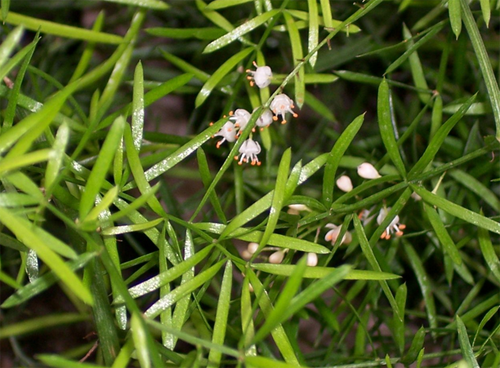
Asparagus fern planting techniques:
There are quite a lot of asparagus fern varieties, and it is not as delicate as Asparagus setaceus, which turns yellow at the slightest provocation. It is still very ornamental and suitable for potted planting, hanging baskets and wall decoration!
It is also called Wuzhu, tiger tail root, asparagus grass, etc. It has light green and white clusters of flowers, and its bright red berries are even more eye-catching.
It likes to grow in a cool, semi-shaded natural environment. Of course, when grown in pots it can still be given plenty of sunlight. It is also a very shade-tolerant plant, and there is absolutely no problem keeping it indoors!
The warm, humid weather of the south is quite suitable for growing asparagus fern, and it is also excellent as a courtyard decoration. How about choosing the foxtail asparagus fern? Planting it on both sides of a garden path, or growing it in a small flowerbed, are both fine!
Flowering time: May to June; fruiting time: August to October.
Asparagus fern is not cold-tolerant, that is certain. In winter it needs temperatures above 5°C to overwinter safely, and around 20°C is its optimal growing period. Some growers find their asparagus fern suddenly grows like crazy while being cared for.
Asparagus fern has very large tubers, and its root system is also relatively large, so it needs a wide, deeper flower pot for cultivation. For the soil, try to choose loose, fertile, well-drained sandy soil or humus soil!
For ground planting, generally choose a place that does not receive too much sunlight; growing it in semi-shade is also fine. Pay attention to applying thin fertilizer frequently so it can flower and fruit better. Of course, if you do not like its flowers, you can reduce the frequency of fertilizing!
1. About fertilizing
After newly planted seedlings have been in the ground for 40 days, you can begin fertilizing, and from then on always apply thin fertilizer frequently! If the seedlings are unstable, earth up around them, which means adding a little soil around the root system.
2. Light
Seedlings that have not yet grown strong should be given a little scattered light, then gradually increase the light. In the hot summer season, shade is needed, and direct sunlight is even more out of the question!
3. Watering
In normal care, pay attention to watering less and spraying more, keeping the environment slightly moist rather than the potting soil wet.
Pest and disease control:
1. Red spider mite
Hot, stuffy and humid conditions make it prone to disease.
Control: Clean the environment, destroy dead branches and fallen leaves rather than putting them in the potting soil. For those already affected, spray 25% chlordimeform aqueous solution at 500-1000 times dilution, once a week, for 2-3 consecutive times.
2. Aphids
This pest and disease, which most plants are prone to, is most effectively killed by spraying 40% dimethoate at 1000-1500 times dilution or mieyaling at 1000-1500 times dilution.
In severe cases, directly cut off the affected parts and take healthy branches for cuttings.
3. Root rot
Excessively wet potting soil and waterlogging make it prone to disease, and soil or fertilizer touching and injuring the plant can also cause it. Control methods: do good drainage work and scatter some quicklime powder around the diseased plant.
Propagation methods for asparagus fern:
Generally, in autumn the fully red fruits are harvested and piled together indoors to ferment, letting the fruit skin rot. Then they are placed in water to remove the flesh. Plump seeds can be sown immediately, or sown the following spring. Seeds stored in sand have the best germination rate. Do not let the seeds dry out, otherwise the germination rate will decrease!
1. Sowing introduction
Seeds can be sown directly in slightly moist sandy soil. Keep the soil slightly moist, place in a ventilated, shady spot, and spray water frequently. When the seeds germinate, place bamboo poles or wooden sticks beside the seedlings to let the seedlings climb and grow, which will help with later transplanting.
2. Transplanting
Newly transplanted seedlings should not be planted too deep, because they still have tubers to grow out; if planted deep they will not grow well. Many growers want them to grow more stably, but this idea is also not feasible!
That is all for the introduction to asparagus fern planting methods and propagation methods. Hurry and add some greenery to your home.
Overview of Asparagus cochinchinensis planting techniques
The shape of Asparagus cochinchinensis is more like a long bean pod, and its body is somewhat curved, as if it were a little shrimp, extremely cute. Of course, its body is not exactly a cute body; generally, well-grown Asparagus cochinchinensis can reach 18 cm in length, and its diameter can also be 2 cm wide. The surface is mostly yellow, and whether pale yellow or yellow-white, it is extremely vivid. In addition, the surface of Asparagus cochinchinensis has small wrinkles, and we can also see the fruit seeds inside. Now let us talk about content related to Asparagus cochinchinensis planting techniques.
Asparagus cochinchinensis planting techniques
[Site selection and land preparation]:
Select soil according to biological characteristics; choose sandy loam with deep soil layers, fertile soil and good drainage, or land rich in humus, as the cultivation site. Deeply plow the land, level it with a rake, then make high beds 130 cm wide. Deep plow about 30 cm, remove miscellaneous branches and so on, apply 2500-3500 kg of decomposed stable manure, 100 kg of cake fertilizer and 50 kg of superphosphate per mu, level and rake fine, then make high beds 150 cm wide and 20 cm high.
[Propagation methods]:There are two propagation methods for Asparagus cochinchinensis: seed propagation and division propagation. Division propagation is mostly used, and the survival rate is higher.
1. Seed propagation:
Every year in September-October, harvest when the fruits turn from green to red. After piling for fermentation, select large, plump seeds as seeds. The sowing period is divided into spring sowing and autumn sowing. Autumn sowing is in early September to early October; autumn sowing has a high germination rate, occupies land for a long time and requires more labor for management; spring sowing is in late March, occupies land for a short time and is convenient to manage.
Sowing method: Open horizontal furrows in the bed with a furrow spacing of 20-24 cm; furrow depth 5-7 cm, sowing width 6 cm, seed spacing 2-3 cm. Use 10-12 kg of seeds per mu. 1000 sq m of seedling raising can plant out 10000 sq m. After sowing, cover with compost or plant ash, then cover with fine soil level with the bed surface, and cover with rice straw on top to retain moisture. At a temperature of 17-20°C and with sufficient humidity, seedlings emerge 18-20 days after sowing. After germination, remove the covering grass. When the seedlings begin to emerge, shade them with a shed, or use crops such as corn for shading between the beds, and always keep the soil moist. When the seedlings are about 3 cm tall, weed and fertilize. In autumn, fertilize together with loosening the soil, mainly using human and livestock manure. Apply 1000-1500 kg per mu each time.
After more than one year, the seedlings can be planted out. Generally in October or before budding in spring, when the seedlings are 10-12 cm tall, plant out with soil. When lifting the seedlings, grade them by size and plant them separately. Open holes at a row spacing of 50 cm and plant spacing of 24 cm. First plant 2 rows of asparagus fern, reserve an intercropping row spacing of 50 cm, then plant another 2 rows of asparagus fern. When planting out, spread the tuberous roots evenly in all directions and cover with fine soil and press firm. In the reserved rows, corn or broad beans can be intercropped every year.
2. Division propagation:
Combined with harvesting, divide robust mother plants into several plants; each plant should carry 1-2 buds or 2-3 small tuberous roots as planting material. Plant at a spacing of 40 cm x 40 cm (after covering with soil, spray acetochlor to seal the grass seeds; after spraying, grass seeds can be prevented for 40 days). If farmyard manure is available at planting, it can be placed in the middle of the plant spacing, or some phosphate fertilizer can be added.
[Field management]:
1. Cultivation and weeding: Weed frequently. In the first half of the first year of planting, use manual weeding; in the second half of the year, you may use the special herbicide ametryn (do not use the small inner packet; the small packet contains 246 dimethyl, which can be mixed for field ridge grass) for safe weeding. Generally, 6 days after spraying, the grass turns yellow and dies.
2. Topdressing: After planting, together with cultivation and weeding, apply human and livestock manure water once each in March-April and June-July. You can also use 15 kg of urea (or compound fertilizer) per mu diluted with water and pour it on, once every month. In September-October, apply farmyard manure once and earth up. Thereafter, before budding each year (that is, before the Spring Festival), apply 2 000-2 500 kg of stable manure per mu, and the other two applications are the same as in the first year.
[Pest and disease control]:
Mainly red spider mite, which damages the leaves in May-June.
Control methods:
① In winter, pay attention to cleaning the garden, and bury deeply or burn dead branches and fallen leaves.
② Spray 0.2-0.3 degrees Baume lime sulfur mixture or use 25% chlordimeform aqueous solution at 500-1000 times dilution, once a week, for 2-3 consecutive times.
[Harvesting and processing]:
Asparagus fern uses the tuberous roots as medicine. It can be harvested 2-3 years after planting out, and the yield is higher after 4-5 years. From September to before budding the following spring, dig out the tuberous roots, remove the fibrous roots, wash clean, then boil in boiling water for 10-15 minutes (until the skin is easy to peel), take out and peel off the outer skin, bake until 80% dry, fumigate with sulfur for 10 hours, then sun-dry and it is done.
One excellent quality of Asparagus cochinchinensis is that its surface is somewhat transparent, very intriguing. Our country includes Asparagus cochinchinensis as a medicinal material; classified by nature and taste, it is assigned as cold in nature and bitter in taste. It can help women nourish yin, and can clear heat from the body. Of course, when men take Asparagus cochinchinensis it can also nourish the kidneys and counteract yin deficiency with fever in the body; it is indeed an excellent tonic. When elderly people consume Asparagus cochinchinensis it can also raise blood cells, and its effects on the body are praised endlessly. The above is the content related to Asparagus cochinchinensis planting techniques. I hope it can be helpful to everyone!
Asparagus Fern Planting Techniques and the Effects and Functions of Asparagus Fern
Asparagus Fern Planting Techniques and the Effects and Functions of Asparagus Fern
[Propagation and cultivation]
(1) Propagation: Mainly by sowing. Sow in holes in a shallow pot. If kept warm and moist at about 25°C, seedlings can emerge in about 15 days. Division propagation can also be used. When dividing, cut off the drooping old branches so they sprout new branch clusters again. Then divide and pot up.
(2) Cultivation: The method is simple, similar to that for Asparagus setaceus.
Medicinal effects of Asparagus cochinchinensis
Mainly treats yin deficiency with fever, cough with blood ejection, lung atrophy, lung abscess, sore throat, diabetes, constipation, and difficult urination. For internal use: decoct in water, 2-4 qian; or make into paste or pills or powder. Contraindicated for those with deficiency-cold diarrhea and cough caused by externally contracted wind-cold.
The tuberous root of Asparagus cochinchinensis is a commonly used Chinese medicine, with effects of nourishing yin and moistening dryness, and clearing fire and stopping cough.
1. Treating breast tumors. For general benign breast tumors, especially breast lobular hyperplasia, regardless of the size of the mass,
the effect is rapid, and most can be cured. Among 52 patients with breast lobular hyperplasia and fibroadenoma, after treatment 30 cases were clinically cured, 16 cases showed marked effect, 5 cases were effective, and 1 case was ineffective. It also has a certain short-term effect on breast cancer, manifested as the mass shrinking and becoming softer after medication; however, the long-term effect is not yet significant, manifested as reaching a standstill after a period of medication with no further obvious progress (the same is true for fibroma). In individual cases, even increasing the dose did not show obvious improvement. For breast tumors that have begun to ulcerate and bleed and for advanced breast cancer with widespread metastasis, the effect is poor.
Usage: Take 2 liang of fresh Asparagus cochinchinensis daily, peel off the outer skin, steam thoroughly over water, and take in 3 divided doses. It can also be made into tablets for internal use, or into injections for intramuscular or intravenous injection.
2. For dilating the cervix. 12 hours before artificial abortion, insert Asparagus cochinchinensis into the cervical canal, which can make the cervix dilate and soften naturally. According to observation of 84 cases, 94% had good results, and no case of infection was found. In cases of threatened abortion, after application, uterine contractions can start on their own and expel the contents of the uterine cavity; in cases of artificial abortion there is no such phenomenon.
Usage: Select 1 piece of Asparagus cochinchinensis of appropriate size and curvature (5-7 cm long, 0.3-0.6 cm in diameter) with a smooth, intact surface, tie a thread to the end, soak in 95% alcohol, and it can be used after 4 hours. During the procedure, disinfect according to routine, dilate the vagina, expose the external cervical os, grasp the threaded end of the Asparagus cochinchinensis with long forceps, and slowly insert the other end toward the cervical os until it reaches the internal os of the cervical canal. Pack 1 piece of gauze in the vagina to prevent the Asparagus cochinchinensis from falling out. After about 12 hours, curettage can be performed.
Processing methods
Asparagus cochinchinensis, in "Annotated Treatise on Cold Damage": "Remove the core." In "Leigong's Treatise on the Preparation and Processing of Drugs": "For all uses, remove one layer of outer skin, split open and remove the core." Tao Hongjing: "Steam, peel off the skin. Although sun-dried, it is still moist and difficult to pound; it must be sliced thinly and dried in the sun or baked over fire." In "Essential Prescriptions Worth a Thousand in Gold": "Wash clean, remove the core and skin." In "Illustrated Classic of Materia Medica": "For the root, split it into four, remove the core, first steam for about half a cooking time, and sun-dry. If left for a long time it still remains moist; when used as medicine, bake it again over a heated surface until dry." In "Prescriptions for Saving Lives": "Soak in hot water and remove the core." In "Complete Compendium of Benevolent Arts": "Moisten with water, steam briefly, remove the core." In "Original Materia Medica": "To remove the core, only soak with water and filter so that it is moistened all around; when the moisture has penetrated the flesh and it is soft, split and take it out slowly. Do not soak out the fatty liquid. Those who do not know this then soak it in hot water for a long time; though it becomes soft, its flavor and qi are all gone, and it is ineffective when used." In "Differentiation of Drug Meanings": "Flatten and pull out the core." Current practice: take the original medicinal material, remove impurities and those that are oily and black, wash quickly, or wash with alum water, sun-dry until half dry, cut into thin slices, and dry. 2. Fried Asparagus cochinchinensis, in "Danxi's Experiential Methods": "Stir-fry." Current practice: take clean slices of Asparagus cochinchinensis, place in a pot, stir-fry over gentle fire until slightly scorched, take out and let cool. 3. Honey-fried Asparagus cochinchinensis
In "Dietary Materia Medica": "Cook with honey." Current practice: take refined honey, dilute with an appropriate amount of boiling water, add clean slices of Asparagus cochinchinensis and mix well, let stand briefly, place in a pot, stir-fry over gentle fire until dark yellow and no longer sticky to the hand, then take out and let cool. For every 100 kg of Asparagus cochinchinensis slices, use 12 kg of refined honey.
Take clean slices of Asparagus cochinchinensis, moisten slightly with clear water, sprinkle with fine cinnabar powder and mix well, then sun-dry or air-dry. For every 100 kg of Asparagus cochinchinensis, use 0.15 kg of cinnabar, to clear the heart and relieve restlessness. Store in a dry container; fried Asparagus cochinchinensis, honey-fried Asparagus cochinchinensis and cinnabar-processed Asparagus cochinchinensis should be sealed and placed in a cool, dry place,
protecting against moisture, mold and insects.
Medicinal nature and taste
① "Classic of the Materia Medica": Bitter in taste, neutral.
② "Supplementary Records": Sweet, very cold, non-toxic.
③ "Materia Medica of Southern Yunnan": Cold in nature, sweet and slightly bitter in taste.
Meridian entry of the medicinal material
Enters the lung and kidney meridians.
1. "Materia Medica of Decoctions": Enters the hand taiyin and foot shaoyin meridians.
2. "Explanation of the Materia Medica": Enters the hand taiyin lung meridian and hand shaoyin heart meridian.
Usage and dosage
Internal use: decoct in water, 2-4 qian; make into paste or pills or powder.
Usage indications and contraindications
Those with deficiency-cold diarrhea and cough caused by externally contracted wind-cold should all avoid taking it.
1. "Collected Annotations on the Classic of the Materia Medica": Ophiopogon root and rehmannia serve as its guides.
2. "Rihuazi Materia Medica": Fritillaria serves as its guide.
3. "Correct Materia Medica": For deficiency-cold with false heat, and for loose stool due to spleen and kidney deficiency, it is most contraindicated.
Selected prescriptions
1. To treat cough: Ginseng, Asparagus cochinchinensis (core removed), and prepared rehmannia root in equal parts. Grind into fine powder, refine with honey into pills the size of cherries, and hold in the mouth to dissolve and take. ("Sancai Pill" from "Confucians' Duties to Their Parents")
2. To treat blood ejection and hemoptysis: Asparagus cochinchinensis 1 liang (soaked in water, core removed), licorice (honey-fried), apricot kernel (skin and tip removed, stir-fried until cooked), fritillaria (core removed, stir-fried), white poria (skin removed), and donkey-hide gelatin (wrapped, stir-fried with clam powder into beads) 0.5 liang each. Grind the above into fine powder, refine with honey into pills the size of bullets, hold one pill in the mouth to dissolve and swallow the saliva; up to 10 pills day and night. ("Asparagus cochinchinensis Pill" from "Effective Prescriptions")
3. To treat asthma in women, with vexing heat in the hands and feet, steaming bone disorder, night sweats, dry mouth with craving for drinks, and swelling of the face and eyes: Asparagus cochinchinensis 10 liang, ophiopogon root (core removed) 8 liang, raw rehmannia root 3 jin (take the juice as paste). Grind the above two ingredients into powder, and with the paste form pills the size of wutong seeds. Take 50 pills each time, decoct Xiaoyao San and send them down.
Remove licorice from Xiaoyao San and add ginseng. ("Asparagus cochinchinensis Pill" from "Collection of Prescriptions on Pathogenesis and Preserving Life from the Basic Questions")
4. To treat lung itching with cough, spitting saliva and foam, mild discomfort in the heart, and dry throat without thirst: Pound raw Asparagus cochinchinensis and take 1 dou of juice, 1 dou of wine, 1 sheng of maltose, and 4 he of aster, place in a copper vessel and decoct until it can be made into pills; take 1 pill the size of an apricot, up to 3 times a day. ("Supplementary Elbow-Back Prescriptions")
5. To treat blood deficiency and lung dryness, cracked skin, and the syndrome of lung atrophy with cough and pus and blood: Asparagus cochinchinensis, newly dug, in unlimited amount; wash clean, remove the core and skin, pound finely, squeeze out the juice and clarify it, filter out the coarse residue with cloth, and simmer over slow fire in a silver pot or clay pot into a paste. Use 1-2 spoonfuls each time, taken on an empty stomach with warm wine. ("Asparagus cochinchinensis Paste" from "True Tradition of Medicine")
6. To treat tonsillitis and sore throat: Asparagus cochinchinensis, ophiopogon root, isatis root, platycodon root and sophora tonkinensis root 3 qian each, licorice 2 qian, decoct in water and take. ("Shandong Chinese Herbal Medicine Manual")
7. To treat constipation due to dry heat in the large intestine in the elderly: Asparagus cochinchinensis 8 liang; ophiopogon root, angelica, hemp seed and raw rehmannia root 4 liang each. Make into a paste and preserve with refined honey. Take 10 teaspoons mixed with plain warm water each morning and evening. ("Fang Family Treasures")
8. To treat hernia: Fresh Asparagus cochinchinensis 5 qian to 1 liang (peeled). Decoct in water and take orally with a little wine as a guide. ("Yunnan Chinese Herbal Medicine")
9. To promote lactation: Asparagus cochinchinensis 2 liang. Stew with meat and take. ("Yunnan Chinese Herbal Medicine")
Pharmacological effects
Chinese medicinal materials use the tuberous root of the Liliaceae plant Asparagus cochinchinensis. It has the following pharmacological effects:
① Antioxidant, delaying aging. Asparagus cochinchinensis extract has the effect of delaying aging, and Asparagus cochinchinensis polysaccharides have free radical scavenging and anti-lipid peroxidation activity.
② Lowering blood sugar. Asparagus cochinchinensis hypoglycemic capsules can significantly lower blood sugar in alloxan hyperglycemic mice.
③ Antibacterial. In vitro, the decoction has varying degrees of inhibitory effect on Bacillus anthracis, alpha- and beta-hemolytic streptococci, Corynebacterium diphtheriae, diphtheroid bacilli, Diplococcus pneumoniae, Staphylococcus aureus, Staphylococcus citreus, Staphylococcus albus and Bacillus subtilis.
④ Anti-tumor. In in vitro tests (methylene blue method and Warburg respirometer measurement), Asparagus cochinchinensis has a certain inhibitory effect on the dehydrogenase of leukocytes from patients with acute lymphocytic leukemia, chronic myelocytic leukemia and acute monocytic leukemia, and can also inhibit the respiration of leukocytes from patients with acute lymphocytic leukemia.
⑤ Antitussive and expectorant. Verified by animal experiments, it has antitussive and expectorant effects.
Nutrition
The tuberous root of Asparagus cochinchinensis contains 33% starch, 4% sucrose and various other nutrients. The whole plant of Asparagus cochinchinensis contains asparagine (asparagus fern element), beta-sitosterol, steroidal saponins, mucilage, sugar aldehyde derivatives, 17 kinds of amino acids, rich vitamins, inorganic elements, stigmasterol, lactones, flavonoids, anthraquinones and cardiac glycosides and other components. The tuberous root contains 19 kinds of amino acids such as citrulline, serine, threonine, proline and glycine, beta-sitosterol, 5-methoxymethylfurfural, glucose and fructose. The tuberous root also contains various oligosaccharides: trisaccharide, tetrasaccharide, pentasaccharide, hexasaccharide, octasaccharide, nonasaccharide and decasaccharide.