What are the alternative names and propagation methods for evening primrose?
The flowers of evening primrose are so beautiful to look at; I really want to grow a large patch of evening primrose at home, the flowers are truly enchanting. What are the propagation methods for evening primrose? Does evening primrose have any other names?
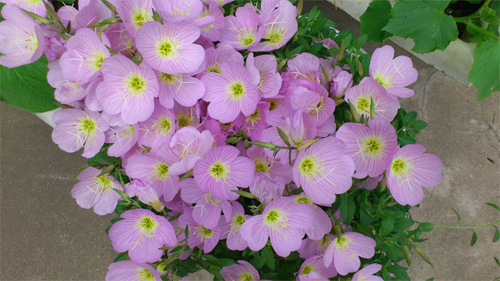
Propagation methods for evening primrose:
1. Sowing
Evening primrose can be sown in spring, summer or autumn, and spring is the most suitable. It can be sown as long as the sandy soil is moist. Keep the soil slightly moist, and it will germinate in 10-15 days!
2. Transplanting
Although it can be propagated once it grows four true leaves, it is recommended to transplant when it has six true leaves. When it grows to about 30 cm, add soil around the root crown, otherwise it will not stand firm. After transplanting and setting the seedlings, apply a light fertilizer once; either organic fertilizer or urea is fine!
3. Fertilizing
Evening primrose has a well-developed main root. Generally, after the plant has established in a pot, pinch out the growing tips to encourage branching and more flowers. During the growing season, depending on the vigor of growth, apply a dilute organic or inorganic liquid fertilizer once every two weeks, and keep the potting soil moist at all times.
4. After-bloom care
After blooming, promptly remove spent flowers to reduce nutrient consumption, in the hope of blooming again.
For home flower growing, sow indoors in pots in early spring. Because the seeds are small, do not sow too densely, and do not cover with too much soil. When the seedlings grow 6 true leaves, lift them out as a whole clump and divide them with soil for planting in the ground or in pots. They will bloom in May and continue until the end of October.
Alternative names for evening primrose:
Evening primrose also has very pleasant alternative names, such as: night-blooming evening primrose, evening cherry herb, etc. It generally blooms in the evening, and of course fades at dawn, otherwise why would it be called evening primrose!
However, there is a variety called “showy evening primrose” that likes to bloom during the day. When in bloom, it looks like pink butterflies fluttering and dancing among the grass! When it grows into a large clump, it is especially, especially beautiful!
Its flowering period is very long, and it can be seen from April to October. It does not grow very tall, but the flower colors are brilliant.
Planted in the yard, it can propagate a large patch by itself! It can self-sow, and propagation by seed is also very easy. Except in winter, it can be sown in all other seasons!
Evening primrose is just this magical, this lovable. Hurry and add some color to your little garden!
How to grow evening primrose (night-blooming evening primrose, evening star)
Evening primrose (night-blooming evening primrose, evening star)
Scientific name: oenothera biennis
Alternative names: evening star, mountain sesame, wild sesame
Family and genus: Onagraceae
Morphological characteristics: Biennial herb, 1 m tall. When grown as an annual, the plant is shorter. The whole plant is hairy, the stem is upright, and the lower part is much branched. Leaves lanceolate to ovate. Flowers solitary in leaf axils, petals 4, obcordate, flowers yellow, flower diameter 5 cm.
Ecological habits: Sun-loving, cold-tolerant, drought-resistant, intolerant of waterlogging, tolerant of poor soil, highly adaptable.
Flowering period: May to September, opening at dusk and wilting in the morning.
Flower language: an unyielding heart, a free heart. There is a saying that when a woman gives evening primrose to a man, it represents “silent love”; there is also a common saying that evening primrose represents an unyielding heart and a free heart; some also say the flower language of evening primrose is “a beauty after bathing” magic.
Landscape use: Opens at night, with a pleasant fragrance, suitable for accenting night scenes. Sunny slopes, forest edges, courtyards, flower beds and roadsides.
Species identification: showy evening primrose (red evening primrose) O. speciosa blooms during the day, with pink flowers, and a single stem blooms for about 10 days. In the Jiangsu-Zhejiang-Shanghai region it is often used as a flowering groundcover under forests and at forest edges, and in flower pots, flower beds and flower borders.
Medicinal value: Evening primrose is the most important nutritional medicine discovered this century. It can treat many diseases, regulate lipid substances in the blood, and has a significant effect on coronary artery infarction, atherosclerosis and cerebral thrombosis caused by high cholesterol and high blood lipids.

Evening primrose Oenothera erythrosepala Borb. Evening primrose gallery: how to grow evening primrose / how to propagate evening primrose
Evening primrose profileEvening primrose Oenothera erythrosepala Borb.
How to grow evening primrose and precautions; introduction to evening primrose
Evening primrose is a perennial herb in the Onagraceae family, often cultivated as a 1- to 2-year-old flower. The seeds are used as medicine. It originated in various countries of North and South America, and after being introduced to Europe, it spread successively around the world. In China it is mainly grown in Jilin, Heilongjiang and Liaoning provinces and other places. Evening primrose is a medicinal plant with many uses. The seed oil is not only a medicine, but also a nutritional supplement and an ointment for refined cosmetics. The flowers may also be used to extract aromatic oil and concrete. Like Epiphyllum, it opens at night, hence the name "night-blooming evening primrose." Its fragrance is pleasant and it is suitable for accenting night scenes. It can be used with other greening materials for landscaping in gardens, courtyards, flower beds and roadsides.
It is highly adaptable, acid-tolerant and drought-tolerant, and not demanding about soil. It can generally grow in neutral, slightly alkaline or slightly acidic soil, and in well-drained, loose soil. If the soil is too wet, the roots are prone to disease. In the north it is an annual plant, and south of the Huai River it is a biennial plant. It is the most important nutritional medicine discovered this century. It can treat many diseases, regulate lipid substances in the blood, and has a significant effect on coronary artery infarction, atherosclerosis and cerebral thrombosis caused by high cholesterol and high blood lipids.
Morphological characteristics of evening primrose
[Original form] Perennial herb. Main root well developed, woody. Stem upright, up to 1 m tall, simple or rarely branched at the base, sparsely covered with short white hairs. Basal leaves clustered, stalked; stem leaves alternate, short-stalked or sessile, lanceolate or linear-lanceolate, base narrowly cuneate, apex acuminate, both surfaces covered with short white hairs, veins and margins also with long soft hairs, margins with irregular sparse serrations. Flowers bisexual, solitary at the tips of branches and in leaf axils, bright yellow, sessile, opening at night; calyx tube about 4 cm long, lobes 4, lanceolate, often two joined when flowering, recurved; petals 4, obovate or obcordate; stamens 8; ovary inferior, 4-loculed, stigma 4-lobed. Capsule long cylindrical, slightly 4-angled, 2-3 cm long, covered with short white soft hairs. Seeds brown, irregularly triangular. Flowering period July to September. Fruiting period August to October.
Plant height 1.5-2 m, root cylindrical, stem upright, branched. Seedling stage rosette-shaped, base with long red hairs. Leaves alternate, lower stem leaves straight and stalked, upper leaves nearly sessile; leaf blades oblong, lanceolate, 6-9 cm long, 1.5-3 cm wide, margins with sparse fine serrations, both surfaces covered with white soft hairs. Flowers solitary at the tips of branches and in leaf axils, arranged in loose spikes, calyx tube slender, apex 4-lobed, lobes reflexed; petals 4, yellow, stamens 8, 4 opposite the petals. Pistil 1, stigma lobed. Capsule cylindrical, apex pointed, outer end pointed, externally covered with long white hairs, naturally splitting after maturity. Seeds small, brown, irregularly triangular.
Upright biennial stout herb, basal rosette leaves close to the ground; stem 50-200 cm tall, unbranched or branched, covered with curved soft hairs and spreading long hairs (hair bases blister-like), often mixed with glandular hairs at the upper ends of stems and branches. Basal leaves oblanceolate, 10-25 cm long, 2-4.5 cm wide, apex acute, base cuneate, margins sparsely and irregularly shallowly obtusely toothed, lateral veins 12-15 per side, both surfaces covered with curved soft hairs and long hairs; petiole 1.5-3 cm long. Stem leaves elliptic to oblanceolate, 7-20 cm long, 1-5 cm wide, apex acute to shortly acuminate, base cuneate, margins with 5-19 sparse obtuse teeth per side, lateral veins 6-12 per side, both surfaces covered with curved soft hairs and long hairs, especially the lower surface and leaf margins of upper stem leaves often mixed with glandular hairs; petiole 0-15 mm long. Inflorescence spicate, unbranched, or with secondary lateral inflorescences below the main spike; bracts leaf-like, reaching 1/2 the length of the flower in bud, becoming elliptic-lanceolate when grown, decreasing in size from bottom to top, nearly sessile, 1.5-9 cm long, 0.5-2 cm wide, persistent in fruit. Flower buds conical-oblong, 1.5-2 cm long, 4-5 mm thick, apex with a beak about 3 mm long; floral tube 2.5-3.5 cm long, 1-1.2 mm in diameter, yellow-green or tinged red when flowering, covered with mixed soft hairs, spreading long hairs and short glandular hairs; falling after flowering; sepals green, sometimes tinged red, oblong-lanceolate, 1.8-2.2 cm long, 4-5 mm wide at the lower broader part, apex abruptly contracted into a tail shape, 3-4 mm long, upright in bud, appressed to each other, reflexed from the base when open, but again turned upward in the middle, hair covering same as the floral tube; petals yellow, rarely pale yellow, broadly obovate, 2.5-3 cm long, 2-2.8 cm wide, apex slightly emarginate; filaments nearly equal in length, 10-18 mm long; anthers 8-10 mm long, about 50% of pollen developed; ovary green, cylindrical, 4-angled, 1-1.2 cm long, 1.5-2.5 mm thick, densely covered with spreading long hairs and short glandular hairs, sometimes mixed with curved soft hairs; style 3.5-5 cm long, exserted portion beyond the floral tube 0.7-1.5 cm long; stigma surrounded by anthers. When flowering, pollen is directly deposited on the stigma lobes, lobes 3-5 mm long. Capsule conical-cylindrical, narrowing upward, 2-3.5 cm long, 4-5 mm in diameter, upright. Green, hair covering same as the ovary, but gradually sparser, with obvious angles. Seeds arranged horizontally in the fruit, dark brown, prismatic, 1-1.5 mm long, 0.5-1 mm in diameter, angular, each face with irregular pits.
It is a perennial herb in the Onagraceae family, often cultivated as a 1- to 2-year-old flower. The plant is upright or ascending, sparsely branched, with thick long hairs. Lower leaves linear-oblanceolate, stem leaves lanceolate, sessile. Spicate inflorescence, unbranched, or with secondary lateral inflorescences below the main spike, flowers yellow, opening from evening to night, with a delicate fragrance. The upper part of the fruit is often thickened. Flowering period July to September.
Annual plants 60-90 cm tall, biennial plants 100-140 cm tall. Basal leaves clustered in a rosette, stem leaves alternate, lower leaves narrowly long lanceolate, upper leaves short and small. Stem upright, branched. Before bolting the root is fleshy, white and enlarged; after bolting the main root becomes woody. Flowers yellow. Flower diameter 4-5 cm. Flowers solitary in leaf axils, pale yellow, 5 cm in diameter. Capsule cylindrical, seeds very small. Petals obcordate, flowering period June to October, fruit ripening period August to November. Can be direct-sown or raised as seedlings and transplanted. Direct-sown seeds need low-temperature pretreatment, then sowing, sowing rate 0.2 g/sq m, cover with about 0.5 cm of soil after sowing.
Ecological habits of evening primrose
Highly adaptable, not demanding about soil, cold-tolerant, drought-tolerant, tolerant of poor soil, sun-loving, intolerant of waterlogging, and requiring a certain low-temperature stimulus to bolt and flower.
For courtyard cultivation, evening primrose performs best in a ventilated, open place with loose, fertile, well-drained sandy loam. It can also be grown in pots on a balcony for viewing. Under the moonlight in the quiet night, waves of delicate fragrance make one feel refreshed. Evening primrose has strong self-sowing ability. After one planting, its self-sown seedlings can grow by themselves every year and bloom continuously.
Growing environment
Evening primrose mainly grows on sandy riversides, but it has also been found in high mountains and deserts. The flowers of evening primrose slowly open in the evening and wither at dawn, making it a plant that blooms only for the moon. Native Americans were the first people to use evening primrose for therapeutic purposes. They used evening primrose to treat trauma, dermatitis and other diseases. In the 19th century, evening primrose was brought to Europe. Because of its efficacy in treating many diseases, evening primrose quickly earned the reputation of [King's cure all].
In Northeast China, the plants were originally all wild. In order to meet domestic and foreign market demand for evening primrose oil, large-scale artificial cultivation has been carried out in recent years. Large areas have been planted in Jilin, Liaoning and Inner Mongolia, and through scientific research, high-yield, high-oil evening primrose has been successfully developed.
There are about 100 species in the same genus. Commonly cultivated ones include: O. drummondii; O. odorata; O. speciosa, etc.
Variety classification of evening primrose: beach evening primrose(Flora of Fujian) sea hibiscus (Fujian)
Upright or prostrate annual to perennial herb, with a main root not more than 1 cm in diameter; stem 20-50 cm long, unbranched or branched, covered with white or purplish curved soft hairs and long soft hairs, sometimes with glandular hairs in the upper part. Basal leaves gray-green, narrowly oblanceolate to elliptic, 5-12 cm long, 1-2 cm wide, apex acute, base gradually narrowed or abruptly narrowed to the petiole, margins sparsely shallowly toothed to entire, both surfaces covered with white or purplish curved soft hairs and long soft hairs; petiole 0-4 mm; stem leaves narrowly obovate to oblanceolate, sometimes elliptic or ovate, 3-7 cm long, 0.5-1.8 cm wide, apex acute to rounded, base gradually narrowed or abruptly narrowed to the petiole, margins sparsely shallowly toothed to entire, rarely pinnately lobed in the lower part, hair covering same as basal leaves; petiole 0-3 mm long. Inflorescence spicate, sparsely arranged at the tips of stems and branches, sometimes with a few branches in the lower part, usually opening one flower each evening; bracts narrowly elliptic to narrowly oblanceolate, 1-5 cm long, 0.5-1.5 cm wide. Flower buds conical-lanceolate or narrowly ovate, 1.5-2.5 cm long, 7-11 mm in diameter; floral tube 2.5-5 cm long, about 1.5 mm in diameter, curved and extended upward before opening, densely covered with curved soft hairs and long soft hairs, often mixed with glandular hairs; sepals green or yellow-green, margins tinged red when open, lanceolate, 2-3 cm long, hair covering same as the floral tube, free sepal teeth at apex 1-3 mm long; petals yellow, broadly obovate, 2-4 cm long, 2.5-4.5 cm wide, apex truncate or slightly emarginate; filaments 1-2.2 cm long; anthers 5-12 mm long, about 90%-100% of pollen developed; ovary 1.2-2.5 cm long, about 1.5 cm in diameter, densely covered with curved soft hairs and long soft hairs, sometimes mixed with glandular hairs; style 5-7 cm long, exserted portion beyond the floral tube 2.5-3.5 cm long; stigma higher than the anthers when flowering, lobes 5-10 mm long. Capsule cylindrical, 2.5-5.5 cm long, 2-3 mm in diameter, hair covering same as on the ovary. Seeds elliptic, 1-1.7 mm long, 0.5-0.8 mm in diameter, brown, surface with neat pits. Flowering period May to August, fruiting period August to November.
Native to the Atlantic coast and Gulf of Mexico coast of the United States. Cultivated and naturalized in Peru, Chile, Australia, the United Kingdom, Spain, Israel, Iraq, Egypt, South Africa and other countries. In China it is cultivated in Fujian, Guangdong and other places, and has become naturalized along the coastal seashore.
Yellow evening primrose(Flora of Yunnan) red-sepal evening primrose (Manual of Economic Plants), evening primrose (Seed Plant Manual of Southern Jiangsu)
Upright biennial to perennial herb, with a thick main root; stem 70-150 cm tall, 6-20 mm thick, unbranched or branched, often densely covered with curved soft hairs and sparsely spreading long hairs (hair bases red and blister-like), often densely mixed with short glandular hairs in the upper part of stems and branches. Basal leaves rosette-shaped, oblanceolate, 15-25 cm long, 4-5 cm wide, apex acute or slightly obtuse, base gradually narrowed and decurrent into wings, margins with distant shallow wavy teeth from bottom to top, lateral veins 5-8 pairs, white or red, upper part dark green to bright green, both surfaces covered with curved soft hairs and long hairs; petiole 3-4 cm long; stem leaves spirally alternate, narrowly elliptic to lanceolate, decreasing in size from bottom to top, 5-13 cm long, 2.5-3.5 cm wide, apex acute or slightly obtuse, base cuneate, margins sparsely distant tooth-like projections, lateral veins 8-2 pairs, hair covering same as basal leaves; petiole 2-15 mm long, shorter upward. Inflorescence spicate, borne at the tips of stems and branches, densely covered with curved soft hairs, long hairs and short glandular hairs; bracts ovate to lanceolate, sessile, 1-3.5 cm long, 5-12 mm wide, hair covering same as on the inflorescence. Flower buds conical-lanceolate, obliquely spreading, 2.5-4 cm long, 5-7 mm in diameter, apex with a beak about 6 mm long; floral tube 3.5-5 cm long, 1-1.3 mm thick, sparsely covered with curved soft hairs, long hairs and glandular hairs; sepals yellow-green, narrowly lanceolate, 3-4 cm long, 5-6 mm wide, apex tail-shaped, appressed to each other, reflexed when flowering, hair covering same as the floral tube but denser; petals yellow, broadly obovate, 4-5 cm long, 4-5.2 cm wide, apex obtuse-rounded or slightly emarginate; filaments nearly equal in length, 1.8-2.5 cm long; anthers 10-12 mm long; about 50% of pollen developed; ovary green, cylindrical, 4-angled, 8-12 mm long, 1.5-2 mm in diameter, hair covering same as on the sepals; style 5-8 cm long, exserted portion beyond the floral tube 2-3.5 cm long; stigma exserted beyond the anthers when flowering, lobes 5-8 mm long. Capsule conical-cylindrical, narrowing upward, 2.5-3.5 cm long, 5-6 mm in diameter, with longitudinal angles and red grooves, hair covering same as the ovary but sparser. Seeds prismatic, 1.3-2 mm long, 1-1.5 mm in diameter, brown, angular, each face with irregular pits, about half aborted. Flowering period May to October, fruiting period August to December.
This species originated as a hybrid from cultivation or naturalization in Europe, and was spread from the United Kingdom to garden cultivation in various countries in 1860. The earliest name of this species was described by Marlius (1875) based on cultivated material collected in Brazil by Glaziou in 1868. It then spread rapidly around the world and escaped into the wild. In China it is commonly cultivated in Northeast, North, East (including Taiwan, China) and Southwest China, and has escaped into the wild. It often grows in open wasteland and along field roadsides.
The flowers are large and beautiful, with a long flowering period, cultivated for ornament; the seeds can be pressed for oil, for food and medicine.
Cutleaf evening primrose(Flora of Taiwan)
Upright to outwardly leaning annual or perennial herb, with a main root; stem 10-50 cm long, often branched, covered with curved soft hairs, sometimes mixed with long soft hairs, and often mixed with glandular hairs in the upper part of the stem. Basal leaves linear-oblanceolate, 5-15 cm long, 1-2.5 cm wide, apex acute, base cuneate, margins pinnately parted, often entire toward the apex; petiole 0.5-1.5 cm long; stem leaves narrowly obovate or narrowly elliptic, 4-10 cm long, 0.7-3 cm wide, apex acute or slightly obtuse, base cuneate, lower part often pinnately lobed, middle and upper parts toothed, upper part nearly entire; bracts leaf-like, narrowly oblong or narrowly ovate, 2-6 cm long, 1-2 cm wide, nearly horizontally spreading, apex acute, base obtuse to cuneate, margins sparsely shallowly toothed or with a few pinnate lobes at the base; all leaves and bracts green, covered with curved soft hairs and long soft hairs, the upper ones often mixed with glandular hairs. Inflorescence spicate, composed of a few flowers, borne at the tips of stems and branches, sometimes with a few branches in the lower part of the main spike, opening one flower per spike near sunset each day. Flower buds oblong-ovate, 2-3 cm long, 3-5 mm in diameter, often curved and extended upward before opening. Floral tube yellowish, tinged red when fully open, 1.5-3.5 cm long, about 1 mm in diameter, often covered with long soft hairs and glandular hairs, sometimes mixed with curved soft hairs; sepals green or yellow-green, reflexed when open, turning red, especially red at the margins, free sepal teeth at apex in bud 0.5-3 mm long, covered with curved soft hairs and long soft hairs; petals pale yellow to yellow, broadly obovate, 0.5-1.3(-2) cm long, 0.7-1.2(-1.8) cm wide, apex truncate to slightly emarginate; filaments 0.3-1.3 cm long; anthers 2-6 mm long, about 50% of pollen developed; ovary 1-2.3 cm long, about 1.5 mm in diameter, covered with curved soft hairs and long soft hairs, sometimes mixed with glandular hairs; style 2-5 cm long, exserted portion beyond the floral tube 0.3-1.4 cm long; stigma surrounded by anthers, lobes 2.5-5 mm long, pollen directly deposited on the lobes. Capsule cylindrical, narrowing toward the apex, 2.5-5 cm long, 2-4 mm in diameter. Seeds in 2 rows per locule, elliptic to nearly spherical, 0.8-1.8 mm long, brown, surface with neat pits. Flowering period April to September, fruiting period May to November.
Native to the eastern to central United States, later introduced to Europe, East Asia, Australia and South Africa for cultivation, and rapidly escaped into the wild. In China it has escaped into the wild in northern Taiwan, China, at altitudes of 50-1300 m, growing on coastal sandy beaches or low-altitude open wasteland and field edges.
Long-fruited evening primrose Oenothera macrocarpa Nutt. (Fraser's Cat. no. 56. 1813; Pursh, Fl. Amer. Sept. 2: 734. 1814.), native to the eastern to central United States, cultivated in China, but no naturalization has been reported. This species is extremely similar to cutleaf evening primrose, and some authors even merge them into one species. Their relationship awaits future study.
Curved-spike evening primrose(newly proposed)
Upright to prostrate biennial herb, with a main root; stem 20-70 cm tall, 3-10 mm thick, unbranched or, when prostrate, producing oblique or arcuate branches from the rosette leaf cluster, densely covered with appressed silky curved soft hairs and mixed with sparse long hairs, sometimes mixed with glandular hairs in the upper part. Basal leaves gray-green or dark green, narrowly oblanceolate, 10-30 cm long, 5-25 mm wide, apex acute, base gradually narrowed, margins with distant shallow teeth, lower part with wavy teeth, lateral veins 10-12 pairs, both surfaces covered with silky curved soft hairs; petiole 2-4 cm long. Stem leaves gray-green or dark green, narrowly oblanceolate or narrowly elliptic, 5-20 cm long, 5-27 mm wide, apex acute, base cuneate, margins with distant shallow or obtuse teeth, lateral veins 8-10 pairs, both surfaces appressed with silky curved soft hairs. Inflorescence spicate, borne at the tips of stems and branches, unbranched, the upper part often more or less curved and ascending, rarely nearly upright; bracts sessile, narrowly lanceolate to narrowly ovate or elliptic, 2-10 cm long, 3-20 mm wide, often longer than the capsule in fruit, apex acute, base cuneate. Flower buds oblong to narrowly ovate, 0.8-1.5 cm long, 3-5 mm in diameter; floral tube yellow-green, turning red when flowering, or with red spots, 1.5-4 cm long, 1-1.5 mm in diameter, appressed with silky curved soft hairs and sparse long hairs with blister-like bases and glandular hairs; sepals green to yellow, lanceolate, 1-1.7 cm long, 2.5-4 mm wide, appressed to each other, apex free, reflexed when flowering, 2.5-4 mm long, hair covering same as the floral tube; petals yellow or pale yellow, broadly obovate, 0.7-2 cm long, 0.8-2 cm wide, apex slightly emarginate; filaments 8-15 mm long; anthers 4-7 mm; about 50% of pollen developed; ovary 0.8-1.2 cm long, 1.5-2 mm in diameter, densely covered with appressed silky curved soft hairs and mixed with long hairs and glandular hairs; style 2-4.5 cm long, exserted portion beyond the floral tube 4-8 mm long, stigma surrounded by anthers, lobes 3-5 mm long, pollen directly deposited on the lobes. Capsule conical-cylindrical, 1.5-4 cm long, 4-8 mm in diameter. Apex gradually narrowed, dark green, sometimes with red stripes or red spots, becoming red-brown when dry. Seeds short wedge-shaped, 1-1.2 mm long, 0.8-1.1 mm in diameter, dark brown, angular, surface with irregular pits. Flowering period July to September, fruiting period September to October.
Native to North America, widely naturalized in Europe, and sporadically escaped into the wild in Asia. In China it is cultivated in Fujian and has escaped into the wild. It grows on sunny barren slopes and along field roadsides.
Small-flowered evening primrose(newly proposed)
Upright biennial herb, with a main root; stem 30-150 cm tall, unbranched or branched, sparsely covered with curved soft hairs, long hairs and glandular hairs, sometimes only curved soft hairs in the lower part, and long hairs with blister-like bases in the upper part. Basal leaves narrowly oblanceolate or narrowly elliptic, bright green, 10-25 cm long, 1-3.5 cm wide, apex acute, base gradually narrowed, margins shallowly toothed, lower part with shallow wavy teeth, lateral veins 10-12 pairs, white or red, both surfaces sparsely covered with curved soft hairs; petiole 5-10 mm long; stem leaves lanceolate to narrowly ovate or narrowly elliptic, 5-16 cm long, 1-2.8 cm wide, apex acute or long acute, base gradually narrowed or cuneate, margins shallowly toothed, lateral veins 6-8 pairs, both surfaces sparsely covered with curved soft hairs; petiole 0-5 mm. Inflorescence spicate, borne at the tips of stems and branches, sometimes branched, upright or curved and ascending; bracts narrowly ovate to lanceolate, 1.5-5 cm long, 0.5-1.5 cm wide, sparsely covered on both surfaces with curved soft hairs, glandular hairs and long hairs. Flower buds narrowly oblong, 0.8-1.5 cm long, 3-5 mm in diameter; floral tube pale yellow, 2.5-4 cm long, about 1 mm in diameter, nearly hairless, or with glandular hairs and long hairs; sepals green or yellow-green, slightly turning red when open, narrowly lanceolate, 0.8-1.7 cm long, 2.5-4 mm wide, appressed to each other, apex free, 1-5 mm long, reflexed when open, hair covering same as the floral tube; petals yellow or pale yellow, apex slightly emarginate; filaments 7-13 mm long; anthers 3.5-6 mm long, pollen about 7-13 mm long; anthers 3.5-6 mm long, about 50% of pollen developed; ovary conical-cylindrical, 1-1.3 cm long, 1.5-2 mm in diameter, covered with curved soft hairs, mixed with sparse long soft hairs and glandular hairs; style 2.5-5 cm long, exserted portion beyond the floral tube 0.2-1 cm long; stigma lower than or surrounded by anthers, lobes 2.5-6 mm long. Pollen directly deposited on the lobes. Capsule conical-cylindrical, 2-4 cm long, 3.5-5 mm in diameter, apex gradually narrowed, green, turning black when dry, hair covering same as the ovary but sparser, even gradually becoming hairless. Seeds brown or black, prismatic, 1-1.6 mm long, 0.5-1 mm in diameter, angular, each face with irregular pits. Flowering period July to September, fruiting period October.
Native to the eastern and central United States, cultivated and escaped into the wild in Europe, eastern Asia, New Zealand and South Africa. In China it has escaped into the wild in Northeast China (Liaoning). It grows on barren slopes and moist places by ditches.
Pink evening primrose(List of Seed Plants of Yunnan)
Perennial herb, with a thick main root (up to 1.5 cm thick); stems often clustered, ascending, 30-50 cm long, much branched, covered with curved soft hairs, densely so when young in the upper part, sometimes mixed with long soft hairs, lower part often purplish red. Basal leaves close to the ground, oblanceolate, 1.5-4 cm long, 1-1.5 cm wide, apex acute or obtuse-rounded, gradually or abruptly narrowed from the middle, irregularly pinnately parted and decurrent to the petiole; petiole pale purplish red, 0.5-1.5 cm long, basal leaves withered at flowering. Stem leaves gray-green, lanceolate (outline) or oblong-ovate, 3-6 cm long, 1-2.2 cm wide, apex obtuse-acute in the lower part, acute to acuminate in the middle and upper parts, base broadly cuneate and abruptly contracted and decurrent to the petiole, margins with tooth-like projections, base finely pinnately lobed, lateral veins 6-8 pairs, both surfaces covered with curved soft hairs; petiole 1-2 cm long. Flowers solitary in the leaf axils at the tips of stems and branches, opening near sunrise; flower buds green, conical-cylindrical, 1.5-2.2 cm long, apical sepal teeth contracted into a beak; floral tube pale red, 5-8 mm long, covered with curved soft hairs, sepals green, tinged red, lanceolate, 6-9 mm long, 2-2.5 mm wide, apical sepal teeth 1-1.5 mm long, abaxially covered with curved soft hairs, reflexed when flowering and then turned upward again; petals pink to purplish red, broadly obovate, 6-9 mm long, 3-4 mm wide, apex obtuse-rounded, with 4-5 pairs of pinnate veins; filaments white to pale purplish red, 5-7 mm long; anthers pink to yellow, oblong-linear, about 3 mm long, about 50% of pollen developed; ovary narrowly elliptic at flowering, about 8 mm long, together with pedicel 6-10 mm long, densely covered with curved soft hairs; style white, 8-12 mm long, exserted portion beyond the floral tube 4-5 mm long; stigma red, surrounded by anthers, lobes about 2 mm long, pollen directly deposited on the lobes. Capsule club-shaped, 8-10 mm long, 3-4 mm in diameter, with 4 longitudinal wings, angled between the wings, apex with a short beak; pedicel 6-12 mm long. Seeds numerous per locule, nearly transversely clustered, oblong-obovate, 0.7-0.9 mm long, 0.3-0.5 mm in diameter. Flowering period April to November, fruiting period September to December.
Native to southern Texas in the United States to Mexico, also found in the southwestern United States, Central America and the warm temperate mid-mountain zones of South America. Cultivated and escaped into the wild in Eurasia (such as the Himalayan region of Asia, India, Nepal, Myanmar, etc.), South Africa and elsewhere. In China it has escaped into the wild in Zhejiang, Jiangxi (Lushan), Yunnan (Kunming) and Guizhou. It grows in wasteland grassland and semi-shaded places by ditches at altitudes of 1000-2000 m. It has strong reproductive capacity and becomes a harmful weed difficult to eradicate.
The root is used as medicine and has anti-inflammatory and blood pressure-lowering effects.
Evening star(Illustrated Handbook of Higher Plants of China) evening primrose (Flora of Yunnan), linear-leaved evening primrose (Yunnan), night-blooming evening primrose (Anhui, Zhejiang), mountain sesame (Yunnan)
Upright or outwardly leaning annual or biennial herb, with a main root; stem unbranched or obliquely producing branches from the rosette leaf cluster, 30-100 cm tall, covered with curved soft hairs and spreading long hairs, and also mixed with glandular hairs in the upper part. Basal leaves narrowly elliptic to oblanceolate, 10-15 cm long, 0.8-1.2 cm wide, apex gradually narrowed and acute, base cuneate, margins with distant shallow teeth, both surfaces and margins with curved soft hairs and long soft hairs; stem leaves sessile, green, 6-10 cm long, 5-8 mm wide, decreasing in size from bottom to top, apex gradually narrowed and acute, base heart-shaped, margins with 6-10 tooth-like projections per side, both surfaces covered with curved soft hairs, midvein and margins with long soft hairs, lateral veins indistinct. Inflorescence spicate, flowers sparse in the leaf axils above the middle of stems and branches; bracts leaf-like, ovate-lanceolate to narrowly ovate, 2-3 cm long, 4-7 mm wide, apex acute, base heart-shaped, margins sparsely toothed or entire, both surfaces covered with curved soft hairs and glandular hairs, midvein and margins with long hairs. Flower buds green or yellow-green, upright, oblong or lanceolate, 1.5-3 cm long, up to 7 mm in diameter, apex with upright or forked sepal teeth, 2-3 mm long, densely covered with curved soft hairs, glandular hairs and sparse long hairs; floral tube 2.5-4.5 cm long; sepals yellow-green, lanceolate, 1.5-2.5 cm long, 4-6 mm wide, reflexed when flowering; petals yellow, with red spots at the base, broadly obovate, 1.5-2.7 cm long, 1.2-2.2 cm wide, apex slightly emarginate; filaments 1.5-2 cm long, anthers 7-11 mm long, about 50% of pollen developed; ovary 1.3-2 cm long; style 3.5-6.5 cm long, exserted portion beyond the floral tube 1.5-2 cm long; stigma surrounded by anthers, lobes 3-5 mm long, pollen directly deposited on the lobes. Capsule cylindrical, 2.5-3.5 cm long, 3-4 mm in diameter, covered with curved soft hairs and glandular hairs. Seeds in the fruit obliquely extending, broadly elliptic, without angles, 1.4-1.8 mm long, 0.5-0.7 mm in diameter, brown, surface with neat pits. Flowering period April to October, fruiting period June to November.
Native to South America, Chile and Argentina; introduced and cultivated in other South American countries, North America, Europe, Asia, Australia and South Africa, and often escaped into naturalization. In China it is cultivated in Shaanxi, Jiangsu, Jiangxi, Fujian, Taiwan, Guangdong, Guangxi, Guizhou, Yunnan and other places, and has escaped into the wild.
The flowers of this species are fragrant and beautiful, and it is often cultivated for ornament. The flowers can be used to extract aromatic oil; the seeds can be pressed for oil for food and medicine; the stem bark fiber can be made into rope; the root is an antipyretic medicine and can treat colds, laryngitis, etc.
This species was often mistaken in Eurasia and Australia in the past for Oenothera odorata Jacg., because this plant is equal in height to the latter, the leaves are both linear, and both flowers are fragrant, so they are easily confused as the same species. The main differences are: the stem leaves of this species have heart-shaped bases, the bracts do not exceed the capsule in length, and the petals do not exceed 2.5 cm in length. In O. odorata, the stem leaves have cuneate bases, the bracts often exceed the capsule in length, and the petals reach up to 5 cm, making them easy to distinguish.
Four-winged evening primrose(List of Chinese Seed Plants) conical-fruited evening primrose (Flora of Yunnan)
Perennial or annual herb, with a main root. Stems often clustered, upright or ascending, 10-30 cm tall, branched from the base and sometimes also from the upper part, covered with curved soft hairs and sparsely spreading long hairs with blister-like bases. Basal leaves dark green, elliptic to narrowly obovate, 2.5-3 cm long, 4-10 mm wide, apex acute or slightly obtuse, base cuneate or gradually narrowed and decurrent into a petiole (0.5-1 cm long), margins sparsely shallowly toothed, often pinnately lobed at the base, upper part entire, lateral veins 3-5 pairs, both surfaces and margins sparsely covered with curved soft hairs, or nearly hairless; stem leaves nearly sessile, narrowly elliptic to lanceolate, 1.5-7 cm long, 0.6-2.5 cm wide, apex acute, base narrowly cuneate, margins with 3-5 shallow teeth per side, the lower ones somewhat deeply pinnately lobed, both surfaces sparsely covered with curved soft hairs. Inflorescence racemose, composed of a few flowers, borne in the leaf axils at the tips of stems and branches; bracts leaf-like, lanceolate, 1-2.5 cm long, 3-8 mm wide, long acute, base cuneate, margins with several teeth or lobes. Flower buds conical-oblong, 1.5-2 cm long, 3.5-4.5 mm in diameter, apex acuminate, free sepal teeth upright, 2-3 mm long, covered with curved soft hairs; pedicel 3-6 mm long, together with ovary densely covered with curved soft hairs and long hairs. Flowers open in the evening; floral tube nearly funnel-shaped, 0.8-1.5 cm long, throat 3-5 mm in diameter; sepals yellow-green, narrowly lanceolate, 1.7-2.2 cm long, 3-4 mm wide, reflexed when open, then turned upward again from the middle; petals white, turning purplish red after pollination, broadly obovate, 1.5-2.5 cm long, 1.3-2.3 cm wide, apex obtuse-rounded or slightly emarginate; filaments white, 1.2-1.5 cm long; anthers yellow, oblong, about 4-6 mm long, all pollen developed; style 2-2.5 cm long, exserted portion beyond the floral tube 1.2-1.4 cm long; stigma green, higher than the anthers, lobes 2.5-3.5 mm long. Capsule obovate, rarely club-shaped, 1-1.5 cm long, 6-12 mm in diameter, with 4 longitudinal wings, white angles between the wings, apex abruptly contracted into a beak, densely covered with spreading long hairs; pedicel 1.2-2 cm long, seeds obovate, without angles, 0.8-1 mm long, 0.5-0.6 mm in diameter, pale brown, surface with neat pits. Flowering period May to August, fruiting period July to October.
Native to Mexico, Costa Rica, Colombia, the southwestern United States (Texas and southern California) and Venezuela. Introduced and cultivated in various places of the Old World, and rapidly escaped into the wild. In China it has escaped in Yunnan (Kunming, Yiliang), Guizhou (Guiyang), Taiwan, China (Nantou) and other places. It grows on hillside roadsides, field ridges, open or shaded grassland, at altitudes of 1000-2200 m.
Long-haired evening primrose(newly proposed)
Upright biennial herb, with a thick main root; stem 50-200 cm tall, 5-20 mm thick, unbranched or branched, densely covered with nearly appressed curved soft hairs and long hairs. Basal leaves rosette-shaped, narrowly oblanceolate, 15-30 cm long, 1.5-4 cm wide, apex acute, base gradually narrowed, margins with obvious shallow teeth, lateral veins 10-13 pairs, pale green, sometimes pale red, both surfaces appressed with curved soft hairs and long soft hairs, petiole 1.5-2.5 cm long; stem leaves dark green or gray-green, decreasing in size from bottom to top, oblanceolate to elliptic, 8-20 cm long, 1.2-3 cm wide, apex acute, base cuneate, margins shallowly toothed, sometimes shallowly wavy-toothed in the lower part, lateral veins 10-12 pairs, both surfaces especially the veins on the lower surface appressed with curved soft hairs and long soft hairs; petiole shorter from bottom to top, 0-8 mm long. Inflorescence spicate, borne at the top of the stem, unbranched, apex upright; bracts lanceolate to narrowly elliptic or ovate, nearly sessile, longer than the flower buds, 2-7 cm long, 0.7-2 cm wide, apex acute, base broadly cuneate or obtuse-rounded. Flower buds conical-cylindrical to cylindrical, 1-2 cm long, 3-5 mm in diameter, apex with a beak 1-3 mm long; floral tube pale yellow or red, 2.5-4.2 cm long, about 1 mm in diameter, densely appressed with curved soft hairs and sparsely spreading or appressed long soft hairs, sometimes mixed with sparse glandular hairs; sepals green to yellow-green, lanceolate, 1-1.8 cm long, 2.5-4.5 mm wide, hair covering same as the floral tube but denser; petals yellow or pale yellow, broadly obovate, 1-2 cm long, 2-2.2 cm wide, apex slightly emarginate; ovary 0.7-1.5 cm long, densely covered with curved soft hairs and nearly appressed or spreading long soft hairs; filaments 7-15 mm long; anthers 5-10 mm long; about 50% of pollen developed; style 3-5 cm long, exserted portion beyond the floral tube 0.4-1.4 cm long; stigma surrounded by anthers, lobes 3-9 mm long, pollen directly deposited on the lobes. Capsule cylindrical, gradually narrowing upward, 2-4 cm long, 5-6 mm in diameter, hair covering same as the ovary but sparser, gray-green to dark green, with red stripes and pale green veins, lobe tips upright. Seeds short wedge-shaped, 1-2 mm long, 0.5-1.2 mm in diameter, dark brown, angular, each face with irregular pits. Flowering period July to September, fruiting period September to October.
Native to North America, later spread to South America, Europe, Asia and southern Africa, and rapidly escaped into naturalization. In China it is cultivated and naturalized in Heilongjiang, Jilin, Liaoning and Hebei. It often grows in open field edges, wasteland and relatively moist places by ditches, and naturalizes as a weed. The seeds can be pressed for oil for food and medicine.
Distribution range of evening primrose
Native to North America (especially Canada and the eastern United States), introduced to Europe early, and then rapidly spread to temperate and subtropical regions of the world. It was introduced to China through Europe in the 17th century and escaped into the wild in many places. It is distributed in Northeast and North China, and cultivated in various places in the north. In China it is cultivated in Northeast, North, East (including Taiwan, China) and Southwest China (Sichuan, Guizhou), and has long since become escaped, often growing along open barren slopes and roadsides. In Northeast and North China this species often forms patches in the wild. Its seeds have an oil content of 25.1%, of which Y-linolenic acid reaches 8.1%, making it the species with the greatest development prospects.
Habitat distribution
Ecological environment: grows on sunny slopes, barren grassland, sandy land and gravelly riverside areas along roads at altitudes of 1100 m.
Resource distribution: distributed in Northeast China, North China and Guizhou and other places. Often cultivated in parks and gardens. Native to the humid temperate regions of the Americas.
Geographical distribution
Evening primrose is produced in Chile and Argentina in South America. It has been widely introduced and planted in temperate and subtropical countries around the world. In China it is cultivated and escaped in Northeast China, Inner Mongolia, North China, East China, Central South, Southwest and other places as well as in towns of Shaanxi Province. In the Transcaucasus and the pastoral areas of the Far East, as early as the early 1950s, it was already used as an excellent grass species for artificial grassland construction.
Uses and functions of evening primrose
Evening primrose oil is a main ingredient in many natural cosmetics. Evening primrose contains high concentrations of fatty acids and gamma-linolenic acid (GLA), which can prevent and treat psoriasis, eczema and other skin conditions. Evening primrose can also lock in moisture. The essential fatty acids the body needs keep nails healthy and prevent breakage. It nourishes the scalp and hair.
Uses and value
The flowers of this species are fragrant and beautiful, and it is often cultivated for ornamental use. The flowers can be used to extract aromatic oil; the seeds can be pressed for oil for food and medicinal use; the stem fiber can be made into rope; the root is an antipyretic medicine and can treat colds, laryngitis, etc.
Garden uses of evening primrose: courtyard cultivation
Evening primrose is robust by nature, cold-resistant, drought-resistant and tolerant of poor soil, likes sunlight and hates waterlogging. In courtyard cultivation it performs best in a ventilated, open spot with loose, fertile, well-drained sandy loam soil; it can also be grown in pots on a balcony for viewing, where in the stillness of the night its waves of delicate fragrance refresh the mind and spirit. Evening primrose has strong self-seeding ability: after one planting, its self-sown seedlings come up on their own every year and bloom continuously. For artificial sowing and propagation, autumn sowing in October is best. After winter sets in, heel the small seedlings in a cold frame and cover them at night against the cold. The following spring, plant them out in the open ground or pot them up. They can also be sown in early March of early spring and will bloom the same year, but the flower quality is not as good as with autumn sowing. When the sown seedlings have grown 2 to 3 true leaves, prick them out and transplant once to strengthen them, and when they reach 6 to 7 true leaves, plant them out. Evening primrose has a well-developed taproot; generally, once potted and established, the growing tips can be pinched off to encourage branching and more flowers. During the growing season, depending on how strong the growth is, apply a moderate amount of organic or inorganic liquid fertilizer once every two weeks, and keep the potting soil moist at all times. After flowering, promptly cut off the spent flowers to reduce nutrient consumption, in the hope of blooming again. For home growing, sow indoors in pots in early spring; because the seeds are small, do not scatter them too densely and do not cover with too thick a layer of soil. When the seedlings have grown 6 true leaves, lift the whole clump out and divide and plant it in the ground or in pots with the soil attached; it will bloom in May and continue until the end of October.
Among commonly cultivated plants of the same genus there is also Oenothera odorata, 50 cm to 80 cm tall, with triangular-linear cauline leaves and large flowers 5 cm to 7 cm across, lemon-yellow when first open and tinged with red as they fade. Oenothera odorata (sweet evening primrose), about 1 m tall, with few branches, lanceolate cauline leaves and bright yellow, delicately fragrant flowers. Oenothera speciosa, 50 cm tall, with linear, sparsely toothed leaves and white to water-red flowers up to more than 8 cm across, opening from evening until the next morning.
Medicinal or dietary value of evening primrose
The medical information and health dietary information on Huahua Net are for reference only and cannot serve as a basis for diagnosis or medical treatment. For any health problem, consult professional medical personnel, and for the treatment of any disease, follow your doctor's advice.
Ultimate flower-care mission: to love yourself, start from reality and strictly follow your doctor's advice. Toward illness, do not be careless, do not delay, do not give up hope; face it bravely, warm the silent world with love, and care for the flower field within your heart with your heart.
Effects
Evening primrose is also called late cherry primrose; the flowers of evening primrose slowly open only in the evening and fade at dawn. The flower blooms for only one night, and legend says it blooms especially for the moon to admire, which is where the name evening primrose comes from. Evening primrose oil is extracted from evening primrose seeds and is rich in GLA (gamma-linolenic acid); gamma-linolenic acid is an essential fatty acid that the human body cannot synthesize itself and must obtain from outside. In the body it is "processed" into a substance similar to a hormone (prostaglandin E1).
The remarkable effects of evening primrose oil:
1. The effect of evening primrose oil on premenstrual syndrome (PMS) in women. Among women aged 15 to 50, statistics show that as many as 40 percent have premenstrual symptoms of varying degrees, mainly appearing 1 to 2 weeks before menstruation: bloating, abdominal pain, anxiety, mood swings, breast tenderness or very soft breasts, joint pain, insomnia, rashes or acne on the face, and low libido. Women with severe premenstrual syndrome who take one 1000 mg capsule of evening primrose oil twice a day can have their symptoms completely improved. Another effect is that it increases cold resistance in women who are usually sensitive to cold, so their limbs are no longer icy.
2. The effect of evening primrose oil on menopausal syndrome. Menopause is the physiological decline of ovarian function leading to reduced estrogen secretion, mainly manifested as insomnia, tension, irritability, low mood, facial hot flashes and sweating, etc. Supplementing with natural evening primrose oil can balance endocrine disorders and relieve menopausal symptoms in menopausal women.
3. Effects on cardiovascular disease and high blood pressure.
4. The relationship between evening primrose oil and diabetes. It greatly reduces the probability of complications.
5. The relationship between evening primrose oil and eczema, asthma and allergies. If a young child has symptoms of eczema, asthma and allergies, evening primrose oil can be applied to tender areas of skin, such as the abdomen and inner thighs. Because absorption is better there, it can improve many symptoms. Adults can take evening primrose oil orally to improve allergic reactions in patients with atopic constitution.
6. The relationship between evening primrose oil and hyperactive children. Evening primrose oil can directly supply gamma-linolenic acid and abundant essential fatty acids, greatly improving the symptoms of hyperactive children. Take one evening primrose capsule orally every morning and evening. Taking evening primrose oil is definitely beneficial for hyperactive children.
7. Evening primrose oil benefits the skin, hair, eyes and nails.
8. The relationship between evening primrose oil and rheumatoid arthritis (RA). The abundant GLA contained in evening primrose oil is a precursor of PGE1; after patients with rheumatoid arthritis take it, it can be directly synthesized into PGE1 in the body, which can inhibit the release of lysosomal enzymes and stimulate the immune system's T lymphocytes, promoting normal autoimmune function. As long as the patient's own immune function returns to normal and the inflammatory factors are inhibited, the cause of rheumatoid arthritis is eliminated.
Medicinal use
[Aliases] Yelaixiang (night-fragrant)
[Source] Onagraceae evening primrose Oenothera erythrosepala Borb., used medicinally as the root.
[Habitat and distribution] Guizhou.
[Chemical composition] The seeds contain about 20-25% fatty oil, and the oil contains linolenic acid glycerides.
[Nature, flavor and meridian entry] Sweet, warm.
[Functions and indications] Strengthens sinews and bones, dispels wind and dampness. Mainly used for rheumatism and aching sinews and bones.
[Usage and dosage] 0.5 to 1 liang.
[Excerpt] "Compendium of Chinese Herbal Medicines"
Medicinal properties
Evening primrose is warm in nature and sweet in flavor. It has the functions of strengthening sinews and bones and dispelling wind and dampness, and is used to treat rheumatism, aching sinews and bones, and other conditions. Its seeds, after being pressed for oil, saponified and acidified, can first yield gamma-linolenic acid; using this as a raw material, through chemical structural modification and then biosynthesis, prostaglandin E1 can be obtained. It is a new anti-thrombotic and vasodilating drug, widely used for thrombotic vasculitis, chronic arterial occlusion, myocardial infarction, central retinal vein thrombosis arteriography, vascular reconstruction angiography, etc.
Evening primrose contains lauric acid, myristic acid, palmitic acid, stearic acid, arachidic acid, caprylic acid and other components. The oil pressed and extracted from its seeds is called evening primrose oil. Its main components are oleic acid, linoleic acid, gamma-linolenic acid, etc. Gamma-linolenic acid is an advanced unsaturated fatty acid essential to the human body. The flowers contain volatile oil and terpenoid components. The leaves and stems are rich in vitamin C, various flavonoid glycoside alkaloids and 1%-17% tannic acid.
The oil content of different species of evening primrose seeds ranges from 15% to 25%. Besides palmitic acid, oleic acid, linoleic acid and stearic acid, the oil contains 7%-10% gamma-linolenic acid. Therefore evening primrose oil has very obvious functional properties. Evening primrose oil and its finished products have wide medical and medicinal value in treating high blood pressure, preventing cerebral thrombosis, lowering lipids, lowering blood sugar, and resisting aging.
Plant medicinal effects: inhibiting atherosclerosis
In terms of thrombosis, gamma-linolenic acid also has a mitigating effect. Besides reducing the risk of thrombotic cardiovascular and cerebrovascular diseases, it also inhibits the formation of atherosclerosis, protects ischemic myocardium, reduces the area of necrosis, and maintains normal platelet function. Because gamma-linolenic acid also has
an obvious anti-lipid peroxidation effect, it is of great significance for protecting human health and delaying human aging. In recent years, the medical community has been very active in clinical research on gamma-linolenic acid, and has also found that gamma-linolenic acid has good improving effects on obesity, schizophrenia, premenstrual syndrome in women, cyclical breast pain, and various inflammations (rheumatoid arthritis, ulcerative colitis, nephritis, etc.), which indicates that gamma-linolenic acid has broader medicinal prospects. Generally, we take in linoleic acid mostly from food, and through the action of enzymes in the body and a series of biosynthetic processes, it is converted into gamma-linolenic acid to maintain the normal operation of bodily functions. When the human body takes in excessive saturated fatty acids or other metabolic disorders occur, the conversion of linoleic acid to gamma-linolenic acid is affected, thereby affecting the normal operation of functions and leading to the emergence of various diseases. Therefore, if gamma-linolenic acid can be supplemented in time, it can promote normal metabolism of bodily functions and thus reduce the occurrence of diseases.
Anti-inflammatory effect
In the human body, GLA undergoes physiological and biochemical reactions to produce an endogenous substance - prostaglandin E1. Prostaglandin E1 (PGE1) can replace the physiological action of PGE2 normally produced in the body; however, PGE1 has a stronger smooth muscle relaxing effect than PGE2, so it is speculated to help relieve asthma symptoms and lower blood pressure. Although many clinical trials at ordinary doses cannot support this claim, it has been proven effective against endogenous inflammatory factors and prostaglandin-induced atopic eczema.
In research conducted by a group of Swiss biochemists led by Biagi, evening primrose oil was used to treat a group of children with atopic dermatitis caused by immune dysfunction due to abnormal IgE immunoglobulin values. The results proved that GLA can effectively increase the concentration in the body of an anti-inflammatory endogenous precursor - dihomogamma linolenic acid (DGLA) - and in the group taking high concentrations of evening primrose oil, a clear improvement in symptoms was found.
Through a series of clinical trials that proved the relieving effect of evening primrose oil on inflammation, biochemists began trying to apply evening primrose oil to inflammatory symptoms caused by autoimmune reactions such as multiple spondylitis and lupus erythematosus, and also obtained equally satisfactory results.
However, it is worth noting that deep-sea fish oil (omega-3 fatty acids) also has this effect, so unless you are a vegetarian, for the relief of autoimmune inflammation you might as well take evening primrose oil together with deep-sea fish oil.
Relieving premenstrual syndrome
When we find that a usually lively, lovely and gentle female companion suddenly becomes depressed and bad-tempered, the most intuitive guess most people make may be "Ah! It must be that time of the month." For most women, nearly half their lives must be spent with their "good friend" for five to ten days every month. However, because in women's bodies, starting about two to three days before menstruation, hormonal changes occur, and when menstruation begins, the shedding and bleeding of the endometrium triggers an increase in the concentration of the inflammatory factor prostaglandin in the body. The GLA contained in evening primrose oil can exactly inhibit the rise in the concentration of prostaglandins that cause inflammation, reducing the adverse reactions of premenstrual syndrome (PMS).
There was once a clinical trial using evening primrose oil to treat severe breast swelling and pain caused by premenstrual syndrome, and the results proved that the effect of evening primrose oil was similar to the relieving effect of traditional oral hormone preparations for treating breast swelling and pain.
Among women aged 15 to 50, about more than 50% are PMS patients. Supplementing essential fatty acids through evening primrose and synthesizing EFAs to balance the body's endocrine system - this theoretical basis has already supported the experimental models of many research units in Europe and America. A PMS clinical researcher in Massachusetts, USA, once published that this "method of improving PMS through nutrition has a 70% success rate." Under multiple experimental controls, the common statistical result is: taking 1-2 capsules of 0.5 g evening primrose oil daily gives a 70% success rate in improving PMS, and if eight capsules are taken a day, the improvement rate is as high as 83%.
Eczema and atopic dermatitis
We often say that people with atopic dermatitis have a "constitution" problem. Usually patients have skin problems of varying degrees, are prone to dry itching, and often have allergies from unknown causes. Under drastic climate changes or extreme environments, the skin cannot provide the necessary protection, which also makes patients unbearably itchy and painful. As for so-called "poor constitution," one common reason is that although the patient takes in enough essential fatty acids, the body lacks a sufficient conversion mechanism, so it still cannot synthesize necessary substances such as gamma-GLA. At this time, using evening primrose to directly supplement GLA becomes an excellent nutritional supplementation plan.
In experimental research, it was found that evening primrose achieved good results in both oral administration and skin application absorption. However, when dealing with eczema, evening primrose oil must be applied to healthy areas to be absorbed; if applied to the affected area, it has the opposite effect.
Preventing osteoporosis
Another problem women face is osteoporosis, so how to reduce calcium loss has become an important topic. According to an experiment with rats as subjects, a group of rats fed evening primrose oil for four weeks had significantly lower calcium content in their urine, and for rats with hypercalciuria, preventing calcium loss is even more meaningful.
This experiment also supports that taking evening primrose oil can reduce calcium loss and has the effect of preventing osteoporosis. Because evening primrose oil has various benefits for women's physiological health, in the health food market, evening primrose oil should be a priority choice for female friends.
Reducing the incidence of thrombosis
Evening primrose oil, like deep-sea fish oil, belongs to the extremely polyunsaturated essential fatty acids. During metabolism in the body, it replaces the inflammatory endogenous factors produced in the body by arachidonic acid, such as prostaglandins, leukotrienes and thrombosane X2, which triggers coagulation reactions. Therefore, besides its anti-inflammatory effect, evening primrose oil also has the effect of reducing coagulation reactions and preventing thrombosis.
In addition, biochemist Fan published in the 1995 Journal of Arteriosclerosis and Vascular Biology that GLA can reduce the proliferation of mast cells and smooth muscle cells, while also lowering the incidence of arteriosclerosis.
Reducing the incidence of diabetes
Besides its preventive and therapeutic effects on cardiovascular diseases common in the elderly, evening primrose oil is also very useful for another disease of old age - diabetes. Nerve atrophy lesions are a common side effect in diabetic patients, and scientists have also found that evening primrose oil has the effect of protecting nerve cells and reducing the incidence of lesions.
British biochemist Grant and others fed a group of rats with gestational diabetes evening primrose oil and found that the newborn pups had more normal body weight and health status than those of rats not given evening primrose oil. They further found that evening primrose oil can reduce the incidence of diabetes. Although this is not an experiment with human subjects, using evening primrose oil for the maintenance of chronic diseases is actually a good choice!
Good news for allergic constitutions
Among the components of evening primrose, another component that has been listed as a focus of medical research is prostaglandin. In 1930 a Swiss scientist discovered this substance in semen and named it "prostaglandin." Only later was it discovered that prostaglandins are ubiquitous in the human body and have many different combinations, exerting different synergistic effects in the body.
One example shows what kind of remarkable influence evening primrose exerts here: the medical community likes to use steroids as a formula for anti-inflammation and tissue anti-allergy, and steroids can indeed quickly achieve this effect, but steroids not only have major side effects, they also simultaneously inhibit both "inflammatory prostaglandins" and "anti-inflammatory prostaglandins" in the human body. The characteristic of evening primrose is that it can synthesize and increase "anti-inflammatory prostaglandins" but inhibits "inflammatory prostaglandins." This unique biological activity makes evening primrose a more "intelligent" formula strategy and also greatly reduces the possibility of side effects. This explains why evening primrose may be great news for patients with allergic constitutions.
Anti-cancer effects under study
When it comes to cancer, most people probably classify it as a major killer that ends human life, and post-hoc treatment is always less meaningful than prevention beforehand. Therefore, no matter what kind of health food it is, most will "find a way" to connect with "anti-cancer." The anti-cancer effect of evening primrose oil has in fact only remained at the research stage using rats as samples, and its anti-cancer principle is that evening primrose oil has a "reducing" effect on the occurrence of lipid peroxidation reactions in the fat cells of rats, because peroxidation reactions generate free radicals, which then cause cell degeneration and trigger cancerous changes.
Therefore, evening primrose oil is considered to have an anti-tumor effect. In addition, scientists have also found that GLA can hinder the fusion reaction between normal vascular endothelial cells and tumor endothelial cells, which can also slow the development of cancerous lesions.
Dosage adjusted according to need
Evening primrose oil mainly comes from evening primrose seeds, obtained by low-temperature pressing. Natural evening primrose oil is pale yellow (darker colors may mean it was not low-temperature extracted or has already deteriorated), and contains about 90% unsaturated fatty acids, of which the most abundant are about 70% linoleic acid (LA) and about 7 to 10% GLA. Because both LA and GLA are extremely unsaturated fatty acids (containing more double bonds), the oil's stability is relatively low and it easily reacts with air and oxidizes and deteriorates. Therefore, evening primrose oil on the market mostly has vitamin E added as an antioxidant to stabilize quality.
The most common evening primrose oil on the market is in soft capsule form at about 500 mg per capsule. As for how much to take daily to be effective, it varies according to individual needs.
For general maintenance in the elderly and for chronic diseases, 3 to 4 soft capsules of 500 mg can be taken daily. As for premenstrual syndrome in women: in 1981, St. Thomas Hospital in London conducted a clinical trial and found that when taking four 500 mg evening primrose oil capsules every morning and evening for two weeks before menstruation, 61% of PMS patients said their symptoms almost disappeared, while 25% of patients showed partial improvement; at ordinary times, half the dose can be used as a maintenance dose.
For patients with diseases accompanied by inflammatory symptoms, such as autoimmune diseases, allergic diseases and arthritis, it can be taken together with deep-sea fish oil. For example, taking three to four deep-sea fish oil capsules of 1000 mg each containing 300 mg of EPA and DHA (omega-3 polyunsaturated fatty acids) daily, plus four to six 500 mg evening primrose oil capsules, should give a maintenance effect more effective than using evening primrose oil alone.
Evening primrose and the skin
A lack of essential fatty acids causes symptoms such as moisture loss, dryness and aging in human skin. German researchers once used an instrument that measures skin smoothness to study the effect of evening primrose oil on the skin, and found that whether taken orally or applied directly, evening primrose oil made the subjects' skin smoother and more vibrant.
Experiments like this encouraged researchers to conduct more in-depth research and testing on various surface parts of the body such as nails, eye corners and hair, and the results showed that the applications of evening primrose oil are wide-ranging. This has led many well-known cosmeceutical companies to adopt evening primrose oil as an important, high-end ingredient in skincare products.
Evening primrose and hair
Evening primrose contains large amounts of "essential fatty acids." So-called "essential fatty acids" are substances that are very important to the human body but cannot be synthesized by the body itself and must be obtained from outside. Their roles in the body include: providing energy, maintaining body temperature, and protecting tissues and organs. Most importantly, they are indispensable substances that make up the body's cells and tissues, and are also materials the body uses to synthesize important prostaglandins and hormones. It is conceivable that if "essential fatty acids" are lacking, the human body will face: hair loss, wounds that do not heal easily, severely affected reproductive function, reduced immune function, and a greatly increased chance of the body being infected by viruses and bacteria. Steeping forget-me-not and evening primrose together as tea can treat baldness and hair loss in people with blood deficiency pattern.
Most people naturally obtain "essential fatty acids" from foods such as milk and vegetable seed oils. But in recent years, because modern people's food sources and eating habits involve excessive intake of the "three highs" foods: "high cholesterol, high fat, high sugar." These foods are not only a non-nutritious source, they also hinder the body's absorption of normal "essential fatty acids." This is a so-called example of "overnutrition" equaling "malnutrition."
Among the components of evening primrose, the main ones are 70% linoleic acid and 9% gamma-linolenic acid. These two are precisely the two main categories of "essential fatty acids," which also explains the theoretical basis for why evening primrose is so important to the human body.
Small handy tips
1. Mix evening primrose oil with other carrier oils to blend essential oils (rose, geranium, jasmine, etc.), and massage onto the lower abdomen and skin; it can relieve menstrual pain, premenstrual lower abdominal swelling and prevent dry skin.
2. Evening primrose oil mixed with chamomile and patchouli can be used for hives and atopic dermatitis and other conditions, improving allergies and stopping itching.
3. Mix evening primrose oil with birch and ginger essential oils and massage the joints; it can prevent arthritis and joint stiffness.
Taken orally under the guidance of a professional, evening primrose oil can improve premenstrual syndrome and eczema. It is recommended to use it together with antioxidant sources high in vitamin E, such as deep-sea fish oil and cranberry seed oil.
Drugs
Western medicine
[Category]: Drugs for regulating blood lipids and resisting arteriosclerosis
[Indications] Used for hypertriglyceridemia, hypercholesterolemia, atherosclerosis and obesity, etc.
[Usage and dosage] Oral: 1.5-2.0 g at a time, twice a day.
[Precautions] A small number of patients have loose stools at the beginning of medication; individual patients have nausea, stomach discomfort, and occasionally liver pain or lower limb edema.
[Specifications] Capsules: 0.3 g, 0.35 g, 0.5 g.
Chinese medicine
[Source] From "Guizhou Herbal Medicine"
[Nature and flavor] Sweet; bitter; warm in nature
[Mineral name] Oenothera biennis L.
[English name] root of Redsepal Eveningprimrose
[Medicinal material source] The root of evening primrose.
[Harvesting and storage] Dig out the root in autumn, remove the soil, and dry in the sun.
[Functions and indications] Dispels wind-dampness; strengthens sinews and bones. Mainly for wind-cold-dampness impediment; aching and weak sinews and bones.
[Usage and dosage] Internal use: decoct in water, 5-15 g.
References
Oenothera stricta Ledeb. et Link ("striata"), Enum Pl. Hort. Berol. 1: 377. 1821, et Mem. Acad. St.-Petersb. 8: Pl. 12. 1822; Munz, N. Amer. Fl. Aer. 2, 5: 110. 1965; Raven in Tutin & Heywood, Fl. Europ 2: 308. 1968; Dietrich in Ann. Miss. Bot. Gard. 64: 536, 538, figs. 4, 136, 220. 1977; Flora Yunnanica 4: 182. 1986; Hoch & Waglen in T. C. Huang, Fl. Taiwan ed. 2. 3: 965. 1993.——Oenothera odorata auct. non Jacq.: Iconographia Cormophytorum Sinicorum 2: 1018, fig. 3765. 1972; Flora Qinlingica 1 (3): 356. 1981; Flora Jiangsuensis, vol. 2, 549, fig. 1633. 1982; Flora Hebeiensis 2: 225, fig. 1130. 1988; Flora Anhuiensis 3: 556, fig. 1593. 1988; Flora Guizhouensis 4: 282. 1989; Flora Fujianica 4: 139. 1989; Flora Zhejiangensis 4: 313, fig. 4-397. 1993; Flora Shandongensis, vol. 2, 781, fig. 670. 1997.
Distinguishing true from false
The barcodes on the labels of imported health foods differ from those of domestic products. Products imported from the United States and Canada have 12-digit barcodes, while domestic products have 13-digit ones. For products imported from Europe, Australia and New Zealand, although the barcodes are also 13-digit, the first few digits differ from domestic ones. Domestic health foods start with 69. In addition, you can look at where the product expiration date is marked. For legitimate products, the expiration date is printed on the bottle label or the bottle body, not on the bottle cap or outer packaging box.
Evening primrose propagation methods: choosing and preparing the site
Choose loose, well-drained land, plow deeply, sun for 15-20 days, then break up the soil and rake it level, and make beds 1.5 m wide. Before deep plowing, apply pen manure or stable manure, cake fertilizer, etc. as base fertilizer, then sow seeds or transplant seedlings for planting.
Seed propagation
Use seed propagation; in the north sow in spring, and in areas south of the Huai River, sow and raise seedlings in autumn or spring. When sowing, the soil must be raked fine and level, scatter the seeds on the bed surface, rake lightly with a rake, and cover with a thin layer of soil. The seeds are small, so the soil must not cover them thickly, otherwise seed germination and growth will be affected. After sowing, the soil must be kept moist. About 10-15 days after sowing, the seeds will germinate into seedlings.
(1) Sowing: autumn sowing is often carried out after mid-to-late September. Disinfect the substrate used for sowing; the best method is to put it in a pot and heat it until hot, which scalds to death any pests and diseases. Soak the seeds in warm hot water (temperature similar to face-washing water) for 3-10 hours, until the seeds absorb water and swell. For very common seeds that germinate easily, this step can be skipped. For tiny seeds that are hard to pick up with hands or other tools, moisten one end of a toothpick with water, stick the seeds one by one onto the surface of the substrate, cover with substrate 1 cm thick, then put the sowing pot into water, with the water depth at 1/2-2/3 of the pot height, and let the water slowly soak up. For larger seeds that can be picked up with hands or other tools, put the seeds directly into the substrate and sow them in holes at a spacing of 3 x 3 cm. After sowing, cover with substrate to a thickness of 2-3 times the seed size. After sowing, use a sprayer or fine-holed watering can to moisten the sowing substrate, and later water again when the potting soil is slightly dry; still be careful not to water with too much force, to avoid washing the seeds up. Management after sowing: after autumn sowing, when a cold wave and low temperatures occur, the flower pot can be wrapped in plastic film to help keep warm and moist. After the seedlings emerge, promptly uncover the film, and let the seedlings receive sunlight before 9:30 every morning or after 3:30 in the afternoon, otherwise the seedlings will grow very weak and spindly. After most of the seeds have come up, appropriate thinning is needed: pull out diseased and unhealthy seedlings so that the remaining seedlings have a certain space between them. When most of the seedlings have grown 3 or more leaves, they can be transplanted into pots.
(2) Cutting propagation: the branches used for cuttings are called cuttings. Usually in combination with pinching, the thick, pest-free top shoots that are pinched off are used as cuttings, and the top shoots are used directly for cuttings. After cutting, the following management points should be noted:
Temperature: the optimum temperature for cuttings to root is 18°C-25°C. Below 18°C, cuttings root with difficulty and slowly; above 25°C, the cut end of the cutting is easily infected by pathogens and rots, and the higher the temperature, the greater the proportion of rot. When low temperatures occur after cutting, the main measure for keeping warm is to wrap the flower pot or container used for cuttings in film. When the temperature is too high after cutting, the main cooling measure is to shade the cuttings, blocking out 50-80% of the sunlight, and at the same time spray the cuttings 3-5 times a day; on sunny days with higher temperatures, spray more often, and on cloudy and rainy days with lower temperatures and higher humidity, spray less often or not at all.
Humidity: after cutting, the relative humidity of the air must be kept at 75-85%. Humidity can be increased by spraying the cuttings, 1-3 times a day; the higher the temperature on sunny days, the more often to spray, and the lower the temperature on cloudy and rainy days, the less often to spray or not at all. But excessive spraying makes cuttings easily infected by pathogens and rot, because many kinds of pathogens exist in water.
Light: cutting propagation cannot do without sunlight, but the stronger the light, the higher the temperature inside the cutting, the more vigorous the transpiration of the cutting, and the more water is consumed, which is not conducive to the survival of the cutting. Therefore, after cutting, 50-80% of the sunlight must be blocked out, and after the root system grows, gradually remove the shade net: on sunny days, remove the shade net at 4:00 every afternoon and put it back before 9:00 the next morning.
(3) Transplanting: when potting small seedlings, first put coarse-grained substrate or ceramsite 2-3 cm thick at the bottom of the pot as a drainage layer, sprinkle a layer of fully rotted organic fertilizer on top as base fertilizer, about 1-2 cm thick, then cover with another layer of substrate about 1-2 cm thick, and then put in the plant, so as to separate the fertilizer from the root system and avoid burning the roots. The substrate used for potting can be chosen from one of the following. Vegetable garden soil: cinder = 3:1; or garden soil: medium-coarse river sand: sawdust (mushroom residue) = 4:1:2; or one of paddy soil, pond mud, and leaf mold. Or peat + perlite + ceramsite = 2 parts + 2 parts + 1 part; vegetable garden soil + cinder = 3 parts + 1 part; peat + cinder + ceramsite = 2 parts + 2 parts + 1 part; sawdust + vermiculite + medium-coarse river sand = 2 parts + 2 parts + 1 part. After potting, water thoroughly once and keep in a slightly shaded environment for a week of care. When transplanting small seedlings, first dig the planting hole, sprinkle a layer of organic fertilizer at the bottom of the planting hole as bottom fertilizer (base fertilizer), about 4-6 cm thick, then cover with a layer of soil and put in the seedling, so as to separate the fertilizer from the root system and avoid burning the roots. After putting in the seedling, backfill the soil, cover the root system, and press the soil firm with your foot, then water thoroughly once.
Evening primrose cultivation techniques
In courtyard cultivation, evening primrose performs best in a ventilated, open spot with loose, fertile, well-drained sandy loam soil; it can also be grown in pots on a balcony for viewing, where in the stillness of the night its waves of delicate fragrance refresh the mind and spirit. Evening primrose has strong self-seeding ability: after one planting, its self-sown seedlings come up on their own every year and bloom continuously.
1. Requirements for environmental conditions: strong adaptability, acid-resistant and drought-resistant, not strict about soil; it can grow in generally neutral, slightly alkaline or slightly acidic soil that is well-drained and loose. If the soil is too wet, the roots easily become diseased. In the north it is an annual plant, and south of the Huai River it is a biennial plant.
2. Choosing and preparing the site: choose loose, well-drained land, plow deeply, sun for 15-20 days, then break up the soil and rake it level, and make beds 1.5 m wide. Before deep plowing, apply pen manure or stable manure, cake fertilizer, etc. as base fertilizer, then sow seeds or transplant seedlings for planting.
3. Propagation: use seed propagation; in the north sow in spring, and in areas south of the Huai River, sow and raise seedlings in autumn or spring. When sowing, the soil must be raked fine and level, scatter the seeds on the bed surface, rake lightly with a rake, and cover with a thin layer of soil. The seeds are small, so the soil must not cover them thickly, otherwise seed germination and growth will be affected. After sowing, the soil must be kept moist. About 10-15 days after sowing, the seeds will germinate into seedlings.
4. Field management: before the second pair of true leaves spreads out, the seedlings closely resemble weed seedlings, so intertillage and weeding cannot be done; only after the second pair of true leaves have spread out can it be carried out. When the seedlings have formed a rosette, thin them to fix the stand or transplant them. The plant and row spacing is 65 cm x 65 cm. When the plants are as tall as 30 cm, earth up around the plants to prevent lodging due to height. After transplanting or fixing the stand, apply one topdressing of manure or urea to promote seedling growth, and apply a second topdressing at the first bud stage to favor flowering and seed setting.
5. Harvesting and processing: evening primrose has an indeterminate inflorescence, and the fruits mature successively; generally it can be harvested when half of the inflorescence has matured. When harvesting, use pruning shears or a knife to cut (sever) the inflorescence, or pull up the whole plant, dry in the sun, press with a roller or beat with a stick, remove all fruit shells and impurities, and store in a dry, cool place.
Key management points
Evening primrose is easy to cultivate and simple to manage. In general cultivation management, the following points should be noted:
1. Transplanting and planting out. After sowing and seedling emergence, carry out 1 transplant, and plant out when the true leaves have grown to 4-5.
2. Pinching. After the plants are established, pinch once to encourage branching and a more compact habit, and to produce more flowers.
3. Fertilizer and water management. During the growing period, apply liquid fertilizer 1 to 2 times a month. During the growing period, nitrogen fertilizer is the main type; during the bud stage, phosphorus and potassium fertilizers are the main types. Water according to the principle of watering as soon as the soil becomes dry. After each fertilization and watering, cultivate and weed in good time to conserve soil moisture and improve aeration, so as to promote robust plant growth.
Disease control of evening primrose
Rot disease. After infection, the plant's roots gradually discolor and rot, the leaves wilt and dry up, and eventually the whole plant dies. Control methods: drench with 1% lime water, or 50% thiophanate-methyl 1500 times dilution, or 75% chlorothalonil 1000 times dilution.
Leaf spot disease, symptoms: mainly damages leaves. The lesions on the leaves are round, light brown, 2 to 3 mm in diameter, with a purplish red edge and a brown center, densely covered with small black dots, which are the pathogen's pycnidia. When the disease is severe, the leaves die.
Pathogen and occurrence pattern: The pathogen is Septoria oenotherae Westd., belonging to Deuteromycotina, genus Septoria, a fungus. The pathogen overwinters as pycnidia and mycelium in diseased plant residues. In the following spring, after the pycnidia absorb water, they release conidia for primary infection. Field spread of the disease mainly relies on raindrop splash and airflow, and seed-borne infection causes long-distance spread. High temperature and high humidity, and continuous overcast and rainy weather, favor the disease. Poor cultivation management and weak plant growth make plants susceptible to the disease. The peak period of the disease is the hot, rainy season from July to August.
Control methods: 1. In autumn, thoroughly remove diseased and dead leaves from the field, burn them in a centralized manner or bury them deeply, so as to reduce the amount of overwintering inoculum in the field. 2. Before sowing, soak the seeds in 50% carbendazim or 50% mancozeb 500 times dilution for 30 minutes, then air-dry before sowing. 3. In the early stage of the disease, spray once with 50% mancozeb 500 times dilution or 50% dimethirimol 600 times dilution and other agents, at an interval of 10 to 15 days.
The flower language of evening primrose
The flower language of evening primrose is: silent love, an unruly heart.
Evening primrose pictures