Is your plant not blooming because of insufficient sunlight or incorrect pruning?
Some plants are supposed to bloom, but when you grow them yourself they just won't flower. What is the reason? You may have already lost interest in growing flowers, but finding the cause is the key:
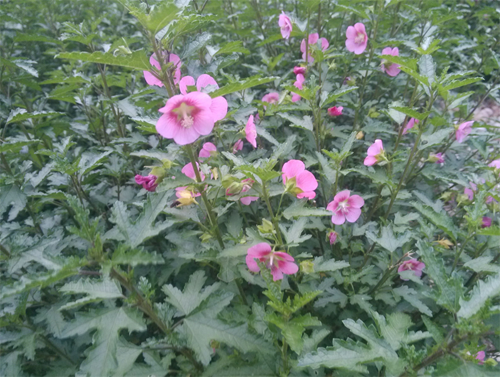
1. Insufficient sunlight:
Almost all flowering plants need sunlight, and the more sunlight, the better the flowering.
Plants like roses and Chinese roses need at least 6 hours of sunlight a day, so keeping them indoors won't work.
Even shade-loving plants such as begonias, kalanchoe and African violets need about 3 hours of sunlight a day to bloom more easily.
And for some foliage plants with colored leaves, giving them a little sunlight occasionally will make the leaf color even more attractive.
2. Incorrect use of fertilizer:
A flower-growing friend asks: compound fertilizer bags have 3 numbers on them, such as 15-15-15, indicating the nitrogen, phosphorus and potassium content, but some are labeled potassium sulfate, and some are not labeled at all!
Answer: compound fertilizers are divided into chlorine-containing and chlorine-free. The potassium sulfate type indicates that the potassium in the product comes from potassium sulfate magnesium fertilizer, not potassium chloride fertilizer. Generally, potassium sulfate type compound fertilizers are chlorine-free, or low-chlorine.
Generally, compound fertilizers labeled with potassium sulfate, and also potassium nitrate, indicate the source of one of the nutrients.
To make plants bloom, you need to apply more phosphorus and potassium fertilizer, that is, fertilizer where the middle and last numbers among the three nitrogen-phosphorus-potassium numbers are higher.
For example: 10-30-10, or 5-20-10 and the like. If you use a high-nitrogen fertilizer, such as 30-10-10, the plant will only grow stems or leaves, and be too lazy to bloom.
There is a kind of all-phosphorus fertilizer that is a bloom-encouraging fertilizer (0-20-0); this flower-growing friend still knows that.
3. Incorrect pruning:
Plants that need pruning should all be pruned within one or two months after the flowers fade. Don't wait until a season has passed to prune, as this may cut off the next season's flower buds.
For example, plants that bloom in spring should be pruned in summer; those that bloom in autumn can be pruned in early spring of the following year. After flowering, you can remove the spent flowers. Don't blindly prune when you don't know how to prune!
4. Bugs ate the flower branches
Check whether the plant and leaves have insects that have eaten the new buds or flower buds. Carefully check each branch. Plants like roses often attract aphids, or there is a kind of caterpillar, and they eat all the flower buds without you noticing.
You can check at irregular intervals and wash the bugs away with soapy water. (To make soapy water, mix dish soap or soap with water. About 250 ml of clean water, add a small tablespoon of dish soap.)
5. The plant is not yet mature
Some plants take two or three years to reach maturity and bloom. For example, some ornamental bromeliads, and wisteria takes more than seven years to bloom. Growing flowers requires patience.
6. Mistakes in repotting
If it is a potted plant, it will temporarily stop blooming after repotting, so do not repot frequently.
In addition, most plants need to have their roots constrained (so they don't grow too comfortably) before they will bloom, so don't repot into too large a pot all at once. Each time you repot, just go up one size.
7. Being too indulgent with the plant
Some flowering plants will suddenly stop blooming. The reason may be that the growing environment is too good, there is no sense of crisis, and they become lazy. The flower buds are clearly there, and fertilizer and water are sufficient, but before they bloom, all the flower buds drop off. It is precisely because you are too indulgent!
If the plant you are growing is itself supposed to bloom, but as soon as you grow it, it doesn't bloom, then you should look for the reason from these aspects.
Does the thick-skinned plant bloom, how long does the thick-skinned plant take to bloom / March blooming flower language is funny
The thick-skinned plant is probably familiar to everyone. Its leaves fall on the soil and can immediately take root, so it is also called the air plant. In daily life, when people mention the thick-skinned plant, everyone thinks of its gem-like, emerald green, fleshy leaves, and ignores the fact that it can bloom. So does the thick-skinned plant bloom? How long does the thick-skinned plant take to bloom? What is the flower language of the thick-skinned plant? Today the editor will explain this in detail for everyone.
1. Does the thick-skinned plant bloom? Yes, it does
Although the thick-skinned plant is a foliage plant, we know that all plants bloom, so does the thick-skinned plant bloom? Obviously it can. It is understood that if you maintain it strictly according to the cultivation methods for the thick-skinned plant, after it grows to a certain age, it will produce flowers every year in March.
2. How long does the thick-skinned plant take to bloom? 3-5 months
The ornamental value of the thick-skinned plant is mainly reflected in its gem-like, fleshy, emerald green leaves, but when it blooms, it also has a special charm. With pale red or purplish red corollas and small white flowers, the thick-skinned plant's flowers do not look ugly either. As for how long the thick-skinned plant takes to bloom? Generally, after 2 years of cultivation, it will bloom in March-May, and in April-June it will also bear fruit.
3. How to make the thick-skinned plant bloom
1. Sufficient light
If a plant wants to bloom, light is indispensable, especially for a foliage plant like the thick-skinned plant. If you want it to bloom, it must have sufficient light. Apart from needing shade when the summer sun is very harsh, at other times it should be given full sunlight.
2. Water less
How to make the thick-skinned plant bloom? Some people think you should water more, but that is actually a wrong idea. Because the thick-skinned plant has fleshy leaves, it is extremely drought-tolerant. It is said that if you don't water it for two consecutive months, the plant is completely unaffected. Therefore, in the process of growing the thick-skinned plant, if you want it to bloom, you should water less. Generally, wait until it dries out completely, then water thoroughly.
3. Apply phosphorus and potassium fertilizer
When the thick-skinned plant blooms, it naturally consumes a large amount of nutrients, so if you want it to bloom, timely fertilization is crucial. Normally, we should fertilize it once a month, and when it is about to bloom, apply additional phosphorus and potassium fertilizer, which can promote flowering.
4. The flower language of the thick-skinned plant: thicker means healthier
Plants that bloom all have their own unique flower language. The beauty of the thick-skinned plant lies mainly in its leaves, and just like its name, its skin is thick, and no matter how you grow it, it won't die. So after the thick-skinned plant blooms, the resulting flower language of the thick-skinned plant is also quite startling: thicker means healthier. It sounds funny, doesn't it~
Home hydroponic cultivation method for peace lily, reasons why peace lily does not bloom and solutions
As everyone's living standards improve, people have more spare time and money to enrich their lives. For example, female friends like to use their leisure time to grow some especially exquisite and beautiful flowers and plants at home. The peace lily is one of the potted flowers we like to grow at home. It can be grown not only in soil but also hydroponically. Below, let's take a look with the editor at the hydroponic method for peace lily!
Home hydroponic cultivation method for peace lily
1. Vase
If you want to use the water-growing method, you can buy a vase with a relatively large bottom, or a medium-sized fish tank is also good.
2. Temperature
Only suitable temperatures can help it grow. 5-30 degrees is relatively normal. Within this range, it will not be harmed and can grow normally.
3. Light
It should be given scattered light. This is the most suitable light. It does not necessarily need to be exposed to sunlight, especially in summer, do not place it in direct sunlight.
4. Water and fertilizer
In hot weather, add water about once a week; in winter, change it once every ten to fifteen days. Each time you add water, you can add a little special hydroponic nutrient solution, and just mix it according to the instructions. The bottle used for water culture easily grows green algae, the roots become unattractive, and oxygen is also consumed. When adding water, you should wash clean the dirt on the roots, cut off old dead roots, and wash the bottle clean. The water in the bottle only needs to cover half or two-thirds of the roots; the other parts being exposed outside can help it absorb substances.
5. Humidity
To prevent its leaves from turning yellow and affecting the ornamental value, you can frequently spray clean water on its leaves to increase humidity. It is best to spray foliar fertilizer once a week, which can not only increase nutrients and make the leaves more glossy, but also help it overwinter more safely. Before flowering, you can spray the leaves with potassium dihydrogen phosphate at 0.3 percent; two or three times can help it bloom more densely.
Reasons why peace lily does not bloom
1. Unsuitable care environment
The peace lily is called a lazy person's flower, but if you want it to bloom, it is not an easy thing either. If the peace lily grows for a long time in a place with insufficient light, or with overly strong sunlight, it will grow poorly and be difficult to bloom. Especially during the period before flowering from April to May, if light is insufficient and the air is dry, the peace lily will not bloom even when it reaches blooming age.
2. Insufficient growing space
The peace lily grows relatively fast. Generally, in 1-2 years the plant will fill the pot, the leaves will be crowded, ventilation will be poor, and the inner leaf surfaces will find it hard to receive sunlight, making it hard to bloom.
3. Long-term lack of fertilizer
If the peace lily is not fertilized for a long time, it is not conducive to healthy plant growth and affects flowering. During the growing period from May to September, apply some granular compound fertilizer each month, so it will both grow leaves and bloom.
4. Insufficient growing years
The peace lily itself also needs conditions to bloom. Peace lilies bought from the flower market that have already bloomed are all more than 3 years old and can basically bloom normally. But under normal circumstances, a 4-6 year old peace lily can bloom normally; if it is a peace lily grown from seed, it needs 5-6 years to bloom; seedlings after division need to grow 2-3 years before they can bloom. If your peace lily is in its young stage, not blooming is normal, and you still need to wait patiently!
Solutions for peace lily not blooming
1. Strengthen daily care
Place the plant in a bright place for care, pay attention to timely watering, and ensure air humidity. From April to May, frequently sprinkle water around the plant to increase relative humidity, fertilize once a month, and appropriately increase the amount of fertilizer before flowering to ensure enough nutrients for blooming.
2. Induce and promote flowering
Peace lily flowering needs induction. One month before flowering, spray gibberellic acid to artificially induce flowering.
3. Repot into a larger pot in time
Peace lily leaves grow quickly, so repot and loosen the soil in time according to its growth. Every year in early spring, repot the peace lily into a larger pot and also replace it with loose soil. After repotting, place the plant in a cool place for 1 week, then care for it normally. When the plant's branches and leaves are too dense, and the ratio of the plant to the pot is 3:1, it needs to be repotted in time. For potted plants that grow very quickly, repotting can be done in autumn.
What to do if peace lily flowers bloom smaller and smaller
If it is too dense, prune the plant, cutting off all branches and leaves that are weak in growth or have been attacked by pests and diseases; at the same time, also remove older leaves; if you find leaves with yellowing edges, remove them too. In this way, besides increasing the plant's light penetration and air permeability, it can also avoid unnecessary loss of nutrients.
If nutrients are insufficient or the soil is not fertile enough, you can pour out half of the original soil, replace it with half new fertile soil, and then do a good job of fertilizing routinely. After flowering, also do a good job of fertilizing, which is beneficial for the next flowering. Many friends think that after the plant blooms they can relax their care, but this is the wrong approach.
These two reasons are the most direct causes. I believe everyone now has a certain understanding of this issue. The editor wants to say that when problems appear in plants, they are certainly related to improper care. Therefore, as long as everyone is more attentive when caring for them, the flowers will definitely be healthy and well!
As mentioned above, in fact sometimes hydroponic peace lily is more convenient and beautiful, and with no soil, you don't need to worry about dirtying the home! Whether soil-grown or hydroponic, the peace lily is so exquisite and elegant!