What are the other names for the African bowstring hemp? A detailed guide to growing methods and propagation techniques
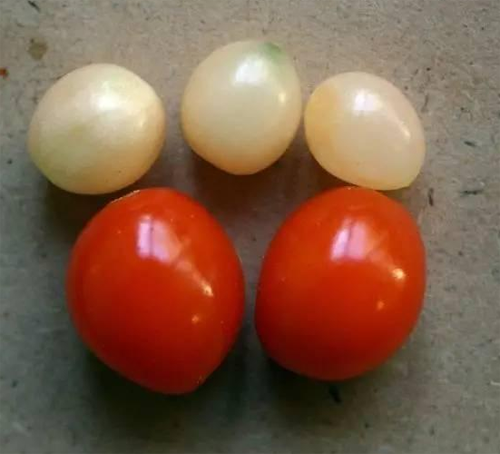
The African bowstring hemp is a charming little sprite: its flowers are beautiful, and its fruits look just like little tomatoes. How can there be such a cute plant? How do you grow the African bowstring hemp? How do you propagate it, and what are its other names?
Growing methods for the African bowstring hemp:
The African bowstring hemp is native to South Africa. It likes a warm, humid, semi-shaded environment, and prefers slightly acidic sandy loam or peat soil.
Its drawback is poor cold tolerance. In summer it needs shading, or it can simply be grown in semi-shade. In winter, the overwintering temperature must not fall below 5 °C, since it is not cold-hardy.
1. Potting soil and fertilizing
For potted African bowstring hemp, a mixed soil of leaf mold, peat and coarse sand can be used. During the growing season, keep the potting soil moist; keep it slightly dry rather than too wet. Never let it be rained on or let water accumulate in the pot, otherwise the bulb will rot.
In spring and autumn, apply a compound fertilizer of nitrogen, phosphorus and potassium once every half month.
2. Dormancy
In winter it has a short period of semi-dormancy, so watering should be reduced. It is generally kept indoors to overwinter, and watering should be minimized as much as possible in winter.
The African bowstring hemp is a cute and attractive foliage plant, and its flowers are also very beautiful. Its leaves are broad and slightly curved, with a graceful posture.
Every year in August it bears white flowers with yellow centers at the top, and it looks quite nice placed on a cool balcony!
Propagation methods for the African bowstring hemp:
1. Propagation by seed
The seeds generally mature more than 2 months after flowering. Its seeds are fairly large; once picked, they can be sown directly in a pot. Keep them slightly moist, and they will sprout after 15 days. Seedlings need 4~5 years to flower.
2. Propagation by division
Its small bulbs grow very slowly, and generally need 2~3 years to produce small offsets. At that point they can be divided once. When repotting in spring, lift out the mother plant and break off the small bulbs to plant separately.
Other names for the African bowstring hemp:
Cow's tongue orchid (is it because the leaves look like a cow's tongue? Whoever came up with this name really did a poor job). It is a perennial evergreen herbaceous plant in the Amaryllidaceae family, and it is very different from snake plant.
Pictures of the African bowstring hemp in bloom:
The leaves of the African bowstring hemp are broad and thick, looking almost succulent. The inflorescence is drawn out from a short stem above the bulb, bearing small umbrella-shaped terminal flowers. The flower color is usually white, occasionally red or yellow.
That covers the growing methods and propagation methods of the African bowstring hemp, along with some introduction to it. Keep this plant at home, and it is like growing a little tomato.
A complete detailed guide to growing methods for Tradescantia sillamontana
✿ Related reading recommendations
✿ Sarcophyte ✿ Acer palmatum
✿ Dracaena ✿ Water hyacinth
✿ Viola ✿ Saxifraga stolonifera
(◕‿◕✿) For flowers, bonsai and plant growing, follow the Meilele Flowers and Bonsai section!
.......
Tradescantia sillamontana belongs to the genus Tradescantia in the Commelinaceae family. It is a perennial succulent herbaceous plant, native to countries in Central and South America such as Guatemala, Belize and Mexico. It is also known as white silk grass. It prefers a warm, humid environment. Today the editor will briefly introduce the growing methods for Tradescantia sillamontana.
.......
Tradescantia sillamontana is a perennial succulent herbaceous plant. The plant grows in clumps, with stems upright or slightly prostrate, 15~20 cm tall. The short, thick, succulent stems are hard and straight, covered with dense long white hairs. The leaves are alternate, green or brownish-green, slightly succulent, long ovate, about 2 cm long and 1 cm wide, also covered with dense white hairs. The small flowers are pale purple-pink, borne at the top of the stems.
.......
.......
Tradescantia sillamontana prefers a warm, humid environment and plenty of soft, gentle sunlight. It tolerates semi-shade and drought but not cold, and avoids scorching sun and water accumulation in the potting soil. The optimum growing temperature is 16~24 °C.
.......
.......
Under these conditions, the plant can be grown in a spot with bright light but no direct sunlight. If light is insufficient, the plant will become leggy, the distance between leaves will stretch out, and the white hairs on the stems and leaves will become sparse, affecting its ornamental value; if the light is too strong, the leaves turn brown, which also affects its beauty.
.......
.......
Propagation of Tradescantia sillamontana can be done by division when repotting: tip the densely growing plant out of the pot and divide it for planting. You can also, during the growing season, cut stems with the growing tips and insert them in sand or vermiculite for cuttings. After inserting, place them in semi-shade, keep the soil moist but not waterlogged, and at 20~25 °C they will root in about 2 weeks.
.......
.......
During the growing season, keep the potting soil of Tradescantia sillamontana moist but not waterlogged. When the air is dry, clean water can be sprayed on the plant and the surrounding ground, but water droplets must not remain on the leaf surface for long, otherwise the leaves will rot. Apply a decomposed dilute liquid fertilizer or compound fertilizer once a month, but the amount should not be too much, so as to avoid overly vigorous stem and leaf growth that makes the plant shape messy.
.......
.......
In summer, when temperatures are high, shade appropriately and strengthen ventilation, otherwise the plant will rot from stuffiness and humidity. In winter, place it indoors in a spot with plenty of sunlight and restrict watering; it can overwinter safely at 8~10 °C. Because the plant grows fairly fast, it should be pruned and shaped frequently during cultivation. Cut back overly long stems promptly and remove yellowed, withered lower leaves to keep the plant shape neat and attractive.
.......
Because the plant is densely covered with long hairs, dirt is very hard to remove once it sticks. Therefore, be especially careful when fertilizing to prevent the fertilizer solution from contaminating the plant, and keep the pot in a clean spot indoors to avoid rain outdoors soiling the leaves.
.......
Conclusion: Tradescantia sillamontana is also fairly easy to care for and is very suitable for home cultivation and appreciation. It is often grown as a small potted plant to decorate a desk, writing table or windowsill, fresh and elegant with quite a distinctive character. That is all for today's introduction to the growing methods for Tradescantia sillamontana. Thank you for reading. If you want to learn about the characteristics of other plants, click the links below the article; more information is waiting for you.
[Article source] Flowers and Bonsai
✿Flowers and Bonsai✿
✿ Characteristics of the peony ✿ How to grow azaleas ✿ Is the cactus poisonous ✿ Black datura ✿ How to grow lucky bamboo in soil
✿ Uses of the cactus ✿ How to eat yacon ✿ What is cistanche ✿ The harm of water hyacinth ✿ Price of oldenlandia
✿ Characteristics of the osmanthus tree ✿ Golden monkey cactus ✿ Price of perfume lilies ✿ Complete picture collection of peonies ✿ Does mimosa bloom
✿ The language of pink roses ✿ How to grow cyclamen ✿ Forget-me-not flower pictures ✿ Red carnation pictures ✿ What are betel nuts
✿ **Tianshan snow lotus ✿ How to grow money tree ✿ Thousand-hand Guanyin pictures ✿ Rose planting techniques ✿ Growing methods for rubber plant
✿ Characteristics of mimosa ✿ Magnolia flower pictures ✿ Sago palm leaves turning yellow ✿ Pictures of lucky bamboo grown in water ✿ Pictures of Aloe vera
What is the difference between snake plant and mother-in-law's tongue, and what varieties of snake plant are there
Snake plants vary considerably in plant shape and leaf color, have many varieties, and are highly adaptable to the environment, so they are popular with many people. So what is the difference between snake plant and mother-in-law's tongue? And what varieties of snake plant are there? Let's find out together.
1. What is the difference between snake plant and mother-in-law's tongue
Snake plant is a fairly common potted plant in the home, and many households grow it. Many flower lovers ask what the difference is between snake plant and mother-in-law's tongue. In fact, what we call snake plant is mother-in-law's tongue; it is just that there are many cultivated varieties of snake plant on the market, which is why the names snake plant and mother-in-law's tongue both exist. Below let's take a look at what varieties of mother-in-law's tongue there are!
2. Snake plant varieties
Picture of short-leaf snake plant
Short-leaf snake plant:A cultivated variety of snake plant, also called small orchid tiger or African bowstring hemp. The plant is low-growing, no more than 20 cm tall. The leaves grow spiraling outward from the center, overlapping each other to form a bird's nest shape. The leaves are short and broad, long ovate, with a gradually pointed leaf tip that has a distinct short tail point. The leaves are 10-15 cm long and 12-20 cm wide, dark green in color, with fairly wide yellow bands along both sides of the leaf margin, and irregular silvery-gray streaks on the leaf surface. The leaves are clustered and lush.
Golden-edged short-leaf snake plant
Golden-edged short-leaf snake plant:The leaves are also on the short side, over 10 cm, and the margins are golden yellow, showing as bands. It is highly adaptable, likes warmth and humidity, tolerates drought, and likes light while also tolerating shade. It is not strict about soil, and sandy loam with good drainage is better. Its optimum growing temperature is 20-30 °C, and its overwintering temperature is 10 °C. Snake plant can be propagated by division and cuttings.
Picture of silver-edged short-leaf snake plant
Silver-edged short-leaf snake plant:Also known as silver short-leaf snake plant. A cultivated variety of snake plant. Both its plant shape and leaf shape are similar to the short-leaf snake plant. The leaves are short, silvery-white, with indistinct horizontal stripes. The leaves are on the short side, with silvery-white longitudinal streaks along the margins, about 10 cm long.
Picture of silver-veined snake plant
Silver-veined snake plant:Silver-veined snake plant is a cultivated variety of snake plant. Snake plant is native to western Africa. It likes a warm, dry environment with plenty of sunlight. It is not cold-tolerant, tolerates semi-shade, and dislikes water accumulation and waterlogging. It requires well-drained, loose sandy loam. The leaves are irregular, with silvery-white longitudinal streaks along the margins; the leaves are uneven, with both broad and narrow leaves. In winter the temperature should not fall below 5 °C. It is mainly propagated by division. This can be done in spring when repotting: pull apart the overly dense leaf clumps and cut them into clumps of 3-4 leaves, each clump must have a section of rhizome and a sucker, and new leaves can grow 1 month after potting.
Picture of onion-leaf snake plant
Onion-leaf snake plant:The leaves are cylindrical, roughly the same thickness from top to bottom, slightly tapering at the tip, with shallow longitudinal grooves on the leaf surface, and each leaf grows independently. The stems are slender like sticks, with clean lines. It can absorb large amounts of toxic gases and at night absorb large amounts of carbon dioxide, increasing the concentration of negative ions. It tolerates shade and is an ideal indoor plant.
Picture of golden-edged snake plant
Golden-edged snake plant:A perennial herbaceous plant. The rhizome curls into a tube shape, and the leaves emerge as tubes, gradually unfurling and flattening as the leaves grow taller. The leaves are thick and leathery. Golden-edged snake plant is a perennial succulent herbaceous plant. It has creeping rhizomes, brown, semi-lignified, with strong branching ability. The leaves grow from the underground stem, in clumps, flat, upright, with pointed tips, sword-shaped; the leaves are 30~50 cm long and 4~6 cm wide, with entire margins. The leaf color is light green, with white and dark green horizontal cloud-like stripes on both sides, resembling tiger skin, and the surface has a very thick waxy layer.
Picture of fan-leaf snake plant
Fan-leaf snake plant:The leaf margins appear banded, and the leaf shape is like a fan. It is native to tropical America and Somalia. It has creeping succulent rhizomes, with about 2-4 leaves per shoot, succulent and long elliptical, 50-70 cm long and 10-15 cm wide, with light green and dark green horizontal stripes. Its main feature is a thin reddish-brown border along the leaf margin.
The above isthe difference between snake plant and mother-in-law's tongueintroduced. In fact, snake plant is mother-in-law's tongue, so everyone can choose the snake plant variety they like to grow.