Areca Palm Care Methods and Precautions, Price and Alternative Names
The areca palm is a favorite among many growers. It can be grown indoors, purifies the air, and looks quite attractive. What are the care methods and precautions for the areca palm? What is the price of an areca palm? And what other names does it have?
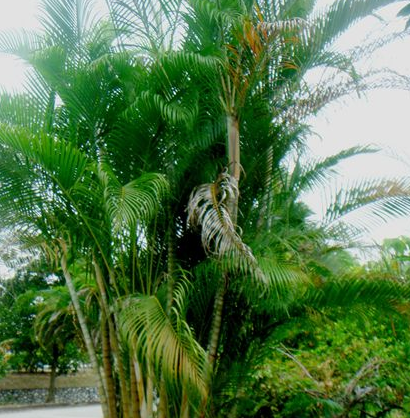
Areca palm care methods and precautions:
It prefers a warm, humid, semi-shaded environment with good ventilation, and the minimum winter temperature must stay above 10°C. During the growing season, the potting soil must be kept moist and the air humidity around the plant maintained;
The areca palm is sensitive to cold and has weak cold tolerance. In northern China, outdoor-grown plants are generally brought indoors from late September to early October and must be placed in a spot with ample sunlight. During the wintering period, the room temperature should be 23-25°C during the day and maintained at 15°C at night, and must stay at least above 8°C, otherwise it will suffer cold damage and die in winter or spring; in
During the wintering period, also pay attention to regularly wiping the leaf surfaces or spraying a small amount of water on them to keep the leaves clean.
The areca palm is a tropical plant. It likes warm, humid, semi-shaded environments. Its cold tolerance is not strong; below 20°C the leaves turn yellow, the minimum wintering temperature must be above 10°C, and around 5°C it will freeze to death. It prefers loose, well-drained, fertile soil. Its branches and leaves are dense, it stays evergreen year-round, and it is highly shade-tolerant. Young potted plants are used for indoor decoration.
1. Potting and disinfection
Soak the divided small offshoots in a 1500-fold chlorothalonil solution for five minutes, then remove and air-dry before potting. You can also drench the roots with chlorothalonil immediately after potting.
Management after division: after the divisions are potted, drench the roots or water thoroughly once. Because its root system is heavily damaged and its water-absorbing capacity is very weak, it takes about 3-4 weeks to recover and sprout new roots.
Within 3-4 weeks after division, watering should be restricted to avoid root rot, but the transpiration of its leaves is unaffected. To maintain the water balance of the leaves, the foliage needs to be misted 1-3 times a day, and no fertilizer should be applied during this period. After division, also be careful about overly strong sunlight; it is best to keep it under a shade net for care.
2. Potting or transplanting
When potting young seedlings, first place a 2-3 cm thick layer of coarse-grained substrate at the bottom of the pot as a drainage layer, sprinkle a layer of fully decomposed organic fertilizer on top as base fertilizer, about 1-2 cm thick, then cover with a thin layer of substrate about 1-2 cm thick, and then place the plant in, so as to separate the fertilizer from the roots and avoid burning the roots.
3. Substrate for potting. You can choose one of the following: garden soil: cinder = 3:1; or garden soil: medium-coarse river sand: sawdust (mushroom residue) = 4:1:2;
When transplanting young seedlings, first dig the planting hole, sprinkle a layer of organic fertilizer at the bottom of the hole as bottom fertilizer (base fertilizer), about 4-6 cm thick, then cover with a layer of soil and place the seedling in, so as to separate the fertilizer from the roots and avoid burning the roots. After placing the seedling in, backfill the soil to cover the roots, firm the soil with your foot, and water thoroughly once.
4. Humidity
It likes a humid climate and requires the relative air humidity of the growing environment to be 70-80%. If the relative air humidity is too low, the leaf tips will dry out.
5. Temperature
Because it originates from tropical regions, it likes high-temperature environments and has strict temperature requirements in winter. When below 10°C, growth slows and it begins to enter a semi-dormant or dormant state; when below 5°C, it cannot overwinter safely; in summer, it can tolerate temperatures as high as above 35°C, but growth will be temporarily hindered. The most suitable growing temperature is 18-30°C.
6. Light
It is not strict about light; it likes ample sunlight and also tolerates semi-shade, but grows better with sufficient light.
7. Pruning
Winter pruning: in winter, when the plant enters dormancy or semi-dormancy, cut off weak, diseased, pest-infested, dead, and overly dense branches.
8. Rotating the pot
As long as it is cared for properly, it will grow very quickly. When it grows to a certain size, consider giving it a larger pot so it can continue to grow vigorously.
The potting soil and component ratio for repotting can be one of the following: garden soil: cinder = 3:1; or garden soil: medium-coarse river sand: sawdust (mushroom residue) = 4:1:2; or one of paddy soil, pond mud, or leaf mold.
9. Removing from the pot
Place the flower to be repotted on the ground, first lightly pat the sides of the pot with your palm so the root system is shaken and separates from the pot wall. Turn the flower pot upside down on your left hand, gently grip the plant between the index and middle fingers of your left hand, brace your wrist and fingertips against the pot rim, pat the bottom of the pot with your right hand, then use your thumb to push the root soil downward from the drainage hole to let the plant come out. After it comes out, gently pat the potting soil with both palms to let excess soil fall off.
Choose a flower pot of appropriate size. Cover the drainage hole at the bottom of the pot with two pieces of tile or thin foam pieces, and place a layer of expanded clay pebbles or crushed red bricks on top of the tile or foam as a drainage layer, about 2-3 cm thick.
Precautions:
Indoor potted areca palms should be given slightly acidic soil, and in the north care should be taken to choose sandy loam with high humus content. Watering should follow the principle of "dry thoroughly, wet thoroughly" according to the season; water more appropriately in dry, hot seasons, and control watering during low temperatures and rainy weather.
The areca palm is sensitive to cold and to strong direct sunlight, which can scorch the leaves. The areca palm likes semi-shaded environments, and in spring, summer, and autumn about 50% of sunlight should be blocked. The suitable growing temperature is 20-25°C. In winter, the nighttime temperature should be above 15°C, and around 25°C during the day is better. If it stays below 5°C for a long time, it will inevitably suffer cold damage, or even die. During the growing season, the potting soil must be kept moist frequently and the air humidity around the plant kept relatively high. In winter, keep the leaf surfaces clean; you can often spray a small amount of water on the leaves or wipe them.
Alternative names of the areca palm:
The areca palm, also known as the yellow palm, is a clumping evergreen shrub or small tree. The stem is smooth, yellow-green, without prickles, covered with a waxy bloom when young, and bears obvious ring-shaped leaf scars.
Areca palm price:
This mainly depends greatly on the size of the areca palm. A 180 cm one sells for 165 yuan. For specifics, you still need to ask the relevant sellers; prices differ from place to place.
Care methods and precautions for the areca palm, Phoenix-tail bamboo, and yellow palm
Alternative names: areca palm, Phoenix-tail bamboo, yellow palm. Family and genus: Arecaceae, Dypsis. Flowering period: summer. Flower language: graceful and charming. Use tips: home care, care in large public places. Home placement: suitable for placing in the hall, bedroom, study, and other places.
Basic care and management
Light
It likes ample sunlight and is sensitive to strong direct sunlight.
Temperature
The suitable growing temperature is 20-30°C.
Soil
It is suitable for growing in loose, fertile, well-drained sandy soil. For potting, you can make a growing medium with garden soil, leaf mold, and river sand in a 6:2:2 ratio, and apply a small amount of base fertilizer before planting.
Watering
Potted areca palms should be given plenty of water during the growing season, keeping the potting soil moist frequently. In hot summer, spray water on the leaves frequently to increase air humidity and keep the leaf color emerald green and glossy. When temperatures are lower in autumn and winter, keep the potting soil moist but slightly dry.
Fertilizing
From May to September, the growing season of the areca palm, apply a dilute liquid fertilizer 1-2 times a month. In spring, you can apply base fertilizer once along with repotting.
Areca palm cultivation techniques, habits, care, and pest and disease prevention
Areca palm, family and genus: Arecaceae, DypsisAlternative name: yellow palm
Native to Madagascar, Africa.
(1) Morphological characteristics: evergreen shrub or small tree. The plant height is 3-8 m, clumping, with many tillers at the base. The stem is smooth, yellow-green, with obvious leaf scars, resembling bamboo nodes. Pinnate compound leaves, smooth and slender, the base of the petiole slightly curved, bright green. Leaflets linear or lanceolate, about 30 cm long and 1-2 cm wide. The fruit is purple-black. A common ornamental species in the same genus is Cabada palm (C. cabadae), with a plant height of 10 m, slender stems, enlarged base, alternately arranged leaves, slender bright green leaflets, and small red fruit. (2) Habits: It likes warm, humid, and semi-shaded environments. It is sensitive to cold and to strong direct sunlight, and is not strict about soil, but loose soil rich in humus is preferable.
(3) Cultivation and management: The areca palm is sensitive to cold and to strong direct sunlight, which can scorch the leaves. The areca palm likes semi-shaded environments, and in spring, summer, and autumn about 50% of sunlight should be blocked. The suitable growing temperature is 20-25°C. In winter, the nighttime temperature should be above 15°C, and around 25°C during the day is better. If it stays below 5°C for a long time, it will inevitably suffer cold damage, or even die.
During the growing season, the potting soil must be kept moist frequently and the air humidity around the plant kept relatively high. In winter, keep the leaf surfaces clean; you can often spray a small amount of water on the leaves or wipe them. During the growing season, fertilize 1-2 times a month.
It is not strict about soil, but loose soil rich in humus is preferable. For potted areca palms, you can use leaf mold, peat soil plus 1/3 river sand or perlite and base fertilizer to make a growing medium. Repot once every 2-3 years in spring, applying base fertilizer. When repotting, remove dead branches and fallen leaves, and according to growth conditions, cut away overly dense clumps to favor the sprouting of healthy clumps and maintain an elegant potted appearance.
(4) Propagation: Both sowing and division can be used, but division is commonly used. In spring, along with repotting, cut plants with many tillers into 2-3 pieces with a sharp knife and pot them separately, caring for them at 20-25°C, and they recover and take shape fairly quickly. Generally, after 1-2 years of care they can become potted commercial plants. If seeds can be obtained, wash the pulp off the harvested fruit, soak the seeds in 35°C warm water for two days, and then sow them. Transplant as they germinate. On sunny days, spray more water on the leaves. Generally, they grow slowly in the juvenile stage and rapidly after maturity.
(5) Pests and diseases: Leaf spot disease, with leaf tips and leaf margins most susceptible, causing drying and curling. In the early stage of the disease, spray with a 500-fold 50% captan wettable powder solution for control. In addition, there may be scale insect damage, which can be killed by spraying with a 1500-fold 40% omethoate emulsifiable concentrate solution.