How to grow the resurrection plant? Is it Selaginella tamariscina or Selaginella pulvinata?
Can the resurrection plant bring the dead back to life? No such miraculous plant exists. The name "resurrection plant" means that this plant is extremely cold-tolerant and can survive as long as it drifts to the water's edge. How should the resurrection plant be grown? Is it Selaginella tamariscina or Selaginella pulvinata?
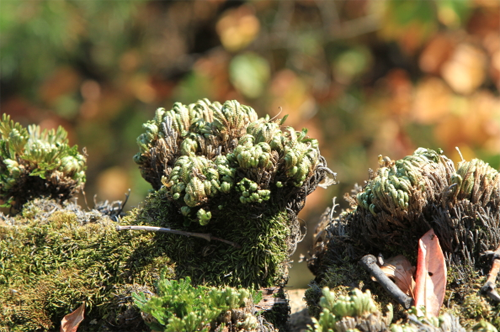
How to grow the resurrection plant:
It has extremely strong drought resistance. When dry, it curls inward into a ball; when there is moisture, it unfolds. In midsummer, water when the soil looks dry; in winter, reduce watering.
It tolerates poor, infertile soil and usually does not need fertilizing. It requires loose, well-drained sandy loam, and can be grown in gravel or even hydroponically.
It grows well in a warm environment, with around 20°C being the optimum temperature. Potted plants should not be exposed to temperatures below 0°C in winter, and it prefers partial shade.
1. Placement
Selaginella tamariscina is best kept in a shaded spot. Of course, it must not be exposed to blazing sun, nor should water accumulate. Place it on a north-facing windowsill or in a ventilated room, where a little scattered light is best.
2. Temperature
It grows best in a warm room. Move it indoors in winter, with a minimum winter temperature of 0°C.
3. Watering
The plant has extremely strong drought resistance, but during the growing season it needs plenty of water to keep the potting soil thoroughly moist.
The plant likes humidity. Spray the foliage with warm water every day; do not spray with cold water, as this is harmful to the foliage.
4. Fertilizing
During the growing season, apply a standard liquid fertilizer at 30% concentration once every half month. Of course, a lower frequency is fine too, so don't worry too much about it.
5. Potting soil and hanging
Choose fertile, loose, well-drained sandy loam for the potting soil. Of course, it can also be grown in a small cup of water. A shallow pot is most suitable for pot culture. Repot in spring; if repotting is not necessary, then refresh the soil by turning it over.
Is the resurrection plant Selaginella tamariscina or Selaginella pulvinata:
Selaginella tamariscina, also known as the resurrection plant, has roots that can detach from the soil by themselves. It curls up like a fist and moves with the wind. It revives upon contact with water, and its roots drill back into the soil to seek moisture.
Just hearing the name "resurrection plant" gives a sense of dominance. Why not hurry up and try growing one? Even if the resurrection plant looks dead, it still has vitality.
How to grow the resurrection plant_What are the benefits of the resurrection plant?
Plant profile: The resurrection plant, also known as huihuncao, with the scientific name Selaginella tamariscina, is recorded in the Selaginellaceae encyclopedia. It is a perennial fern with herbaceous characteristics as well as woody characteristics. It is named for its ability to sense the weather: its branches and leaves curl up during drought and spread flat during the rainy season. It has extremely strong drought resistance. At the same time, the resurrection plant has very strong medicinal effects, and is also known as wansuicao and the herb of immortality. This article will now tell you: how to grow the resurrection plant? And what are the benefits of the resurrection plant?
[Benefits of the resurrection plant]
The main medicinal use of the resurrection plant is in stir-fried form; it can be taken internally or applied externally.
▎Benefits and effects
❶Stops bleeding. The resurrection plant can be applied externally directly to stop bleeding, such as bleeding from trauma or sores.
❷Inhibits bacteria. Modern medical research has found that the resurrection plant can inhibit Staphylococcus aureus in the human body.
❸Relieves spasms. Patients with long-term spasms or stomach spasms, for example, can use the resurrection plant as medicine to relieve spasms of the smooth muscle in the body. Research has also found that this herb has a certain therapeutic effect on patients with gastric ulcers.
❹Anti-cancer. Research has found that the resurrection plant can have therapeutic effects on various chemical carcinogens, such as lung cancer, liver cancer, and nasal cancer.
❺Detoxifies. Fresh resurrection plant used as medicine can also achieve a detoxifying effect, such as for unidentified snake venom and swelling toxins, all of which can be treated effectively.
[How to grow the resurrection plant]
The resurrection plant can be propagated by division. It is suitable for indoor care and can also be grown directly as a potted plant. For soil, sandy loam is best. Repot once every spring, or simply refresh the soil by turning it over. Of course, it can also be grown directly in water.
▎Soil culture and care
Placement: The resurrection plant can be placed directly in a partial-shade environment. Avoid blazing sun. Indoor care requires ventilation, and care under scattered light is sufficient.
Temperature: The resurrection plant should be kept in a warm environment for a long time, so it is suitable for growing inside near a window. It needs to be kept warm in winter.
Watering: Although the resurrection plant has extremely strong drought resistance, it needs long-term watering to provide for its daily nutrient needs. You can spray it directly with warm water; avoid cold water.
Fertilizing: The resurrection plant needs fertilizing once every half month during the growing season. Less is better than more.
▎Hydroponic care
Hydroponic care of the resurrection plant is simple: just manage it in a small cup of water, changing the water once every half month. During the growing season, you can also add nutrient solution.
Summary: The full content on the benefits and effects of the resurrection plant, as well as the care methods for the resurrection plant, is introduced above. After reading this article, do you now have some understanding of the resurrection plant? We hope it provides useful help to you.
Resurrection plant - Medicinal formulas for Selaginella tamariscina
Resurrection plant - Medicinal formulas for Selaginella tamariscinaSelaginella tamariscina is a short fern whose branches and leaves closely resemble those of a cypress, yet it possesses extraordinary vitality. It grows in the cracks of jagged rocks. In the dry season it curls up and withers into a ball, seemingly lifeless, but with just one rain shower it unfolds its branches and leaves, revealing an intoxicating green. People have encountered such strange things: a Selaginella tamariscina pressed into a specimen and kept in a cabinet, when placed in water years later, actually "revived" again. Therefore, it also has fine names such as the resurrection plant, wannianqing, and the herb of longevity. However, Selaginella tamariscina is only suited to living on great mountains far from the noise of the world, with fresh air. If the surrounding natural environment is polluted by industry, it will truly die and never revive again. Therefore, people often use it as an "indicator" in the natural environment: wherever Selaginella tamariscina grows proves that the environment there is good. If Selaginella tamariscina dies, the environment there may have been polluted.
Selaginella tamariscina was used as medicine long ago. The whole plant is used medicinally. Its nature is neutral and its taste slightly pungent. The Shennong Bencao Jing says it drives out "evil qi of the five viscera, and taken over a long time lightens the body." The Mingyi Bielu says it can "strengthen yin and benefit essence." The Yaoxing Lun says it "treats corpse-possession and ghost-possession syndromes, and the wailing of all manner of evil spirits." In fact, ancient physicians mainly used raw Selaginella tamariscina to invigorate blood and resolve stasis, treating traumatic injuries, abdominal pain, asthma, and amenorrhea; stir-fried Selaginella tamariscina (charred) was used to stop bleeding, treating excessive menstruation, vomiting blood, and dark urine; ground into powder and applied externally, it stopped bleeding from cuts and other wounds.
[Proven formulas] ① For vomiting blood and nosebleeds: stir-fried Selaginella tamariscina 60 g, White Cogongrass Rhizome (Imperata cylindrica) 30 g, decoct in water and take. For bloody stool and hemorrhoidal bleeding: stir-fried Selaginella tamariscina 30 g, decoct in water and take.
② For blood-stasis amenorrhea: raw Selaginella tamariscina 9 g, decoct in water and take. For rectal prolapse: stir-fried Selaginella tamariscina 9 g, decoct in water and take. For ordinary bruises, bumps causing blue-purple marks, hematoma, and pain, use Selaginella tamariscina 9-15 g, decoct in water and drink as tea. If the skin is unbroken, the remaining decoction dregs can also be applied externally, which can reduce the occurrence of spots and moles.
③ For infertility caused by fallopian tube blockage: Selaginella tamariscina and Tiedingling (a variety of Chinese herb) 60 g each, decoct in water and take.
④ Adjuvant treatment for liver cancer: Shishangbai (Selaginella doederleinii, dark green Selaginella), Achyranthes bidentata, and Verbena officinalis 30 g each, decoct in water and take.
⑤ Shishangbai 30 g plus an equal amount of lean pork, decoct in water and take. 15-20 days is one course of treatment. It helps shrink tumors such as nasopharyngeal carcinoma.
⑥ Shishangbai 30 g, jujube 5 pieces, decoct in water, then eat the jujubes and drink the soup. Used for choriocarcinoma, it can stop vaginal bleeding and turn the urine pregnancy test negative.
Modern research shows that Selaginella tamariscina contains trehalose, flavonoids, amino acids and other components, and has antibacterial, analgesic, smooth-muscle antispasmodic, and immunity-enhancing effects. Selaginella tamariscina is a short plant, small and exquisite, with a strange posture and unique charm, and can also serve as an ornamental plant. People like to soak it in a bowl or dish, letting it absorb its fill of water and slowly spread its branches and leaves; or grow it in a small-mouthed cup and place it on a desk; or plant it in a mountain-stone bonsai, where it resembles a sturdy pine or green cypress, adding pleasure to life.Resurrection plant
This product is the dried whole plant of the Selaginellaceae plant Selaginella tamariscina (Beauv.) Spring, English name (Selaginella tamariscina (Beauv.) Spring), or Selaginella pulvinata (Selaginella Puluinata.). It can be harvested throughout the year. Remove the fibrous roots and sediment, and dry in the sun.
[English name] HERBA SELAGINELLAE
[Other names] Guimuxi, yibazhua, laohuzhua, longevity herb, wanniansong, resurrection plant, tumbleweed.
Traits
This product curls up like a fist, 3-10 cm long. The branches grow in tufts, flat and branched, green or brownish-yellow, curling inward. The branches are densely covered with small scale-like leaves. The leaf tips have long awns. The middle leaves (ventral leaves) are in two rows, ovate-oblong, arranged obliquely upward, with membranous leaf margins bearing irregular fine serrations. The membranous margin on the back of the dorsal leaves (lateral leaves) is often brown-black. Brown to brownish-dark fibrous roots remain at the base, scattered or clustered into short stalk-like forms. Texture brittle, easily broken. Odorless, taste bland.
Selaginella tamariscina in South America needs sufficient moisture to survive. When moisture is insufficient, it pulls its own roots out of the soil and curls its whole body into a round ball. Because it is light, it will roll across the ground with the wind at the slightest breeze. Once it rolls to a place with sufficient moisture, the ball quickly opens, the roots drill back into the soil, and it temporarily settles down. When moisture is once again insufficient and it is not comfortable where it lives, it will continue to wander in search of a sufficient water source.Distribution and medicinal use
The resurrection plant is widely distributed in China. It can be both ornamental and medicinal. The whole plant has hemostatic and astringent effects. Folk practice is to burn the whole plant to ash; taken internally it can treat various bleeding disorders, and mixed with rapeseed oil and applied externally it can treat various cuts. It is said to also be a beauty medicine: ground into powder and mixed with egg white as a paste, it can make the face smooth and clear.
The resurrection plant is an anti-inflammatory and hemostatic medicine, often used to treat hemoptysis, vomiting blood, bloody stool, rectal prolapse, excessive menstruation, uterine bleeding, amenorrhea, rheumatic pain, traumatic injuries, external bleeding, colds, nosebleeds, metrorrhagia and other diseases. Applying dried Selaginella tamariscina powder to an infant's navel to reduce inflammation and stop bleeding works very well. Selaginella tamariscina has beauty effects. Mixing dried Selaginella tamariscina powder with egg white and applying it to the face can make the face smooth and beautiful. Taken internally, Selaginella tamariscina has the effect of strengthening yin and benefiting essence. It is a miraculous Chinese herbal medicine for external bleeding, a primeval landscape plant that is both ornamental and medicinal, a rare immortal herb, guaranteed to survive at a 100% rate after soaking and planting.
Ornamental value
If you grow it in a pot, it makes a very good wanniansong bonsai! Used to accent rockeries and large bonsai plantings, it can greatly enhance ornamental value. Placed in your home, it is a living witness to the joys and sorrows of your whole life! It is a very good gift to give people, because it symbolizes blessings as deep as the Eastern Sea and longevity as enduring as the southern mountains! Selaginella tamariscina indeed has tenacious drought resistance. A Japanese biologist once discovered that a plant specimen made from Selaginella tamariscina, after 11 years, when soaked in water, actually "resurrected" and revived, restoring its vitality.
From the alternative names of Selaginella tamariscina, one can see that the Yunnan Materia Medica calls it Huiyangcao (herb that returns yang), the Compendium of Materia Medica calls it Changshengcao (herb of long life), the Classification of Herbal Properties calls it Huanhuncao (resurrection herb), Modern Practical Chinese Medicine calls it Jiusi Huanhuncao (nine-death resurrection herb), and the Zhejiang Manual of Chinese Medicine calls it Jianshui Huanyangcao (herb that revives on seeing water). Why can Selaginella tamariscina resurrect from nine deaths and live forever? Sun-dried plants will survive! Withered wood sprouts when it meets water! As long as the dried resurrection plant is soaked in water and then planted, it will come back to life. The resurrection plant is just that miraculous.Resurrection plant. Most plants like to grow in places with plenty of water and fertile soil. However, some plants happen to like settling on the cliffs of remote, desolate mountains and wild ridges, by marshes, and among thorny thickets. Some precious medicinal materials grow in even more remote places. For example, the "resurrection plant," which can treat traumatic injuries, grows on rocky mountains high and low, where the stones have edges sharp as knife points, and even moss, with its tenacious vitality, struggles to grow. Naturally, finding and collecting it is also very difficult.
Resurrection plant: its scientific name is "Selaginella tamariscina." It is a perennial upright evergreen herbaceous fern, 5-15 cm tall, with a brown stem, branches growing in clusters, flat in shape, and light green. It has an extremely tenacious ability to resist drought. In dry weather, the small branches curl up and shrink into a ball to preserve moisture within the body. Once it gets rainwater and the temperature rises, the curled small branches spread out flat, so it is called the "resurrection plant."
The water content of plants varies. Aquatic plants often have a water content of 98%, some desert plants only 6%, woody plants about 40%-50%, and herbaceous plants about 70%-80%. But Selaginella tamariscina can still maintain life even when its water content drops below 5%. Someone once did such an experiment: a Selaginella tamariscina was pressed into a specimen and preserved for several years. When taken out and soaked in water, when the temperature was suitable, it actually "resurrected" and began to grow again.
It can be used as an indoor miniature bonsai. It is evergreen all year round, shaped like a sturdy mountain pine, and has extremely high ornamental value. This plant simply cannot produce flowers.
Selaginella tamariscina is not only an ornamental plant, but also a precious medicinal plant. It is an astringent hemostatic agent and can be used to treat bleeding from traumatic injuries and cuts.
The resurrection plant is also called the herb of long life, the herb of immortality, and the herb of ten thousand years.
The secret of the resurrection plant's extraordinary "resurrection" ability lies entirely in the "adaptive response" of its cells. When drought comes, all its cells enter a dormant state, and metabolism almost completely stops, as if dead. Only after receiving water do all the cells resume normal physiological activity.
Actually, this ability of the resurrection plant was forced out of it by its environment. It grows on sunny slopes or in rock crevices, where the soil is poor and its water-holding capacity is very low. Its water source for growth depends almost entirely on rainwater falling from the sky. In order to survive under long periods of drought without rain, it was forced to develop this "skill."
The resurrection plant is widely distributed in China. It can be both ornamental and medicinal. The whole plant has hemostatic and astringent effects. Folk practice is to burn the whole plant to ash; taken internally it can treat various bleeding disorders, and mixed with rapeseed oil and applied externally it can treat various cuts. It is said to also be a beauty medicine: ground into powder and mixed with egg white as a paste, it can make the face smooth and clear.
In South America there are also relatives of the resurrection plant, but the relatives there are even more capable: they can not only feign death in place and wait for water to resurrect, but also actively leave their growing place to seek a new home with water. In the dry season, the resurrection plants there pull themselves out of the soil, then curl their whole body into a round ball. When the wind blows, the grass ball rolls forward with the wind. If it encounters a place with plenty of water, the grass ball unfolds to its original form and takes root in the soil. Naturally, when water is scarce and it is not comfortable in its new home, it will once again leave its hometown and go wandering.
[Introduction to the benefits of the resurrection plant]:
Resurrection plant (Shaanxi Herbal Medicine)
[Other names] Dabusi.
[Source] The whole plant of the Crassulaceae plant Hylotelephium verticillatum.
[Plant morphology] Hylotelephium verticillatum is a perennial herb, 40-100 cm tall.
Fibrous roots fine.
Stem upright, unbranched.
Leaves in whorls of 3-5 or opposite, oblong-lanceolate to ovate-lanceolate, 4-8 cm long, 2.5-3.5 cm wide, apex acute, base cuneate, margin with wavy sparse teeth, often glaucous beneath, almost sessile.
Corymb terminal, flowers densely arranged, top semicircular-spherical, 2.5-6 cm in diameter; sepals 5, lanceolate, about 1 mm long; petals 5, yellow-white, pale green to white, oblong-elliptic, 4-5 mm long; stamens 10; scales strip-shaped cuneate; carpels 5, oblong.
Flowering period July-September.
Grows in alpine slope grasslands or among stones by ditches.
Distributed in Sichuan, Hubei, Anhui, Gansu, Shaanxi, Shanxi, Hebei, Shandong and the Northeast and other regions.
[Collection] Collected in summer and autumn, washed and used fresh.
[Nature and taste] Bitter and astringent, neutral.
[Functions and indications - benefits of the resurrection plant] Detoxifies, reduces swelling, stops bleeding.
Treats wounds, unnamed swelling toxins, snake bites, and scorpion stings.
[Usage and dosage] External use: mash and apply, or squeeze the juice and apply.
[Selected formula] For snake bites: fresh resurrection plant, Tu Dahuang, Xianmao Shen, and alum in appropriate amounts, mash into a paste and apply to the wound.Benefits of the resurrection plant: often used to treat dizziness and headache, stomach pain, lower back pain, numbness of hands and feet, bone hyperplasia, high blood pressure, constipation, bloody stool, hemorrhoids, dark urine, pharyngitis, asthma, cough, hemoptysis, vomiting blood, bloody stool, rectal prolapse, stones, excessive menstruation, uterine bleeding, amenorrhea, dysmenorrhea, gynecological inflammation, rheumatic pain, traumatic injuries, burns and scalds, external bleeding, colds, nosebleeds, metrorrhagia and other diseases.
[Usage and dosage] Soak in water, wash clean, take 6-9 g of the green leaves and steep in water to drink, or decoct the whole plant and take.
Selaginella tamariscina (Herba Selaginellae), a fern of the Selaginellaceae family, Selaginella tamariscina (Beauv.) Spring, also known as the resurrection plant. Its roots can detach from the soil by themselves. It curls up like a fist and moves with the wind. It revives upon contact with water, and its roots drill back into the soil to seek moisture. Because of its extremely strong drought resistance, after a long drought it can spread out again as long as its root system is soaked in water, hence its name.
Distribution: The resurrection plant is distributed in Guangdong, Guangxi, Fujian, Taiwan, China, Zhejiang, Jiangsu, Jiangxi, Hunan, Shaanxi, Hebei, Shandong, Liaoning, Jilin and other places. It is produced in most parts of the country. Mainly produced in Shandong, Liaoning, and Hebei. It grows on sunny slopes or in rock crevices, mostly in sunny dry rock crevices. It grows on cliffs more than 2,000 m high, surrounded by venomous snakes and cuishengzi for protection, so it is not easy to approach. It can be both ornamental and medicinal. The whole plant has hemostatic and astringent effects. Folk practice is to burn the whole plant to ash; taken internally it can treat various bleeding disorders, and mixed with rapeseed oil and applied externally it can treat various cuts. It is said to also be a beauty medicine: ground into powder and mixed with egg white as a paste, it can make the face smooth and clear.
Applying dried Selaginella tamariscina powder to an infant's navel to reduce inflammation and stop bleeding works very well. Selaginella tamariscina has beauty effects. Mixing dried Selaginella tamariscina powder with egg white and applying it to the face can make the face smooth and beautiful. Taken internally, Selaginella tamariscina has the effect of strengthening yin and benefiting essence. It is a miraculous Chinese herbal medicine for external bleeding, a primeval landscape plant that is both ornamental and medicinal, a rare immortal herb.