What kind of container is best for hydroponic lucky bamboo? These precautions you need to know
Hydroponic lucky bamboo is the simplest method, very hassle-free, and lucky bamboo has extremely vigorous vitality. What are the precautions for hydroponic lucky bamboo? What kind of container is best?
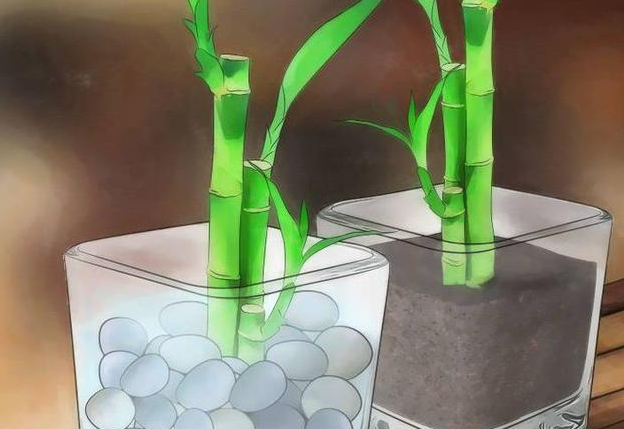
Precautions for hydroponic lucky bamboo:
Keep it slightly moist and ventilated often, but do not let water accumulate. Excessive lack of water or water accumulation will make lucky bamboo uncomfortable!
For hydroponic growers, do not drip too much nutrient solution. The conservative approach is three drops every two weeks. Lucky bamboo that has not rooted should have its water changed at least once every two weeks, and those without nutrient solution should have the water changed at least once a week.
Precautions: After lucky bamboo has rooted, there is no need to change the water. As long as the water does not smell bad, do not change it. When the water level drops, just add more water. Do not use tap water directly; it is best to let it sit for two or three days or expose it to full sun for one day before use.
Over-fertilizing easily makes lucky bamboo leaves turn yellow, and the same principle applies to dripping too much nutrient solution in hydroponic growing.
For hydroponic lucky bamboo, use pebbles to prop up the lucky bamboo, and it will look better.
If growing it in soil, when mixing the soil, mainly add three parts river sand, and mix peat soil with regular soil, ensuring good drainage. The ratio of river sand to mixed soil is 3:7.
Frequent water changes can prevent the plant from rotting. When changing the water, clean the vase, pebbles and plant thoroughly. If you do this every time, the plant will surely grow happily. (After rooting, do not change the water, only add water.)
For soil cultivation, just keep the potting soil warm and moist.
What kind of container is best for growing lucky bamboo:
Choose a suitable container. I think a glass container is quite good for hydroponic lucky bamboo. Add some pebbles, and you can clearly see its growth and spot problems in time.
For soil cultivation, a ceramic pot is generally chosen, and the soil mix follows the standard above. The soil cultivation container must have drainage holes.
Actually, soil-cultivated lucky bamboo does not need frequent watering. Just water it thoroughly each time. The potting soil should not be too wet or too dry.
That is all for the precautions for hydroponic lucky bamboo. It is best to grow it in a transparent container. Many people say that when growing lucky bamboo, the water smells bad. That is because the water has not been changed for a long time. Just change the water and it will be fine.
How to grow lucky bamboo in water (what kind of water to use) Methods and tips for growing hydroponic lucky bamboo at home
Lucky bamboo is a plant very suitable for hydroponics. Hydroponics not only allows lucky bamboo to root better, but also allows the overall form of the lucky bamboo plant to be displayed better. However, hydroponics is a cultivation method with a lot of technical skill, and only by mastering the techniques can you achieve relatively good results.
How to grow lucky bamboo in water
1. Choosing a container
According to the form of water cultivation and the length of the materials and other factors, choose the corresponding container. For example, for shaped water cultivation, use a shallow-rimmed flower pot. When the requirements for plant water cultivation are not high, wine bottles, beverage bottles and so on around you can also be used.
2. Cultivation forms and methods
1. Water cultivation of potted plants
Take the potted plant out with its roots, wash it clean, cut off some old roots and damaged roots, and then directly grow it in water.
2. Water cuttings of branches
Cut well-grown mature branches, use a sharp knife to cut the base of the cutting slightly into a slanted opening. The cut should be smooth to increase the area for absorbing water and nutrients, and insert the base leaves into a bottle. The water should cover the base about 1-2 cm deep, and in about 15 days silver-white fibrous roots will grow.
3. Single-branch and multi-branch water cultivation
For single-branch water cultivation, the bottle opening should not be too large, and the bottle height should be about one third of the branch height. For multi-branch water cultivation, the bottle opening should be large, and the branches should be cut to the same length, arranged in a slanted insertion with the bottle to form a geometric composition.
4. Shaped water cultivation
When lucky bamboo is still a young plant, various shapes can be made by twisting and bending the branches, and after maturity it can maintain that shape. Mature stems have strong sprouting and rooting ability, can be cut into different lengths, and can be tied and shaped into a tower shape and so on, which is the product called lucky bamboo tower on the market. Choose a shallow pot slightly larger than the tower stem, place the tower in it, and add clear water to slightly cover its base nodes.
Methods and tips for growing hydroponic lucky bamboo at home
1. When inserting, pay attention to trimming the roots. When first inserting, remove the leaves at the base to avoid affecting the bamboo's growth. The specifics depend on the size of your vase. Just remove the leaves below the bottle opening. In addition, use scissors or a knife to cut off a small part of the root at an angle, which allows the bamboo to absorb water better. The cut should be as smooth as possible.
2. Water volume control and choice of water. Water reaching one third of the vase is enough; do not exceed two thirds. Before rooting, change the water once every 3 days. After rooting, do not change the water again; just add water directly to the vase. When the weather is dry and stuffy, spray water on the leaf surface. It is best to use well water or purified water. If using tap water, it is best to store it for one day before use.
3. Maintain indoor temperature. Lucky bamboo is suitable for growing between 16°C and 26°C. Cold easily causes the plant to die. In winter, do not place it on a balcony, next to a window or other colder places, and never let the water freeze. Take anti-freeze measures when necessary.
4. Ensure sufficient light. Hydroponic lucky bamboo is generally placed indoors. Although its sunlight requirements are not high, if it cannot receive any sunlight at all, the leaves will also turn yellow and grow poorly. Therefore, place it in a bright and ventilated environment as much as possible so it can fully receive light.
5. Fertilize once a month. For hydroponically grown plants, we generally ignore fertilizing. Actually, this is not the case. Fertilizing can make the plant grow better. Hydroponic lucky bamboo can be fertilized once a month. You can go to a flower market to choose professional fertilizer, or drip a few drops of dissolved vitamin C1 when adding water.
What to do if hydroponic lucky bamboo does not root
If gardening friends find that their hydroponic lucky bamboo has not rooted for a long time, they can take it out, cut it again at a 45° slant, and then redo the hydroponics.
Of course, sometimes there may be some problems with the lucky bamboo plant itself, causing it to be unable to root smoothly. In this case, it is best to switch to another lucky bamboo for hydroponics.
The correct way to pair lucky bamboo
The correct feng shui function of lucky bamboo is to promote official career luck and academic luck.
If you want to advance in studies or official career, place 4 stalks of lucky bamboo at the Wenchang position in the home. A Wenchang tower and brush holder can be used at the same time to increase the power of the Wenchang position.
There are many precautions for hydroponic lucky bamboo, and there are also many techniques. If you want lucky bamboo to better use the nutrients in the water to root and sprout, we need to make continuous efforts throughout the whole process. At the same time, the strengthening of lucky bamboo's effects can also rely on some other external factors.
What to pay attention to in hydroponic lucky bamboo
Introduction to lucky bamboo
Lucky bamboo, originally called Dracaena sanderiana, also known as bamboo banana and ten-thousand-year bamboo, is called ten-thousand-year green in Taiwan, China, Korea and Japan. It belongs to the genus Dracaena in the Asparagaceae family. It is native to Cameroon in western Africa and was introduced to China in large quantities in the late 1970s for ornamental use. It is now a common ornamental plant in China. It can be grown in soil or in water, and water-grown lucky bamboo can live for more than several years.
What to pay attention to in hydroponic lucky bamboo
(1) Before putting it in the bottle, cut off the leaves at the base of the cutting, and cut the base into a slanted opening with a sharp knife. The cut should be smooth to facilitate the absorption of water and nutrients. Change the clear water once every 3-4 days. Do not move the position or change the direction within 10 days. In about 15 days, silver-white fibrous roots will grow.
(2) After rooting, it is not suitable to change the water. After water evaporates and decreases, only add water in time. Frequent water changes easily cause yellow leaves and withering.
(3) After rooting, apply a small amount of nutrient solution in time, and the branches will grow thick and strong, and the leaves will be glossy green. If no fertilizer is applied for a long time, the plant will grow weakly and the leaf color will turn yellow, affecting its ornamental value. But do not apply too much fertilizer, so as to avoid "burning the roots" or causing excessive growth. In spring and autumn, fertilize once a month.
Some sources say that for water-grown lucky bamboo, to prevent excessive growth, do not apply chemical fertilizer. It is best to inject a few drops of brandy into the bottle about every 3 weeks and add a small amount of nutrient solution, which can keep the leaves emerald green.
(4) Do not place lucky bamboo next to a TV or in places where air conditioners and electric fans often blow, so as to avoid dry and withered leaf tips and edges.
Value: China has the congratulatory phrase "flowers bloom in wealth and honor, bamboo reports peace." Because lucky bamboo has slender stems and leaves, is soft and elegant, and is full of bamboo charm, it is very popular. Lucky bamboo is easy to manage, has few pests and diseases, is easy to cultivate, and symbolizes "great good fortune and great profit."
Lucky bamboo stands elegantly like jade, with a handsome appearance, evergreen in winter and summer, green leaves with yellow edges, and a noble color. It gives people a sense of nobility and good fortune. This is the so-called "lucky bamboo," with green branches and emerald leaves, showing even more vitality, and therefore it is deeply welcomed!
What to do if hydroponic lucky bamboo leaves turn yellow
The lucky bamboo at home often has yellow leaves, but you do not know the reason! Grow it according to the following methods, and the leaves will not turn yellow.
During the growth process of lucky bamboo, leaf yellowing often occurs, and the cause is mostly due to improper cultivation management. Too much or too little water, too strong or too weak sunlight, and too much or too little fertilizer can all cause leaf yellowing, but the yellowing conditions differ. Observe carefully, analyze the cause, and correct it.
Water yellowing: Tender leaves are dull yellow and lack luster, old leaves show no obvious change, branches are thin and yellow-green, and new shoots shrink and stop growing, indicating too much watering. Take the plant out of the pot, place it in a ventilated and cool place to let the soil ball dry naturally, then put it back in the pot.
Drought yellowing: The yellowing from lack of water is different from the yellowing from too much water. Yellowing from lack of water shows withered and dry leaf tips or edges, and old leaves turn yellow from bottom to top and fall off, but new leaves grow relatively normally. Just pay attention to watering enough and thoroughly.
Sunburn yellowing: Strong direct sunlight shining on some shade-loving flowers (such as spider plants, hostas, etc.) easily causes the leaf tips and leaf edges to wither, and yellow spots appear on the sun-facing parts of the leaves. Move them to a shaded place.
How to grow hydroponic lucky bamboo
It is an evergreen woody plant. It likes high temperature and high humidity environments, and is also shade-tolerant and waterlogging-tolerant, with a certain cold resistance. When the winter temperature is below 10°C, the leaves will turn yellow and fall off.
When used as an indoor ornamental, generally do not add nutrients to the soaking liquid of lucky bamboo, to prevent stem node rot. It is best to grow it in overnight tap water or cooled boiled water, and it can be changed once every 10 to 15 days, or once every 5 to 7 days in summer, but each time only pour out half and add a new half. It is not suitable to change all of it, otherwise the root system will not be able to adapt. If you want the water-grown lucky bamboo to continue growing, you can add a small amount of urea and potassium dihydrogen phosphate aqueous solution to the soaking liquid, with the concentration controlled at about 0.1%, changing it once every half month. You can also spray the fertilizer liquid on the leaf surface. When it grows more new buds, cut off diseased buds and insect-infested buds early, otherwise it will bring harm to the whole pot of lucky bamboo. For weak buds, "dominant buds" and so on, under the premise of not affecting the overall shape and ornamental value of the lucky bamboo, it is also very necessary to give appropriate thinning. It adds a quiet, warm and happy atmosphere.
Hydroponic lucky bamboo root rot
After water-grown lucky bamboo roots, it is not suitable to change the water. After the water evaporates, only add water in time. Frequent water changes easily cause yellow leaves and withered branches. The added water is best well water. If using tap water, first store it in a container for one day. The water should be kept clean and fresh. Do not use dirty water, hard water or water mixed with oil, otherwise root rot is likely. If root rot has already occurred, it is best to cut it off first, then put a small amount of charcoal into the water to purify the water quality and prevent rot.
Hydroponic lucky bamboo pictures
The stem nodes of lucky bamboo look like bamboo nodes but it is not bamboo. China has the congratulatory phrase "flowers bloom in wealth and honor, bamboo reports peace," so it is loved by people. Lucky bamboo is easy to cultivate and symbolizes "great good fortune and great profit."
Lucky bamboo - bamboo cage lucky bamboo grows coarsely and vigorously, with upright stems, deep green leaves, and evergreen in winter and summer. Whether potted or cut stems inserted in bottles or processed into "lucky bamboo" or "curved bamboo," it all appears sparse, upright and noble, with slender stems and leaves, soft and elegant, with a free and easy posture, full of bamboo charm, and especially high ornamental value.