Lemon Potted Plant Growing Methods and Solutions for Yellowing Leaves
Everyone quite likes lemons, especially lemon water. Lemons have seeds and can be grown in pots. What are the growing methods for potted lemons? What should you do if the leaves turn yellow?
Growing methods for potted lemons:
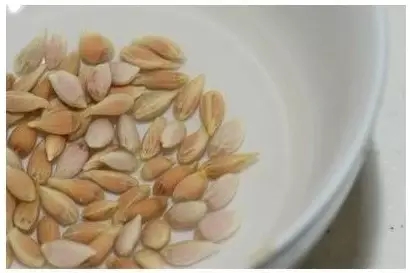
1. Soak the leftover lemon seeds in water for a while.
2. Use tweezers to remove the outer shell.
3. Then find a container or cup you like, fill it with moist soil, and arrange all the seeds with the small end pointing up.
4. Then cover them with coarse sand or small pebbles. You can also cover with plastic wrap, mist with a little water every 2 to 3 days, and they will sprout in about a week.
5. After sprouting, also mist with a little water every 2 to 3 days to keep them moist and help growth.
6. This is the finished result - very pretty, right? It adds a touch of green to your office desk or study desk. If it grows this tall and you think it is too dense, you can divide a few seedlings and move them elsewhere to grow.
What should you do if the leaves of a potted lemon turn yellow?
1. Iron deficiency
You can add ferrous sulfate to the water you sprinkle, controlling the concentration at about 0.3%.
2. Poor nutrition
The usual sign is that as soon as it blooms, the leaves turn yellow and may even drop. You can spray with monopotassium phosphate. Besides nitrogen, phosphorus and potassium, this fertilizer also contains a large amount of trace elements. Directions: spray the leaves at 0.3%, and at the same time apply it to the soil in the pot, once every half month during the growing season.
3. Root rot
Root rot is usually caused by too much water accumulating in the pot or by applying fertilizer that is too strong. Cut away the rotten roots, and afterward pay attention to drainage. If too much of the root system has rotted, the plant most likely cannot be saved.
4. Pests
Pests are visible to the naked eye. You can remove them by hand, or spray the corresponding pesticide.
That is all for the growing methods for potted lemons and how to deal with yellowing leaves.
Potted Lemon Knowledge: Care and Management of Lemon Growing
Lemon is an evergreen small tree in the genus Citrus, family Rutaceae. The leaves are relatively small, oblong-elliptical, with fine serrations along the leaf margins. The flowers are solitary, opening throughout the year, with a rich fragrance. The fruit is oblong-elliptical or oval and ripens in autumn and winter. The rind is yellow, and the flesh is extremely sour with a strong aroma. The juice is citric acid, and the rind can be used to extract lemon oil.
The main techniques for potted lemons are as follows: For seedling raising and potting, in the south where cultivation is on a large scale, grafting propagation should be used; in the north where cultivation is on a small scale, cuttings are mainly used, and grafted seedlings can also be purchased for growing. The lemon root system has relatively high requirements for water, nutrients and soil, so the potting soil should be mixed into a slightly acidic culture soil that is permeable and aerated, and retains water and fertilizer. The time for potting and repotting can be after autumn or in early spring, and can be flexibly arranged according to the local climate.
Light and temperature: Lemon is a light-loving plant, but if the sunlight is too intense, growth and development will be poor. Generally at noon the plant needs to be moved, and the suitable annual average temperature for growth is above 15°C. The optimal growing temperature is 23°C to 29°C, growth stops above 35°C, and at -2°C it suffers cold damage. In summer, lemons generally do not need cooling. Move them indoors before Frost's Descent and outdoors after Qingming, and they can overwinter safely.
Watering and fertilizing: Lemons need a relatively large amount of water during growth and development, but too much water easily causes root rot. Generally speaking, spring is the period of shoot growth and leaf expansion, flower bud formation and flowering, so water should be given appropriately. In summer, with strong light and high temperatures, more water is needed. But it should be timely and appropriate, otherwise it will cause fruit drop. Autumn is the period of autumn shoot growth and rapid fruit enlargement, so there must be sufficient water. Late autumn and winter are the flower bud differentiation period, so the potting soil should be on the dry side. Lemons relatively like fertilizer. Besides applying sufficient base fertilizer when potting and repotting, the principle of light fertilizer applied frequently should be followed during the growing period. The number of fertilizer applications and the amount applied must be determined according to growth condition and phenological stage. For example, for liquid fertilizer, fully fermented cake fertilizer water is good, with a cake-to-water ratio of 1:200. In the north, where the soil tends to be alkaline, ferrous sulfate can be added to the fertilizer solution to make a slightly acidic nutrient solution.
Pruning: Pruning is generally divided into winter pruning and summer pruning. Winter pruning should follow the principle of “remove the dense and keep the sparse, remove the weak and keep the strong,” cutting off dead branches, shortening weak branches, and removing useless water sprouts. Summer pruning on non-fruiting trees mainly involves shortening excessively long shoots; on fruiting trees, remove summer shoots and shorten declining branches on the outer middle and upper parts of the canopy. Promoting flowers and preserving fruit: Lemon is originally a tree species that flowers and fruits in all four seasons, but potted plants in the north mostly flower and fruit in spring. Therefore, after the autumn shoots stop growing, water must be controlled. Wait until both sides of the leaves begin to curl inward, then water moderately to promote flower bud differentiation. Pay attention to fertilizing in the pot and spraying fertilizer on the leaves to cultivate strong fruiting mother branches.
The main measures for preserving fruit: First, strengthen the supply of fertilizer and water to accumulate nutrients; second, carry out artificial pollination; third, thin flowers and fruit. Lemon fruits are large and need a lot of nutrients, with a normal leaf-to-fruit ratio of 30 to 40:1. According to the principle of removing the weak and keeping the strong, with even distribution, first thin out excessive and overly dense flower buds; then when the young fruit is 1 cm in size, thin out part of the fruit; finally, after physiological fruit drop, set the fruit according to the leaf-to-fruit ratio. You can also leave no fruit on weak branches and keep only 1 fruit on strong branches.
Potted Lemon Leaves Turning Yellow and No Fruit? You Need to Pay Attention to These 9 Points
Many people like to grow a pot of lemon at home. It not only beautifies the environment, but if it bears fruit, picking a lemon in your spare time to make lemon water is just about the most wonderful thing. However, potted lemons are not that easy. During the growing process, you need to pay attention to these nine points:
Image: Lemon fruit
1. Repotting and changing soil:Potted lemons must be repotted and given new soil from March to April around the Spring Festival. If the pot is too small, replace it with a suitably larger pot; if the pot is still suitable, you can reuse the original pot with new soil. When repotting and changing soil, base fertilizer should be applied.
2. Spring pruning:In spring, carry out spring pruning together with repotting, cutting off inner canopy branches, dead branches and fallen leaves, diseased and pest-infested roots and leaves, and water sprouts, so as to help the plant bear fruit.
3. Reasonable fertilizing:Before the lemon plant blooms and after it sets fruit, fertilizer should be applied several times. Apply multi-element flower fertilizer once a month and spray flower nutrient solution once every half month to ensure the fruit does not easily drop and is large and brightly colored.
Image: Potted lemon mini forest
4. Prevent leaf drop:Leaf drop affects lemon fruiting. To avoid leaf drop, in daily management, avoid watering that suddenly increases and decreases.
5. Shade at noon:After the lemon plant blooms and before it sets fruit, when the noon temperature exceeds 30°C, it should be shaded for about three hours; otherwise it will affect normal flower formation and also hinder the plant from setting fruit.
6. Artificial pollination:Artificial pollination is an important measure for setting more fruit. Pollination is best done promptly after the petals have opened, and doing this work around 9 a.m. every day gives the best results.
Image: Potted lemon bearing fruit
7. Preventing and controlling pests and diseases:Summer and autumn are seasons with frequent pests and diseases, so prevention and control should be carried out. In preventing and controlling pests and diseases, prevention should be more important than treatment. Spray flower pesticide once every half month, around 9 a.m. and around 4 p.m. Do not spray under the blazing midday sun, to prevent pesticide damage.
8. Focus on preserving fruit:After fruit set, according to the size of the plant, keep several or several dozen vigorous, healthy fruits free of pests and diseases, and remove the rest. Remove spent flowers as soon as you see them, so that nutrients are concentrated in the young fruit.
9. Proper overwintering:Throughout winter, place potted lemons in an environment of 5°C to 10°C to overwinter. The plant should receive sufficient light every day, and watering should normally be controlled, with the potting soil often kept slightly dry, so as to avoid root rot and lay a good foundation for fruiting.