How much does it cost to control pests and diseases on scarlet sage
Scarlet sage sounds like an auspicious name at first hearing, and many people love growing it. Scarlet sage can also get sick, so how do you treat it after it gets sick? What is the price of scarlet sage?
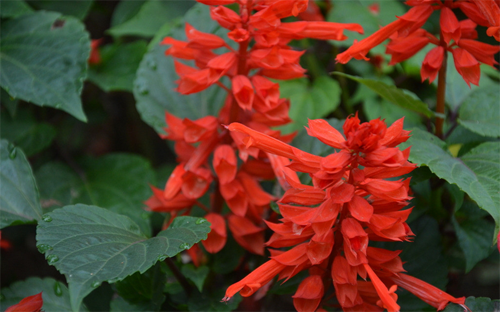
Scarlet sage pest and disease control:
1. Black spot
Small purplish-brown dots appear on the upper surface of the leaves, slowly turning into dark brown lesions. You can spray with carbendazim, thiophanate-methyl, daconil and other chemicals.
2. Powdery mildew
3-5 days after the white powdery layer appears on the leaves, the leaves become water-soaked, gradually lose green color and turn yellow. You can spray carbendazim or triadimefon during the onset period, but Guoguang Yingna has the best effect.
3. Leaf blight
Irregular large spots appear at the leaf tips and leaf margins, the leaves fade to yellow, then turn brown, dry up and fall off. In winter, the diseased branches and leaves should be cut off, and the fallen leaves on the ground cleared away. When the disease occurs, spray fungicides such as carbendazim and thiophanate-methyl.
4. Slug moth larvae
They generally feed heavily on the leaves during hot seasons. Once found, immediately spray with trichlorfon or fenvalerate.
5. Scale insects
They suck the sap from the tender stems and young leaves of scarlet sage, causing poor plant growth. This is mainly triggered by high temperature and high humidity, poor ventilation and insufficient light. Spray with buprofezin.
6. Aphids
They damage tender stems, young leaves, flower buds and so on, seriously affecting plant growth and flowering. Spray with imidacloprid.
Price of scarlet sage:
The price of scarlet sage seedlings is 4 jiao per plant. This is for bare seedlings; if the seedlings come with pots, the price will be higher.
Does scarlet sage get bugs? Scarlet sage pest and disease control / 3 diseases 2 pests
When we grow plants, once the environment is unsuitable or the care methods are improper, the plants may get bugs, even plants with strong disease resistance and vitality are no exception. So does scarlet sage get bugs? The answer is yes. What should you do if it gets bugs? Let's look at the pest and disease control methods for scarlet sage.
Does scarlet sage get bugs?
Scarlet sage can indeed get bugs. The more common pests are red spider mites and aphids. They feed on the sap in the scarlet sage plant, causing nutrient loss in the leaves, roots and stems, leading to wilting, yellowing or death of the plant, and they can also trigger other diseases, posing a considerable threat.
Control: The main preventive measures against red spider mites and aphids are keeping the environment clean, tidy and well ventilated, and maintaining suitable temperature and light, and so on. When pests appear, they need to be removed promptly. Besides a damp cloth and a brush, you can also spray with a 1500-fold dilution of omethoate emulsion.
Scarlet sage pest and disease control methods
1. Viral disease
Symptoms: Viral disease has four types of symptoms, namely mosaic type, yellowing type, necrosis type and malformation type. Its cause is that pests transmit the virus to the scarlet sage plant, and the main transmitter is the aphid. This shows how important it is to prevent aphids and other pests.
Control: When sowing, disinfect the seeds, for example by soaking them in a 10% trisodium phosphate solution for 20 minutes, and so on, which can effectively reduce the appearance of the virus. In addition, usually spray some chemicals to prevent aphids, such as a 1000-fold dilution of 90% trichlorfon, and so on.
2. Leaf spot
Symptoms: Dark brown lesions appear on the leaves of scarlet sage, and lesions may also appear on the stems and petioles. At first the lesions are relatively small, but if not treated in time they gradually expand, and finally the lesions may become irregular in shape with concentric rings at the edges, and eventually the plant turns yellow and weakens.
Control: Do not plant too densely; make sure the plants are properly spaced. If the branches and leaves become intertwined during growth, promptly prune the dense branches. After the disease occurs, treat with a 1000-fold dilution of 50% thiophanate.
3. Downy mildew
Symptoms: The base of the leaf is affected first, then it develops upward. Light yellow lesions first appear on the leaf surface, nearly round or polygonal in shape, then frost-like mold spots form when the air is relatively humid, and finally the leaves wither and die.
Control: When watering, use a small amount of water as much as possible and avoid flood irrigation. On rainy days, drain water to prevent waterlogging. When the disease occurs, control watering and reduce air humidity, then spray a 400-600 fold dilution of HILOT Kaishuang.
Pest and disease control for scarlet sage
Scarlet sage, also known as firecracker red and ivory red, is a plant of the genus Salvia in the Lamiaceae family.
Its inflorescence is slender, its color bright red, its flowering period long, and its adaptability strong. It is the most commonly cultivated herbaceous flower in Chinese cities and gardens.
It is native to Brazil and South America. It likes warm and sunny environments. It is not cold-tolerant, tolerates partial shade, and dislikes frost, snow and high temperatures. It fears waterlogging and alkaline soil. The fruit of scarlet sage is a small nut, oval in shape, containing black seeds. The seeds fall off easily and it can reproduce by self-sowing.
The diseases of scarlet sage are mainly caused by waterlogged soil, humid air, severe shading, and lack of ventilation and air movement, which cause the branches and leaves to rot. Measures should be taken promptly to improve the environmental conditions.The pests of scarlet sage are mainly the rapid reproduction of red spider mites and aphids under dry and hot conditions, which can be controlled in a targeted way.