Columbine Planting Methods and Propagation, Price Detailed Explanation
The flowers of columbine are truly very beautiful, and behind the flowers there are small tendrils; when they move, they are really super cute. What are the planting methods for columbine? How is it propagated? How much does one plant sell for?
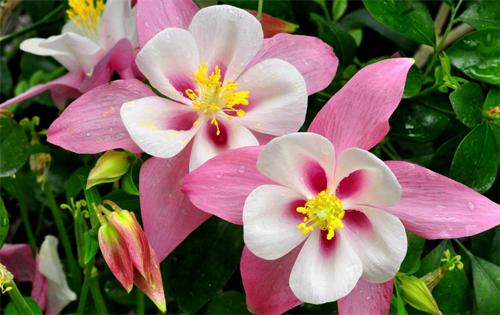
Columbine planting methods:
The flower form is delicate and charming, the flower colors are bright, and it has strong adaptability. It is suitable for planting in masses on lawns and under open woods. In spring, the grass is covered with tiny yellow flowers, full of wild charm. It is also suitable as ground cover in moist places such as lowlands and stream sides. Naturalistic planting, flower borders, flower beds, rock gardens. An excellent garden flower, with unusual leaves and beautiful flowers.
Columbine is robust by nature, cold-resistant, and fond of cool climates; it prefers fertile, moist, humus-rich, well-drained soil.
It likes relatively high air humidity. In summer it should be cared for under semi-shade conditions and must not be exposed to strong sunlight. During the growing period, keep the potting soil slightly moist; just do not let water accumulate.
Columbine propagation methods:
Generally, sowing and division methods are used for propagation.
Columbine is best sown in pots immediately after the seeds mature. Sow the seeds sparsely. Before emergence, cover the sowing pot with glass to keep the soil moist and provide shade. Seedlings emerge after 1 month. Seedlings grown from seed bloom the following year.
Superior varieties of columbine are usually propagated by division, carried out in March to April or August to September, but autumn is preferable.
Columbine seedlings can be planted out when they are about 10 cm tall, with a plant spacing and row spacing of 30 to 40 cm.
Apply a topdressing once before flowering.
Shade is needed in summer. In cold regions, slight covering is needed in winter. After 3 years, the plants tend to decline, so division should be carried out promptly to encourage renewal.
Columbine introduction:
Aliases: Xuejianchou, cat's claw flower, columbine flower;
It has many flower colors and many varieties. It generally has five petals, slightly shorter than the sepals, so it looks very cute and beautiful.
The plant height of columbine is 50-70 cm. The stem is upright, with bipinnately compound leaves, blue-green in color (similar in leaf shape to many ferns).
The corolla is funnel-shaped and drooping, with 5 petals, usually deep blue-purple or white; cultivated varieties also include pink, yellow, and other colors; 5 sepals, the same color as the petals. The follicle is dark brown.
The planting methods for columbine are introduced here. What is the price of columbine?
Columbine is not available everywhere that sells flowers. Sometimes you can come across it, priced at around 10 yuan per pot, and the pot is fairly ordinary. When columbine is kept indoors, it really is quite easy to kill it. I killed one plant myself. I still feel a bit sad about it.
Columbine propagation methods
Columbine likes cool climates, avoids high temperatures and strong sunlight in summer, and is suitable for growing in sandy loam. It is robust and cold-resistant, and likes moist, well-drained sandy loam rich in humus. It is propagated by division or sowing; sowing propagation can be carried out in spring or autumn.
Before planting, apply sufficient base fertilizer. In northern regions, spring is relatively dry, so water 4~5 times per month (adjust the number of waterings appropriately according to the environment by checking whether the potting soil is dry or moist). In summer, appropriate shading is needed, or plant it in a semi-shaded place, where growth is more vigorous. Avoid water accumulation, and drain promptly after rain. Strictly prevent lodging, and at the same time strengthen pruning to facilitate ventilation and light penetration.
When the seedlings reach a certain height (about 40 cm), pinch out the growing tips promptly to control plant height; after winter begins, apply sufficient base fertilizer. In northern regions, also water enough to protect against freezing, and mound soil around the base of the plants to improve their ability to survive the winter and resist freezing.
Columbine is mostly propagated by sowing or division.
Sow in spring or autumn; seedlings grown from sowing can bloom in about 2 years. Planted seedlings need to be renewed once every 3 to 4 years. Cold-resistant and robust in growth, it likes moist, well-drained sandy loam. It grows better in semi-shade. Division is best carried out before budding in early spring or after leaf fall. Sowing is best done in pots immediately after the seeds mature.
Sowing propagation: sow the seeds sparsely. Before emergence, cover the sowing pot with glass to keep the soil moist and provide shade. Seedlings emerge after 1 month. Seedlings grown from seed bloom the following year. Superior varieties are usually propagated by division, carried out in March to April or August to September, but autumn is preferable. Seedlings can be planted out when about 10 cm tall, with a plant spacing and row spacing of 30 to 40 cm. Apply a topdressing once before flowering. Shade is needed in summer. In cold regions, slight covering is needed in winter. After 3 years, the plants tend to decline, so division should be carried out promptly to encourage renewal.
Division propagation: fertilizing and soil preparation are the same as above. Plant in spring or autumn, from January to April in spring and from August to December in autumn, with a plant spacing and row spacing of 10×13.2 cm, cover with 1.6 cm of soil, water thoroughly to settle the roots, and keep the soil moist during the growing period. During the vigorous growth period, apply a small amount of urea as topdressing, using 5 kg of urea per mu diluted with water and poured on to promote growth. Seed propagation: seeds can be sown from January to April in spring and from June to December in autumn.
Apply sufficient base fertilizer, rake the soil fine and level it, prepare the seedbed, water thoroughly to wet the bed, spread the seeds evenly on the surface of the seedbed, and cover with a three-part soil mixture to the extent that the seeds are no longer visible. Keep the bed surface moist; excessive moisture will cause seed rot. Seedlings emerge in 140 days. If covered with plastic film, seedlings emerge in 60 days. After emergence, ventilate and harden the seedlings. When the seedlings are 6.6 cm tall, transplant them to the field, digging and planting as you go, with a plant spacing and row spacing of 10×13.2 cm, and apply topdressing after they survive.
How to grow columbine: potted columbine planting methods and precautions
If everyone has seen what columbine looks like, I believe you will definitely be attracted by its unique beauty. Columbine holds a very high status in medicinal use in China, and at the same time its ornamental value is no less than that of other flowers and plants. Columbine in bloom is very beautiful, with a unique flower shape, very suitable for viewing, so keeping it as a potted plant at home is a good choice.
How to grow columbine
1. Potting up
After columbine sprouts, 5 to 6 weeks later it can be transplanted using plug trays with a diameter of 3 to 4 cm. After another 5 to 6 weeks, blue columbine can be transplanted into flower pots with a diameter of 10 to 15 cm, fan columbine can be transplanted into flower pots with a diameter of 7 to 11 cm, and hybrid columbine can be transplanted into flower pots with a diameter of 11 to 16 cm. Two transplantings are beneficial to plant quality.
2. Medium
The cultivation substrate for columbine needs good drainage. The soil content in the substrate should be about 15%, and about 15% organic matter (such as wood fiber, bark) can be added. For each cubic meter of substrate, apply 1 to 1.5 kg of complete balanced fertilizer, and 1 to 2 kg of slow-release fertilizer, iron chelate, and trace nutrient elements. The pH value should be 5.5 to 6.2.
3. Light
Columbine is a long-day plant. Maintain a high light level. Potted varieties need supplemental lighting in both winter and spring, which helps improve plant quality. In mid-January, they need to grow under long-day (16 hours) and continuous supplemental lighting (30000 to 40000 lux) conditions, with the temperature kept at 12°C.
4. Temperature
The optimum growth temperature for columbine is 14°C to 16°C. After the roots have formed, lower the temperature to 8°C to 10°C. Temperature changes can improve plant quality. In spring, seedlings begin to grow at 15°C to 18°C for 6 to 7 weeks. A temperature of 10°C to 12°C will prolong the cultivation time. Avoid high temperature and low light conditions.
5. Fertilization
Columbine has a moderate fertilizer requirement. A balanced nitrogen-potassium fertilizer at a concentration of 130 ppm to 150 ppm can be sprayed once a week. Avoid high ammonium and high nitrogen levels. Do not fertilize after mid-September.
Potted columbine planting methods and precautions
I. Potted columbine planting methods
1. Pot and soil selection
For potted columbine, choose a slightly larger flower pot. Put soil into the pot; it can be well-drained sandy soil or humus-rich leaf mold. A little base fertilizer needs to be added to the soil.
2. Light and temperature
Columbine likes cool climates, avoids high temperatures but can tolerate cold, and needs sufficient light. When caring for columbine, keep the growth temperature between 15°C and 35°C. Light should be moderate, avoiding the high temperatures and strong sunlight of summer. At this time, shading is needed, or the potted columbine should be placed in a semi-shaded place for care.
3. Watering and fertilizing
Columbine needs strengthened management with reasonable watering and fertilizing. During the vigorous growth period of columbine, sufficient water should be given. The amount and frequency of watering should be determined according to the dryness and moisture of the potting soil, but water accumulation should be avoided. In dry weather, drain promptly, and after rain, drain excess water promptly, and be careful to maintain a certain air humidity. For fertilizing, moderate fertility is sufficient. Fertilizer can be applied once a week, but be careful not to make the concentration too high. Note that fertilizing should stop after autumn begins. In addition, before columbine blooms, apply some phosphorus fertilizer and potassium fertilizer to make the flowers more brilliant.
II. Precautions for growing columbine
1. Propagation methods
Columbine is basically propagated by division or sowing. Sowing propagation can be done in spring or autumn, and division propagation is mainly done in autumn.
2. Pinching
During the growing period, columbine needs timely pinching to control plant height. After columbine has finished blooming, the spent flowers can be cut off, so that columbine can be cared for as a foliage plant.
3. Pests and diseases
The main pest of columbine is aphids, which cause relatively great damage and can also cause mosaic disease. In addition, there is also the harm of powdery mildew, which requires timely and reasonable treatment.
How columbine is propagated
1. Sowing: Columbine is best sown in pots immediately after the seeds mature. In order to adjust the dormancy period of columbine, sow immediately after the seeds are harvested. Apply sufficient base fertilizer, rake the soil fine and level it, prepare the seedbed, water thoroughly to wet the bed, spread the seeds evenly on the surface of the seedbed, and cover with a three-part soil mixture to the extent that the seeds are no longer visible. Keep the bed surface moist; excessive moisture will cause seed rot. Seedlings emerge in 140 days.
2. Division: Columbine division is carried out in August-September. First cut off the branches and leaves on the upper part of the plant, keep the relatively low-growing shoots at the growth points, then dig up the plant, shake off the soil, and plant them separately according to the natural separation of the main roots. If the main root is aged, it should be removed, making sure the base of the shoot carries part of the root crown, then insert it into a sand bed, and plant it separately after it takes root. Cuttings bloom the following year.
What to do about columbine mosaic disease
1. Symptoms
The whole plant is affected, and the leaf surface is wrinkled and deformed. The pathogen is caused by cucumber mosaic virus. The virus particles are spherical, with a diameter of 35 nanometers, an inactivation temperature of 60-70°C, and a retention period outside the body of 3-5 days. The host range is extensive. The transmission route may be through aphids and sap friction, causing healthy disease-free plants to become diseased.
2. Control methods
Fertilize scientifically and effectively, use more compound fertilizer and organic fertilizer, avoid partial application of nitrogen fertilizer, and add phosphorus and potassium fertilizer, thereby improving the nutritional conditions of columbine and enhancing the plant's antiviral ability; also loosen the soil in a timely manner to promote the development of the plant's root system. Remove weeds promptly. Control aphids early and eliminate the transmission vector.
The care methods for columbine are not very difficult either. With a little patience in daily care, it can grow very well. During the care process, not only do you need to prevent its pests and diseases, but the step of timely pinching during the growing period is also indispensable.