How to Grow Papaya in Pots and How Long Its Flowering Period Lasts
Fruit pot plants are a popular trend now and are very eco-friendly. After eating a papaya, you can use its seeds to grow a pot plant. So how do you grow papaya in a pot?
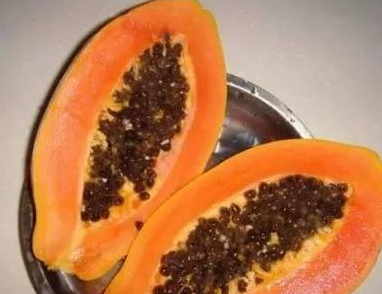
1. Cut the papaya open, eat the flesh of course, but first take out the seeds and soak them in water (room-temperature water);
2. Papaya seeds have a membrane on the outside (you can see it if you look carefully). Soak them in room-temperature water in a shaded place for two days, and the membrane will come off (it slips off with a gentle squeeze of your fingers), revealing round little black beads one by one.
3. Find a small flower pot (any container you like), fill it with loose, fertile soil, spread the papaya seeds flat one by one to fill it, then cover them with small stones. Doesn't it look nicer this way? (Flower markets sell maifan stone, akadama, expanded clay pellets and the like, but ordinary small stones or pebbles are fine.) Remember to keep the potting soil slightly moist, and do not put it in the sun at first.
4. It is best to plant them at a temperature of 15°C to 20°C, and grow the seeds in a cool, ventilated place, but do not put them in direct sun. Spray water with a spray bottle every day (never pour water, as it will wash the seeds away).
5. After more than 20 days, little seedlings finally come up. They are quite cute. Thin out some of the seedlings that are too crowded in time. It is your own fault for not sowing them evenly.
6. With seedlings there is no worry about growth; once one appears, more keep popping up one after another. If the room temperature is high, spray twice a day, and on weekends also keep water in the tray.
7. This little pot plant looks very tempting, but it will take two or three years to bear fruit.
Papaya flowers in April and fruits from September to October.
It can be grown in Shandong, Shaanxi, Hubei, Jiangxi, Anhui, Jiangsu, Zhejiang, Guangdong, Guangxi and other places, but friends in places where the temperature is not high enough should pay attention to cold protection.
Papaya is not strict about soil quality, but it grows better in deep, loose, fertile, well-drained sandy soil, and should not be planted in low-lying waterlogged spots.
It likes half-dry, half-moist conditions. Around the flowering period it prefers slightly dry conditions. If the soil is too wet, the flowering period will be short. After fruit set it likes moisture. If the soil is dry, the fruit becomes shriveled and drops easily. As the fruit approaches maturity, the soil should be slightly dry. If the soil is too wet during the fruit-ripening period, the fruit will drop.
It is not shade-tolerant, so choose a wind-sheltered, sunny spot for planting.
It likes a warm environment and can overwinter outdoors in the Yangtze-Huai River basin.
That is all for how to grow papaya in pots. Go and make yourself a fruit pot plant right away.
How to Grow a Pomegranate Tree and How Much Does One Cost
You may never have seen a pomegranate tree, but you have surely seen a pomegranate! This pomegranate tree is meant to bear fruit. How do you grow a pomegranate tree? How much does one pomegranate tree cost:
How to grow a pomegranate tree:
Many people grow pomegranate pot plants at home, but they only flower and do not fruit. It is not a feng shui issue; it is related to the home environment, as well as the variety and improper growing methods.
1. Variety
There are many pomegranate varieties, mainly divided into two categories, namely flowering pomegranates and fruiting pomegranates (fruiting pomegranates mostly have single-petaled flowers).
If you choose a flowering pomegranate meant only for flower viewing, it may only flower and not fruit. Even if it fruits, it can only produce small fruits 2—3 cm in diameter, which are not edible, so they are just for looking at.
There is now a double-petaled red-flowered pomegranate that has bright flowers and also fruits, so you can enjoy both the flowers and the fruit.
2. Environmental requirements
The soil for growing pomegranates should be loose, fertile and well-drained; light should be sufficient, and the growing period requires full sun, and the more sufficient the light, the more numerous and vivid the flowers. When light is insufficient, it may only grow leaves and not flower; the suitable growing temperature is 15-20°C. The biggest problem with growing them at home is light. Unless it is a courtyard with unobstructed, sunny conditions, it is very difficult to meet the requirements for pomegranates to flower and fruit.
3. Daily management
Watering, fertilizing, moderate pruning, and pest and disease control are also very important. Only with full attention can you have good flowers and abundant fruit.
How much does one pomegranate tree cost:
Pomegranate tree 4 cm 15 yuan, 5 cm 30 yuan, 6 cm 50 yuan, 7 cm 70 yuan, 8 cm 100 yuan, 10 cm 150 yuan, 12 cm 260 yuan, 14—15 cm 800 yuan, 18—20 cm 1200 yuan, and old pomegranate tree trunks; papaya 2—3 cm 10—40 yuan, 4—6 cm 150—260 yuan, 8—10 cm 550—760 yuan, 15—18 cm 2000---3200 yuan, 20—25 cm 5500---12000 yuan, 25—30 cm 12000—15000 yuan, 35—40 cm 20000—25000 yuan, 45 cm 35000 yuan; Chinese scholar tree 6 cm 60 yuan, 7 cm 150 yuan, 8 cm 200 yuan, 1
That is all for the growing methods and prices of pomegranate trees. You can grow one at home yourself.
How to Care for a Papaya Bonsai and How to Grow a Papaya Bonsai
The papaya tree has flowers in spring and fruit in summer and autumn. It is elegant, pretty and graceful, and never tires the eye, bringing delight. It can also be trained into a single-trunk or multi-trunk tree or shrub for a grove or as a courtyard accent. The papaya tree likes a sunny environment, is fairly drought-tolerant and cold-tolerant, is not demanding about soil, and likes a hot, dry climate. Today the editor will introduce how to care for a papaya pot plant.
Before cultivating the plant, treat its seeds first. First scald the papaya tree seeds with 55°C water, let them cool naturally, then disinfect them with 800 times diluted thiophanate-methyl for 15 minutes, then take them out, rub and wash them clean with clear water, soak them in clear water for about 10 hours, take them out and wrap them in three layers of wet cloth, and germinate them at about 35°C, turning and spraying with warm water once a day, and sow the seeds that have split their shells in time. After 7 days of germination, sow the seeds that have not split their shells separately.
First make raised beds about 1.8-2 m wide, that is, bed width 2.2-2.5 m, and apply decomposed manure, phosphate rock powder, compound fertilizer and borax per mu, spread the above base fertilizer evenly on the bed surface, mix it evenly with the bed soil, then shape it into a turtle-back bed, then mix 10 kg of the organic biological fertilizer "Shiquan Dabu" with water and sprinkle it on, which helps decompose nutrients that are not easily absorbed by crops, improves crop immunity, and improves the soil biological community. After making the soil half-dry and half-moist, cover the bed surface with silver-black plastic film, pull it flat and tight, and press it down around the edges with soil clods.
In February of the following year, after the frost period, carry out field planting of the papaya trees. Choose a relatively large flower pot. After planting the papaya seedlings, water them thoroughly with root-setting water. A fungicide such as thiophanate-methyl can be added to the root-setting water to prevent seedling disease, and make sure not to damage the roots, not expose the roots, and not let water accumulate. Papaya seedlings should not be planted too deep; slightly deeper than the root crown is suitable. Water every day before they survive, keeping the soil moist.
20 days after the papaya trees are planted, new roots grow, and you can apply diluted manure or 5‰ urea as a liquid feed, fertilizing once every 10-15 days, mainly with quick-acting fertilizer. Before and after budding, apply heavy fertilizer in time to meet the needs of flower bud formation, still mainly nitrogen fertilizer, appropriately increasing P and K fertilizer, and additionally use flowering essence for foliar top dressing.
Papaya growth and development need sufficient water, but they also dislike waterlogging, so as to avoid root rot from accumulated water. Therefore, drainage and irrigation should be done well. In autumn, when it is dry and the plants are in the full fruit period, irrigate frequently.
When cold waves and frost come, cover the top of the papaya tree with rice straw, and also wrap the stem with rice straw. At the same time, cover the soil and use smoke, apply additional P and K fertilizer to the papaya, and spray the "Shiquan Dabu" biological fertilizer.
Well, that is all for the making and care methods of papaya bonsai. Welcome to keep following Succulent Flower Garden to learn more little tips about bonsai making and care.