Broom (Cytisus scoparius) Growing Methods, Propagation Tips and Aliases Explained
Broom is a fairly common flower that can be seen in many places. Its yellow blooms are very attractive and fragrant too. If you want to grow broom at home, what are the growing methods? How do you propagate it? What are its aliases?
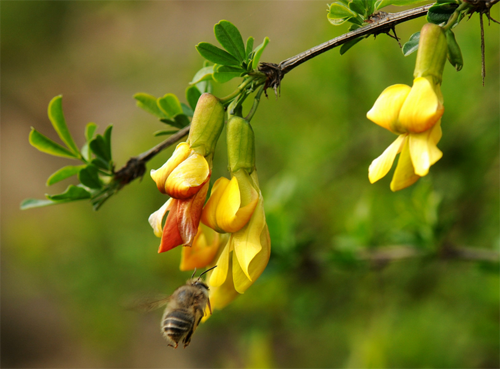
Growing methods for broom:
1. Watering and fertilizing
Broom likes light and tolerates drought, so just place it in a sunny, well-ventilated spot. It is cold-hardy in winter and can overwinter outdoors south of the Yellow River, and the pot can be buried in the soil.
Water according to the principle of “do not water until dry, and water thoroughly when you do”. Keep the potting soil moist during the flowering period to extend the bloom time.
During the winter dormant period, apply a liquid fertilizer once; water with a liquid fertilizer once before flowering; apply a topdressing once after flowering; and usually apply a light fertilizer in moderation.
2. Pruning
After leaf drop in winter, cut off branches that affect the tree shape; after flowering, shorten the branches that have bloomed to encourage new flowering shoots; during the vigorous growth period, you can prune leggy branches at any time and pinch back appropriately. Its growth ability is strong.
3. Repotting
Repot once every 2 to 3 years in early spring, remove 1/2 of the old soil, replace with fresh potting soil, trim the root system, replant, place in filtered light, water thoroughly, frequently spray water around the root crown, and once it grows strong, return to watering only when the soil is dry.
4. Advantages of broom
In the north, broom is used as forage grass, especially in winter and spring when forage grass has withered, and its practicality is very good. It has strong adaptability, tolerates drought and poor soil, and is not afraid of being buried by sand. It is undoubtedly excellent for windbreaks and sand fixation, soil and water conservation, and improving the ecological environment.
Its root system is well developed and can improve soil and water conditions. It tolerates low temperatures and intense heat, enduring lows of -39°C; in summer it can grow normally when the surface temperature of sandy land reaches as high as 45°C.
Propagation methods for broom:
Caragana can be propagated by sowing, cuttings, division, layering and other methods, and propagation is simple.
1. Sowing
It is best to sow immediately after collecting the seeds. If they have been stored dry, soak the seeds to promote germination before sowing the following spring (soak at room temperature for 7 to 8 hours);
2. Cuttings
Caragana can be propagated by hardwood cuttings in February to March, or by softwood cuttings during the plum rain season. Cut the cuttings to 8 to 12 cm, insert them to 1/2 depth, build a shade frame after insertion, water moderately, and after rooting they can receive full light and grow vigorously, with a relatively high survival rate;
3. Division
Division propagation is carried out in spring, in February to March.
What are the aliases of broom?
Huangque flower, Yangque flower, Zique flower;
It blooms from April to May. The tips of the petals are slightly pointed and split into two parts, like a flying finch stopping there, and the color is golden yellow, so it is named "broom" (jinque flower).
That concludes the introduction to broom growing and propagation methods. Hurry and add some color to your home.
Pruning methods for broom
Broom cytisus scoparius
Also known as jinque'er, it is an evergreen or deciduous shrub in the legume family, genus Cytisus. Native to Europe. There are evergreen and deciduous varieties. There are not many varieties. In courtyard cultivation, the plant height is generally kept below 2 m. Pruning and cutting propagation are both very easy; transplanting is slightly difficult.
Cultivation environment
Courtyard cultivation is suitable in warm areas and in spots with good sunlight. It prefers well-drained sandy loam. It is not suitable for places that are too wet.
Pot cultivation: it can be grown in pots using a pot of size 10 or larger. It should be placed in a location with good sunlight for management.
Soil: use akadama soil alone. (Akadama soil is a kind of breathable, granular volcanic soil that is slightly neutral.)
Time needed for flowering: cutting-grown plants can bloom 3 to 4 years after planting.
Main reasons for not flowering: 1) insufficient sunlight. 2) Cutting all branches too short in autumn and winter.
How flower buds grow: flower buds emerge from the axillary buds of new shoots from autumn to winter.

Basics of pruning
Pruning old branches and the trunk in places without branching will cause dieback, so prune above the branching point of the branch.

Pruning method for courtyard cultivation a
Leave it alone. Only prune branches that are especially messy or excessively elongated.

Pruning method for courtyard cultivation b
Every 1 to 2 years, cut out one- to two-year-old new branches to keep a compact plant shape.

Common methods for making broom bonsai
Broom gets its name because its golden-yellow flowers resemble a finch bird spreading its wings to fly. In addition, it also has aliases such as Caragana, Feilai Feng, Qun Que, and Baopi Bian, and is a deciduous small shrub in the legume family, genus Caragana. The plant height is about 1.5 m. The iron-black-brown trunk is upright and clustered, the slender small branches are yellow-brown or gray, the long branches droop as they grow, the stems have thorns, and the bark peels off in threads. The odd-pinnate compound leaves bear small leaflets, and the leaves are leathery and dark green. One to two flowers are borne in the leaf axils, butterfly-shaped, yellow with a red blush, opening from April to June.Broom is distributed in the sunny slopes of hilly and mountainous areas in the Yangtze River basin and North China region of China, and is now widely cultivated as a garden flower. The roots of broom are gnarled and vigorous, the trunk is steely and strong, and the soft branches are easy to twist and wire, making it suitable for making bonsai in different forms such as wind-swept style, cascade style, forest style, raised-root style, connected-root style, root-on-rock style, curved-trunk style, slanting-trunk style, and double-trunk style. When making them, you should shape according to the material, use both wiring and pruning, and combine methods such as pulling to carry out comprehensive shaping, so that the finished bonsai is both aged and quaint, and lush and full of vitality, achieving an artistic realm that originates from nature yet rises above nature. Before placing broom bonsai into a fine pot, you can first grow and train the plant in a clay tile pot filled with clean plain sandy soil. After it survives, and after preliminary shaping and root raising, move it into a fine pot for viewing in the second or third year. Potting and transplanting of broom are best done before bud break in spring. Before planting, cut off excess branches and remove torn or damaged roots, and the cut surfaces should be smooth. Soaking in water is strictly prohibited, otherwise the plant will certainly rot at the roots and die after planting. After planting, water once to settle the roots, and afterward do not water until dry. Plants that have not yet unfolded their leaves should be kept in a wind-sheltered, sunny place after potting, and the ambient temperature does not need to be too high, so that they first grow roots and then leaves, to avoid excessive temperature causing the plant to sprout too early and creating a "false survival" phenomenon.
Broom is commonly propagated by sowing, division, cuttings, layering and other methods. It prefers a sunny environment and tolerates drought and poor soil, but fears waterlogging and overly shady environments. Its sprouting ability is very strong and it grows rapidly. During the growing season, pinch back frequently, which not only keeps the leaves small but also helps it form more buds and bloom more. At any time, cut off branches that are too long, too messy, or otherwise affect the beauty of the bonsai. Each spring before bud break, heavily prune the plant once, cutting off weak branches, leggy branches, dead branches, and other branches that affect the shape. Broom is not afraid of sun, and even in midsummer it does not need shading. However, too much water will cause root rot, and too much fertilizer will make the leaves too large and reduce ornamental value, so in general there is no need to apply additional fertilizer during care, but when flower buds form, you can spray the leaves once with 0.2% potassium dihydrogen phosphate to extend the flowering period. In winter, overwinter it indoors in a cool place or outdoors in a wind-sheltered, sunny place. Repot once about every 3 years in spring before bud break, and the potting soil should be sandy soil with medium fertility and good drainage.