Monkey Face Orchid Care Guide and Propagation, Price Explained
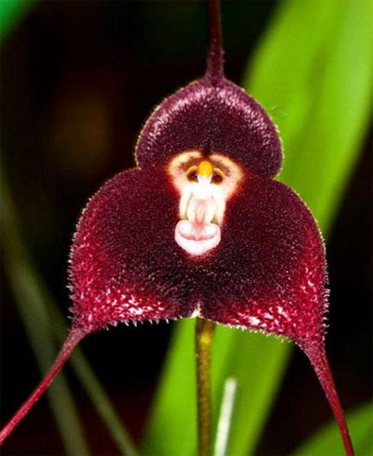
The Monkey Face Orchid really does look like a monkey, complete with a monkey's tail. Keeping one at home is like having a mischievous little animal in the house. So what are the care and propagation methods for the Monkey Face Orchid? And how much does it cost?
Monkey Face Orchid care methods:
1. Choosing the potting mix
Growing the Monkey Face Orchid isn't hard. Choose the right medium - usually a mix of bark, perlite and sphagnum moss. You can top the potting mix with sphagnum moss to retain moisture while staying airy. In summer, of course, shade it to prevent scorching and direct sun. Humidity should be moderate; the environment shouldn't be too dry.
2. Propagation
The Monkey Face Orchid is usually grown from seed. Scatter the seeds on a seedling tray; no need to cover them with soil. Once it cools slightly in autumn, you can sow them.
Keep the potting mix slightly moist. Transplant when 2 to 3 true leaves have formed, and tend them carefully - the plant stays quite compact.
3. Humidity and watering
It likes slightly moist potting mix, so water frequently in summer. It's fine if the environment is a little on the dry side (no waterlogging, no rain exposure). If it grows lushly, you can pinch the tips appropriately to get more flowers!
It usually blooms from April to May, and the flowering period is quite long. Of course, there are also varieties that bloom in summer and autumn, and their ornamental value is good too!
4. Suitable temperature
Another downside of the Monkey Face Orchid is that it fears heat. Getting it through summer is like caring for succulents - it's rather delicate. So you can mist water around it to cool it down; no need to do this on cloudy and rainy days!
In winter, it's best to overwinter it at above 5 degrees. Of course, an indoor temperature above 15 degrees is also good for it.
5. Appropriate sunlight. Except in summer, it can get as much light as possible. It's also one of those plants that can't take scorching sun - it quite likes sunlight but can't take direct sun. Only with ample sunlight will it grow better and produce more flowers.
Shade it appropriately in summer, much like caring for succulents. It stops growing in both high and low temperatures.
During the flowering period, it's usually brought indoors, which helps extend the bloom time. The best spot is a ventilated, shaded southeast-facing windowsill. Don't say I didn't tell you.
6. Fertilizing
This plant doesn't need frequent fertilizing. Generally, use a weak solution and fertilize sparingly. Don't fertilize in summer and winter; in spring and autumn you can fertilize lightly and often, but the amount must be small. Usually an ordinary diluted liquid fertilizer is enough! Points to note:
On cloudy and rainy days it shouldn't be left outside in the rain. Since it's a potted plant, you can move it indoors for a few days - that's fine too.
Summer precautions:
In summer, water in the early morning or evening. You can mist the plant frequently. Don't water during the hot part of the day, and especially don't put it out in the sun right after watering.
Its seeds scatter easily when they mature. Whether to harvest them then is up to you - though it also depends on whether you pollinated it. Without pollination, where would seeds come from?
Its flowers really do look bizarre!
Monkey Face Orchid propagation methods:
The Monkey Face Orchid is usually grown from seed, but it can also be propagated by softwood cuttings or by division when repotting.
1. Sowing
Sowing is usually done in autumn. Mix humus soil with sandy soil, or simply mix perlite or fine sand with peat moss. The seeds are extremely small, so you can't water with a sprinkler; usually you soak the pot, letting water seep in through the holes in the bottom.
Sow at around 15 degrees; they germinate in two weeks. Transplanting when 3 to 4 true leaves have formed is the safest, and keep the potting mix slightly moist.
2. Division. Division is done in spring, conveniently during repotting. Pull out the whole plant, shake off the potting soil, cut it apart with a sharp knife into several plants, and each one must have a fairly good amount of roots. After dividing, remove some old leaves appropriately to increase the survival rate.
After dividing, soak in carbendazim or chlorothalonil for 5 minutes, let dry, then pot up. (After division, don't water frequently; give a small amount each time and mist often.)
Too much watering easily causes root rot. If all your divided plants die then, it'll be really sad.
How much does the Monkey Face Orchid cost:
The Monkey Face Orchid is still relatively rare on the market. The price is around 200 yuan. It has fairly high requirements for temperature and soil, and is quite easy to kill.
That's all for the Monkey Face Orchid's care and propagation methods. Go get yourself a little monkey sprite to keep at home.
Monkey Face Orchid Care Methods - One of the Rare Orchid Varieties
The Monkey Face Orchid (Dracula simia) is a perennial herbaceous flower. Its flowers grow opposite each other in the leaf axils, are funnel-shaped and yellow, usually with purplish-red blotches or spots, and are very beautiful. Now let's take a look with the editor at the care methods for the Monkey Face Orchid, and see how to grow this orchid that, with its monkey face, is vividly called the "Monkey Face Orchid."
Introduction to the Monkey Face Orchid
A bizarre orchid grows in the cloud forests of southeastern Ecuador and Peru. Because it has a monkey face, it is vividly called the "Monkey Face Orchid." This orchid usually grows at around 2000 meters above eye level, in very hidden spots, so it is hard for people to find. This orchid can bloom in any season, and the scent it gives off is similar to that of a ripe orange.
Monkey Face Orchid (Dracula simia). "Dracula" means "little dragon," referring to this orchid's two long spikes and two long sepals, while "Simia" refers to an even more striking bizarre feature of this orchid, namely the monkey face. Because it has a monkey face, it is vividly called the "Monkey Face Orchid," and its scientific name is Dracula simia. Besides the monkey face, this orchid has two other bizarre features, namely two long spikes and two long sepals.
The parts of this orchid that look like a "monkey face" and "monkey mouth" are the lip of Dracula simia. The parts that look like three large petals are actually sepals, while the part resembling the monkey's forehead and nose is the column. In 1978, botanist Carl Luer named this orchid.
I. Morphological characteristics
The Monkey Face Orchid (Dracula simia) is a perennial herbaceous flower, often grown as a 1- to 2-year-old plant. It is 30 to 40 cm tall, with a thick, hollow stem. The leaves are opposite and decussate, broadly ovate. It blooms from April to May; the flowers grow opposite each other in the leaf axils, are funnel-shaped and yellow, usually with purplish-red blotches or spots, and are very beautiful.
The stem is thick and hollow, rooting at the nodes where it lies on the ground. The leaves are decussate, broadly ovate, with length and width nearly equal, slightly narrower toward the top. The inflorescence is a sparse raceme; the flowers grow opposite each other in the leaf axils, are funnel-shaped and yellow, usually with purplish-red blotches or spots. The seeds are tiny.
The corolla base color of cultivated varieties ranges through different shades of yellow, marked with red, purple and brown spots of various sizes and shapes.
II. Ecological habits
The Monkey Face Orchid (Dracula simia) is commonly found growing in the forests of Ecuador and Peru at an altitude of 2000 meters, where it was discovered by botanists. Keep the plant partially shaded, prevent scorching sun, and maintain a certain humidity.
The Monkey Face Orchid (Dracula simia) likes a cool climate and is relatively cold-tolerant, but it cannot be damaged by frost; in winter it can withstand low temperatures of 2°C. It likes moisture and ample light, and grows well in fertile soil.
Monkey Face Orchid care methods
1. Humidity management
The Monkey Face Orchid (Dracula simia) likes a relatively dry air environment. If cloudy and rainy days last too long, it is prone to infection by pathogens. It fears rain exposure, so keep the leaves dry at night. The most suitable relative air humidity is 40 to 65%.
2. Temperature management
The Monkey Face Orchid (Dracula simia) likes a cool climate and fears intense heat; getting it through summer is difficult. It cannot tolerate frost and cold; when the temperature drops below 10°C, it enters dormancy. The most suitable growing temperature is 15 to 28°C.
3. Light management
In the three seasons of late autumn, winter and early spring, since the temperature is not very high, give the Monkey Face Orchid (Dracula simia) direct sunlight to help it photosynthesize and form flower buds, bloom and set seed. If hot weather occurs or in summer, it needs about 50% of the sunlight shaded out.
If it is kept indoors for viewing after blooming, place it near a southeast-facing door or window to extend the flowering period and increase the number of flowers as much as possible.
4. Fertilizer and water management
It doesn't demand much fertilizer or water, and it also fears haphazard fertilizing, concentrated fertilizer, and one-sided application of nitrogen, phosphorus or potassium. Follow the fertilizing (and watering) principle of "weak fertilizer applied frequently, small amounts but many times, complete nutrition":
5. Spring and autumn
These two seasons are its peak growing periods. Manage fertilizer and water in the cycle of "Hua Bao" -- "Hua Bao" -- clear water -- "Hua Bao" -- "Hua Bao" -- clear water (at the very least, ensure two "Hua Bao" feedings per week). The interval is roughly: 1 to 4 days for outdoor care; shorter intervals on sunny or hot days, longer intervals or no watering on cloudy, rainy or cold days. For indoor care, 2 to 6 days; shorter intervals on sunny or hot days, longer intervals or no watering on cloudy, rainy or cold days.
6. Summer
This is the season of slow growth, so appropriately restrict fertilizer and water. Manage fertilizer and water in the cycle of "Hua Bao" -- clear water -- clear water -- "Hua Bao" -- clear water -- clear water. The interval is roughly: 1 to 4 days for outdoor care; shorter intervals on sunny or hot days, longer intervals or no watering on cloudy, rainy or cold days. For indoor care, 2 to 6 days; shorter intervals on sunny or hot days, longer intervals or no watering on cloudy, rainy or cold days. Water when temperatures are low in the morning or evening, and also mist the plant frequently. Try to schedule watering in the morning when the temperature is lower.
7. Winter
During the winter dormancy period, the main task is to control fertilizer and water well. Manage fertilizer and water in the cycle of "Hua Bao" -- clear water -- clear water -- "Hua Bao" -- clear water -- clear water, with intervals of roughly 7 to 10 days; shorter intervals on sunny or hot days, longer intervals or no watering on cloudy, rainy or cold days. Try to schedule watering at midday on sunny days when the temperature is higher.
Pinch the tips several times during the growing period to encourage branching. In winter, cultivate in a low-temperature greenhouse; in spring, after the early frost has passed, place it in the open field for ornamental cultivation. The seeds scatter easily when mature, so harvest them in batches at the right time. It can also be propagated by cuttings: cut tender stems and insert them into moist soil, and they root very easily. Since the stems root at the nodes where they creep along the ground, you can cut off rooted stem sections and plant them separately. The cultivation site is best chosen in a semi-shaded spot protected from the western sun, and apply extra organic fertilizer to promote vigorous growth and abundant flowering. The plant can withstand low temperatures of -20°C. Propagate by seed. Sow in pots in September; the sowing soil can be equal parts loam, leaf mold and sand. Because the seeds are tiny, the soil cover should be thin; use the pot-soaking method to keep the potting soil moist. The suitable sowing temperature is 12-15°C; they germinate in 7-14 days. When 3-5 true leaves have formed, move them into 7-9 cm pots, keep them moist, fertilize frequently, and adjust the pot spacing in time so they don't crowd each other.
In winter, cultivate in a low-temperature greenhouse; in spring, after the early frost has passed, place it in the open field for ornamental cultivation. The seeds scatter easily when mature, so harvest them in batches at the right time. It can also be propagated by cuttings: cut tender stems and insert them into moist soil, and they root very easily. Since the stems root at the nodes where they creep along the ground, you can cut off rooted stem sections and plant them separately. The cultivation site is best chosen in a semi-shaded spot protected from the western sun, and apply extra organic fertilizer to promote vigorous growth and abundant flowering. The plant can withstand low temperatures of -20°C. Propagate by seed. It likes a cool climate and is relatively cold-tolerant, but it cannot be damaged by frost; in winter it can withstand low temperatures of 2°C. It likes moisture and ample light. It grows well in loose, fertile, well-drained soil.
Monkey Face Orchid propagation methods
The Monkey Face Orchid (Dracula simia) is commonly propagated by seed, but can also be propagated by softwood cuttings or division.
1. Seed propagation
Sow in pots in September; the sowing soil can be equal parts loam, leaf mold and sand. Because the seeds are tiny, the soil cover should be thin; use the pot-soaking method to keep the potting soil moist. The suitable sowing temperature is 12-15°C; they germinate in 7-14 days. When 3-5 true leaves have formed, move them into 7-9 cm pots, keep them moist, fertilize frequently, and adjust the pot spacing in time so they don't crowd each other.
2. Division propagation
Time for division: best done in early spring (February or March) after the soil has thawed.
Division method: Take the mother plant out of the pot, shake off the excess potting soil, separate the tangled roots as much as possible, and cut it apart with a sharp small knife into two or more plants. Each divided plant must carry a substantial amount of roots, and its leaves should be trimmed appropriately to help it survive.
Potting and disinfection:
Soak the divided small plants in a 1500-fold chlorothalonil solution for five minutes, then take them out to dry, and they can be potted. Alternatively, right after potting, drench the roots with chlorothalonil.
Care after division:
After the divisions are potted, drench the roots or water once thoroughly. Because its root system is heavily damaged and its water-absorbing ability is very weak, it takes about 3 to 4 weeks to recover and sprout new roots. Therefore, within 3 to 4 weeks after division, restrict watering to avoid root rot. But since the transpiration of its leaves is unaffected, to maintain the water balance of the leaves, mist the leaf surface 1 to 3 times a day (mist more when it's hot, less or not at all when it's cold). During this period, do not fertilize either. After division, also watch out for overly strong sunlight; it's best to keep it in a shade house.
Potting and transplanting:
When potting small seedlings, first place a 2 to 2 cm thick layer of coarse-grained substrate or expanded clay pellets at the bottom of the pot as a drainage layer. On top of that, scatter a layer of fully decomposed organic fertilizer as a base fertilizer, about 1 to 2 cm thick, then cover with another layer of substrate about 1 to 2 cm thick, and then place the plant in, so as to separate the fertilizer from the roots and avoid burning the roots.
Substrate for potting:
You can choose one of the following: peat + perlite + expanded clay pellets = 2 parts + 2 parts + 1 part; peat + furnace slag + expanded clay pellets = 2 parts + 2 parts + 1 part; sawdust + vermiculite + medium-coarse river sand = 2 parts + 2 parts + 1 part. After potting, water once thoroughly and keep it in a slightly shaded environment for a week.
When transplanting small seedlings, first dig the planting hole, scatter a layer of organic fertilizer at the bottom of the hole as a base fertilizer (base fertilizer), about 4 to 6 cm thick, then cover with a layer of soil and place the seedling in, so as to separate the fertilizer from the roots and avoid burning the roots.
After placing the seedling in, backfill the soil to cover the roots, press the soil firm with your foot, and water once thoroughly.
Big Brother Monkey Face Orchid Care Methods and Main Value
The Monkey Face Orchid (Dracula simia), also called the Monkey Face Orchid, is another masterpiece of nature's uncanny workmanship. It not only resembles our Big Brother Sun Wukong, but also has a faint floral fragrance, making people really want to get a pot and admire it every day!
Monkey Face Orchid care methods
The Monkey Face Orchid (Dracula simia) gets its name because the shape of its petals and sepals closely resembles a monkey. It is mainly distributed in Ecuador and Colombia.
Monkey Face Orchid care methods:
1. Soil
The Monkey Face Orchid (Dracula simia) likes a slightly acidic substrate. It requires a loose, airy, well-drained medium that keeps the roots moist without waterlogging. Generally, an orchid growing medium can be used.
2. Water and fertilizer management
It doesn't demand much fertilizer or water, and it also fears haphazard fertilizing, concentrated fertilizer, and one-sided application of nitrogen, phosphorus or potassium. Follow the fertilizing (and watering) principle of "weak fertilizer applied frequently, small amounts but many times, complete nutrition."
3. Temperature and humidity
Temperature: The Monkey Face Orchid (Dracula simia) likes a cool climate and fears intense heat; getting it through summer is difficult. It cannot tolerate frost and cold; when the temperature drops below 10°C, it enters dormancy. The most suitable growing temperature is 15 to 28°C.
Humidity: The Monkey Face Orchid (Dracula simia) likes a relatively dry air environment. If cloudy and rainy days last too long, it is prone to infection by pathogens. It fears rain exposure, so keep the leaves dry at night. The most suitable relative air humidity is 40 to 65%.
4. Light conditions
In the three seasons of late autumn, winter and early spring, since the temperature is not very high, give the Monkey Face Orchid (Dracula simia) direct sunlight to help it photosynthesize and form flower buds, bloom and set seed. If hot weather occurs or in summer, it needs about 50% of the sunlight shaded out.
If it is kept indoors for viewing after blooming, place it near a southeast-facing door or window to extend the flowering period and increase the number of flowers as much as possible.
5. Propagation methods
The Monkey Face Orchid (Dracula simia) can be propagated by methods such as sowing and division.
Notes on keeping the Monkey Face Orchid at home:
1. Care during the Monkey Face Orchid's flowering period
The Monkey Face Orchid's flower is the origin of its name, so during the flowering period you must take good care of that monkey face! During flowering, don't water too much, to prevent root rot, and don't water the leaves and petals either, to prevent the flower shape from being damaged.
2. Common pests and diseases of the Monkey Face Orchid
The Monkey Face Orchid has quite a few common diseases: wilt, anthracnose, southern blight, leaf blight, tiller rot, root rot, etc.
Common pests of the Monkey Face Orchid: scale insects, aphids, snails and slugs, etc.
Main value of the Monkey Face Orchid
1. Main value of the Monkey Face Orchid: ornamental
The Monkey Face Orchid (Dracula simia) is a small epiphytic orchid with short creeping stems, 30-40 cm tall, with a thick, hollow stem. The leaves are decussate, broadly ovate. It roots at the nodes where it lies on the ground. Broadly ovate, with length and width nearly equal, slightly narrower toward the top. The leaves are obovate-lanceolate.
The inflorescence is a sparse raceme; the flowers grow opposite each other in the leaf axils, are funnel-shaped and yellow, usually with purplish-red blotches or spots. The flower stalk emerges from the base, and the sepals and petals combine into three lobes, with the lip in the center. The seeds are tiny. It blooms from April to May. It is often grown as a 1- to 2-year-old plant.
The Monkey Face Orchid's bizarre appearance is well known to many flower lovers, and this orchid can bloom in any season, giving off a scent similar to that of a ripe orange. Besides the monkey face, this orchid has two other bizarre features, namely two long spikes and two long sepals. So it has great ornamental value.
At present, domestic cultivation of the Monkey Face Orchid is still limited to a minority, because it has relatively high environmental requirements and high demands for temperature and humidity control. Without a sunroom at home and temperature and humidity control equipment, it is very hard to grow Big Brother well. Although Big Brother's ornamental value is extremely high, old Pig here is just too lazy!
2. Main value of the Monkey Face Orchid: garden use
The Monkey Face Orchid usually has purplish-red blotches or spots and is very beautiful, and can be used for potted display and for arranging flower beds. However, this Monkey Face Orchid is very rare; those that can be used to arrange flower beds and flower borders belong to very exquisite estates. In some small gardens in Japan, you can see carefully cultivated, adorable Big Brothers.
3. Main value of the Monkey Face Orchid: no orchid in sight, yet orchid fragrance in the air
Friends who love orchids are all drawn both by the orchid's noble character and by its fresh, elegant form. At night, lying quietly in bed, listening to the breeze brushing past the screen window, stirring a corner of the curtain so it flutters slightly, and carrying in a faint, subtle fragrance - truly the most beautiful experience.
The fragrance of the Monkey Face Orchid is different from that of other orchid varieties. What it gives off is the scent of ripe oranges, making you feel as if you are in an orange grove, enjoying the fruity fragrance and the elegance.