Yew can absorb carcinogenic substances - what are its cultivation methods and precautions?
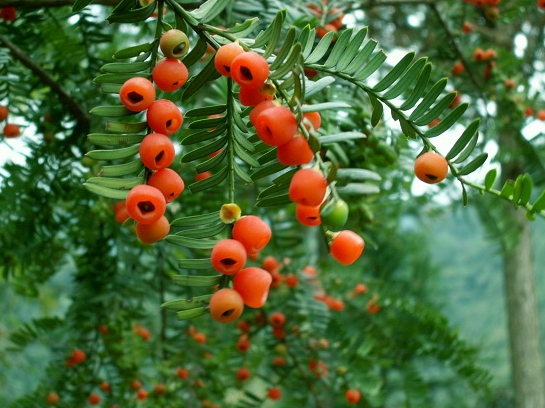
The yew is so named because its fruit is red, just like the love pea. What are the cultivation methods and precautions for yew? What carcinogenic substances can it absorb?
Cultivation methods for yew:
The yew likes cool and humid climates, can withstand low temperatures below -30°C, and is highly cold-resistant. Its optimum temperature is 20-25°C, and it is a shade-tolerant tree species. It is shade-tolerant by nature and can even grow under dense forest. It is perennial and does not form forests. It likes moisture but fears waterlogging, and is suitable for planting in loose, moist, well-drained sandy loam soil.
When a newly purchased yew has just sprouted new buds, try not to spray fertilizer solution on the leaves. It has not yet truly established itself, or the leaves are too tender. Fertilizing will cause the tender leaves or buds to shrivel and curl.
1. About spraying water (not watering)
Do not spray too much clean water on the leaves. The degree should be that water droplets can be seen on the leaf surface but do not drip down. Spray in the afternoon two hours before dark. Do not leave water droplets at night (even more so when the amount is larger), otherwise it will affect the normal growth of tender leaves or cause the leaves to turn yellow, affecting the healthy growth of the plant.
The underside of the leaves can be sprayed more than the upper surface. The upper surface of the leaf has a waxy protective film that hinders the absorption of nutrients and water, while the underside of the leaf has no waxy layer and more stomata, giving it a stronger ability to absorb water and nutrients.
Depending on conditions and temperature, spray once a day or two to three times a day. Note that indoor spaces need frequent ventilation.
2. Pruning yellow leaves
When the pot soil is kept moist and the terminal leaves become curled and withered, it is best to prune the branches and leaves appropriately to reduce the consumption of water and nutrients by the branches and leaves.
Watering should be controlled, keeping the pot soil slightly dry to help the roots grow as quickly as possible.
3. Light and ventilation
Because the yew tree is small, attention should be paid to regulating light. It needs light but should not be placed in strong light for too long. Generally, in summer and autumn, about two hours of sun before 10 a.m. or after 5 p.m. each day is enough. At ordinary times, let it receive more scattered sunlight.
Otherwise, strong light will scorch the leaves, causing the leaf tips to turn scorched yellow. Also keep the indoor space ventilated so that the plant will not show poor growth such as wilting and drooping due to indoor air being too dry.
4. Repotting and pot soil
The nutrients in a flowerpot where a yew is planted are limited, so it should be repotted once a year. For bonsai types, repot once right after purchase.
The yew likes fertile, loose soil. When the soil is neither dry nor wet, tip the tree and pot soil out. If after it has established you find there are too many roots, you may appropriately cut away the bad roots, place the tree into a new pot, fill nutritional soil around it, and gently press it firm. Only when the soil in the pot is in close contact with the roots can the survival rate be improved; otherwise, the plant is not easy to establish or will not grow vigorously.
Do not press the soil too firmly. If it is too firm, the roots cannot breathe air, which will cause root rot and plant death.
Water thoroughly once immediately after planting. Then place the pot in a cool place for a few days.
After watering, the pot soil should not be turned or pressed again, otherwise the pot soil will easily become compacted, or the soil will be too firm and poorly aerated, easily causing root rot.
5. Choosing pot soil
The soil should preferably be loose, rich in humus, fertile, and slightly acidic (pH=5.5-7). Do not pour leftover tea water into a yew bonsai pot. If leftover tea water is often poured in, because the tea contains theophylline and other substances, it will change the soil pH and affect growth.
6. Appropriate light
If conditions permit, about once a week, move the yew bonsai to the balcony at night to receive dew, and in the morning place it in sunlight for about one to two hours (before 10 a.m.) to receive light. This is beneficial to the growth of the yew and improves its disease resistance.
Precautions for yew:
Pests and diseases in yew cultivation are very few. If yellowing, pests, or diseases appear, thiophanate-methyl and potassium dihydrogen phosphate can be used for watering or spraying.
Yews will suffer root rot, stem rot, and root decay during the rainy season, and seedlings are more prone to this. Dexon can be used for spraying.
During high temperature and drought (July to August), yews are prone to leaf blight and red blight, which can be prevented and controlled by spraying Bordeaux mixture.
Treatment methods:
Also, in summer and autumn, lower the surface soil temperature of the seedbed to prevent scorching the base of the seedling stems, so as not to create wounds that allow pathogens to invade;
Apply more fertilizer to promote the growth of cuttings and enhance their disease resistance.
Carbendazim plus thiophanate-methyl can be mixed with water for watering, and the effect is quite good.
Propagation methods for yew:
1. Sowing introduction
Collect red fruits from September to October, rub off the aril and pulp, wash clean, and store mixed with moist sand.
The seeds will then go dormant and must go through two winters and one summer before they can germinate (how long!). In winter, place them outdoors to freeze; in summer, let them receive high temperature and rain. Sow in autumn of the second year. If you want to sow in spring, then in early winter place them outdoors in sandy soil or in a refrigerator indoors to freeze (at -3°C to -20°C for one month). From late March to early April, keep them warm (above 25°C, maintained for one month) to force germination. Sow after germination, and seedlings can emerge more than 30 days after sowing.
PS: If you can place the seeds and coarse sand on rough concrete ground and repeatedly rub them with the sole of a shoe, breaking the tough seed coat (do not crush the kernel), the seeds will be more permeable to water and air and will germinate faster.
2. Cutting propagation
For yew cutting propagation, softwood cuttings are best in spring, and hardwood cuttings are best in autumn. When taking cuttings, shade must be provided, and the cut base should be dipped in rooting powder. Avoid strong winds or excessively dry conditions.
Cut current-year softwood shoots from mother trees at least 4 years old as cuttings. Cut branches more than 15 cm long as cuttings, remove the lower leaves, and girdle the base of the branch to create a wound of 0.5-1 cm. After nodular tissue forms around the wound, cut the branch off below the girdled part. Soak the lower part of the branch in 200 ppm ABT No. 2 rooting powder solution for 8-10 hours.
Insert the cuttings into a prepared seedbed or a medium of vermiculite plus weathered sand (1:1) with sawdust. Insert to a depth of 3-5 cm. After inserting, water thoroughly, cover with a plastic film arch to retain moisture, and spray water twice a day, then once a day after 2 weeks. Keep them shaded, and they will root in 45-50 days.
The cultivation methods and precautions for yew are introduced here. Hurry and grow one. As long as you have one yew at home, you can produce many more through cuttings.
Matching and care of yew
The yew is a magical plant. It is hailed as the tree of health and a feng shui sacred tree. It is regarded as a national treasure by 42 countries and is truly the giant panda of the plant world. Today, the editor of TheNaturePlanet takes you to learn about the pairing of yew in home decor and its cultivation methods!
1 Introduction to yewThis is a magical tree species. It was once carried into space by the Shenzhou 4 spacecraft. Its elegant figure can be found in the White House in the United States, Buckingham Palace in various countries, and the United Nations headquarters. It is the yew, hailed as the "tree of health."
1. It is a national treasure. The yew is a rare and endangered species left over from the Quaternary glaciation 2.5 million years ago, and is a living fossil among plants. Because under natural conditions the yew grows slowly and has poor regenerative capacity, for a long time no large-scale yew raw material forest base has been formed worldwide, and its natural distribution is very scarce. China has listed it as a first-class rare and endangered protected plant, and the United Nations has also explicitly banned its felling. At the same time, it is called a "national treasure" by all 42 countries in the world that have yews. The yew is indeed a veritable "plant giant panda."
2. It is a shallow-rooted plant. Yew, also known as Chinese yew and red pine cypress, is an evergreen tree. Its twigs turn yellow or light reddish-brown in autumn, and its leaves are linear. The seeds are flat and round and can be used for oil extraction and medicine. It is a shallow-rooted plant, with an inconspicuous main root and well-developed lateral roots. It can reach 30 cm in height and 1 m in trunk diameter. The leaves are spirally alternate, twisted at the base into two ranks, linear and slightly curved, with slightly recurved leaf margins, acuminate leaf tips, and a very narrow green band along the leaf margin. It is dioecious. Male cones are solitary in the leaf axils. The ovule of the female cone is solitary at the tip of a short lateral axis on the upper part of the flower axis, with a disc-shaped aril at the base.
3. It is suitable for planting in both north and south. The yew has the characteristics of shade preference, drought tolerance, and cold resistance, and likes acidic soil. It can be interplanted with other tree species or orchards, and is easy to manage. For example, the Japanese yew not only has well-developed lateral roots, luxuriant branches and leaves, and strong sprouting ability, but also adapts to a wide range of climates, has broad soil requirements, is tolerant of pruning, pests, and diseases, and is cold-resistant. It can also grow into a tall tree, can serve as a medicinal variety, and can also be used as a landscaping plant. It has the title of "feng shui sacred tree."
The yew also has many uses, such as medicinal value and air purification, and is very suitable for cultivation. Choose a potted yew, and there will be unexpected surprises. Everyone can buy a pot and grow one.
2 The yew's impact on the home environment
When people mention the yew, many naturally think of its medicinal effects, but its function in purifying air is equally famous and has always played a huge role.1. It is a CAM plant. What is a CAM plant? It is a plant with the crassulacean acid metabolism pathway, a plant with a strong ability to absorb carbon dioxide and release oxygen. The yew absorbs carbon dioxide and releases oxygen 24 hours a day. Compared with other plants, its greatest advantage is that it is suitable for placement indoors and has an oxygen-enhancing effect. At the same time, it releases oxygen 24 hours a day, making people feel the air is especially fresh. It also allows other indoor green plants to have oxygen at night and thus grow vigorously. Yews can be placed in many settings to freshen the air, helping people relax and feel full of vitality.
2. It can absorb toxic and harmful gases. The yew can not only absorb toxic substances such as carbon monoxide, sulfur dioxide, and nicotine, but also absorb carcinogenic substances such as formaldehyde, benzene, toluene, and xylene. It can purify the air and play a role in cancer prevention. Therefore, the yew has an obvious smoke-absorbing function. In the room of a frequent smoker, placing 3-5 four-year-old yews can improve the room environment. In a room with yews, smokers and passive smokers feel noticeably less irritation. There is also a peculiar phenomenon: yews grow better in rooms where people often smoke than in rooms where no one smokes, which shows that yews "love" smoke. In addition, newly renovated rooms often contain large amounts of harmful benzene substances, which are especially harmful to children. Placing yews can effectively absorb these harmful substances. Generally, in a room of about 20 sq m, placing 3 potted yews more than three years old will noticeably improve the smell in the room. If economic conditions allow, placing more is even better.
Fresh air is what people need, and the yew is a good helper for improving the environment. People who work under pressure might as well choose a pot of yew to keep nearby. While increasing oxygen, it also brings you a pleasant mood.3 Feng shui applications of yew
The yew has long had the title of "feng shui sacred tree." Exactly what special effects does it have, how does it help our lives, and how did it win this title?
1. Legend has it that in the centuries when Christianity flourished, yews were planted by Druid members in some sacred places as a symbol of immortality. Today, this ancient tree species still grows in China's feng shui treasured places and medieval monasteries. In some areas of China, people believe that the yew can bring good fortune and happiness, and therefore it is called the "feng shui sacred tree." Interestingly, in front of the reading stone at Mao Zedong's former residence in Jinggangshan, there are two sacred trees. One is an oak, and the other is a yew. It seems that in the eyes of many people, the yew gives a feeling of good luck. Planting a yew in the courtyard at home, or cultivating a small potted yew at home, means long-lasting prosperity and enduring peace, and perhaps it may bring a turn of good fortune.
2. It is a representative of longevity. Since ancient times, Chinese people have liked to pursue good fortune and health. The yew can not only improve people's health through medicinal effects, but can also bring longevity. The yew can reach an age of more than 5,000 years, and is itself hailed as the "longevity tree." Its branches are full of red fruits, crystal clear, symbolizing good fortune and celebration, so it also has the title of "auspicious tree." According to reports, in a primeval yew forest in the western United States, there is a village with more than 100 households at the edge of the mountain forest. The youngest elderly person who passed away in the village was 95 years old. The whole village has a habit of going into the yew forest for "forest bathing," walks, dancing, and so on. No one in the village has ever suffered from cancer, diabetes, or high blood pressure, and it is the place with the highest average life expectancy in the United States. Therefore, it can be said that the yew is an envoy of longevity sent from heaven to the human world. Place a few pots of yew at home to keep family members healthy, long-lived, and happy.The yew has many benefits. If you hope your family will be happy and healthy, it is a good choice.
4 The functions of yew
If a plant is beautiful and can improve the environment, it is already rare. If it is beautiful, can improve the environment, and can also be used as medicine to make people healthier, it is already precious and treasured. The yew is exactly such a rare plant.
1. It has a powerful effect in treating cancer. Paclitaxel extracted from the bark and leaves of the yew has outstanding efficacy against many advanced cancers and is called "the last line of defense for treating cancer." The roots, stems, leaves, and fruits of the yew are all valuable. Paclitaxel extracted mainly from yew plants is mainly used for the treatment of advanced breast cancer, advanced ovarian cancer, esophageal cancer, nasopharyngeal cancer, bladder cancer, lymphoma, prostate cancer, malignant melanoma, head and neck tumors, upper gastrointestinal cancer, and small cell and non-small cell lung cancer. Experience has shown that paclitaxel has a unique anti-tumor mechanism and a significant tumor-inhibiting effect.2. The yew also has therapeutic effects on other diseases. It contains large amounts of taxane compounds such as taxinine, taxinine A, taxinine H, taxinine K, taxinine L, taxine, taxusin, and many other elements. It can treat dysmenorrhea, promote diuresis, lower blood pressure, lower blood sugar, resist leukemia, and resist tumors, and has significant effects in treating diabetes and cardiovascular and cerebrovascular diseases.
3. In addition to its value for extracting medicine, the aril of the yew can also be eaten. It is sweet and sour and stimulates appetite. The leaves can also be eaten raw and have anti-inflammatory and detoxifying effects, and its seeds can also be used to extract oil. Some people also use enzymes extracted from yew paclitaxel together with essential oils and other ingredients to make beauty skincare products, which can provide effects such as moisturizing and regulating blood circulation.
The yew can be said to be all treasure from top to bottom, a veritable "golden tree." It is not only a matter of taste, but also a matter of health.
5 Pairing yew with home styles
Compared with ordinary plants, the yew blends inner beauty and outer beauty very well. Such a beautiful plant is also quite versatile in life.1. As a landscaping tree species and bonsai, the yew can be placed in courtyards, indoors, and on streets. Its tree form is graceful, its trunk is purple-red and straight, its seeds are red when mature, and its aril is bright and eye-catching. At the same time, the various alkaloid gases it secretes can reduce inflammation, sterilize, purify air, and provide therapeutic health care. Wherever it is placed, it is dazzling. Especially during the fruit ripening period, the color combination of red and green is intoxicating. It can be enjoyed both outdoors and indoors. Now it has also become a new favorite in urban greening and home beautification, and is called a precious "money tree" by people.
2. The yew has an insect-repelling effect. Placed at home, it can play a huge role in repelling insects. Through photosynthesis, it can volatilize its own odor molecule citronellal. Citronellal has the effect of preventing and repelling mosquitoes. The higher the temperature, the more aroma molecules it releases, and the better the mosquito-repelling effect. Moreover, this fresh and elegant scent makes people feel refreshed and relaxed in the hot summer. Authoritative tests show that this fragrance is harmless to humans and livestock and can repel hundreds of species of mosquitoes. Experts say that few plants are shade-tolerant, temperature-tolerant, and CAM plants at the same time. With the unique functions of the yew, no plant can compare with it. Therefore, having a pot of yew at home can reduce the annoyance of mosquitoes, help relax the mood, and drive away fatigue. It is suitable for placement in the living room, bedroom, study, office, and so on.
3. It is also a representative of taste. With unique bonsai ornamental value, the yew has a simple and elegant shape. Its branches and leaves are compact but not crowded, spreading but not loose. Its red stems, red branches, green leaves, and red fruits give it multiple ornamental values: stem viewing, leaf viewing, and fruit viewing. It is noble, with smooth and beautiful red stems; it is resolute, with green and attractive leaves; it is full of love, because it resembles the "love pea" and highlights the longing it represents. Therefore, no matter what style of home it is, the yew can set it off in a refined and elevated way, carrying a rich flavor of life and making people linger.Such a beautiful plant as the yew is worth protecting and cultivating, adding a beautiful scenery to the home.
6 Care of yew
Plants all need love and care, so how should the evergreen and beautifully shaped yew be cared for?
1. The yew is an excellent potted foliage plant. It likes shade and humidity, avoids sunlight, and is drought-tolerant. Therefore, it should not have full sunlight. In summer, shade should be provided appropriately. Especially from July to August each year, under full sunlight and strong light, the chlorophyll in the leaves is damaged, causing young trees to die. The best light for yew is from 7 a.m. to 11 a.m. each day, about 4 hours of light. In summer, the light duration should be shorter, and in autumn and spring it can be longer. But no light also affects the photosynthesis and growth of the yew. Remember not to place it where there is western sunlight. Do not place it at the air outlet of an air conditioner or next to a heater, otherwise the water in the yew leaves will evaporate, and they will easily dehydrate and dry out.
2. The yew likes acidic soil. It is best to use loose, fertile, water-retentive, and breathable soil. In addition, when fertilizing, note that fertilizer should be applied as much as possible along the pot wall and must not be close to the yew roots. Generally, newly purchased yew bonsai contain nutritional soil, so no fertilization is needed within three months. After three months, fertilize once every two to three months.3. Regarding water requirements, when cultivating yew, observe the surface of the pot soil. If it is slightly yellowish-white and the leaves are also slightly curled, there is no need to water the soil; simply mist the leaf surface. When the soil in the pot turns white, the pot soil should be watered. Remember to water thoroughly in one go so that the pot soil fully absorbs enough water.
4. Compared with ordinary plants, the yew is more suitable for indoor placement because of its shade tolerance, low-temperature tolerance, evergreen nature, strong stress resistance, and tolerance of extensive management. It is very tolerant of low temperatures. In summer, temperatures can reach above 40°C, and in winter they can drop below zero. Even with such large seasonal temperature differences, the yew can still grow well and has quite strong vitality. It is a typical lazy person's plant. It does not need frequent watering or soil turning, is suitable for extensive management, and is easy to keep alive. It is very suitable for urban groups with today's fast pace of life to grow.
Yew care methods and their impact on the home environment
The yew is a shallow-rooted plant. Because under natural conditions the yew grows slowly and has poor regenerative capacity, for a long time no large-scale yew raw material forest base has been formed worldwide. What impact does the yew have on the home environment? How should it be cared for? Below let's look at yew care methods. The editor has carefully prepared some knowledge here. Come learn about it with the editor. I hope the editor's content is helpful to you!
The yew's impact on the home environment
The yew's impact on the home environmentWhen people mention the yew, many naturally think of its medicinal effects, but its function in purifying air is equally famous and has always played a huge role.
1. It is a CAM plant. What is a CAM plant? It is a plant with the crassulacean acid metabolism pathway, a plant with a strong ability to absorb carbon dioxide and release oxygen. The yew absorbs carbon dioxide and releases oxygen 24 hours a day. Compared with other plants, its greatest advantage is that it is suitable for placement indoors and has an oxygen-enhancing effect. At the same time, it releases oxygen 24 hours a day, making people feel the air is especially fresh. It also allows other indoor green plants to have oxygen at night and thus grow vigorously. Yews can be placed in many settings to freshen the air, helping people relax and feel full of vitality.
2. It can absorb toxic and harmful gases. The yew can not only absorb toxic substances such as carbon monoxide, sulfur dioxide, and nicotine, but also absorb carcinogenic substances such as formaldehyde, benzene, toluene, and xylene. It can purify the air and play a role in cancer prevention. Therefore, the yew has an obvious smoke-absorbing function. In the room of a frequent smoker, placing 3-5 four-year-old yews can improve the room environment. In a room with yews, smokers and passive smokers feel noticeably less irritation. There is also a peculiar phenomenon: yews grow better in rooms where people often smoke than in rooms where no one smokes, which shows that yews "love" smoke. In addition, newly renovated rooms often contain large amounts of harmful benzene substances, which are especially harmful to children. Placing yews can effectively absorb these harmful substances. Generally, in a room of about 20 sq m, placing 3 potted yews more than three years old will noticeably improve the smell in the room. If economic conditions allow, placing more is even better.
Fresh air is what people need, and the yew is a good helper for improving the environment. People who work under pressure might as well choose a pot of yew to keep nearby. While increasing oxygen, it also brings you a pleasant mood.
Care of yew
Care of yewPlants all need love and care, so how should the evergreen and beautifully shaped yew be cared for?
1. The yew is an excellent potted foliage plant. It likes shade and humidity, avoids sunlight, and is drought-tolerant. Therefore, it should not have full sunlight. In summer, shade should be provided appropriately. Especially from July to August each year, under full sunlight and strong light, the chlorophyll in the leaves is damaged, causing young trees to die. The best light for yew is from 7 a.m. to 11 a.m. each day, about 4 hours of light. In summer, the light duration should be shorter, and in autumn and spring it can be longer. But no light also affects the photosynthesis and growth of the yew. Remember not to place it where there is western sunlight. Do not place it at the air outlet of an air conditioner or next to a heater, otherwise the water in the yew leaves will evaporate, and they will easily dehydrate and dry out.
2. The yew likes acidic soil. It is best to use loose, fertile, water-retentive, and breathable soil. In addition, when fertilizing, note that fertilizer should be applied as much as possible along the pot wall and must not be close to the yew roots. Generally, newly purchased yew bonsai contain nutritional soil, so no fertilization is needed within three months. After three months, fertilize once every two to three months.
3. Regarding water requirements, when cultivating yew, observe the surface of the pot soil. If it is slightly yellowish-white and the leaves are also slightly curled, there is no need to water the soil; simply mist the leaf surface. When the soil in the pot turns white, the pot soil should be watered. Remember to water thoroughly in one go so that the pot soil fully absorbs enough water.
4. Compared with ordinary plants, the yew is more suitable for indoor placement because of its shade tolerance, low-temperature tolerance, evergreen nature, strong stress resistance, and tolerance of extensive management. It is very tolerant of low temperatures. In summer, temperatures can reach above 40°C, and in winter they can drop below zero. Even with such large seasonal temperature differences, the yew can still grow well and has quite strong vitality. It is a typical lazy person's plant. It does not need frequent watering or soil turning, is suitable for extensive management, and is easy to keep alive. It is very suitable for urban groups with today's fast pace of life to grow.