What to Do When the Leaves of a Money Tree Turn Yellow? Detailed Guide to Care Methods and Precautions
The money tree sounds like an auspicious name, and using it at home to attract wealth is a very good idea. What are the methods for keeping a money tree at home? What precautions are there? What should you do if the leaves turn yellow during cultivation?
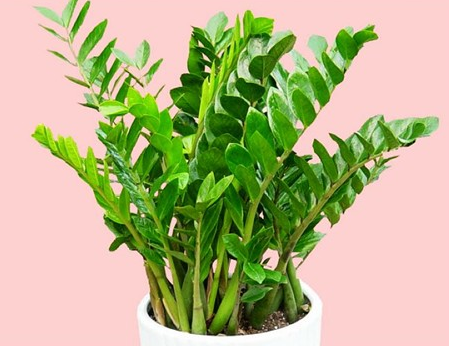
Money tree care methods and precautions:
1. Temperature and light
It prefers a warm, hot and slightly dry, semi-shaded environment with little annual average temperature variation.
It is relatively drought-tolerant, but afraid of cold, averse to intense sunlight and exposure, and afraid of heavy clay soil and water accumulation in the pot. Its optimum growth temperature is 20-32°C. Whether potted or planted in the ground, it requires little annual average temperature variation.
2. Potting soil selection
The soil should be loose, fertile, well-drained, rich in organic matter, and acidic to slightly acidic. A soil mix of peat, coconut coir, and perlite at 4:1:0.5 is best, in which the coconut coir and perlite need to be soaked in water to remove harmful substances, and the mixed medium soil should be disinfected with 1000 times diluted thiophanate-methyl.
3. Watering precautions
Watering should follow the principle of watering after the soil dries and alternating between dry and moist. In winter, water about once every half a month; in spring and autumn, once a week; in summer, spray once every 3 days.
4. Light
The money tree likes light and also has strong shade tolerance, so it should be given an environment with good sunlight but a certain degree of shade. It is averse to direct intense light, and especially should avoid the scorching sun after long rain and sudden clearing in late spring and early summer, as well as the 5-6 hours of unobstructed intense light baking around noon in summer, otherwise the newly sprouted tender leaves are very easily sunburned.
5. Fertilization precautions
It also relatively likes fertilizer. In addition to adding an appropriate amount of rotted cake fertilizer or compound fertilizer to the growing soil, during the growing season a mixed solution of 02.% urea plus 0.1% monopotassium phosphate can be applied 2-3 times per month.
When the temperature drops below 15°C, all forms of topdressing should be stopped to avoid fertilizer damage to the roots under low-temperature conditions.
6. Propagation methods
The money tree propagates by dividing small plantlets with small tubers produced on the mother tuber. A large plant can produce only 2-5 plantlets per year, with a low propagation coefficient and slow speed. Money tree leaf cuttings root easily in a substrate and can be used for propagation.
Each mature compound leaf has 15-25 leaflets. If used for propagation, the propagation rate can be greatly increased.
The money tree has a huge tuber, which sprouts numerous buds and forms many small tubers. The compound leaves have a lifespan of 2-3 years or more and are constantly renewed by new leaves.
What should you do if the leaves of a money tree turn yellow?
The money tree likes a warm, hot and slightly dry, semi-shaded environment with little annual average temperature variation. It is relatively drought-tolerant, but afraid of cold, averse to intense sunlight and exposure, and afraid of heavy clay soil and water accumulation in the pot. If the pot soil has poor air permeability, it easily leads to rot of its tuber.
It requires soil that is loose, fertile, well-drained, rich in organic matter, and acidic to slightly acidic.
Reasons for yellowing leaves:
Watering three times a day is overwatering, plus numerous instances of “fondling”. When keeping a money tree, you cannot water it too much; you cannot constantly fiddle with the plants.
Yellowing leaves generally have three causes: first water, second fertilizer, third drought.
The remaining cause is the fertilizer problem. It is easy to judge whether fertilizer is excessive.
The money tree is a plant with tubers, and its roots easily rot due to water accumulation. Root problems correspondingly cause yellow leaves. At this time, it should be handled according to the actual situation, such as controlling water, placing it in a ventilated place, etc.
Plants that have been overwatered are very difficult to recover, so gardening friends must remember not to overwater. Remove yellow leaves promptly, ventilate, and do not expose to sunlight for now!
Money tree purification effects:
During the day, the money tree can absorb carbon dioxide from the room and release oxygen. It can absorb harmful gases such as formaldehyde and benzene series, and kill bacteria in the air. It effectively purifies the air.
The money tree looks clean and beautiful, is easy to care for, and is not prone to pests and diseases. It tolerates drought, so even if you go out for one or two weeks there will be no problem.
Money tree aliases:
Coin tree, Zamioculcas zamiifolia, Zanzibar gem, dragon-phoenix tree, is a rare foliage plant of the Araceae family and Zamioculcas genus.
The money tree care methods and precautions are introduced here. It does not matter if yellow leaves appear during cultivation. The money tree can also absorb formaldehyde, is non-toxic, and can be kept with peace of mind.
What to Do When the Leaves of a Money Tree Turn Yellow: Money Tree Care Methods and Precautions
The money tree, also known as Zamioculcas zamiifolia and Zanzibar gem. There is no main stem above ground; adventitious buds sprout from the tuber to form large compound leaves, and the leaflets are fleshy with short petiolules, firm and dark green; the underground part is a fat tuber. Today the editor will introduce to youWhat to Do When the Leaves of a Money Tree Turn Yellow? For details, please read the following.
The money tree originated in the tropical (savanna) climate zone of eastern Africa with relatively low rainfall. It likes a warm, hot and slightly dry, semi-shaded environment with little annual average temperature variation. It is relatively drought-tolerant, but afraid of cold, averse to intense sunlight and exposure, and afraid of heavy clay soil and water accumulation in the pot. If the pot soil has poor air permeability, it easily leads to rot of its tuber. It requires soil that is loose, fertile, well-drained, rich in organic matter, and acidic to slightly acidic. It has strong sprouting ability; after cutting off the thick compound leaves, new leaves quickly sprout from the top of the tuber.
I. What to Do When the Leaves of a Money Tree Turn Yellow
1. Watering. The money tree likes warmth and heat and is slightly dry, is relatively drought-tolerant, and should not be watered too much, otherwise yellowing leaves easily occur. When keeping it on a home balcony, if it is on the 3rd floor or above, the potted plant can be placed on a wet sand tray, and normally spray some water on the leaf surface to wash away the fine dust attached to the leaves, while also paying attention to providing shade. When keeping it indoors, when the room temperature reaches above 33°C, spray the plant once a day, keeping the pot soil slightly moist. In winter, pay attention to spraying water on the leaf surface and the surrounding environment so that the relative air humidity can reach above 50%. After the Mid-Autumn Festival, watering should be reduced, or spraying water can replace watering, to help the newly sprouted tender leaves safely overwinter. In addition, in winter special attention should be paid to the pot soil not being overly moist; it is better to keep it on the dry side, otherwise under low-temperature conditions, overly wet pot soil more easily leads to root rot, and even the death of the whole plant.
2. Fertilization. The money tree relatively likes fertilizer, but the degree must be well controlled during fertilization. During the growing season, the money tree can be watered with a mixed solution of 02.% urea plus 0.1% monopotassium phosphate 2-3 times per month, or a balanced fertilizer 20-10-20 (20-20-20) can be applied at a concentration of 200-250 ppm in combination with calcium nitrate. After the Mid-Autumn Festival, to help it safely overwinter, nitrogen fertilizer should be stopped, and 0.3% monopotassium phosphate solution should be applied 2-3 times consecutively to promote the hardening and filling of its young leaf rachises and newly sprouted leaves. When the temperature drops below 15°C, all forms of topdressing should be stopped to avoid fertilizer damage to the roots under low-temperature conditions.
3. Pests. Pests are also one of the causes of yellowing money tree leaves. In environments with poor ventilation and insufficient light, money tree leaves are easily harmed by the piercing and sucking of scale insects. Control methods: for small-scale home cultivation, transparent tape can be used to stick off the insects, or a wet cloth can be used to wipe off the live insects. For commercial cultivation, during the peak hatching period of the nymphs, spray 20% buprofezin wettable powder at 1000 times dilution, which gives good insecticidal results.
4. Soil. Insufficient soil acidity can also cause money tree leaves to turn yellow. Due to the special climatic conditions of its place of origin, the money tree has developed strong drought resistance, so the basic requirement for the growing medium is good air permeability. The growing medium is often a mixture of peat, coarse sand or washed coal cinders with a small amount of garden soil, with its pH adjusted to between 6 and 6.5, in a slightly acidic state. Because of its huge tuber, well-developed root system, and relatively long pinnate compound leaves, it is best to choose a relatively deep blue-and-white porcelain pot or purple clay pot for planting, but the lower part should have more stones, brick pieces, or bark chunks as a base layer, about 1/4 of the pot depth, to help create a root environment with good air permeability and drainage. During the growing season, loosen the soil of the plant once a month, always keeping the growing medium well aerated. During the plum rain season, check frequently; if water accumulation occurs in the pot, repot and change the soil promptly.
II. Money Tree Care Methods and Precautions
Money tree division method: pry apart by hand at the weak part of the tuber, and bury shallowly in the flower pot about 2 cm deep. Division is suitable when the temperature is above 18 degrees, and some plant ash should be appropriately sprinkled on the cut opening.
Money tree light preference: The money tree likes light and also tolerates shade, so it is best to place it in a place with sufficient light but with some shade, which both satisfies the light requirement and avoids yellowing money tree leaves caused by direct intense light.
Suitable temperature for the money tree: 20-32°C is the suitable growth temperature for the money tree. When the summer temperature exceeds 35 degrees, growth slows down, and black shading should be used to lower the temperature; when winter is below 5 degrees, the money tree may suffer frost damage, and it should be moved indoors promptly to keep warm.
Soil moisture for the money tree: The money tree prefers a relatively dry soil environment, and the soil should be kept slightly dry. In summer, due to the large amount of water evaporation, water once a day; in autumn and winter, reduce the frequency of watering as much as possible, and mainly spray the money tree leaves.
Fertilization for the money tree: The money tree is very greedy and likes the nourishment of fertilizer. It is best to reach a fertilization amount of twice a month during its growing stage and when the temperature is above 15 degrees. Fertilizer types are sold in flower markets. But when the temperature is below 15 degrees, fertilization must be stopped, otherwise the rhizomes will rot and the leaves will turn yellow.
The above is what the editor introduces to youWhat to Do When the Leaves of a Money Tree Turn Yellow, hoping it can help you. More about what to do when the leaves of a money tree turn yellow, hoping it can help you.
Money Tree Care Methods and Precautions
This indoor potted plant, the money tree, is named the money tree because the shape of its leaves is very similar to coins, used to symbolize joy and wealth. Various problems may be encountered during the process of growing the money tree. Below let us look at the money tree care methods and precautions. Money tree care methods and precautions
I. Money tree care methods and precautions——division
Money tree division should be chosen when the temperature is above eighteen degrees, and some plant ash can be sprinkled on the cut opening of the division.
II. Money tree care methods and precautions——light
The money tree likes light and also tolerates shade, so it is enough to place it indoors where it can receive light; it does not need to be exposed to direct light. Direct light instead causes the leaves of the money tree to turn yellow.
III. Money tree care methods and precautions——temperature
The temperature for the money tree can be controlled at around twenty degrees. After exceeding thirty-five degrees, growth slows down a lot, so it is enough to cool it appropriately and shade the sunlight.
IV. Money tree care methods and precautions——moisture
The money tree likes dry soil, and a slightly dry state is most suitable for the growth of the money tree. When the summer temperature is relatively high, water evaporation is relatively large. At this time, it can be watered once a day; in other seasons, reduce the frequency of watering, or spray some water droplets on the leaves.
V. Money tree care methods and precautions——fertilization
The money tree is a tree type, so it relatively likes thick fertilizer and has a high demand for fertilizer nourishment. Fertilizing twice a month is relatively suitable.