What are the planting methods and alternative names of Chinese trumpet creeper?
When it comes to Chinese trumpet creeper, it is loved by many people. It can climb trees and walls and grow just about anywhere - that is just how unruly it is. If it trails down, it can even look like a curtain. So what are the planting methods of Chinese trumpet creeper? What other names does it have?
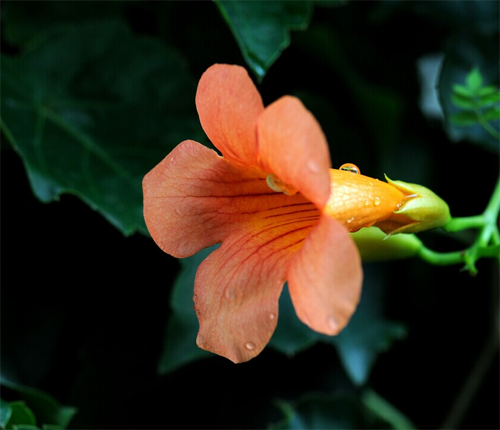
Planting methods of Chinese trumpet creeper:
1. Choosing potting soil and pot
For potted Chinese trumpet creeper, it is best to choose a clay pot or wooden barrel with good permeability that is relatively deep and large. It likes fertile, loose, well-drained neutral or slightly acidic sandy loam; an equal mix of leaf mold and sifted garden topsoil can be used as the growing medium.
2. Placement environment
Chinese trumpet creeper likes a sunny environment and also tolerates partial shade, but plants in partial shade grow poorly, with fewer and paler flowers. Place it in a courtyard, rooftop garden, or south- or west-facing balcony with ample sunlight whenever possible, and make sure there is good ventilation. Avoid placing it in an enclosed balcony or an open north-facing balcony.
3. Water and fertilizer management
Chinese trumpet creeper likes moisture and tolerates drought slightly, but is afraid of waterlogging. Therefore, during the growing season it should be watered regularly, keeping the potting soil on the moist side without becoming waterlogged. From late autumn when the leaves fall until dormancy ends before sprouting the following spring, the potting soil is best kept slightly dry and just a little moist.
Chinese trumpet creeper likes fertilizer. In addition to adding 50 g to 100 g of bone meal or NPK compound fertilizer to the growing medium as a base fertilizer when potting or repotting and changing soil, apply a nitrogen-based fertilizer once every 10 to 15 days after sprouting to promote the growth of branches and leaves. From May onward, switch to a phosphorus- and potassium-based fertilizer to promote flower bud differentiation and bud formation. From June onward, spray the leaves once every 7 to 10 days with a 0.2% potassium dihydrogen phosphate solution to encourage larger, more vividly colored flowers.
After flowering, apply phosphorus and potassium fertilizer once or twice more to help it overwinter. Do not fertilize in winter.
4. Pruning
In early spring, cut off dead branches, thin and weak branches, overly dense branches, and branches in poor growing positions, and shorten overly long branches to encourage the growth of strong side branches; this lays the foundation for flowering. After flowering, also shorten overly long stems and vines.
5. Propagation methods
Chinese trumpet creeper does not easily set fruit, and seeds are difficult to obtain, so propagation is mainly done by cuttings and layering.
1. Cutting propagation
In the south, it is mostly done in spring, while in the north it is mostly done in autumn. In the middle and lower reaches of the Yangtze River, it is best done from April to May, with a very high survival rate. The method is to select healthy branches free of pests and diseases, cut them into 10-15 cm sections, and insert them into the soil; they will root in about 20 days.
2. Layering propagation
Chinese trumpet creeper produces aerial roots on its stems, so layering propagation is relatively simple and can be done in spring, summer, or autumn. After rooting and surviving in about 50 days, it can be cut off and transplanted.
6. Pests and diseases and their control
During periods of high temperature and high humidity, Chinese trumpet creeper is prone to aphid damage. Once discovered, spray 40% dimethoate at 800-500 times dilution promptly for control. Chinese trumpet creeper has relatively few pests and diseases, but timely control should still be noted.
Leaf spot and powdery mildew: spray with 50% carbendazim wettable powder at 1500 times dilution.
Whiteflies and scale insects: these often occur during the growing season and can be killed by spraying 40% omethoate emulsifiable concentrate at 1200 times dilution.
Aphids: during dry spring and autumn periods and during high temperature and high humidity, damage is likely. Once discovered, spray 40% dimethoate at 500-800 times dilution promptly for control.
Alternative names of Chinese trumpet creeper:
Purple wei, five-claw dragon, tree-climbing dragon, etc. It is a deciduous climbing woody vine that relies on tough aerial roots to climb onto walls or other objects. Its leaves are pinnate and ovate with toothed edges. Of course, what people like most are its bright red or orange-yellow flowers, which are very beautiful in their funnel shape.
That is all for the introduction to the planting methods and alternative names of Chinese trumpet creeper. Hurry and add one to your own small courtyard - it will slowly cover the entire yard.
Growing methods of Chinese trumpet creeper, and precautions for cultivating and planting Chinese trumpet creeper.
Chinese trumpet creeper
Latin name:Campsis grandiflora
Alternative names: purple wei, Chinese trumpetcreeper, large-flowered trumpet creeper
Family and genus: Bignoniaceae
Origin and habits: Native to various provinces in central China. It is a deciduous climbing woody vine that climbs upward on other objects by means of aerial roots. It likes sun and tolerates shade slightly, prefers well-drained soil, is relatively tolerant of moisture, and has a certain tolerance to salinity and alkalinity. Flowering period6-9month.
Morphological characteristics: Plant height about 20 m. Bark grayish brown, with fine strip-like vertical fissures. Leaves opposite, odd-pinnately compound, leaflets7-9. Terminal cymes or panicles, flowers large, funnel-shaped, orange-yellow outside, bright red inside
Propagation and cultivation: Propagated by cuttings, layering, division, and sowing. Cuttings are mostly taken in spring from hardened branches with aerial roots, and layering is done in summer. Division mostly uses root suckers. Seedlings from sowing propagation should be shaded. Winter pruning is needed every year, removing overly dry and dead branches. Applying fertilizer and water before flowering can promote lush leaves and abundant flowers.
Application: Chinese trumpet creeper flowers in abundant and autumn seasons, has a long flowering period, large flowers, and is bright and eye-catching. It is suitable for climbing on walls. It has medicinal value and a certain economic value for cultivation
Growing methods of Chinese trumpet creeper:
1. Soil:Chinese trumpet creeper has low soil requirements and can grow in both sandy loam and clay loam.
2. Watering: During the flowering period of Chinese trumpet creeper, a certain humidity must be maintained. The potting soil should not be too dry, but it also must not be too wet.
3. Temperature:Chinese trumpet creeper likes warmth and is not cold-tolerant. In winter, it should be placed indoors in a place that does not freeze to overwinter.
4. Fertilizing:Chinese trumpet creeper likes fertilizer and moisture, so water and fertilizer management should be strengthened after sprouting in spring. Generally, apply liquid fertilizer 1-2 times per month.
5. Pruning:If Chinese trumpet creeper needs a trellis for planting, in order to promote vigorous growth and abundant flowering, weak, winter-killed, and crowded branches can be cut off before sprouting in early spring to improve ventilation and light penetration, which helps growth and flowering.
6. Pests:Chinese trumpet creeper has relatively few pests and diseases, but timely control should still be noted. During periods of high temperature and high humidity, Chinese trumpet creeper is prone to aphid damage. Once discovered, spray 40% dimethoate at 800-500 times dilution promptly for control.
Chinese trumpet creeper has strong adaptability. It produces aerial roots between its branches, by which it climbs up mountain rocks, walls, or tree trunks. It is often planted at the base of walls, beside trees, and along bamboo fences. Every year from the fifth lunar month to the end of autumn, green leaves cover the wall or trellis and flowering branches stretch out, with clusters of orange-red trumpet flowers dotted on the branch tips, dancing in the wind and especially delightful.
Planting methods and propagation of flame vine, and its differences from Chinese trumpet creeper
Flame vine blooms in strings, just like firecrackers - neatly arranged firecrackers. That is why it is called flame vine. What are the planting methods of flame vine? How is it propagated? What are its differences from Chinese trumpet creeper?
Planting methods of flame vine:
1. Choosing potting soil and flowerpot
Flame vine grows rapidly with luxuriant branches and leaves. For the growing medium, it is best to use mountain soil, though leaf mold or peat soil can also be used as the main component, mixed with some compost soil and a small amount of bone meal. Choose a large, deep cylindrical tile pot for planting (repotting will probably take a lot of effort).
2. Reasonable watering
Flame vine likes moist soil, so it is best to keep the potting soil moist regularly during the growing season. In dry seasons and hot summers, also spray water on the branches and leaves 2-3 times a day and sprinkle water on the ground around the flowerpot to increase air humidity. In autumn, when flower bud differentiation begins, watering should be reduced to keep the potting soil slightly moist.
3. Fertilizing
During the peak growing season, apply dilute cake fertilizer water about once every half month. After autumn begins, fertilization should be mainly phosphorus fertilizer, and compound chemical fertilizer can also be applied.
During the growing season, generally apply a dilute liquid fertilizer combining nitrogen and phosphorus once about every 2 weeks. During the bud stage, apply a quick-acting liquid fertilizer mainly based on phosphorus fertilizer 1-2 times. After the flowers fade, apply a liquid fertilizer mainly based on nitrogen fertilizer once to benefit flowering and plant growth.
4. Support for climbing
Flame vine needs to climb as it grows, and the plant grows very quickly, so a support should be set up in time. When growing it on a balcony, thick iron wire and relatively thick bamboo poles can be used to build a frame of a certain shape, and its stems and vines can be trained onto the flower trellis (shape it however you like).
When in bloom, the strings of vivid flowers cover the entire trellis and are deeply loved by people.
Drawback: Flame vine is not cold-tolerant. In northern regions, it must be moved indoors to overwinter after winter begins.
5. Planting
In the south, it can be cultivated in the open ground, while in northern regions it needs to be potted and moved indoors to overwinter in winter.
For potted plants, a growing medium made by mixing leaf mold, compost soil, and sand evenly can be used, with a small amount of cake fertilizer powder added as base fertilizer.
6. Watering
Water according to the principle of watering when dry and stopping when wet, and never allow water to accumulate in the pot. During the bud and flowering stages, watering should be appropriately increased.
In summer, when temperatures are high, watering should be sufficient, and at the same time water should be sprinkled on the ground near the flowerpot to increase air humidity. In autumn, when the flower bud differentiation stage begins, watering should be appropriately reduced in order to control vegetative growth and promote flower bud differentiation.
7. Temperature and light
Flame vine is not cold-tolerant. In northern regions, it must be moved indoors to overwinter after winter begins. During overwintering, place it in a sunny spot indoors, control watering, stop fertilizing, and keep the room temperature above 10°C. Generally, from mid- to late December, the room temperature should be gradually raised somewhat, with appropriate watering and fertilizing at the same time, and by February to March it can form buds and bloom.
Propagation methods of flame vine:
1. Layering propagation
Flame vine can be propagated by layering. Using vines that trail on the ground, wound the bark at the leaf axils and cover with soil. It can be done in spring, autumn, or summer, with summer being preferable.
After 20-30 days it will root, and after a month and a half it can be cut off as a new plant, which can bloom in the same year. It is mostly grown in pots, though of course it can also be layered directly into a container.
2. Cutting propagation
For flame vine cuttings, choose healthy branches free of pests and diseases, preferably about 10 cm long. Each cutting needs 3-4 nodes and 2 buds. Cut at 0.5 cm below a node to encourage rooting.
After inserting, press the base of the cutting gently with your fingers so that the base of the cutting fits closely with the medium, then water thoroughly with a fine watering can.
Afterward, spray water on the leaves once every 1-2 days to keep them moist. After 3 weeks, if the stems and leaves have not shriveled and remain tender green, it means the cut has healed well and roots have formed. After about another 10 days, it can be transplanted into a pot.
Note: Newly potted seedlings need to be watered thoroughly and kept in partial shade for care.
Differences between flame vine and Chinese trumpet creeper:
Flame vine leaves are smooth and glossy with a long pointed tip, while Chinese trumpet creeper leaves are serrated. The inflorescences of flame vine and Chinese trumpet creeper also differ quite a lot - both in shape and color tone the differences are great!
Alternative names of flame vine:
Firecracker flower, yellow eel vine, dense mangosteen flower, etc. Its flowers look like strings of firecrackers, and its flowering period is from January to June
That is all for the introduction to the planting methods of flame vine. Hurry and get one for your home - the fragrance is very strong.