Can the heartleaf ice plant be eaten? Detailed explanation of cultivation methods and precautions
The heartleaf ice plant is a plant that many people like to grow, and it is also quite delicate. What are the cultivation methods and precautions for the heartleaf ice plant? Can the heartleaf ice plant be eaten?
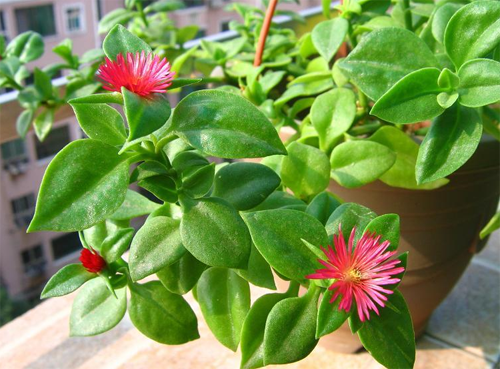
Cultivation methods and precautions for the heartleaf ice plant:
1. Light and temperature
As mentioned above, it does not need too much light to bloom, but in spring, autumn and winter it can be given a little more light. In summer it should be shaded, and in winter the temperature should not be lower than 5°C. With proper light it can bloom continuously.
2. Potting soil and fertilisation
Because it likes loose potting soil with good drainage, generally leaf mould mixed with perlite or river sand will do, and leaf mould made from leaf compost plus garden soil is also good. Of course, compost soil or peat soil can also be used as a substitute.
Regarding fertilisation, note that it must not be excessive. Generally, applying fertiliser once each in spring and autumn is enough!
3. Watering
It likes a relatively warm and moist environment, but after autumn turns cool the potting soil should be kept slightly dry. Usually, keeping the potting soil constantly moist will make the branches and leaves grow too luxuriantly, causing a failure to bloom, so letting the potting soil dry out a little can also help it bloom better.
4. What to do if it does not bloom?
If your heartleaf ice plant grows very luxuriantly but simply does not bloom, it is usually because water and fertiliser are too abundant, or light is insufficient. Generally, after a little treatment it will bloom. Properly prune the delicate branches; any that are too long can be cut off for cuttings to propagate a new pot.
Appropriately increasing light and letting the potting soil dry out a little are both good. If it has not been repotted for two years, then the root system is probably too crowded and it cannot bloom, so you can repot it in spring or autumn.
5. When to prune
In winter the heartleaf ice plant hardly grows, so you can properly prune weak branches and diseased branches, and some overlapping or overly luxuriant ones can also be cut off.
Doing this has a purpose: it can reduce pests and diseases, extend its lifespan, and help it bloom better.
6. Propagation method
Generally, cutting propagation is used, and it can be done in spring and autumn. It roots very easily. For flower lovers in the warm regions of the south, cuttings can be taken successfully all year round.
Cut a relatively robust branch, let the wound dry, then insert it into slightly moist potting soil. First place it in a shaded, ventilated spot for two weeks, then gradually give it a little light, and it will quickly take root and sprout.
Just water when the potting soil is dry and let it dry between waterings. Although it is said to like slight moisture, that is hard to judge, right? So just water when the potting soil is dry. It will not die if dry for a few days, but if it is too wet the roots will rot.
The heartleaf ice plant is not cold-tolerant. After the weather turns cool in autumn, it should be moved indoors, and attention should be paid to keeping it warm.
Can the heartleaf ice plant be eaten?
It can also be eaten, such as in a cold salad as above! Wash the heartleaf ice plant, break it into small clusters, blanch it and set aside. The blanching time must not be too long, three to five minutes is enough. Take it out and squeeze out the water slightly, add some minced garlic and similar seasonings, and it makes quite a good refreshing dish!
That is all for the introduction to the cultivation methods and precautions for the heartleaf ice plant and how to eat the heartleaf ice plant. Why not hurry and grow one at home?
Cultivation methods and precautions for the heartleaf ice plant
❤Coin grass hydroponics❤`•.¸¸.•´´¯`•Green plants, this article originates from [Decoration Information]
The heartleaf ice plant is the best green plant for embellishing home life. Its leaves are emerald green and its flowers are rose red, giving it great ornamental value. If placed on a windowsill or desktop, it can also achieve a very good decorative effect. The cultivation method of the heartleaf ice plant is also relatively simple, and the survival rate can reach more than 90%. The editor brings you the specific cultivation methods and precautions for the heartleaf ice plant.
Basic information about the heartleaf ice plant:
The heartleaf ice plant is also called by everyone "dew grass", and it is the easiest indoor plant to keep alive. It can be enjoyed both for its flowers and its leaves. Its ornamental value is very high. The heartleaf ice plant is not an ordinary spider plant. Rather, it belongs to a kind of evergreen trailing succulent plant. Its leaves are fleshy and thick, bright and fairly crisp. The small rose-red flowers are just like chrysanthemums. They also have a glossy sheen. The flowering period is from spring to autumn.
Cultivation methods for the heartleaf ice plant:
[Soil] The heartleaf ice plant is native to South Africa. It likes a sunny, dry and ventilated growing environment, avoids high temperature and high humidity, and likes well-drained sandy soil. Care is relatively simple.
[Sunlight] The heartleaf ice plant likes light and can be placed in a sunny spot to receive as much sunlight as possible.
[Temperature] The heartleaf ice plant likes a warm and comfortable living environment. In summer, when the temperature is relatively high, attention should be paid to cooling the plant, but in winter, when the temperature is relatively low, the plant must be protected from frostbite.
[Watering] The heartleaf ice plant likes a dry environment, and watering should not be excessive. Too much water easily causes root rot.
[Fertilisation] The heartleaf ice plant does not have high requirements for fertiliser and water. Applying fertiliser water about once every half a month is enough.
[Pests] The heartleaf ice plant grows extensively and is not prone to pests and diseases, but attention should still be paid to spraying for prevention and control.
[Pruning] Once winter arrives, diseased and pest-infested branches must be pruned in time, which can ensure the tree's vigour does not decline and the branches remain thick and the leaves lush.
Precautions for growing the heartleaf ice plant:
1. If the heartleaf ice plant does not get enough light, then its leaves will appear pale in colour.
In severe cases, the leaves will drop.
2. The heartleaf ice plant cannot be watered every day, which may cause the roots and leaves to rot, and in severe cases lead to death.
3. Once every half a month or so is enough for the heartleaf ice plant. If too much fertiliser is applied, leaves will likewise turn yellow and wither.
The value of the heartleaf ice plant:
1. Spider plant type flowers have the function of improving indoor air, so the heartleaf ice plant is also beneficial for purifying and improving indoor air.
2. The heartleaf ice plant also contains many nutritional elements, and its lutein is also very good for the eyes. As a vegetable, the heartleaf ice plant has an obvious heat-clearing effect.
3. The heartleaf ice plant is a very good ornamental flower with high ornamental value.
Conclusion: The heartleaf ice plant is different from ordinary spider plants. Besides its general ornamental value, it can also be eaten as a vegetable, which is very good for the body. Its air-purifying effect is also very powerful. So growing a pot of heartleaf ice plant at home keeps the whole family healthy.
Cultivation methods and precautions for the heartleaf ice plant
Because the heartleaf ice plant is evergreen all year round and its vines are soft and can trail downward, it becomes a potted ornamental plant. The heartleaf ice plant itself is a begonia plant, and it can be grown for ornamental viewing on a balcony. The heartleaf ice plant is brightly coloured, and it is excellent for decorating a living room or windowsill. Below we look at the cultivation methods and precautions for the heartleaf ice plant.
Cultivation methods and precautions for the heartleaf ice plant1. Cultivation methods for the heartleaf ice plant——propagation
For propagation of the heartleaf ice plant, the cutting method is generally recommended, and it is easy to root in spring and autumn. For cutting propagation, choose mature branches. After cutting them off, let them cool slightly before inserting them into the soil. Then place the pot in a ventilated spot and make sure the potting soil is moist. After a week the base will stand upright and begin to grow roots.
2. Cultivation methods for the heartleaf ice plant——temperature and light
At noon in summer, the heartleaf ice plant needs to be grown under shade, while at other times it can use sufficient light to absorb nutrients. Especially in winter, the temperature must be suitable, and it should be placed on a balcony to receive more sunlight.
3. Cultivation methods for the heartleaf ice plant——water and fertiliser
The fibrous layer of the heartleaf ice plant is relatively thin, so the absorption and release of water and nutrients are relatively slow. Therefore, during the process of growing the heartleaf ice plant, do not use concentrated fertiliser. You can grow the heartleaf ice plant by applying diluted fertiliser frequently.
4. Precautions for growing the heartleaf ice plant
If the heartleaf ice plant is placed in a place with insufficient light for a long time, the leaves will become dull in colour and also drop. If watered too much, the heartleaf ice plant easily suffers root rot, and in severe cases it will die directly.