How to grow Selaginella uncinata? Solutions for yellowing leaves
Selaginella uncinata is quite distinctive as a plant, with blue leaves, making it fairly easy to identify, since most plants have green leaves. How do you grow Selaginella uncinata? What should you do if the leaves turn yellow during cultivation?
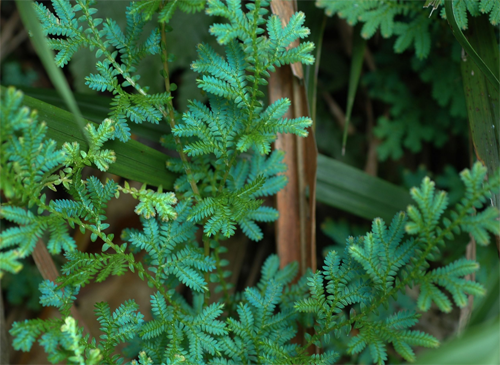
How to grow Selaginella uncinata:
Selaginella uncinata is a medium-sized creeping fern. It prefers a warm, humid, semi-shaded environment. The potting soil should be loose, well-draining and rich in humus. It can be mixed with equal parts leaf mold or peat, loam and coarse sand.
During the growing season, pay attention to misting to maintain high air humidity. In winter, the temperature must not drop below 5°C. The ideal growing temperature is 10-15°C at night and 21-26°C during the day. Special attention should be paid to shading, as strong light will cause its blue-green color to fade and affect its ornamental value. Apply liquid fertilizer once a month during the growing season.
1. Sunlight:
Suitable for cultivation in shaded, cool places, avoiding direct exposure to the scorching sun
2. Management:
Prefers a warm environment, tolerant of moisture
3. Water:
Water regularly every day, and frequently use a spray bottle to mist water to maintain leaf surface humidity, which helps promote more vigorous growth.
4. Fertilizing:
Fertile sandy soil or humus soil is fine, fertilize sparingly.
5. Watering:
Prefers moisture. During the growing season, pay attention to misting and maintaining high air humidity to keep the leaves fresh and beautiful.
6. Soil:
Requires loose, fertile, well-draining soil. Leaf mold is best.
7. Temperature:
Prefers warmth, grows well at around 20, overwintering temperature 5°C.
8. Light:
Prefers semi-shade. In midsummer, pay attention to shading; it must not be exposed to the scorching sun, otherwise the plant is prone to scorching and dying.
9. Propagation:
Generally propagated by division. Divide in spring when repotting, separating the mother plant into several clumps, planting them in pots, and placing them in a shaded, humid environment for easy survival.
What to do if Selaginella uncinata leaves turn yellow?
Selaginella uncinata naturally has fairly dark leaves. If yellowing occurs during cultivation, pay attention: give it more sun, but not scorching sun, as it can easily burn to death. Overwatering can also easily cause yellowing leaves, so care should still be taken during cultivation.
That covers the cultivation methods for Selaginella uncinata and how to deal with yellowing leaves.
How to grow Selaginella uncinata, cultivation methods and precautions for Selaginella uncinata / avoid direct strong sunlight
We know that Selaginella uncinata has eight main benefits and effects. It can serve as an ornamental plant and also as a bonsai to beautify the environment. Keeping a few pots at home can also refresh the mind. So is it easy to grow? The answer is it is easy to cultivate. And how do you grow Selaginella uncinata? Let me tell you the cultivation methods and precautions for Selaginella uncinata.
The growing habits of Selaginella uncinata
It prefers a humid, warm, semi-shaded environment. In terms of soil, it prefers fertile acidic soil. It has relatively high water requirements, average light requirements, weak cold tolerance, and average heat tolerance. It is grown in both southern and northern China, with northern regions mostly growing it in pots.
How to grow Selaginella uncinata
1. Soil
Selaginella uncinata is more suitable for growing in slightly acidic or acidic soil, so when planting, the soil should mainly be loose soil containing humus, such as a mix of leaf mold, peat, coarse sand, etc., among which good drainage is very crucial.
2. Temperature
Selaginella uncinata can be grown in both southern and northern China. It has relatively strong adaptability to temperature, but the temperature during overwintering should be kept above 5°C, and in summer, temperatures above 35°C should be avoided. The ideal temperature is 10-26°C, with 10-15°C at night and 21-26°C during the day.
3. Light
Among the cultivation methods and precautions for Selaginella uncinata, it prefers a semi-shaded environment, so the light should not be too strong, otherwise it can easily scorch and die from sun exposure. In summer, shading work must be done well, and even in spring and autumn, it should not be placed directly in the sun.
4. Water
In dry environments, Selaginella uncinata leaves easily turn yellow. So in terms of watering, how do you grow Selaginella uncinata? Normally, pay attention to watering more, keeping the soil relatively moist is beneficial for its growth. At the same time, you can also frequently use a spray bottle to mist the leaf surfaces, which can make the leaves even more deep green.
5. Fertilizing
Selaginella uncinata likes fertilizer, but fertilizing differs at different growth stages. For example, during the growing season, fertilize once every 15 days, and after it takes shape, reduce the frequency of fertilizing. Each fertilizing should mainly use nitrogen, phosphorus and potassium fertilizer. If the branches and vines grow relatively fast, the amount of nitrogen fertilizer needs to be controlled.
Precautions for growing Selaginella uncinata
1. Avoid direct sunlight
Although plant photosynthesis requires a certain amount of light, Selaginella uncinata particularly dislikes direct sunlight during cultivation. From April to October, if exposed to the scorching sun, the leaves are easily scorched and may also dry out from lack of water. It should be kept in a semi-shaded environment as much as possible.
2. Do a good job of pruning
In spring or autumn, you can prune the Selaginella uncinata plant once, cutting off some old branches and vines and overly long branches and leaves. On one hand, this can beautify the plant shape; on the other hand, it can also promote the sprouting of new branches.
3. Repotting and soil changing
Repot and change the soil once every 1-2 years. Choose a flower pot with a diameter of about 20 cm. 5-7 Selaginella uncinata plants per pot is more suitable. The replacement soil should be prepared with leaf mold, garden soil, etc., which can make the soil more breathable and better draining.
Causes of yellowing leaves in Selaginella uncinata, solutions for yellowing leaves in Selaginella uncinata
People often encounter the lower leaves of their Selaginella uncinata turning yellow, and the upper leaves becoming more and more yellow as well. They water it every day. But it gets more yellow day by day. Below, let me help you understand the causes of yellowing leaves in Selaginella uncinata and the solutions for yellowing leaves in Selaginella uncinata.
Causes of yellowing leaves in Selaginella uncinata
Insufficient light.. water accumulation in the pot. This will cause root rot and yellowing leaves
Solutions for yellowing leaves in Selaginella uncinata
Water: Water regularly every day, and frequently use a spray bottle to mist water to maintain leaf surface humidity, which helps promote more vigorous growth
Fertilizing: Fertile sandy soil or humus soil is fine
Water: Prefers moisture. During the growing season, pay attention to misting and maintaining high air humidity to keep the leaves fresh and beautiful.
Soil: Requires loose, fertile, well-draining soil. Leaf mold is best.
Temperature: Prefers warmth, grows well at around 20°C, overwintering temperature 5°C.
Light: Prefers semi-shade. In midsummer, pay attention to shading; it must not be exposed to the scorching sun, otherwise the plant is prone to scorching and dying.
Selaginella uncinata prefers a warm, humid, semi-shaded environment. The potting soil should be loose, well-draining and rich in humus. It can be mixed with equal parts leaf mold or peat, loam and coarse sand. During the growing season, pay attention to misting to maintain high air humidity. In winter, the temperature must not drop below 5°C. The ideal growing temperature is 10-15°C at night and 21-26°C during the day. Special attention should be paid to shading, as strong light will cause its blue-green color to fade and affect its ornamental value. Apply liquid fertilizer once a month during the growing season.
Selaginella uncinata has an elegant posture, and its blue-green fluorescence is pleasing to the eye. In southern China, it is an excellent ground cover plant, and it is also suitable for potted ornamental cultivation in the north. Planting it in patches in planting troughs gives even better results, and it is also an ideal covering material for orchid pot surfaces.