Is mosquito repellent plant toxic? Detailed guide to growing it and its mosquito repellent effect
Mosquito repellent plant is extremely popular in summer. Mosquitoes in summer are really too rampant, so the home still needs to have a mosquito repellent plant, only then can the mosquitoes at home be reduced and the mood be happy. What is the growing method for mosquito repellent plant? Is mosquito repellent plant toxic? Can it repel mosquitoes when kept at home?
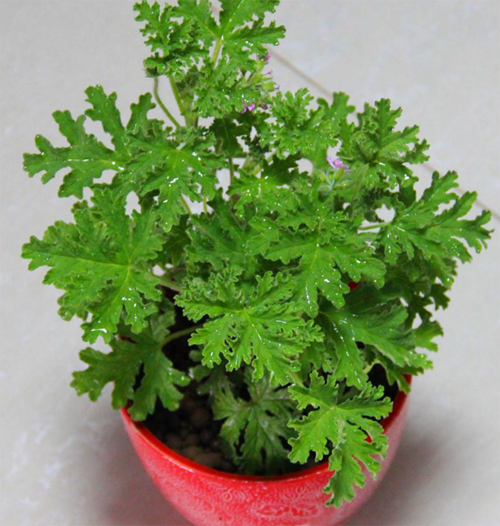
Growing methods for mosquito repellent plant:
1. Potting soil selection
Mosquito plant seedlings grow extremely fast, so during the seedling stage repotting is more frequent. During the seedling stage use a nutrient soil mixed with peat soil: vermiculite: perlite in a ratio of 6:2:2. Of course, directly buying seedling soil is simpler.
After transplanting, the plant is extremely adaptable and can use any soil. The main stem of a two-year-old plant becomes woody and can be pruned and shaped.
2. Temperature control
The growing temperature for mosquito plant is 10-25°C. It can overwinter safely above 0°C. Only above 15°C can it release lemon fragrance. The higher the temperature, the more fragrance it releases. Appropriately spraying water mist on the plant makes the fragrance more pleasant and the mosquito repellent effect better.
3. Light regulation
Mosquito plant prefers shade and must not be exposed to direct sunlight during growth, or sunned for too long. In summer it needs shading. Household potted plants are generally kept indoors, and attention should be paid to ventilation.
4. Water and fertilizer
After each repotting, water thoroughly once. Fertilize (light fertilizer) 15 days after the seedlings recover. Spring is the vigorous growth period.
Watering should follow the principle of alternating dry and wet. In summer high temperatures, water less and do not fertilize. This helps the root system develop and improves disease resistance.
Propagation methods for mosquito repellent plant:
1. Cuttings
Mainly use cuttings from adult plants. Every spring and autumn, cut off the side branches of mosquito plant, cut them into small sections 5 cm long, soak them in carbendazim for 15 minutes, insert them diagonally into a vermiculite or river sand seedbed, and cover with plastic film and a shade net.
Spray water 3-5 times a day. Generally roots form in about 10 days. When new shoots grow to about 5 cm in 20 days, they can be potted and transplanted.
2. Sowing
In early March, sow the seeds into clean fine sandy soil at a depth of 3 cm. Water thoroughly 4 hours after sowing, then keep the pot soil moist, not too dry or too wet.
In early spring, place indoors in a warm and bright place. At a room temperature of about 20°C, they will sprout and root in about 1 month. Then divide and transplant, using ordinary culture soil in small pots to grow the seedlings. When the seedlings grow strong and white roots emerge from the bottom hole of the pot, use fertilized culture soil with some crushed hoof pieces placed at the bottom as base fertilizer, and transplant into a chrysanthemum bucket pot for final planting.
Pest and disease control for mosquito repellent plant:
If care is improper, root rot, stem and leaf rot, leaf shrinkage, or black spots will appear, and in severe cases the whole plant will wither.
This is usually caused by watering too frequently, humidity being too high, or poor ventilation when the temperature is too high, and sometimes by seedling density being too high.
Control methods:
Spray fungicides such as chlorothalonil or carbendazim, but do not spray frequently, once or twice a week.
Precautions:
Sudden leaf drop in a short period is often caused by too great a temperature change or insufficient light. Leaves turning yellow and soon falling off are mostly caused by insufficient light and excessive watering. This phenomenon can also occur when the winter temperature is too low.
Dry leaf tips or scorched leaf edges are sometimes due to too strong light or dry air, and sometimes caused by excessive fertilization or dry pot soil. Excessive growth of branches and leaves is mainly due to insufficient light, too much nitrogen fertilizer, and improper watering. It should be moved to a place with light and the branch shape trimmed.
Yellow or brown spots like water stains appearing on the leaves may be the result of watering too vigorously, with mud splashing onto the leaves and then being exposed to the sun.
Is mosquito repellent plant toxic? Can it repel mosquitoes?
Be careful not to buy scented geranium (P. graveolens), as it is very different from mosquito plant. Strictly speaking, scented geranium and mosquito plant are different. The fragrance is different, and the amount of scent released is small. You must touch it with your hands to smell the scent, which is quite similar to touch-me-not.
Generally, mosquito repellent plant specifically refers to lemon-scented varieties of lemon geranium (releasing lemon scent), and also apple geranium (apple scent).
Mosquito repellent plant has fairly strong adaptability. It is a perennial herb that gives off a rich lemon fragrance. It can repel mosquitoes and purify the air, and of course has no side effects.
If there are patients with respiratory diseases at home (pets count too), then it is still better not to grow it. Mosquito repellent plant is actually also a commercial name, so that it sells better, just like “money tree”, “coin tree”, etc.!
That is all for the introduction to the growing methods of mosquito repellent plant, whether it is toxic, and whether it can repel mosquitoes. If you really like it, then hurry up and grow a mosquito repellent plant yourself!
Is mosquito repellent grass toxic? Growing methods for mosquito repellent grass
Mosquito repellent grass, scientific name scented geranium. Perennial herb, shrub-like, up to 1 m tall. Stem upright, 80-90 cm tall, grayish green, woody at the base, fleshy above, densely covered with glossy soft hairs, fragrant, with very strong vitality. Flowers small, densely borne in small umbel-like inflorescences, opposite the leaves. The whole plant can be distilled for aromatic oil and is often cultivated as an aromatic plant. Because it is fragrant, it is often grown in pots for ornamental purposes.
Mosquito repellent grass grows fast and needs repotting and fertilizing every year, mostly in spring. When repotting, remove the old roots at the base, apply base fertilizer into the new culture soil. Generally repot in February or March. After new branches grow in April, apply a dilute organic liquid fertilizer once a week. In late April move it outdoors to wait for the flowering period. In June move it to a place with scattered light, under tree shade or under a shade shed.
Is mosquito repellent grass effective
The answer is yes, but because the concentration of the volatilized gas is relatively low, the mosquito repellent effect of just a few pots of "mosquito repellent grass" is not very significant. If you want to rely on it to completely stay away from mosquitoes, that is not very possible. So everyone should not have too high expectations for mosquito repellent grass. After all, it does not take effect as quickly as chemical mosquito repellents.
Is mosquito repellent grass toxic
It is non-toxic. It is a perennial herb that not only has a mosquito repellent effect, but also gives off a lemon fragrance and has the effect of purifying the air. Authoritative tests show that it can repel hundreds of species of mosquitoes and is harmless to humans and livestock.
Growing methods for mosquito repellent grass
1. Soil. Mosquito plant (mosquito repellent grass) prefers neutral to slightly acidic soil, generally fertilized once every 15-20 days. When the plant height is 30 cm and it has 40 leaves, the mosquito repellent effect is best. Yellow leaves should be removed at any time. Seedlings grow extremely fast, so during the seedling stage repotting is more frequent. Within 6 months use a special self-mixed nutrient soil of 6 parts peat soil, 1.5 parts vermiculite, 1.5 parts perlite, and 1 part coal ash, with a pH value slightly acidic to neutral. You can also buy ready-mixed commercial foliage substrate soil (pH 5.5-7) from the flower market. After six months the plant is extremely adaptable and can use any soil. The main stem of a two-year-old plant becomes woody and can be pruned and shaped into any form according to personal preference.
2. Temperature. The most suitable growing temperature for mosquito plant (mosquito repellent grass) is 10-25°C. It can overwinter safely above 0°C. Above 15°C it can normally release lemon fragrance. The higher the temperature, the stronger the fragrance released. Appropriately spraying water mist on the plant leaves can make the citronellal substance release continuously, thereby making the mosquito repellent effect better.
3. Light. Mosquito plant (mosquito repellent grass) prefers shade and is not tolerant of strong light during growth, especially in summer when shading must be strengthened. It can be planted under trees or in shaded places. Household potted plants are generally kept indoors for cultivation.